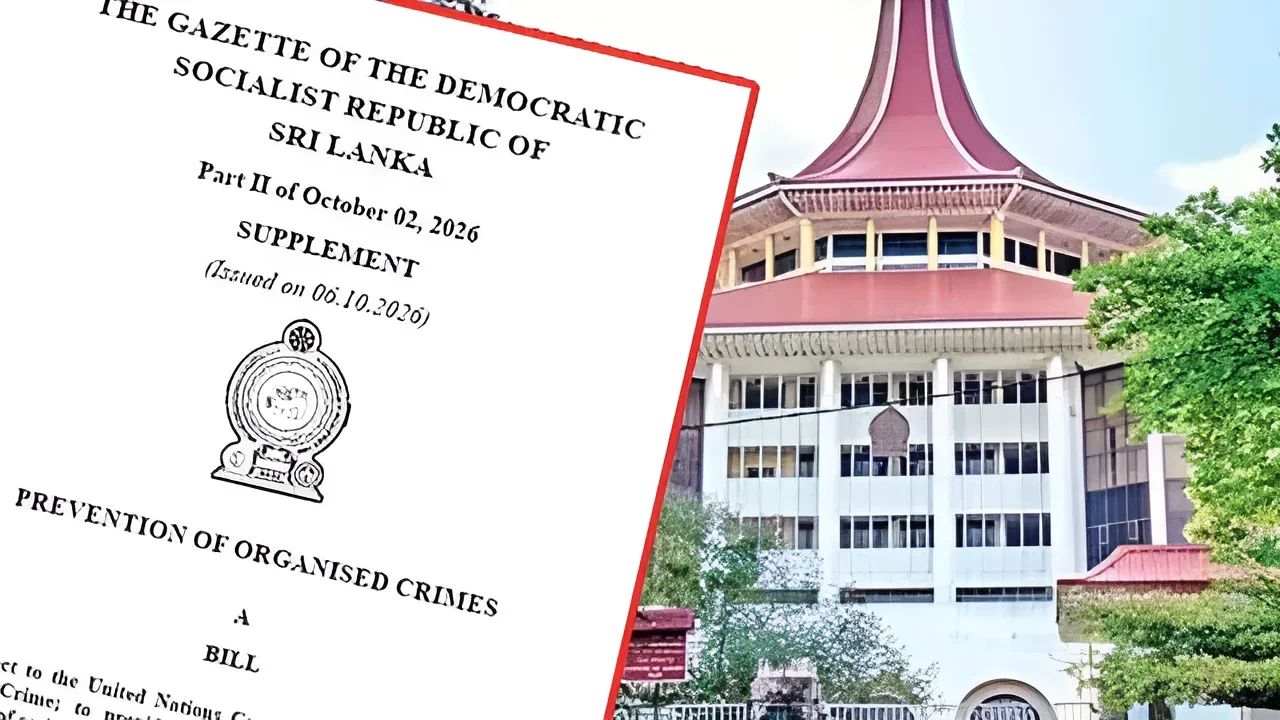
A real scandal has erupted in Sri Lanka surrounding the organized crime prevention bill, and the tattoo community has found itself right at the center of it. The Attorney General has officially notified the Supreme Court that the provisions concerning tattoos and other body markings will be removed from the text of the law through amendments. This decision is the result of pressure from dozens of petitions filed by opponents of the controversial regulations.
What exactly is being changed in the law
As reported by Solicitor General Viraj Dayaratne, speaking on behalf of the Attorney General, the amendments are planned to be introduced during the parliamentary committee’s review stage of the bill. The document outlining the proposed changes has already been sent to the Supreme Court. In addition to the article on tattoos, another controversial point is being withdrawn: the requirement to obtain prior court permission to publish information on serious crime cases. Both provisions were considered the most vulnerable from the perspective of constitutional rights.
The hearing of 26 petitions challenging individual provisions of the bill as unconstitutional has begun in the Supreme Court. The case is being heard by a three-judge bench led by Chief Justice Preethi Padman Surasena, which also includes Justices Achala Wengappuli and Sampath Abeykoon. Previously, the court had recommended that the petitioners formalize their amendment proposals in writing, and the petitioners’ lawyers did so last Thursday.
Why tattoos became a target of the law
For someone unfamiliar with tattoo culture, it might seem strange that body markings would be included in a criminal bill at all. The logic of the authors of the regulation was simple: tattoos and scars often serve as a “calling card” for gang members, so recording them simplifies identification and tracking. But this is exactly where the conflict with basic freedoms begins.
In the tattoo community, such regulations are perceived as direct stigmatization. A tattoo is a form of self-expression, a cultural code, and in some traditions, a ritual sign. When the state begins to treat a person’s body as a file, it affects millions of people who have at least one design on their skin. Tattoo culture experts have long warned that such mechanisms turn an ordinary design into a potential “incriminating” mark and undermine trust in the profession of the tattoo artist, who essentially becomes an involuntary registrar of “marks.”
There is also a practical side. If the law mandates the recording of body markings, it inevitably leads to the creation of databases and the expansion of the powers of law enforcement agencies. For a free person, this means that their body ceases to be their private space. The repeal of this provision is an important signal that the state is not prepared to use tattoos as a tool for control.
Context for the tattoo community
The case of Sri Lanka is not unique. In many countries, tattoos and piercings periodically come under the scrutiny of legislators: from labeling requirements in the penitentiary system to attempts to restrict designs for minors. Each such episode reminds us that tattoo culture is not just about aesthetics and skill, but also a matter of human rights.
The victory of the petitioners in Sri Lanka shows that organized resistance works. When the community unites, appeals to the court, and formulates arguments in the language of constitutional rights, even controversial regulations can be removed. For tattoo artists and clients, this is a lesson: knowing your rights and being ready to defend them is as much a part of the culture as the design on the skin itself.
Now it remains to be seen how the amendments will pass through the parliamentary committee and whether they will be definitively fixed in the final text of the law. But the very fact that the article on tattoos is being removed can already be considered a small but significant victory for everyone who considers their body their own.