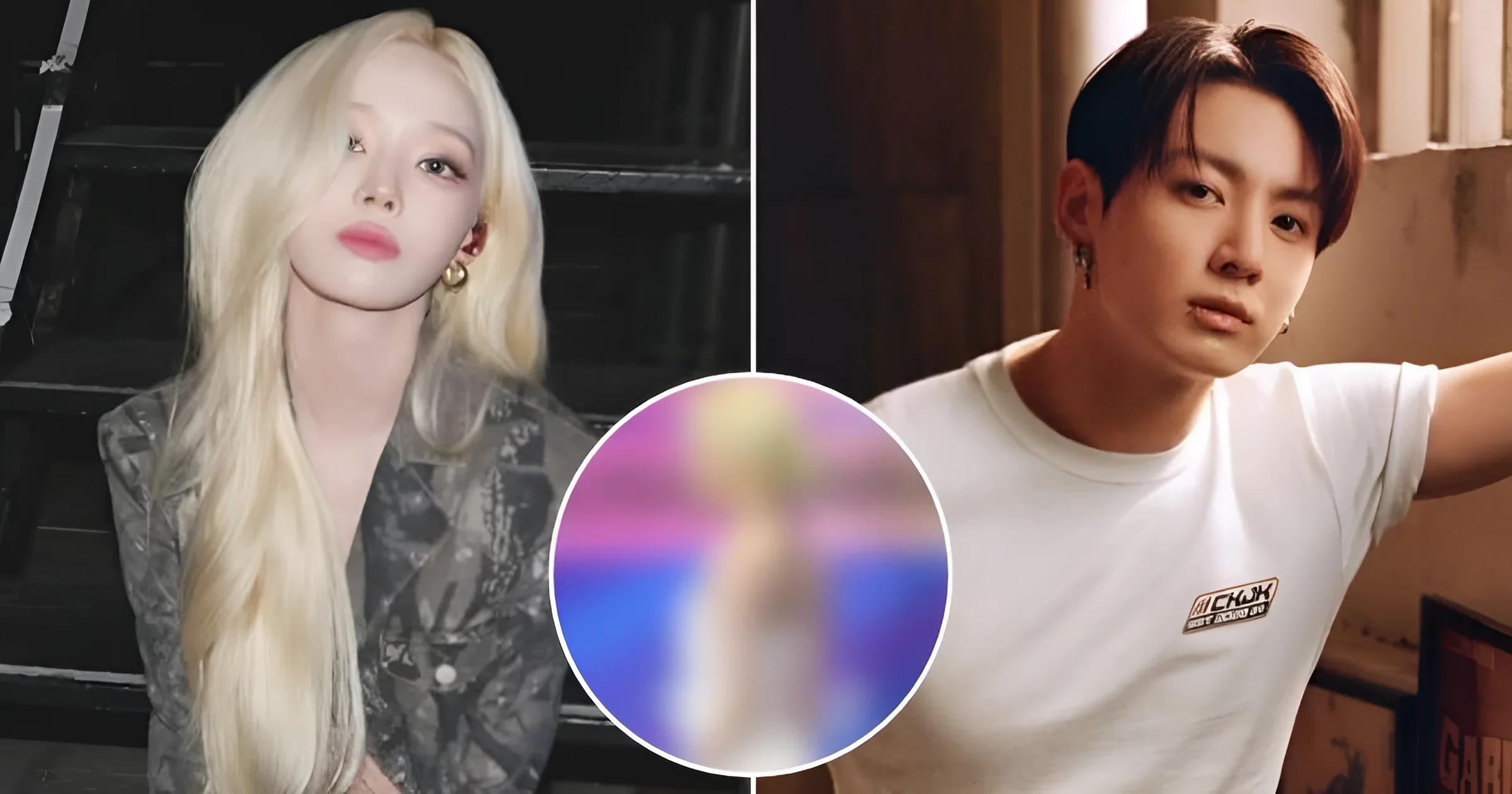
In the world of K-pop, it is rare for an element of an artist’s personal style to turn into an object of mass investigation. This is exactly what happened to aespa girl group member Winter, whose small dog tattoo on her forearm was back in the spotlight after her appearance on the red carpet at the Melon Music Awards on November 14. This time, fans were not discussing the tattoo itself — they were arguing about where it had gone.
The group aespa appeared at the awards ceremony in full force: the four members walked the red carpet in evening gowns, and a few hours after the event ended, a screenshot of a Korean media article began to circulate online with the headline stating that “Winter’s dog tattoo, which sparked rumors of a romance with BTS’s Jungkook, has completely disappeared.” The post quickly gained thousands of reposts and comments, turning the artist’s routine appearance into a real detective story.
Two versions: laser or foundation

The first and most dramatic version suggests that Winter actually had the tattoo removed by laser. The second, promoted by a significant part of the community, sounds more pragmatic: the tattoo has not gone anywhere, but was simply covered with a thick layer of foundation and powder, which is consistent with the format of an official event. In the comments under the viral tweet, fans analyzed the frames pixel by pixel:
- “Layers of paint and makeup on her arm are visible to the naked eye,” noted observant watchers, pointing to the change in skin texture in the tattoo area.
- “It’s covered with makeup because it’s not appropriate for the occasion. That’s exactly how femininity is perceived in Korea,” they explained the cultural context.
- “She definitely still has the tattoo, it’s just not proof of a relationship: Jungkook really does have three dogs, and the motif is related to his real pets,” reminded those who followed the story from the very beginning.
- “I’m crying, is it a silicone sticker with concealer or did she really remove it with a laser? It’s getting awkward,” joked others, admitting that the debate had dragged on.
Thus, no consensus has been reached online: part of the audience sees traces of camouflage, while others insist on the complete disappearance of the design. Both turn the artist’s personal decision into a public narrative.
Expert view: why tattoos in K-pop are always an event

To understand the scale of the discussion, it is worth turning to the specifics of tattoo culture in the Korean entertainment industry. For many years, tattoos in K-pop were considered a taboo: agencies strictly monitored the “clean” image of idols, and having a design on one’s body could cost an artist their contract. Gradually, the attitude softened, but it did not disappear. Today, a tattoo for an artist is no longer a violation, but an element of a visual narrative that is instantly read by the public.
A special place in this narrative is occupied by so-called “couple tattoos” — matching or mirrored tattoos that fans perceive as a tacit symbol of a relationship. It is this context that turned the small dog on Winter’s arm into a subject of speculation: the coincidence of the motif with Jungkook’s pets was interpreted as a hint, although there have been and are no official confirmations of the couple. The tattoo became a kind of “visual evidence” that the audience tried to interpret according to their own script.
Another important aspect is the gender lens. In the Korean media environment, female artists are still expected to have a “smooth,” well-groomed look at official events, and covering a tattoo with heavy makeup is a common practice, not an exception. Therefore, the foundation version sounds no less plausible than the laser version, and both reflect different sides of the same reality: a tattoo in K-pop exists not only on the artist’s body, but also in the minds of the audience, who are constantly re-evaluating its meaning.
The outcome remains open: without a comment from Winter herself or her agency, the debate will continue. But for tattoo culture, this case is a telling example of how a small drawing can become a point of intersection for fan theories, gender norms, and industry standards. And while fans argue whether the laser or the concealer won, Winter’s tattoo continues to live — no longer as ink on skin, but as a cultural meme that the K-pop industry is not yet ready to let go of.