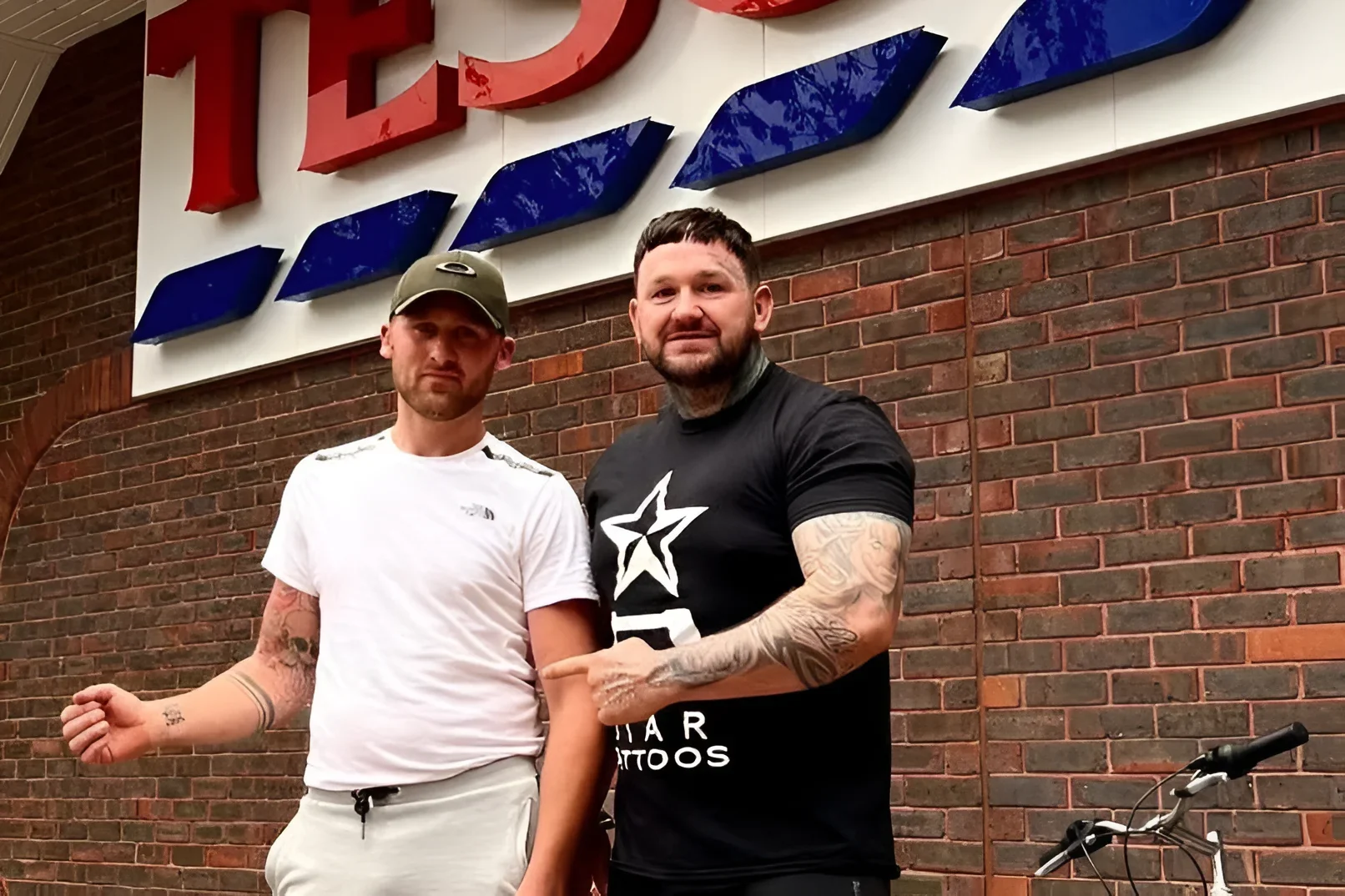
British father of three Dean Mayhew, who became famous for having a barcode of his Tesco Clubcard tattooed on his own wrist, has unexpectedly announced that he no longer visits this supermarket. According to him, the prices no longer justify the loyalty, and the card itself stopped providing tangible benefits. The story, which went viral in 2022 and became a symbol of brand devotion, is now taking a different turn: even the most striking tattoo won’t keep a customer when the grocery bill becomes unaffordable for a family.
How the barcode became part of his body
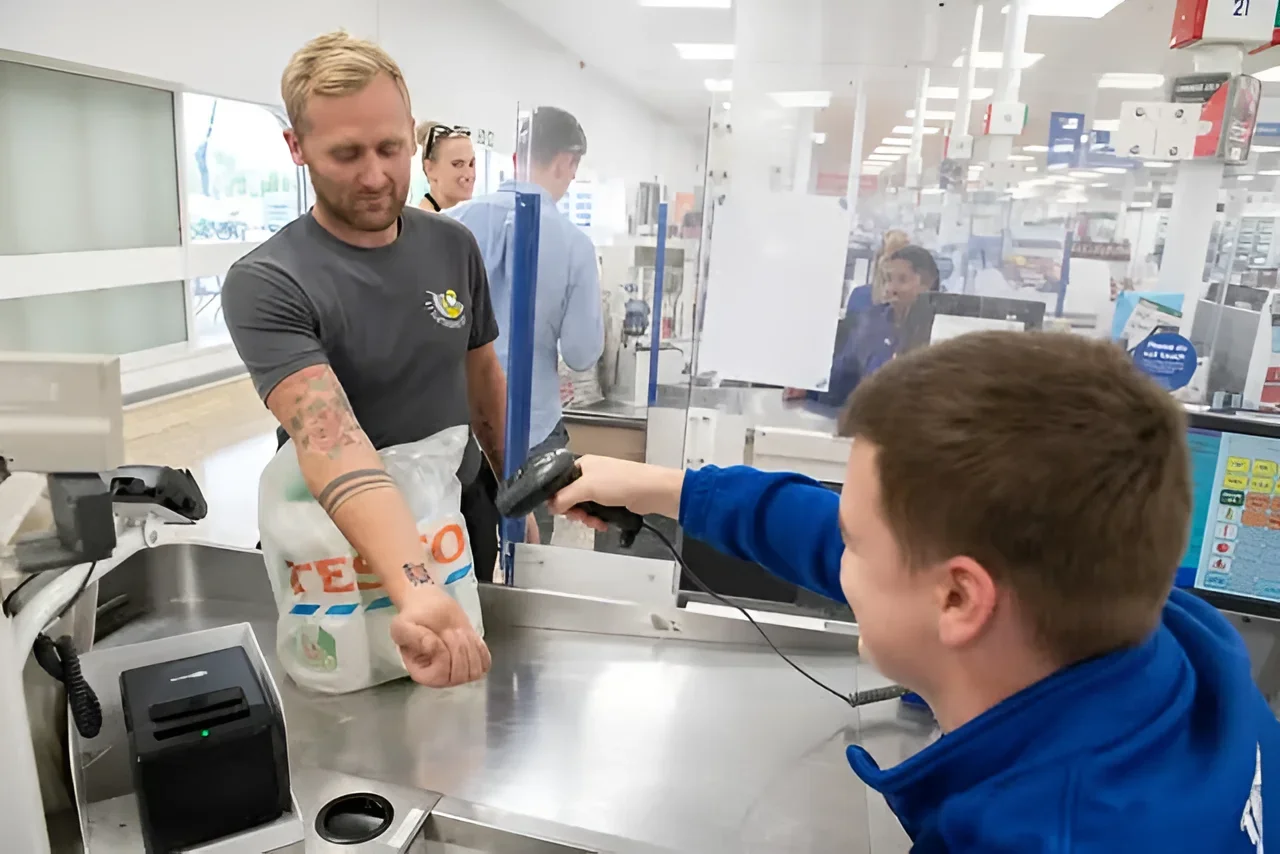
For 34-year-old Dean Mayhew, a construction worker living in Bideford, North Devon, the idea didn’t come all at once. He pondered it for several months before booking an appointment in July 2022. On July 16, 2022, artist Dan Rossetter, 39, at the A Star Tattoo studio in Chessington, Surrey, applied an exact copy of the Clubcard barcode to his wrist. The tattoo novice didn’t have to wait long for a test: immediately after the session, Dean went to the nearest Tesco Express and placed his wrist on the scanner. The barcode worked perfectly, and from that moment on, the loyalty card was no longer a plastic rectangle in his wallet — it became part of his skin.
Dean himself recalled that cashiers sometimes didn’t believe the tattoo was real, and he had to repeat, “Just scan it, please!” — after which they were genuinely surprised. This moment became the main driver of viral attention: a tattoo that was supposed to save time turned into an entertainment object for strangers.
When the novelty wears off
But the practical logic of the tattoo quickly gave way to household arithmetic. Dean admits that an average shopping trip for a few days cost his family about £200, and this amount ceased to be comfortable. He hasn’t done his weekly shopping at Tesco for over a year and now prefers Morrisons or Asda, where, in his opinion, the price-to-quality ratio looks fairer. For a man who literally inscribed a brand onto his body, such a decision sounds almost like betrayal — and that is precisely why the story resonated so much.
The numbers confirm his feelings. A Which? study, which compared 93 popular products across eight major supermarkets, showed the following picture:
| Supermarket | Average basket cost |
|---|---|
| Asda | £186.71 |
| Tesco | £193.45 |
| Tesco with Clubcard | £187.71 |
As you can see, even taking into account loyalty card discounts, Tesco remains more expensive than Asda, and the benefit from the Clubcard amounts to only a few pounds on the entire basket. For a family with three children, this is a difference that adds up to a significant sum every month.
Tattoo culture and brand loyalty: an expert view
From the perspective of tattoo culture, Dean’s case is rare and telling. A tattoo is by definition permanent: it cannot be removed, canceled, or used during a promotion. When a person puts a barcode, logo, or QR code on their skin, they are betting that the brand will meet their expectations for a lifetime. This is a fundamentally different level of loyalty than a plastic card that can be thrown away at any moment.
In the tattoo world, the genre of “functional” and ironic tattoos — barcodes, QR codes, logos, social media symbols — has existed for a long time and is usually associated with selfie culture, a desire to be the center of attention, and a willingness to turn the body into media. But in most cases, such works are aesthetic or humorous in nature. Dean, however, acted out of pragmatism: he was too lazy to look for his card in his wallet. It was this combination of practical motivation and public effect that made his story so memorable.
Something else is important: a tattoo does not depend on corporate decisions. Even if Tesco changes its card format tomorrow, cancels the Clubcard, or raises prices for the third time, the barcode on Dean’s wrist will remain. In this sense, the body turns out to be a more reliable storage medium than any marketing tool. And this is perhaps the main paradox of the story: the brand that tried to tie the customer to itself through loyalty ended up with a symbol on a person’s skin that it no longer controls.
What remains after leaving
Despite the break with the supermarket, Dean doesn’t hide his wrist. Sometimes he still gets a lunch combo at Tesco — a meal deal for £3.50, which includes a drink, chips, and a sandwich. “No one is going to regret a meal deal, right?” he shrugs. And, remarkably, he doesn’t regret the tattoo itself. For him, that’s in the past, and all that remains on the surface is a conversation starter and a light laugh.
Ultimately, Dean Mayhew’s story is not just a note about supermarket prices. It is a small cross-section of how tattoo culture intertwines with consumer behavior: the body becomes a carrier of brand loyalty, and when the loyalty ends, the tattoo continues to live its own life — as a joke, as a memory, as part of a person who has long since chosen a different store.