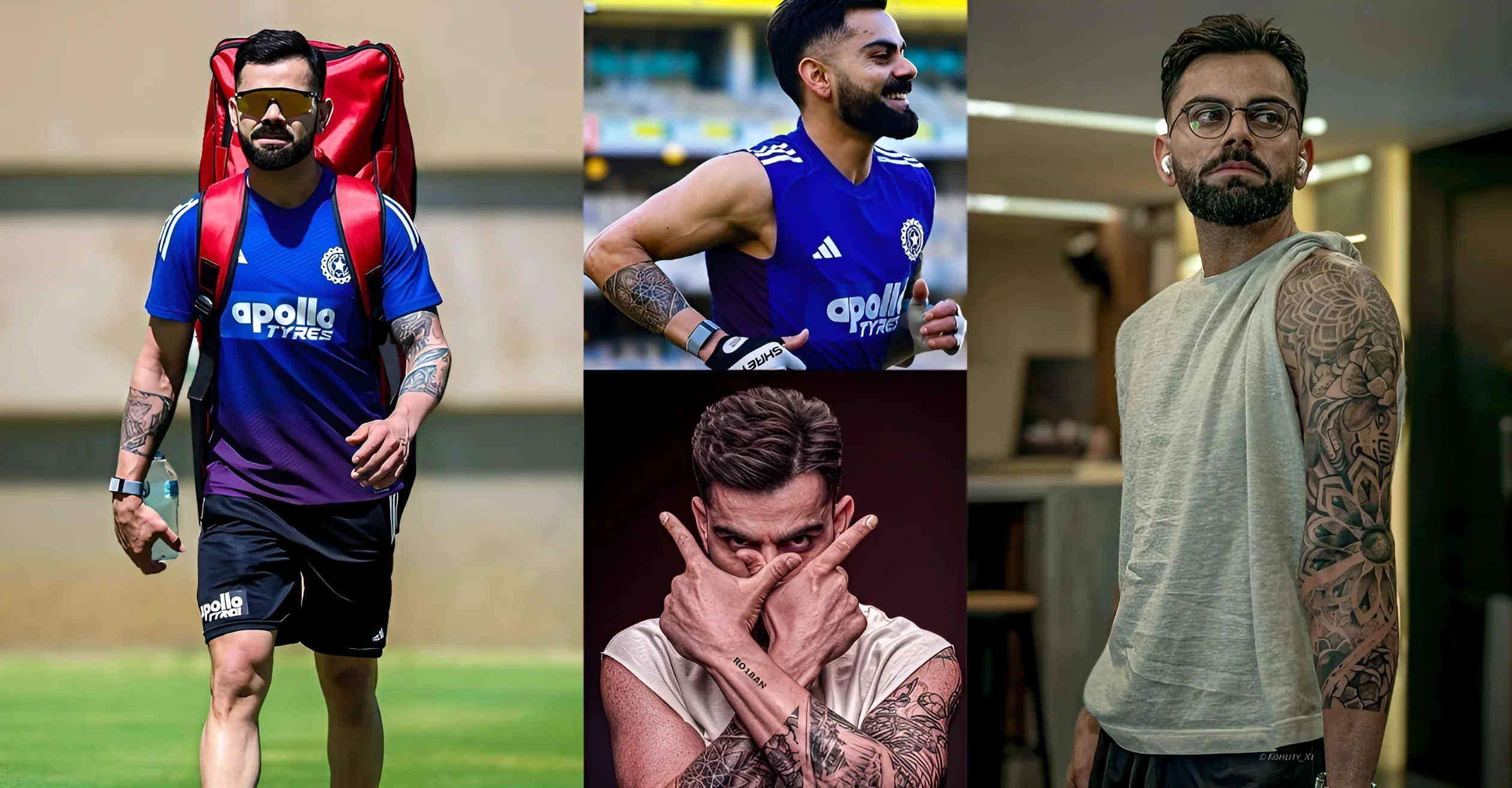
When people talk about Virat Kohli, they first think of his batting, his records, and his legendary thirst for victory on the field. But the Indian cricketer has a second, less obvious “language” — the one he has tattooed on his own body. A total of thirteen compositions, scattered across his forearms, biceps, and torso, form a complete autobiography: from family roots and his first international matches to meditations and an interest in sacred geometry. For tattoo culture, this is a telling case: athletes are increasingly using their bodies as a chronicle, rather than just a place for fashionable ornaments.
Family and the First Steps in Major Cricket
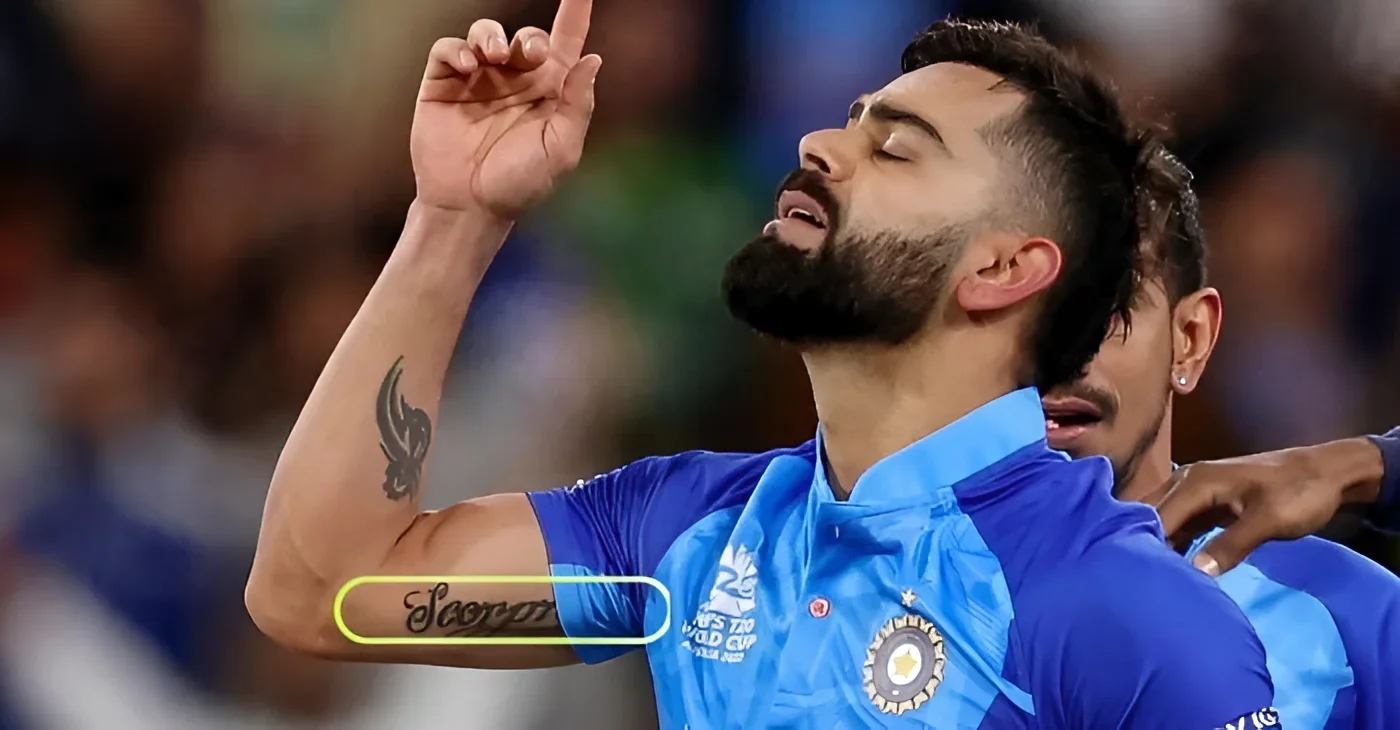
The base layer of Kohli’s tattoo collection consists of the people and dates without whom his career simply would not have happened. On his left forearm, the name of his mother, Saroj, is written in Hindi — a constant reminder of who supported his successes. Next to this motif is the name of his father, Prem Kohli, who passed away when Virat was still a teenager and just beginning his professional sports journey. This composition is one of the most personal in the set.
Two numbers mark the start of his international career. These are number 175 — the so-called ODI cap, which Kohli received on his debut against Sri Lanka in August 2008. And number 269 — his Test debut against the West Indies in 2011, his entry into the longest and, in his own words, most demanding format of the game.
The Warrior Within: Aggression and Character
The second layer of tattoos reflects the very “warrior” manner for which fans have come to love Kohli. On his left shoulder is a Japanese samurai, a reference to the Bushido code with its discipline, honor, and loyalty. On his right forearm is an abstract tribal pattern, one of his early ones, symbolizing strength and drive during his first years on the international stage. And on his right bicep is the Scorpio sign — the zodiac constellation of Kohli, who was born on November 5, 1988, traditionally associated with perseverance and inner intensity.
Spirituality and the Search for Balance
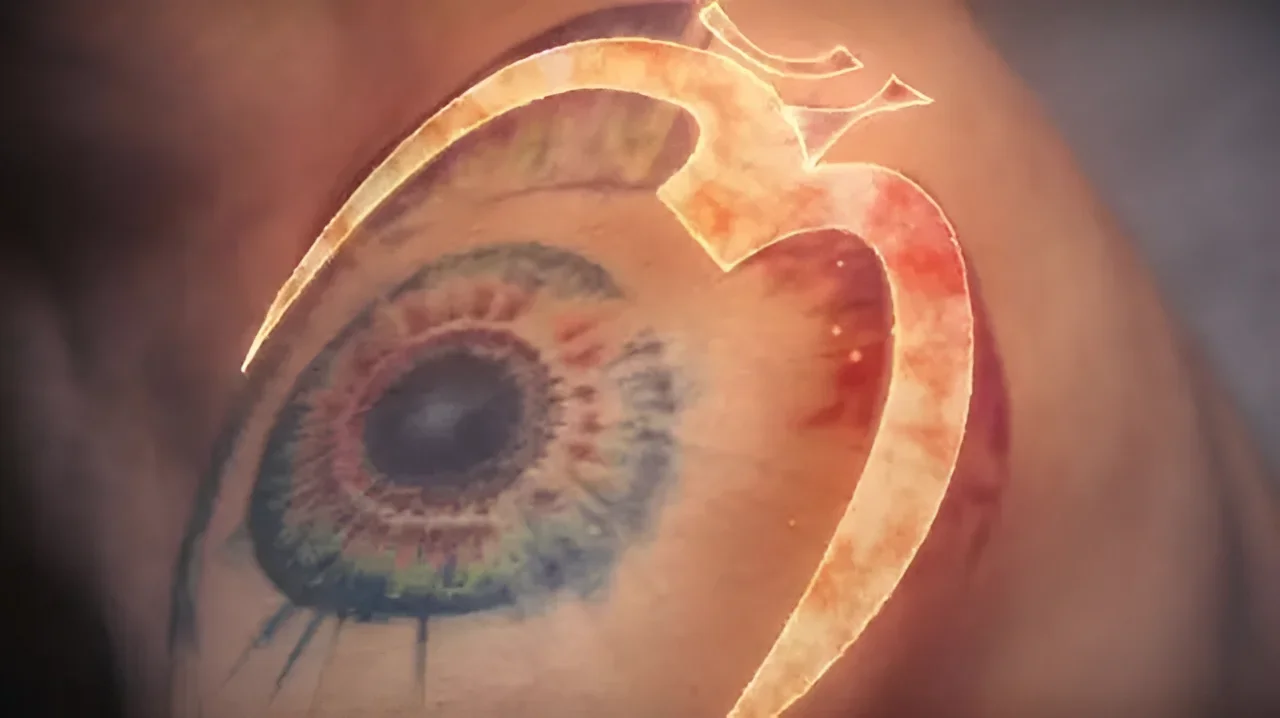
As he has matured, a meditative line has grown in Kohli’s collection. Here is Shiva in meditation on Mount Kailash — a symbol of transformation and inner peace. Next to him is the sacred Om (ॐ) sign, considered in the Hindu tradition to be the primordial sound of the universe. A separate composition features a monastery — a metaphor for a quiet harbor for a person living under the constant attention of millions. And finally, the all-seeing eye — an image of the supreme observer, a reminder that life is broader than personal achievements.
Sacred Geometry and Flowers: Completing the Sleeve
The most recent works connect individual motifs into a single complex sleeve. The central element is Metatron’s Cube — a figure of intertwined circles and lines, interpreted in sacred geometry as a model of the interconnectedness of all things and the balance of energy. The composition is completed by a lotus and a peony: the lotus, pushing through muddy water to bloom, is read as a symbol of purity and growth, while the peony is a sign of prosperity and harmony.
Looking at this set as a whole, it is clear how tattoo culture in the sports environment has shifted from decorative to narrative: every point on Kohli’s body is a chapter, not just a drawing. This approach, where the body becomes a personal library of meanings, is becoming one of the main trends in tattoo practice for celebrities and athletes around the world today.