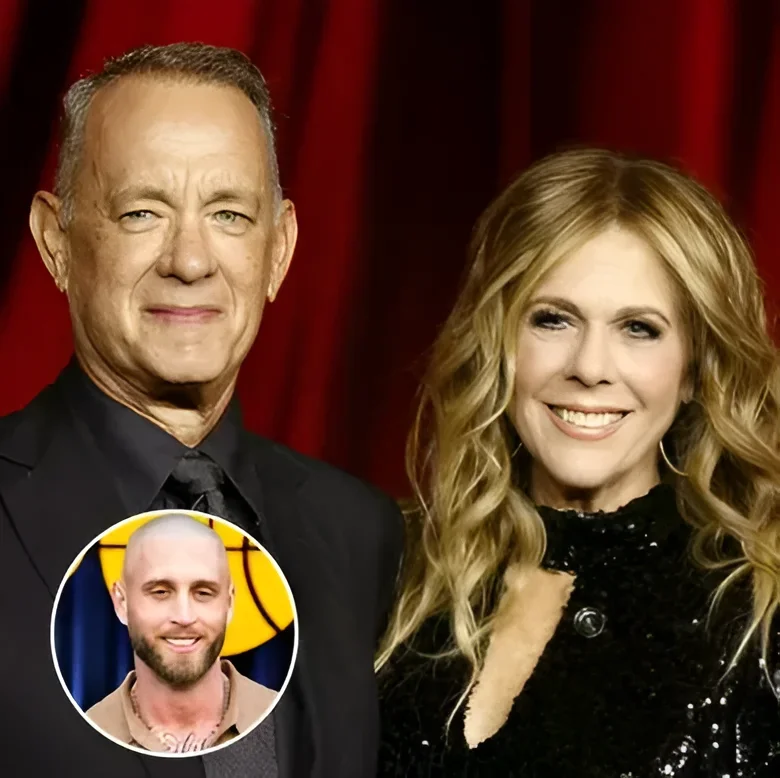
Social media is buzzing about tattoos again, and this time the reason isn’t a new design from a trendy artist, but a photo posted by 69-year-old Rita Wilson. The actress and musician, wife of Tom Hanks, showed a large cross design covering a significant portion of her back, and the public immediately noticed that the design was suspiciously close to her son Chet Hanks’ tattoo. The post appeared in a carousel promoting her new track “Stranger With Age,” dedicated to growing up and accepting the changes that time brings.
In the caption, Wilson wrote with her characteristic humor: “STRANGER WITH AGE? Who? Me? I love it! Who else becomes a stranger with age? The song STRANGER WITH AGE is everywhere.” It is in this context – a conversation about the body that changes – that the new design on her skin was revealed. Large back tattoos themselves have long ceased to be exotic: in tattoo culture, back tattoos are considered one of the most expressive formats because the back provides a flat, wide canvas on which symmetrical and religious motifs are well revealed. The cross in this tradition is one of the most recognizable symbols, and its “mirror” repetition in two generations of the same family looks like a conscious gesture, not an accident.
Why the coincidence with her son caused a stir
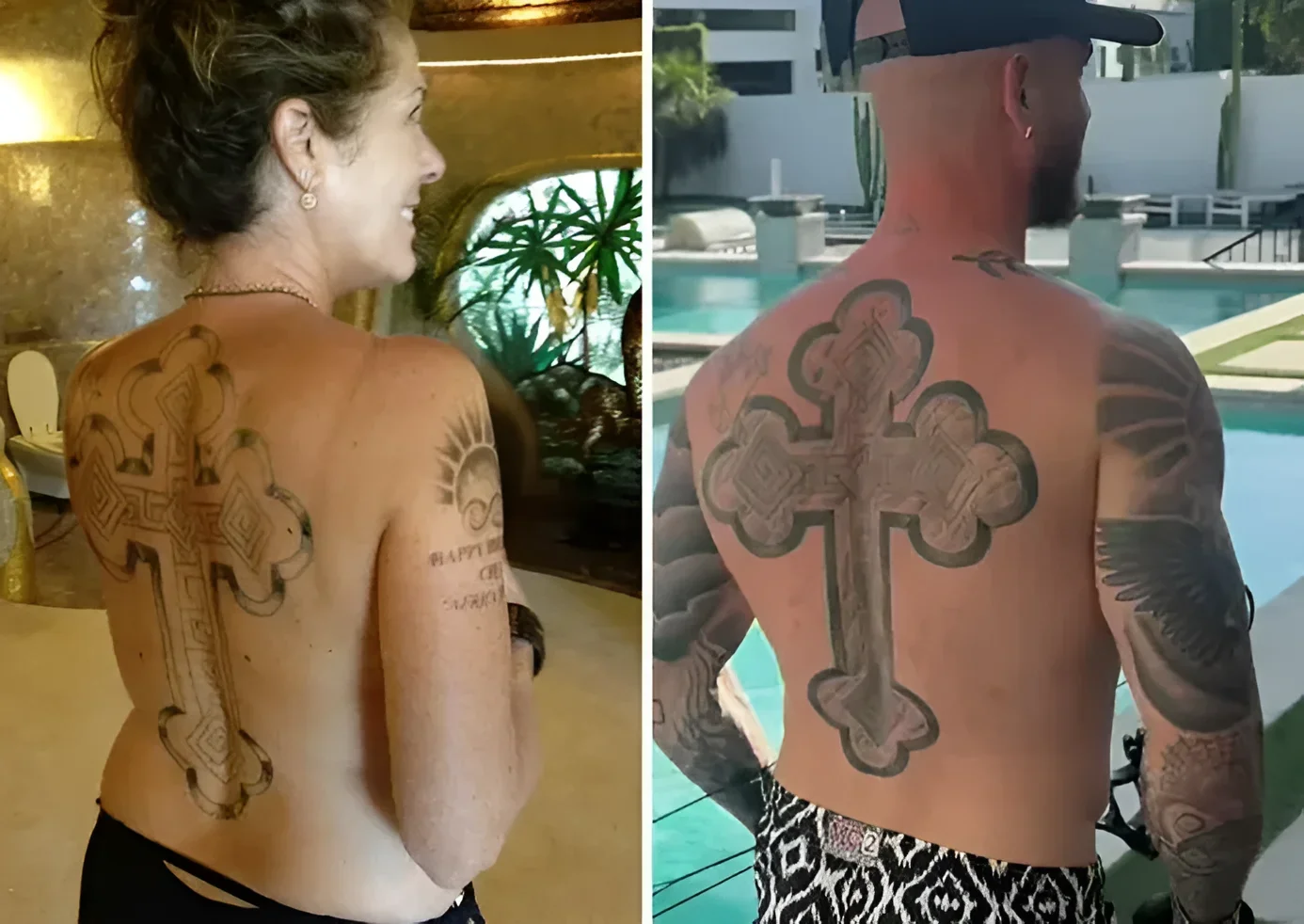
The connection between the designs became noticeable back in the spring: on May 7, 36-year-old Chet Hanks posted a video on Instagram where a large cross, strikingly similar to the one his mother later showed, was visible on his back. However, it is still unclear whether Wilson’s tattoo is permanent and when exactly the photo was taken, which has sparked a wave of speculation. Comments were dominated by bewilderment: “This is just weird,” “The only question is why?” “I only want to match my sons by last name,” “Sorry, but I don’t like it,” “This can’t be true,” “Absurd,” “Bad idea.” Such a range of reactions is typical for family tattoos: in the tattoo community, matching designs – from couple tattoos to “parent-child” ones – always elicit polarized opinions. On the one hand, it’s a way to solidify a connection and a shared history; on the other hand, some of the audience believes that each family member’s body should remain their personal space, not a copy of someone else’s design.
A body rewritten anew
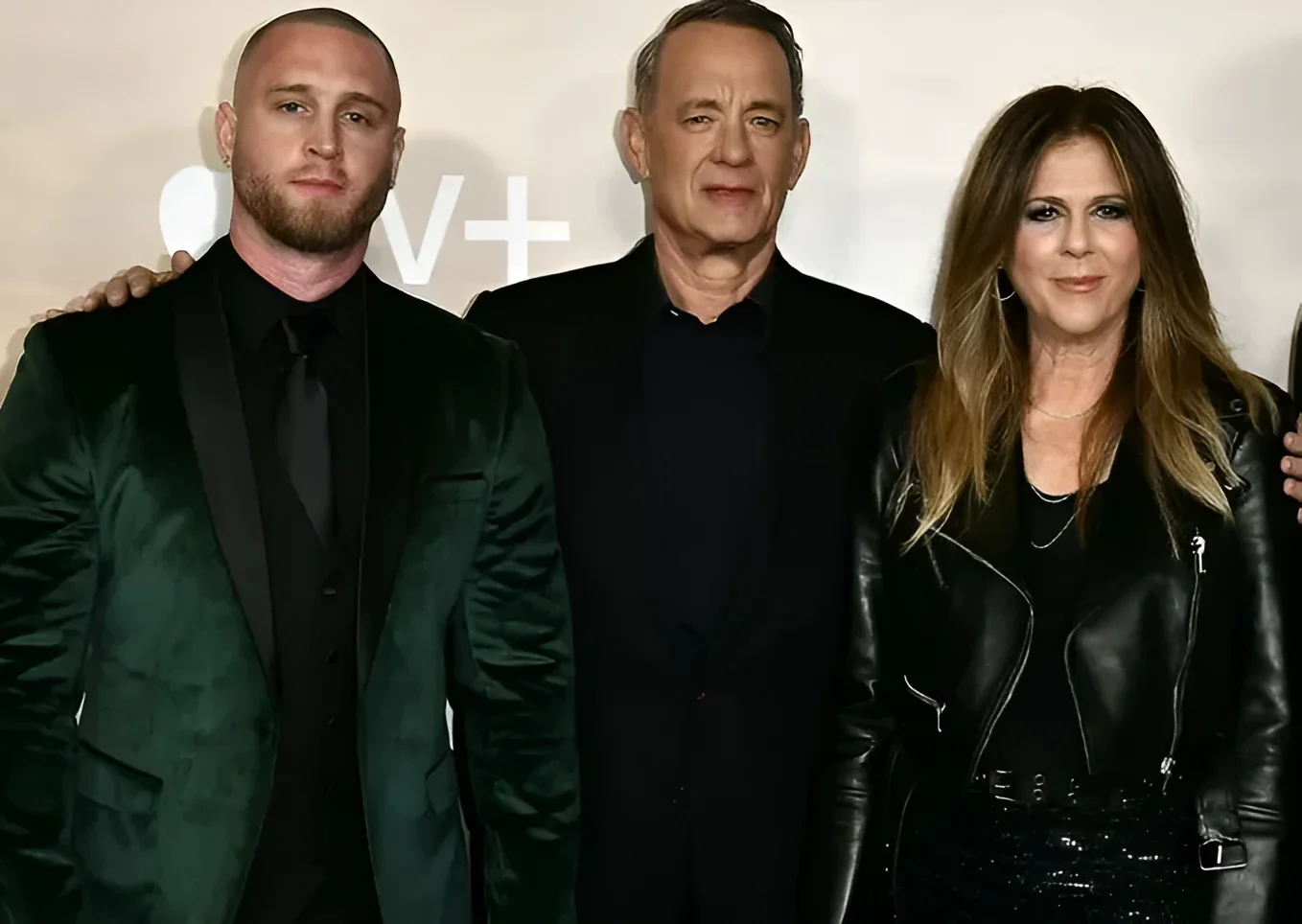
To understand why this gesture might be deeper than it seems, it’s worth recalling Wilson’s personal context. In 2015, she was diagnosed with breast cancer, after which she underwent a bilateral mastectomy and reconstructive surgery. The artist openly spoke about how this experience changed her relationship with her own body and inspired her music, including the track “Whose Body Is This?”. In an interview with People magazine, she said: “These body parts that were so beautiful to you are gone. I am so grateful that modern medicine has reconstruction and implants.” She added: “In my mother’s generation, if you had breast cancer, that was it. Nothing was left. You were left with something like a shadow.” Against this backdrop, the new design on her back is read not just as a fashionable choice, but as part of a broader statement about how a person reclaims their skin after trauma – and how they choose which symbols to leave on themselves forever.
Wilson and Tom Hanks have been married since 1988 and have two sons, Chet and Truman. For tattoo culture, the couple’s story is also a clear example of how large symbolic tattoos become a family language: when a design appears on both mother and son, it ceases to be just an adornment and turns into a marker of shared identity. Regardless of what the commentators think, Wilson’s case again shows the main law of the tattoo environment: the larger and more noticeable the design, the louder it speaks – and the more strongly it divides the audience into those who see meaning in it and those who see only strangeness.