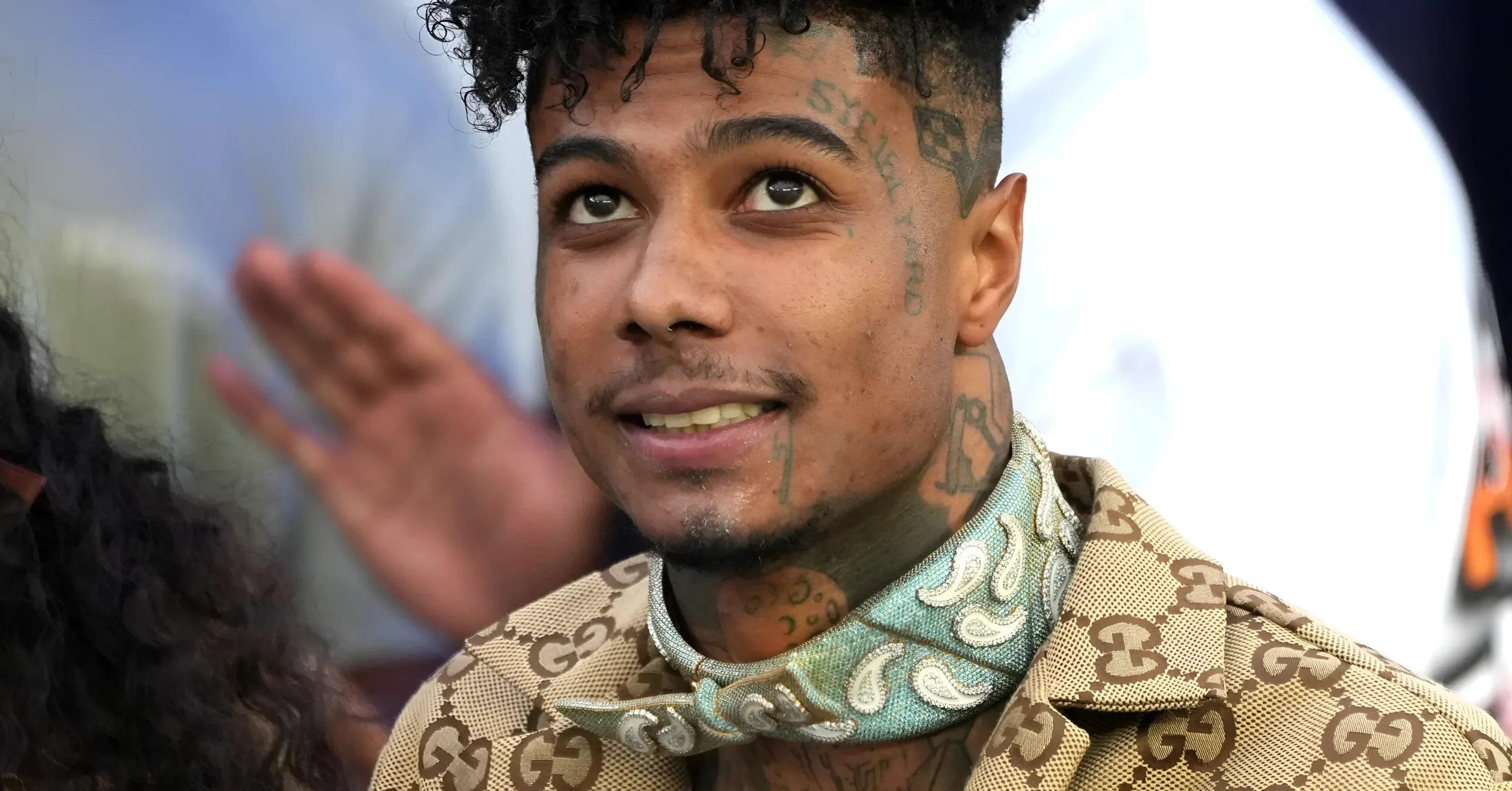
In the world of pop culture, a tattoo has long ceased to be just a skin decoration — it is a public manifesto that can be engraved in one evening and erased in the eyes of millions of followers. This seems to be the logic followed by California rapper Blueface when he decided to replace a tattoo of his former partner Chrisean Rock’s name with an image of the White House. The new “canvas” on his back, according to observant viewers, is not healing perfectly, but the gesture itself has already spread across social media and sparked yet another discussion about how ephemeral romantic tattoos have become in the era of streams and instant audience reactions.
From a Name on the Back to the White House
Let me remind you of the context for those who haven’t been following this saga in real-time. Blueface and Chrisean Rock are arguably the loudest and most unstable couple in the rapper’s orbit. After one of their numerous reconciliations, he got a tattoo of her name on his back, as if sealing the truce with ink. The truce, as usual, did not last. Now, in the same spot, according to data that has entered the public sphere, there is a tattoo of the White House, and the quality of its healing raises questions — scars and ink bleeds are visible to the naked eye. This is far from the first time Blueface and Chrisean Jesus have exchanged tattoo gestures and then erased or covered up each other’s names: their history has long turned into a cycle of “get inked — break up — cover up.”
Expert View: Why Romantic Tattoos Have Such a Short Lifespan
From the perspective of tattoo culture, what is happening on Blueface’s body is a classic example of so-called relationship tattoos, that is, tattoos tied to a specific person or stage of a relationship. Tattoo historians note several reasons why such works become the “first candidates” for removal:
- The impulsiveness of the moment. A name or date is often applied at the peak of emotions, when skin and decisions are made with equal heat.
- The publicity of the body. On social media, a tattoo ceases to be personal: it becomes content that is commented on, screenshotted, and discussed, which increases the pressure on the owner.
- The cult of replacement. In the pop environment, covering an old tattoo with a new gesture is a way to “close a chapter” and simultaneously create a new news hook.
- Technical risks. Quick, often low-quality work done “on the run” heals worse and loses readability faster, which is visible in the fresh White House tattoo.
In essence, the body here works like a bulletin board: every name is a post, and removal or covering is editing the post. For tattoo artists who value longevity and design development, such an approach seems controversial, but for a media personality, a tattoo is also a tool of self-presentation, not just art.
Nevaeh Akira and the “What If They’re Back Together” Question
Parallel to the tattoo drama surrounding Chrisean Rock, Blueface has shown signs of a thaw with Nevaeh Akira. She posted a short clip on social media where she is hugging the rapper and joked that “there is an intruder in my house.” Fans immediately began to guess whether this meant a reunion. Most likely, no: their history is a pendulum that swings from breakup to reconciliation and back, with the pace changing from week to week, or even day to day. The couple has a son together, and for his sake, they apparently maintain at least polite contact, but harsh words have been exchanged between them more than once, so it is impossible to predict anything reliably.
What is important for the reader to understand: all this public dynamic — both with Chrisean Rock and with Nevaeh Akira — works like an attention conveyor belt. Every stream, every new declaration of love or hate, every tattoo and its replacement bring all participants significant reach and, consequently, money. A tattoo in this system is not a final touch, but just another frame in a long series where the hero’s body becomes the main set piece.
For tattoo culture as a whole, this case is a clear reminder: ink does not erase emotions, it only fixes them for a while. And as long as the body remains the loudest medium in the life of a media personality, tattoo dramas will continue — with new names, new “White Houses,” and new attempts to heal what, perhaps, should not have been inked in the first place.