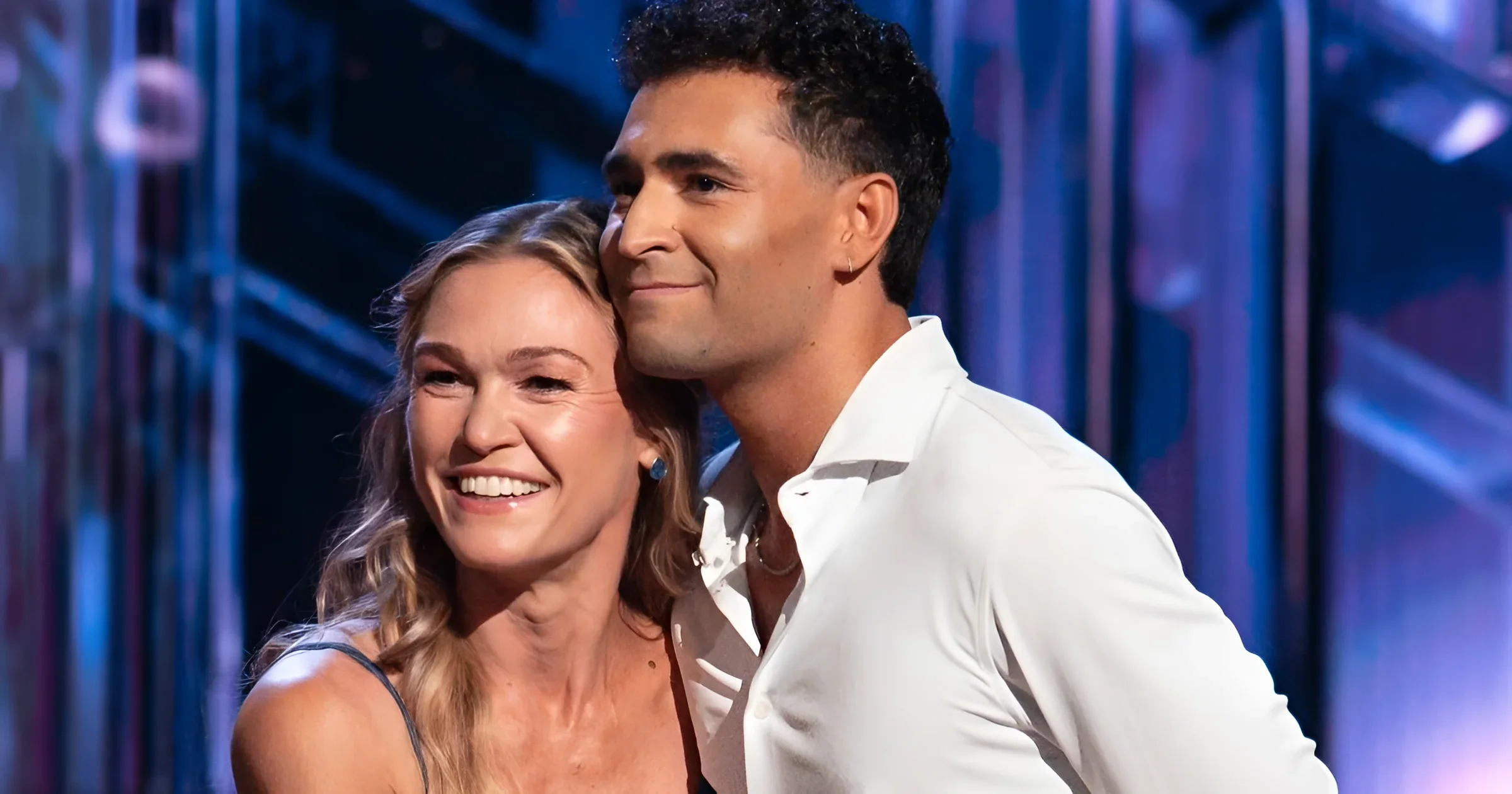
Julia Stiles is no longer fighting for the Mirrorball Trophy on “Dancing With the Stars,” but the bond with her dance partner Ezra Sosa is now literally set in stone—or rather, under the skin. The actress left the show after a recent Disney-themed episode, but the pair decided not to let the experience go, choosing instead to capture it in ink. And this decision, while seemingly simple, actually hits on one of the most notable shifts in modern tattoo culture: tattoos are increasingly becoming not just body decorations, but a way to record an emotional story that doesn’t fit into any interview.
Eight Stars on the Wrists
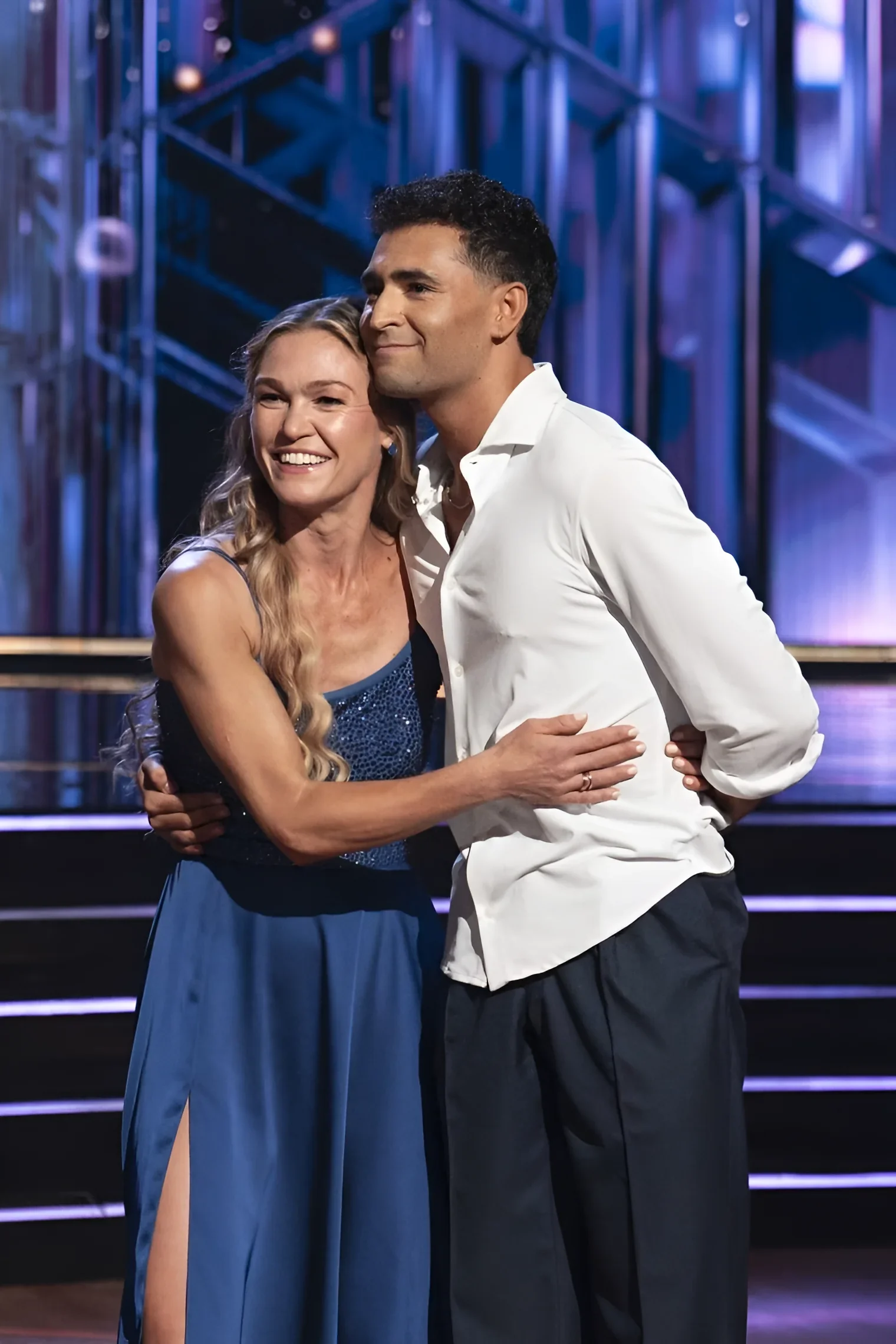
On November 5, Ezra Sosa posted a photo of their shared tattoos on Instagram and explained their meaning. Both now have a collection of small stars on their wrists—one for each time they performed together on stage. In total, there are eight figures, representing exactly how many dances the pair completed together during the season. Sosa captioned the post succinctly: “one star for every time we danced together.”
It is worth pausing here, because the choice of location and scale speaks volumes. Minimalist marks on the wrist are currently one of the top requests in the tattoo industry. Such works do not scream for attention, do not require complex care, and do not turn into a “life-long tattoo” in the daunting sense. They are closer to a tattoo journal: each star is a date, an event, a person. For the viewer, it reads like an open book, and for the wearer, it acts as a personal counter of important moments. This is precisely why matching and shared tattoos in a minimalist format are so popular among those who want to mark a friendship or professional closeness without resorting to loud symbols.
Rib Tattoos as a Hidden Code
But the story doesn’t end with the wrists. Sosa added an image of a chair to his ribs—not just decor, but a reference to Julia Stiles’ iconic audition scene in the 2001 film “Save the Last Dance.” In response, the actress got the words “diva check” tattooed on her ribs. According to Sosa, this was their inside joke: it was exactly how he would ask her how she was feeling every day.
From an expert perspective, this approach is very precise. Rib tattoos are one of the most intimate and “hidden” zones. They are not visible in everyday clothing, they are not intended for prying eyes, and therefore carry a purely personal, almost diary-like weight. In tattoo culture, this location has long been associated with things a person wants to keep for themselves and, perhaps, for one specific confidant. When two people get mirror or complementary tattoos on their ribs, it reads like an agreement: “we know something the audience doesn’t.” Combined with the public stars on the wrists, it creates a dual system—open and closed—which makes the entire narrative significantly deeper.
- Stars on the wrists — a public, minimalist marker of their shared journey (8 dances).
- A chair on Sosa’s ribs — a personal reference to the film “Save the Last Dance” (2001).
- The “diva check” inscription on Stiles — their daily ritual of care, recorded on the body.
An Exit That Became a Focal Point
The pair left the competition in an episode where they performed a paso doble to “Satisfied” from the musical “Hamilton.” Over their weeks-long journey, they faced both highs and lows, but by the finale, the distance between a professional partnership and a genuine bond had erased. In her post-elimination post, Stiles wrote that she danced “for that little girl inside me who stopped dancing,” and added: “We won in so many ways. Love you forever.”
A separate touch is the video where Sosa reads her a poem inspired by “10 Things I Hate About You.” The line, “I hate how you held my hand when everything fell apart,” modeled after the monologue Stiles delivers to her co-star, the late Heath Ledger, in the film, brings the actress to tears. This is no longer just a tattoo story, but an entire scene where ink, music, and film intertwine into one emotional knot.
The audience’s reaction confirms that the tattoos worked as an anchor of meaning here. One social media comment read: “This partnership means more than the scores and who wins. This is what it was all about.” And this is perhaps the essence of the new stage of tattoo culture: the body becomes a place to record not beauty for beauty’s sake, but relationships that would otherwise easily dissolve in a news feed. Stiles and Sosa simply did what more and more people are doing now—turned an important stretch of time into a sign that can be touched by hand and remembered when the screens go dark.