
The question of whether there are special, strictly recommended, or conversely, undesirable tattoo designs for people with light hair is one of the most frequent questions asked in tattoo parlors. At first glance, it seems like nothing more than a stereotype, as the choice of body art is a deeply individual process, unrelated to hair color. However, a professional perspective on aesthetics, pigmentology, and the perception of designs on fair skin allows us to assert that while there are no strict rules, there are certain stylistic and color choices that look particularly advantageous and harmonious on the complexion often associated with blondes. We will debunk myths and provide expert recommendations based on the specifics of how pigment interacts with very fair skin.
Tattoos for Blondes: Myth or Reality? Debunking Stereotypes
Let’s start with the main point: the assertion that blondes are only suited for “delicate butterflies” or “miniature flowers” is an absolute myth. A tattoo is a form of self-expression, and its scale, subject, or style should reflect the wearer’s personality, not their hair color. Nevertheless, this myth didn’t arise out of nowhere; it’s a consequence of several cultural and aesthetic factors:
- Cultural Stereotype: In popular culture, the image of a blonde is often associated with lightness, tenderness, and fragility. This automatically translates to tattoo choices, implying they should be the same – airy and delicate.
- Aesthetics of Contrast: People with light hair often have very fair skin (Fitzpatrick skin type I-II). On such skin, any design, even the most delicate and minimalist, creates maximum contrast. This allows for visual expressiveness without resorting to massive, densely filled pieces.
- Practical Aspect: Fair skin is more sensitive to UV radiation and prone to pigment fading. Choosing less dense styles (e.g., Fine Line or Dotwork) helps avoid a “heavy” look that can appear with uneven fading of dense black ink.
Thus, we are talking not about rules, but about recommendations for harmonization of the design with the wearer’s complexion.
Why the Myth of “Special” Tattoos for Blondes Arose: Historical Context and Fashion Influence

To understand the persistence of this stereotype, we need to look at the history of tattoo fashion in recent decades. In the early 2000s, when tattoos began to actively enter the mainstream, especially among women, the trend was towards miniaturization and discretion. Celebrities, who were often blondes (e.g., Britney Spears or Paris Hilton), chose tiny, barely noticeable designs – stars, hearts, hieroglyphs on wrists, shoulder blades, or lower back. These tattoos became synonymous with “feminine” or “delicate” tattoos.
The Connection Between Type and Subject Line
During this period, an unspoken division occurred:
- Traditional (Old School) and Realistic (Realism) tattoos, requiring high color density and large volumes, were more often associated with a “tougher” or “darker” image, traditionally linked to brunettes or people with darker skin.
- Delicate, floral, or watercolor motifs, on the other hand, fit perfectly with the image of a “light” and “airy” type.
The stereotype solidified: if you are fair and delicate, you are “supposed” to have delicate, barely noticeable designs. Today, thanks to the development of styles (especially Fine Line and Single Needle), artists can create large-scale yet incredibly elegant works, completely destroying this outdated stereotype. But the influence of fashion from 20 years ago is still palpable.
Complexion and Tattoos: How Skin and Hair Color Affect Design Perception

The key factor when choosing a tattoo for blondes is not hair color, but the fair skin tone that often accompanies this complexion. Skin types I and II are characterized by low melanin content, which has several critically important consequences for tattoos:
1. Maximum Contrast and Visual Sharpness
On very fair, almost porcelain skin, black pigment appears maximally saturated and contrasting. This is a double-edged sword:
- Advantage: Even the thinnest lines and smallest details remain sharp and easily readable. The Fine Line style was literally created for such a canvas.
- Disadvantage: Dense, massive fills can look too “heavy” and even crude. This requires the artist to be skilled in working with gradients and using techniques that soften visual weight (e.g., Dotwork or Whip Shading).
2. Specifics of Colored Pigment
Fair skin allows colored pigments to appear maximally bright, as they are not “muffled” by background melanin. However, there are nuances:
- Warm Tones (red, yellow, orange): Can look excessively saturated and sometimes even cause a visual sensation of inflammation, especially immediately after healing.
- Cool Tones (blue, purple, green): Look crystal clear on fair skin. They are ideal for creating delicate watercolor effects or realistic nature scenes.
- White Pigment: On fair skin, white pigment often looks less contrasting than on darker skin. It can quickly blend with skin tone, giving the tattoo a “ghostly” or light scar effect. If a blonde chooses a white tattoo, they must be prepared for its minimal visibility and rapid fading.
3. The Problem of “Fading” and Blueness
Fair skin has a thinner epidermis, and the pigment lying in the dermis can eventually acquire a slight bluish or greenish tint (Tyndall effect). This is especially noticeable if the tattoo is done too deep. For blondes, choosing high-quality black pigment and impeccable artist technique is critically important to minimize the risk of “blueness” years later.
Popular Tattoos Among Blondes: Analysis of Trends and Preferences
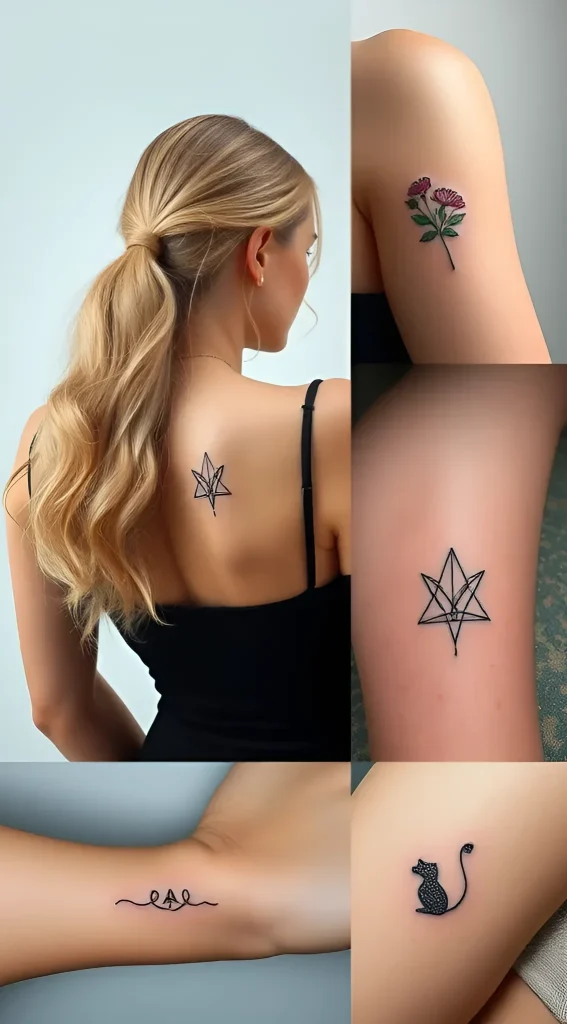
Analysis of social media, leading artist portfolios, and tattoo studio statistics shows that people with fair complexions have a pronounced preference for certain styles and subjects. These preferences are dictated by a desire for harmony and maximum aesthetic impact from a fair “canvas.”
Trending Styles Based on Contrast
Most often, blondes choose works that emphasize the purity of the skin and contrast, avoiding heavy fills:
- Fine Line: This is undoubtedly the leader. A tattoo done with a thin needle (Single Needle) looks like delicate graphics or a pencil drawing. On fair skin, it retains its clarity without overwhelming the look.
- Dotwork: A technique that uses dots to create shadows and gradients. It’s ideal for blondes as it allows for soft, velvety transitions from black to light, avoiding dense fills and harsh outlines.
- Minimalism: Geometric shapes, symbols, thin inscriptions. Fair skin allows even the smallest elements to be noticeable and significant.
- Blackwork (with negative space): If Blackwork is chosen, the “negative space” technique (where the design is created by leaving clean skin areas) is often used, giving the work an airy feel despite the abundance of black pigment.
Popular Subjects
In terms of subject matter, there are also trends towards “light” and natural motifs:
| Subject | Symbolism and Context | Aesthetic Advantage on Fair Skin |
|---|---|---|
| Floral motifs (thin branches, lavender, wildflowers) | Tenderness, growth, cyclical nature, fragility of life. | Delicate outline and the possibility of using soft pastel shades. |
| Astronomical symbols (moon, constellations) | Dreaminess, connection to the cosmos, feminine energy. | Ease of execution in Dotwork or Fine Line techniques, creating a “scattered” effect. |
| Insects (butterflies, dragonflies) | Transformation, lightness, freedom. | Possibility of detailed wing work using thin lines and shading. |
| Lines and geometry | Order, balance, structure. | Perfect readability of geometric shapes due to high contrast. |
Tattoo Styles That Look Advantageous on Fair Skin: Artist Recommendations

Style choice is 90% of success. On fair skin, it’s not so much what you depict, but how it’s depicted that matters. Professional tattoo encyclopedists highlight several styles that are most effective on a light background.
1. Graphics and Fine Line (Single Needle)
This is the gold standard for fair skin. The artist uses a single or a very thin cluster of needles to create a design that looks like a high-quality engraving or sketch. The main advantage is preserving the “purity” of the skin around the design, preventing a visual “dirty spot” effect with fading or aging of the tattoo.
2. Whip Shading
A technique where shading is created not by dense coloring, but by a series of quick, “whipping” needle movements. This leaves a lot of clean space between pigment dots. On fair skin, Whip Shading creates a very soft, smoky gradient that perfectly imitates halftones, unlike a dense, heavy gradient that can look too harsh.
3. Pastel and Watercolor Style (with caution)
Fair skin is an ideal background for delicate, pastel shades that can simply “get lost” on darker skin. However, watercolor requires special attention:
- Risk of Bleeding: Watercolor tattoos without a clear outline can look blurry over time. On fair skin, where contrast is higher, this effect can become more noticeable.
- Recommendation: If you choose watercolor, opt for works where pastel splashes are surrounded by thin, clear outlines (e.g., in Sketch Style) to ensure the design’s longevity and readability.
4. Microrealism and Jewelry Style
Thanks to fair skin’s ability to perfectly display contrast, blondes can confidently choose microrealism (e.g., a tiny animal portrait or a miniature landscape). Such works require incredible precision and fine needlework, but the result on a light background looks like a true piece of jewelry.
Best Tattoo Placement on a Blonde’s Body: Emphasis on Aesthetics and Harmony
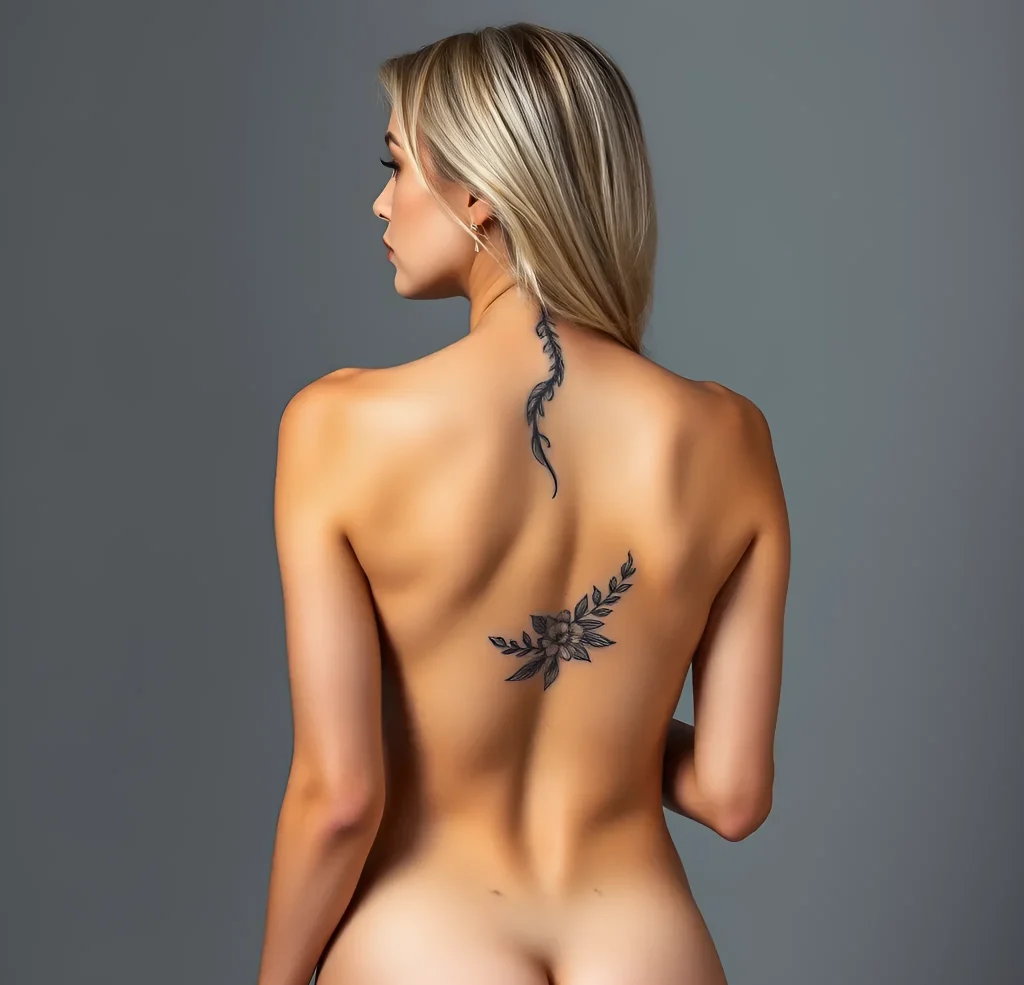
Tattoo placement on fair skin has special significance. Since fair skin is more prone to sunburn and, consequently, pigment fading, placement is often chosen based on two criteria: protection and harmony with the overall look.
Zones of Maximum Harmony (for delicate works)
These areas are ideal for Fine Line, Dotwork, and miniature tattoos, which blondes often choose when aiming for elegance:
- Inner Wrist: The skin here is very thin and fair, ensuring maximum line clarity. Tattoos here look like a delicate bracelet or an elegant symbol.
- Collarbones and the area beneath them: An ideal location for floral motifs or birds. An exposed area that can nevertheless be easily covered by clothing from direct sun.
- Behind the Ear and Nape of the Neck: Areas where a tattoo adds mystery. Thanks to the light background, even the smallest symbols (e.g., stars or crescents) are easily readable.
- Side of the Ribs (under the bust): A popular spot for long inscriptions or delicate branches. The skin here is protected from the sun, ensuring the longevity of colored pigment.
Specifics of Working with Large Areas
If a blonde chooses large-scale works (sleeves, back), the following should be considered:
Sleeves: On fair skin, sleeves done in Blackwork or Old School style can look very dense and “heavy.” Artists often recommend using “negative space,” incorporating more Whip Shading or Dotwork elements to avoid the effect of a solid black mass. Using contrasting but not too dark shades in realism will also help maintain a light look.
Calves and Thighs: These are areas more exposed to solar radiation. For fair skin, enhanced care and constant SPF use are necessary here. Large, but graphic works (e.g., mandalas or geometric patterns) look very striking, as the clarity of the lines is maximally emphasized.
Tips for Blondes When Choosing a Tattoo: From Sketch to Aftercare

Choosing a tattoo for a fair complexion requires a special approach to ensure longevity and aesthetic harmony. Follow these expert recommendations.
1. Consultation on Pigment and Contrast
Don’t chase pure black: Discuss with your artist the possibility of using pigments with a softer, graphite shade if you are concerned that pure black will look too harsh. Often, diluted gray shades are used to achieve a soft effect, which looks like perfect shading on fair skin.
Color Testing: If you are planning a colored tattoo, ask your artist to show you how the chosen pigment will look on your skin. Due to low melanin content, the color on fair skin can appear brighter than on samples.
2. Choosing an Artist and Style
Specialization in Fine Line: If you’ve opted for thin, delicate works, look for an artist who specializes specifically in Fine Line and Single Needle. Working with the finest needles on fair skin, which is prone to bruising, requires a special, light touch and perfect equipment calibration.
Avoid unnecessary “filling”: For blondes, the principle of “less pigment – more air” often works better. Avoid styles that require maximum fill density, unless it’s a conscious artistic choice.
3. Tattoo Aftercare on Fair Skin (Critically Important)
Fair skin is more vulnerable to UV radiation, which is the main enemy of tattoo longevity.
- SPF 50+ is your best friend: After the tattoo has fully healed, if it’s on an exposed area of the body, you must use sunscreen with a protection factor of at least 50. This is not a recommendation, but a strict rule for Fitzpatrick skin types I-II.
- Avoid tanning beds: Artificial UV radiation destroys pigment faster than natural sunlight. For blondes who often visit tanning beds to maintain their tan, this can lead to rapid yellowing of white/yellow shades and fading of black.
- Moisturizing: Fair skin is often drier. Regular moisturizing helps keep the skin healthy and the pigment vibrant.
Frequently Asked Questions (FAQ) About Tattoos for Blondes
1. Is it true that fair skin rejects colored pigment faster?
No, this does not directly depend on hair or skin color. The speed of pigment rejection depends on the quality of the pigment, the depth of its introduction, and individual immune system characteristics. However, on fair skin, any, even minimal, fading becomes noticeable sooner than on darker skin. Therefore, aftercare and sun protection play a decisive role here.
2. Can tattoos on fair skin look “dirty” over time?
Yes, but only if the work is done poorly. If the artist introduces the pigment too deep (into the fatty tissue), it leads to a “blur” effect (blurriness). On fair skin, where contrast is high, this effect is more noticeable and looks like a bluish or greenish stain. Choosing Fine Line or Dotwork styles, where pigment is applied more delicately, minimizes this risk.
3. Should blondes choose white ink?
White ink is a very specific choice. On very fair skin, it provides minimal contrast and can look like a light scar or mark. It requires frequent touch-ups and fades very quickly. If you want to achieve a “barely noticeable” tattoo effect, this might be an option, but for a long-lasting, clear design, it’s better to choose ultra-thin black lines.
4. How to choose a sketch if I have very light hair and skin?
Pay attention to sketches that use negative space. This is when part of the design remains as clean skin. Such works (e.g., Blackwork with ornaments or realism with uncolored highlights) will harmonize maximally with your complexion, using fair skin as part of the composition.
Interesting Facts About Tattoos and Complexions
While we assert that tattoo choice is a matter of personal preference, there are interesting statistical and physiological patterns related to complexion:
- The “Porcelain Skin” Phenomenon and Detail: Artists working in the microrealism genre often prefer working with fair skin because it allows for maximum detail. On darker skin, the finest lines can be absorbed by melanin.
- Popularity of Red and Burgundy: On fair skin, especially with cool undertones, red and burgundy pigments can look extremely saturated and dramatic. This is why these colors are often used by blondes for accents in floral tattoos (e.g., roses or pomegranates).
- Connection to Celtic Motifs: Historically, Celtic and Scandinavian peoples, among whom fair complexions are prevalent, actively used tattoos. These designs (interlaces, runes) were often done in black or dark blue pigment. Their graphic and linear nature is ideal for fair skin.
- Vulnerability to Laser Removal: Fair skin and light hair (if present in the removal area) complicate the process of laser tattoo removal. Lasers “see” dark pigment on a light background best, but for people with skin types I-II, more careful laser settings are required to avoid burns and scarring.
In conclusion, choosing a tattoo for a blonde is not a limitation, but rather an opportunity to leverage the unique features of their complexion. By opting for styles that play on contrast and clean lines, you can create a work of art that will look fresh and elegant for years to come.