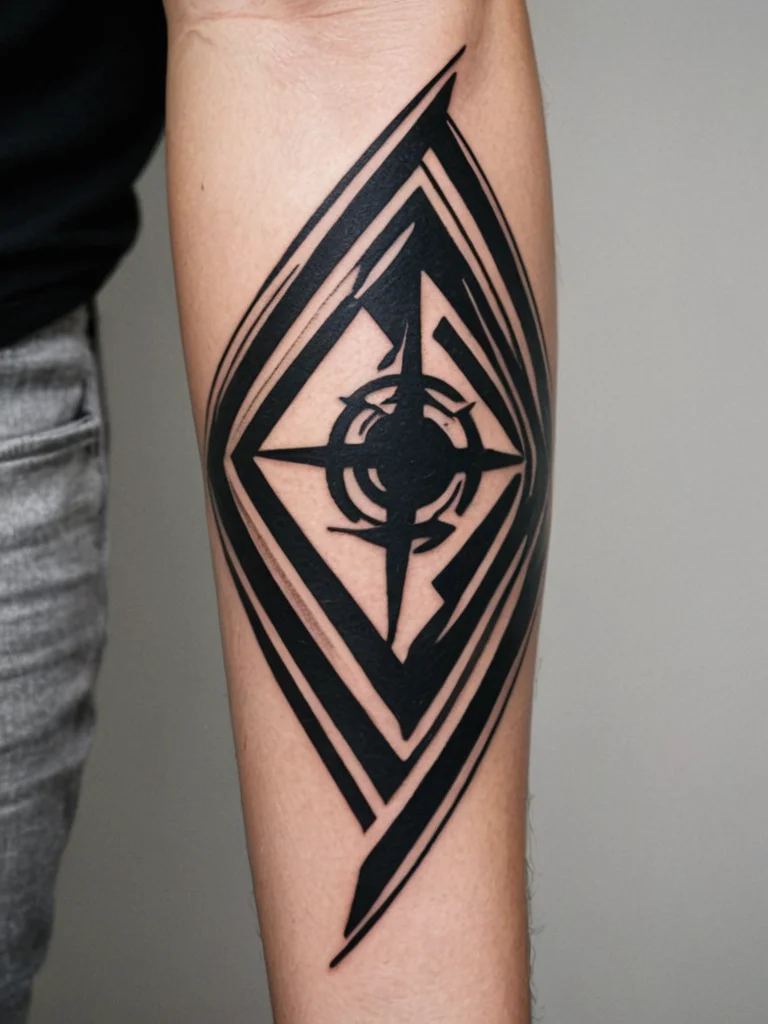
Hello, friends! This is tatufoto.com, and today we’re going to talk about something you might not have thought about before, but which is already buzzing in the tattoo community. We’re talking about trends that make skeptics wrinkle their noses and enthusiasts rush to the studio. As someone who has seen a lot of diverse tattoos in my time, from classics to avant-garde, I decided to figure out: where do these strange trends come from, and what do they even mean? Well, are you ready to dive into a world without outlines, textures, and… possibly, meaning? 😉
“Boundaries of the Permissible”: When the Outline Became Enemy #1
Let’s start with the main culprit of today’s discussion – the absence of an outline. I remember a time when a tattoo without a clear outline seemed like a mistake. A tattoo artist who didn’t go around the edge with a black needle could cause a client’s fair suspicion: would they be able to handle it? The outline is the foundation, the framework that holds the shape, gives clarity, and ensures durability. It, damn it, makes a tattoo recognizable for ages!
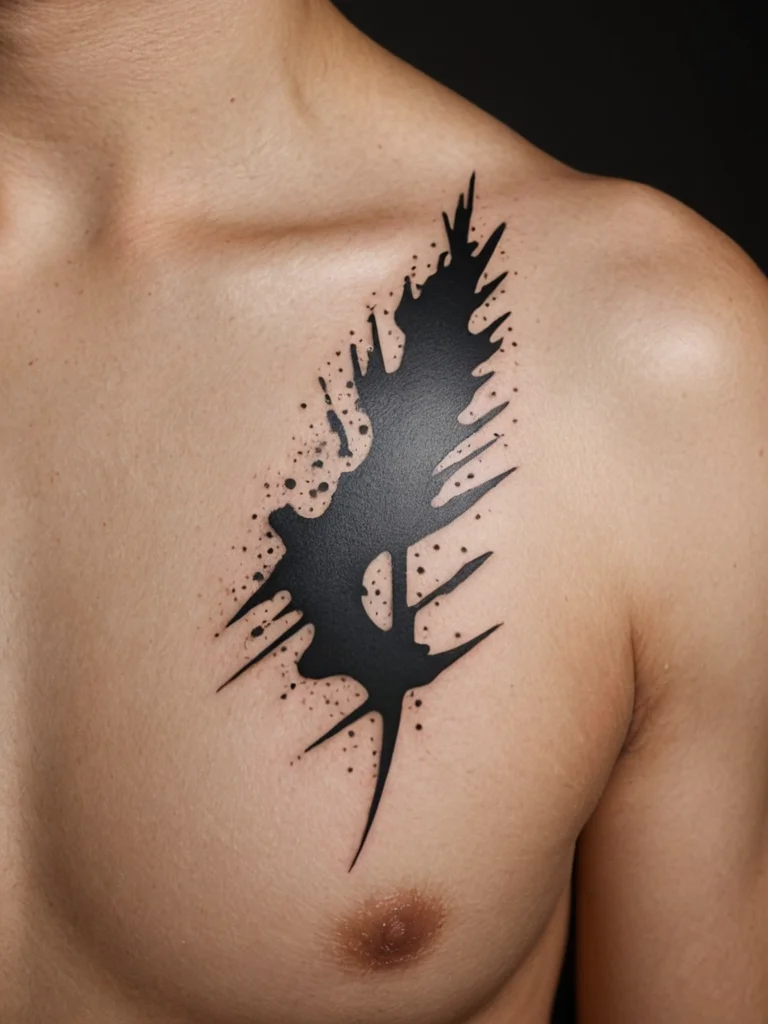
But times are changing. And now, on Instagram and Pinterest, works where the image seems to be drawn with shadows, gradients, and soft color transitions are increasingly appearing. This isn’t always bad, no. In watercolor style, for example, the absence of a hard outline is part of the aesthetic. But when we talk about realism, graphics, or traditional styles, where the outline plays a key role, its disappearance looks… well, let’s say, ambiguous. Especially when it’s done for hype, not for a conscious artistic decision. It seems to me that many artists, trying to stand out, experiment in ways that are not always justified. And here’s where it gets interesting: where is the line between innovation and simply a lack of skill? I’ve seen works where the absence of an outline made the image blurry, inexpressive, as if it would fade away at any moment. This is, of course, sad. But there’s also the other side of the coin, where artists masterfully use shadows and color, creating the effect of a “living” image without a single black line. The question here is how durable such an approach is and how much it corresponds to the original idea.
Hype on “Facelessness”: Tattoos That Are Afraid to Be Themselves
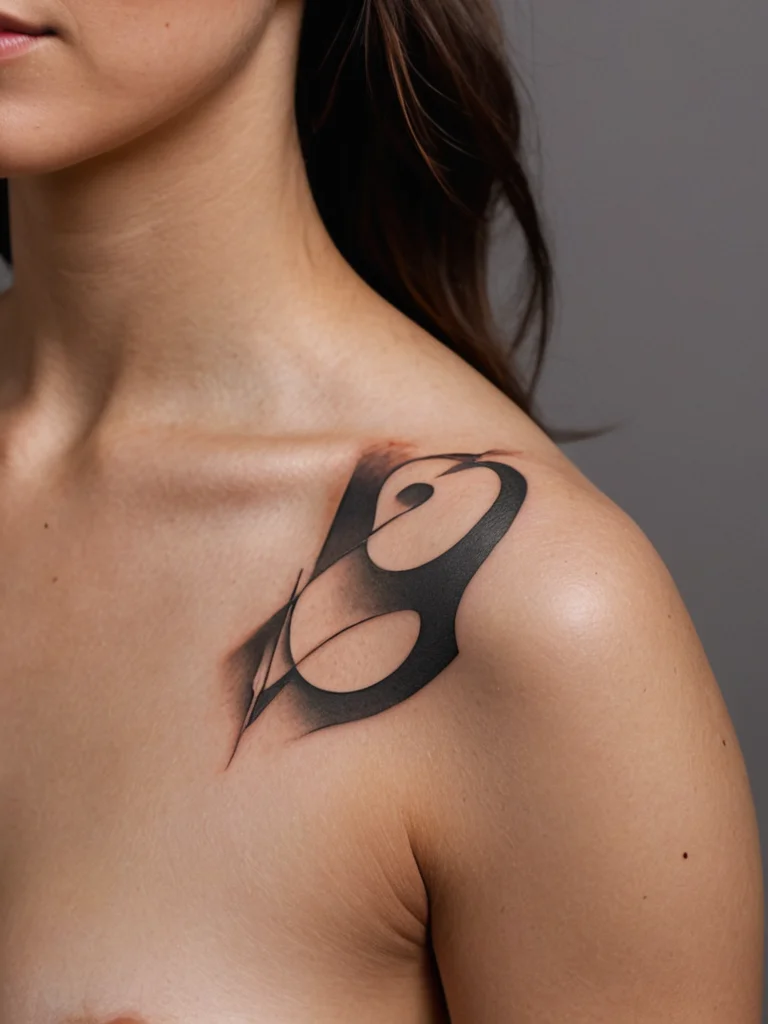
Continuing the theme of the absence of outlines, we cannot fail to mention another strange trend that, in my opinion, is closely related to it – so-called “faceless” tattoos. I’m talking about those works where figures are depicted, but without any facial features. No eyes, no nose, no mouth. Yes, sometimes it looks stylish, minimalist, even mysterious. But when it becomes a mass trend, you start to wonder: what are we actually trying to say with these tattoos?
In my experience, a tattoo is often a way to express oneself, one’s thoughts, feelings, one’s identity. And when we deliberately erase facial features, it’s like saying, “I don’t want to show who I am.” Or perhaps it’s an attempt to make the tattoo as universal as possible, so that it fits any look and mood? It seems a bit paradoxical to me. We go to get a tattoo to stand out, to add individuality, and then we get a “nobody” tattooed on ourselves. Of course, there are also very conscious artistic decisions. Artists often use abstract forms and shadows to evoke certain emotions in the viewer, to make them complete the image in their imagination. But when it turns into a conveyor belt, when similar “faceless” figures appear at every turn, it somewhat devalues the idea. It’s like listening to the same song on the radio ten times a day – it starts to get annoying. I would advise everyone who wants to get such a tattoo to think: what exactly do you want to put into this “nobody”? Maybe it’s worth adding at least a hint of character, emotion, individuality?
“Art for Art’s Sake”: Experiments with Texture and Form
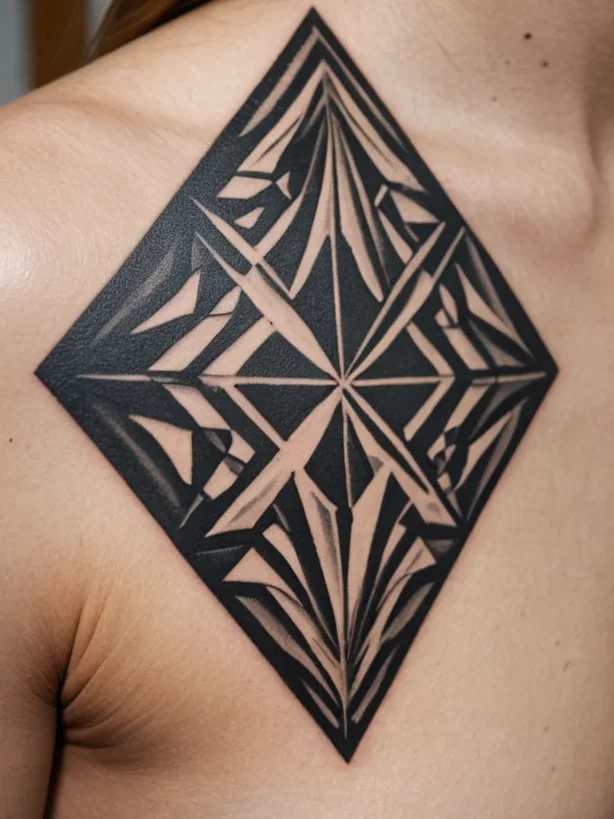
And here we come to, perhaps, the most interesting and ambiguous trend – experiments with texture and form, which sometimes reach complete absurdity. Forget about the usual outlines, shadows, and gradients. Today, “textured” tattoos that imitate various materials are in vogue: wood, stone, metal, animal skin… The list can go on and on.
At first glance, it might seem cool. Someone gets a sleeve that looks like the bark of an ancient oak, someone else gets a tattoo imitating a marble statue. Technically, it’s very difficult, and I take my hat off to the artists who can achieve this. But let’s be honest: often these textures look… well, just like an attempt to surprise. As if the artist is saying, “Look, I can make your skin look like rough stone!” But why? What’s the point, besides the purely visual effect? It seems to me that a tattoo should not only look beautiful but also carry some meaning, some story. When an artist focuses solely on texture, forgetting about composition, harmony with the body, durability – it turns into an end in itself. It’s like building a house that looks like a giant piece of cheese. Beautiful? Possibly. Practical? Unlikely. I’ve seen examples where such textured tattoos looked like just a “stain” that would start to blur and lose its “texture” in a couple of years. Therefore, before chasing fashion, it’s worth considering: how relevant will such a tattoo be in 10-20 years? Won’t you get tired of your body looking like a sample of building materials?
“New School” or “Anything Goes”? Experts’ View
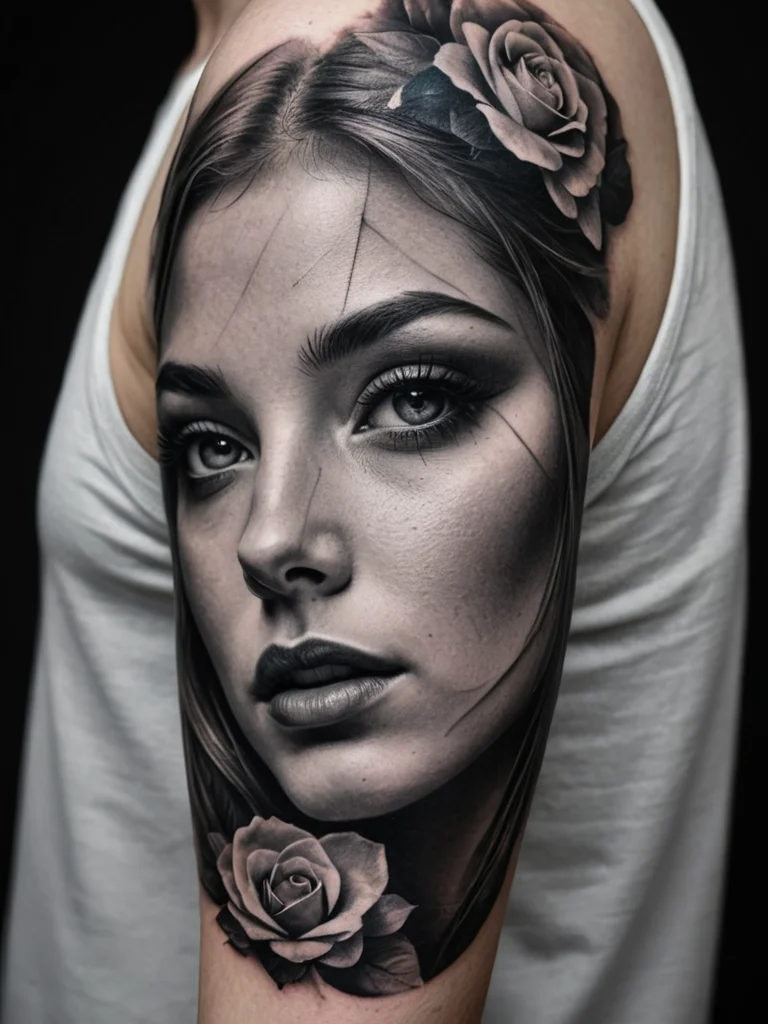
When I hear about “new school,” I always have mixed feelings. On the one hand, it’s a real breakthrough, an expansion of the boundaries of what’s possible in tattooing. Bright, exaggerated forms, acid colors, distorted perspective, cartoonishness bordering on the grotesque – all this came from graffiti and street art, and it undoubtedly has a right to exist.
But, it seems to me, “new school” often balances on a very thin line between genius and complete kitsch. And the main problem here, as with the absence of outlines, is again, the loss of clarity and durability. I’ve seen works in this style that looked simply stunning: dynamic, lively, full of energy. But I’ve also seen others that looked like just a collection of bright spots, without any logic or structure. Artists who truly master this style know how to work with color, form, and distortion of proportions so that it looks cohesive and expressive. They understand that even in “anything goes,” there are rules, laws of composition. But when this style falls into the hands of inexperienced artists who simply try to copy others’ ideas without understanding the essence, you get… well, you get the idea. It’s like taking expensive paints and canvas but not knowing how to paint. And here the question arises: where does “new school” as art end and “anything goes” simply begin? It seems to me the line is very thin. And it’s very important that behind the external brightness and shock value, there is real talent and an understanding of what you are doing. Otherwise, it’s just a bright spot that may become faded and indistinct in a couple of years.
“Don’t Say ‘Emptiness,’ Say ‘Air’: How Not to Be Disappointed in a Trend”
So, we’ve gone through what I consider the most interesting and controversial trends in modern tattoo culture. Absence of outlines, “faceless” figures, “textured” experiments, “new school”… What to do with all this? How not to get lost in this variety and not get a tattoo you’ll regret later?
First, think. Don’t chase fleeting hype. If you like a trend, try to understand why it appeals to you. What is its essence? What idea does it carry? Try to find an artist who doesn’t just copy fashion trends but truly understands their meaning and can implement them at a high artistic level.
Second, find an artist. This is probably the most important advice. A good artist is not someone who does the “trendiest” tattoos, but someone who can bring your idea to life with quality, safety, and consideration for all nuances. Look at portfolios, read reviews, communicate in person. If you’re offered a tattoo without an outline that should essentially have one, ask why. Make sure the artist understands how this will affect the durability and readability of your tattoo.
Third, be bold, but reasonable. Experiments are great, they drive progress. But remember that a tattoo is for life (or until laser removal, which is also not always pleasant). If you want to do something unusual, for example, a tattoo with an emphasis on texture, make sure it will look good not only immediately after the session but also in 5, 10, 20 years. Sometimes it’s better to leave room for “air” than to fill it with something that will quickly lose its relevance.
And remember: the most important thing is that you like your tattoo. That it is meaningful, high-quality, and reflects your individuality. And fashion… fashion, as we know, comes and goes. But a good tattoo remains.