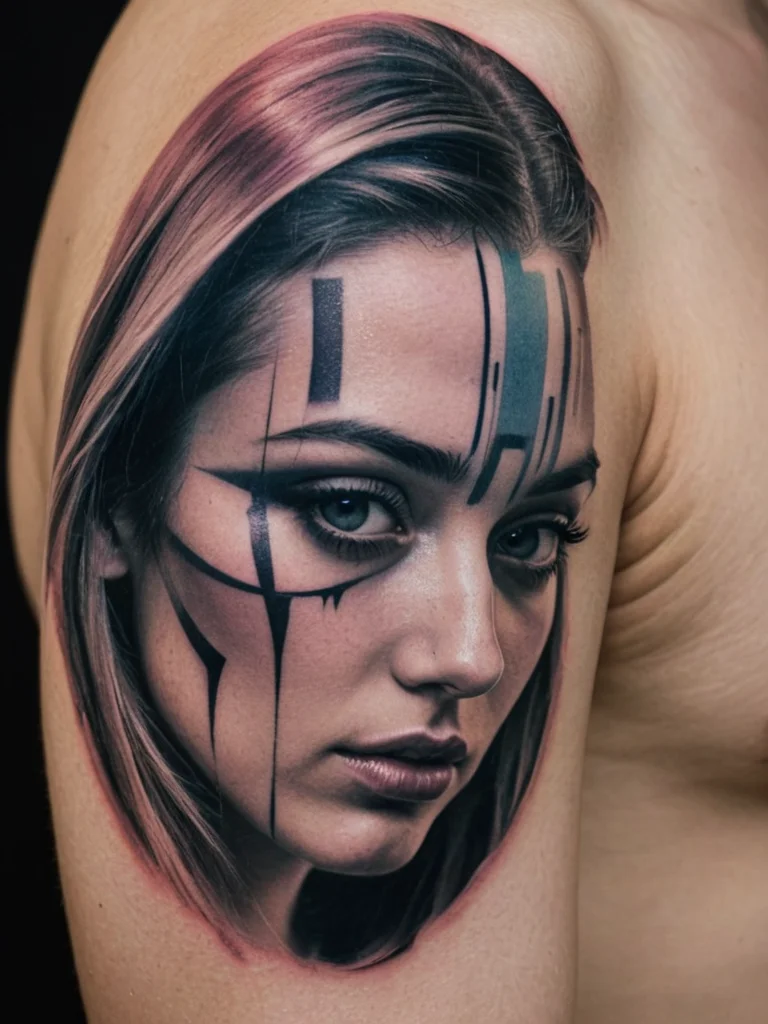
Imagine this: you’re looking at someone’s tattoo, and suddenly it feels like your vision is glitching. No, it’s not an optical illusion or fatigue. It’s a tattoo consciously done in the style of a video game ‘bug.’ Such irony: to transfer a digital artifact into the real world, onto human skin. Sounds strange? Perhaps. But it’s very interesting, and I’ll tell you why.
Glitches in Reality: Tattoos That Break the Matrix
In the world of tattoos, where it seems everything has already been invented, new currents and trends constantly emerge. One of the most unusual is tattoos that imitate graphic errors, ‘glitches,’ or ‘bugs’ often found in video games or digital images. These can be ‘torn’ textures, shifted layers, pixel artifacts, or even complete ‘crashes’ of image fragments. In my experience, such works attract attention with their originality and provocation. They seem to challenge the usual perception of a tattoo as a perfectly smooth and clear image.
Why do people get such tattoos? There can be many reasons. Some express their love for video games and digital culture this way. For some, it’s a way to declare their individuality and rejection of templates. And some simply find it amusing and original. It seems to me that the element of surprise and humor is important here. When a tattoo looks like an accidental error, but is a conscious artistic technique, it creates an interesting effect.
Pixelated Flesh: Techniques and Styles Creating the ‘Bug’ Effect
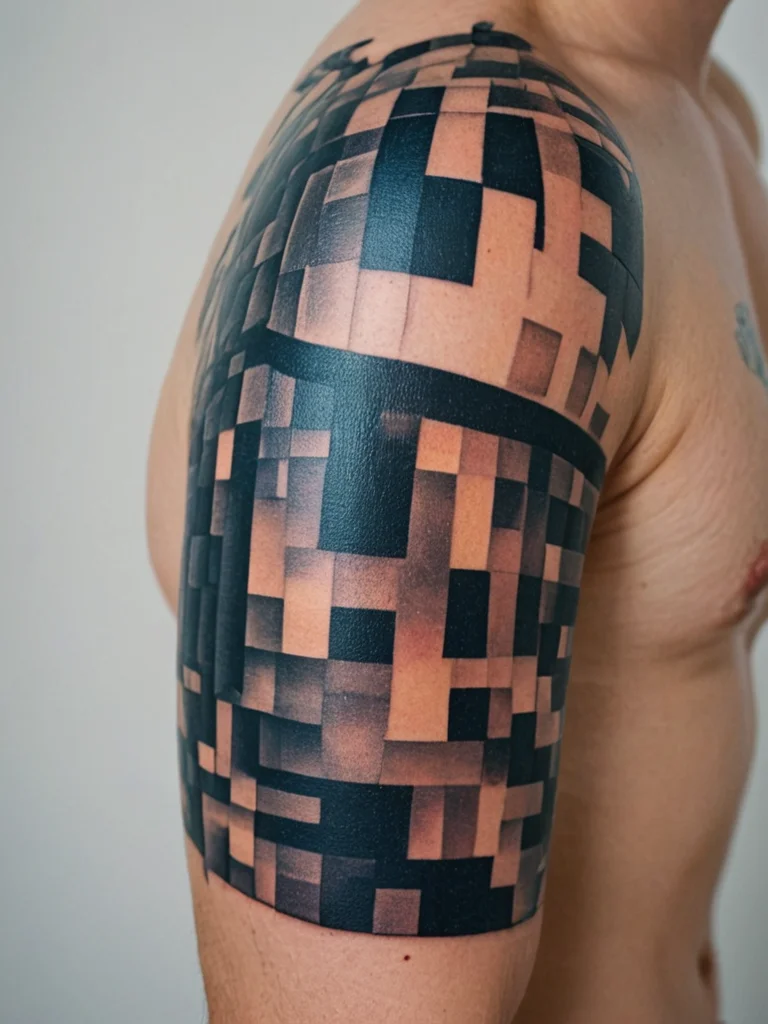
How can you achieve that ‘bug’ effect on the skin? There are several main techniques and styles:
- Pixelation. This is the most obvious method. The image is broken down into large pixels, like in old games or at low resolution.
- Glitch Art. This style imitates distortions that occur during digital signal failures. These can be lines, color shifts, compression artifacts, and more.
- Layer Shifting. The effect is achieved by overlaying several images with an offset, as if the image has ‘layered.’
- Perspective Distortion. Breaking the usual perspective, distorting lines, creating impossible figures – all this helps create a sense of unreality and ‘glitchiness.’
- Tears and Fragmentation. The image looks as if it’s torn into pieces or consists of separate, unconnected fragments.
It’s important to understand that creating a ‘bug’ style tattoo requires the artist not only to have good tattoo technique but also to understand the principles of digital graphics and visual effects. In my experience, it’s best to choose an artist who already has experience in this style, otherwise, the result can be unpredictable.
Frozen Textures and Artifacts: A Gallery of the Creepiest Tattoo Glitches

Here, we can provide examples of specific tattoos illustrating various techniques and styles. For instance, a tattoo of a video game character with part of their face pixelated, or a tattoo of a flower that looks like its texture has ‘frozen’ and hasn’t loaded completely. Or, say, a portrait of a person that looks like their image has undergone heavy compression with artifacts. It seems to me that the more unexpected and absurd the ‘glitch’ looks, the more interesting the tattoo is.
Sometimes you encounter tattoos that imitate program code errors. These can be meaningless symbols, snippets of code lines, or error messages. Such tattoos look particularly creepy and make you think about the nature of reality and digital illusion.
However, it’s important to note that ‘creepiness’ in this context is more of a compliment. Such tattoos don’t aim to be beautiful in the traditional sense of the word. They aim to be memorable, unusual, and evoke emotions.
Ctrl+Z in Real Life: Can a Tattoo Error Be Fixed and How?
What if a ‘bug’ style tattoo turns out not to be as cool as you expected? Or if you simply change your mind and want to get rid of the tattoo? There are several options:
- Laser Removal. This is the most effective, but also the most expensive method. The laser destroys the tattoo pigment, and it’s gradually eliminated from the body.
- Camouflage. The tattoo can be covered up with another, more complex and darker tattoo. However, this is not always possible, especially if the tattoo is large and bright.
- Surgical Removal. This method is used only in extreme cases, when the tattoo is very small and located in an area where the skin stretches easily.
In my opinion, the best way to avoid disappointment is to carefully choose an artist and plan the tattoo design in advance. Don’t get a tattoo on impulse or due to fleeting fashion. Make sure you truly understand what you want on your body and that the chosen artist can execute it with quality.
And, of course, don’t forget that a tattoo is for life (or at least for a very long time). Therefore, this issue must be approached responsibly and consciously.
The Art of Error: Why Tattoo Bugs Are a New Trend?
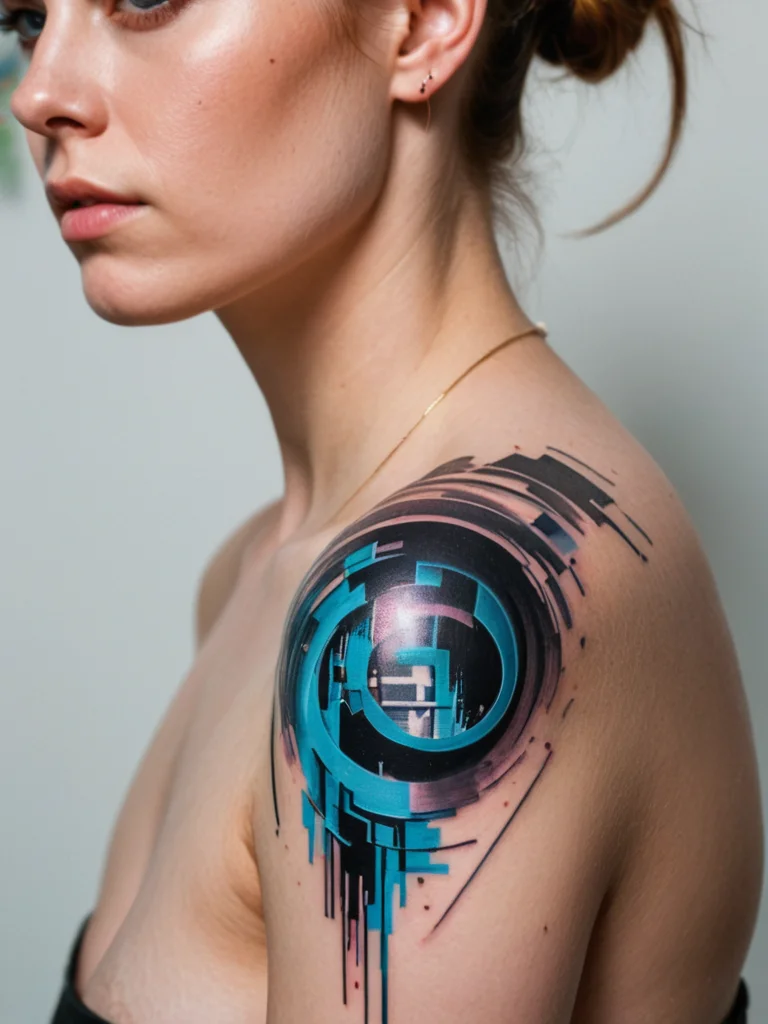
Why are ‘bug’ style tattoos becoming increasingly popular? It seems to me that this is due to several factors.
Firstly, it’s a reaction to the oversaturation of the tattoo market. When everyone around is doing roughly the same thing, you want to stand out and do something unusual. ‘Bug’ style tattoos are a great way to attract attention and declare your individuality.
Secondly, it’s a reflection of our digital age. We live in a world where computers and digital technologies play a huge role in our lives. ‘Glitches’ and ‘bugs’ are an integral part of this world, and ‘bug’ style tattoos are a way to comprehend and accept this reality.
Thirdly, it’s simply fun and original. Tattoos don’t necessarily have to be serious and profound. Sometimes they can just be funny and bring a smile. And ‘bug’ style tattoos are a great way to lift your mood and that of those around you.
In conclusion, I want to say that ‘bug’ style tattoos are an interesting and promising trend that, in my opinion, will continue to develop. If you want to get an unusual and memorable tattoo, this is an excellent option. But remember, the most important thing is to choose a good artist and carefully consider the design. And then your tattoo will bring you joy for many years to come.