
Preparing the skin for a tattoo session is not just a formality, but a critically important stage that determines the sterility of the process, the quality of pigment application, and the speed of subsequent healing. Hair removal from the working surface is necessary to ensure unimpeded needle glide, reliable stencil fixation, and minimization of infection risk. However, the question of which hair removal method is preferable – traditional shaving or chemical depilation with cream – sparks much debate among both clients and novice artists. As professional tattoo encyclopedists, we will examine both approaches from the perspective of their impact on epidermal integrity, hygiene, and the final result of the work.
Skin Preparation for Tattooing: Shaving or Depilatory Cream – What to Choose
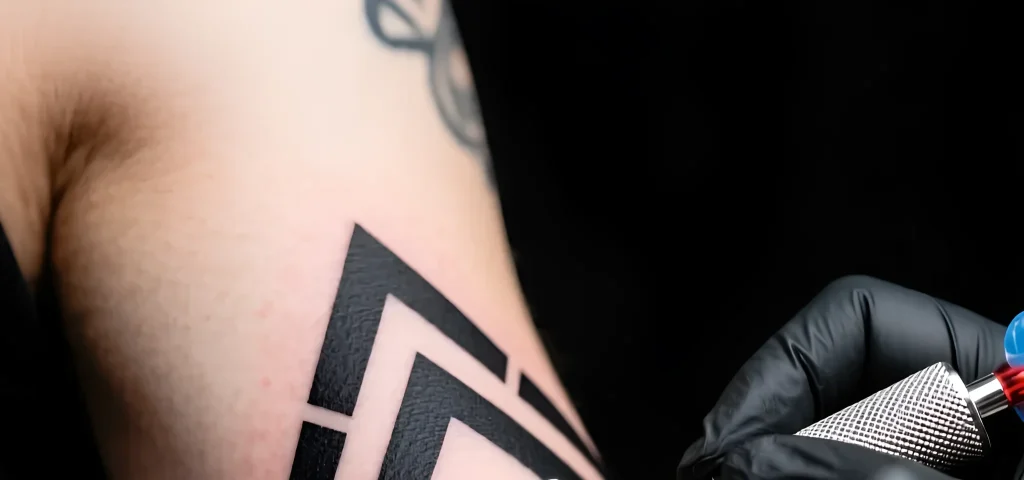
Regardless of your chosen method, the main goal of preparation is to create a perfectly smooth, clean, and undamaged skin surface. The presence of hair, even the finest, can cause serious problems: it can clog the cartridge or needle, obstruct precise sketch transfer, and, most dangerously, serve as a reservoir for bacteria that can be introduced into an open wound during tattooing.
The choice between mechanical (shaving) and chemical (cream) hair removal should be based on three key criteria:
- Minimal epidermal damage: Any micro-trauma, cuts, or chemical burns make the skin more vulnerable and painful.
- Absence of residual substances: The skin must be neutral to ensure proper stencil adhesion and exclude chemical reactions with pigments.
- Hygiene: The method must provide a maximally clean surface for subsequent antiseptic treatment.
Most professional studios believe that the final preparation should be done by the artist themselves, using new, sterile instruments. This eliminates the risk of a client arriving with already irritated or infected skin after their own careless procedures at home. However, if you want to minimize session time and prepare in advance, it’s important to know all the nuances.
Shaving Before Tattooing: Pros and Cons

Shaving is a classic, time-tested method that has been used in medicine and the tattoo industry for decades. It is the mechanical removal of hair at the skin surface level.
Advantages of Shaving
- Control and Precision: When using a disposable razor (preferably surgical or professional barber grade), the artist has full control over the process.
- Instant Results: Hair is removed completely and immediately, allowing for prompt stencil application.
- No Chemical Risks: No risk of allergic reaction or chemical burn, which can occur with creams.
- Exfoliation: Shaving provides a mild exfoliating effect, removing the top layer of dead skin cells, which promotes better stencil adhesion.
Disadvantages and Risks of Shaving
The main disadvantage of shaving is the risk of micro-trauma (micro-cuts), which can become entry points for bacteria or cause localized inflammation. This is especially true if shaving is done carelessly or with a dull blade.
- Risk of cuts and irritation: If the skin is dry or the razor is of poor quality, irritation (razor bumps) can occur, making the tattooing process extremely painful and negatively affecting healing.
- Ingrown hairs: In areas with dense or coarse hair (e.g., shins), improper shaving can lead to ingrown hairs, which will manifest during healing and can distort the design.
- Need for products: To minimize friction, gel or foam is required, the residue of which must be thoroughly removed before starting work.
Expert Tip: If you shave yourself, do so 12–24 hours before the session, using a new, sharp razor, always against the grain (for maximum smoothness) and with plenty of moisturizing gel. After the procedure, apply a neutral, unscented antiseptic.
Depilatory Cream Before Tattooing: Pros and Cons

Depilatory creams (often containing calcium or potassium thioglycolate) work by chemically dissolving the keratin bonds in the hair structure, allowing hair to be removed without mechanical action.
Advantages of Depilatory Cream
- No micro-trauma: The main advantage is the complete elimination of cuts, scratches, and mechanical irritation, making this method attractive for people with very sensitive skin.
- Long-lasting smoothness: Since the cream dissolves the hair slightly below the skin surface, the results typically last longer than after shaving.
- Convenience for large and uneven areas: Cream is easily applied to hard-to-reach areas (e.g., back of the thigh or shoulder blade) where shaving can be difficult.
Disadvantages and Critical Risks of Depilatory Cream
Despite its apparent gentleness, chemical depilation carries significantly higher risks for skin preparation for tattooing, and most professional artists strongly advise against its use.
- Chemical burns and irritation: Thioglycolates are very aggressive. If the cream is left on too long, it can cause a chemical burn, manifesting as severe redness, itching, or even blisters. Tattooing such skin is impossible.
- Allergic reactions: High risk of individual intolerance to cream components. The reaction can range from mild redness to severe dermatitis, which will cancel the planned session.
- Altered skin pH: Depilatory creams have a high alkaline pH. This can disrupt the skin’s natural acid mantle, making it more susceptible to infections and affecting the healing process.
- Residue and oily film: It is extremely difficult to guarantee complete removal of all chemical residues from pores. These residues can negatively interact with tattoo pigments, antiseptics, and, importantly, prevent reliable stencil adhesion.
Important: If you still decide to use cream, perform a patch test on a small area of skin 48 hours before the procedure and use it at least 48 hours before the session to allow the skin to fully restore its pH balance.
Shaving vs. Depilatory Cream: A Comparison Table for Clarity

To provide you with the most structured information, we have compiled a comparison table evaluating the two methods based on key parameters important for the tattoo process.
| Parameter | Shaving (Mechanical) | Depilatory Cream (Chemical) |
|---|---|---|
| Risk of micro-trauma | Moderate (depends on razor and technique) | Low (cuts are excluded) |
| Risk of chemical burn / allergy | None | High (patch test required) |
| Impact on skin pH | Minimal (if neutral soap is used) | Significant (alkaline environment) |
| Residue on skin | Low (easily washed off) | High (chemical components) |
| Epidermal integrity | Good (with proper technique) | Risk of thinning and chemical damage |
| Artist’s preference | High (easy to control final touch-ups) | Low (risk of residue and irritation) |
| Recommended preparation time | 12–24 hours before or immediately before the session | At least 48 hours before |
Expert Conclusion: To ensure maximum safety, sterility, and best stencil adhesion, shaving remains the industry standard. The risks associated with the chemical composition of creams are too high for skin that will soon be traumatized by a needle.
Recommendations for Skin Preparation Based on Hair Type and Sensitivity
Preparation should be individualized. What works for fine hair on the forearm may be unacceptable for coarse hair on the chest or shins.
1. Coarse and Dense Hair (Shins, Chest, Groin)
- Preliminary Preparation: If the hair is very long and coarse, it is highly recommended to first use a trimmer to shorten it to a minimal length (1–2 mm). This will prevent the razor from clogging and reduce the risk of irritation.
- Method: Shaving only. Chemical creams may require too long an exposure time to dissolve coarse hair, which will inevitably lead to chemical burns on the skin.
- Shaving Technique: Use a hot compress before shaving to soften the hair and open pores. Be sure to use a thick, high-quality shaving gel.
2. Fine and Light Hair (Back, Forearms)
- Method: Shaving. Although fine hair seems less problematic, it still needs to be removed for a clean stencil.
- Risk: The main risk is hypersensitivity to dry shaving. Always use moisturizing products.
3. Very Sensitive Skin (Inner Arm, Neck)
If your skin is prone to severe irritation, eczema, or rashes:
- Avoid creams: Any chemical products can cause an unpredictable reaction.
- Preference: Careful, wet shaving. If possible, ask the artist to do it at the studio, where professional, sterile disposable razors specifically designed for sensitive skin are used (often medical single-blade razors).
- Timing: If you shave yourself, do it 24 hours in advance. This will give your skin time to “calm down” before the session begins.
How to Properly Prepare Skin After Shaving or Depilation: Step-by-Step Instructions

Hair removal is only half the battle. Subsequent care is extremely important to ensure the skin is in optimal condition for tattooing.
1. Immediately After Hair Removal (If Done at Home)
- Thorough Cleansing: Immediately rinse off all traces of foam, gel, or cream with cool water. Use a mild, neutral pH soap (baby or hypoallergenic).
- Antiseptic Treatment: Wipe the treated area with an alcohol-free antiseptic (e.g., Chlorhexidine). This will prevent potential infection of micro-cuts.
- Soothing: If mild redness is observed, apply a cool compress for 5–10 minutes.
2. Skin Care During the Waiting Period (12–48 Hours)
- Moisturizing: The skin should be elastic but not oily. Use a light, unscented, hypoallergenic lotion or cream (e.g., plain panthenol). This will help restore the hydrolipidic barrier. Avoid heavy oils or petroleum jelly.
- Avoid Irritants: Do not use perfumed products, scrubs, or harsh washcloths on this area.
- Sun Protection: Be sure to protect the area from direct sunlight. Sunburned, UV-damaged skin cannot be tattooed.
3. Immediately Before the Session (At the Studio)
- Do not apply anything: Arrive at the studio with clean skin, free of any creams, lotions, or oils.
- Final Artist Treatment: The artist at the studio will perform a repeat, sterile preparation: final shaving (if you missed any hairs), degreasing, and thorough antiseptic treatment with professional products.
Frequently Asked Questions (FAQ) About Tattoo Skin Preparation

1. Is it necessary to remove vellus (fine, light) hair?
Yes, it is necessary. Even vellus hair can become a problem. Firstly, it interferes with clear stencil adhesion, which can lead to blurred outlines. Secondly, if pigment gets into the hair follicle, it can cause inflammation. The artist always strives to work on the smoothest and cleanest surface possible.
2. What if I forgot to shave at home?
It’s not a problem. In fact, most professional studios prefer clients to come with hair. This ensures that the artist uses a sterile, new razor and professional foam, and performs the procedure as carefully as possible, eliminating the risks associated with your home shaving. Simply inform the artist.
3. Can I use an electric razor or trimmer?
A trimmer (electric) is ideal for pre-shortening very long and dense hair. However, it does not provide the smoothness required for tattooing. After trimming, a final shave with a disposable razor is always necessary. Electric razors used for dry shaving often cause severe irritation and are not recommended, as they can damage the upper layer of the skin.
4. I used depilatory cream, and now my skin is red. What should I do?
Contact your artist immediately. Under no circumstances should you come for a session with irritated or burned skin. The artist will likely reschedule the session. You need to apply a cool compress and use a soothing agent (e.g., pure Aloe Vera gel) until the redness and sensitivity completely disappear. Tattooing inflamed skin guarantees a risk of poor healing and design distortion.
5. How long before the session is it best to shave?
Ideally, 12–24 hours. This is enough time for the skin to calm down after mechanical impact, but the hair follicles haven’t had time to grow stubble yet. If you shave immediately before leaving home, the risk of mild irritation is higher.
Interesting Facts About Tattoo Skin Preparation and Its Impact on the Result
The hair removal process carries not only hygienic but also artistic significance. Here are a few facts that highlight the importance of proper preparation:
1. Follicle and Stencil
The presence of even minimal hair remnants or poorly shaved follicles can critically affect stencil transfer. The stencil (especially if applied with a special transfer gel) requires perfect contact with the skin. If hair stubs remain on the surface, they create microscopic obstacles, causing the stencil to be unclear and to smudge quickly during wiping during the work process.
2. Impact on Healing
If the hair is not completely removed and its remnants are “driven” deeper into the skin during the work, it can provoke a rejection reaction or localized inflammation around the follicle. This appears as small red dots or pimples during healing, which can lead to pigment loss in these micro-areas.
3. Razor Sterility: Why It’s So Important
Medical studies show that using non-sterile or reused razors is one of the main sources of tattoo-related infections, even if the studio adheres to all other hygiene rules. This is precisely why professional artists use only disposable, hermetically sealed razors. If you prepare at home, ensure your razor is absolutely new and sterile.
4. Elasticity vs. Dryness
Properly prepared and moisturized skin (but not oily!) is more elastic. This is critically important for the artist’s work, especially when tattooing complex, mobile areas (e.g., elbow or knee bends). Elastic skin accepts pigment better and is less traumatized during the session, which directly affects the quality of the final work and the speed of regeneration.
Conclusion
While depilatory creams may seem like a more convenient solution, their chemical aggressiveness and the risk of disrupting the skin’s pH balance make them highly undesirable for use before tattooing. Shaving – provided it is done with a sterile, sharp instrument and with adherence to hygiene rules – remains the only professional standard for skin preparation. The best approach is to pre-shorten hair at home (if it’s dense) and trust the final, clean shave to your artist’s hand at the studio.