
The question of whether to adorn one’s body with a tattoo when it comes to areas prone to natural age-related or physiological changes is one of the most frequently discussed in the tattoo community. In particular, many women with fuller figures who experience cellulite doubt whether a tattoo on their legs will look aesthetic and retain its original appearance. As professional tattoo encyclopedists, we can unequivocally say: yes, a tattoo on full legs is not only possible but can also become a powerful tool for self-expression and visual correction. However, this process requires a deep understanding of skin mechanics, the right choice of style, and strategic placement of the design.
Tattoos on Legs with Fullness: Is It Worth the Risk?
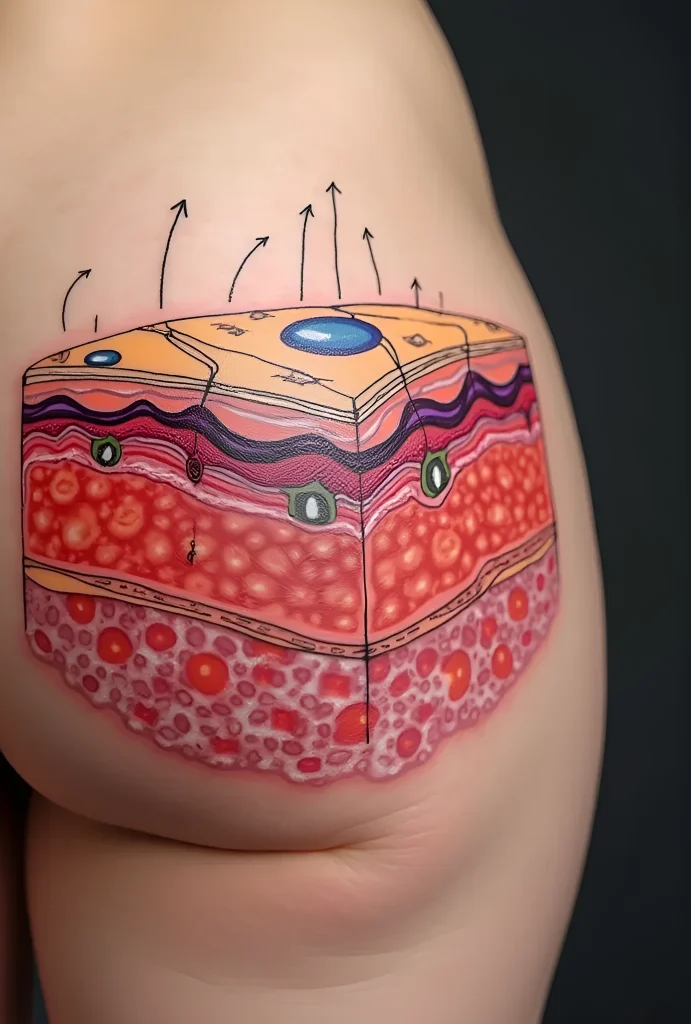
The decision to get a tattoo is always a personal choice, independent of societal body standards. If you are hesitant about whether to “risk” getting a design on fuller thighs or calves, it’s important to shift the focus from aesthetic judgments to technical aspects. The risk here is not that the tattoo will be “ugly” due to fullness, but rather that the characteristics of fatty tissue and skin elasticity may affect the longevity and clarity of the outlines.
Advantages of Tattoos on Full Legs
- Accent and Distraction: A well-executed tattoo, especially a large one, draws attention, shifting the focus from skin texture or volume to the artwork itself.
- Visual Correction: The use of vertical or diagonal lines, as well as certain styles (e.g., Blackwork or ornamental), can visually elongate the leg silhouette.
- Motivation and Acceptance: For many women, a tattoo becomes a step towards accepting their body and a way to transform “imperfection” into a canvas.
Technical Challenges
The main problem is related to the mobility of the skin and subcutaneous fat. Legs, especially the thighs, are areas where fat deposits are most pronounced and can easily change in volume. This affects:
- Stretching: With rapid weight gain or during pregnancy, the design can stretch, distorting geometry and proportions.
- Outline “Blurring”: In areas with a high concentration of subcutaneous fat (hypodermis), the ink can “blow out,” especially if the artist works too deep.
- Textural Distortions: Cellulite is an uneven distribution of fat that creates a textured surface. A design applied to such a surface will appear uneven, especially under certain lighting.
The key to success is choosing an experienced artist who understands how to work with skin of increased density and uneven texture, as well as careful design planning that can adapt to potential changes.
Features of Cellulite Skin and Its Impact on Tattoos

To make an informed decision, you need to understand the physiology of cellulite and how it interacts with the tattooing process. Cellulite, or lipodystrophy, involves structural changes in the subcutaneous fat layer (hypodermis) that lead to impaired microcirculation and lymphatic drainage. Externally, this manifests as dimpling, or the “orange peel” effect.
Structure of Problematic Areas: Dermis and Hypodermis
A tattoo is placed in the dermis, the layer of skin beneath the epidermis. Normally, the dermis has a certain thickness and density, which ensures stable pigment retention.
- Impact of Cellulite on the Dermis: In areas affected by cellulite, the dermis often becomes less elastic and more tense. Fat cells (adipocytes) in the hypodermis increase in volume and push upwards through connective tissue septa, creating bumps.
- Needle and Tissue Interaction: When an artist inserts the needle, they must penetrate the epidermis and accurately reach the dermis. This is technically more difficult on a bumpy surface. If the artist doesn’t account for the increased density and tension of the skin, there’s a risk of either not depositing enough pigment (the tattoo will fade quickly) or depositing too much (the ink will enter the hypodermis, where it will quickly “blur” due to its less dense structure).
- Healing: Areas with cellulite often have impaired lymphatic drainage. This can slow down the healing process and increase swelling in the initial days, requiring more attentive care.
Important Conclusion: The quality and stability of a tattoo on legs with cellulite directly depend on the artist’s depth of work and their ability to adapt to the changing skin topography. If necessary, the artist can use special skin-stretching techniques to achieve a smooth surface during the session.
How Cellulite and Excess Weight Affect Tattoo Appearance: What to Expect

Before making a final decision, you should realistically assess how the skin’s texture will affect the perception of the finished work. The distortion effect manifests differently depending on the type of design.
Distortion of Outlines and Geometry
- Thin Lines and Lettering: Fine Line and minimalist lettering are the most vulnerable. On a bumpy surface, a thin line can appear broken or curved. If the skin stretches, a thin outline can become blurry.
- Geometric Patterns: Mandalas, straight lines, and strict geometric shapes (especially on the outer thigh) can look perfect when the leg is relaxed. However, with movement, bending, or muscle tension, the geometry can distort. Tip: Choose geometry that follows the natural curves of the muscles rather than trying to ignore them.
Impact on Color and Shading
Cellulite and increased fat content can affect how we perceive color and shading:
- Light Absorption: A bumpy surface reflects light unevenly. The depressions can appear darker and muted, which can obscure fine details and make shadows look “muddy.”
- Color Saturation: If the skin in this area is denser or has poorer circulation, the pigment may not take as well. As a result, bright colors (red, yellow) may appear less saturated compared to a tattoo on the forearm.
Compression Effect
This effect occurs when you sit or bend your leg. The skin on the thighs compresses, and the design “wrinkles.” If the design is very detailed, this detail can merge into a single dark spot. This is why larger, less detailed elements and overall shapes are often recommended for fuller legs.
What to Expect: Expect your tattoo to look different depending on your pose and lighting. The key is not to make it perfect in a static state, but to ensure it remains harmonious in motion.
Best Tattoo Styles for Full Legs: Visual Correction

The choice of style is perhaps the most crucial strategic step. Some styles have a natural ability to hide or integrate uneven skin texture, while others, conversely, will emphasize every bump. We recommend focusing on styles that utilize mass, density, and organic forms.
1. Blackwork and Ornamental
- Why it Works: These styles use dense black pigment and large, repeating elements. The density of the black color “levels” the surface, absorbing light and making the cellulite texture less noticeable.
- Examples: Wide bands, dense mandalas, ethnic patterns imitating lace or fur. Ornamental designs can be elongated vertically, creating a slimming effect.
- Visual Effect: Creates a strong, unified image that dominates the skin’s texture.
2. Tribal and Polynesian
- Why it Works: These styles are based on powerful, thick, curved lines and dense filling. They adapt perfectly to muscle contours, even if they are full.
- Examples: Maori or Samoan motifs, which often wrap around the leg, emphasizing its shape rather than fighting it.
- Visual Effect: Due to their organic forms, they look natural on a moving and changing body.
3. Abstraction and Deconstructivism
- Why it Works: If you don’t want to hide the texture, but rather integrate it. Abstract designs like Trash Polka (though not pure abstraction, it uses chaos) or free brushstrokes don’t require perfect smoothness.
- Examples: Large color splashes, torn outlines, brushstroke imitations (Watercolour), where the unevenness of the outline is part of the concept.
- Visual Effect: The unevenness of the skin texture becomes part of the artistic intention.
4. Neo-Traditional and New School (Close-up)
- Why it Works: These styles use bold outlines and bright, but clear color blocks. They are less prone to “blurring” than realism, and their large forms look good on a large area.
- Avoid: Small, highly detailed realism, especially portraits. Minimal skin deformation can greatly distort facial features.
Styles to Avoid:
- Fine Line: As mentioned, too vulnerable to stretching and bumps.
- Pure Realism with Fine Details: Requires a perfectly smooth surface to maintain the optical illusion of volume.
Ideal Tattoo Placement on Legs with Cellulite: Recommendations
Strategic placement of the design is crucial. When choosing a location, we must look for areas with minimal fatty tissue mobility and denser skin.
High Stability Zones (Recommended)
- Shin (front and side): The skin here is thinner, and the fat layer is minimal, as it lies directly on the bone. This is one of the most stable areas on the leg. Tattoos here retain their clarity for decades, regardless of weight fluctuations.
- Outer Thigh: Although cellulite can be pronounced here, the muscles (quadriceps) under the skin provide some support. Large vertical designs look most advantageous here and can visually lengthen the leg.
- Back of the Calf: The calf muscle tissue is dense and stable. This is an excellent location for symmetrical or ornamental work.
High-Risk Zones (Require Caution)
- Inner Thigh: This is an area with maximum mobility and softness of the skin, as well as a high probability of friction. Tattoos here can fade faster, and outlines can “blur” due to the high concentration of fatty tissue.
- Kneecap and Popliteal Fossa: The skin here is very thin and constantly bends. A design placed directly on the crease will deform quickly.
- Upper Thigh (closer to the buttocks): This area is most prone to cellulite and stretching. If you plan future weight loss, avoid this area.
Tip for Camouflaging Cellulite
If cellulite is pronounced, choose locations that you don’t constantly see in the mirror, as well as designs that are not solid fills. For example, a dense ornamental sleeve on the thigh with “windows” or gaps of skin looks less bumpy than a uniformly shaded realistic background.
Preparing for a Tattoo on Legs with Cellulite: Important Steps

Proper preparation is critically important to ensure better pigment retention and minimize distortions.
1. Consultation with the Artist and Planning
Be sure to inform the artist about the presence of cellulite and your concerns about the longevity of the work. An experienced specialist will:
- Perform a stretch test: They will ask you to tense and relax your leg to see how the skin behaves during movement.
- Help choose a design: The artist will adjust the design to avoid overly thin lines in bumpy areas and suggest more adaptable styles.
- Assess skin condition: Hydrated and healthy skin accepts pigment better.
2. Weight Stabilization
If you are actively losing or gaining weight, it is advisable to stabilize your weight 3–6 months before the session. Rapid changes in leg volume after tattooing will inevitably lead to stretching of the design.
3. Improving Skin Condition
The better the quality of your skin, the better the tattoo will lay:
- Hydration: Drink enough water. Well-hydrated skin is more elastic.
- Moisturizing: For a month before the session, regularly use quality moisturizing creams for your legs.
- Improving Microcirculation: Gentle massage or dry brushing in the area of the future tattoo can improve blood circulation, which will positively affect healing. Important: Avoid aggressive anti-cellulite procedures (like wraps or injections) two weeks before and after the session.
4. Comfort During the Session
Sessions on the thighs can be lengthy. Ensure you can lie in one position for an extended period. Legs tend to swell, so it is recommended to keep them elevated after the session.
Leg Tattoo Aftercare: Tips for Maintaining Vibrancy

Aftercare for tattoos on fuller legs has its nuances related to the increased risk of friction, swelling, and peculiarities of blood circulation in this area.
1. Combating Swelling and Lymphatic Drainage
Legs are a part of the body where swelling after tattooing can be most pronounced, especially if the work is large and affects the thigh or calf. In the first 3–5 days:
- Elevated Position: Try to keep your legs elevated as often as possible (on a pillow, footrest), especially during sleep.
- Compression (with caution): If swelling is severe, you can use light compression garments, but they should not press or rub directly on the fresh tattoo.
2. Minimizing Friction
Friction is the main enemy of leg tattoos, especially on the inner thighs or in the calf area that comes into contact with shoes.
- Clothing: Wear loose, breathable clothing (cotton, linen). Avoid tight jeans, tights, and synthetics that can stick to the wound and cause irritation.
- Protection: In the first few days, use protective film (second skin) until the artist allows you to remove it. It minimizes friction and protects from external factors.
3. Hydration and Moisturizing After Healing
After the tattoo has completely healed (in 4–6 weeks), continue to pay attention to the skin on your legs:
- Sun Protection: UV rays degrade pigment, but on fuller legs, where the skin may be stretched, this effect is amplified. Use SPF 50+ sunscreen constantly.
- Regular Moisturizing: Well-moisturized skin looks smoother, which visually improves the appearance of the tattoo and makes colors brighter.
Frequently Asked Questions About Tattoos on Full Legs (FAQ)
We have compiled the most common questions that arise for women when planning a tattoo in an area with cellulite or excess weight.
1. Will a tattoo on fuller legs be more painful?
Answer: Painfulness primarily depends on proximity to bone and the number of nerve endings, not the amount of fat. In fact, areas with denser fatty tissue (e.g., outer thigh) are often less painful than areas where the skin is thin and lies directly on the bone (shin, ankle). However, due to increased swelling in the first few hours after the session, discomfort may be more pronounced.
2. What will happen to the tattoo if I lose 10–15 kg?
Answer: If weight loss is gradual, the skin has time to adapt, and distortion will be minimal. If the tattoo is located on the inner or upper thigh, where volume changes are most significant, the design may “shrink” or become slightly smaller, and stretch marks (striae) may appear within the design. If weight loss was rapid, touch-ups may be needed to restore outline clarity.
3. Can a tattoo be done to hide stretch marks (striae) from cellulite or pregnancy?
Answer: Yes, this is one of the popular reasons for tattooing the thighs. However, it’s important to understand that a tattoo doesn’t “remove” stretch marks, but rather masks them. Stretch marks are scar tissue that holds pigment differently. The artist must use techniques that allow for even pigment application on both scarred and healthy skin. Dense styles (Blackwork, ornamental) or abstraction that uses the scar texture as part of the design are best for camouflage.
4. Can anti-cellulite creams damage a tattoo?
Answer: Yes, they can, especially aggressive creams with a warming effect or high acid content. They stimulate cell renewal and microcirculation, which over time can contribute to faster pigment washout, especially if the tattoo is relatively fresh. After complete healing (at least 6 months), you can use such products, but avoid applying them directly to the tattooed area.
5. How high is the risk of ink “blowout”?
Answer: The risk of blowout (ink spreading under the skin) is higher in areas with more subcutaneous fat, as the hypodermis is less dense and does not hold pigment as reliably as the dermis. An experienced artist will work more superficially, especially on softer areas, to minimize this risk. Choose specialists who have experience working specifically with the “softer” areas of the body.