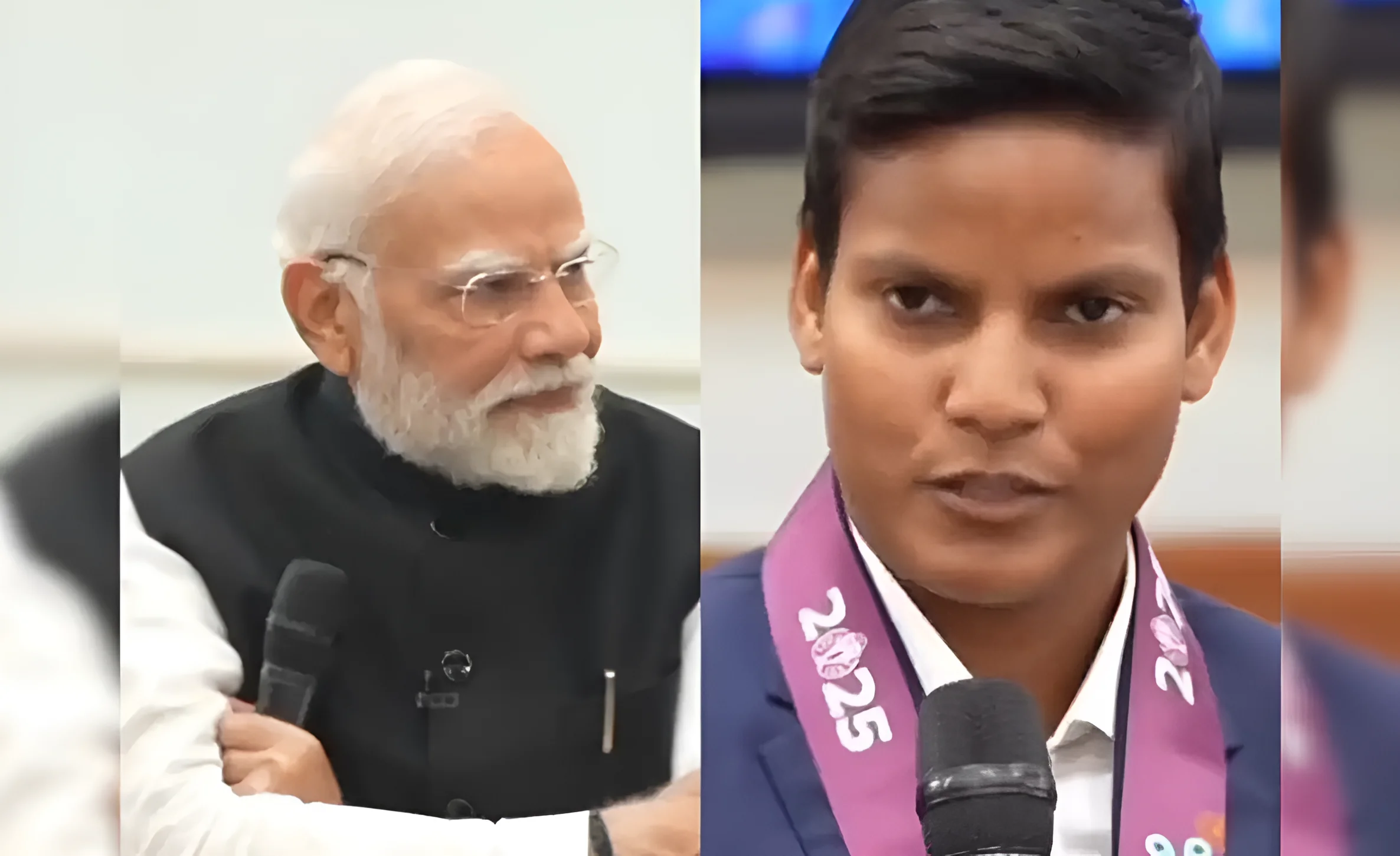
Sporting achievements are often inextricably linked to personal philosophy and faith. This fact was once again confirmed at an official meeting of the members of the Indian women’s cricket team, which won the World Cup. The focus was not only on the team’s triumph but also on the body art of one of the key athletes. All-rounder Deepti Sharma, visiting the residence of Prime Minister Narendra Modi on Wednesday, November 6, 2025, received an unexpected question that shifted the conversation from statistics to spirituality.
Tattoos as a Source of Strength: A Dialogue with the Prime Minister
The meeting with the head of government, as Deepti Sharma herself admitted, was a long-awaited and inspiring event. The athlete did not hide her admiration for Narendra Modi, noting that his public speeches serve as a powerful motivator for her. Recalling their previous interaction in 2017, Deepti emphasized how important his guidance was.
“We were eagerly awaiting this meeting, and we truly enjoyed today. I remember in 2017 you told me that a player is defined by how they rise after defeats and overcome setbacks. You said, ‘Keep working hard,’ and that’s exactly what we did. Your advice truly motivated me,” shared Deepti Sharma, addressing Prime Minister Modi.
However, the moment that caught the attention of the tattoo community worldwide came when Prime Minister Modi noticed the tattoo adorning the athlete’s body. It was not just a sign of attention, but a direct question about the meaning and role of body art in the life of a professional athlete.
“How does the tattoo of Lord Hanuman help you?”
The Prime Minister, known for his attention to detail, could not overlook the image of the Hindu deity.
“You have a tattoo of Lord Hanuman – how does it help you?” Narendra Modi asked.
Deepti Sharma’s answer was concise but filled with deep meaning, fully justifying the existence of religious tattoos as personal talismans and anchors:
“I believe in him more than myself, and it helps me a lot personally in improving my game.”
This confession reveals the tattoo not just as an adornment, but as a powerful tool for mental support, allowing the athlete to transcend her own doubts and fears.
Tattoo Culture and Sports: The Symbolism of Hanuman
To understand the context, the image of Lord Hanuman in India is one of the most popular motifs, especially among athletes and those whose activities require incredible physical and mental resilience. Hanuman, the divine vanara (ape-like being) and devoted follower of Rama, symbolizes:
- Strength and Endurance (Bala): Essential qualities for a cricket all-rounder, who must perform equally well in bowling, batting, and fielding.
- Devotion (Bhakti): Loyalty to the goal and the team.
- Fearlessness: The ability to withstand pressure in crucial moments.
In the context of tattoo culture, religious images often serve as a “mantra on the skin” – a constant reminder of higher values or a source of inner energy. For Deepti Sharma, whose role requires maximum concentration and the ability to perform under immense pressure, the Hanuman tattoo is literally faith transferred to the body, compensating for human weakness and insecurity.
A Triumph Marked by Faith
Deepti Sharma’s statement gains particular weight considering her recent achievements. The athlete showed phenomenal results in the World Cup final against South Africa, played on Sunday. She not only scored 58 runs (run-a-ball) but also took five wickets, conceding only 39 runs, securing India’s victory by 52 runs.
Her outstanding performance throughout the tournament was recognized with the “Player of the Tournament” title. Deepti Sharma’s statistics are impressive:
- Total Wickets: 22 (leading the tournament in this category).
- Total Runs: 215, including three half-century scores.
- Key Contribution in the Final: 58 runs and 5 wickets.
These figures confirm that her “faith,” embodied in her tattoo, is indeed a part of her sporting success, helping her demonstrate consistency at the highest level.
Expert Analysis: Tattoos as a Mental Resource
In modern sports, tattoos have long ceased to be merely a symbol of rebellion; they have become elements of personal branding and mental preparation. Deepti Sharma’s case perfectly illustrates how the sacred meaning of body art integrates into the psychology of victory. Unlike Western tattoo culture, where religious motifs are often aesthetic or historical, in India, such images retain their original function – to be a powerful connection with a divine patron.
The fact that Prime Minister Modi openly discussed the tattoo is also an important cultural marker. It signals the full acceptance of body art in the highest echelons of Indian society, especially when it is associated with demonstrating national pride and success. For millions of young Indians, especially women, Deepti Sharma becomes an example of how one can combine deep traditional faith with a modern, public, and successful career, using tattoos as a bridge between these worlds.
Her admission that she believes in Hanuman more than herself reflects the classic paradigm of “shedding the burden” of responsibility by entrusting it to a higher power. In moments of critical pressure, when self-doubt can undermine performance, looking at the tattoo serves as an instant shift in focus, returning the athlete to a state of fearlessness and confidence symbolized by the divine patron. Thus, the Hanuman tattoo is not just an adornment, but a carefully chosen, constantly active mental resource that ensures a champion’s mindset.