
The International Day for Preventing an Explosion of Environmental War and Armed Conflict, observed annually on November 6th, is a date of profound humanitarian and ecological significance. It serves not only as a reminder of the devastating consequences of hostilities on landscapes, water resources, and ecosystems but also as a call to action. For those who wish to immortalize their beliefs and commitment to protecting the planet, thematic tattoos become a powerful, indelible manifesto. Our portal, tatufoto.com, offers you an in-depth exploration of the symbolism and artistic embodiment of tattoos dedicated to this critical issue.
Tattoos for the Day for Preventing Environmental Exploitation During War and Armed Conflicts: Introduction and Significance

The art of tattooing has always served as a means of expressing the strongest beliefs, memories, and affiliations. When it comes to such a serious topic as environmental exploitation in conflict, a tattoo ceases to be mere decoration. It becomes an ecological passport, a visual reminder of the fragility of the world and the irreparable losses borne not only by people but by all living nature. By choosing a tattoo for November 6th, you are not just marking a date; you are taking on the commitment to be the voice for those deprived of the right to protection—forests, rivers, animals.

The relevance of the topic, unfortunately, is not diminishing. Armed conflicts lead to chemical pollution, destruction of biodiversity, soil degradation, and desertification. Tattoos dedicated to this issue often combine elements of destruction (military symbols, debris) with elements of rebirth (sprouts, clean water, unbroken animals). This is a complex but incredibly important genre that requires the artist to possess not only technical perfection but also a deep understanding of the context.
- Memory Function: A tattoo serves as a constant reminder of specific environmental disasters caused by war (e.g., dam destruction, oil spills).
- Manifesto: It is a public declaration of your stance against the use of natural resources as weapons or targets in conflict.
- Hope: Even in the darkest themes related to war, thematic tattoos invariably contain an element of nature’s rebirth and resilience.
International Day for Preventing Environmental Exploitation During War: History and Goals
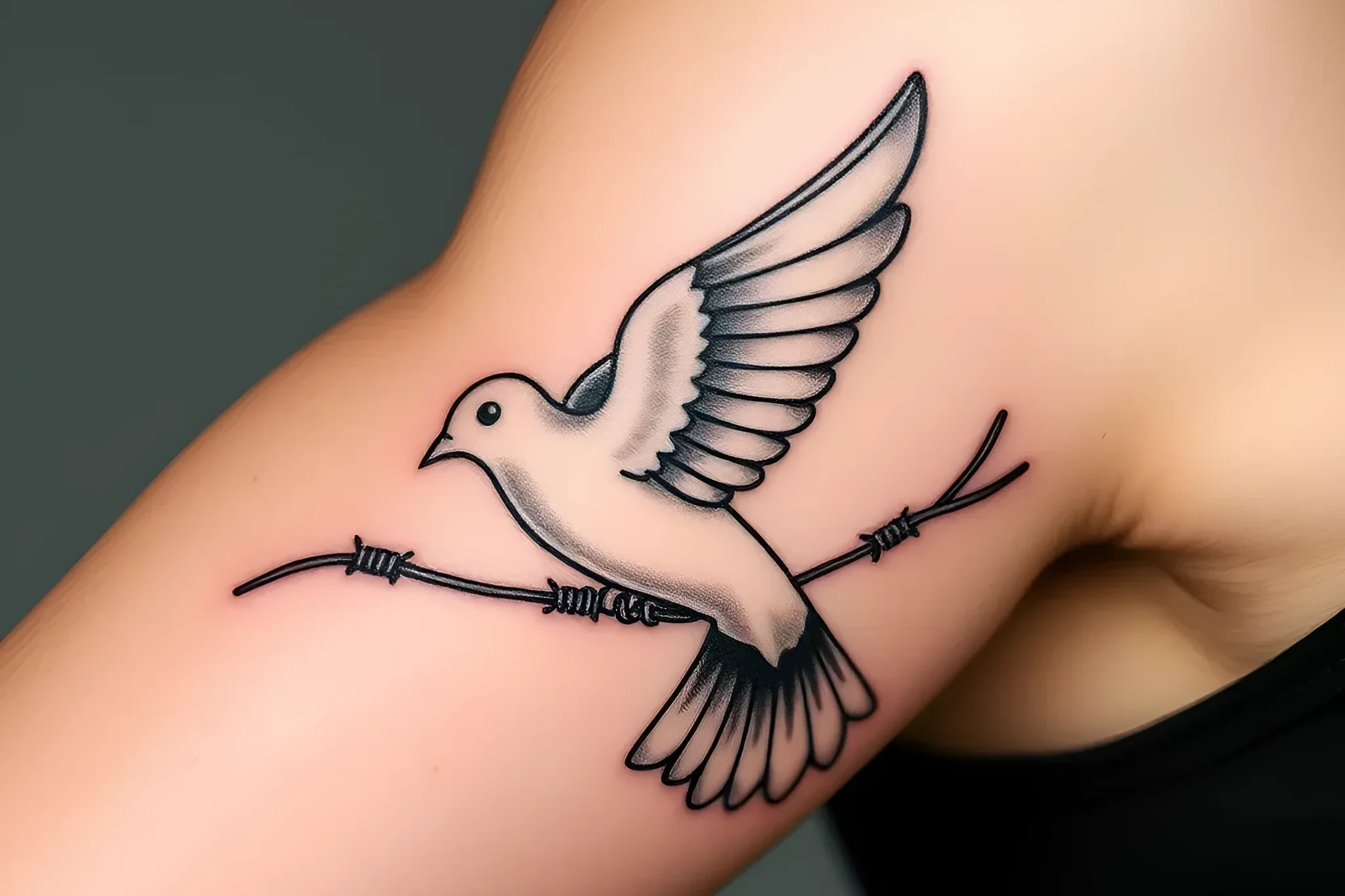
To create a truly meaningful tattoo, one must understand the origins and goals of the holiday. The decision to establish this day was made by the UN General Assembly in 2001. The recognition that the damage inflicted on the environment during armed conflicts often extends beyond the duration of the conflict itself and affects the well-being of ecosystems and future generations marked a turning point.

The primary goal of this day is to draw the international community’s attention to the environmental consequences of wars and to emphasize the need to integrate environmental protection into conflict prevention and peacebuilding strategies. When you choose a tattoo related to this date, you join a global movement that strives to:
- Condemn: The use of scorched-earth tactics and the deliberate destruction of natural resources.
- Restore: Support programs for cleaning up and restoring areas affected by hostilities.
- Educate: Disseminate information about the long-term environmental threats posed by wars.
A tattoo dedicated to November 6th can include dates, geographical coordinates of affected areas, or concise yet powerful slogans reflecting these goals. It is important that the sketch is not just beautiful but also historically or symbolically accurate.
Symbolism of Tattoos Dedicated to Nature Protection in Conflict: Meanings and Interpretations

The symbolism in this genre of tattooing is always a dialectic, a clash of two opposing forces: the destructive energy of war and the resilience of nature. An expert understanding of these symbols will allow you to create a deep and multi-layered sketch.
Symbols of Destruction and Threat
- Barbed Wire and Roots: Depictions of tree roots growing through rusty barbed wire or shell fragments. This symbolizes that even the strongest human structures cannot stop nature’s slow but inevitable drive for rebirth.
- Gas Mask and Flowers: A gas mask entwined with flowering vines or wildflowers. It symbolizes polluted air or chemical weapons but also demonstrates hope for purification and overcoming a toxic environment.
- Dry Tree and Military Equipment: An image of a dead, charred tree with military equipment (tanks, helmets) resting at its base. This directly indicates that war kills the landscape and leaves only wasteland behind.

Symbols of Resilience and Rebirth
The most powerful tattoos on this theme focus on the idea of regeneration and resilience:
- Phoenix and Seed: A classic phoenix symbol, but rising from the ashes of a burned forest, not from fire. Often, the phoenix holds a small, sprouting seed in its talons—a promise of the future.
- Lotus in Mud: A lotus growing in swampy, polluted water. The lotus traditionally symbolizes purity and spiritual elevation, and in this context, it represents nature’s ability to retain beauty despite human intervention and pollution.
- Turtle (or other slow, ancient animals): In the context of ecology, the turtle often symbolizes ancient wisdom and the Earth’s longevity. An image of a turtle slowly crawling through a minefield or a destroyed landscape suggests that life is stronger than an instantaneous act of violence.

Color Palette and Its Meaning
The choice of color plays a critical role. Often used are:
- Monochrome (Blackwork/Grey Wash): Emphasizes tragedy, seriousness, and historical memory, avoiding distracting details. Ideal for depicting scorched earth and ruins.
- Green and Blue (Accents): Bright, saturated colors of life (lush greenery, clean water) are used as contrasting accents against the black and gray of destruction. This is a visual emphasis on hope.
- Red (Minimal): Used to denote blood, the Earth’s wounds, or as a warning, signal color.
Tattoo Styles on Ecology and War: From Realism to Graphics

The choice of style determines how emotionally and artistically your message will be perceived. The theme of environmental exploitation in conflicts requires styles capable of conveying both the details of destruction and metaphorical depth.
Realism and Photorealism
This style is the most direct and shocking. Realistic tattoos can depict specific scenes: destroyed forests, dead animals against a backdrop of military action, or portraits of activists fighting for environmental justice. Realism demands the highest level of skill, as even the slightest inaccuracies can distort the seriousness of the message. Advantage: maximum emotional engagement of the viewer. Example: a hyperrealistic depiction of a hand collecting oil from a water surface, with a warship reflected in the water.

Trash Polka
Trash Polka is an ideal style for expressing chaos, dissonance, and social criticism. The combination of black color, red accents, typographic elements (newspaper clippings, slogans), and realistic imagery allows for the creation of a powerful, protest canvas. In the context of our theme, Trash Polka can mix images of birds caught in oil traps with typographical elements quoting international conventions on nature protection. It is a statement style that shouts about the problem.
Blackwork and Dotwork
These styles are suitable for creating more abstract and meditative works. Blackwork, using dense black fills, can symbolize the irreversibility of damage or the shadow of war hanging over nature. Dotwork, using dots to create volume and shadow, is ideal for depicting delicate, fragile elements: spiderwebs, sprouting seeds, or polluted fog. These styles lend weight and monumentality to symbols.
Geometry and Lettering
Geometric tattoos can be used to structure chaos. For example, clean geometric shapes (circle, triangle) can frame or enclose a scene of destruction, symbolizing control, order, or a scientific approach to restoration. Lettering, in turn, allows for direct expression of the message, using quotes from UN resolutions or words of famous ecologists.

Tattoo Ideas for the Day for Preventing Environmental Exploitation: Popular Themes and Sketches
The choice of theme should be carefully considered to avoid banality and convey the complexity of the issue as accurately as possible. We offer several expert ideas that combine ecology, war, and hope.
Theme 1: “Wound on the Map”
Idea: A depiction of the outline of a map of a specific territory that has suffered greatly from conflict (e.g., the Chernobyl region, or battle sites). In the center of the map, a deep, jagged “wound” from which a bright green sprout emerges or clean water flows. Around the map’s outline, coordinates or the date November 6th can be inscribed.
- Symbolism: A reminder of a specific place and hope for its healing.
- Style: Fine realism with elements of cartography and watercolor accents of green.
Theme 2: “Metamorphosis of Weapons”
Idea: A reinterpretation of the classic biblical motif “beat swords into plowshares” for ecology. An image of a rifle or artillery shell transforming into an agricultural tool, a tree trunk, or a bird’s nest. This theme emphasizes the transition from destruction to creation.
- Symbolism: Demilitarization and the priority of life over war.
- Style: Blackwork or Fineline style to emphasize the elegance of the transformation.
Theme 3: “Balance of Elements”
Idea: A depiction of the four elements (earth, water, air, fire), where three of them (earth, water, air) are shown damaged or polluted (dry earth, dirty water, smoky air), and the fourth element—fire—is represented as a purifying but controlled element, or as energy necessary for growth. Often, an image of a clean drop of water falling on scorched soil is used.
- Symbolism: The global scale of the environmental threat and the need to restore natural balance.
- Style: Minimalism or dotwork to keep the focus on the symbols rather than the details.

Theme 4: “The Protector”
Idea: An image of an animal that has become a symbol of a vulnerable ecosystem (e.g., a sea otter affected by an oil spill, or an endangered bird species), but the animal is shown in a protective pose or surrounded by an aura of hope. This could be a bear guarding a forest, or a whale swimming through trash.
- Symbolism: The vulnerability of fauna and a call for its protection.
- Style: Neo-traditional or realism with bright but muted colors.
Placement of Tattoos with an Ecological Theme: Best Spots on the Body and Their Meaning

The placement of a tattoo enhances its message. For such a serious and socially significant theme as protecting nature from war, the choice of location should be deliberate.
Forearm and Wrist: Manifesto and Call to Action
Meaning: These areas are the most visible and are often used for statement tattoos. If your goal is education and activism, the forearm allows you to display the symbol in everyday life. A tattoo on the wrist can be more personal but still easily noticeable, symbolizing constant remembrance of the issue.
- Suitable Themes: Lettering, small symbols (sprouting seed, water drop), or minimalist geometric compositions.
Chest and Heart: Deep Commitment
Meaning: Tattoos on the chest or near the heart are traditionally associated with the deepest convictions that a person “carries” close to their soul. Placing a large, detailed work on nature protection here signifies your personal, emotional commitment to the cause.
- Suitable Themes: Large, realistic scenes (e.g., “Wound on the Map” or “Phoenix and Seed”) requiring ample space for detail.
Back: Epic Canvas and Scale of the Problem
Meaning: The back is the largest “canvas” on the body, allowing for epic, multi-component themes. Here, one can depict the scale of an ecological catastrophe encompassing multiple ecosystems, or a complex allegory combining historical facts and the symbolism of rebirth.
- Suitable Themes: Complex compositions in Trash Polka or realism, including landscapes, machinery, and symbolic elements.
Shin and Ankle: Resilience and Moving Forward
Meaning: These areas symbolize movement, the path, and resilience. A tattoo here can speak of a “march” for environmental justice or the slow but inevitable force of nature that continues to move forward despite obstacles.
- Suitable Themes: Linear, vertically oriented designs, such as roots going deep into the earth, or a slowly crawling turtle.
How to Choose a Tattoo Sketch Dedicated to Nature Protection: Tips and Recommendations

Creating a tattoo on such a sensitive and politically charged topic requires special care and responsibility. tatufoto.com experts strongly recommend adhering to the following rules when choosing a sketch:
1. Research the Context
Ensure that the symbols you choose do not have a dual or offensive meaning within the context of a specific conflict or culture. For example, if you are using symbolism related to a particular region, research how the inhabitants of that region perceive environmental damage and its visual representation. A tattoo should be an act of respect, not appropriation.
2. Focus on Hope, Not Just Tragedy
Although the theme is heavy, an effective tattoo should inspire action, not just evoke despair. Always include an element of rebirth or resilience (a sprout, clean water, light). This makes the work more profound and less depressing.
3. Choosing an Artist: Specialization in Realism and Symbolism
For complex symbolic work, especially in Realism or Trash Polka styles, it is crucial to find an artist who is not only technically skilled but also willing to delve into the meaning of your message. Discuss the significance of November 6th and your personal motivations with them. A good artist can translate an abstract idea into a powerful visual image.
4. Uniqueness and Avoiding Clichés
Avoid overused and overly general symbols. Instead of a standard tree image, consider depicting an endemic plant that is endangered in a conflict zone. The more specific and unique your sketch, the stronger its impact will be.
5. Consider Longevity
Remember that a tattoo is for life. Themes rich in fine details or thin lines can blur over time. Discuss with your artist how to maintain the clarity of the symbols of destruction and rebirth for years to come. For this theme, contrasting, clear lines and moderate use of color are often preferred.
Inspiration on tatufoto.com: A Collection of Tattoos for the Day for Preventing Environmental Exploitation During War and Armed Conflicts 2025

In anticipation of the International Day for Preventing Environmental Exploitation During War and Armed Conflicts on November 6, 2025, we, as the leading Russian-language portal on tattoos, have compiled an extensive collection of photos and sketches dedicated to this important theme. Our goal is to show you how multifaceted and profound this issue can be reflected through the art of tattooing.
Our galleries feature works by leading artists who have managed to convey the pain of destruction and the power of rebirth in styles such as:
- Watercolor Symbols: Depictions of polluted water bodies, where clean watercolor splashes symbolize purification.
- Graphic Compositions: Clear, strong lines combining military attributes and wildlife.
- Political Statements: Tattoos with dates and slogans calling for an immediate end to environmental vandalism.
We invite you to visit our special section dedicated to “Tattoos for the Day,” where you can examine examples of works in detail, find inspiration for your own sketch, and study the detailed descriptions of the symbolism behind each design. By choosing a tattoo for November 6th, you choose not only aesthetics but also ethics. Let your body become a canvas for an important message that will resonate louder than any words.
Additional Images
Gallery of remaining images (click to view):


