The meaning of a comb tattoo is a surprisingly multifaceted and profound symbol that is often underestimated in the world of body art. If you are considering an image of a comb or a hairbrush for your next project, you need to realize that this seemingly everyday object carries a rich layer of cultural, mythological, and, of course, professional meanings. Our detailed guide, created by the experts at tatufoto.com, will help you fully unlock the potential of this iconography, delving into its symbolism, stylistic features, and cultural context.


The Meaning of a Comb Tattoo: A Complete Guide to Symbolism and Styles
A tattoo featuring a comb or hairbrush is rarely accidental. Unlike popular animals or geometric motifs, a comb almost always indicates a conscious choice related to either professional activity or deeply personal ideas about cleanliness, order, and beauty. To fully appreciate the value of this image, it is necessary to consider it in three key aspects:
- Professional Identity: The most obvious and common meaning. A comb is the primary tool of a hairdresser, barber, stylist, or makeup artist. Such a tattoo serves as a proud statement of one’s profession, skill, and dedication.
- Symbol of Purity and Order: In ancient cultures, combing hair was a ritual of purification, preparation for an important event, or meditation. A comb symbolizes the pursuit of harmony, neatness, and inner order.
- Mythological and Feminine Symbol: The comb is closely associated with the images of water spirits, mermaids (sirens), and goddesses. In this context, it signifies charm, magic, the power of femininity, and a connection to the element of water.
It is this multi-layered nature that makes the comb tattoo so appealing to those seeking not just a design, but a story encoded in lines and shadows.
The History of Comb Symbolism: From Ancient Rituals to Modern Times
To fully appreciate the meaning of a comb tattoo, it is necessary to turn to its historical roots. The comb is one of the oldest artifacts, holding sacred significance in many civilizations.
The Comb as an Attribute of Status and Power
In Ancient Egypt and Mesopotamia, intricate combs, often adorned with precious stones or carvings, were not just tools but symbols of high social status. Well-groomed hair and elaborate hairstyles required expensive combs, which only the nobility could afford. Thus, a tattoo depicting a richly decorated comb can symbolize:
- Elitism and Refinement: Emphasizing one’s own taste and striving for perfection.
- Self-Control: The ability to control and organize one’s life (just as one untangles messy hair).
Mythological Context: The Comb and Water Deities
In European and Middle Eastern mythology, the comb or hairbrush is an integral attribute of mermaids, sirens, and sea goddesses (e.g., Aphrodite, often depicted combing her long hair). This aspect of symbolism includes:
- Charm and Temptation: A symbol of beauty that can be both a blessing and a danger (remember the sirens luring sailors).
- Connection to Water and the Subconscious: Water symbolizes emotions, the subconscious, and mysteries. A comb associated with water can indicate the owner’s deep emotionality or intuition.
The Comb in Transition Rituals
In some cultures, combing hair was part of an initiation or transition rite. For example, among the Celts, hair was considered a vessel for the soul and strength. The comb used for its care became a protective, mantic symbol capable of:
- Protecting from Evil Forces: The teeth of a comb, like the teeth of a fork or rake, were often perceived as a barrier repelling negative energy.
- Symbolizing Renewal: Cleansing hair before a new stage of life (wedding, birth, taking office).

The Meaning of a Comb Tattoo: What It Symbolizes for Different People
Despite common historical roots, the modern meaning of a comb tattoo strongly depends on who wears it and what additional elements are included in the composition.
Professional Tattoo (Barbers and Stylists)
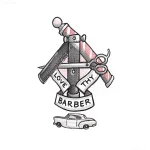
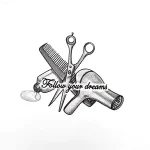
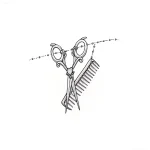
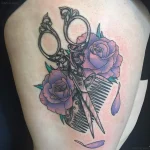
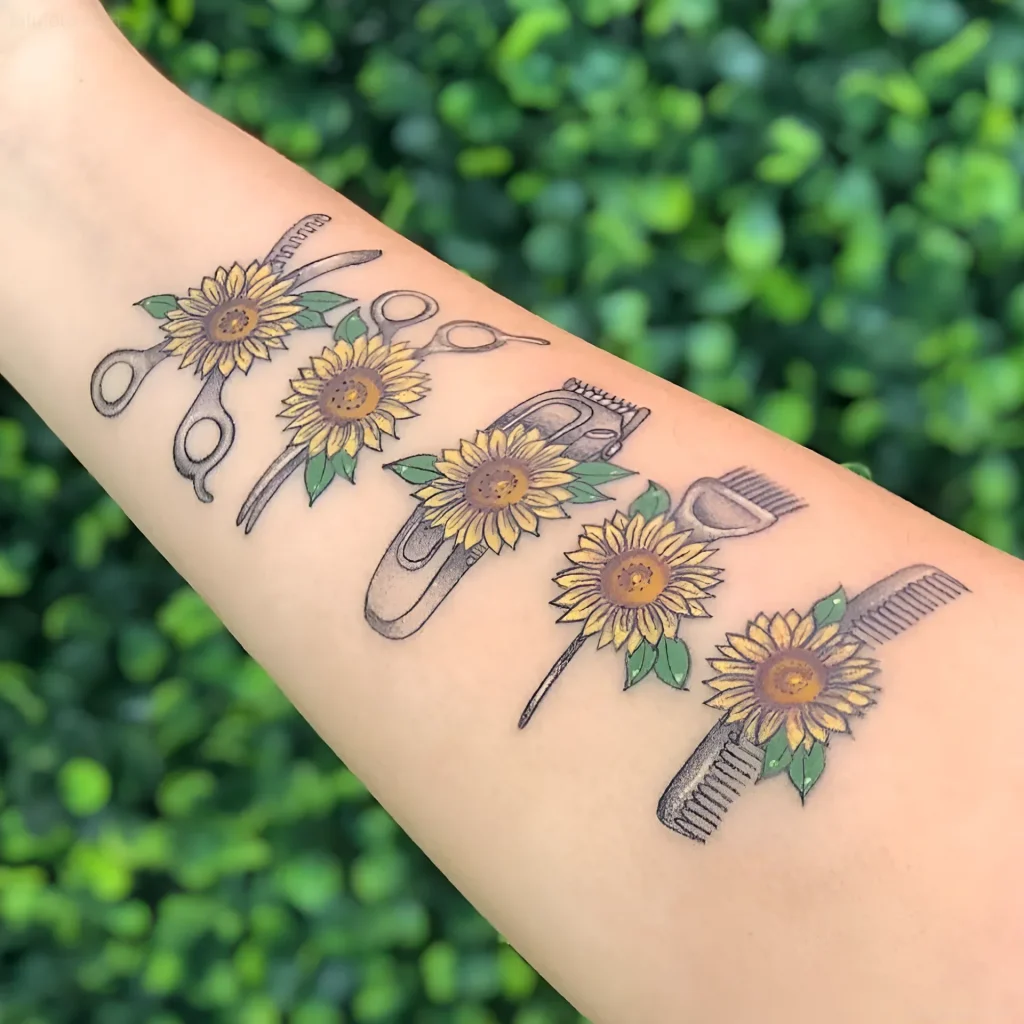
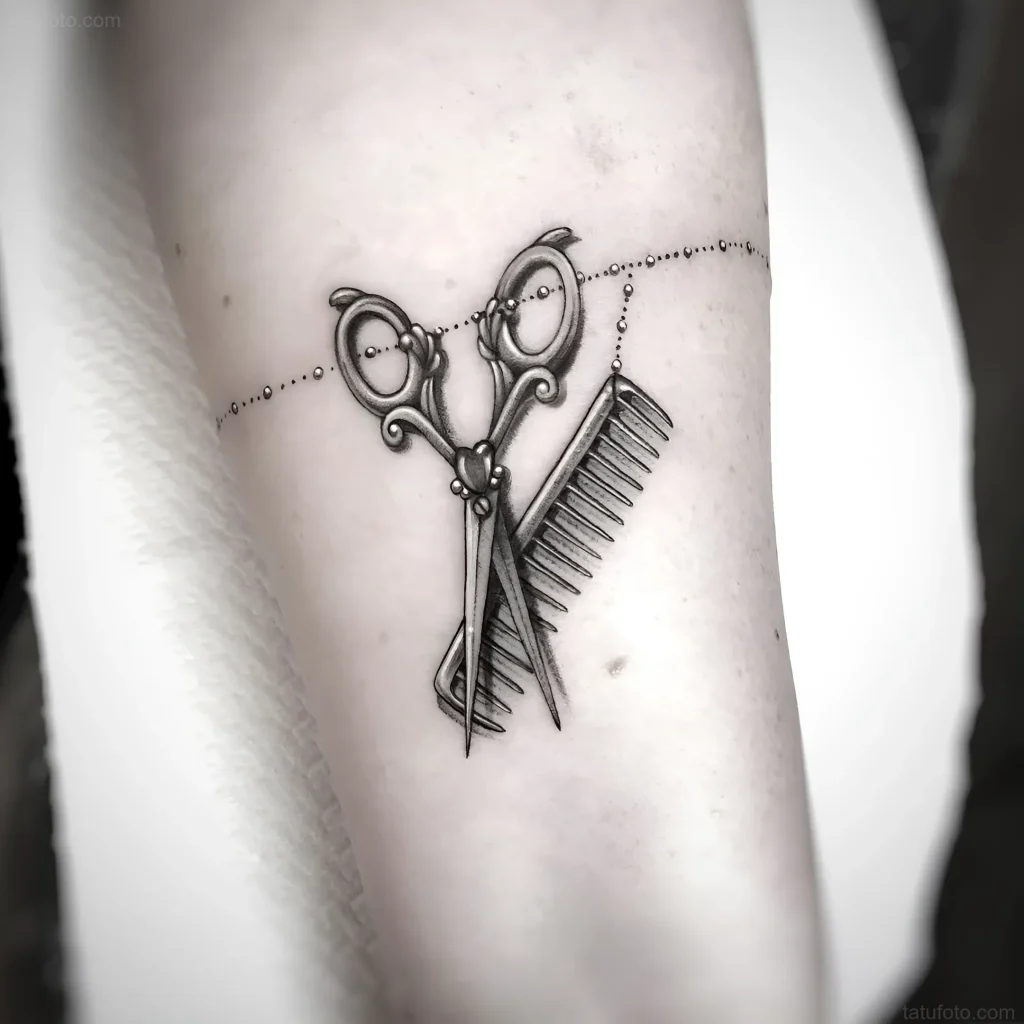
For professionals in the beauty industry, a comb (often combined with scissors, a hair clipper, or a straight razor) is the “coat of arms” of their profession. It is not just a tool; it is an extension of the master’s hand. Such a tattoo symbolizes:
1. Skill and Precision:
- Demonstration of a high level of tool mastery.
- Striving for perfect haircut shape and geometry.
2. Dedication to the Craft:
- Pride in one’s work, which requires not only technique but also artistic vision.
- Self-awareness as part of an ancient and respected profession (especially relevant for barbers emphasizing tradition).
3. Creativity and Transformation:
- The comb as a tool that creates beauty and changes a person’s appearance.
- A symbol of the constant search for new forms and styles.
Personal Symbolism: Purity, Beauty, and Order
For individuals not directly involved in hairdressing, the comb acquires more philosophical and personal meanings:
- Organizing Life: A comb, smoothing tangled strands, becomes a metaphor for solving complex life problems, bringing order to thoughts and emotions.
- Self-Respect and Self-Care: A symbol of attention to one’s own body, appearance, and mental state.
- Overcoming Chaos: Including a broken or old comb in the composition, which is then repaired or replaced with a new one, can symbolize letting go of past experiences and starting a new, more organized life.
Symbol of Heritage and Memory
Sometimes a comb tattoo is done in memory of a loved one who was a hairdresser or stylist. In this case, the design becomes a tribute, preserving the memory of skills and love for the craft passed down through generations.

Comb Tattoo Styles: From Realism to Minimalism – Choose Yours
The choice of style is critical, as it determines which aspect of the comb’s symbolism will dominate your image. The comb is a beautiful object for stylization due to its clear geometric shape.
Realism and Black and Grey Style
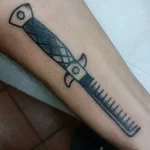
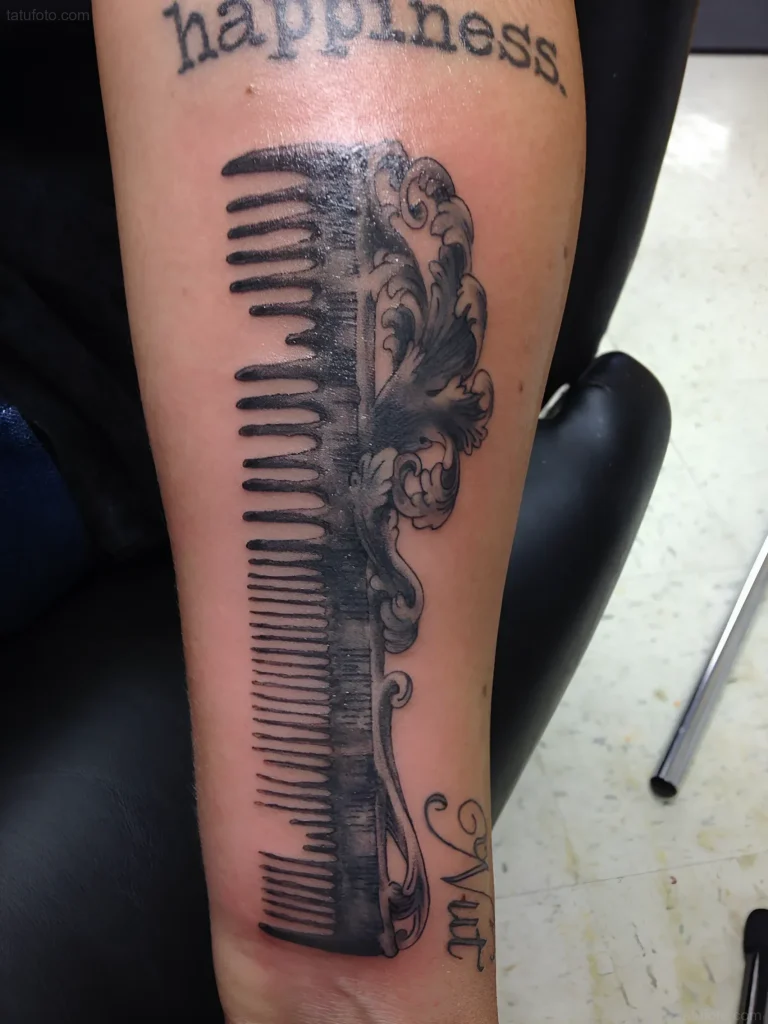
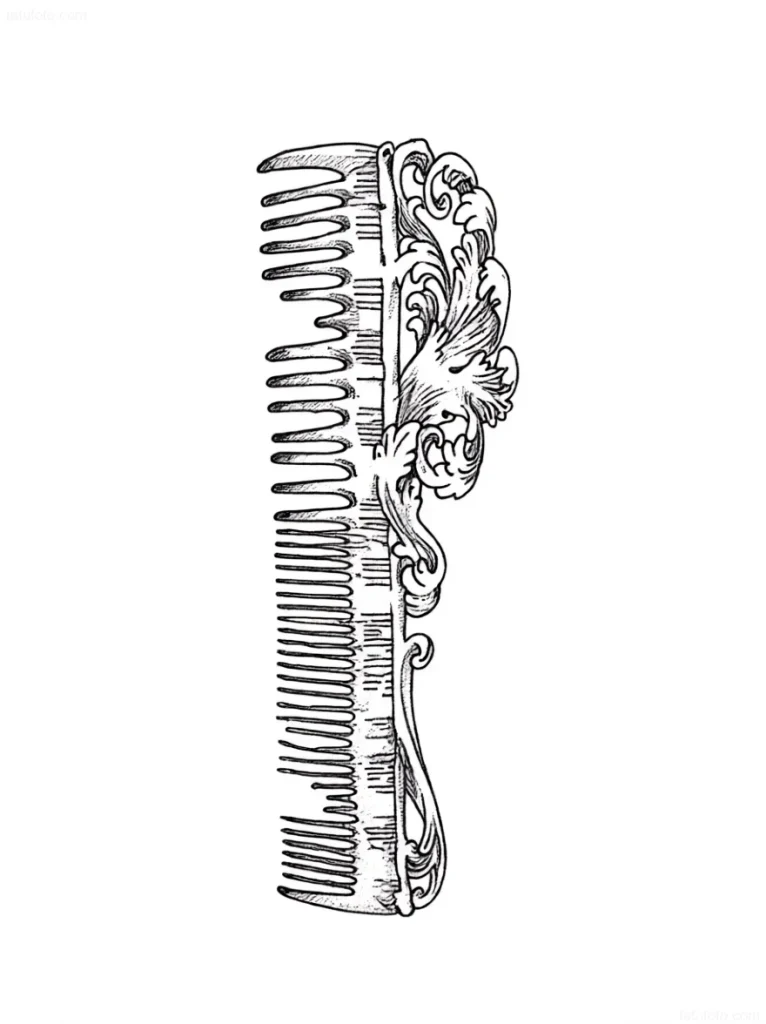
If your goal is to emphasize professionalism and detail, realism is the ideal choice. A realistic comb (often combined with other tools) looks as authentic as possible, with detailed textures of plastic, wood, or metal. In black and gray execution, such a tattoo acquires a vintage, classic look, especially if an antique comb or a straight razor is depicted nearby.
- Emphasis: On the texture and precision of the tool.
- Suitable for: Barbers who value tradition and the history of their craft.
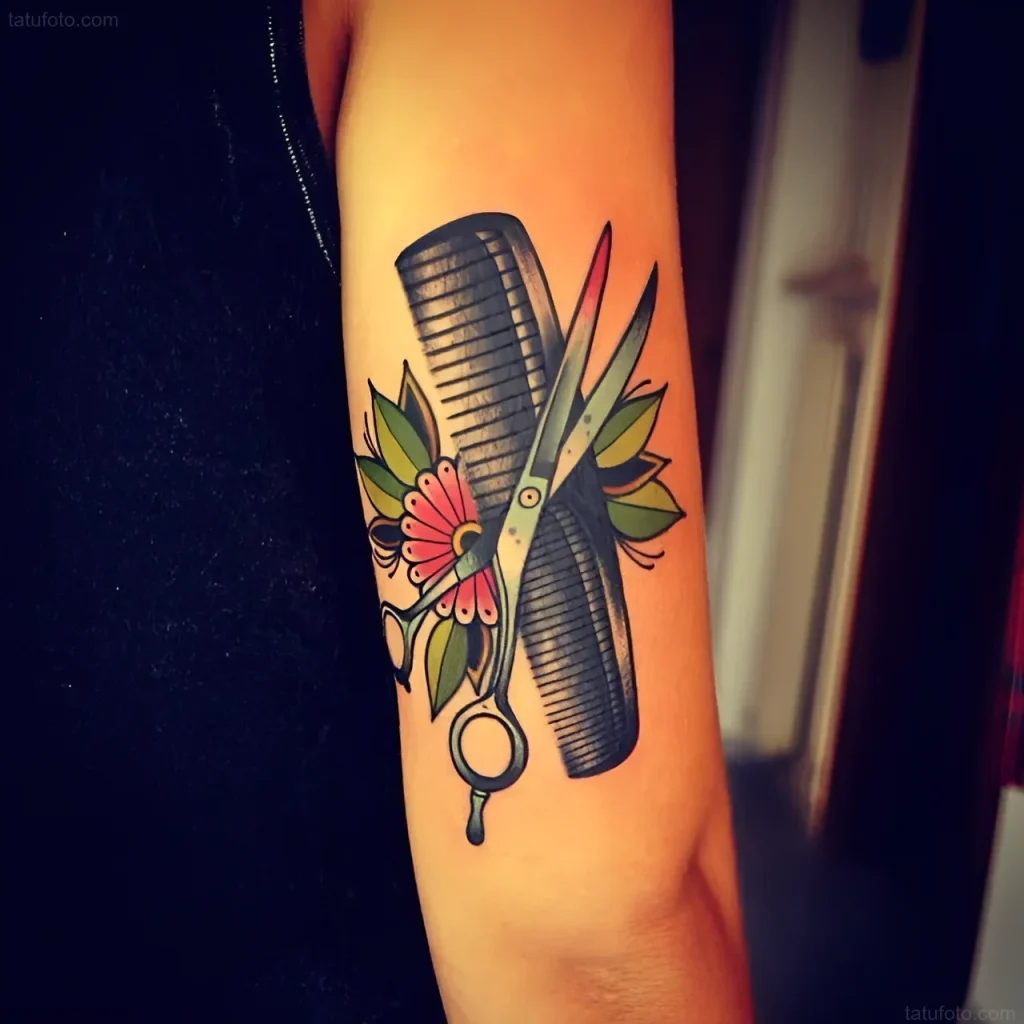
Old School and Neo-Traditional Style
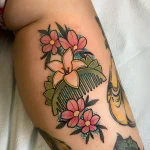
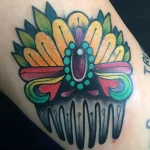
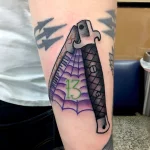
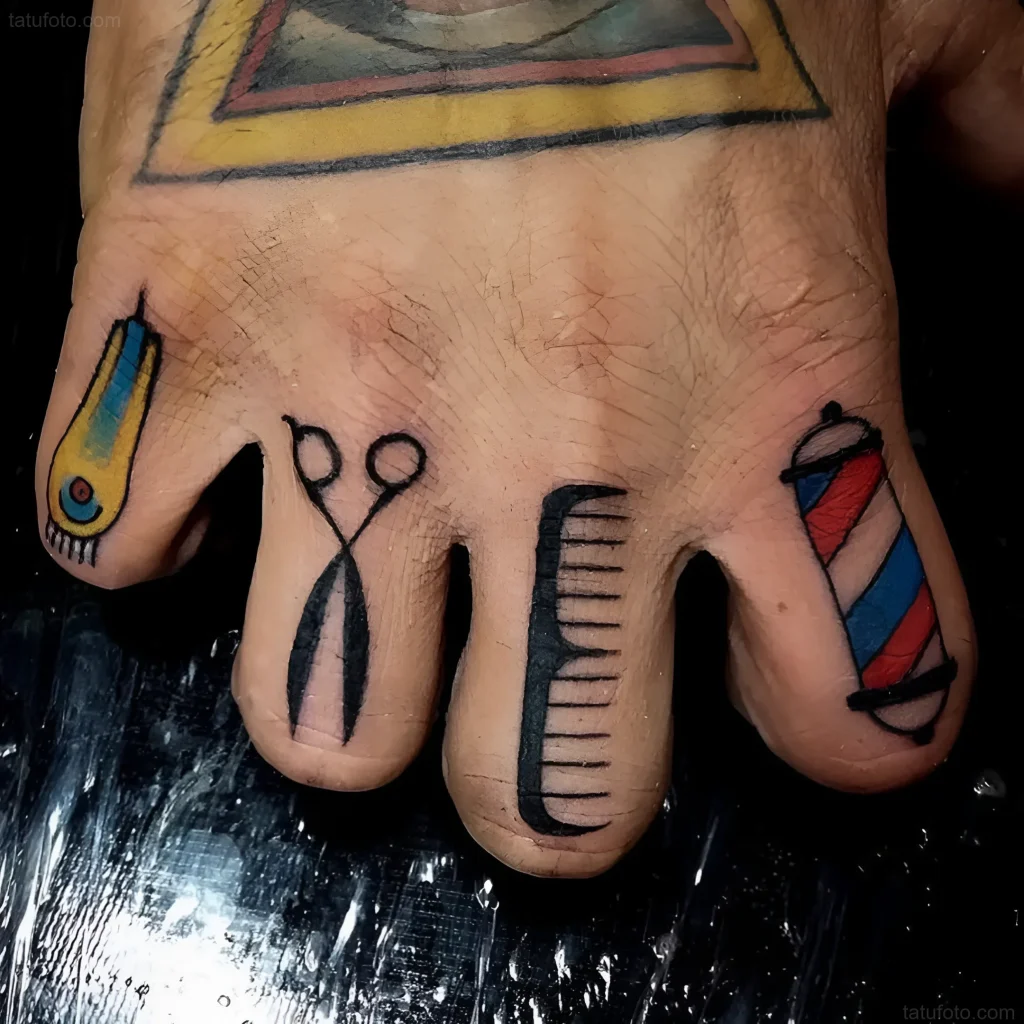
In these styles, the comb often becomes part of a larger composition, filled with bright colors and bold outlines. In old school, the comb can be complemented by:
- Roses or flowers: Emphasizing beauty and femininity (if it’s a feminine comb).
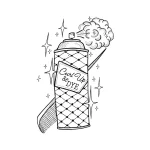
- Ribbons with inscriptions: Adding a personal motto or salon name.
- Skulls or hearts: To add a traditional nautical flair, often found in barber shop-themed tattoos.
The Neo-Traditional style allows for a more detailed and voluminous comb, using deep shadows and rich colors, while maintaining clear outlines.
Minimalism and Fine Line
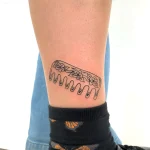
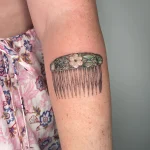
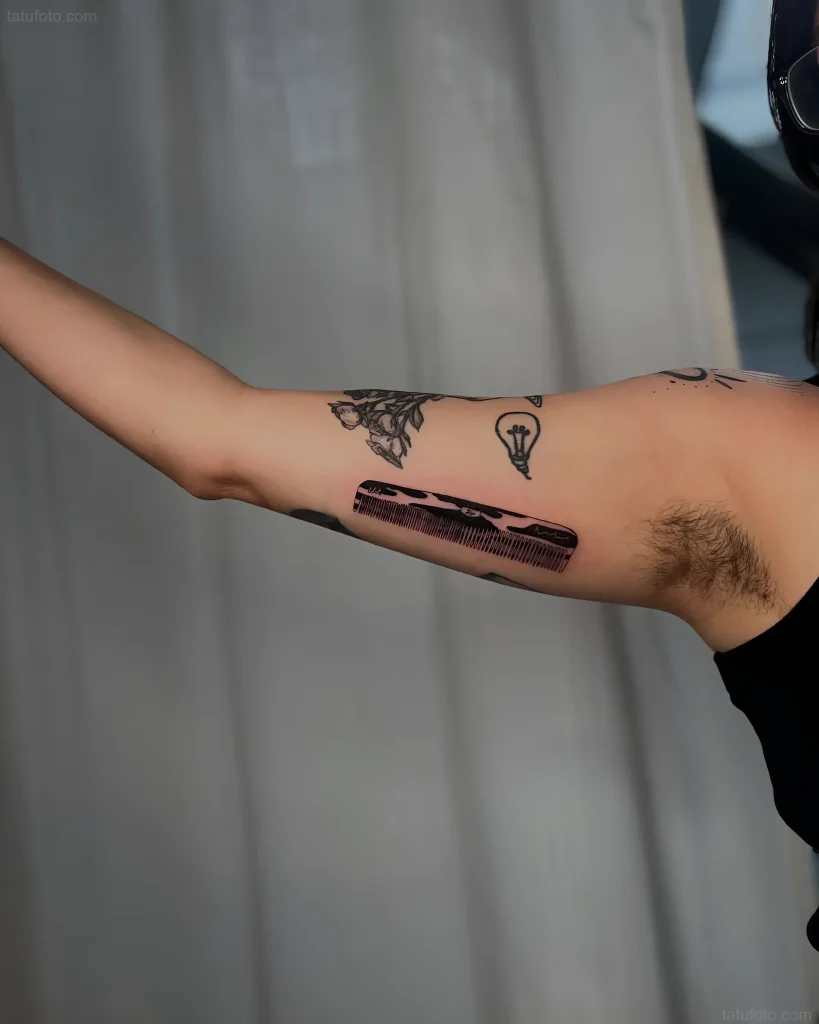
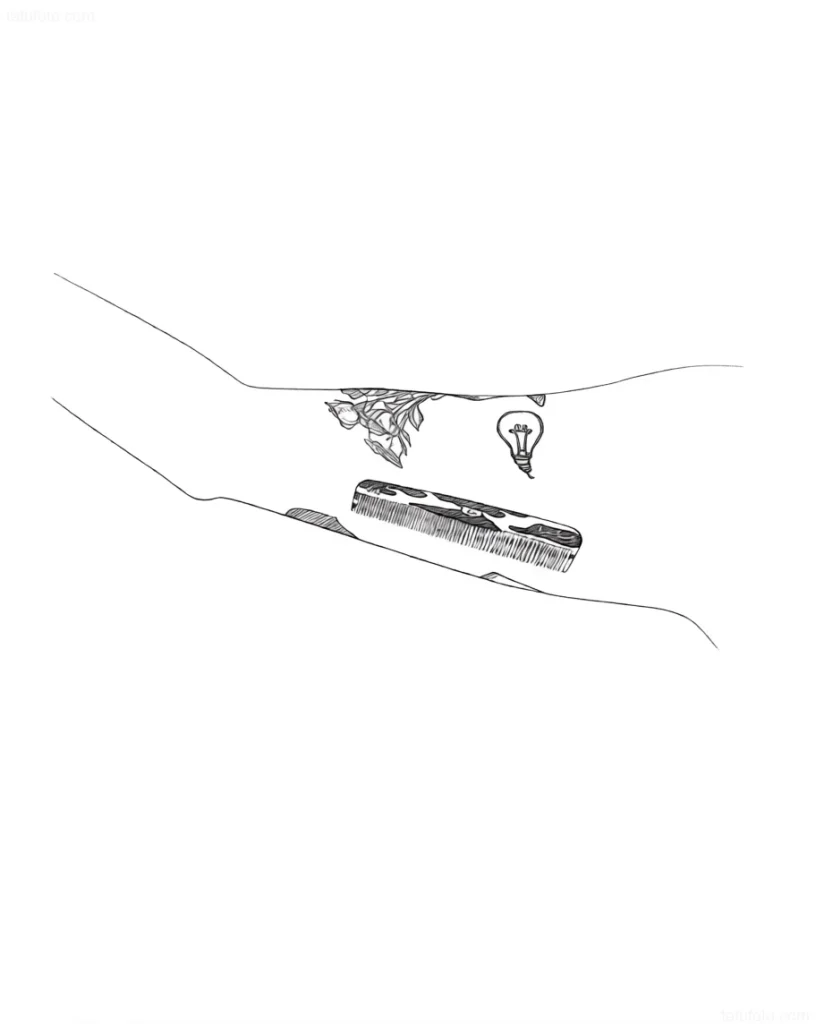
For those who prefer restraint, a Fine Line comb tattoo is an elegant solution. Here, the emphasis is on a clean silhouette and delicate lines. Such work is ideal for small areas of skin (wrist, neck) and often symbolizes:
- Hidden Meaning: A symbol of purity and order that doesn’t require loud statements.
- Grace: Emphasizing the owner’s refined taste.
Dotwork and Blackwork
A comb rendered in dotwork can look abstract and graphic. Often, an image of a Celtic or ancient comb is used, where lines and dots create the effect of ancient carving. Blackwork, especially combined with geometric patterns, gives the comb symbol strength and monumentality, emphasizing its protective or ritual function.

Where to Get a Comb Tattoo: Popular Locations and Their Meanings
The placement of a comb tattoo is significant, as it can enhance or alter its original meaning. When choosing a location, consider the size and detail of the design.
Forearm and Hand: Demonstrating Skill
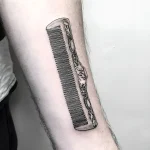
For hairdressers and stylists, the forearm is the most popular location. It is an open area constantly visible to clients and colleagues. Placing a comb tattoo on the working hand or near the wrist emphasizes:
- Professional Pride: A clear statement of one’s profession.
- “The Tool is Always With Me”: A metaphorical extension of the working tool.
Neck and Behind the Ear: A Symbol of Beauty and Care
A small, delicate comb placed behind the ear or on the nape of the neck often carries feminine symbolism related to beauty, care, and charm. This is a more intimate and graceful placement that can be easily hidden or, conversely, highlighted with a specific hairstyle.
Chest and Ribs: Personal Order and Protection
A comb tattoo on the chest (closer to the heart) or ribs is usually deeply personal. Here, it symbolizes inner order, the pursuit of harmony in personal life, or serves as a protective amulet guarding the most important aspects of life.
Shin and Calf: Movement and Development
If the comb is used as part of a larger composition (e.g., in a Steampunk style or as a fantasy element), it can be placed on the shin. In this case, it can symbolize moving forward, continuous development, and striving for excellence in one’s craft.
Comb Tattoo Aftercare: How to Maintain Brightness and Clarity of the Design
Regardless of whether you chose detailed realism or minimalist Fine Line, proper aftercare is critical. Tattoos, especially those with many fine lines (like the teeth of a comb), require special attention to prevent “blurring” and maintain clarity.
The First Two Weeks: A Critical Stage
Follow standard but strict aftercare rules to avoid infection and ensure proper healing:
- Cleaning: Wash the tattoo with warm water and unscented antibacterial soap 2-3 times a day. Do this gently, without rubbing.
- Moisturizing: Use special tattoo healing ointments (e.g., with panthenol) or products recommended by your artist. Apply a thin layer so the skin can breathe.
- Protection: Avoid direct sunlight, swimming pools, saunas, and prolonged soaking in water.
Long-Term Care and Maintaining Clarity
The clarity of lines, especially in Fine Line tattoos, can be affected by UV rays. If your comb has many thin, closely spaced teeth, you must:
1. Constant Sun Protection:
- Use sunscreen with SPF of at least 30 every time the tattoo is exposed. UV radiation is the main enemy of pigment, causing fading and line spreading.
2. Maintaining Skin Hydration:
- Regular use of lotion helps keep the skin elastic, which in turn helps preserve color vibrancy and line clarity.
3. Timely Touch-ups:
- If, after a few years, you notice that the fine lines of the comb’s teeth are starting to merge, consult your artist. A small touch-up can fully restore the original look of the design.

Frequently Asked Questions About Comb Tattoos (FAQ)
1. Is a Comb Tattoo Suitable for Women?
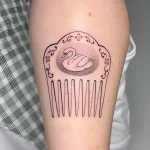
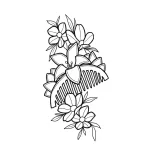
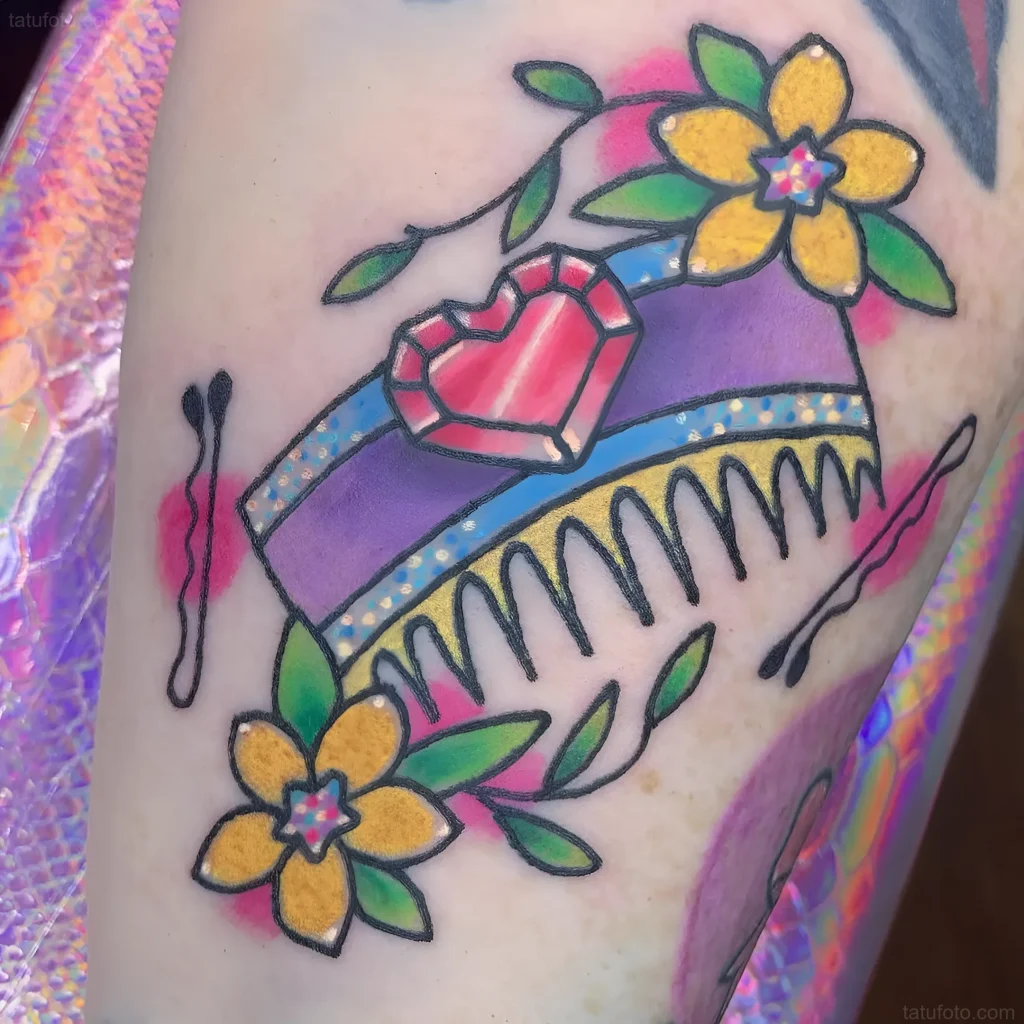
Absolutely. A comb or hairbrush tattoo often has a distinctly feminine symbolism (beauty, mythological images of mermaids, grace). Women often choose delicate, decorative combs adorned with flowers or precious stones, rendered in Fine Line or Watercolor style.
2. Can a Comb Be Combined with Other Symbols?
Yes, and it is a very common practice. Combinations that enhance or complement the meaning of a comb include:
- With scissors/razor: Enhances professional symbolism.
- With a rose/mirror: Emphasizes beauty, vanity (in a positive sense), and self-admiration.
- With waves/fish: Indicates mythological context and connection to the element of water.
- With a clock/hourglass: Symbolizes that beauty requires time and constant care.
3. Which Comb to Choose: A Comb or a Brush?
The choice depends on the desired symbolism:
- Comb: More ancient, often associated with rituals, purity, mythology, and classic barbering. It has a clearer, geometric shape.
- Brush: More often associated with modern care, softness, applying cosmetics (if it’s a makeup brush), or a wider range of styling services.
4. Does a Comb Tattoo Hurt?
Like any tattoo, the level of pain depends on the location. A comb is usually a small or medium-sized design. If you choose bony areas (e.g., elbow or collarbone, if the comb is long), the pain will be more intense. On the forearm, where the skin is dense, the process is usually well-tolerated.

Interesting Facts About Comb Tattoos
The symbolism of the comb is so deeply rooted in history that it has given rise to several unique facts in tattoo culture:
1. The Comb as a Symbol of Prison Hierarchy: In some criminal subcultures, a comb (or hairbrush) can symbolize neatness, order, and, in rarer cases, the ability to “maintain order” within a group. However, this meaning is extremely rare in artistic tattooing.
2. “Comb” as a Good Luck Charm in Barbershops: In traditional American tattoo art (Traditional), a comb is often depicted as a charm bringing luck in business, especially in the service industry. This is related to the superstition that a good tool is the key to success.
3. Use of Bone Combs in Art: Some realism artists working with Viking or Celtic themes specifically depict combs carved from bone. Such a tattoo emphasizes a connection to ancient traditions and primal strength.
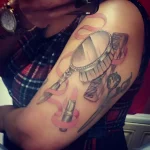
4. The Comb as a Sign of “Rockabilly” Culture: For fans of the rockabilly and pin-up style, a comb tattoo, often combined with lipstick or a vintage mirror, is a symbol of adherence to the aesthetics of the 1950s, perfect hairstyles, and rebellious fashion.
In conclusion, a comb tattoo is a choice for a meaningful, deeply personal, or professional symbol. By choosing this motif, you are not just decorating your body but also declaring your commitment to beauty, order, and craftsmanship.