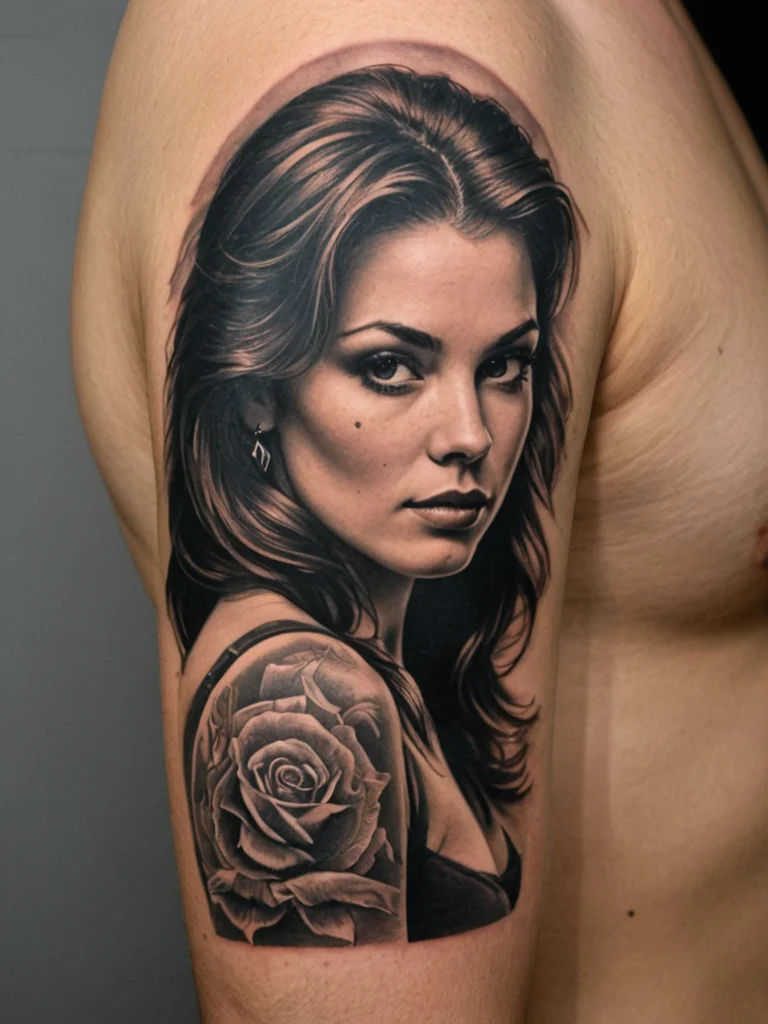
Hello, friends! Today we’re going to dive into the glorious past, into the very 90s, which gave us not only Love is… chewing gum and cop shows, but also, of course, signature, unique, and sometimes simply mind-blowing tattoos. Let’s talk about what was at the peak of fashion back then, how it looks today, and why, damn it, we all wore it (or dreamed of wearing it).
I myself remember how these drawings flashed on the arms and backs of action movie heroes, rockers, and just guys from the neighborhood. It was a kind of code, a marker of belonging to a certain subculture, a way to stand out or, conversely, to fit in. And although today we look at many of these “creations” with a slight smile, one cannot deny that it was a whole era, its own style, its own vision of beauty. And, you know, I believe we deserved them. We deserved them because we wanted something bright, rebellious, a little naive, and very, very ours.
A Bold Greeting from the Past: What Were 90s Trash Tattoos?
What does “trash” mean in the context of 90s tattoos? It’s not quite what we understand today by “trash polka” or “bad taste” styles. Rather, it was a collective term for tattoos that today might cause bewilderment in some, and a nostalgic smile in others. It was a period when tattoo culture was just beginning to emerge from the underground, when there wasn’t the variety of styles and techniques as there is now. The main thing was to make a statement, to show your “coolness” or commitment to an idea. Often, this was done without much claim to artistic value, but with maximum expression.
I would say it was a visual manifesto of the time. People were searching for themselves, trying new things, and tattoos became one way of self-expression. Everything was included: from primitive but bright sketches to quite meaningful ones, but executed in a peculiar, “clumsy” manner. The main thing is that they were done with soul, as I see it, and carried the imprint of that era. It was a time of experimentation, and not always successful, but always sincere.
Masters of that time (many of whom were self-taught or learned “on the fly”) often didn’t have access to quality materials and information. Therefore, the result could be… well, let’s say, very individual. But that’s also part of the history, part of that very era that we “deserved.”
Symbols of the Era: Which Images Ruled the Roost?
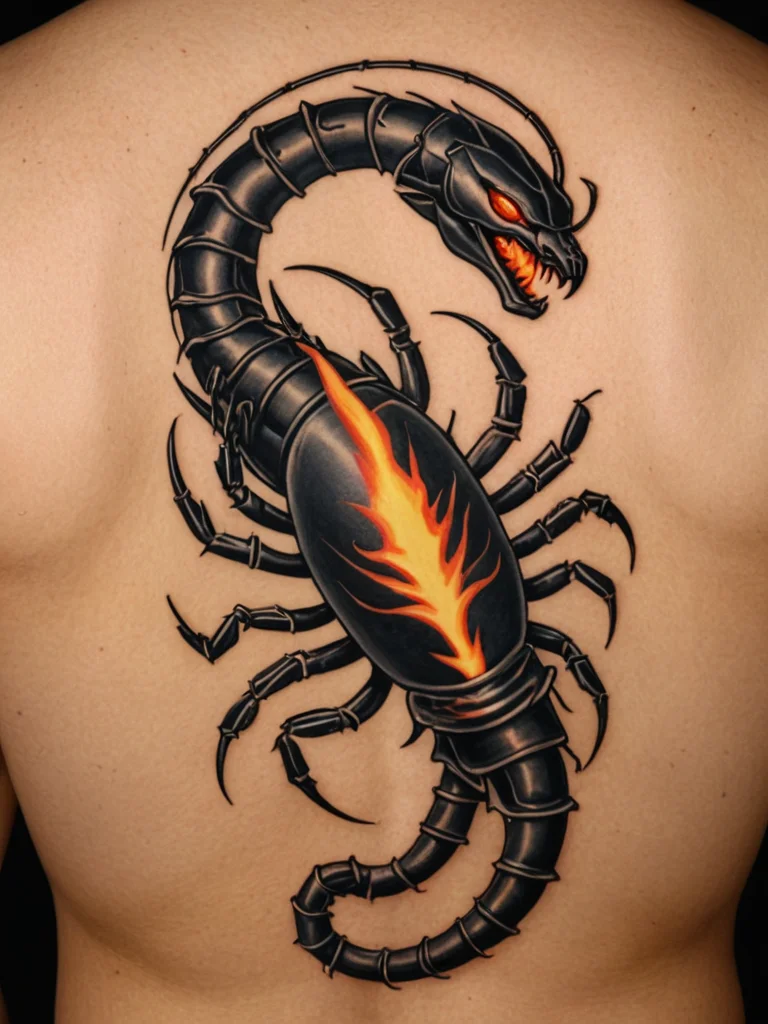
The list of 90s “hits” can be endless, but there are a few signature pieces that were literally everywhere. First, of course, are the symbols of strength and aggression. Black panthers, snarling wolves, tigers, dragons – anything that could demonstrate brutality and independence. Often these images were stylized like comics or cartoons, which added a special charm.
Second, elements of “rocker” and “biker” aesthetics. Skulls, crosses, bones, wings, chains, motorcycle emblems – all of this was very popular. Sometimes these were quite large and detailed works, sometimes – very simple, but very recognizable symbols.
Third, without a doubt, are various inscriptions. These could be song lyrics, names of loved ones (or “exes”), children’s names, “street” wisdom, aphorisms with a touch of philosophy, or simply meaningless but “cool” sounding words. Often these inscriptions were done in the so-called “Gothic” or “Old English” font, which in itself was a statement.
And, of course, how could we forget tribals! Yes, they came to us from ancient cultures, but in the 90s, tribals experienced a second wind, turning into a fashionable, geometric pattern that could be seen anywhere – from the shoulder to the ankle. Their popularity was simply off the charts.
Heroes of Our Novel: From Black Panthers to Tribals – Who and Why?
Let’s break down in more detail who populated our bodies in those years and why these particular images.
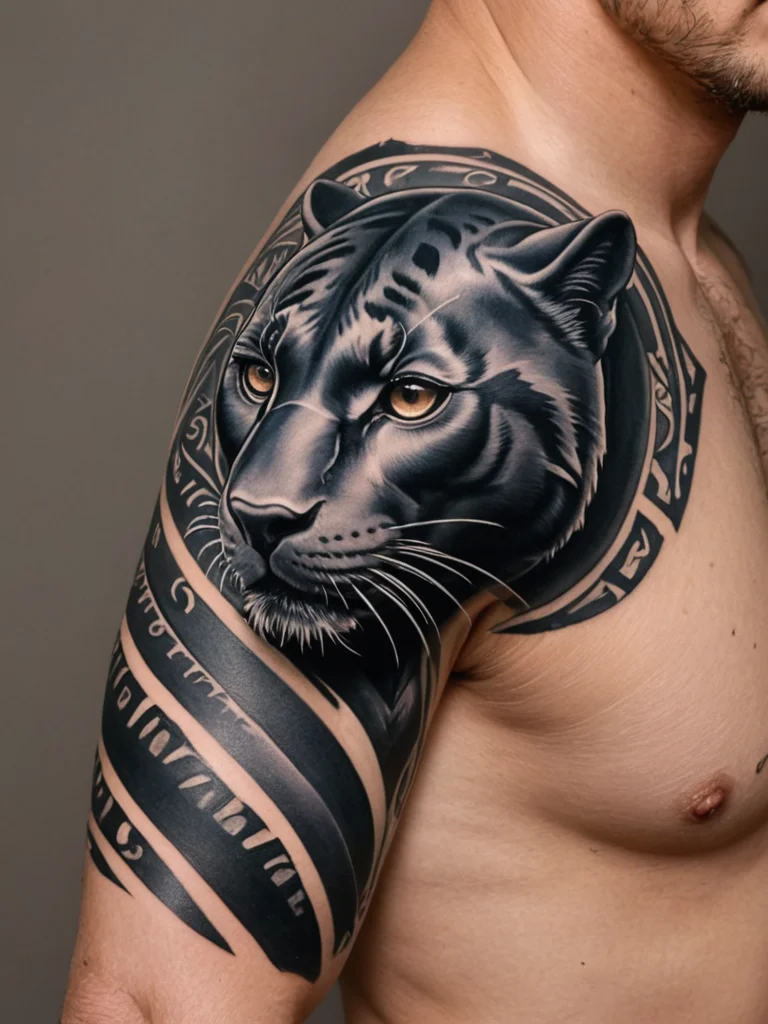
- Black Panther: Well, that’s a classic. The panther is a symbol of grace, strength, hidden danger. In the 90s, it became the embodiment of a “cool guy” who is always on alert, a bit brutal, but elegant. Often depicted full-body, with a predatory snarl, sometimes against a backdrop of the moon or flames. I think it was a way to express one’s inner strength, even if outwardly you were just an ordinary student.
- Wolf: Another powerful symbol. The wolf represents freedom, pack mentality, loyalty (to its pack), but also wildness and danger. A wolf tattoo could indicate that a person values their “family,” their friends, but is also ready to stand up for themselves and their own. I remember seeing wolves with blue eyes so often – striking, to say the least!
- Eagle: Unlike the wolf, the eagle is more a symbol of freedom, power, majesty, a view from above. Often depicted with wings spread, ready for flight. This could reflect a desire for independence, for reaching heights, for freedom from any constraints.
- Scorpion: Now this is about darker sides. The scorpion is a symbol of poison, danger, revenge, protection. Often, such tattoos were done by those who served in the army (especially airborne troops), or by those who identified with something dangerous, “deadly.”
- Snake: The snake is a multifaceted symbol: wisdom, temptation, hidden power, transformation, healing. In the 90s, it was often depicted coiled around an arm, leg, or some object. This could indicate a desire to be “smarter,” “trickier” than others, or to have gone through an important life stage.
- Skull: The skull is, of course, a symbol of death, but also of defiance of it, a symbol of eternity, transformation. In the 90s, skulls could be very different: from simple outlines to detailed ones, with fire, bones, sometimes with a cigarette in their teeth. It was a statement: “I’m not afraid of death, I live life to the fullest!”
- Tribal: And, of course, tribals. These black, geometrically precise patterns, often resembling curls or smooth lines. Their popularity was due to the fact that they looked quite “tattoo-like,” were versatile, and easily fit into any image. Plus, they were good at hiding old, less successful “masterpieces.”
- Flowers (roses, lotuses): Yes, yes, not only “brutal” themes. Flowers, especially roses, were also very popular. The rose is a symbol of love, beauty, but also thorns – pain, danger. Often depicted with drops of blood or entwined with chains. It was a contrast that spoke of the complexity of life, of the combination of the beautiful and the tragic.
- Inscriptions: As I already said, any inscriptions – from names to philosophical sayings. The font played a huge role. “Old English” was often used, which gave the inscription weight and mystery.
Essentially, these tattoos reflected the desires, fears, and ideals of the time. People wanted to be strong, free, independent, sometimes – a little dangerous. And they found this reflection in symbols that were accessible and understandable.
Masters of Horror: How Not to Become a Victim of Underground “Masterpieces”?
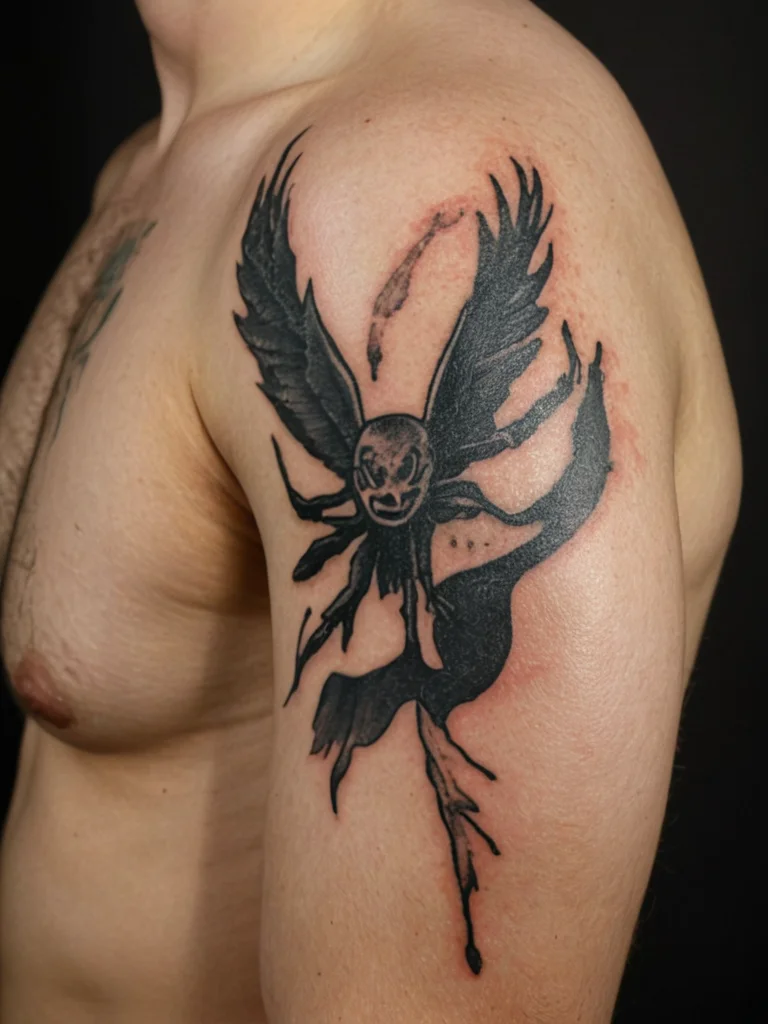
Now let’s talk about how these “masterpieces” were born. In the 90s, there weren’t many professional tattoo parlors, especially in small towns. Therefore, many turned to “masters” from the underground. What could this mean?
First, lack of sterility. This is perhaps the biggest danger. The use of non-sterile instruments, disposable consumables (or their complete absence) could lead to the most unpleasant consequences: from simple infection to HIV or hepatitis. I saw people getting tattoos “in the kitchen” or in a garage. It was a wild risk.
Second, poor quality materials. Inks that faded after a couple of months, “bled” under the skin, caused allergies. Needles that left scars. All of this was a reality. And while today we can easily find quality pigments and equipment, in the 90s it was a problem.
Third, lack of artistic skills and knowledge. Not everyone who picked up a machine was an artist. Many simply copied others’ sketches, often with distortions. This is how those “masterpieces” that cause laughter today came about. Incorrect anatomy, crooked lines, clashing colors – all of this was commonplace.
So how did people manage to get something more or less decent?
- Luck: Yes, plain luck played a huge role.
- Word of mouth: People went to those who had somehow established themselves, even if it was a “master” from the next building.
- Their own sketches: Some brought their own sketches, which they had drawn themselves or found in magazines, and asked to simply “transfer” them to the skin.
- Choice of simple but effective images: Tribals or simple inscriptions, which required less artistic skill, were a safer choice.
My advice to you, if you suddenly decide to dive into the world of tattoos: never skimp on your health and the quality of the work. Today, finding a good master is easier than ever. Look for reviews, check portfolios, talk to the artist. Don’t hesitate to ask questions about sterility and materials.
Reinterpreting Trash: Can You Wear the 90s Today?
And so we come to the most interesting part: how is “90s trash” viewed today? On the one hand, it’s no longer fashionable, many such tattoos are considered outdated, “kitsch.” On the other hand, there’s another trend.
Nostalgia. For many people who got such tattoos in their youth, they remain an important memory, a symbol of that youth, those emotions. And they are in no hurry to get rid of them. Moreover, sometimes people consciously get new tattoos in the 90s style, as a tribute to the past.
Ironic attitude. Today, many look at their old tattoos with a smile, as a funny artifact. But that doesn’t mean they hate them. It’s part of their personal history.
Revival of styles. Some elements of “90s trash” are indeed returning in a new interpretation. For example, neo-tribals, which have become more complex and detailed. Or stylizations of old comics and computer games. That is, the ideas are the same, but the execution is on a completely different level.
Cover-ups and corrections. The most common option today is to cover up old, unsuccessful 90s tattoos with more modern works. This is not always easy, because old pigments can “settle” deep and unevenly, but the result is worth it. Sometimes it’s enough to just touch up the outlines, add shading, make smoother transitions – and the old tattoo comes back to life.
My personal view: I believe that every tattoo is a reflection of its time and the person who wears it. If your “masterpieces” from the 90s are dear to you, if they hold personal meaning for you – wear them with pride! Time does not stand still, styles change, but the sincerity of feelings that stood behind many tattoos of that time is something that will never go out of style.
And if you are just planning your first tattoo, then please draw inspiration from the entire variety of modern styles. But remember: any tattoo made with meaning and soul, even the most “trashy” by others’ standards, will always be valuable to you.
So, that was our walk through the tattoo jungles of the 90s. I hope it was interesting and informative. Share your stories and “heritage” from those times in the comments!