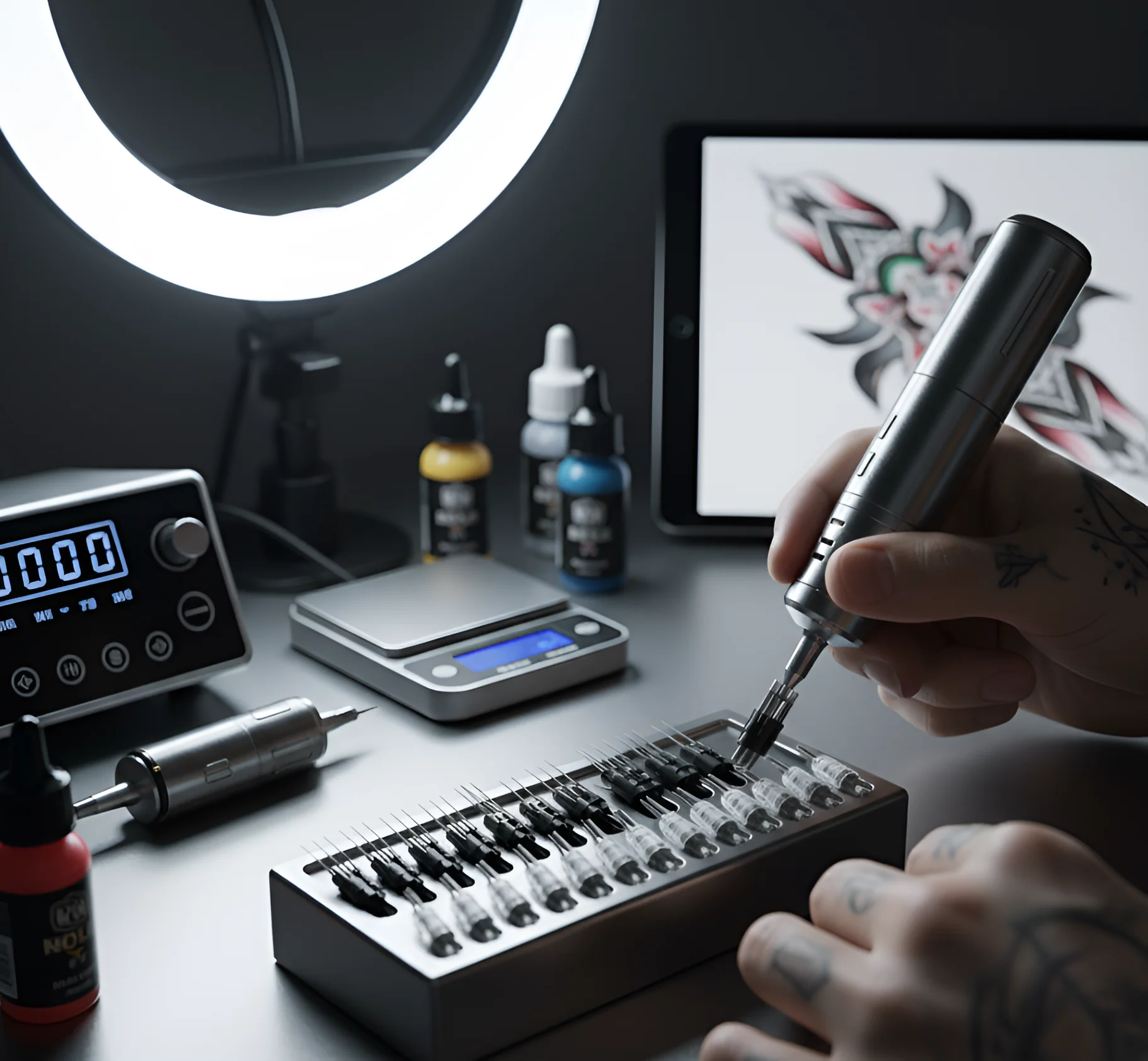
The global tattoo industry is experiencing an era of unprecedented growth, with the continuous evolution of its most crucial tool – the tattoo needle – playing a key role. According to the latest analytical data, the global tattoo needle market, valued at an impressive $289.8 million in 2023, is poised for significant expansion. Projections indicate that by 2031, this figure will reach $403.8 million, demonstrating a steady compound annual growth rate (CAGR) of 4.4% from 2024 to 2031.
Technological Vanguard: From Classic Soldering to Modular Systems
The tattoo needle has long ceased to be just a metal rod. Today, it is a high-tech precision instrument that ensures both client safety and the execution of the most complex artistic tasks. Technological breakthroughs, particularly in the field of cartridge systems and needle configurations, are the primary drivers of market growth.
Modern artists are increasingly opting for professional and specialized products that guarantee sterility, stability, and predictable results. The demand for high-quality needles is driven by several factors:
- Laser Engineering: The use of precision laser sharpening allows for perfect sharpness and consistency, minimizing skin trauma.
- Improved Sterilization Protocols: Compliance with international hygiene and safety standards is a critical factor that enhances consumer trust.
- Ergonomics and Control: Continuous innovations in cartridge design aim to improve the artist’s comfort and enhance precision in pigment application.
Key Segments and Needle Configurations
The market exhibits a complex structure, with each segment catering to specific artistic needs. The most in-demand configurations remain those that offer versatility and high-quality performance:
- Magnum: Primarily used for solid fills and soft shading, evenly distributing pigment over a large area.
- Round Liners: Indispensable for creating sharp and fine outlines.
- Round Shaders: Used for soft shading and color transitions.
- Cartridges: Modular, quickly interchangeable, and sealed systems have become the standard in professional studios due to their convenience and safety.
In addition to the type, the needle diameter (Gauge) is also important. Professionals work with sizes such as 12 (0.35 mm) for bold lines and quick fills, 10 (0.30 mm) for versatile work, and 8 (0.25 mm) or even 6 (0.20 mm) for hyperrealism and the finest details. The growing popularity of detailed styles like fineline and microrealism stimulates demand for smaller diameter needles.
Cultural Transformation as a Growth Catalyst
The main non-financial driver of the market is the complete normalization of tattoos in global culture. Tattoos have definitively established themselves as a legitimate form of personal expression and high art. The influence of social media, reality shows, and celebrities showcasing complex and large-scale works is prompting more and more people to choose body art.
This cultural shift has led to two important consequences:
- Expansion of the Client Base: Tattoos are no longer confined to subcultures and have become popular among a wide range of demographic groups (among both men and women).
- Increased Quality Demands: Clients are willing to pay more for complex, customized designs that require premium equipment, directly supporting manufacturers of high-quality needles.
Industry Challenges: Regulation and Counterfeiting
Despite the positive dynamics, the market faces significant obstacles. The most substantial is the tightening of global sanitary and safety regulations. Manufacturers are forced to invest heavily in complying with strict sterilization and material quality standards, which inevitably increases production costs.
The second, equally dangerous challenge is the proliferation of counterfeit and low-quality needles. Cheap fakes undermine consumer trust, endanger client health, and cause reputational damage to legitimate brands that spend years developing safe and precise instruments. Furthermore, volatile raw material prices and logistical disruptions also add operational complexities.
Regional Leaders: North America and Europe
Geographically, North America maintains its leading position. A mature tattoo culture, a high concentration of professional studios, and a significant number of high-caliber artists are established here. Demand for high-performance equipment in the USA and Canada remains the most stable.
Europe is also a key market. The rise of individualism, a shift towards self-expression, and an increasing number of young people actively embracing body art are fueling European demand. The expansion of professional training programs for tattoo artists in Germany, the UK, and France further stimulates the need for reliable and high-quality consumables.
Recent Innovations: Examples from 2024
The industry demonstrates that development never stops. Recent announcements from key market players confirm a focus on ergonomics and precision:
- March 2024: Kwadron showcased the capabilities of the portable tattoo machine Critical x Prime Pen, equipped with a Japanese Bishop motor. With a 4.2 mm needle stroke, this model is ideal for all techniques, from crisp lines to solid fills.
- June 2024: Stigma Rotary introduced the new Stigma EN05-FG cartridge line. These cartridges are lighter and more streamlined compared to previous versions, offering artists unprecedented control and comfort. They retain Stigma’s signature configurations while being optimized for extended use.
Key Market Players Shaping Standards
Competition in the market is concentrated around brands that combine innovation, quality, and strict adherence to hygiene standards. Among the most influential companies whose products set the tone in the industry are:
- Cheyenne Professional Tattoo Equipment
- Bishop Rotary
- Eikon Device Inc.
- Dragonhawk Tattoo Supply
- Kwadron
- Tatsoul
- EZ Tattoo Supply
- FK Irons
- Stigma Rotary
- Peak Needle Co.
- Precision Needles