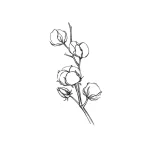
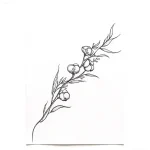
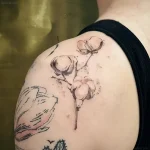
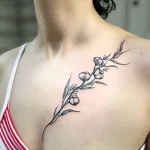
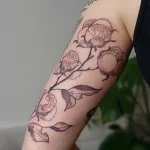
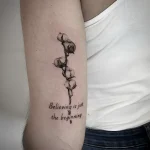
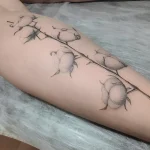
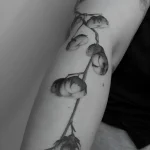
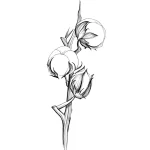
A tattoo is not just body adornment; it’s a profound personal statement reflecting your values, beliefs, and life journey. Among the many plant motifs that find new life on the skin, the image of cotton holds a special place. Delicate in appearance yet possessing powerful symbolism, cotton in a tattoo is a choice for those who value purity, abundance, resilience, and comfort. On Tatufoto.com, we will delve into the world of this amazing symbol to reveal all its facets and help you understand what a cotton tattoo can specifically mean to you.
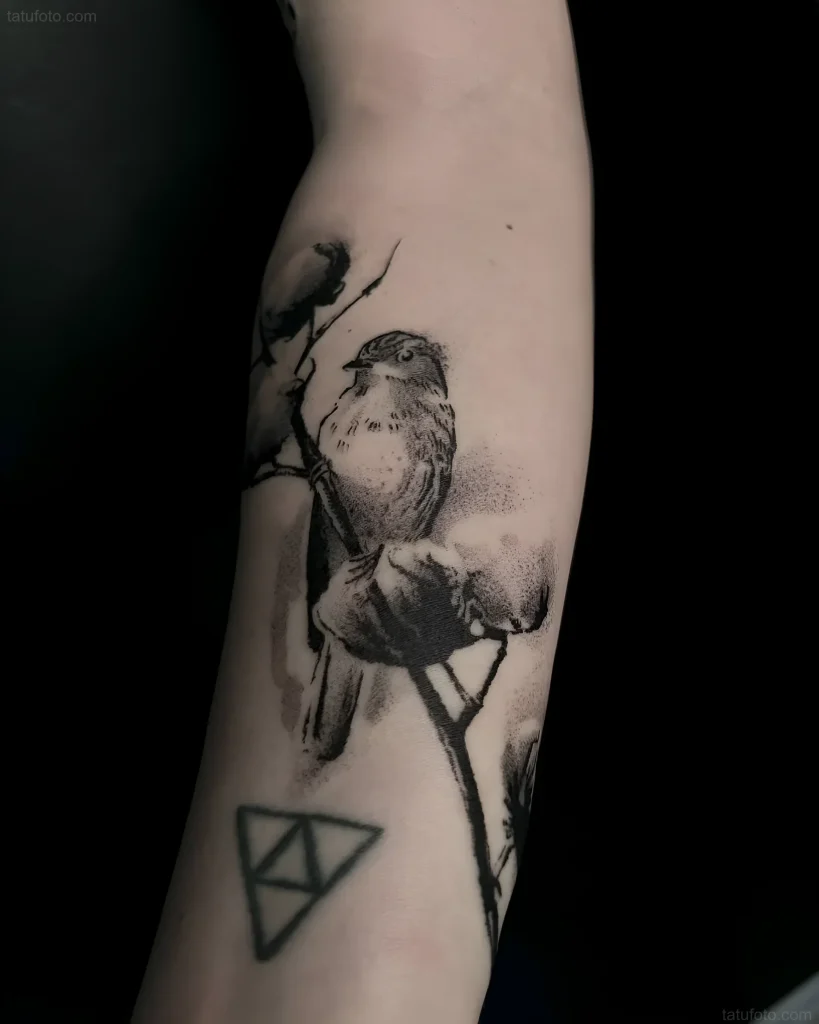
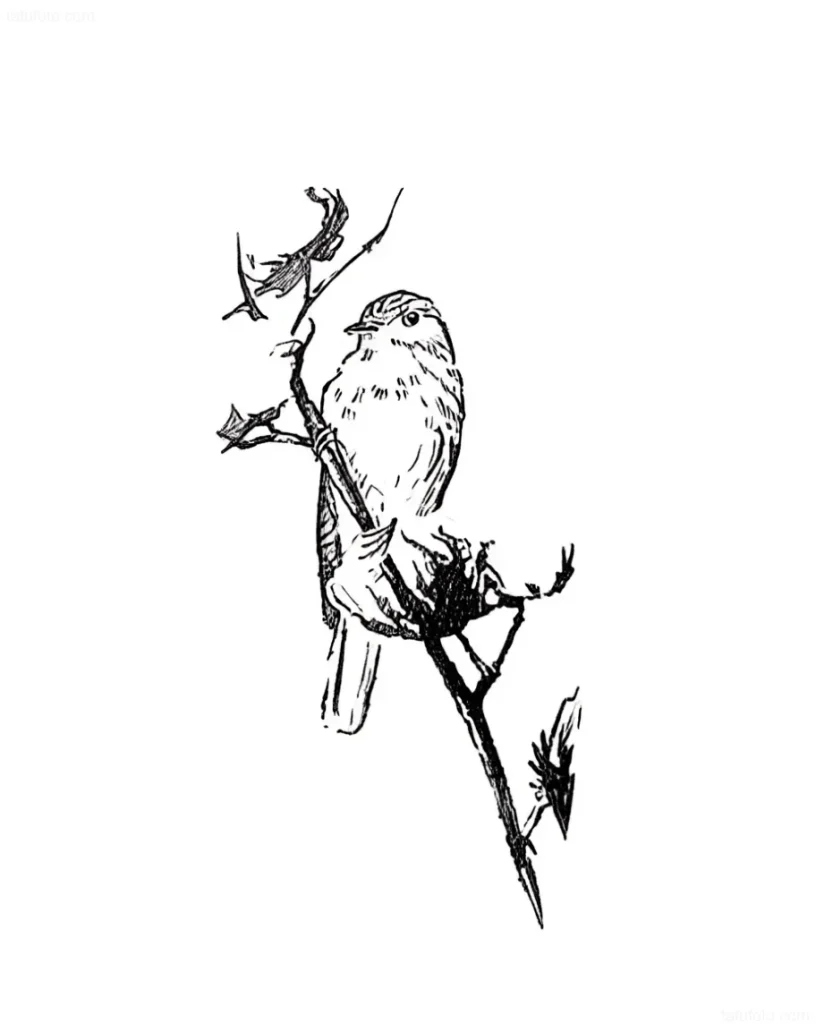
The Meaning of a Cotton Tattoo: From Field to Skin
The image of cotton on the body is much more than just a beautiful plant pattern. It is an indelible illustration that carries a rich layer of meanings, rooted in the history and culture of humanity. From the vast fields where fluffy bolls ripen to the soft fabric that embraces us from birth, cotton symbolizes many aspects of life that resonate with the modern soul.
- Purity and Innocence: The white color of cotton fibers is a universal symbol of purity, innocence, and freshness. A cotton tattoo can be chosen by those who seek peace of mind, inner harmony, and the preservation of their true, untainted essence. It can be a reminder of the beginning of a new phase in life, of the pursuit of sincerity and openness.
- Comfort and Coziness: Cotton is a material associated with home, warmth, care, and security. It provides a sense of comfort and coziness. An image of cotton on the skin can symbolize the desire to create a harmonious home, love for family, and the wish to surround oneself and loved ones with warmth and protection. It can also signify a person who is themselves a source of support and comfort for others.
- Abundance and Prosperity: Historically, cotton was a valuable agricultural product, a source of wealth and prosperity. A cotton harvest meant affluence and the ability to provide for one’s family. In a modern context, a cotton tattoo can symbolize good luck, success in business, fertility, abundance, and the influx of blessings into one’s life. It is a powerful amulet for those striving for material and spiritual growth.
- Resilience and Adaptation: The cotton plant is remarkably hardy and can grow in various climatic conditions. Its ability to withstand drought and yield a harvest even in difficult circumstances makes it a symbol of resilience, love of life, and the ability to adapt to changing circumstances. A cotton tattoo can be chosen by people who have overcome difficulties, endured trials, and become stronger. It is a reminder of inner strength and the capacity for renewal.
- Naturalness and Simplicity: Cotton is a natural material that needs no excessive adornment. It is valued for its simplicity, naturalness, and eco-friendliness. A cotton tattoo can speak of a pursuit of naturalness in everything – in lifestyle, relationships, and worldview. It is the choice of those who reject artificiality and value authenticity.
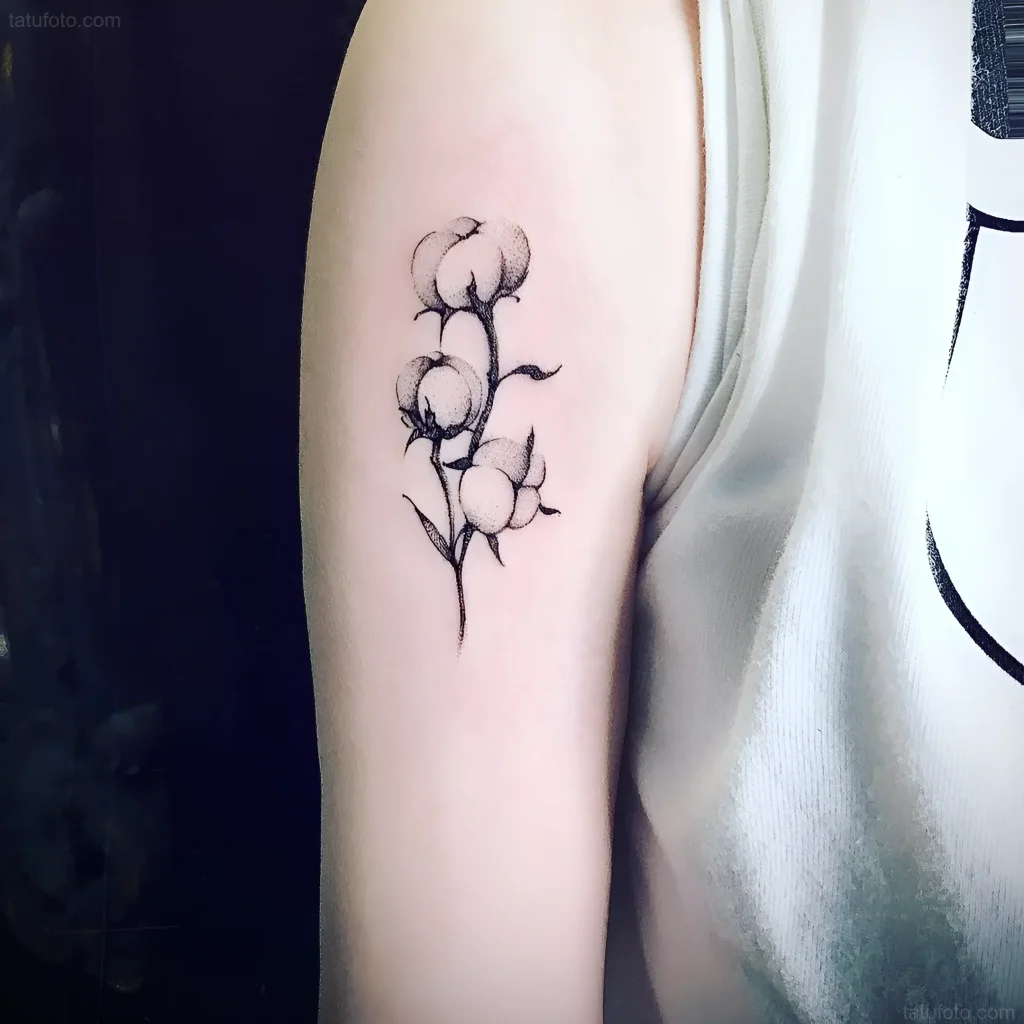

The History of Cotton: A Symbol of Life and Abundance
To truly appreciate the deep meaning of a cotton tattoo, one must turn to its rich history. Cotton is not just an agricultural crop; it is a plant that has shaped civilizations for millennia, influencing the economies and cultures of peoples worldwide. Its journey from a wild plant to one of the planet’s most important resources is filled with symbolism that remains relevant to this day.
- Ancient Roots: Cotton was cultivated in India and Peru thousands of years before Christ. In ancient cultures, it was considered a gift from the gods, a symbol of fertility and life. Indian texts describe cotton as “celestial fabric,” and in South America, it was used not only for clothing but also for ritualistic purposes. This ancient connection to life and divine patronage gives cotton tattoos additional depth.
- Economic and Cultural Influence: As cotton spread across the world, it became a cornerstone of trade routes and economies. It brought prosperity to entire regions, providing work and sustenance for millions. This history of abundance and prosperity, achieved through hard work and fertile land, is a powerful message for those who choose a cotton tattoo as a symbol of success and well-being.
- Symbol of Purity and Light: The white, fluffy cotton bolls have always been associated with purity, light, and innocence. In some cultures, it was used in purification rituals. This aspect makes a cotton tattoo an ideal choice for those seeking spiritual purity, a fresh start, or wishing to emphasize their bright nature.
- Resilience and Strength: The very process of growing cotton, requiring patience and attention, as well as its ability to survive and yield harvests in various conditions, emphasizes the symbolism of resilience and vitality. Cotton fiber, despite its softness, is surprisingly strong. This makes cotton a symbol of inner strength, the ability to overcome difficulties, and to preserve one’s essence despite external influences.
Thus, by choosing a cotton tattoo, you are not just getting a beautiful design on your body; you are connecting with a millennia-old history of symbols that speak of life, abundance, purity, and indomitable strength of spirit. It is the choice of a person who values deep meaning and connection with nature.
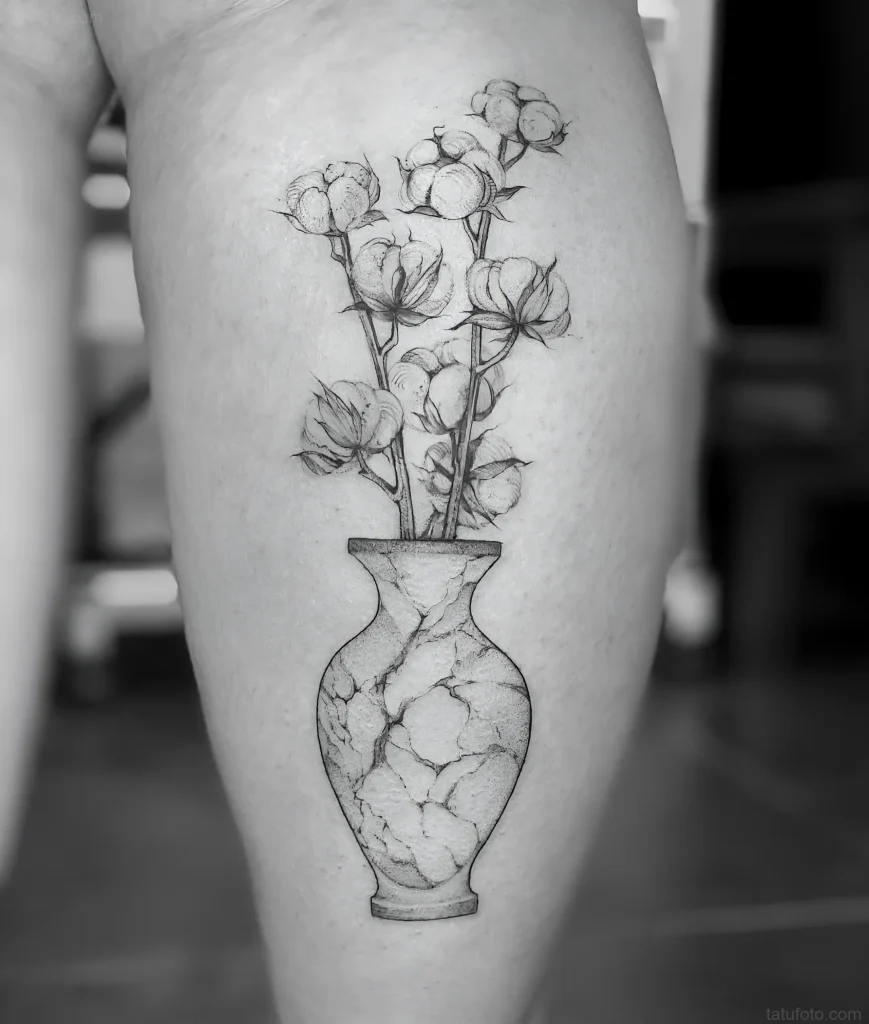
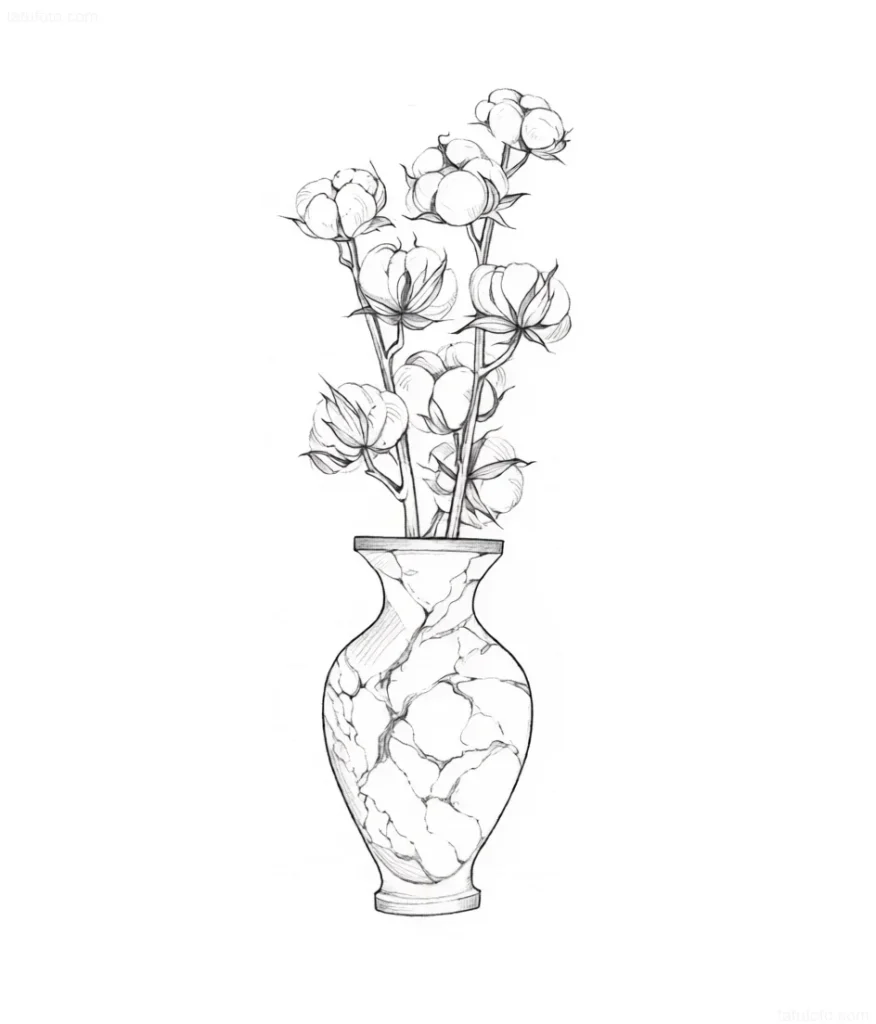
The Symbolism of a Cotton Tattoo: What It Says About You
A cotton tattoo is not just an aesthetic choice; it’s a powerful non-verbal message you send to the world and, more importantly, to yourself. Every detail, every element of the composition can enhance or alter the overall meaning. Let’s consider what a cotton tattoo can specifically tell about its wearer.
Key Messages Conveyed by a Cotton Tattoo:
- Striving for Purity and Sincerity: If you choose a cotton tattoo, it may indicate your inner need for purity of thoughts, intentions, and actions. You value sincerity in relationships and strive for transparency in everything you do. It is a symbol of a person who rejects lies and falsehood.
- Love for Home and Family: Cotton is associated with coziness, hearth, and care. A tattoo depicting it often becomes an expression of deep attachment to family, love for loved ones, and the desire to create a warm, safe, and harmonious atmosphere around oneself. It can be a tribute to one’s roots or a symbol of hope for a happy future with family.
- Belief in Abundance and Prosperity: For many, cotton is a symbol of fertility, affluence, and success. If you wear such a tattoo, you likely have a positive outlook on life, believe in your abilities, and attract well-being into your life. It can be a reminder that efforts are always rewarded and that you deserve the best.
- Resilience and Inner Strength: The cotton plant, despite its apparent fragility, possesses remarkable endurance. This makes it an ideal symbol for those who have overcome life’s difficulties, endured trials, and maintained their integrity. A cotton tattoo speaks of your adaptability, strength of spirit, and your refusal to give up in the face of adversity.
- Connection with Nature and Naturalness: Choosing a plant motif like cotton often indicates a deep connection with nature, a love for simple things, and a pursuit of naturalness. You may be a person who values eco-friendliness, harmony with the environment, and prefers naturalness in all aspects.
- Hope and New Beginnings: The white, fluffy cotton bud opening from a tough boll can symbolize hope, rebirth, and new beginnings. This is a tattoo for those who leave the past behind and look optimistically to the future, ready for growth and development.
Additional Elements Enhancing the Symbolism:
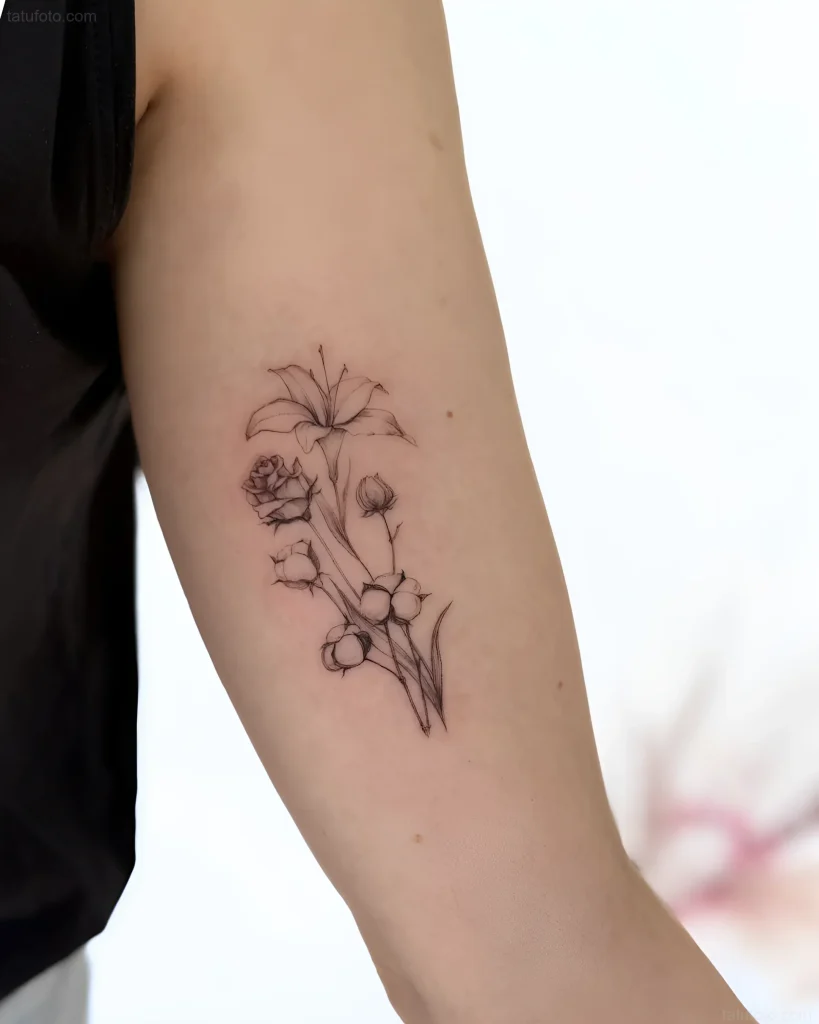
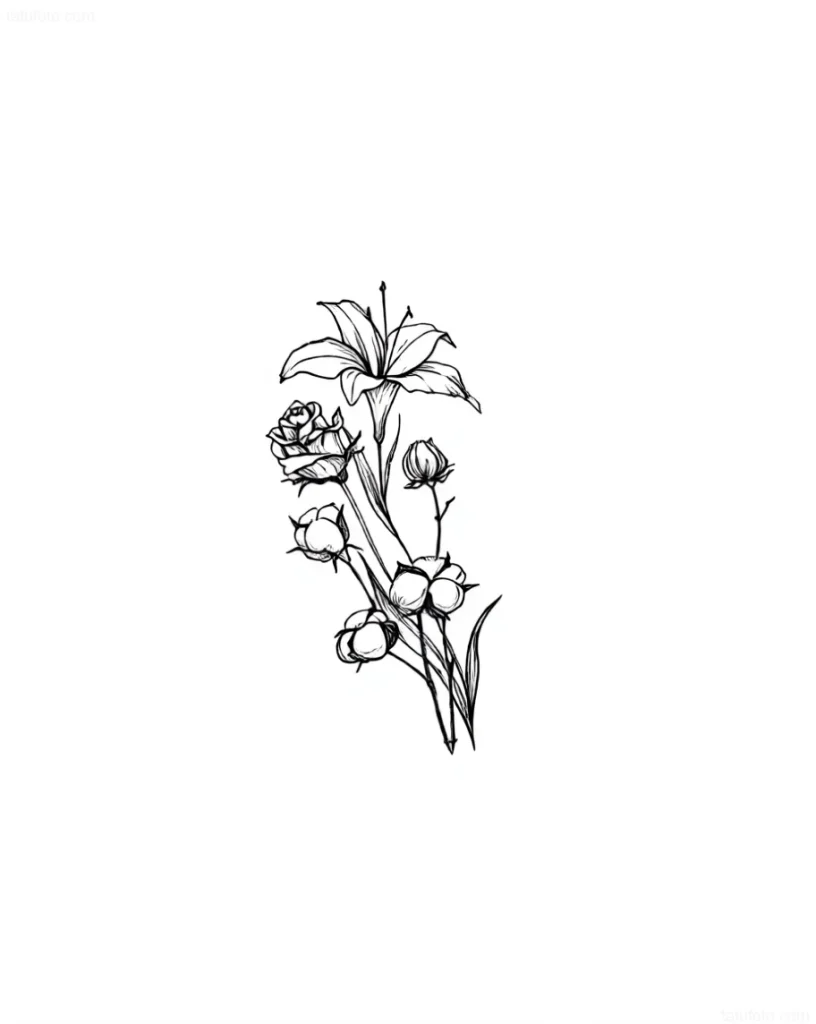
- Combination with Other Colors: If cotton is depicted with other colors, such as lavender (calmness) or roses (love), it can add new layers of meaning.
- Birds or Insects: A butterfly sitting on cotton can symbolize transformation and lightness combined with purity.
- Branches or Roots: An image of cotton with roots emphasizes connection to origin, stability, and deep roots.
Thus, a cotton tattoo is a multifaceted symbol that can speak of your purity, love, resilience, and belief in the best. It is the choice of a person with a deep inner world who values true, enduring values.

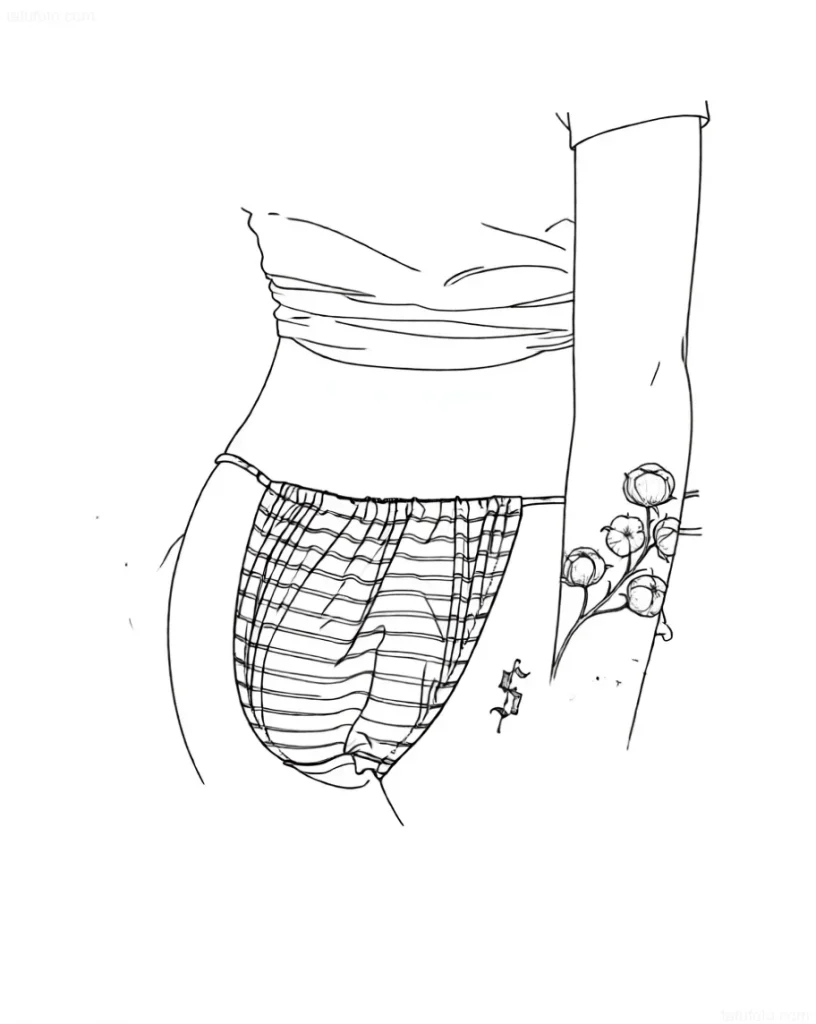
Cotton Tattoo Styles: From Minimalism to Watercolor
The image of cotton, thanks to its universal shape and delicate texture, adapts beautifully to a wide variety of tattoo styles. The choice of style plays a key role in how your body art will be perceived and allows you to express individuality, emphasizing certain aspects of its symbolism.
Let’s look at the most popular styles in which cotton is particularly striking:
Minimalism and Fine Line
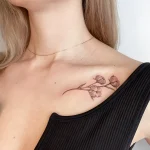
- Description: For those who appreciate conciseness and sophistication. In this style, cotton is depicted with thin, barely noticeable lines, often without shading or with minimal use of shadows. The main focus is on the outline and form.
- Symbolism: Emphasizes purity, simplicity, naturalness, and delicacy. Such a tattoo speaks of restraint, refined taste, and a pursuit of deep meaning without excessive flourish.
- Examples: One or two small cotton buds on a thin branch, placed on the wrist, collarbone, or behind the ear.
Realism
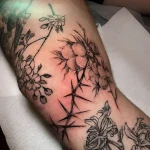
- Description: A maximally accurate and detailed reproduction of a cotton boll, capturing every fiber, texture, and play of light and shadow. Often done in black and gray or with soft, natural shades of white and green.
- Symbolism: Focuses on natural beauty, authenticity, and tangibility. Emphasizes the value of genuineness, a deep connection with nature, and the ability to see beauty in details.
- Examples: A large, photorealistic cotton boll, possibly with dew drops, on the shoulder or forearm.
Watercolor
- Description: Characterized by smooth color transitions, blurred outlines, and the effect of spreading paint, like in a watercolor painting. Cotton in watercolor style looks airy, light, and picturesque.
- Symbolism: Gives the image lightness, dreaminess, and artistry. It can symbolize softness, adaptability, a creative nature, and emotional depth. Colors can be pastel or brighter, creating a unique mood.
- Examples: Several cotton bolls surrounded by soft watercolor splashes in pastel tones, on the thigh or back.
Neo-Traditional
- Description: Combines elements of the classic American traditional style (bold outlines, saturated colors) with more modern techniques and detailing. Cotton in this style will have clear lines but may be more volumetric and detailed than in a pure traditional style.
- Symbolism: Emphasizes the classic beauty, reliability, and durability of the symbol. It can speak of respect for traditions, while also striving for individuality and a modern interpretation.
- Examples: A cotton branch with several bolls, surrounded by decorative elements or ribbons, on the sleeve or calf.
Blackwork
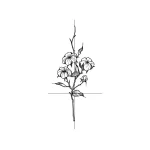
- Description: Uses exclusively black pigment, often with rich fills, graphic elements, and contrasting shadows. Cotton in this style takes on a more graphic, stylized appearance.
- Symbolism: Can emphasize strength, decisiveness, minimalist aesthetics, and versatility. Black color gives the image rigor and expressiveness, focusing on form and contrast.
- Examples: A stylized black silhouette of a cotton branch or boll, possibly with dotwork or linework elements, on the arm or back.
When choosing a style for your cotton tattoo, it’s important to consider not only aesthetic preferences but also how the chosen style will complement and enhance the meaning you invest in the image. Discuss your ideas with the artist to create a truly unique and meaningful piece.
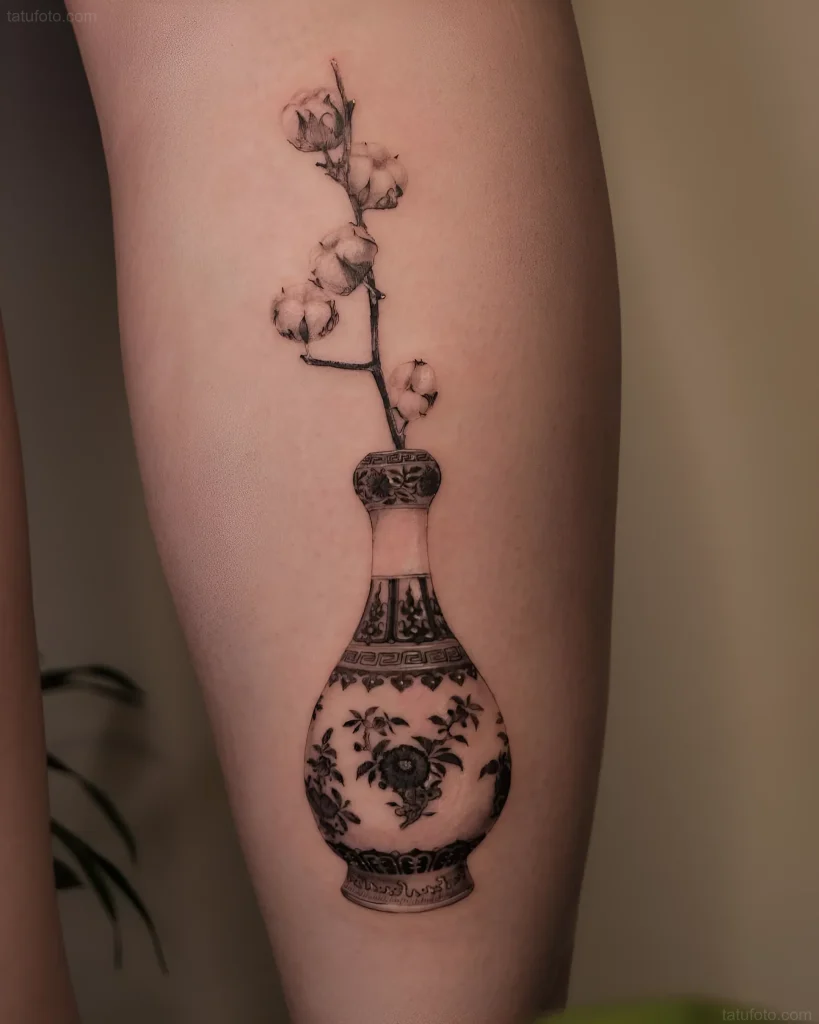
Best Places for a Cotton Tattoo on the Body
Choosing a place for a cotton tattoo on the body is not just a matter of aesthetics but also an important aspect that can enhance or complement the symbolic meaning of the image. Different parts of the body carry their own associations, and the right combination of place and motif creates a harmonious and profound body art.
Let’s consider the most popular and suitable places for a cotton tattoo, as well as their potential symbolism:
- Wrist:
- Reason for choice: A visible but delicate location. Ideal for small, minimalist cotton designs.
- Symbolism: A reminder of purity, tenderness, new beginnings, which are always with you. It can symbolize a gentle nature, yet inner resilience. This is a place for a tattoo intended to serve as a personal amulet or a constant source of inspiration.
- Forearm (inner or outer side):
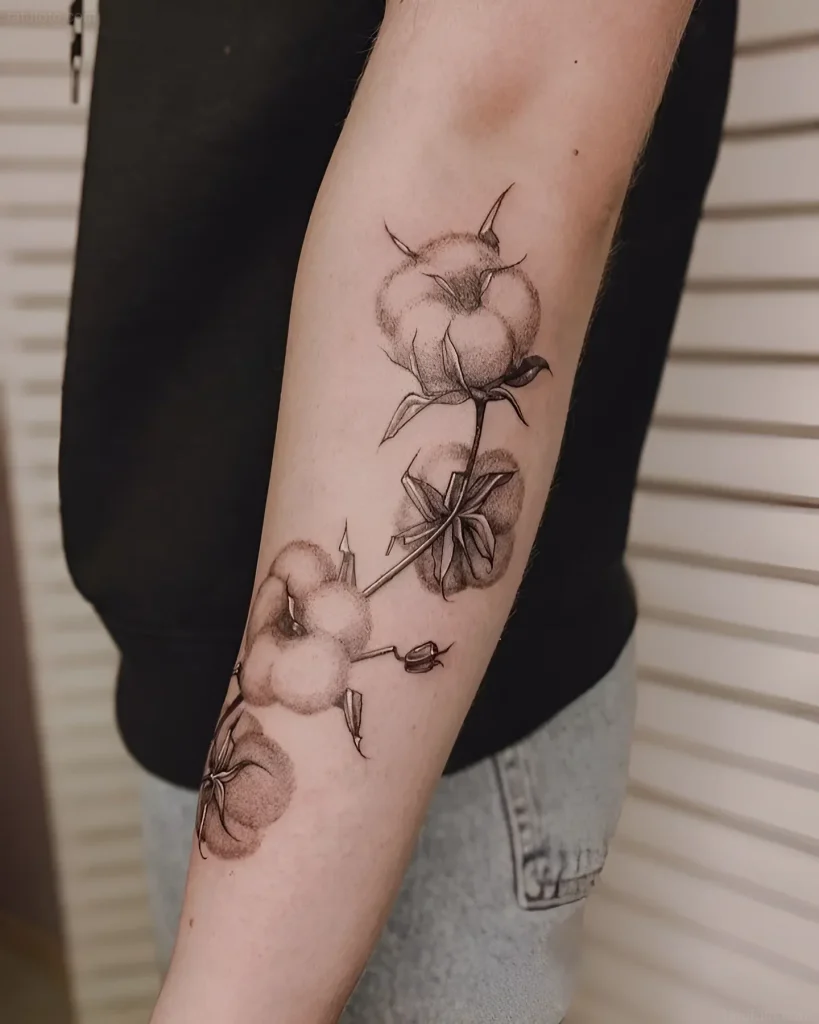
- Reason for choice: Excellent area for more detailed or realistic images, as well as for compositions with several bolls or a branch.
- Symbolism: Since hands are tools of action, a cotton tattoo here can symbolize a striving for fruitful work, abundance, and the ability to create comfort and coziness for oneself and others. It can be a sign of your hardworking nature and ability to bear fruit.
- Shoulder or Shoulder Blade:
- Reason for choice: A large, flat surface suitable for voluminous, detailed works or watercolor compositions.
- Symbolism: The shoulder is often associated with strength, protection, and responsibility. A cotton tattoo here can symbolize inner strength, the ability to bear burdens, as well as the protection and care you provide to your loved ones. It can also be a sign of your reliability and support.
- Collarbone:
- Reason for choice: An elegant and sensual location, ideal for thin, delicate lines and small images.
- Symbolism: Proximity to the heart gives a cotton tattoo here an additional meaning of love, tenderness, and purity of soul. It can be a very personal symbol, connected to the most intimate feelings and aspirations.
- Ribs or Side:
- Reason for choice: Large space for vertical compositions, branches, or entire bouquets of cotton. The location is quite intimate, often hidden under clothing.
- Symbolism: A cotton tattoo on the ribs can symbolize deep personal beliefs, hidden strength, inner comfort, and harmony that you keep within yourself. It can be your personal source of calm and confidence.
- Thigh:
- Reason for choice: Extensive area for large-scale and detailed projects, including watercolor or realistic compositions with additional elements.
- Symbolism: The thigh is associated with fertility, life force, and femininity (for women). A cotton tattoo here can emphasize abundance, prosperity, connection to the earth and nature, as well as sensuality and softness.
- Ankle or Foot:
- Reason for choice: A delicate location for small, symbolic tattoos.
- Symbolism: Cotton here can symbolize connection to the earth, stability, as well as lightness of step and striving for a new path, without losing one’s inner purity and values. It can be a reminder to stand firm on your feet, yet maintain lightness of being.
When choosing a location for your cotton tattoo, always be guided not only by aesthetics but also by how that location resonates with your personal meaning and the message you want to convey.
Tips for Choosing and Caring for a Cotton Tattoo
Choosing a cotton tattoo is just the first step towards owning this beautiful symbol. To ensure your body art brings you joy for years to come, it’s important to pay attention to both the process of choosing an artist and sketch, as well as the subsequent care for a fresh and healed tattoo. Tatufoto.com experts have gathered the most important recommendations for you.
Choosing an Artist and Sketch:
- Study the Portfolio: Make sure your chosen artist has experience with plant motifs and masters the style you prefer (realism, watercolor, minimalism, etc.). Pay attention to the quality of lines, detailing, and texture rendering.
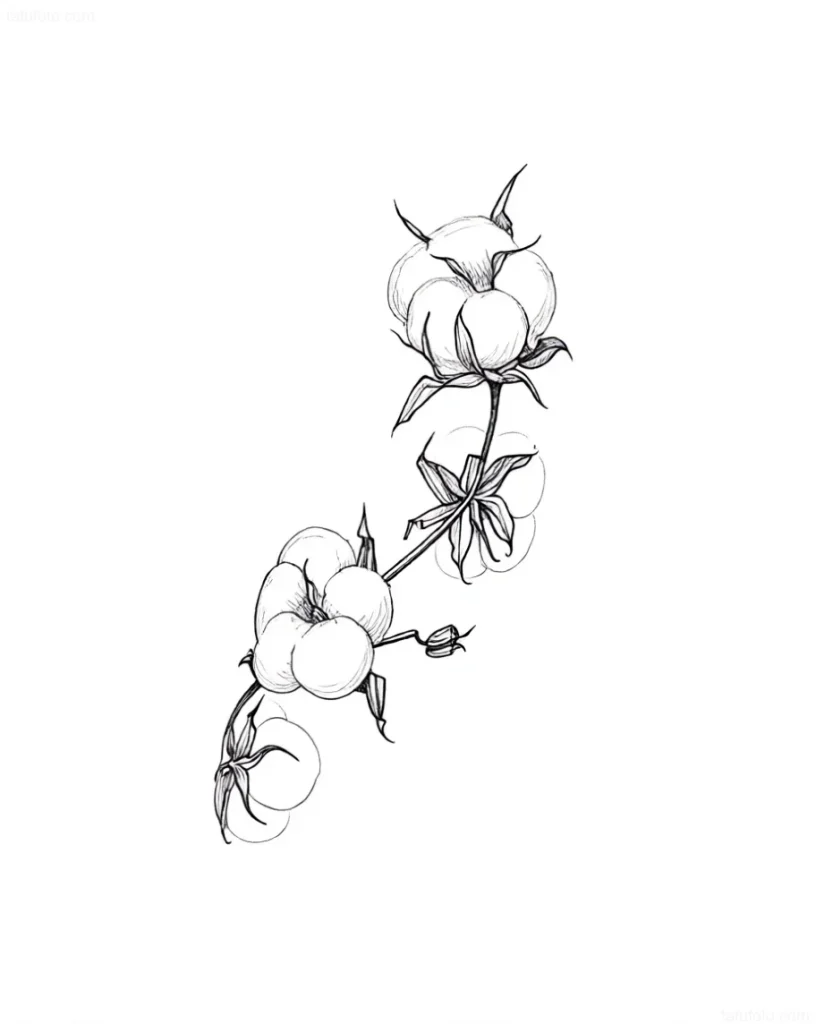
- Detailing of Cotton: Cotton is a delicate image. Discuss with the artist how they plan to convey its fluffy texture. In realism, this is achieved through fine strokes and the play of light; in minimalism, through stylization.
- Color Palette: Although cotton is traditionally white, shades of gray and beige can be used in tattoos, as well as green for the stem and brown for the boll. In watercolor, soft pastel tones are possible. Discuss which colors will be used and how they will affect the overall impression.
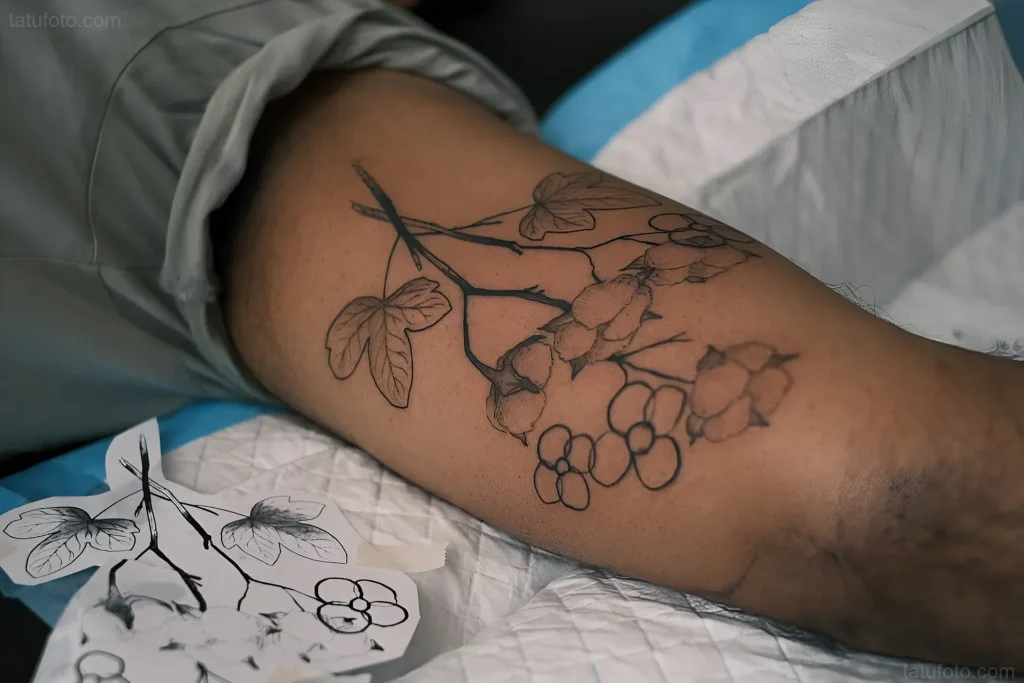
- Placement and Size: As we’ve discussed, placement matters. Consider whether you want a small, intimate tattoo or a large composition. The artist will help you choose the optimal size and placement, doing a mock-up of the sketch on your body.
- Custom Sketch: Don’t hesitate to ask the artist to develop a unique sketch that reflects your specific vision and symbolism. Adding other elements (e.g., bees, butterflies, ribbons with dates) can make the tattoo even more personal.
Care for a Fresh Cotton Tattoo:
Proper care in the first few weeks after application is key to the longevity and beauty of your tattoo.
- Listen to Your Artist: The most important rule is to strictly follow the instructions of your tattoo artist. They know your skin and the materials used.
- Initial Bandage: Wear the protective film or bandage for as long as recommended by the artist (usually from a few hours to several days, depending on the type of bandage).
- Cleaning: Gently wash the tattoo with warm water using an unscented antibacterial soap 2-3 times a day. Gently pat dry with a clean paper towel, do not rub.
- Moisturizing: Apply a thin layer of specialized healing cream or ointment recommended by the artist. Do not overdo it with the amount, so the skin can breathe.
- Avoid:
- Direct sunlight and tanning beds.
- Prolonged contact with water (baths, pools, saunas). Prefer quick showers.
- Tight clothing that can rub against the tattoo.
- Intense physical activity causing heavy sweating until fully healed.
- Scratching and picking at scabs.
Care for a Healed Cotton Tattoo:
Even after complete healing, a tattoo requires attention to maintain its brightness and clarity.
- Sun Protection: UV radiation is the main enemy of tattoos. Always use sunscreen with a high SPF (at least 30) on the tattooed area, especially if it is often exposed to the sun.
- Moisturizing: Regularly moisturize the skin in the tattooed area with lotion or cream. Healthy, hydrated skin retains pigment better.
- Healthy Lifestyle: The overall health of your skin directly affects the appearance of your tattoo. Healthy eating, adequate water intake, and avoiding bad habits will help your tattoo look fresh.
By following these simple but important recommendations, you can enjoy the beauty and deep meaning of your cotton tattoo for a lifetime.
Frequently Asked Questions About Cotton Tattoos
As professional tattoo encyclopedists at Tatufoto.com, we have compiled the most common questions our readers have about cotton tattoos and prepared comprehensive answers for them.
Question: Is a cotton tattoo exclusively a female tattoo?
Answer: Not at all. Although cotton is associated with tenderness and purity, its symbolism of abundance, resilience, connection with nature, and home is universal. Men also choose cotton tattoos to express these qualities, often in more graphic or realistic styles, sometimes combined with other elements that emphasize masculinity or strength. For example, a cotton branch can be part of a larger composition on a sleeve or back.
Question: What colors are best suited for a cotton tattoo?
Answer: Traditionally, cotton is depicted in shades of white, gray, and black to convey volume and fluffiness. The stem and leaves are often done in green tones, and the opening boll in brown or beige. In watercolor style, soft pastel shades can be used to create an airy effect. The choice of color depends on the desired style and personal preferences, but the key is to create a sense of softness and naturalness.
Question: Can cotton be combined with other elements in a tattoo?
Answer: Absolutely! Combining cotton with other symbols can significantly enrich its meaning. Popular combinations include:
- Birds (e.g., swallows): Symbol of freedom, hope, and returning home.
- Butterflies: Transformation, lightness, beauty.
- Bees: Diligence, fertility, community.
- Other flowers (lavender, daisies): Add meanings of calmness, innocence, joy.
- Inscriptions or dates: Personalize the tattoo, connecting it to a specific event or person.
- Geometric shapes: Give a modern look and can symbolize structure, order.
Question: How painful is it to get a cotton tattoo?
Answer: The level of pain during tattooing is individual and depends on several factors: a person’s pain threshold, the size and detail of the tattoo, and the location on the body. Areas with thin skin and close proximity to bones (e.g., ribs, collarbone, ankle) are usually more sensitive. A small cotton tattoo on the forearm or wrist is generally less painful than a large composition on the back. The artist can always use pain relief if necessary.
Question: How long does a cotton tattoo take to heal?
Answer: Initial healing of a tattoo takes 2 to 4 weeks, during which new skin forms. Complete healing, when the pigment has fully settled and the skin has completely recovered, can take 2 to 6 months. Throughout this entire period, it is important to follow the care recommendations to avoid complications and maintain the brightness of the design.
Question: Can a cotton tattoo lose its whiteness over time?
Answer: Any tattoo can fade slightly over time, especially if it is exposed to frequent sun. White and light pigments used to depict cotton may be more prone to fading compared to dark ones. However, with proper care, regular use of sunscreen, and skin moisturizing, your cotton tattoo will retain its beauty for a long time. If necessary, you can always consult your artist.