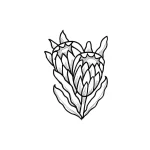
The protea flower is not just a beautiful floral motif; it’s a powerful, multi-layered symbol that has gained incredible popularity in tattoo art in recent years. The protea, known for its exotic, almost architectural form and amazing resilience, carries one of the deepest and most multifaceted meanings in the world of body art. If you’re looking for a tattoo that speaks of spiritual strength, transformation, and the ability to survive in the harshest conditions, the protea is your ideal choice. Our expert material will help you delve into the cultural and mythological context of this flower so that your tattoo gains maximum depth.
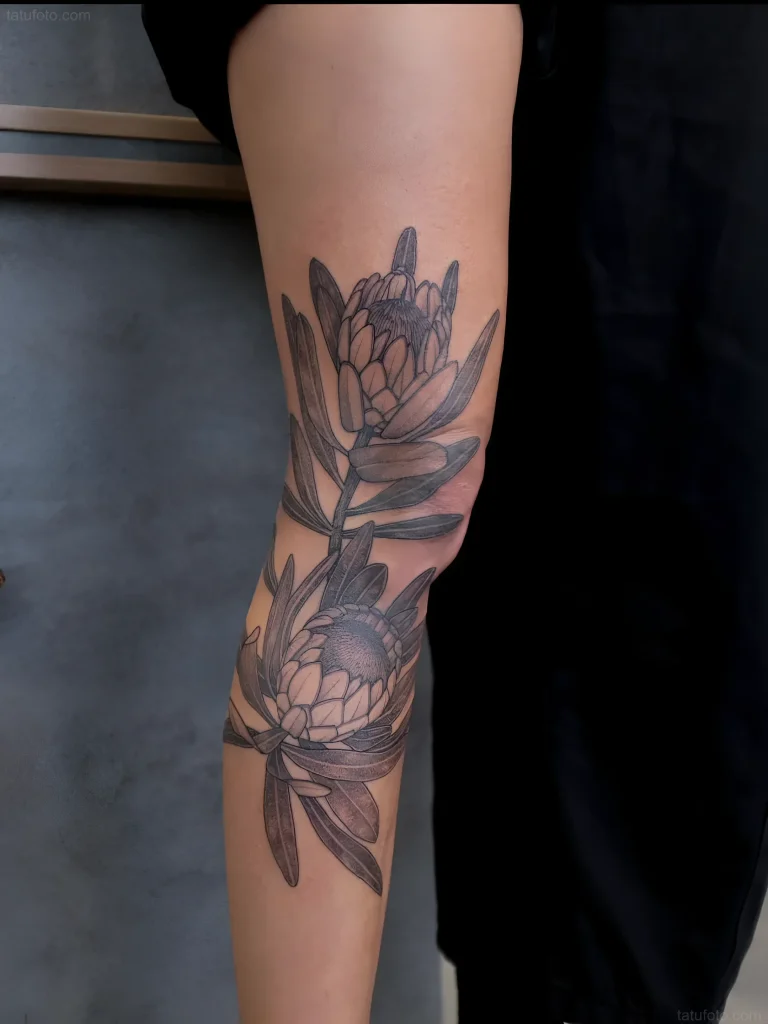
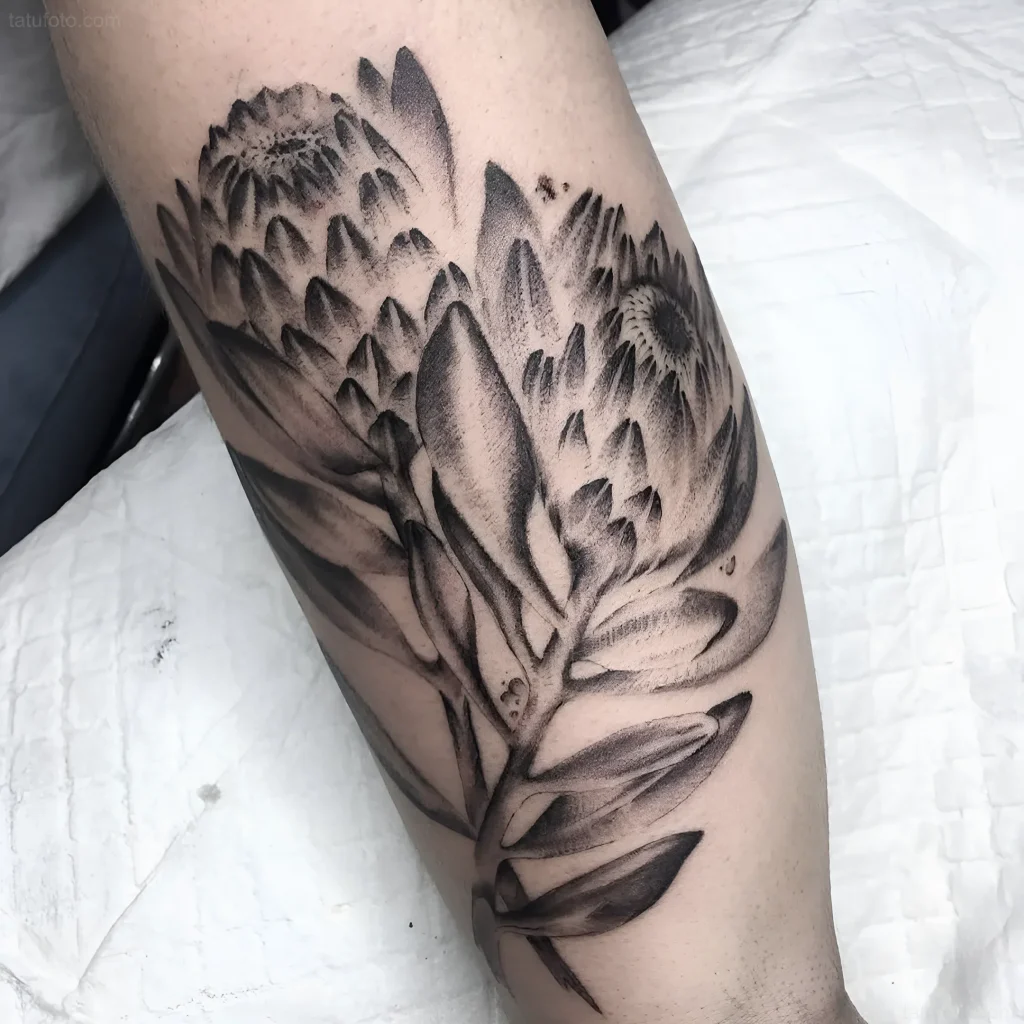
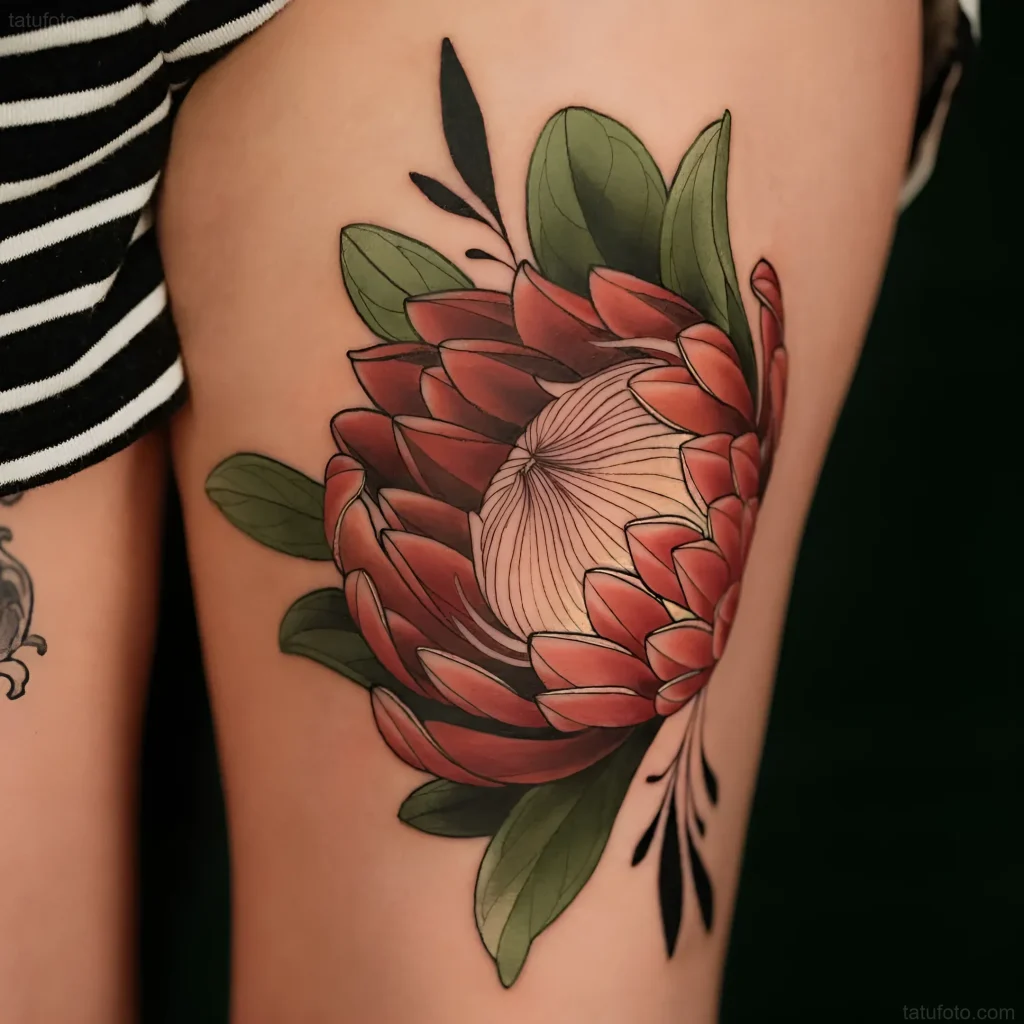
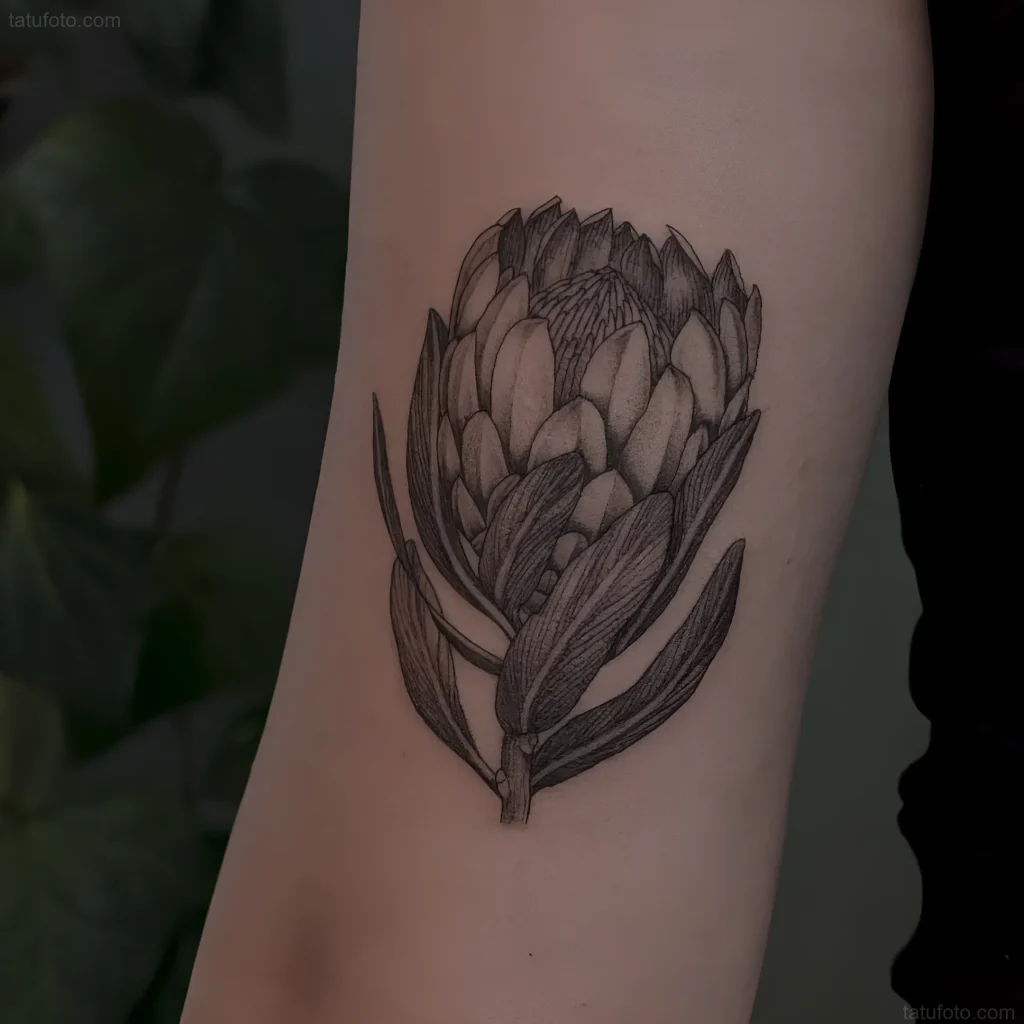
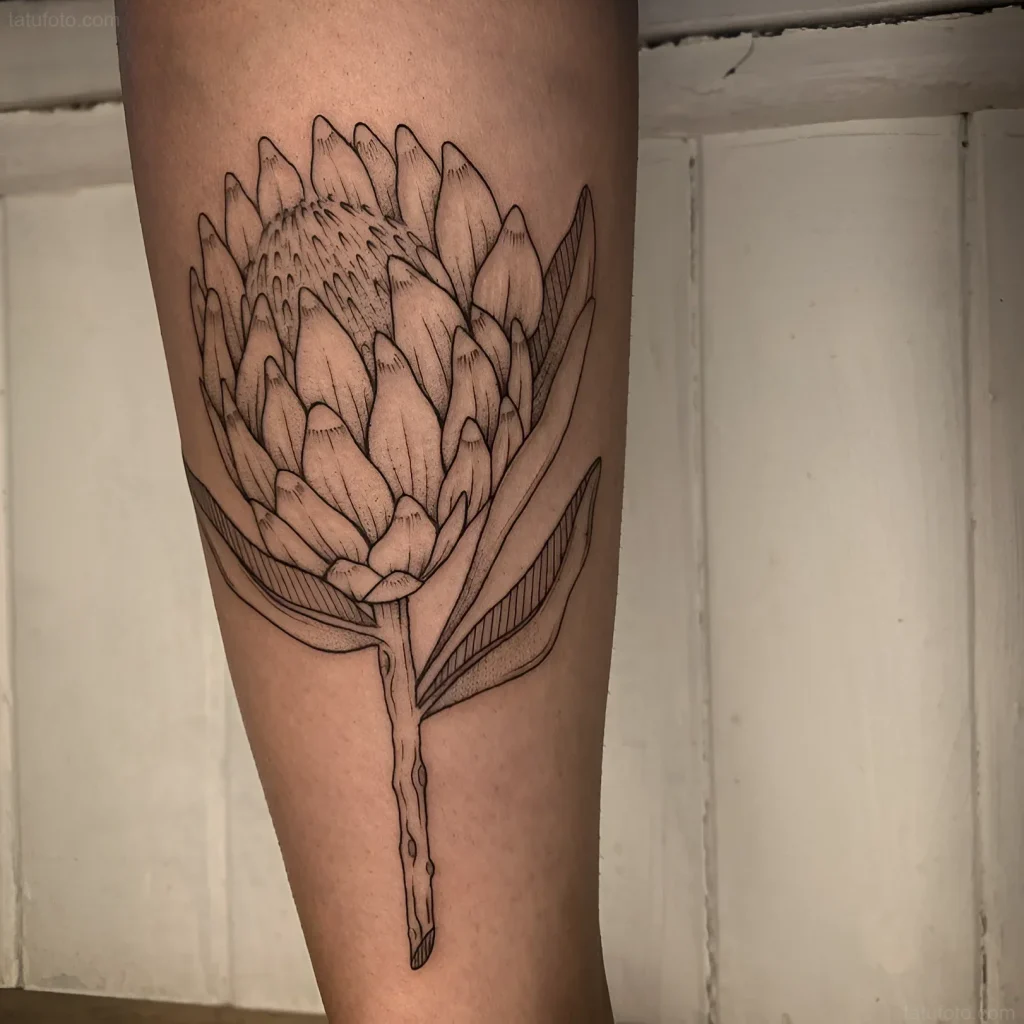
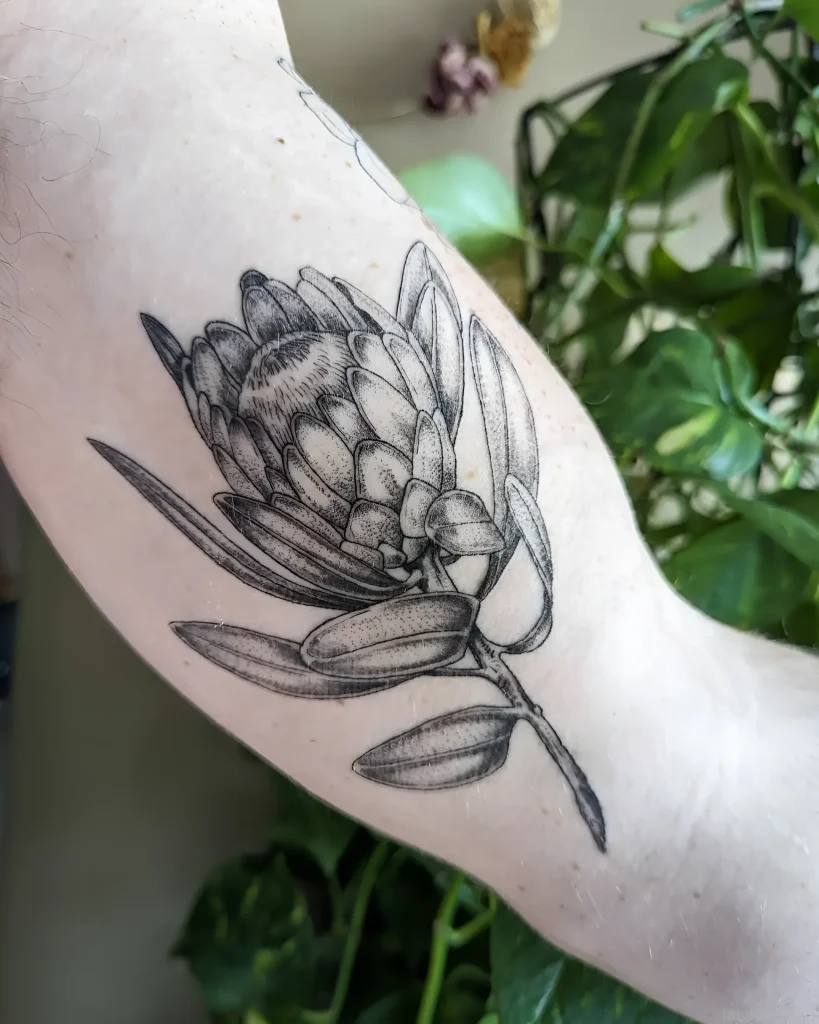
The Protea Flower: A Unique Tattoo with Deep Meaning
The protea, or Proteaceae, is a family of flowering plants, most of which grow in South Africa and Australia. The appearance of the protea instantly distinguishes it from more familiar roses or lotuses: its bud often looks like a crown or an artichoke, combining the rough texture of its petals with incredible inner tenderness. It is this visual contradiction that makes it so attractive to tattoo artists and their clients.
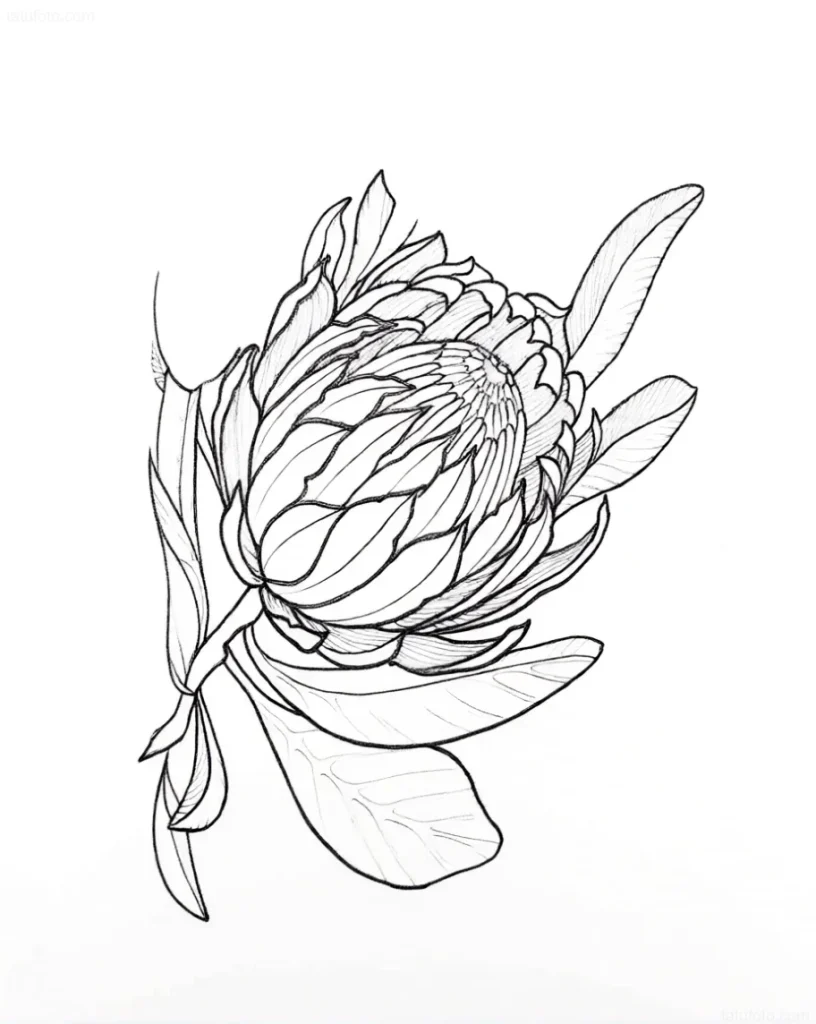
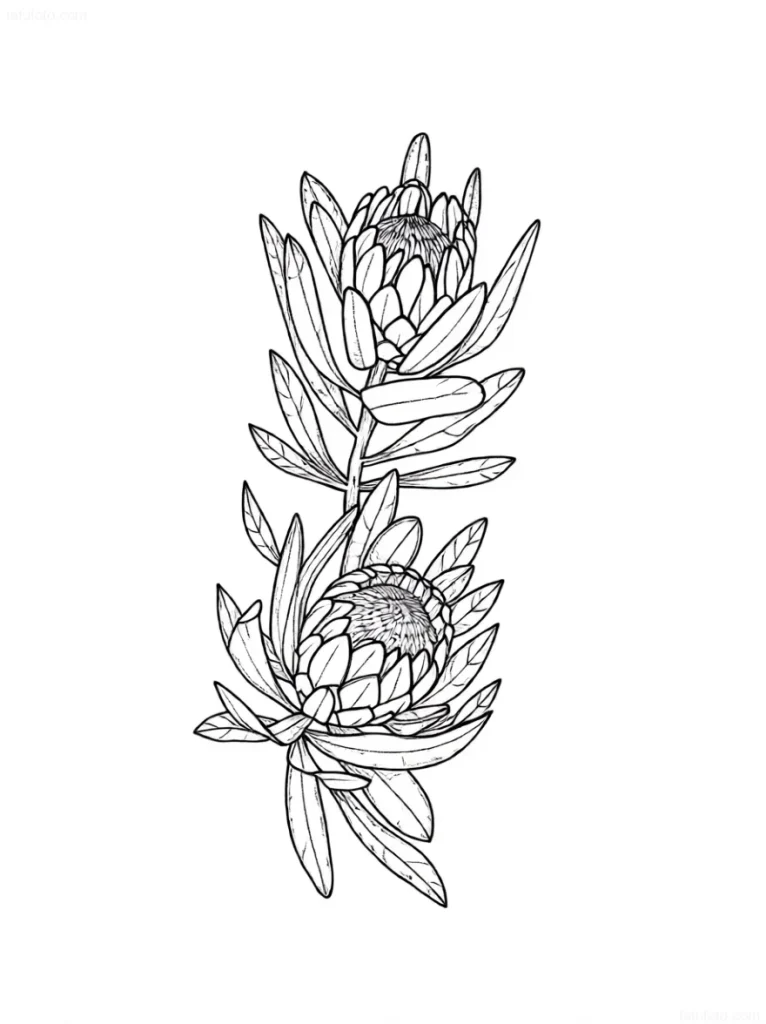


In the context of tattoos, the protea flower is chosen by those who value not only aesthetics but also a complex, inspiring story. By choosing the protea, you declare your:
- Uniqueness: The protea is unlike any other flower. A tattoo symbolizes individuality and a rejection of conventional norms.
- Resilience: These plants thrive in harsh, arid conditions, making them an ideal symbol of endurance and vitality.
- Adaptability: A key meaning associated with the flower’s mythological patron, which we will discuss further.
A protea tattoo is always a story about personal growth, overcoming difficulties, and the ability to retain beauty despite external circumstances.
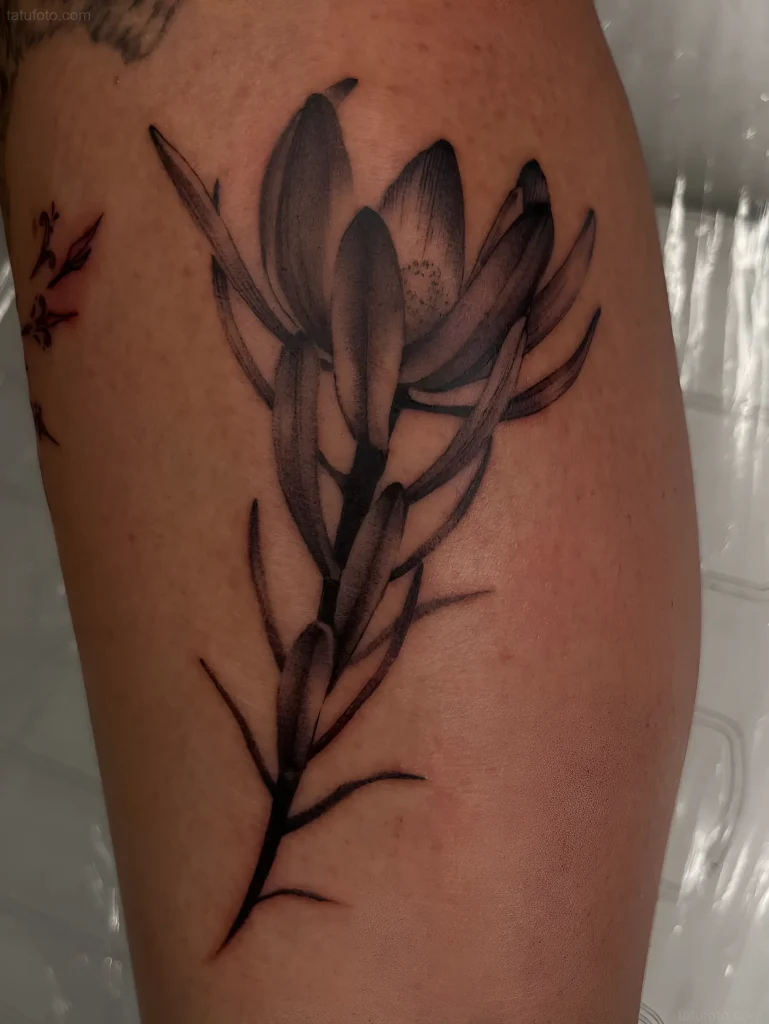
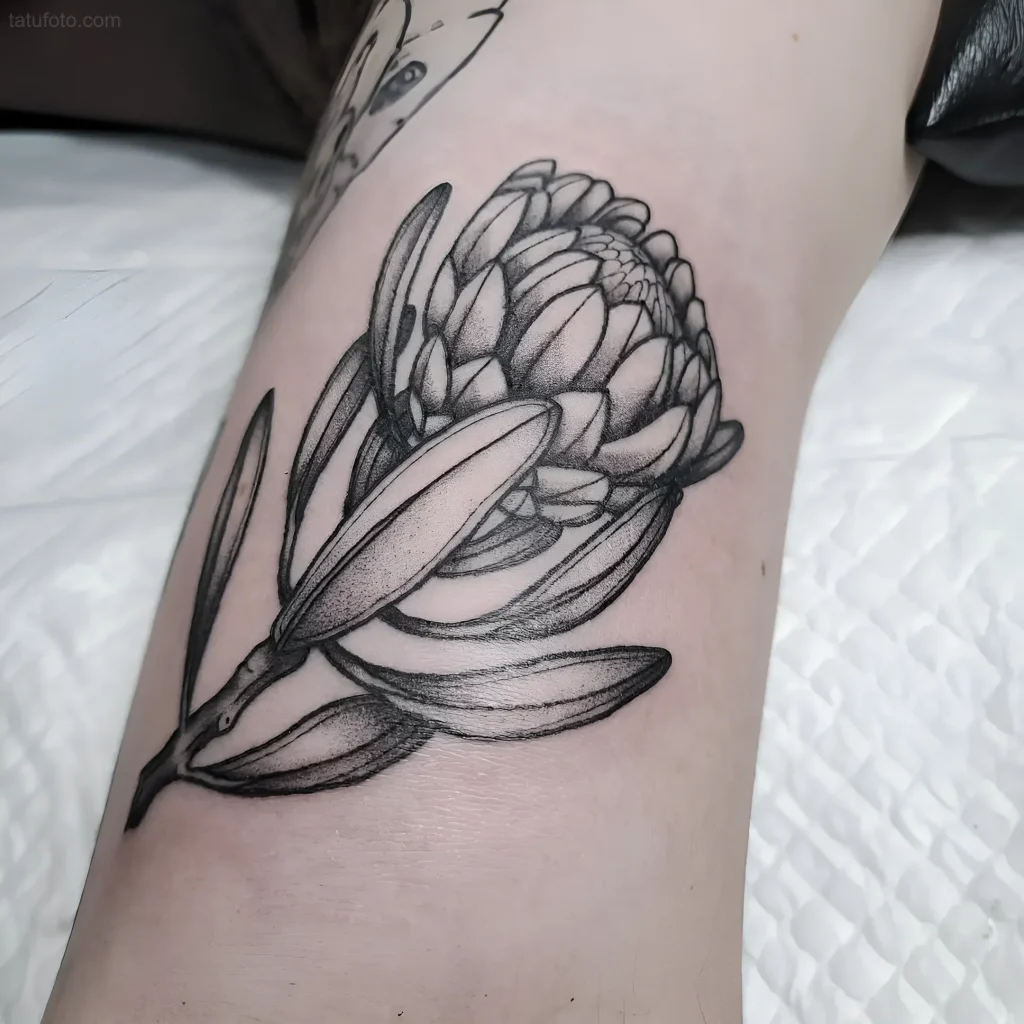
History and Mythology of the Protea Flower
To fully understand the meaning of a protea flower tattoo, we must turn to the mythology that gave this plant its name. The name “Protea” comes from the ancient Greek sea deity.
Proteus: The God of Change and Transformation
According to Greek mythology, Proteus was a son of Poseidon, known as the “Old Man of the Sea.” His main characteristic was the ability to change his form at will. He could transform into fire, water, a lion, a snake, or any other creature to avoid having to predict the future or answer questions.
This mythological connection gives the protea tattoo its deepest and most important meaning:
- Transformation and Evolution: The tattoo symbolizes a person’s ability to adapt to change, undergo personal metamorphosis, and constantly evolve. If you’ve experienced a major life turning point (career change, recovery from trauma, personal breakthrough), the protea perfectly reflects this process.
- Multifacetedness: Like Proteus, the wearer of the tattoo can be multifaceted, hiding many sides of their personality.
- The Pursuit of Truth: One could only get an answer from Proteus by holding onto him tightly, despite all his transformations. This symbolizes persistence in finding one’s path or truth.


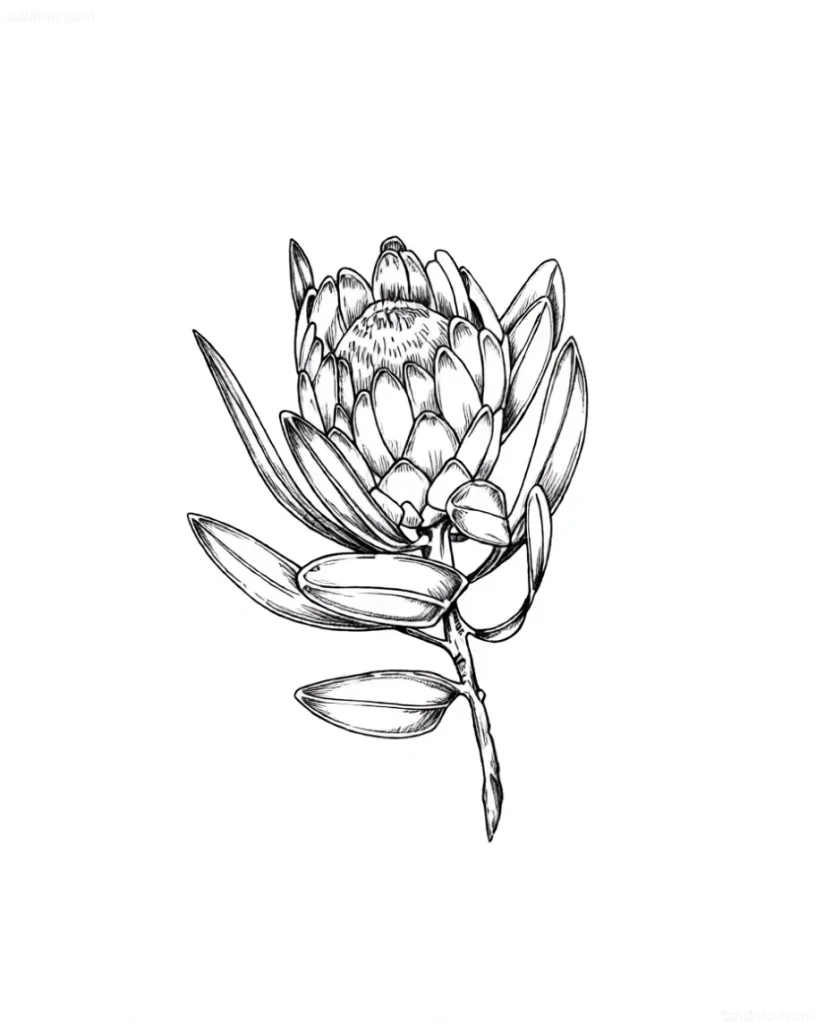
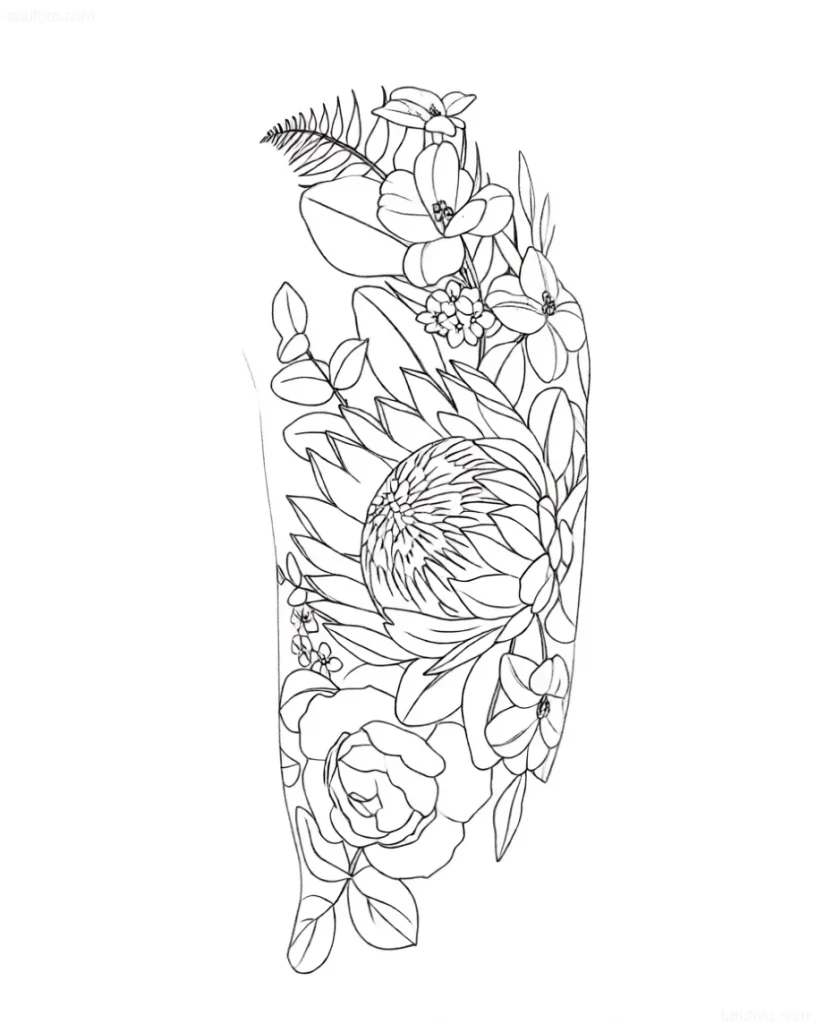
Cultural Context: South Africa
The protea also holds immense cultural significance in South Africa, where it is the national flower (King Protea — Protea cynaroides). In this context, the symbolism shifts towards:
- Courage and Resilience: The plant survives in a harsh climate, symbolizing the spirit of the nation and its people.
- Diversity: The Proteaceae family has hundreds of species, making the flower a symbol of diversity, inclusivity, and the richness of nature.
- Hope and Longevity: Due to its durability, the protea is often used as a wish for a long and fruitful life.
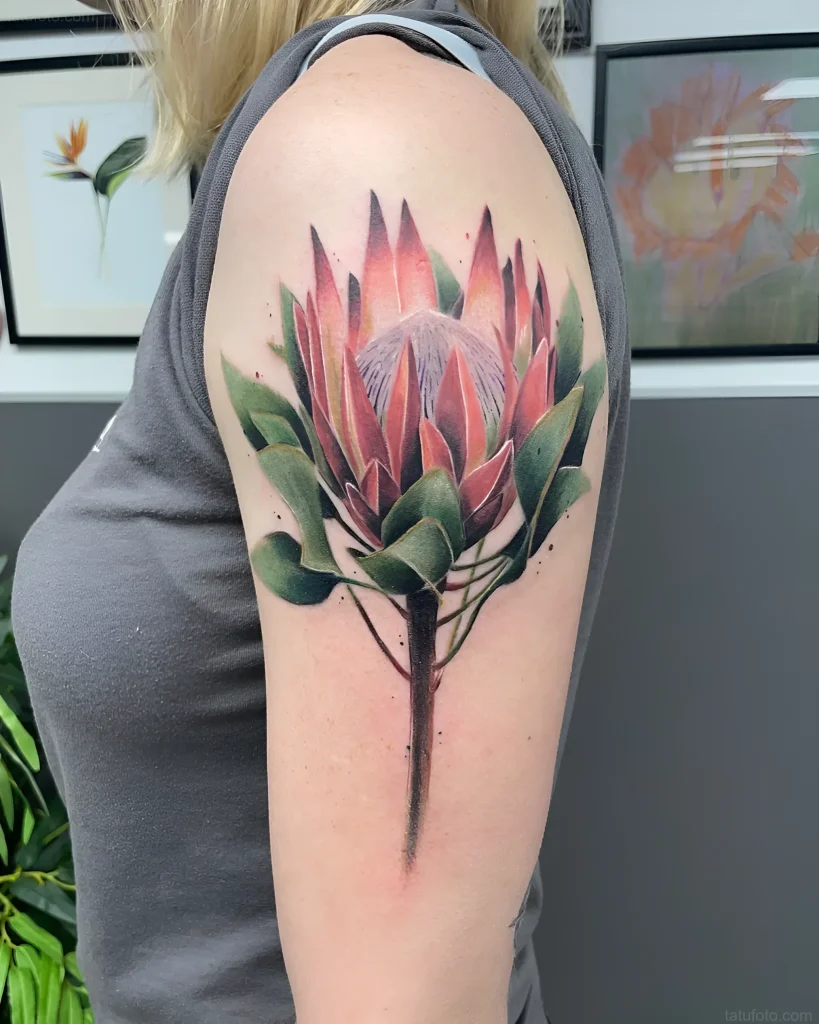
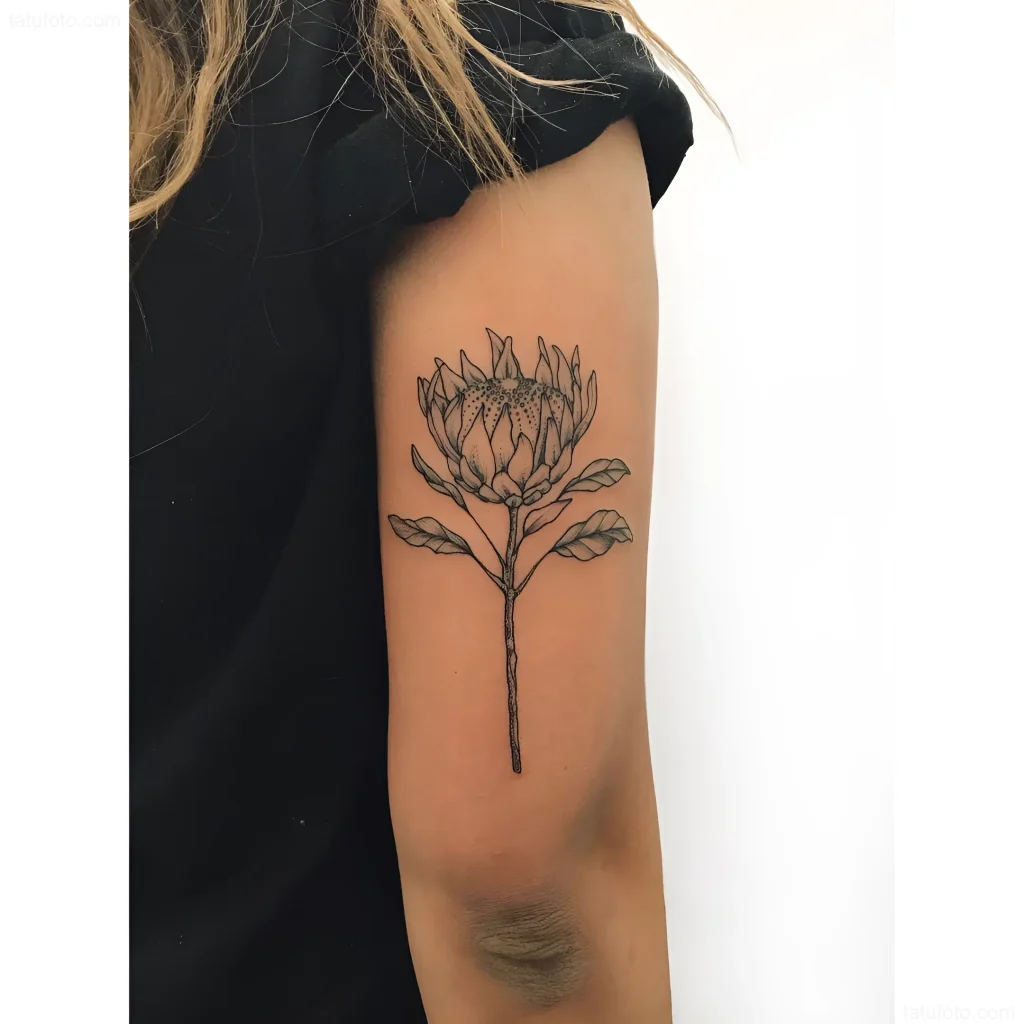
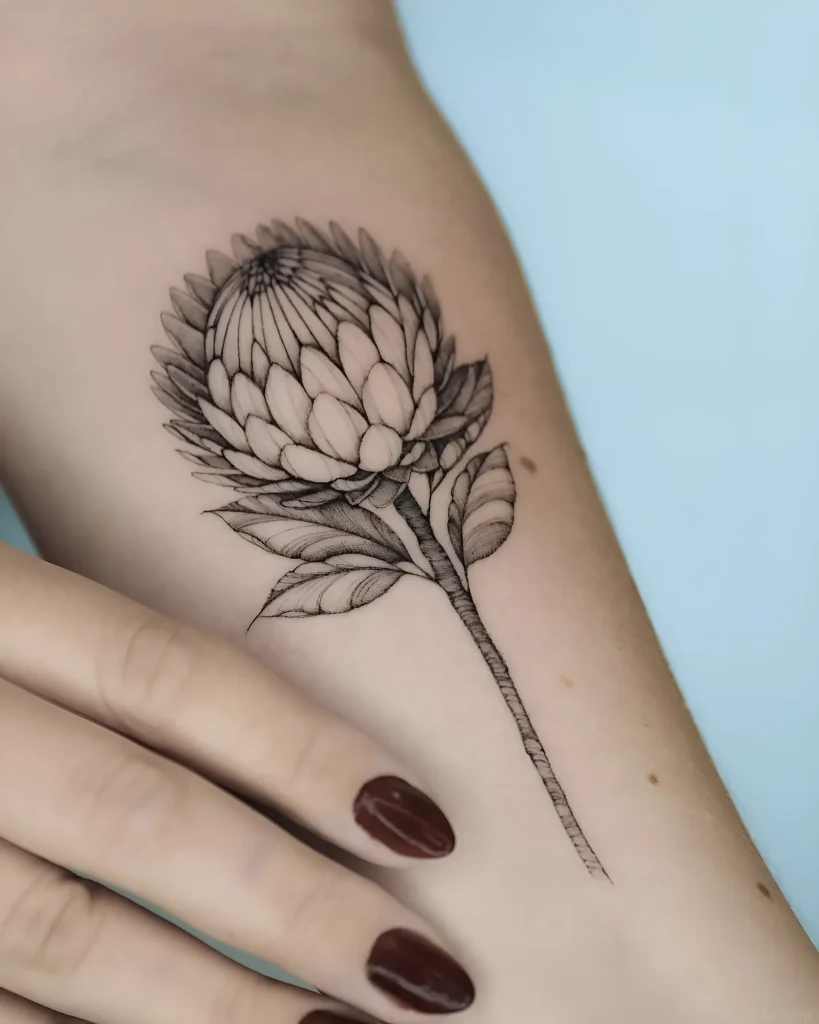
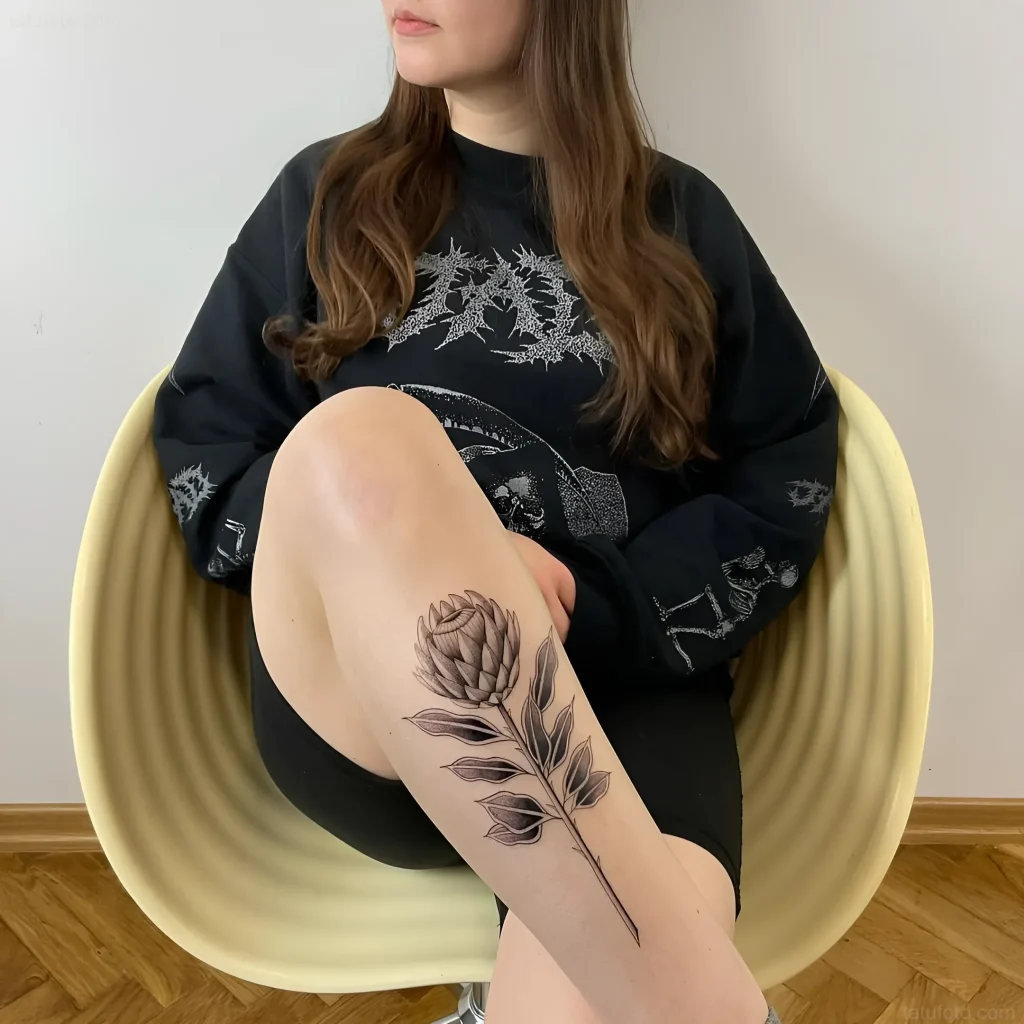
Meaning of the Protea Flower Tattoo: Symbolism and Interpretations
The protea tattoo offers a rich spectrum of meanings that can be adapted to personal experience and worldview. We have systematized the key interpretations that you can use when developing your sketch.
1. Symbol of Courage and Resilience
The protea grows in poor soils and is one of the most “fire-resistant” plants in the Cape region. This aspect makes it a powerful symbol of overcoming.
- Overcoming Adversity: Ideal for people who have emerged victorious from difficult life situations, illnesses, or crises.
- Vitality: The tattoo serves as a constant reminder of your inner strength and ability to regenerate.
- Unbending Spirit: Unlike delicate flowers, the protea looks powerful and confident, reflecting the character of its owner.
2. Embodiment of Transformation and Adaptation
This meaning is directly related to the god Proteus.
- Acceptance of Change: A symbol of readiness and ability to accept changes, not resisting them, but using them for growth.
- Personal Evolution: Often used to denote a transition from one stage of life to another (e.g., after graduation, marriage, childbirth).
- Flexibility of Mind: Indicates a person who can see a situation from different angles and quickly change strategies.
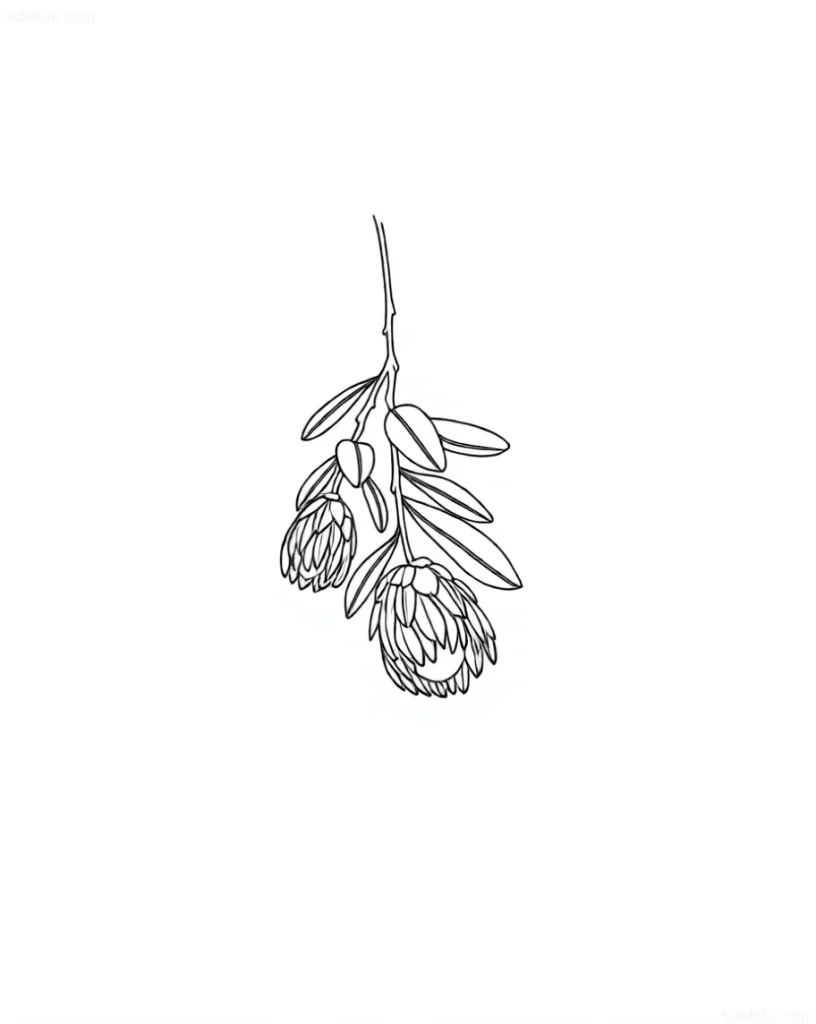

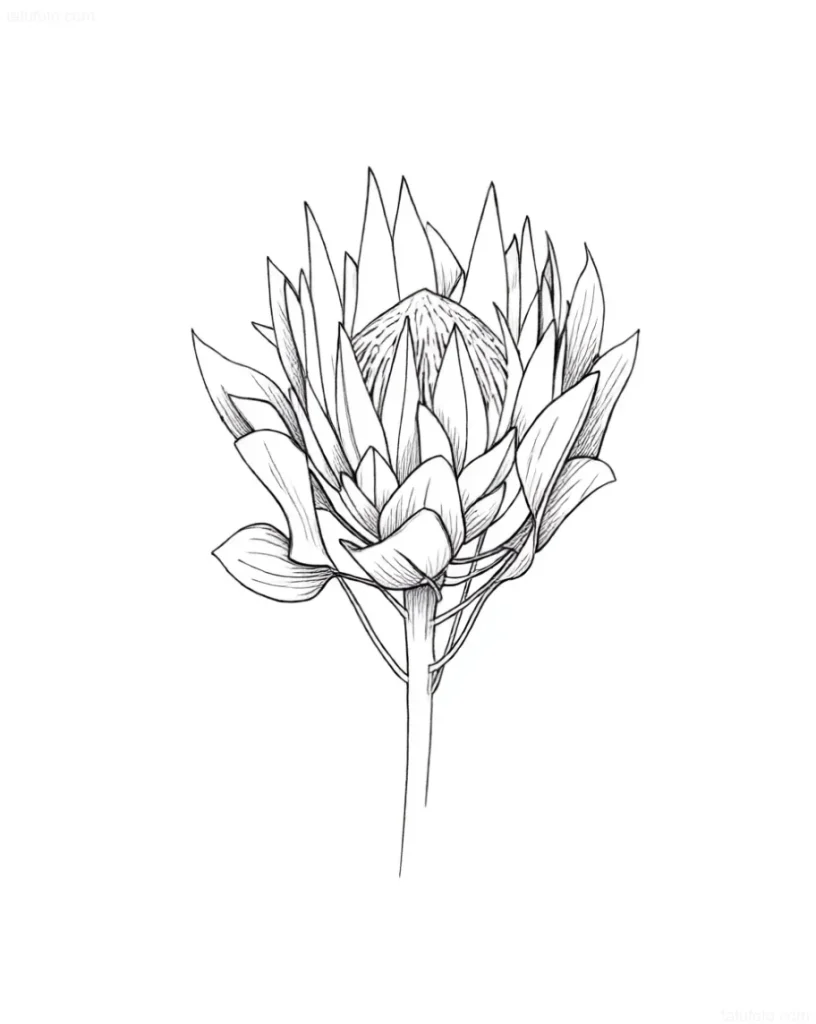
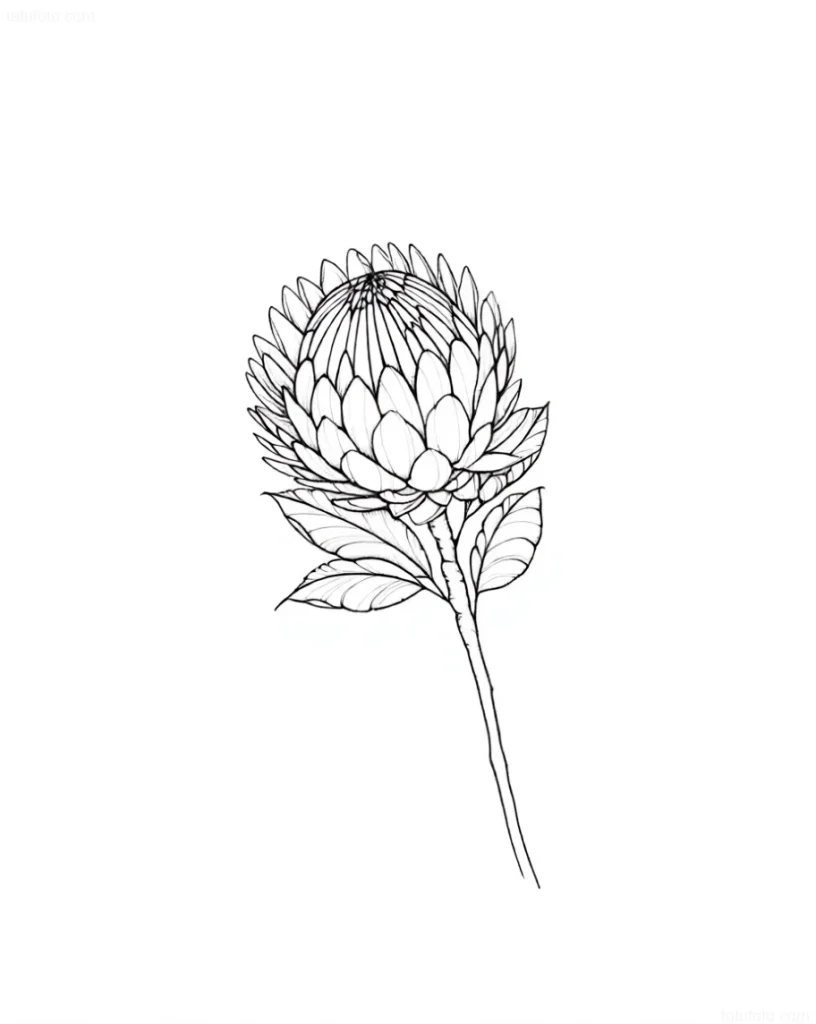
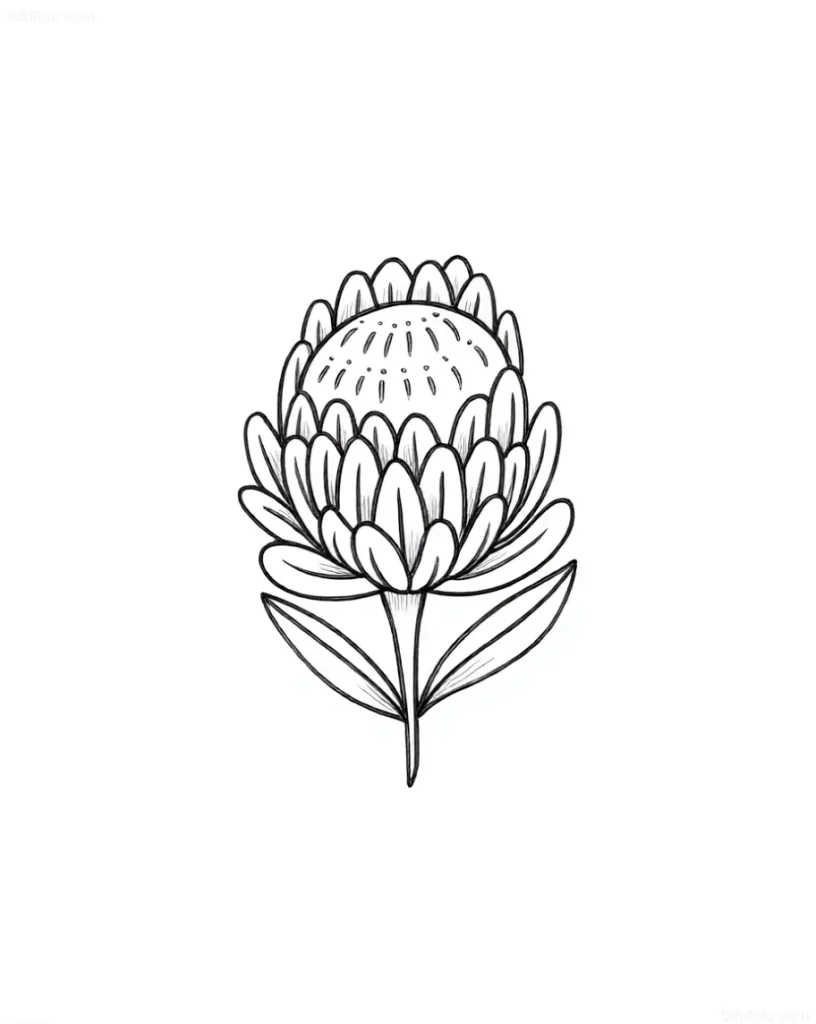
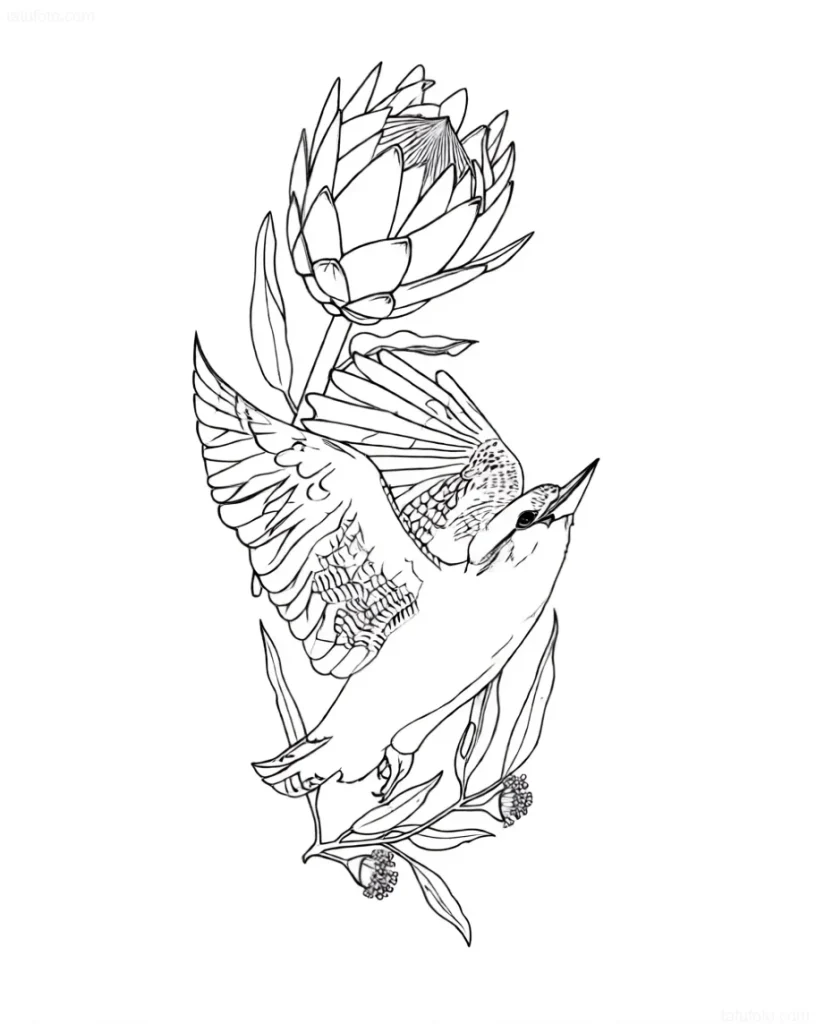
3. Uniqueness and Individuality
The unusual, almost alien structure of the protea flower makes it a symbol of exceptionality.
- Standing Out from the Crowd: Choosing the protea indicates that you are not afraid to be different from others.
- Complex Beauty: Symbolizes that true beauty is often hidden behind an unusual or even “prickly” appearance.
- Self-Respect: The tattoo can serve as a reminder that your uniqueness is your strength.
4. Symbolism Depending on Color and Species
While the King Protea (large, pink or red) is most often depicted, the choice of color can add additional nuances:
Table: Meaning of Protea Color in Tattoos
| Color | Additional Meaning | Symbolizes |
|---|---|---|
| Red/Pink | King Protea, passion | Courage, honor, deep love and respect. |
| White/Cream | Purity, newness | New beginnings, innocence, spiritual transformation. |
| Yellow/Orange | Energy, joy | Optimism, vitality, a positive attitude towards change. |
| Black (Blackwork) | Power, structure | Steadfastness, strength of character, depth of awareness. |
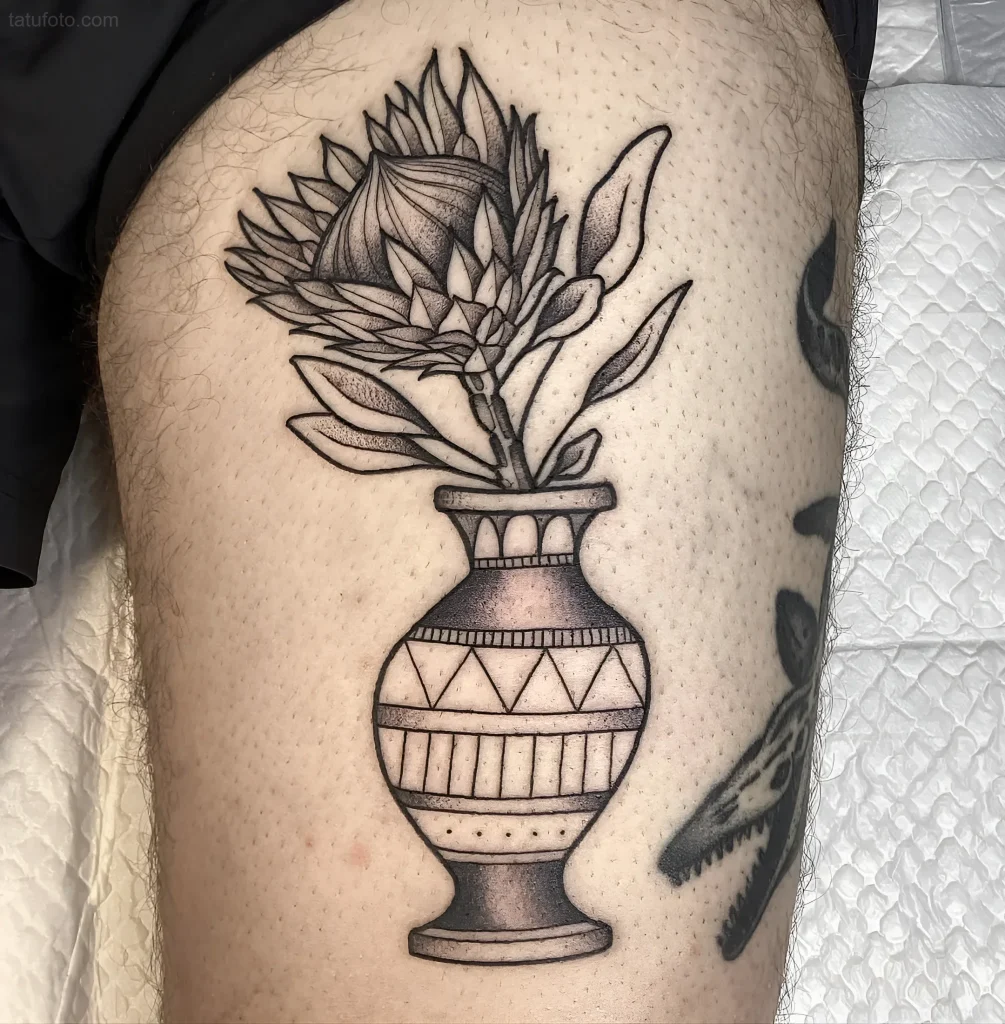
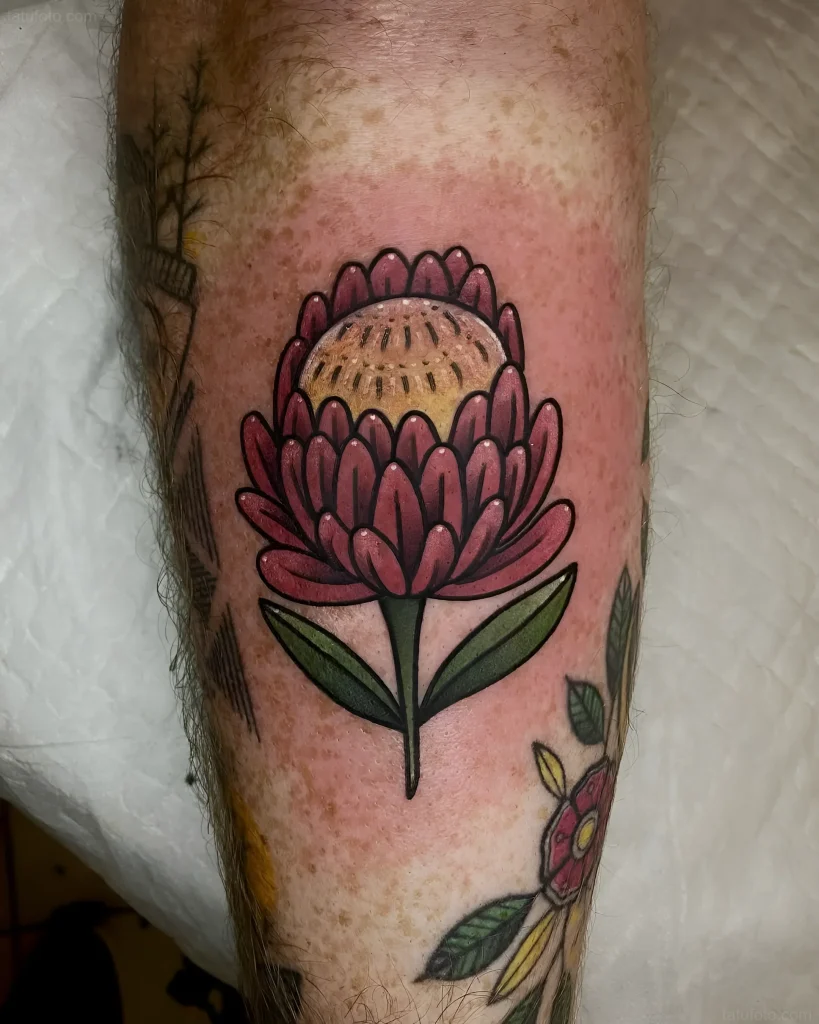
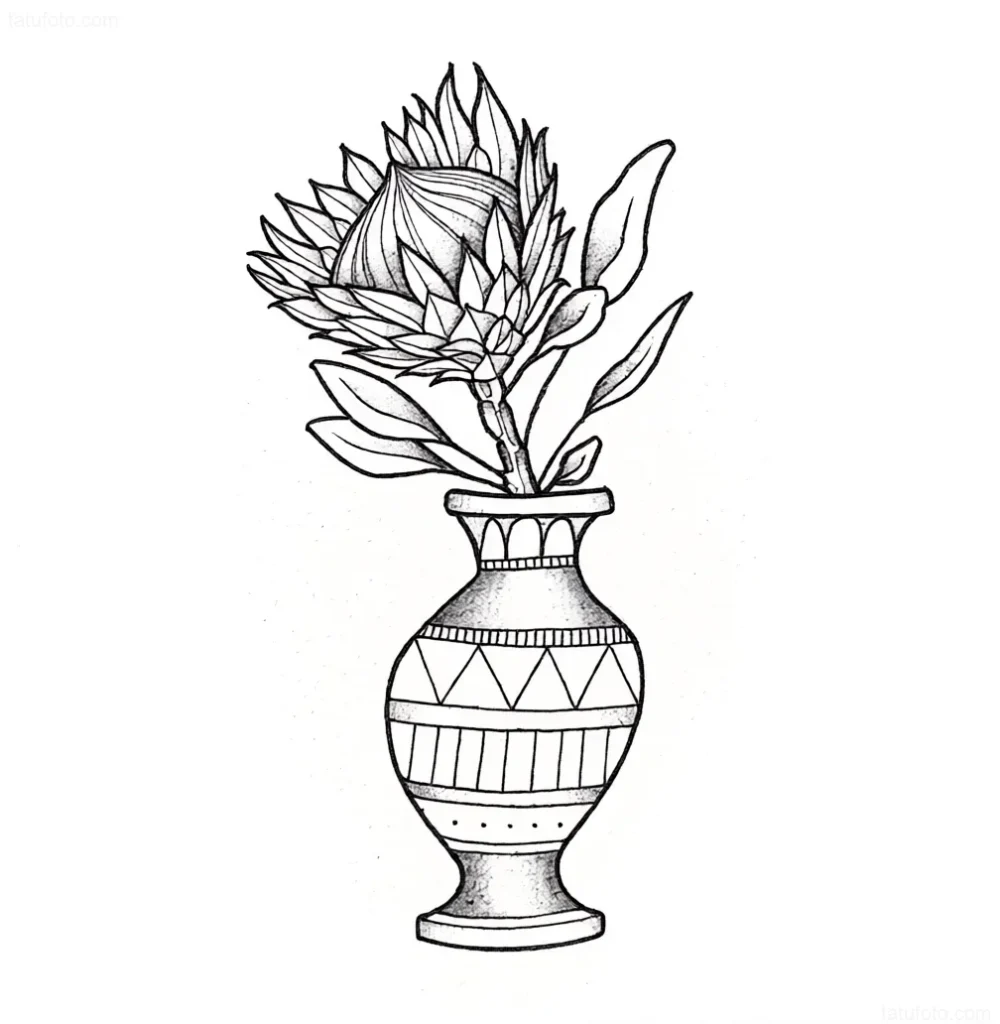
Protea Flower Tattoo Styles: From Realism to Watercolor
The visual complexity of the protea allows it to be used in a wide range of styles. The choice of style directly influences which aspect of the symbolism will be emphasized.
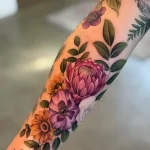
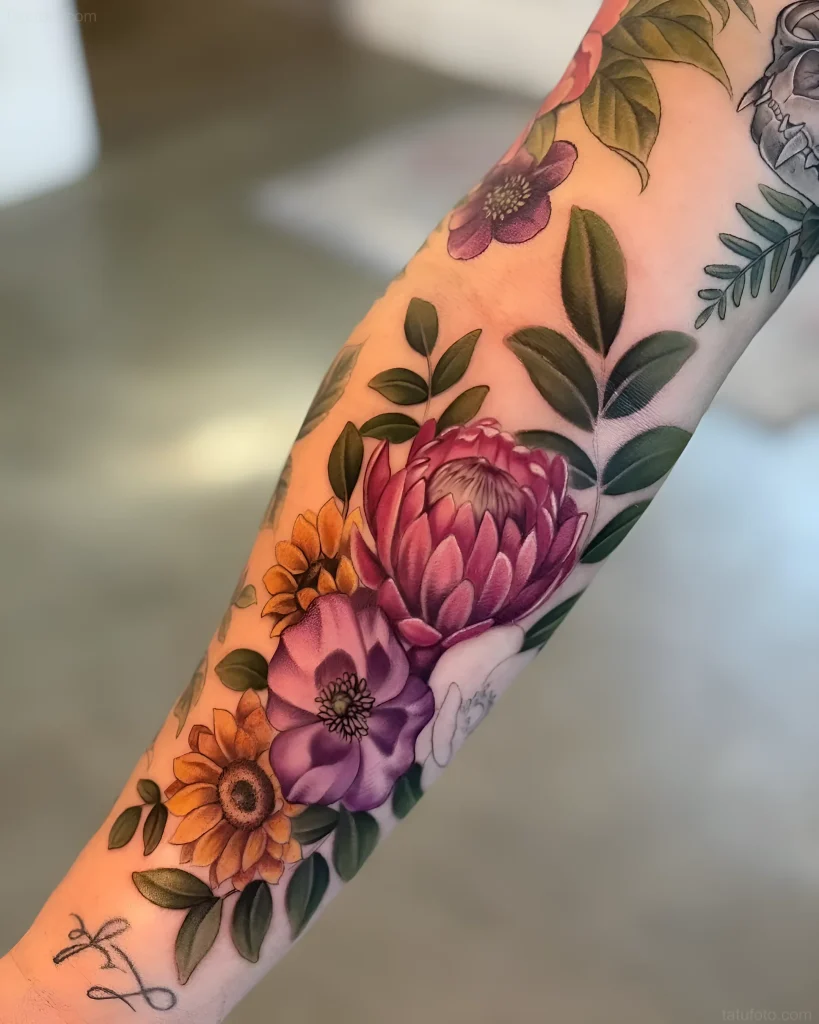
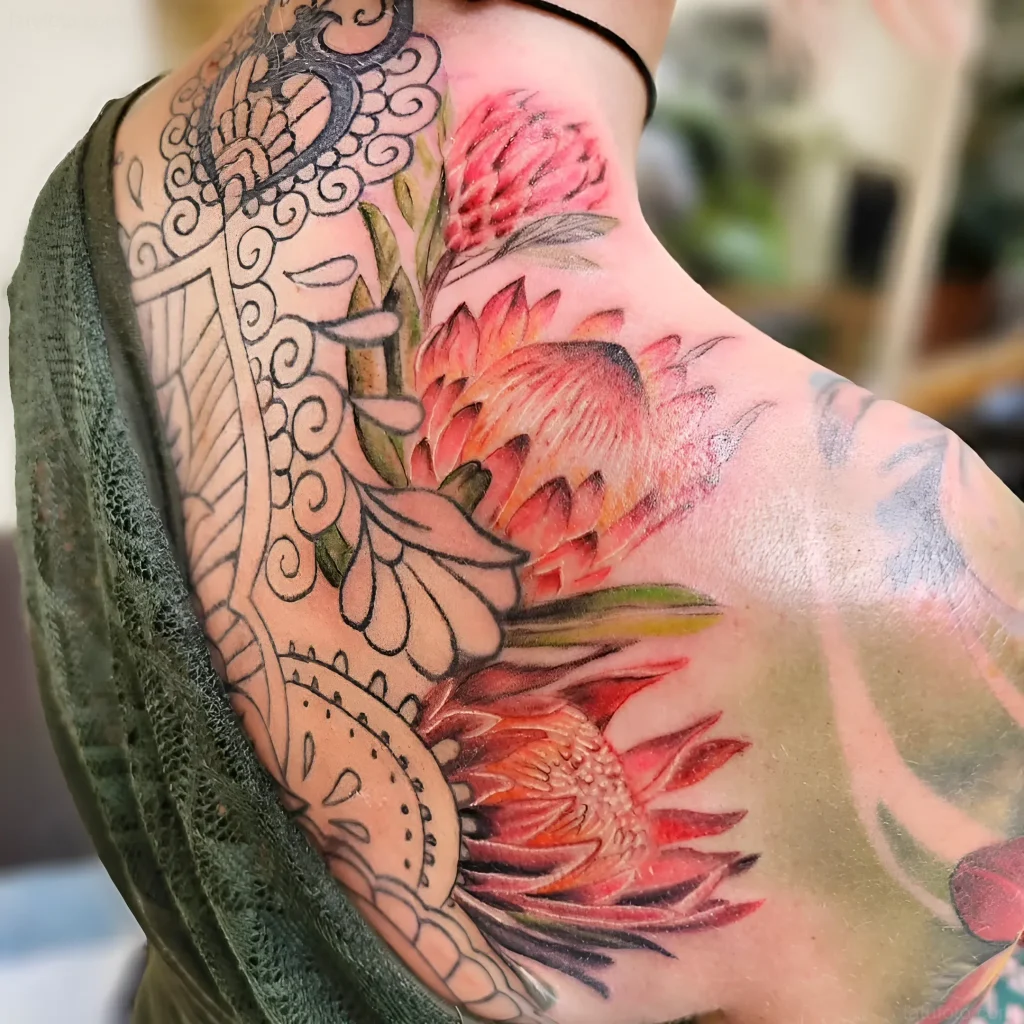
1. Realism (Realistic Protea)
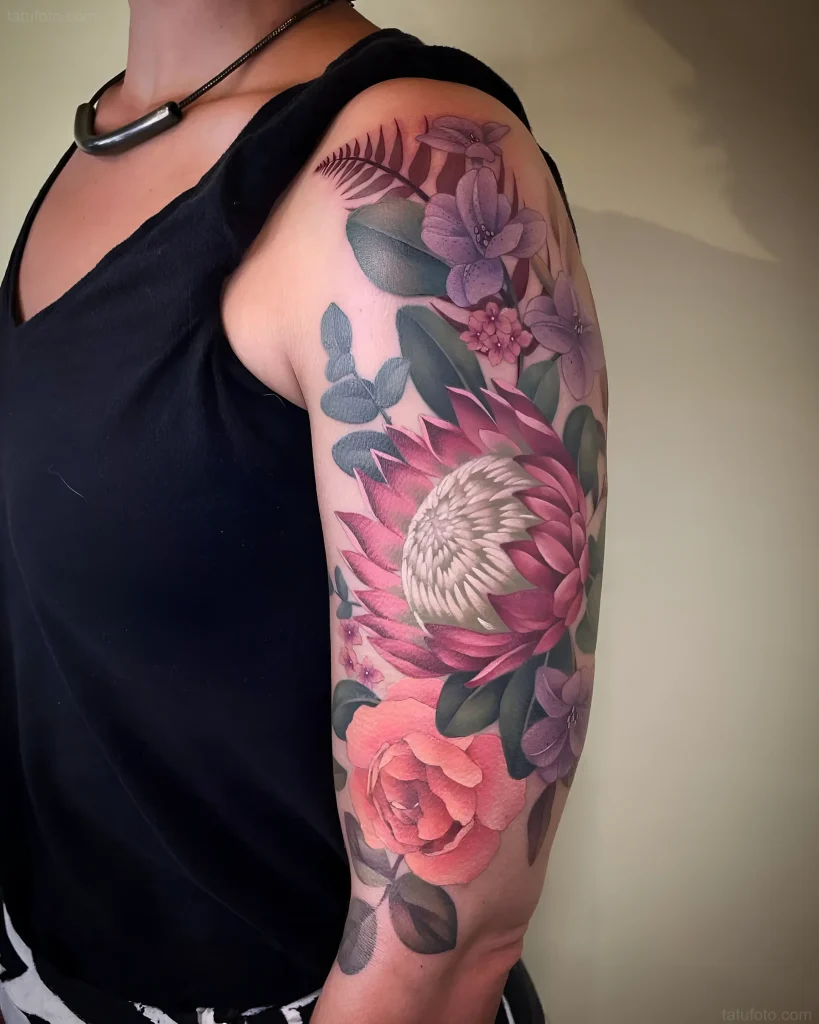
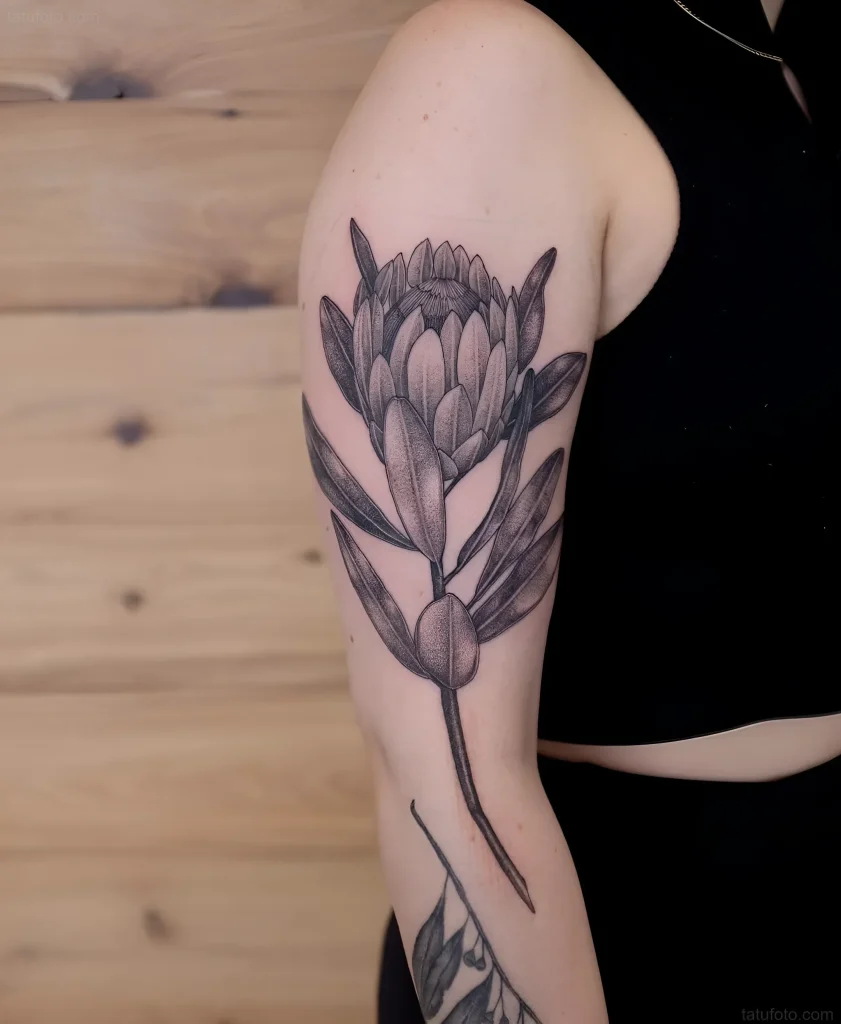
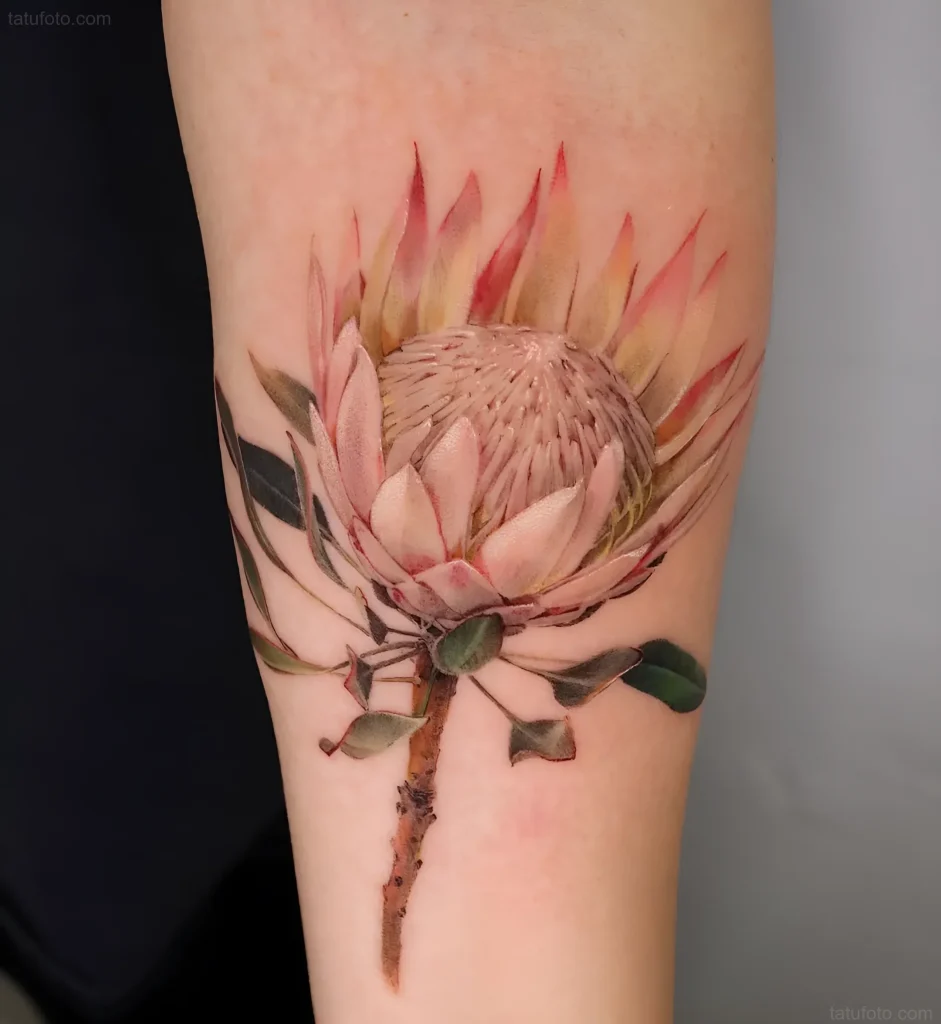
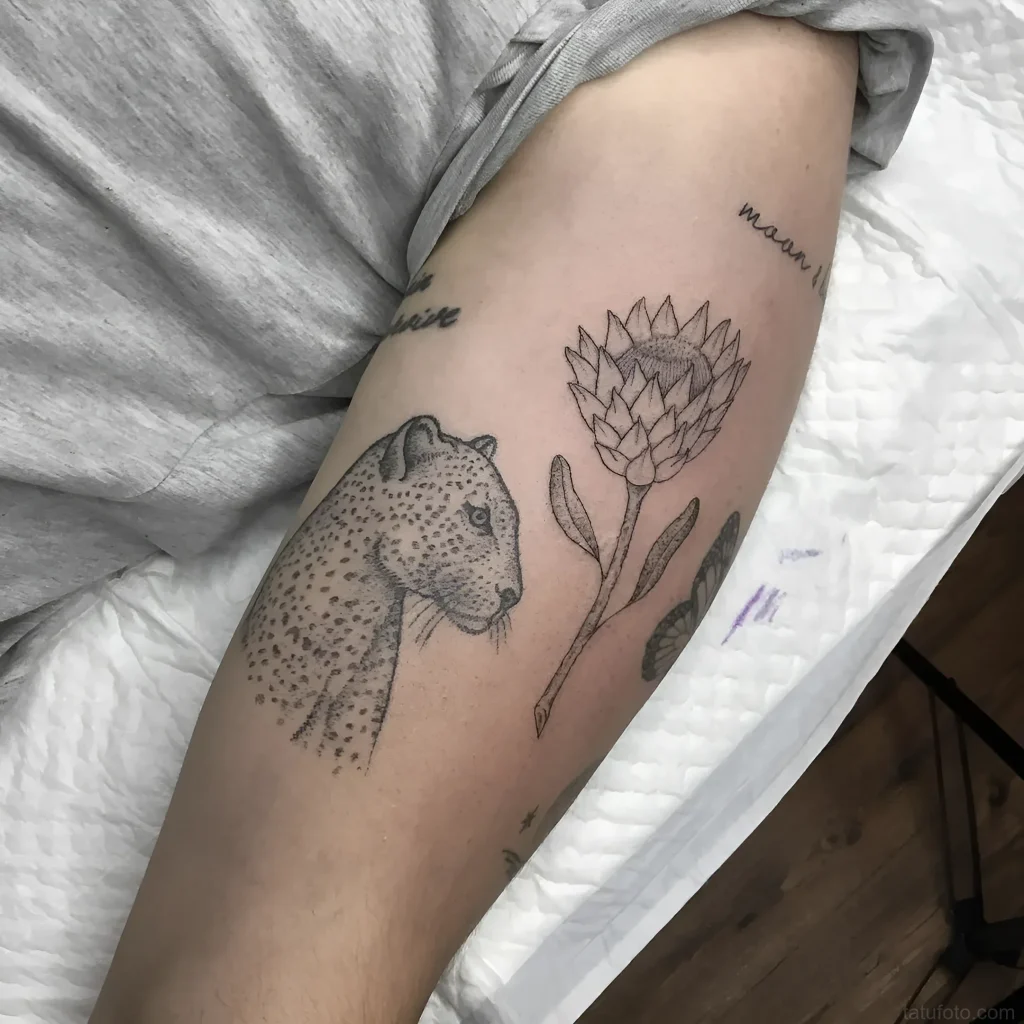
Realism is one of the most popular styles for the protea, especially if you want to emphasize its texture and power.
- Emphasized Meaning: Resilience, natural beauty, longevity.
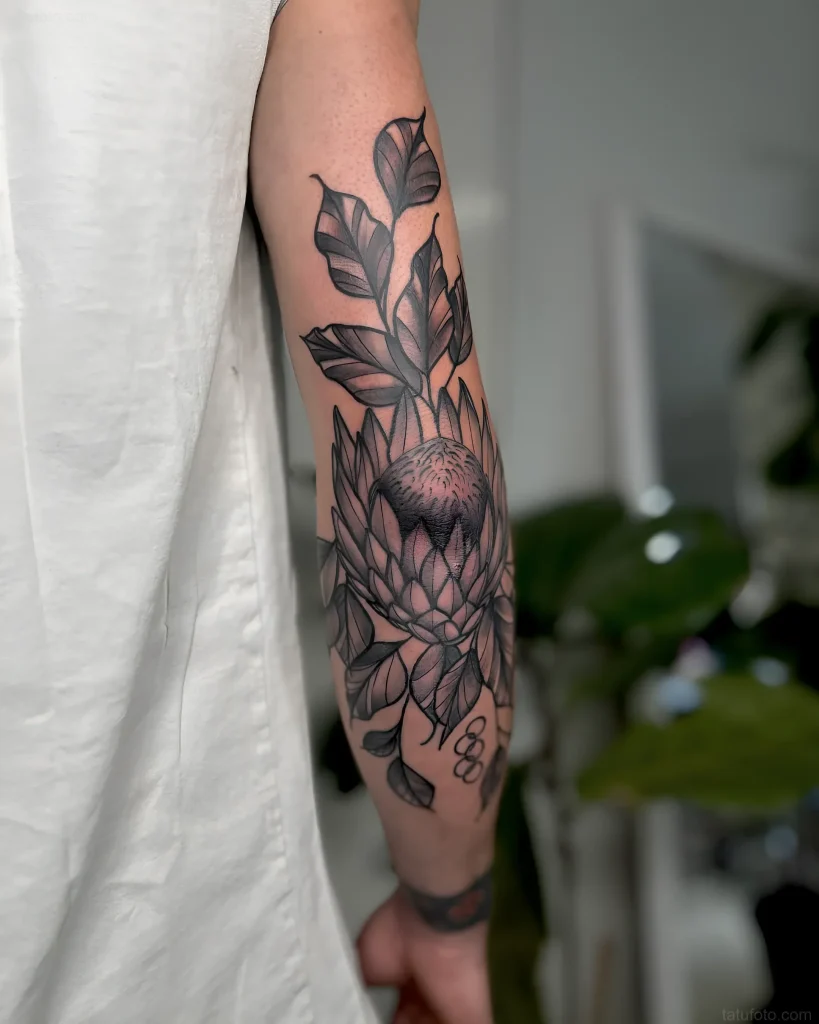
- Features: The artist pays attention to the smallest details of the petals, imitating fuzziness and the play of light and shadow. Color realism is often used to convey the rich shades of the King Protea.
- Tip: A realistic protea requires a sufficiently large area of skin (shoulder, thigh, shoulder blade) so that the details do not “blur” over time.
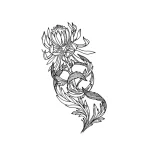
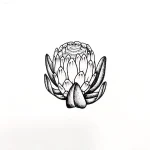
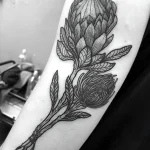
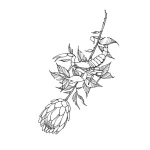
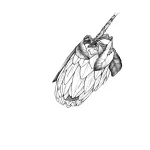
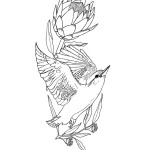
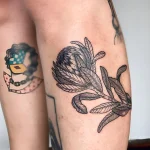
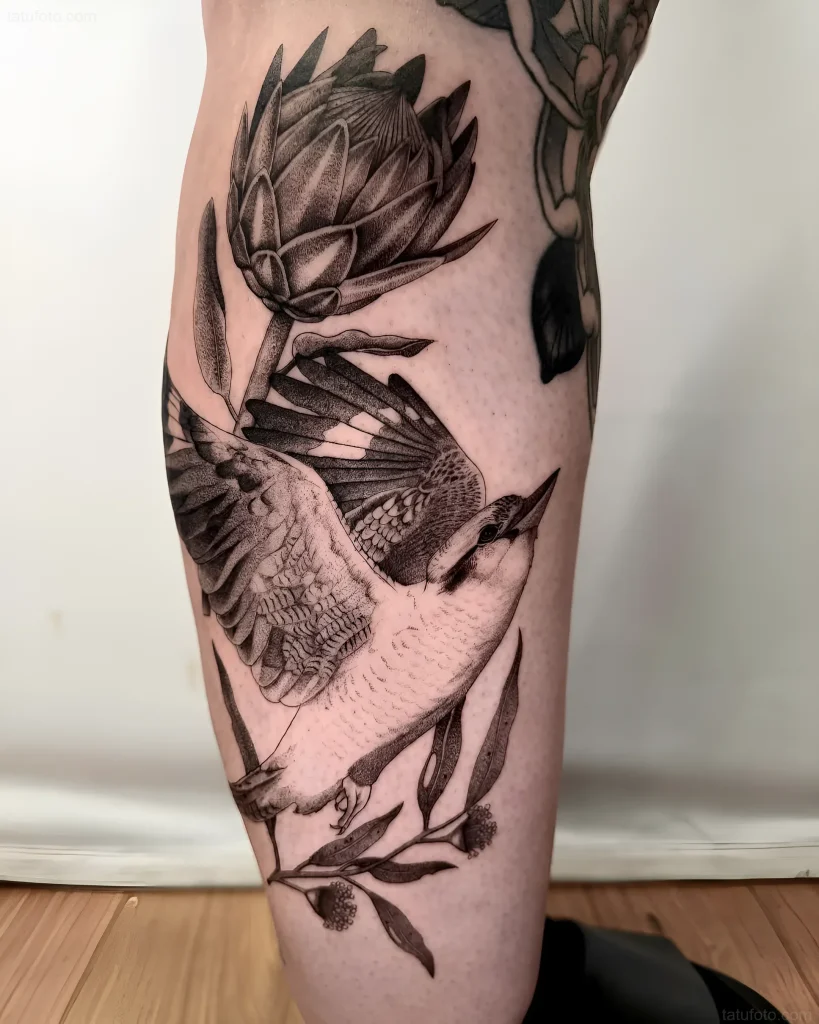
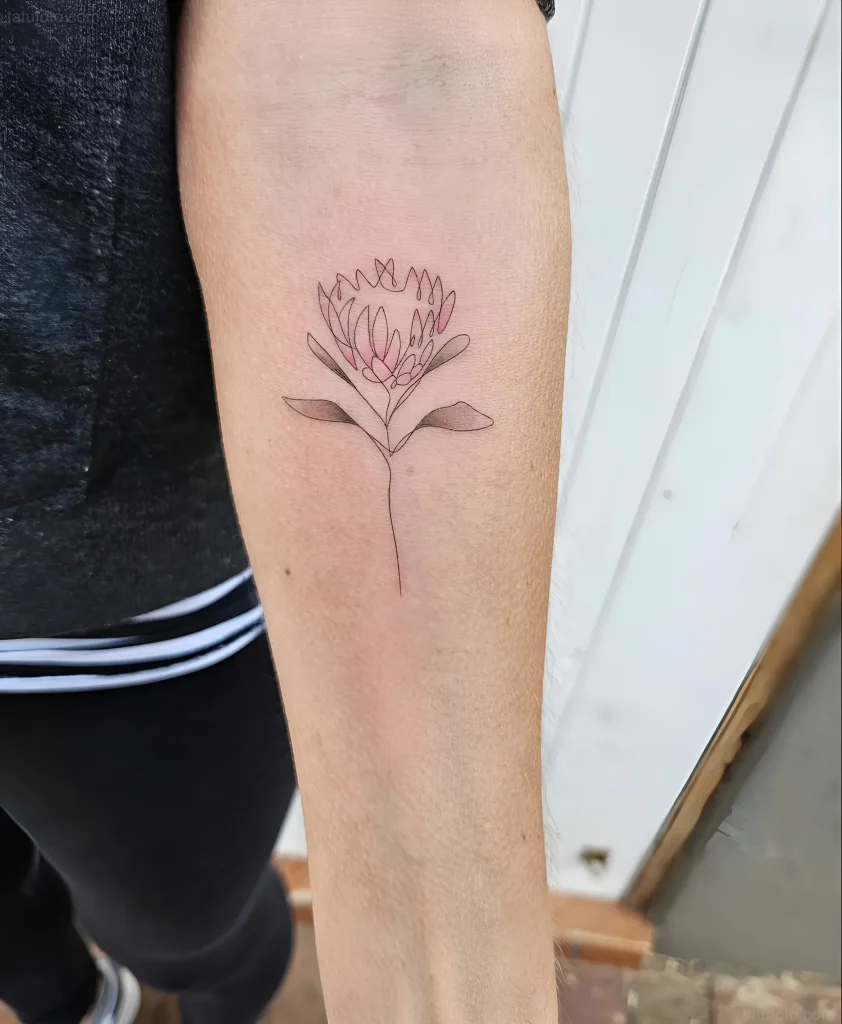
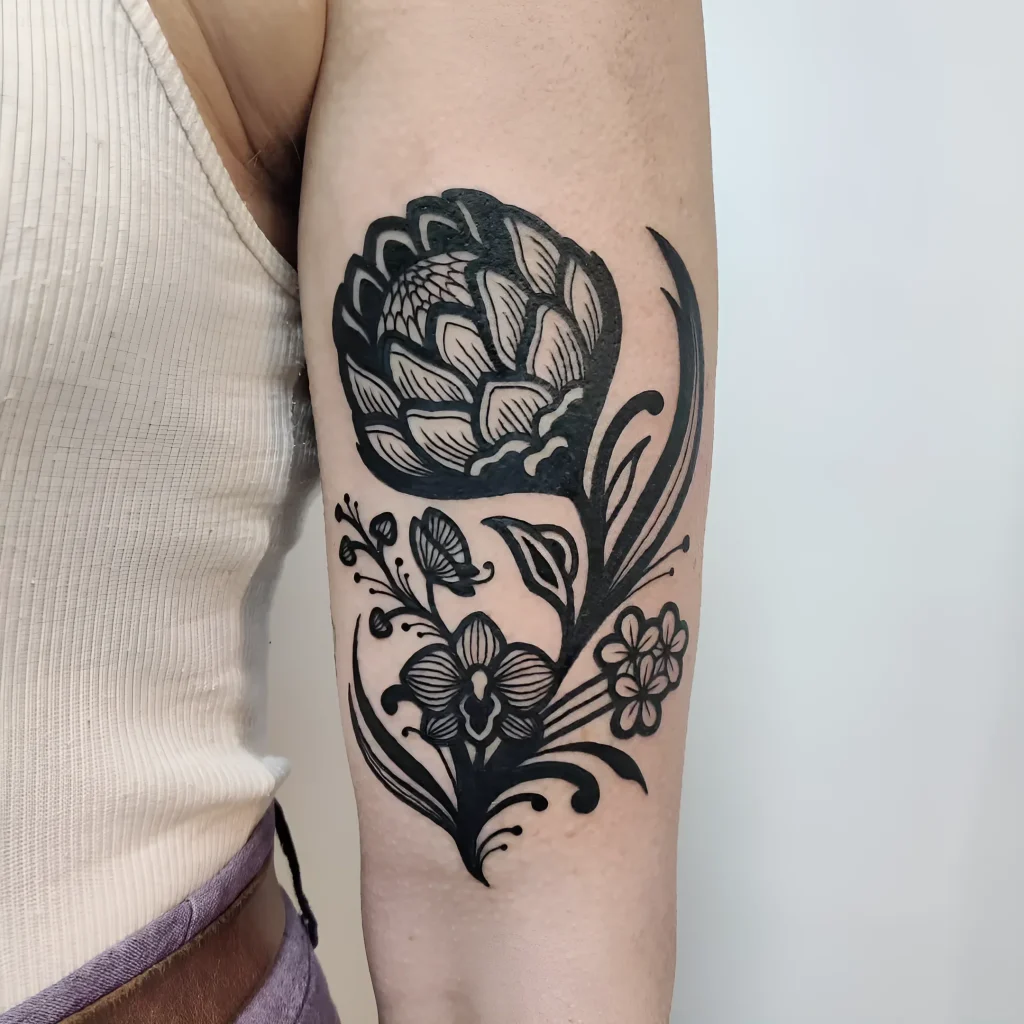
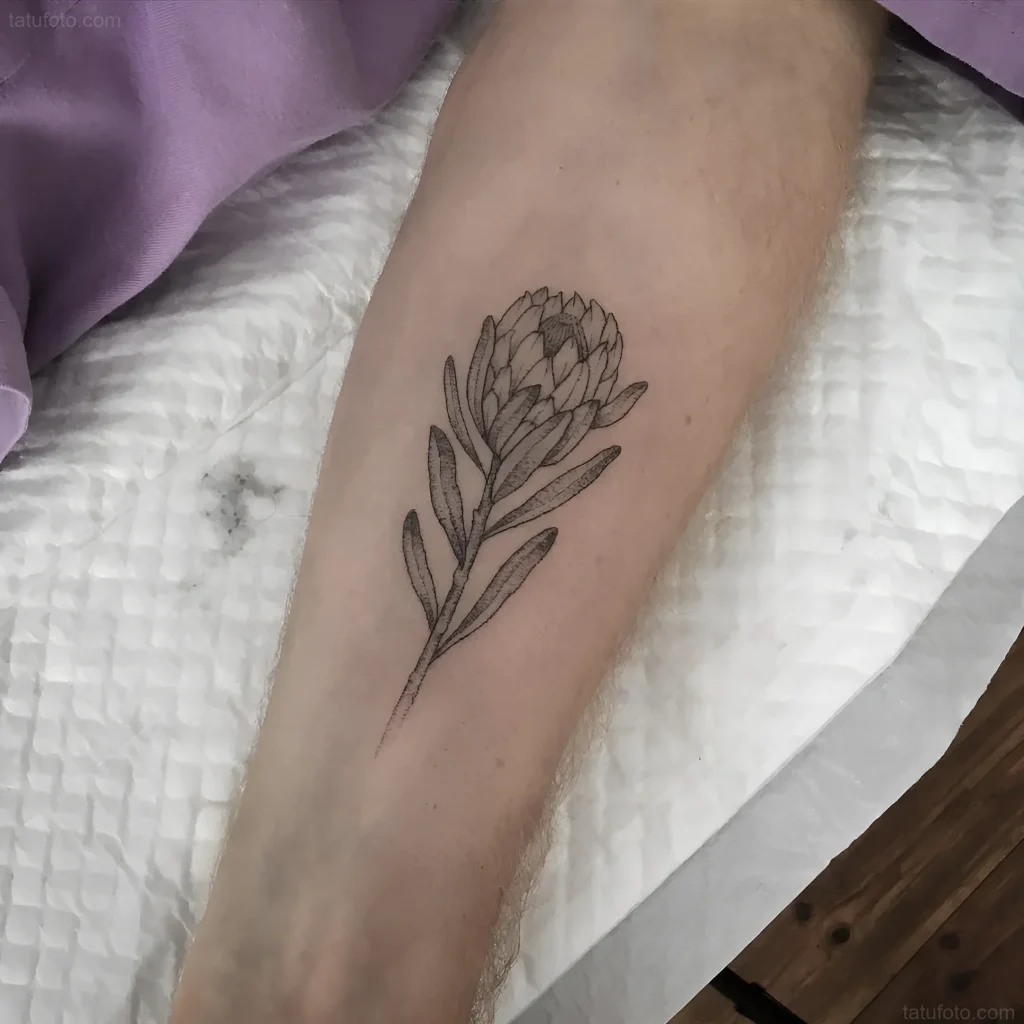
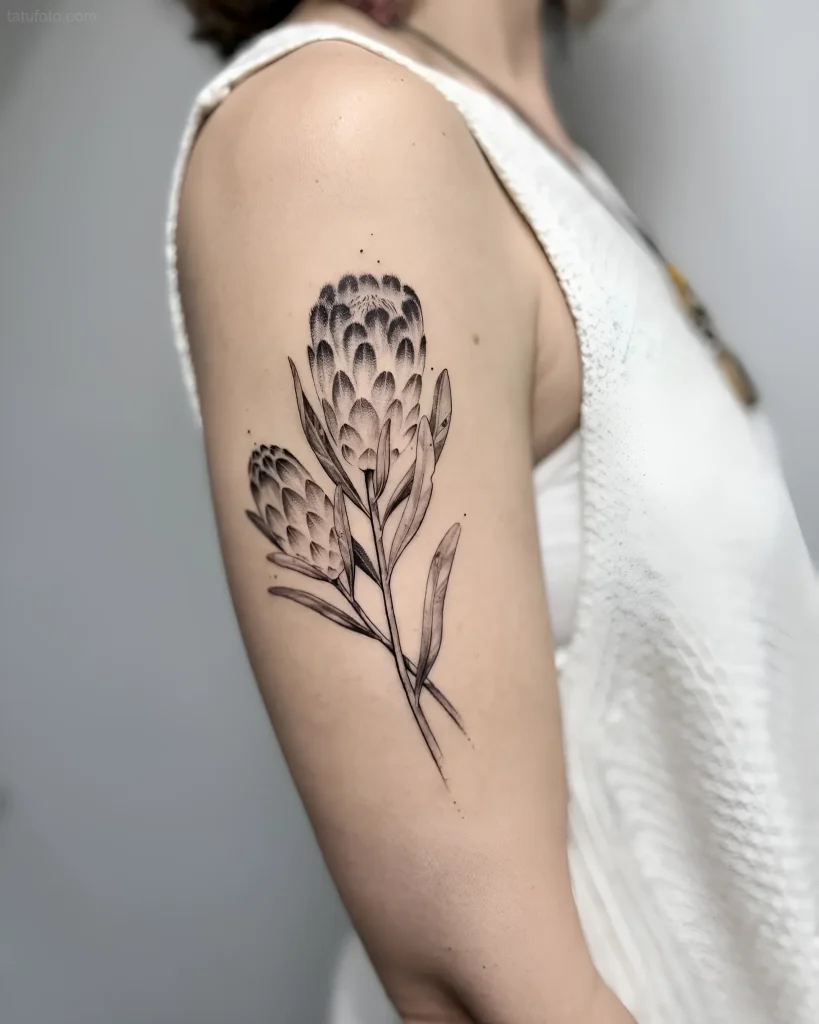
2. Linework and Blackwork
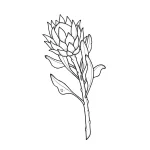
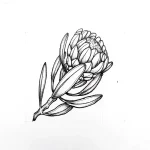
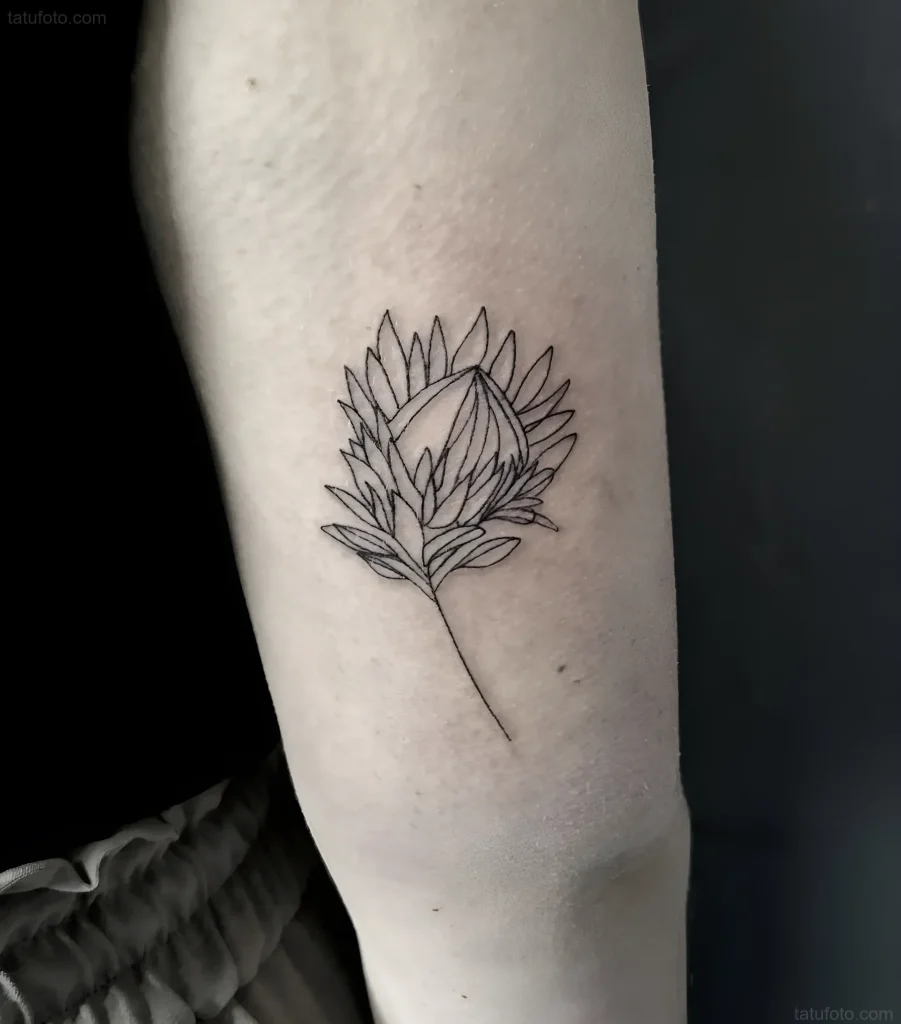
These styles focus on contour and structure, removing excess shading and colors. This is an ideal choice for a minimalist yet strong symbol.
- Emphasized Meaning: Structure, clarity, mythological connection with Proteus (form, not color).
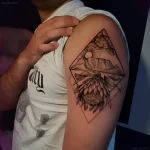
- Features: Clear, bold or thin lines are used. In blackwork, large areas of the background or the center of the flower may be filled in to create dramatic contrast.
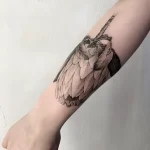
- Tip: Linework looks great on the wrist or forearm, symbolizing a constant reminder of the need to be flexible.
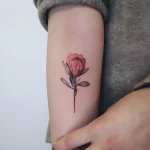
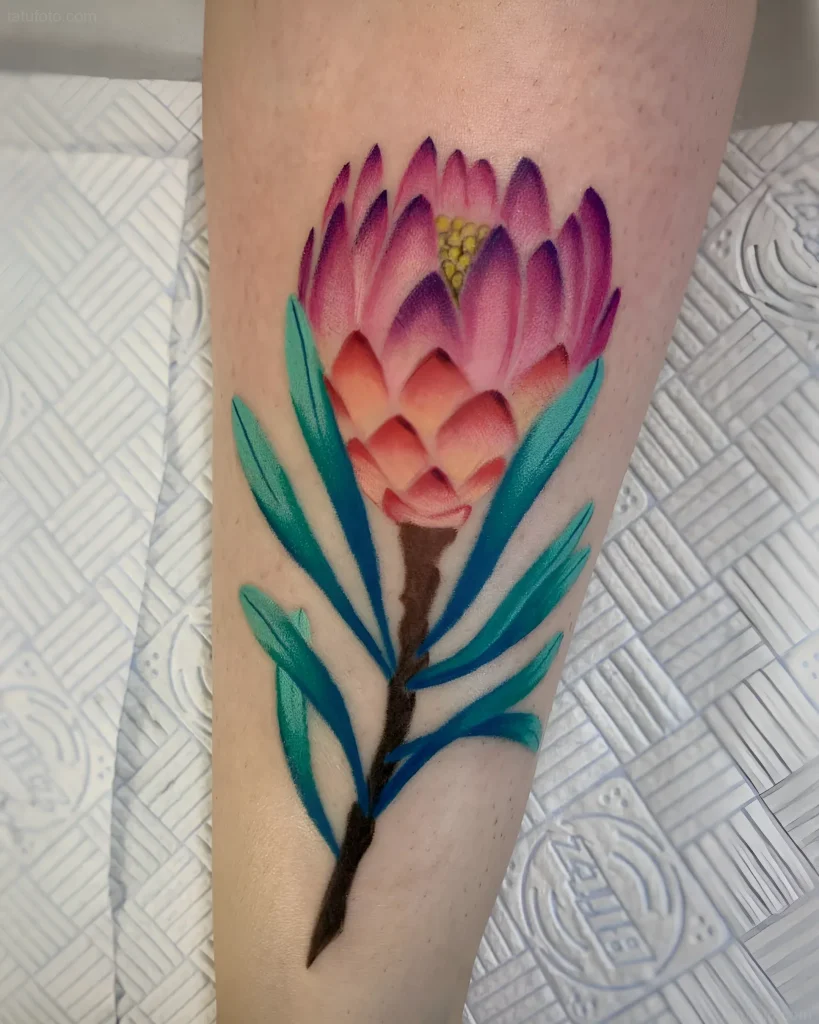
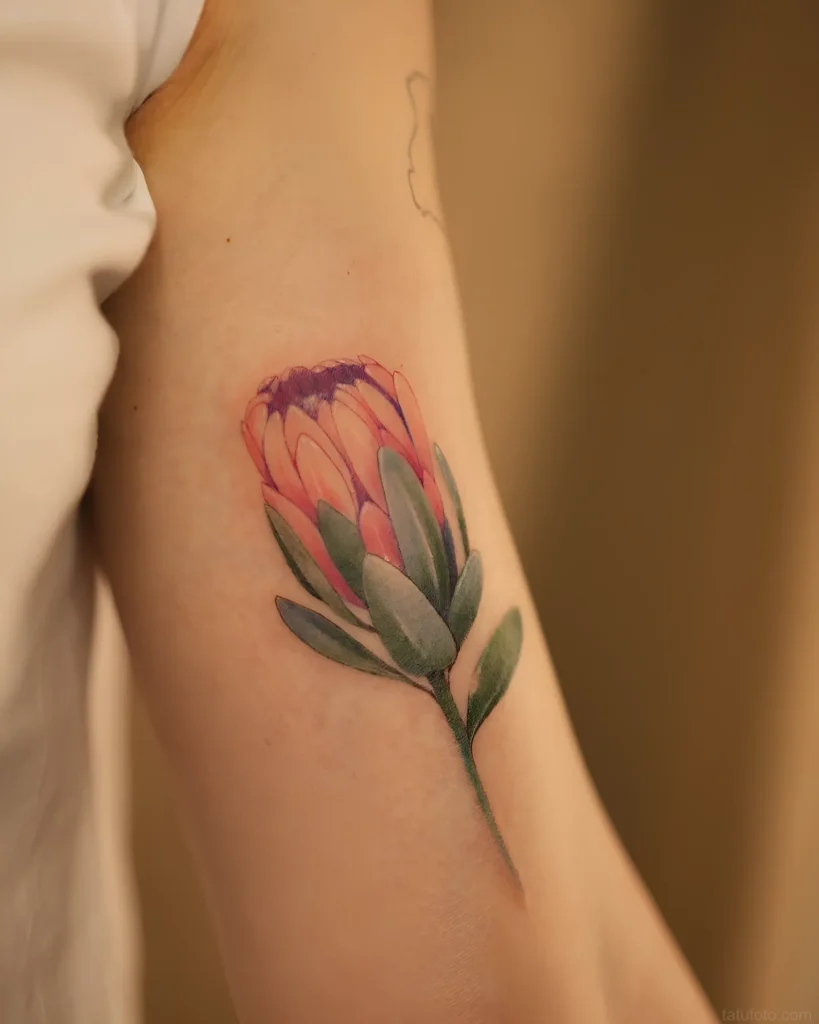
3. Watercolor
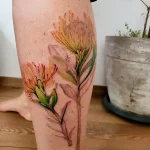
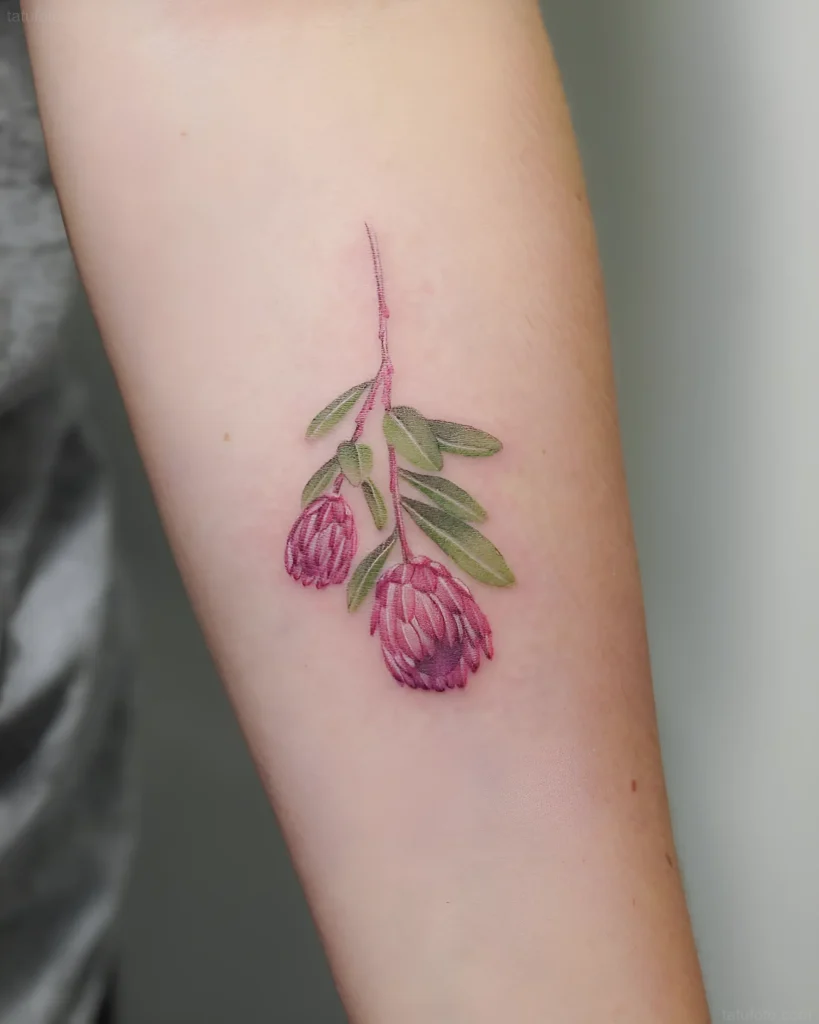
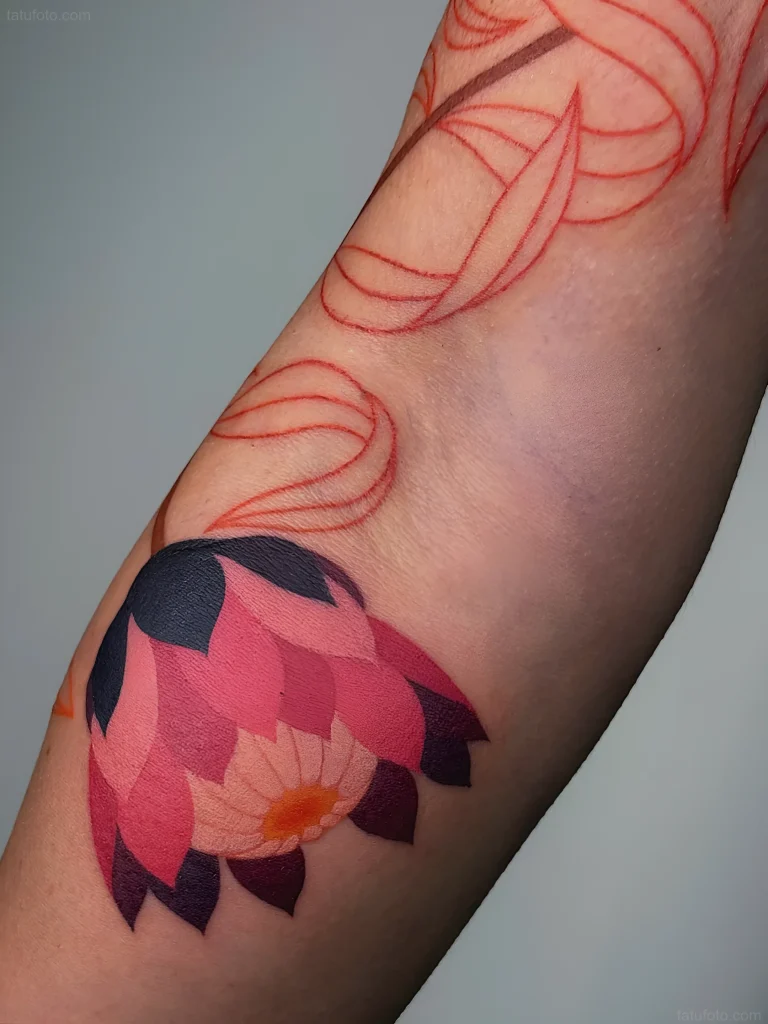
The watercolor style gives the tattoo lightness, movement, and artistic looseness.
- Emphasized Meaning: Emotional transformation, creativity, flexibility (like water).
- Features: Imitation of brushstrokes, soft color transitions, absence of strict outlines. A protea in watercolor looks less rough and more airy.
- Tip: Choose watercolor if you want to emphasize not so much resilience as the ability for gentle but inevitable metamorphosis.
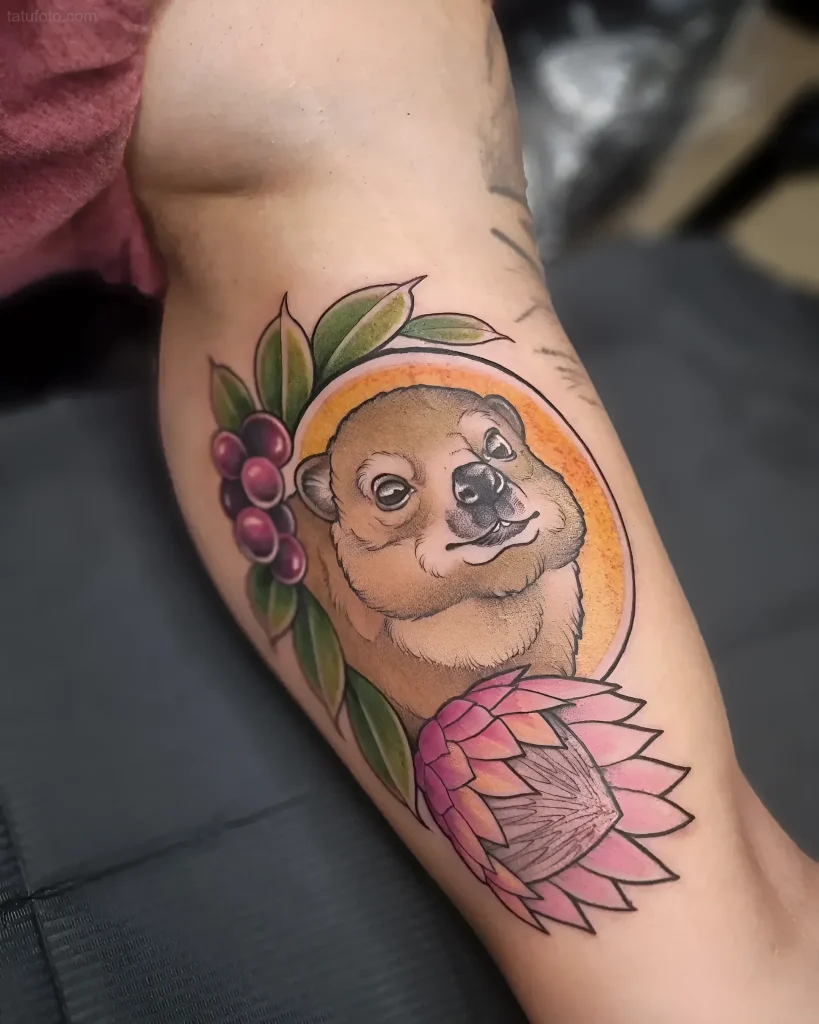
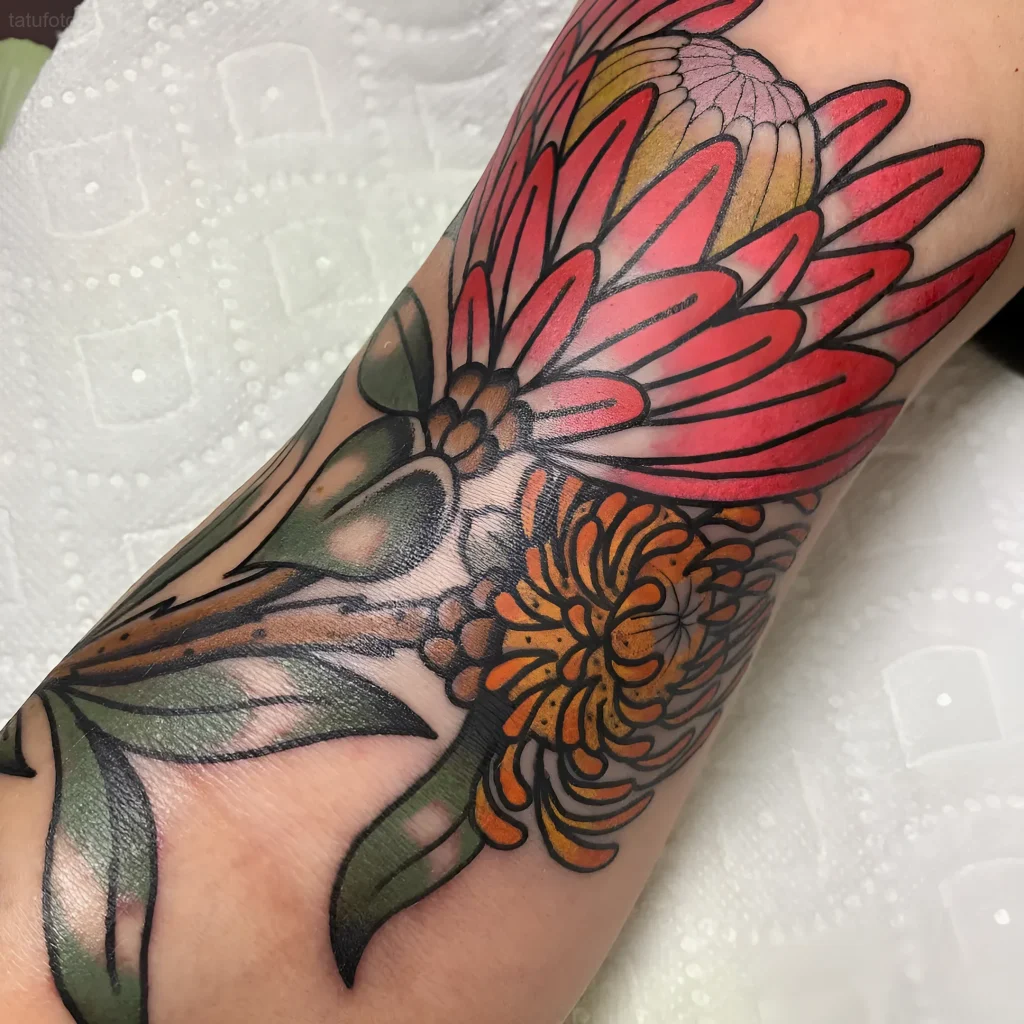
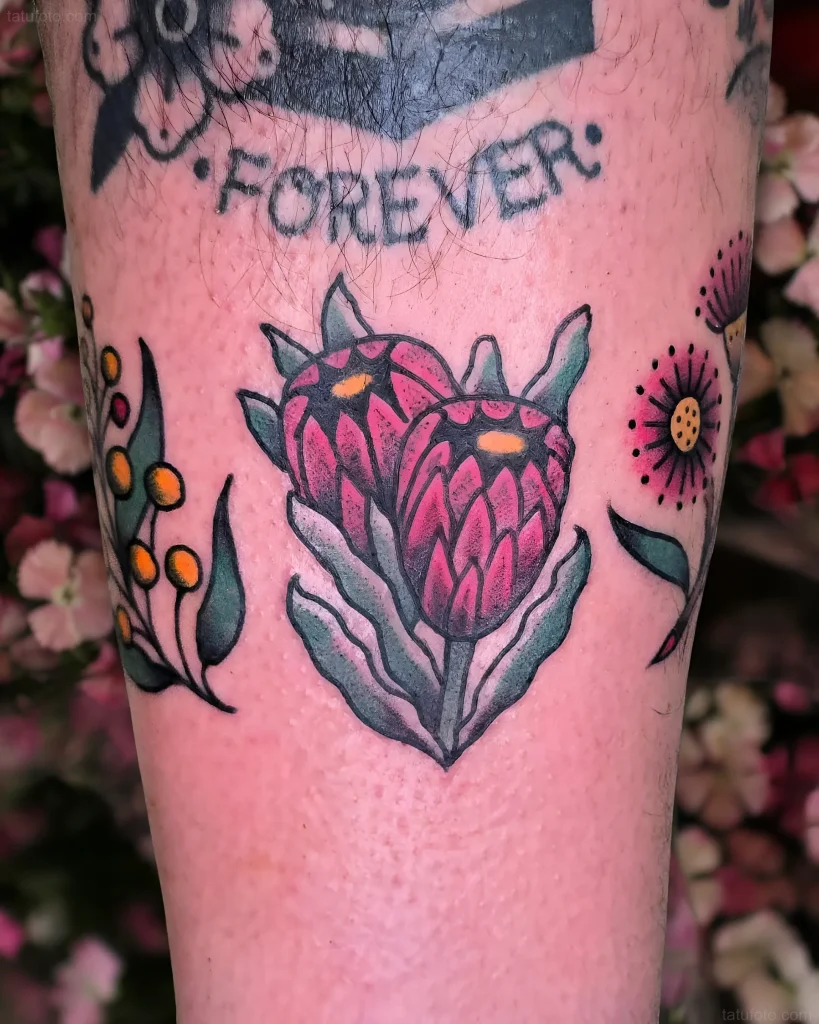
4. Neo-Traditional Style
The neo-traditional style is perfect for those who love bright colors, clear outlines, and vintage aesthetics.
- Emphasized Meaning: Grandeur, respect for traditions, longevity of the symbol.
- Features: Thick black outlines, rich, dense colors (often burgundy, gold, emerald). The protea looks like a heraldic symbol or an expensive decorative element.
Where to Get a Protea Flower Tattoo: Optimal Placement on the Body
The placement of a tattoo always enhances its meaning. For such a voluminous and textured flower as the protea, the choice of location is particularly important.
1. Forearm and Sleeve (Visible Strength)
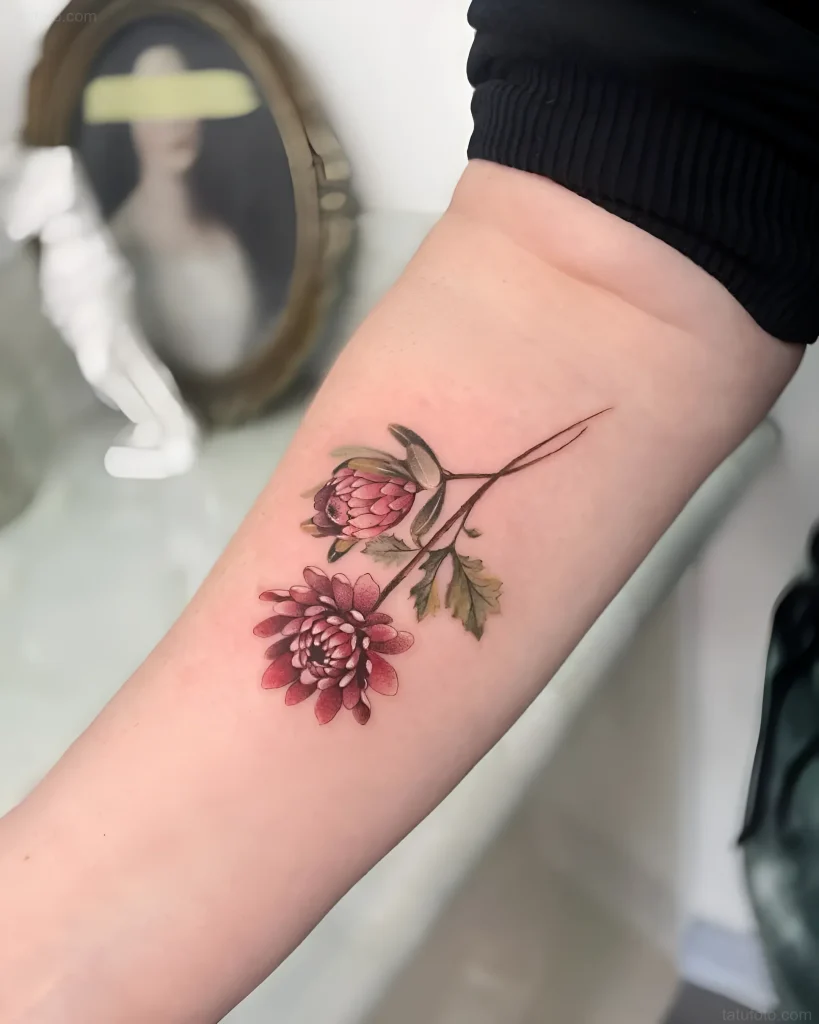
- Symbolism: Placement on the forearm or as part of a sleeve emphasizes that your strength, resilience, and adaptability are an open part of your personality. You demonstrate these qualities to others.
- Practicality: An excellent location for realism or neo-traditional styles, as there is plenty of flat surface for detail.
2. Thigh and Ribs (Personal Transformation)
- Symbolism: A tattoo on the thigh or ribs is often more personal. Here, the protea symbolizes inner, deeply experienced transformations and hidden strength that you don’t have to show everyone.
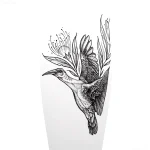
- Practicality: The ribs and thigh allow for a very large, detailed sketch, possibly with the addition of other floral or faunal elements from South Africa.
3. Shoulder Blade and Upper Back (Protection and Legacy)
- Symbolism: The back is traditionally associated with protection, support, and the past. A protea here can symbolize the strength gained from overcoming the past or serve as a “shield” against adversity.
- Practicality: An ideal location for vertically oriented, elongated protea sketches.
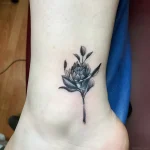
4. Ankle or Wrist (Reminder of Flexibility)
- Symbolism: A small protea in these locations serves as a constant reminder of the need to be flexible (connection to Proteus) and adapt to life’s changing circumstances.
- Practicality: Suitable for minimalist linework or fine graphics.
Protea Flower Tattoo Care: Tips from Professionals
The protea is a detailed motif that often includes many fine lines, gradients, and solid color. Proper care is critical to preserving its unique texture and symbolic meaning.
1. Preserving Texture and Color:
- Sun Protection: Color protea tattoos, especially those done in realism or neo-traditional, are very sensitive to UV rays. Use SPF 50+ sunscreen constantly to prevent the petals from fading and losing their saturation.
- Moisturization: Dense lines and complex gradients characteristic of the protea require constant moisturizing. Dry skin can make the details less clear.
2. Healing Features of Detailed Works:
- Do Not Over-Moisturize: In the first days of healing, despite the need for moisturizing, avoid excessive cream application. This can “pull out” the pigment, especially in areas of complex gradient or fine linework.
- Patience with Scabs: If the tattoo has dense coloring (e.g., the center of the King Protea), scabs may be thicker. Never pick them off; let them fall off naturally to avoid color loss.
3. Touch-ups:
The complex texture of the protea, imitating fuzzy petals, may require minor touch-ups 4–6 weeks after the first session, so the artist can “finish” the fine details and restore contrast lost during healing.
Frequently Asked Questions About Protea Flower Tattoos (FAQ)
Q: Is a protea tattoo suitable as a couple’s tattoo?
A: Yes, absolutely. In the context of relationships, the protea can symbolize deep respect for a partner’s individuality, the couple’s ability to adapt to change (transformation), and the resilience of their union in the face of life’s difficulties. It’s a much deeper symbol than traditional roses or hearts.
Q: Can a protea be combined with other flowers?
A: The protea combines beautifully with other plants that carry similar symbolism or, conversely, contrast with it. It is often depicted with:
- Fern: Symbol of patience and new beginnings.
- Eucalyptus: Symbol of protection and purification (often used in Australian tattoo compositions).
- Lines and Geometry: To enhance the mythological meaning of Proteus as a master of form and structure.
Q: Does the size of the tattoo affect its meaning?
A: Size affects detail, but not the core meaning. A large protea (on the thigh or back) allows for maximum expression of its textural complexity and realism, emphasizing its grandeur and power. A small protea (on the wrist) serves as a personal, intimate symbol of resilience and flexibility.
Q: How to choose a type of protea for a tattoo?
A: The most popular is the King Protea (Protea cynaroides), which looks the most majestic and carries the symbolism of honor and courage. However, you can also choose other species, such as Protea nivea, if you want to emphasize a softer, more delicate meaning.
Interesting Facts About the Protea Flower and Its Cultural Significance
To complete our immersion into the world of protea tattoos, let’s look at a few facts that can add a unique touch to your sketch and understanding of this symbol.
1. Connection to Fire (Fire Fynbos)
Many protea species are part of the Fynbos ecosystem in South Africa. These plants not only survive fires but also use them for reproduction! Protea seeds are securely hidden in tough, fire-resistant cones and are released only after intense heat. This unique characteristic makes the protea an absolute symbol of rebirth from ashes, which is an extremely powerful meaning for a tattoo.
2. Royal Symbol
The King Protea got its name for a reason. Its enormous size and crown-like shape made it a symbol of monarchy, strength, and power. A King Protea tattoo can be interpreted as a sign of high self-esteem, inner royal posture, and dignity.
3. Longevity of a Cut Flower
The protea is known for retaining its shape and freshness for a long time after being cut. This reinforces the symbolism of longevity and unchangingness. In a tattoo, this can mean that the qualities the flower symbolizes (resilience, flexibility) are permanent and long-lasting traits of the owner’s character.
4. Botanical Diversity as a Metaphor for Life
The protea family is one of the most diverse in the world. This botanical feature reflects a metaphor for life: a diversity of forms, colors, and adaptations to the environment. A protea tattoo can symbolize the acceptance of all aspects of life, both beautiful and complex, and the recognition that every experience makes you unique.
Choosing a protea flower tattoo is a deep and conscious decision. You are choosing a symbol that combines ancient mythology, natural power, and a personal story of transformation. We hope this detailed analysis will help you create a sketch that perfectly reflects your unique journey and unwavering strength of spirit.