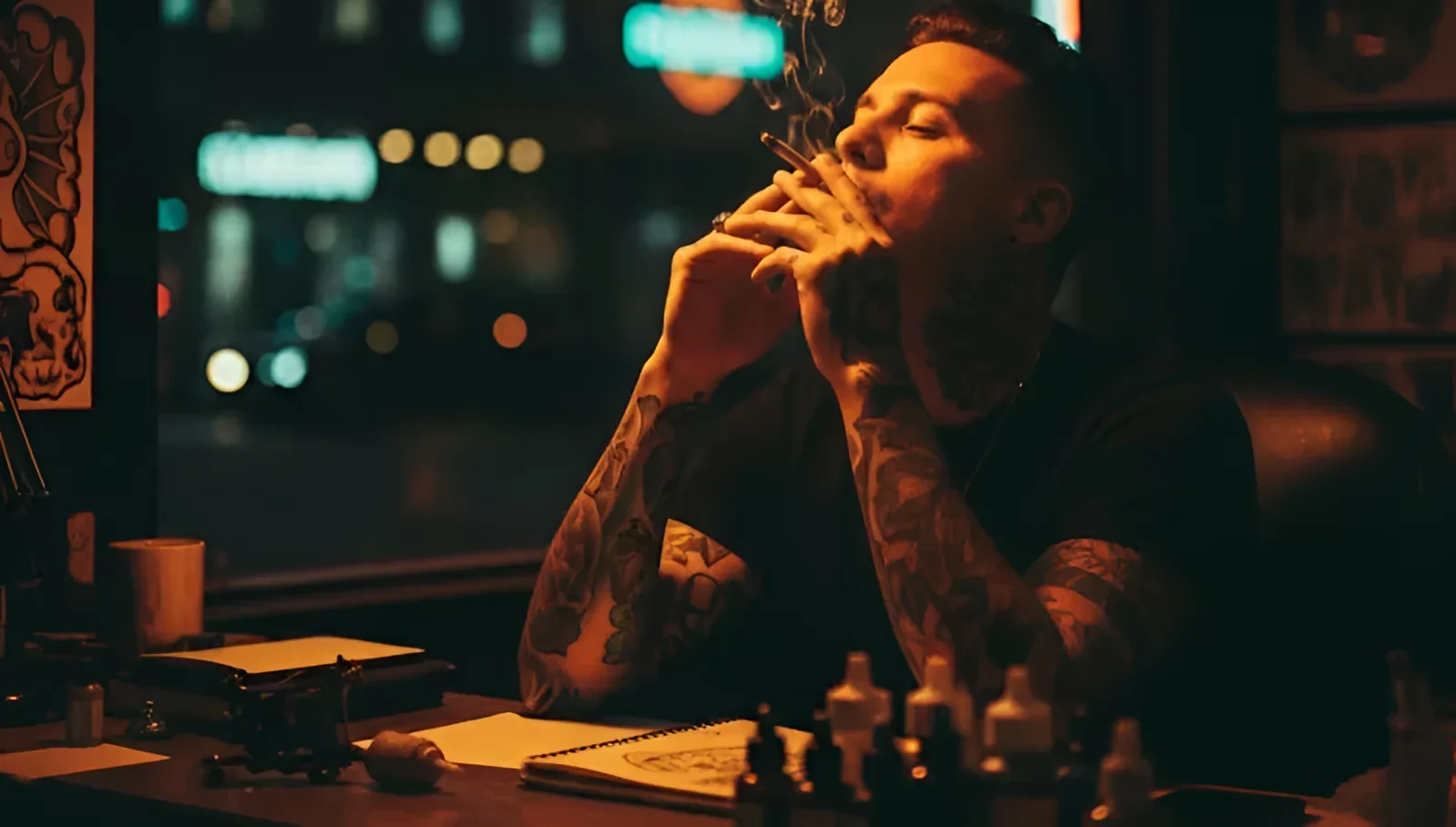
The relationship between tattoo art and cannabis culture has always been more than just a simple coexistence within the underground. It’s a symbiosis of two powerful currents of self-expression that have shaped the face of modern counterculture for decades. Today, as societal boundaries continue to expand, we see this connection transforming from a symbol of protest into a professional industry where wellness innovations coexist with age-old artistic traditions.
Origins and Evolution: From the 60s to Today
The history of “cannabis” tattoos didn’t start yesterday. The first recognizable motifs began to appear in the 1960s and 70s, becoming a marker of belonging to a certain group. However, by 2026, this genre is no longer the domain of marginal figures. Modern artists don’t just tattoo leaf images; they integrate cannabinoids into the tattooing process itself and create collaborations with major brands. Experts note that tattoos and cannabis have “grown” together, moving from underground studios to museum exhibitions and legal markets.
Dillon Forte: Innovation at the Intersection of Sacred Geometry and Wellness
One of the most influential figures in this movement is Dillon Forte. Moving from Venice Beach, California, to Austin, Texas, this master of sacred geometry and dotwork made the industry talk about him back in 2019. His approach isn’t about the recreational aspect but about therapy. Forte became one of the pioneers in using CBD (cannabidiol) directly in the tattooing process. The artist claims that using CBD-based ointments helps effectively manage swelling and alleviate pain for clients. Considering that Forte’s waiting list stretched for three years a few years ago, his methods clearly resonate with the audience. For him, the plant is a tool for expanding creative horizons and changing perspective, which is critically important for creating complex geometric patterns.
Alex Kane: The “Joint” Aesthetic as a Separate Genre
While Forte focuses on philosophy and physiology, Alex Kane, known online as Happy Kane, has transformed the image of joints into true pop art. In April 2022, the authoritative publication Inked Magazine dedicated an entire gallery to his work, showcasing 75 unique tattoos. Kane proves that even such a niche theme can be an endless source of creativity: his “joints” are adorned with prints of clouds, bandanas, and even kittens. This is a vivid example of how hyper-specialization allows an artist to occupy a unique niche in the oversaturated world of tattoo art.
European Footprint: The Stay Stoned Project and Museum Status
Italy and the Netherlands have become centers of attraction for “green” tattoo culture in Europe. Samuele Salvadori (Sam Boy) from Tuscany and his colleague Gilberto Cannarozzi created a project that took the theme to a new level. Their flash book “Stay Stoned,” released in a limited edition of 420 copies, sold out almost instantly. The culmination of their activities was an exhibition at the Hash, Marihuana & Hemp Museum in Amsterdam, which concluded on April 23, 2023. The exhibition featured works by over 40 artists, including legends like Henk Schiffmacher – a tattoo historian and former owner of the Amsterdam Tattoo Museum. Schiffmacher’s participation and that of his son Morris confirm that cannabis-themed art has gained institutional recognition and become part of official art history.
Business and Legalization: The Experience of Chicago and Denver
In the US, where legalization processes are most active, tattoo studios are openly declaring their stance. Shred’s Inferno studio in Chicago positions itself as a “marijuana-friendly” space. The studio owner, Shred, not only creates hyperrealistic images of buds but also actively collaborates with Michigan brands like Trap Stars and MKX. This creates a special atmosphere of comfort for clients who share these values. Nate Stevens from Denver offers an interesting example. Working at Marion Street Tattoo Gallery, he entered into a six-month contract with the dispensary Seed & Smith. Stevens developed merchandise designs and graphics for specific strains, such as “Grease Monkey.” Notably, Nate himself does not consume cannabis but openly supports its culture, seeing it as a natural union of two creative worlds.
Key Figures in the Cannabis Tattoo Movement
| Artist | Location | Specialization / Contribution |
|---|---|---|
| Dillon Forte | Austin, Texas | CBD integration, sacred geometry |
| Alex Kane | Happy Kane | Hyper-specialization in joint tattoos |
| Samuele Salvadori | Livorno, Italy | Co-author of “Stay Stoned” book, traditional style |
| Shred | Chicago, Illinois | Owner of marijuana-friendly studio Shred’s Inferno |
| Henk Schiffmacher | Amsterdam | Historian, legitimization of the genre through museums |
Trend Analysis: Why is This Important for the Industry?
Today’s interest of tattoo artists in cannabis is not just following a trend. We are observing three important vectors of development: therapeutic, commercial, and cultural. The use of CBD to reduce pain and inflammation is changing the client experience, making the tattooing process more comfortable. Collaborations between artists and legal cannabis producers are opening new markets for merchandise and unique content. The transition from a “forbidden fruit” to an object of museum study signifies the maturity of both industries. Artists like Danny Boy, Robert Ryan, Bill Loika, and Jondix, through their flash sets, explore their personal experiences with the plant, transforming subjective sensations into visual images. This makes tattooing not just an adornment, but a deeply personal manifesto. In the context of global legalization, we can expect more such projects to emerge, and the lines between lifestyle, medicine, and art to become completely blurred.