
A red ribbon tattoo is not just an aesthetic choice or a bright spot on the skin. For many, it is a powerful statement that carries a deep social, humanitarian, or deeply personal, romantic subtext. In the world of modern tattoo culture, this symbol has acquired two fundamentally different, but equally significant interpretations. On the one hand, the red ribbon is an international symbol of the fight against AIDS and solidarity with people living with HIV. On the other hand, it is a beautiful interpretation of the Eastern legend of the “red thread of fate,” which connects people destined for each other by heaven. By choosing such a design, you invest a part of your story, your beliefs, or your feelings into it, turning your skin into a canvas for a manifesto.
Red Ribbon: A Symbol of Struggle and Fate in the World of Tattoos

When we talk about a red ribbon tattoo, it’s important to understand that this image carries a colossal emotional weight. Unlike purely decorative ornaments, a red ribbon always tells a story. For some, it’s a story of courage, overcoming, and supporting those who have faced a serious diagnosis. For others, it’s a symbol of an invisible but unbreakable connection with a loved one that transcends time, distance, and circumstances. Experts from the portal tatufoto.com note that the popularity of this design is growing precisely because of its versatility and ability to express complex human emotions through a simple, concise form.

The red color in this context is not chosen by chance. It is the color of blood, life, passion, and at the same time, a warning. In a tattoo, it looks maximally accentuating, attracting attention and making people think about the meaning hidden behind the elegant curve of the ribbon. Regardless of the meaning you invest in it, such a tattoo becomes a kind of talisman, reminding you of what is most important: the value of human life and the power of love.
The History of the Red Ribbon: From the Echo of the Past to a Modern Sign

The history of the red ribbon as a symbol of solidarity began in 1991 in New York. Artist Frank Moore and the “Visual AIDS” activist group were looking for a way to express support for people affected by the HIV/AIDS epidemic. Inspired by the tradition of yellow ribbons, which were hung on trees in the US to await soldiers returning from war, Moore suggested using the color red. The ribbon, folded in the shape of an inverted “V,” became a symbol of compassion, hope, and a call to action. Very quickly, this sign moved from lapels of jackets to skin in the form of tattoos, becoming an eternal sign of remembrance and struggle.
Concurrently, in world culture, especially in East Asian countries (China, Japan), there is an ancient legend about the red thread of fate (Akai Ito). According to the myth, gods tie an invisible red thread to the ankles (or little fingers) of people, connecting those who are destined to meet and influence each other’s lives. This thread can stretch or tangle, but it never breaks. In the modern tattoo industry, these two directions – social and mythological – often intersect, creating new layers of meaning. The tattoo can look like a satin ribbon or a thin woolen thread, but the red color invariably unites these concepts.
The Multifaceted Meaning of a Red Ribbon Tattoo: Two Key Meanings

When analyzing the meaning of a tattoo, it is necessary to clearly distinguish between the two main directions, as they carry different emotional messages. It is important to understand that the choice of a specific design and placement is often dictated by the chosen interpretation.
- Symbol of solidarity with people living with HIV/AIDS: In this context, the tattoo serves as a sign of support, remembrance of those lost to the disease, or a personal manifesto of a person with a positive status. It symbolizes the absence of fear of stigma, the readiness to fight for rights and dignity. Such a tattoo says: “I am here,” “I remember,” “I am not afraid.”
- The red thread of fate (connection between loved ones): Here, the ribbon or thread acts as a symbol of destiny. It can be a matching tattoo for lovers, a symbol of the connection between a mother and child, or a sign of eternal friendship. The main message here is the unbreakable bond that is divinely given.
There are also other, less common meanings. For example, in some cultures, the red ribbon is considered a charm against the evil eye (similar to the red string on the wrist in Kabbalah). Also, a red ribbon can symbolize the fight against other diseases, such as heart disease or certain types of cancer, although each disease often has its own designated color. However, HIV activism and the theme of fate remain dominant.
Styles of Red Ribbon Tattoos: From Minimalism to Realism

The choice of style directly affects how the tattoo will be perceived. Since a ribbon is a plastic object, artists can offer many implementation options.
- Realism: This is one of the most striking styles. The artist meticulously depicts the texture of the fabric, the sheen of satin, the shadows in the folds, and the realistic edges of the ribbon. Such a tattoo looks volumetric and “alive,” as if a real ribbon is attached to the skin.
- Minimalism: Ideal for the “thread of fate” symbol. A thin, barely noticeable line on the wrist or finger looks elegant and understated, preserving the intimacy of the meaning.
- Watercolor: A style for those who want to add artistry. Blurred edges, imitation of paint drips, and the absence of clear outlines make the tattoo soft and emotional.
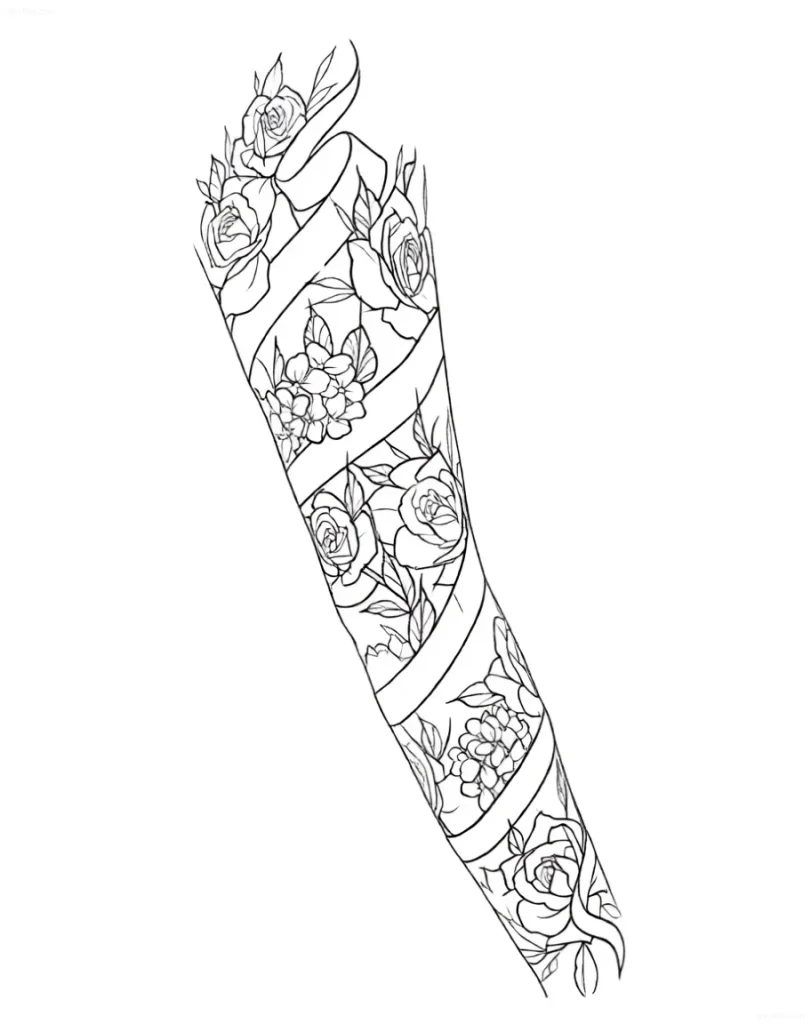
- Graphic or Linework: The use of clear black outlines combined with bright red fill. This makes the tattoo graphic and easily readable even from a distance.
- Trash Polka: For those who want to emphasize the theme of struggle and protest. A red ribbon surrounded by chaotic black strokes, newspaper fonts, and symbols of death (skulls) creates a powerful dramatic effect.
Ideal Placement for a Red Ribbon Tattoo on Your Body

The placement of the tattoo often depends on how public you want your message to be. Specialists at tatufoto.com have prepared a brief guide to locations:
- Wrist: The most popular location. A tattoo here is always visible to the wearer, reminding them of its meaning. Often, the “thread of fate” or a ribbon of solidarity is placed here.
- Ring finger or little finger: The traditional place for the “red thread of fate” symbol. Often done as a thin ring or thread that disappears under a sleeve.
- Chest (in the heart area): A deeply personal place, emphasizing the sincerity of feelings or personal involvement in the fight against the disease.
- Shoulder or forearm: A classic location for a noticeable, large ribbon. Well-suited for detailed realism.
- Ankle: Corresponds to Eastern legends about the thread of fate connecting people by their legs.
Below is a table that will help you choose a location based on the level of pain and visibility:
| Placement | Pain Level (1-10) | Visibility to Others | Best Style |
|---|---|---|---|
| Wrist | 4-5 | High | Minimalism, Graphic |
| Fingers | 7-8 | High | Minimalism |
| Chest | 6-7 | Low (intimate) | Realism, Watercolor |
| Forearm | 3-4 | Medium | Any style |
| Ankle | 6-7 | Medium | Minimalism, Old School |
Preparation and Care for a Red Ribbon Tattoo: Master’s Tips

Red pigment is one of the brightest, but at the same time, it requires special attention. Some people have increased sensitivity to red ink due to the presence of certain minerals. Therefore, an allergy test is recommended before the session.
Basic care recommendations:
- First few days: Strictly follow the master’s instructions. Use healing ointments (e.g., Bepanthen or specialized tattoo products). Do not let the skin dry out.
- Sun protection: Red color fades in the sun faster than others. After complete healing, always use sunscreen with SPF 50+ if the tattoo is on an exposed area of the body.
- Hygiene: Do not scratch or peel off scabs if they appear. This can lead to pigment loss and gaps in color.
- Touch-ups: Be prepared that after a few years, the red color may require refreshing to remain as vibrant and bright.
Remember that a quality result depends 50% on the master’s work and 50% on your care during the skin regeneration period.
Frequently Asked Questions About Red Ribbon Tattoos (FAQ)

1. Is it mandatory to have HIV status to get a red ribbon tattoo?
No, absolutely not. Many get this tattoo as a sign of support for loved ones, in memory of friends, or as a symbol of their civic stance and fight against stigmatization. It is a sign of solidarity accessible to everyone.
2. Is it true that red ink causes allergies more often?
Statistically, yes, red pigment causes reactions in people with hypersensitive skin more often than others. However, modern premium inks undergo strict control, and the risk is minimal. Be sure to discuss this with your master in advance.
3. What does a red thread tattoo on the wrist mean?
Most often, it is an interpretation of a Kabbalistic charm against the evil eye or a reference to the legend of the thread of fate. It is a symbol of protection and predestined path.
4. Can a red ribbon be combined with other symbols?
Yes, ribbons are often complemented with names, dates, images of hearts, angel wings, or flowers. This helps to make the tattoo more individual and expand its meaning.
Interesting Facts About the Red Ribbon and Its Meaning

- The first official “red ribbon” was made from an ordinary silk ribbon bought at a fabric store and pinned to clothing with a safety pin.
- In 1992, at the Grammy Awards ceremony, more than half of the attendees wore red ribbons in solidarity.
- In Japan, the legend of the red thread is so popular that it is often used in anime and manga (e.g., in the famous film “Your Name”), inspiring thousands of people to get similar tattoos.
- The largest red ribbon tattoo was recorded as part of a large-scale art project aimed at raising awareness about health issues in Europe.
- The red color of the ribbon also symbolizes the “blood of Christ” in some religious interpretations, where the ribbon acts as a symbol of redemption and hope.
By choosing a red ribbon tattoo, you join a global community of people who value life, believe in fate, and are not afraid to express their support for those in need. This small image on the skin can carry immense power, becoming an eternal reminder that we are all connected by invisible but strong threads.