
In the world of tattoos, where every symbol carries deep meaning and personal history, some images stand out for their originality and unexpected versatility. One such, undoubtedly, is the sewing machine tattoo. At first glance, it might seem like an unusual choice, but behind the mechanical form lies a rich spectrum of meanings that make this image incredibly appealing to people of various professions and worldviews. If you’re looking for a tattoo that symbolizes creativity, diligence, connection to tradition, or the ability to create something new, then a sewing machine might be your perfect skin companion.
The Meaning of a Sewing Machine Tattoo: A Symbol of Creativity and Craftsmanship

A tattoo with a sewing machine image is much more than just a tribute to the profession of a seamstress or tailor. It is a powerful symbol that combines the concepts of creation, diligence, precision, and individuality. The sewing machine, as a tool, embodies the process of transforming simple materials into something beautiful and functional, which resonates deeply with creative individuals.
- Symbol of Creativity and Creation: For many people, especially those connected to the world of fashion, design, handicrafts, or any other applied art, the sewing machine represents an endless flow of ideas and the ability to bring them to life. It’s a reminder of the joy of creation, of the ability to turn dreams into tangible reality. Such a tattoo can serve as a source of inspiration, pushing the owner towards new projects and experiments.
- Embodiment of Skill and Professionalism: A sewing machine requires not only a creative approach from its operator but also a high degree of skill, precision, and attention to detail. A tattoo with this image is often chosen by professionals in their field – tailors, fashion designers, couturiers – as a mark of pride in their profession, for their honed skills, and impeccable quality of work. It’s a declaration that you don’t just do the job, but put your soul and skill into it.

- Diligence and Patience: The process of sewing requires perseverance, attentiveness, and patience. The sewing machine, methodically performing its work stitch by stitch, becomes a metaphor for determination and the ability to see things through to the end, despite difficulties. It’s a symbol that great achievements are made up of many small but consistent steps.
- Individuality and Uniqueness: In an era of mass production, a handmade item or one created with a sewing machine is especially valued for its uniqueness. A sewing machine tattoo can symbolize the pursuit of self-expression, a rejection of standards, and an emphasis on one’s own distinctiveness. It’s a choice for those who appreciate handwork, personalization, and an individual approach.
Thus, the meaning of a sewing machine tattoo goes far beyond a literal depiction, becoming a profound manifesto of personal values and professional beliefs.
The History of the Sewing Machine: From Invention to Style Icon

To fully grasp the symbolic depth of a sewing machine tattoo, it’s important to look at its historical journey. This seemingly simple mechanism has come a long way from a revolutionary invention to an iconic object that has become part of cultural heritage and a source of inspiration for artists and tattooists.
- Revolution in Home and Industry: The invention of the sewing machine in the late 18th – early 19th century was a real breakthrough. Before that, all clothing and textile products were made by hand, which required enormous amounts of time and effort. The advent of the mechanized sewing machine (pioneers included Barthélemy Thimonnier, Elias Howe, and of course, Isaac Singer) radically changed the world, making clothing more accessible and the production process faster and more efficient. It was a symbol of progress, innovation, and liberation from arduous manual labor.
- Economic Independence and Female Emancipation: The sewing machine played a huge role in enabling women to earn a living by working from home or opening their own workshops. It became a symbol of economic independence, self-sufficiency, and even female emancipation. For many families, the sewing machine was a breadwinner, providing a stable income and improving the quality of life. This aspect adds an extra layer of meaning to the tattoo – a symbol of perseverance, independence, and the ability to build one’s destiny with one’s own hands.
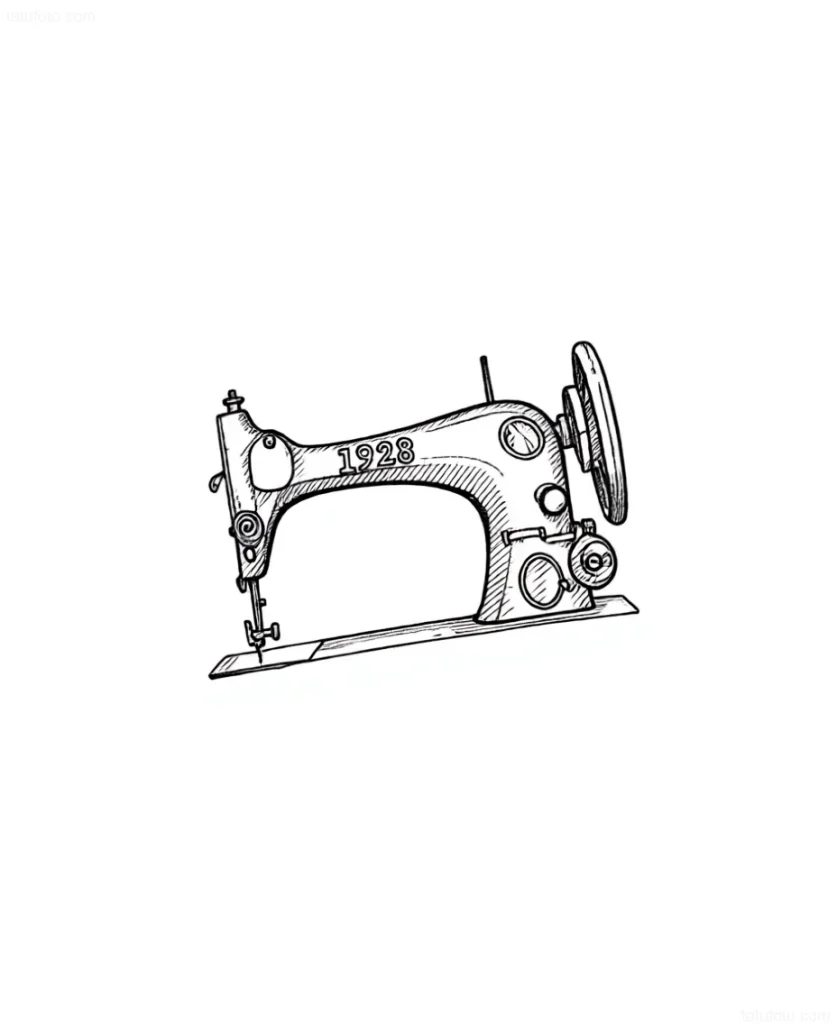
- Aesthetics and Design: Beyond its functionality, old sewing machine models, especially cast-iron Singers with their intricate patterns, gold accents, and elegant lines, are works of art in themselves. Their design reflects the era in which they were created, combining utility with aesthetic appeal. It is this vintage aesthetic that often inspires tattoo artists, allowing them to create images that are both symbolic and artistic objects.
- Nostalgia and Connection to the Past: For many, a sewing machine is associated with home, grandmothers, the warmth of the family hearth, and childhood memories. It can be a symbol of generational connection, respect for ancestors, and the preservation of traditions. In this context, a sewing machine tattoo acquires sentimental value, serving as a reminder of one’s roots and important people in life.
Thus, the history of the sewing machine is not just a chronicle of invention, but a narrative of social change, technological progress, and profound cultural influence that continues to be reflected in its symbolism as a tattoo.
Hidden Meanings: What Does a Sewing Machine Tattoo Mean?

When it comes to a sewing machine tattoo, its meaning is rarely straightforward. This image can carry a whole kaleidoscope of meanings, depending on the owner’s personal history, profession, and worldview. Let’s delve into these hidden meanings that make a sewing machine tattoo truly unique.
- Creative Path and Calling:
For artists, designers, couturiers, writers, and any other creative individuals, the sewing machine can symbolize their calling and insatiable thirst to create. It embodies the process of transforming an idea into a material form, whether it’s a sketch, fabric, or text. This tattoo says: “I create, I manifest, I live by creativity.” It can be a tribute to one’s chosen path and a constant reminder to follow one’s inner voice. - Perseverance, Hard Work, and Precision:
The mechanism of a sewing machine operates with incredible precision and requires concentration from the operator. In this context, a sewing machine tattoo symbolizes perseverance, hard work, attention to detail, and the pursuit of perfection. For those who value quality, accuracy, and are willing to invest effort to achieve an ideal result, this symbol is very appropriate. It can reflect a life philosophy where there is no room for shoddy work and where every stitch matters. - Transformation and Rebirth:
A sewing machine takes individual pieces of fabric and joins them into a cohesive whole, creating something new and functional. This process can be interpreted as a metaphor for transformation, rebirth, or healing. The tattoo can symbolize the ability to overcome difficulties, “stitch up” broken parts of life, restore wholeness after loss, or start a new chapter. It is a powerful symbol of resilience and inner strength.
- Connection to Home, Family, and Traditions:
Many remember their grandmothers’ and mothers’ old sewing machines, which stood in the corner of the room and witnessed many family stories. For such people, a sewing machine tattoo becomes a symbol of comfort, family ties, nostalgia, and respect for traditions. It can be a tribute to loved ones who passed down a love for handicrafts or a reminder of warm moments from the past. It is a symbol of roots and where we come from. - Self-Sufficiency and Independence:
In the past, a sewing machine was often a tool for earning a living, allowing people, especially women, to be self-sufficient and independent. The tattoo can reflect entrepreneurial spirit, the ability to rely on oneself, and the capacity to provide for oneself and one’s family through one’s own labor. It’s a choice for those who value autonomy and are proud of their ability to stand on their own two feet. - The Art of Handicrafts and Hobbies:
Not only professionals but also people for whom sewing, knitting, or creating clothes is a favorite hobby can choose a sewing machine tattoo. For them, it’s a symbol of passion, enthusiasm, and the joy that the creative process brings. It’s a way to declare one’s hobby, which brings peace and self-expression.
Each of these meanings makes a sewing machine tattoo deeply personal and significant. When choosing such an image, it’s important to clearly define which aspect resonates most with your story and values.
Sewing Machine Tattoo Styles: From Realism to Minimalism

The image of a sewing machine, despite its specificity, is surprisingly versatile in terms of stylistic execution. An experienced artist can bring it to life in almost any genre, each of which will give the tattoo its own unique character and mood. The choice of style depends on your personal preferences, desired size, and placement of the tattoo.
- Realism:
Description: This style strives for maximum photorealism. Every detail – from the shine of the metal and the texture of the wood to the smallest screws and shadows – is worked out with incredible precision. Old Singer machines with their characteristic patterns and cast-iron elements are often depicted.
Meaning: Emphasizes respect for history, craftsmanship, and technical perfection. Ideal for those who appreciate details and want the tattoo to look like a work of art on the skin.
Example: A detailed depiction of a vintage sewing machine with threads and scissors, creating a lifelike photographic effect. - Old School (Traditional):
Description: Characterized by thick outlines, a limited palette of bright colors (red, yellow, green, blue), and classic elements like roses, swallows, or ribbons. The sewing machine image will be stylized, focusing on recognizable features rather than absolute accuracy.
Meaning: Refers to tattoo art classics, symbolizing resilience, adherence to tradition, and nostalgia. Often combined with inscriptions like “Mom” or “Craft.”
Example: A bright sewing machine with red roses and a ribbon inscribed with “Made with Love.” - New School:
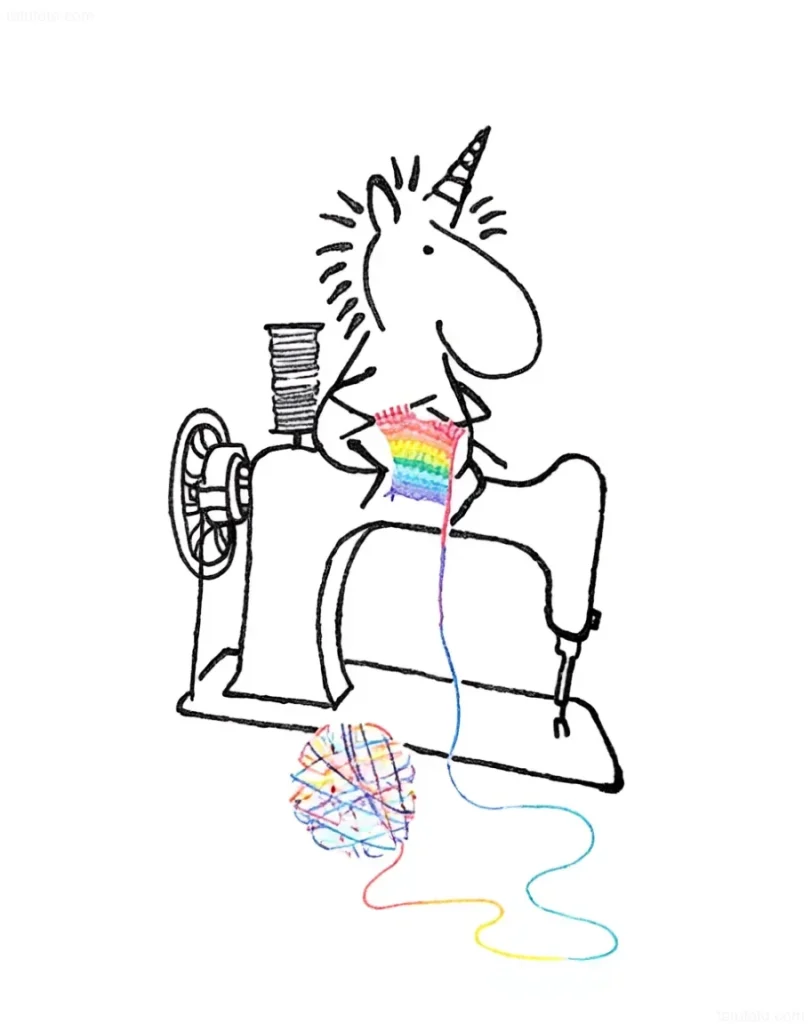
Description: A more modern version of old school, with a wider color palette, dynamic compositions, and elements of cartoonishness or exaggeration. The sewing machine can be depicted with exaggerated details, bright highlights, and unusual angles.
Meaning: Expresses individuality, playfulness, and a modern take on the craft. Suitable for those who want to add humor or fantasy to their image.
Example: A sewing machine from which bright, multi-colored threads fly out, forming a whimsical pattern.

- Minimalism and Linework:
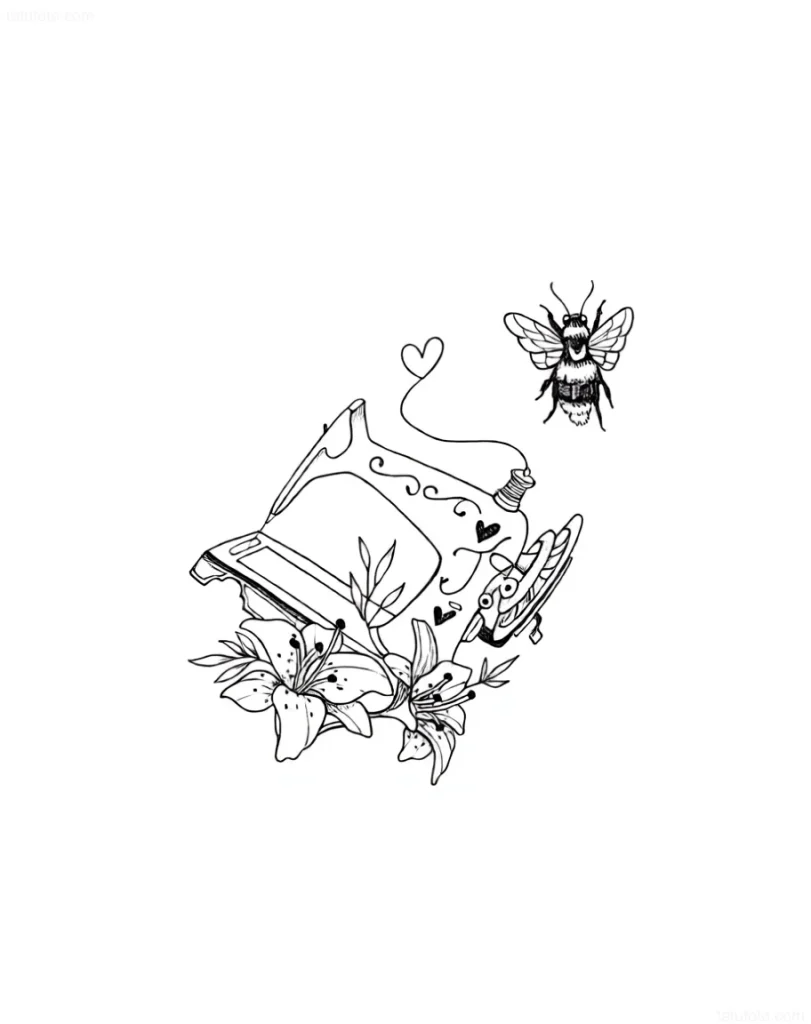
Description: Simplicity and elegance are key features. The tattoo consists of thin lines creating a contour image of the sewing machine without unnecessary details or shading. It can be done in black or with minimal color accents.
Meaning: Symbolizes sophistication, conciseness, and purity of idea. Ideal for those who prefer a subtle yet meaningful design.
Example: A simple, elegant contour of a sewing machine on the wrist or behind the ear. - Blackwork and Dotwork:
Description: Blackwork uses solid black fills to create graphic, contrasting images. Dotwork creates an image using numerous dots, giving the tattoo a unique texture and depth. These styles are often combined.
Meaning: Emphasizes depth, seriousness, and artistic expression. Ideal for creating volumetric and detailed images without using color.
Example: A sewing machine done in dotwork technique, with tonal transitions and solid black elements. - Watercolor:
Description: Mimics the effect of watercolor painting – soft color transitions, splatters, blurred contours. The sewing machine can be depicted in the center, surrounded by bright, translucent spots.
Meaning: Symbolizes lightness, creativity, artistic freedom, and emotionality. Suitable for those who see sewing as art and want to emphasize their uniqueness.
Example: The contour of a sewing machine surrounded by soft watercolor washes of blue, pink, and yellow.
Choosing a style is not just a matter of aesthetics but also a way to enhance or alter the original meaning of the tattoo. Discuss with your artist which style best conveys your idea.
Best Places for a Sewing Machine Tattoo on the Body

Choosing a tattoo location is as important a decision as choosing the design itself. It determines how well the image will look, how it will interact with the lines of your body, and how personal or public its meaning will be. For a sewing machine tattoo, there are many successful options, each with its own advantages.
- Forearm:
Advantages: One of the most popular tattoo locations. The forearm offers a sufficiently flat and visible surface, ideal for detailed sewing machine images. Tattoos here are easy to show off or, if necessary, cover with clothing.
Suitable for: Realism, old school, new school. Medium and large sizes.
Meaning: If you are proud of your profession or hobby, the forearm allows you to openly declare it. - Shoulder and Bicep:
Advantages: Excellent area for larger and more complex compositions. A tattoo on the shoulder or bicep looks very impressive and can be masculine or feminine, depending on the design.
Suitable for: Realism, blackwork, complex narrative compositions with additional elements (threads, scissors, mannequin).
Meaning: A powerful symbol of strength, mastery, and determination. - Thigh:
Advantages: A large, flat surface, ideal for very large and detailed works. A tattoo on the thigh is easy to hide under clothing, making it a more personal choice.
Suitable for: Large-scale realistic scenes, watercolor with many details, complex compositions.
Meaning: A personal symbol that you only show to a select few. Emphasizes intimacy and deep personal meaning. - Shin:
Advantages: Like the thigh, the shin offers a good area for medium to large tattoos. It is well visible in the summer.
Suitable for: Realism, old school, minimalism.
Meaning: Emphasizes moving forward, constant development, if you perceive your passion as a journey.
- Ribs:
Advantages: A very personal and intimate location. Tattoos on the ribs are often chosen for images with deep personal meaning.
Suitable for: Linework, minimalism, small realistic images.
Meaning: A tattoo that is close to the heart, symbolizing a deep personal attachment to the craft or memories. - Wrist:
Advantages: Ideal for small, delicate tattoos. The wrist is a visible area, but the design can be very concise.
Suitable for: Minimalism, linework, small stylized images.
Meaning: A daily reminder of your calling or source of inspiration. - Back:
Advantages: The largest “canvas” on the body, allowing for epic, detailed compositions. The back offers complete freedom to realize the boldest ideas.
Suitable for: Any style, especially large-scale realism, blackwork, narrative tattoos where the sewing machine is part of a larger picture.
Meaning: A deep, all-encompassing meaning that encompasses your entire personality or life path.
When choosing a location, be sure to consider your lifestyle, workplace dress code, and how often you want to display your tattoo. Remember that each part of the body has its own characteristics in terms of pain and healing, which should also be discussed with your artist.
Tips for Choosing an Artist and Caring for a Sewing Machine Tattoo

The quality and longevity of your sewing machine tattoo directly depend on two key factors: the artist’s professionalism and proper aftercare. Investing in these aspects ensures that your meaningful image will bring you joy for years to come.
Choosing an Artist:
- Study the Portfolio: This is the most important step. Look for an artist whose portfolio includes works in your chosen style (realism, old school, minimalism, etc.). Pay attention to the clarity of lines, color saturation, detail, and overall quality of execution. If you want a realistic sewing machine, make sure the artist knows how to work with shadows and volume.
- Specialization: Some artists specialize in certain styles. Find someone who has experience working with mechanical or detailed objects, if that aligns with your concept.
- Reviews and Reputation: Read reviews about the artist and studio. Inquire about hygiene standards (cleanliness, sterile equipment, use of disposable materials). A good reputation is a guarantee of safety and quality.
- Consultation: Be sure to schedule a preliminary consultation. Discuss your idea, show references, and listen to the artist’s recommendations on style, size, and placement. A good artist will always offer their own ideas and help refine the sketch. Make sure you feel comfortable and have complete mutual understanding.
- Price: A quality tattoo cannot be cheap. Do not skimp on the artist, as correcting a poorly done job will be much more expensive. The price should be adequate for the artist’s experience and the complexity of the work.

Sewing Machine Tattoo Aftercare:
Proper aftercare in the first few weeks after the session is crucial for healing and maintaining the vibrancy of your tattoo.
- First Hours and Days:
- Protective Film: The artist will cover the fresh tattoo with a special film or bandage. Follow their instructions on how long to wear it (usually from a few hours to a few days, depending on the type of film).
- Gentle Cleansing: After removing the film, gently wash the tattoo with warm water and antibacterial soap without fragrance. Do this 2-3 times a day. Pat dry with a clean paper towel; do not rub.
- Moisturizing: Apply a thin layer of a special healing cream (e.g., Bepanthen Plus, D-Panthenol, or one recommended by your artist). Do not use Vaseline or greasy creams that can clog pores.
- For 2-4 Weeks:
- Avoid Direct Sun: UV rays are the main enemy of a fresh tattoo. They can cause fading and damage the skin. Keep the tattoo covered or use sunscreen with a high SPF after it has fully healed.
- Refrain from Pools, Saunas, and Baths: Prolonged immersion in water can lead to maceration and infection. Take quick showers.
- Avoid Intense Physical Activity: Sweat and friction can irritate a fresh tattoo.
- Do Not Scratch or Pick Scabs: This can damage the design and cause scarring. Let the skin heal naturally.
- Wear Loose Clothing: Avoid friction from clothing against the tattoo.
- Long-Term Care:
- Moisturizing: Continue to moisturize the skin to maintain its elasticity and the tattoo’s vibrancy.
- Sun Protection: Always use sunscreen on your tattoo when in the sun to prevent fading.
- Healthy Lifestyle: The overall health of your skin affects the appearance of your tattoo.
By following these tips, you will ensure your sewing machine tattoo has a long life and retains its original beauty and deep meaning.
Frequently Asked Questions About Sewing Machine Tattoos
