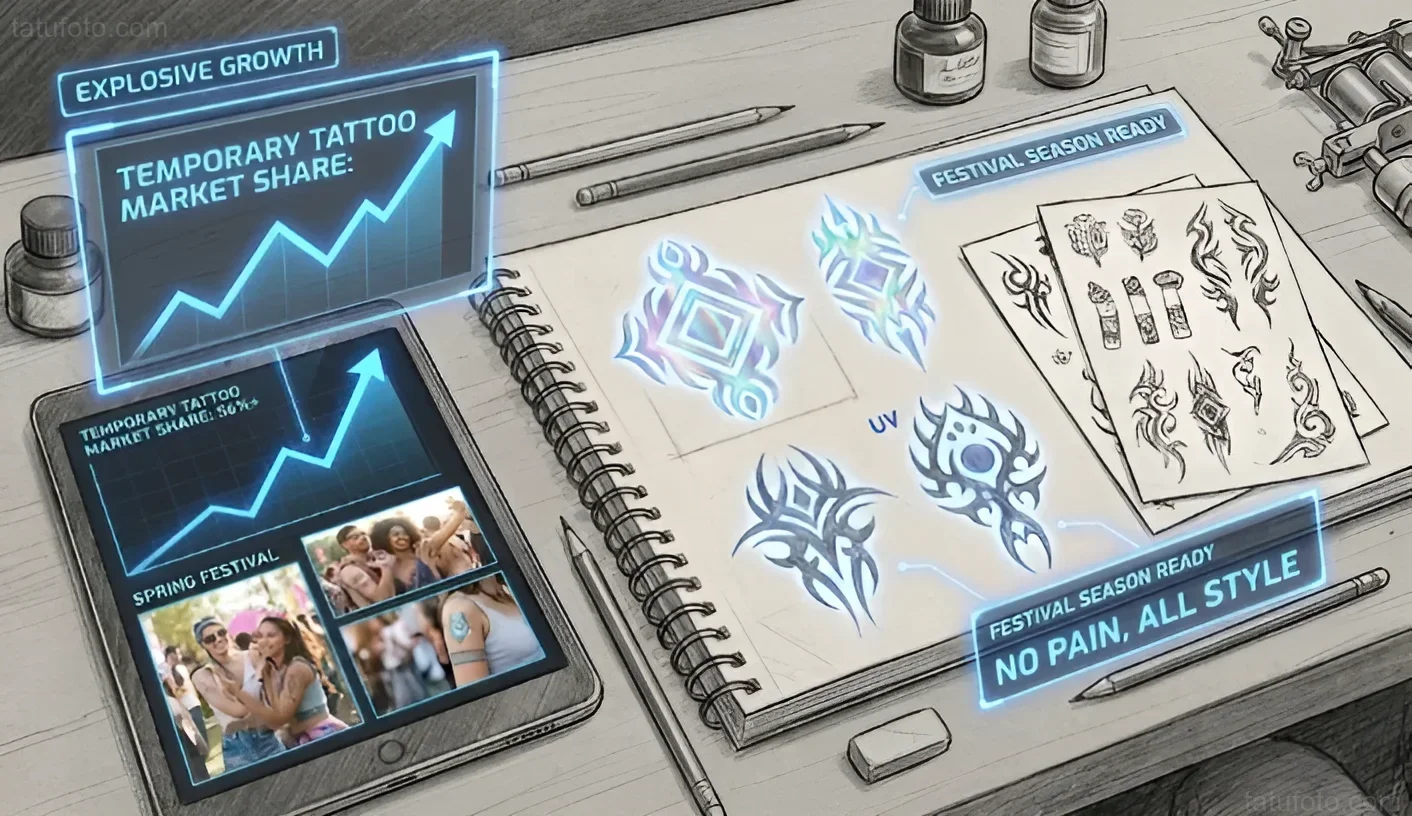
The global body art industry is on the verge of a global transformation: the familiar notion of a tattoo as a lifelong commitment is rapidly becoming a thing of the past. According to the latest analytical reports, by the spring of 2026, the temporary tattoo segment will make an unprecedented leap, capturing a dominant market share of 56.17%. This tectonic shift in consumer preferences is driven not only by technological advancements but also by a profound change in the paradigm of self-expression among young people, who are no longer willing to bind themselves to long-term commitments with ink under their skin.
Numbers and Forecasts: Why Temporary Decor is Winning Over Classics
Market segmentation analysis of tattoos shows that the compound annual growth rate (CAGR) of temporary solutions significantly outpaces that of the traditional segment. By 2026, more than half of all industry revenue will be generated from products that last on the skin from a few days to a few weeks. The main drivers are the Zoomer and Alpha generations, for whom mobility and the ability to instantly change their image are key values. Temporary body art is no longer perceived as “child’s play” and has become a full-fledged fashion accessory, comparable in importance to jewelry or makeup.
Technological Breakthrough: From Stickers to UV Effects
Modern temporary tattoos are a high-tech product that is visually almost indistinguishable from the quality work of a professional artist. Experts highlight several key directions that will dominate in 2026:
- Holographic Tattoos: Iridescent elements that create a 3D volume effect on the skin, especially popular in futuristic looks.
- UV-Reactive Designs: Patterns that remain invisible in daylight and glow brightly under ultraviolet light, making them ideal for nightclubs and raves.
- Next-Generation Peel-and-Stick: Improved adhesive compounds that do not tighten the skin and have increased resistance to water and friction.
- Organic Inks: The use of genipa fruit juice (jaguar), which mimics the color of a real tattoo by penetrating the upper layers of the epidermis.
Festival Season as the Main Demand Catalyst
The peak popularity of temporary body art traditionally falls in the spring-summer period. Preparations for major music festivals and the beach season compel consumers to seek ways to stand out without the risk of an unsatisfactory result or a painful procedure. Temporary solutions allow for experimentation with scale – from miniature symbols on fingers to large sleeves and full-back compositions that can be easily washed off after the event.
Comparative Analysis: Why Consumers Choose the Temporary Format
To understand the reasons for this market imbalance, it’s worth looking at a comparison of the two segments:
| Parameter | Permanent Tattoo | Temporary Body Art (2026) |
|---|---|---|
| Pain | High, requires recovery | Completely absent |
| Cost | High (session + touch-up) | Affordable for mass market |
| Risk of Disappointment | Requires laser removal | Corrected with soap and water |
| Relevance | Static design for decades | Weekly trend alignment |
Expert View: Impact on Tattoo Culture
From the perspective of the professional community, the growing popularity of temporary tattoos is not a threat to classic tattoo parlors. On the contrary, it serves as a kind of “entry ticket” into the culture. Many clients use temporary stickers as a “test drive” before deciding on a real tattoo. This allows them to determine the placement, size, and style, minimizing impulsive decisions that people often regret later. Furthermore, professional artists are increasingly releasing their own sets of temporary tattoos, turning this into an additional monetization channel for their art.
The Future of the Industry by 2026
The market is expected to continue moving towards personalization. The development of home tattoo printers, capable of printing a chosen design directly onto the skin using safe pigments, will be the logical culmination of this evolutionary stage. By the spring of 2026, temporary tattoos will definitively solidify their status as an element of “fast fashion,” allowing individuals to change their identity as often as they change filters on social media. This is an era of visual freedom, where the skin becomes a canvas for an infinite number of short-term stories.