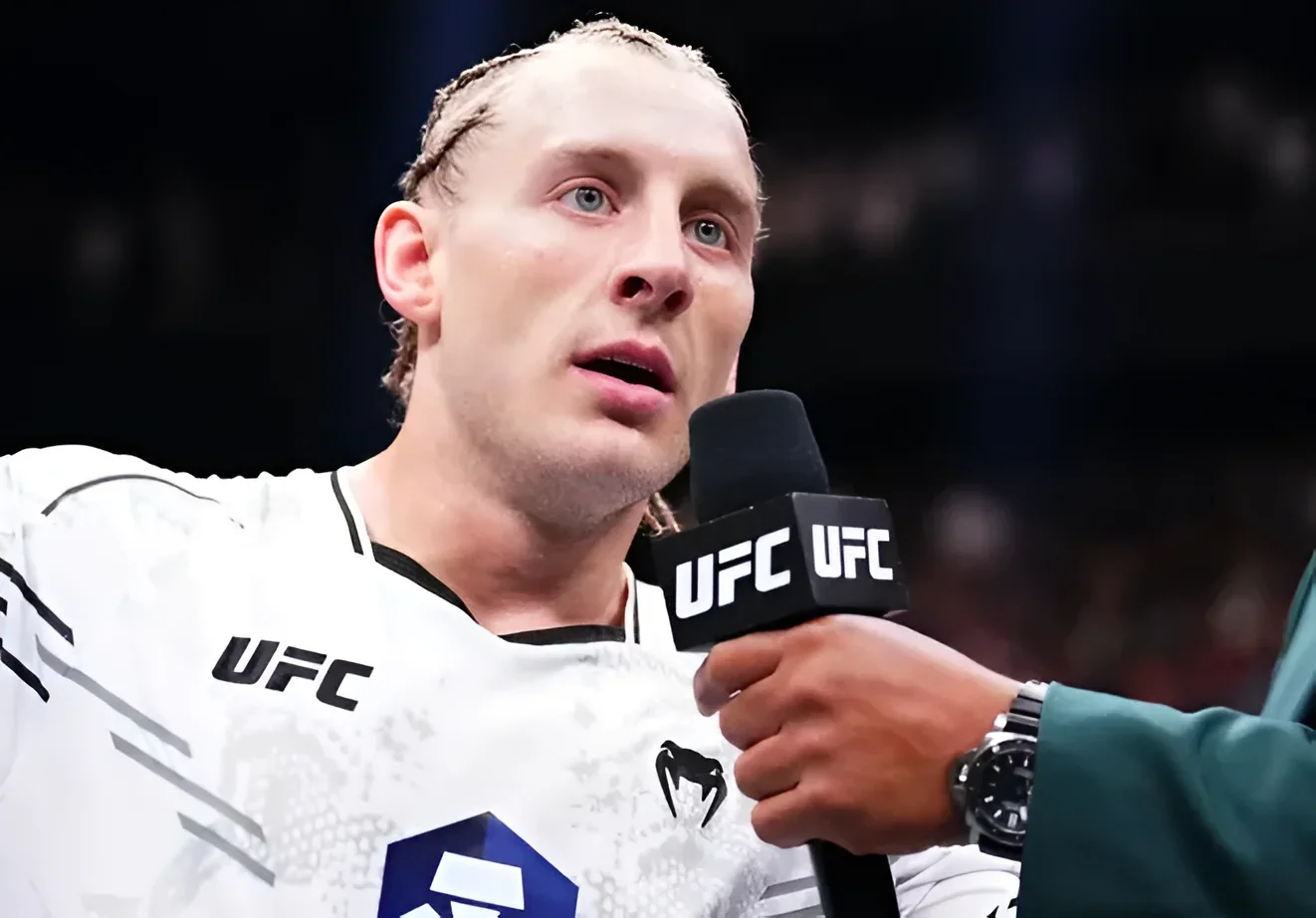
In the world of mixed martial arts, showmanship has long been an integral part of a professional image, and Paddy Pimblett, a contender for the interim UFC lightweight title, has once again confirmed this persona. This time, the target of his sharp tongue was not the fighting skills of his colleagues, but their preferences in body art. Legendary Irishman Conor McGregor and American Justin Gaethje fell under his criticism, with Pimblett calling their tattoos the height of absurdity and strangeness, sparking a new wave of discussions about taste in the octagon.
Names on Skin: Why Pimblett Considers It Foolish
The essence of the British fighter’s claims boils down to one of the most controversial trends in the tattoo industry – getting one’s own name tattooed on the body. In a recent interview, Paddy did not mince words when discussing the aesthetic choices of his opponents. According to Pimblett, having one’s own surname on the stomach or back is a sign of a lack of imagination or, even worse, memory problems.
“The worst tattoos are when people get their own names tattooed. McGregor has that, and Gaethje does too. I just find it weird. Why be so stupid? Do you need to look in the mirror to remember your name?” Pimblett remarked ironically. This jab at his peers caused a mixed reaction, as for many athletes, a surname tattoo is part of their personal brand and a way of self-identification in the media space.
An Expert View: The Psychology and Aesthetics of Name Tattoos
If we consider the situation from the perspective of professional tattoo culture, Pimblett’s criticism has some basis. Among tattoo artists, “name” works (especially when it comes to one’s own name) are often perceived as a kind of anachronism or a manifestation of excessive narcissism. However, in the context of MMA – a sport where a fighter’s personality is sold as actively as their technique – such tattoos serve as a living billboard.
Conor McGregor, whose image has become a benchmark for a generation of fighters, uses his body as a canvas to create a recognizable visual code. His famous gorilla on his chest and the large “McGregor” inscription on his stomach are not just drawings, but elements of a marketing strategy. On the other hand, Justin Gaethje, whose cage style is characterized by directness and uncompromisingness, transfers this same simplicity to his tattoos. For him, a name on his body is a declaration of loyalty to his roots and heritage.
Sports Context: Old Grudges and New Records
It is worth noting that Pimblett’s criticism of Gaethje may also have a personal undertone. Their history in the octagon is still fresh: in January 2026, at UFC 324, Justin Gaethje defeated Paddy by unanimous decision. Currently, Gaethje’s record stands at an impressive 27 wins and 5 losses. Pimblett, despite the loss, maintains a solid statistic of 23 wins and 4 losses.
As for Conor McGregor, his career in recent years has been shrouded in a fog of anticipation. The Irishman last entered the cage in July 2021 at UFC 264, where he suffered a loss to Dustin Poirier due to a severe leg injury (technical knockout). The former two-division champion’s record remains at 22-6. Perhaps it is the long layoff of “The Notorious” that gives younger fighters like Pimblett the reason for such bold statements about him.
Comparative Characteristics of Fighters and Their Tattoo Preferences
| Fighter | Record (W-L) | Tattoo Style | Key Elements |
|---|---|---|---|
| Conor McGregor | 22-6 | Traditional, Lettering | Gorilla, tiger, surname on stomach |
| Justin Gaethje | 27-5 | Minimalist, Lettering | Name, back symbolism |
| Paddy Pimblett | 23-4 | Understated | Old-school motifs, absence of name tattoos |
Tattoo Battle Verdict: Hype or Common Sense?
Tattoo culture in martial arts has always been a territory of self-expression, where the rules are dictated by the wearer themselves, not by critics. While Paddy Pimblett mocks the “forgetfulness” of his colleagues, McGregor and Gaethje continue to be among the most recognizable faces in the industry, partly thanks to their tattoos, which the Brit considers controversial. Ultimately, a tattoo in MMA is a way to make a statement, and if people are still talking about your artwork years later, then the goal has been achieved. Whether a name tattoo is a sign of foolishness or a symbol of unwavering self-confidence is an open question, but in the world of big money and big names, any visual accent works towards the athlete’s overall popularity.