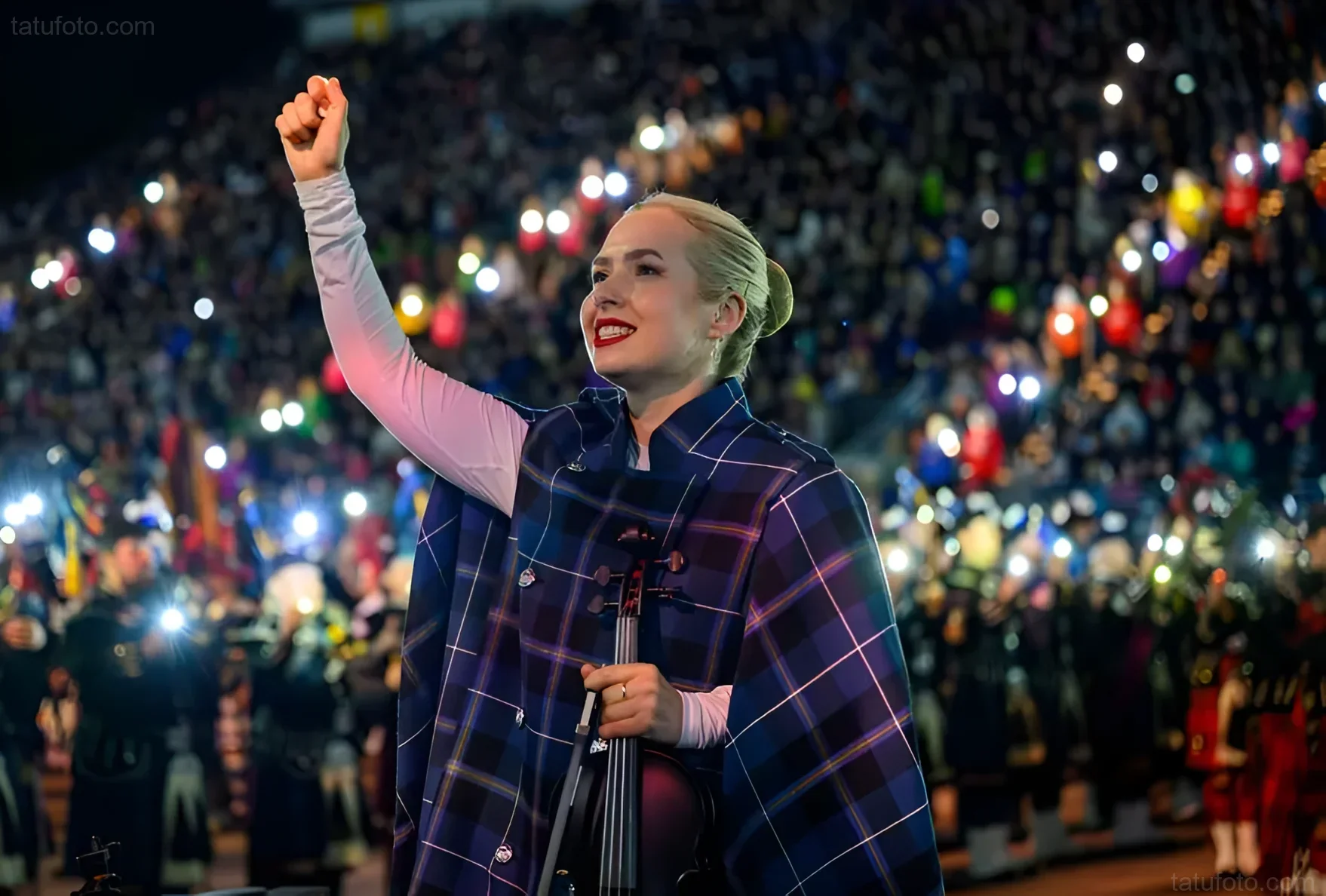
In 2025, the UK’s cultural landscape presented a true sensation: according to a fresh report by YouGov Ratings, the title of the country’s most popular music festival officially passed to the Royal Edinburgh Military Tattoo. This event came as a surprise to many, as the traditional showcase of military and musical prowess managed to surpass industry giants like the legendary Glastonbury, London’s BBC Proms, and the youth rock festivals in Reading and Leeds. The large-scale study, based on an analysis of millions of public reviews, confirmed that the Edinburgh show resonates most with Britons of all ages, transforming from a conservative parade into a major national spectacle.
For those accustomed to associating the word “tattoo” solely with the art of body art, such a triumph might seem strange. However, in the context of world culture, the term “Military Tattoo” has deep historical roots, tracing back to the Dutch expression “doe den tap toe” (turn off the taps). Originally, it was a drum or bugle signal calling soldiers back to barracks and innkeepers to stop selling ale. Over time, this ritual evolved into a grand theatrical performance. Today, the Edinburgh “Tattoo” is not just a march, but a complex visual canvas where light, sound, and precision of movement create an aesthetic surprisingly in tune with the philosophy of modern tattoo culture: here, every line, impeccable composition, and deep symbolism passed down through generations is also important.
The Secret to Success: Why Tradition Triumphed Over Mainstream
Analysts note that the success of the Royal Edinburgh Military Tattoo in 2025 is due to a unique combination of stability and innovation. In an era of fleeting trends, the public has begun to seek something fundamental. The Edinburgh festival offers just that – a connection to history, packaged in a modern, high-tech wrapper. If Glastonbury is associated with chaos and freedom, the Edinburgh Festival is a triumph of order, discipline, and the incredible beauty of human synchronicity. For tattoo art connoisseurs, this phenomenon is understandable: just as a classic “old school” or “realism” tattoo requires a master’s jeweler-like precision, so does the staging on the esplanade of Edinburgh Castle require hundreds of participants to hit the rhythm perfectly.
Jason Barrett, Chief Executive of The Royal Edinburgh Military Tattoo, commented on the rating victory with pride, noting that for decades the festival has been woven into the very fabric of British culture. According to him, today the show is perceived not just as a tribute to tradition, but as a global platform setting standards for the entire entertainment industry. “We are deeply grateful for this recognition. For over 75 years, our festival has brought together world-class performers from all corners of the globe, combining heritage, bold creativity, and an unforgettable spectacle,” Barrett emphasized.
Cultural Code and Visual Aesthetics
Looking at the Royal Edinburgh Military Tattoo through the lens of tattoo culture, one cannot help but notice the similarity in the approach to visual storytelling. Each regiment participating in the show has its own unique symbolism, heraldry, and colors – in essence, these are “living tattoos” of history unfolding before the viewer. The precision of the pipe and drum formations resembles the work of a tattoo machine needle: the slightest deviation destroys the overall picture. It is this aesthetic of flawlessness that attracts a modern audience tired of digital surrogates.
Below is a comparison of the key characteristics of the leading British festivals according to the 2025 ranking:
| Festival | Ranking Position | Key Feature |
|---|---|---|
| Royal Edinburgh Military Tattoo | 1 | Synthesis of military music, light, and history |
| Glastonbury Festival | 2 | Multi-genre and counterculture |
| BBC Proms | 3 | Classical music and academicism |
| Reading and Leeds | 4 | Rock energy and youth drive |
Looking Ahead: “A Call to Gather” 2026
The festival’s success is not limited to the UK. Recent sold-out performances in Brisbane and Auckland have confirmed the Edinburgh Tattoo’s status as a global brand. Organizers are now actively preparing for the 2026 season, which will be held under the ambitious title “A Call to Gather.” This title was not chosen by chance: it symbolizes the unification of people of different cultures, ages, and views around a common primal feeling – the love of rhythm and spectacle.
Experts believe that the growing popularity of such events is linked to the global trend of “new sincerity” and physical presence. In a world where a tattoo has become a way to record personal history on the skin, attending such a festival becomes a way to record collective history in memory. Jason Barrett expressed confidence that the 2026 program will once again make audiences – both new and returning – understand why the “Tattoo” continues to be so beloved and relevant after almost eight decades. Tickets for the upcoming show are already on sale, and given the festival’s current status as Britain’s #1, they are expected to sell out in record time.
For the tatufoto.com community, this triumph is a reminder that art bearing the name “tattoo,” in any of its forms – whether ink on skin or a parade against the backdrop of an ancient castle – is always built on a foundation of craftsmanship, dedication, and the ability to evoke strong emotions. The Edinburgh Festival has proven that even the strictest tradition can become a super hit if it is based on a sincere desire to unite people through beauty and rhythm.