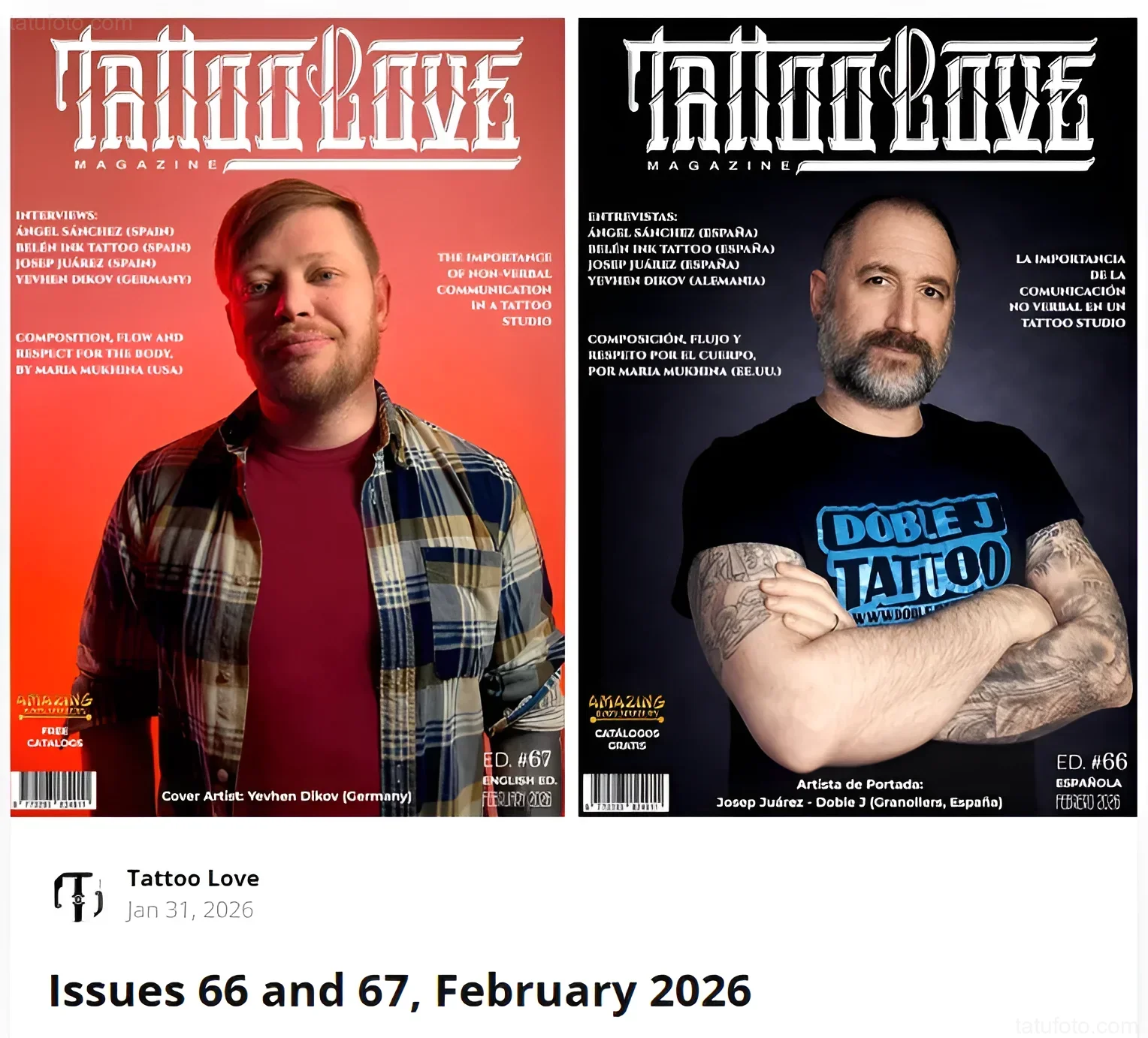
The global tattoo scene continues its rapid digitalization, offering artists and collectors new formats for engaging with quality content. February 2026 marked the release of the long-awaited issues of the authoritative publication Tattoo Love. We are talking about issue #66 in Spanish and #67, aimed at an English-speaking audience. These issues have become not just another review of beautiful works, but a deep exploration of the technical and psychological aspects that are currently defining the industry’s development vector.
Global Reach and Digital Transformation
Tattoo Love’s transition to a fully digital format is not just a nod to environmental trends, but a strategic move to expand its boundaries. In the February 2026 issues, the editorial team focused on the synergy of local experience and global trends. The Spanish version traditionally focuses on the strong European school, while the English edition brings together tattoo artists from all continents, creating a unified information field. For the modern artist, such magazines become a crucial tool for self-education, allowing them to follow the progress of colleagues from Germany, Spain, and the USA without leaving their studio.
Technical Perfectionism: Lessons from Maria Mukhina
One of the central themes of the recent issues includes recommendations from the renowned American artist Maria Mukhina. Her contribution to the issues is dedicated to fundamental questions that beginners often overlook – composition, flow, and respect for the anatomy of the human body. Mukhina’s expert analysis emphasizes that a tattoo is not a static image, but a dynamic element that should harmonize with the body’s muscular framework and curves. The material delves into the following aspects:
- Dynamics of the Design: how to make a tattoo “come alive” with the client’s movement.
- Compositional Integrity: rules for placing large elements to achieve visual balance.
- Ethics of Working with the Body: why it’s important to consider natural lines and not overload the skin with unnecessary details.
These tips are relevant for both proponents of realism and those who work in graphic or ornamental styles.
The Psychology of a Tattoo Session: Beyond Pain
Special attention in the February issues is given to psychology in the tattoo industry, specifically the importance of non-verbal communication within the studio. In contemporary tattoo culture, increasing emphasis is placed on client comfort and creating a safe space. The article in Tattoo Love explores how gestures, facial expressions, and the overall atmosphere in the booth affect the perception of pain and the final satisfaction with the result. The study shows that a master’s professionalism today is measured not only by the quality of the line work but also by their ability to read the state of the person in the chair. This is an important step towards destigmatizing the industry and transforming a tattoo session into a full-fledged therapeutic experience.
The Main Faces of the Issues: Exclusive Interviews
The magazine continues to introduce readers to opinion leaders and talented artists whose work sets the quality benchmark. Issues #66 and #67 feature interviews with outstanding masters:
| Artist | Country / Location | Specialization / Role |
|---|---|---|
| Josep Juárez (Doble J) | Spain | Cover face of issue #66, expert in black and grey realism |
| Yevhen Dikov | Germany | Cover face of issue #67, artist with a unique authorial style |
| Ángel Sánchez | Spain | Innovator in tattooing techniques |
| Belén Ink Tattoo | Spain | Representative of the new wave of the Spanish tattoo scene |
These conversations offer a glimpse “behind the scenes” of the creative process, reveal the challenges faced by professionals, and provide a dose of inspiration for one’s own endeavors.
Why This Matters for the Industry
The release of the new Tattoo Love issues confirms that tattoo culture has definitively outgrown the realm of simple craft. Today, it is a complex fusion of high art, psychology, and technology. The fact that the publication dedicates so much attention to Maria Mukhina’s theory of composition and communication issues speaks to the community’s maturation. For Russian-speaking readers and artists, such materials offer an opportunity to synchronize with the global context, adopt the experience of leading Western studios, and implement best practices in their work. The 2026 digital issues clearly demonstrate: the future of tattooing lies in mindfulness, technical perfection, and deep respect for the person who entrusts their skin to the artist.