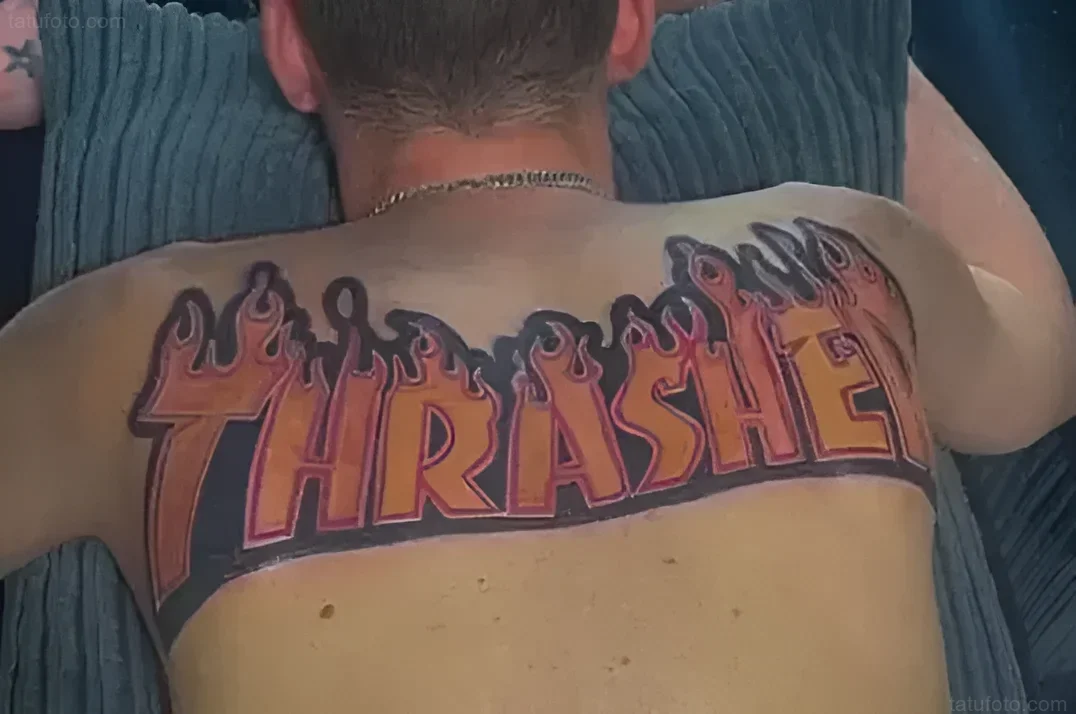
On April 26, 2026, an event occurred in the extreme sports community that prompted the old guard of skateboarding to revisit discussions about the boundaries of dedication to the subculture. Experienced rider Aaron Hyatt unveiled his new tattoo to the public – a monumental work covering almost his entire back. The central element of the composition is the legendary Thrasher magazine logo, rendered in the classic “flame lettering” style. A photograph of the work, posted in a themed group for those over thirty, instantly went viral, sparking a deep discussion about what it means to carry skateboarding culture on your skin until the very end.
Hyatt’s choice is not just a fashion statement, but a true manifesto. The tattoo is executed with astonishing detail: the massive Thrasher font appears three-dimensional due to the intricate play of shadows and the refinement of the outlines. For many participants in the discussion, this visual image became a powerful trigger for nostalgia for a time when printed magazines and VHS tapes shaped the worldview of an entire generation. In the era of digital content, such “analog” loyalty to a brand looks like an attempt to capture the elusive authenticity of street culture from the nineties and early 2000s.
Expert Opinion: Why Thrasher is More Than Just a Logo
From a tattoo anthropology perspective, applying a media publication’s logo on such a scale is an act of de-commodification. Aaron Hyatt transforms a commercial symbol into a part of his biological identity. The Thrasher logo, based on the Banco font by Roger Excoffon, has long ceased to belong solely to the magazine’s editorial team. In tattoo culture, it’s a symbol of “core” status – belonging to the heart of the community, where scars from falls on asphalt and ink under the skin hold equal value.
However, like any radical form of self-expression, Hyatt’s work has elicited a mixed reaction. While some admired the boldness and quality of execution, others began to dispute the choice of “icon.” Some commenters stated they would have preferred the Transworld Skateboarding logo, arguing that this publication resonated more with their personal journey in the sport. This confrontation between two schools – the aggressive Thrasher and the more aesthetically refined Transworld – has been ongoing for decades, and now it has migrated from magazine covers to the backs of fans.
Comparative Analysis of Cultural Codes in Skater Tattoos
To understand the context of the disputes, it’s worth looking at how different brands are perceived within the tattooed skater community:
| Brand / Symbol | Meaning in Tattoos | Target Audience |
|---|---|---|
| Thrasher Magazine | Rebellion, raw energy, loyalty to roots (“Skate and Destroy”) | Old-school riders, punk skaters |
| Transworld | Professionalism, technicality, clean style | Athletes, fans of video aesthetics |
| Independent / Spitfire | Technical dedication to hardware and details | Board mechanics, fans of classic logos |
The issue of inclusivity and modern trends in the skate industry added particular sharpness to the discussion. Some representatives of the conservative wing expressed dissatisfaction with Thrasher’s current policy of supporting transgender athletes, which for them became a reason to distance themselves from the brand. This highlights an important aspect of modern tattooing: by getting a logo tattooed today, you are signing up for all future changes in the company’s ideology, which is a certain risk for the wearer.
Gatekeeping and the Right to a Tattoo
There was also the traditional gatekeeping common in online communities. In the comments under Aaron Hyatt’s post, arguments erupted over whether a person has the right to wear such a “heavy” tattoo if they are no longer skating daily. Skeptical users ironically commented on the reaction of others who might see such a back at the beach and ask about current tricks. In response, most veterans defended Aaron, arguing that skateboarding is a state of mind, not just a momentary physical activity.
Ultimately, Hyatt’s large-scale back piece fulfilled the main function of tattoo art in subcultures: it became a catalyst for dialogue. People began sharing their stories, comparing eras, and discussing what it means to be a skater in 2026. Regardless of one’s attitude towards the Thrasher brand itself, the artistic value and dedication required to create such a “backpiece” cannot be denied. It’s living proof that for some, skateboarding is not just a weekend hobby, but a lifelong contract sealed with ink.