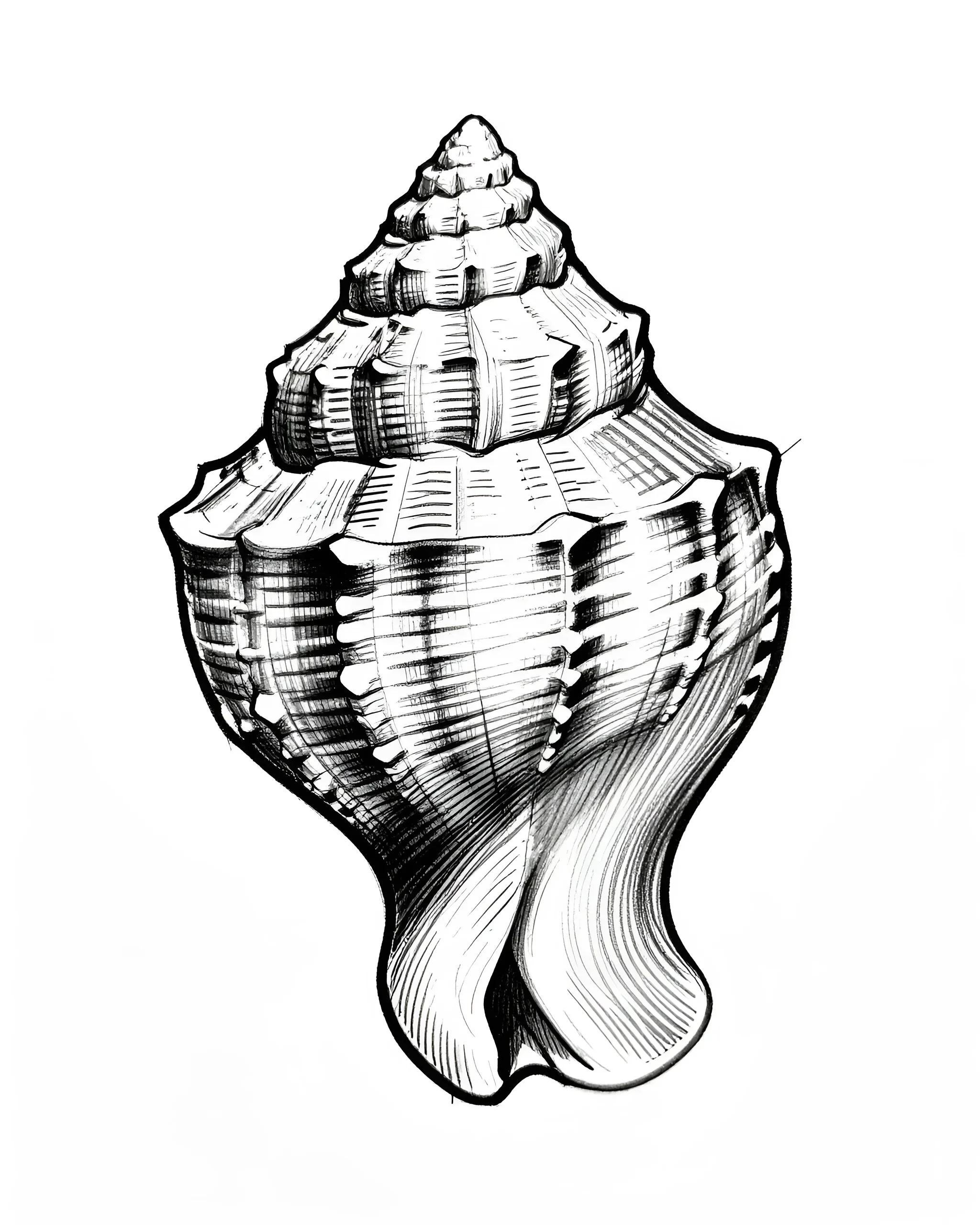
Conch piercing is one of the most expressive types of inner ear piercing that has transformed from a niche solution into a true trend set by Hollywood stars and music artists over the past decade. Unlike the common lobe piercing, the conch affects the cartilage part of the ear in the area of a characteristic hollow, making it look strict, architectural, and immediately drawing attention to the face. If you’ve been considering this type of piercing for a long time but haven’t decided due to a lack of information, this material is for you: it covers meanings, anatomy, types, jewelry, the healing process, and practical aftercare tips so you can make an informed choice and achieve a result you’ll be happy with.
What is Conch Piercing and Why Stars Choose It
The conch (from the English word “conch,” which literally means “shell”) is a piercing performed in the cartilage of the ear in the area of the so-called conchal hollow, i.e., the indentation located in front of the lobe and behind the antihelix. It’s important to immediately dispel a common misconception: the conch is not a separate cartilage, but rather an area of the ear. The piercing itself goes through the cartilaginous tissue of this zone. This is precisely why the conch belongs to the category of “cartilage” piercings, not soft lobe piercings, and it heals significantly longer, requires more careful aftercare, and proper jewelry selection.
So why has this particular piercing become a celebrity’s signature? The answer lies in its aesthetics. The conch sits deep within the ear, creating the effect of a “hidden” piece of jewelry that is revealed with head movements and from certain angles. This creates an image that is both understated and bold: in everyday life, it’s not flashy, but on camera, on stage, or in a photoshoot, it acts as a powerful accent. Stars value this duality – the piercing doesn’t shout, but it is memorable. Furthermore, the conch pairs excellently with other piercings: with daiths, indus, helixes, and lobe piercings, allowing for the creation of complex, layered compositions on one ear, which has become a trend in recent seasons.
Another reason for its popularity is versatility. The conch suits both men and women, and people who want to add character to their look without radical changes. It doesn’t alter the face shape, doesn’t require a specific haircut or clothing style, but immediately adds individuality. For many, it’s their first cartilage piercing after the lobe, and the conch is considered one of the “safest” in terms of pain and most predictable in terms of healing options in this category, making it an ideal starting point.
The History of the Conch and Celebrities Who Made This Piercing Iconic
The practice of piercing the ear cartilage itself has existed since ancient times: in Polynesian, African, and Asian cultures, ear cartilage piercings were part of rituals, signs of status, or protection. However, the modern “conch” as a distinct, named type of piercing emerged in the tattoo and piercing culture of the late 1990s and early 2000s, when the body art industry began to systematize names and anatomical points. The term became established thanks to piercers who identified the conchal hollow as a separate area with clear anatomy and predictable results.
The conch gained iconic status in the 2010s when public figures began getting it en masse. Among those who made this piercing recognizable are Kylie Jenner, Rihanna, Beyoncé, Kendall Jenner, Dua Lipa, Ariana Grande, and many other artists and models. Their choices were picked up by fans, and then by the wider audience: hashtags related to inner ear piercings gather millions of posts on social media. It’s important to understand that behind the “star” image, there’s always the work of an experienced piercer: it’s a professional piercing in the right spot that yields the clean, symmetrical result seen on celebrity photos.
Interestingly, in different cultures, piercings in this area also carried symbolic meaning. In some traditions, they were associated with inner balance, protection from negativity, and “anchoring” intentions, as cartilage was perceived as a firm, “supporting” structure of the body. In modern tattoo and piercing culture, meanings have become more personal: the conch is often chosen as a symbol of inner strength, independence, and readiness for change, as well as part of a larger body “narrative” where each piercing has its own personal meaning for the wearer.
Upper and Lower Conch: Meanings and Differences
The main thing to know before undergoing the procedure is that there are two main types of conch piercings: upper (top conch) and lower (bottom conch). They differ in the piercing point, the direction of the jewelry, healing complexity, and how they visually work on the ear. Let’s break down both options in detail so you can choose what suits your anatomy and aesthetics.
- Lower Conch (bottom conch) – the piercing is done in the lower part of the conchal hollow, closer to the lobe. This is the most popular and generally the easiest option. The jewelry here usually “faces” outwards and downwards, is clearly visible, and easy to care for. Healing takes an average of 6–9 months. In terms of meaning, the lower conch is often perceived as an “open,” accessible, friendly accent – it’s not aggressive and looks great as a standalone element.
- Upper Conch (top conch) – the piercing goes through the upper part of the hollow, closer to the cartilage that transitions into the helix. This option is more complex: the cartilage here is denser, and the jewelry can press more during sleep and when wearing headphones. Healing takes 9–12 months or longer. In terms of meaning, the upper conch is perceived as a more “internal,” reserved, almost intimate accent – it’s only revealed from certain angles, adding an air of mystery to the look.
The differences in meaning are, of course, a cultural interpretation, not a strict rule, but this is how these two options are generally understood in the piercing community. The lower conch is more often chosen as the first cartilage piercing and as an “anchor” for a composition, while the upper conch is for those who already have experience and want a more complex, layered look. Many get both at once or sequentially, creating a complete vertical line on one ear that looks very striking and “architectural.”.
When choosing between an upper and lower conch, consider not only fashion but also your anatomy: some people have narrow or asymmetrical hollows, and the piercer will determine during the consultation which option will fit best and be comfortable for everyday wear. This is an important point that is often overlooked when choosing “based on a picture.”.
Styling and Best Jewelry for Conch Piercing
Jewelry for a conch is not just a “pretty trinket” but a functional element that affects healing comfort and the final look. For cartilage piercings, like the conch, specific types of jewelry are used, and the choice here is more important than for the lobe. Let’s look at the main options and their features.
- Ring (circular barbell / ring) – a classic for the conch. A round or slightly oval ring with balls on the ends. It stays in place well, is easy to clean, and is suitable for both upper and lower conch piercings. The diameter is chosen individually based on the size of the hollow.
- Stud (labret / labret stud) – a straight bar with a flat or domed back and a decorative front. Often used for lower conch piercings when you want the jewelry to “sit” in the hollow and not snag. There are options with internal threading, which are safer for healing.
- Banana (curved barbell) – a curved bar that follows the shape of the cartilage. One of the most comfortable options for a conch, especially for the upper conch, because the curve reduces pressure on the cartilage during sleep.
- L-shaped jewelry (L-bend / conch L) – a specialized shape specifically for the conch: a curved bar that “hugs” the hollow. It looks very stylish and modern, often seen in “star” looks.
- Ring with a gem or charm – decorative options for an already healed piercing. During healing, it’s best to use simple, smooth pieces without extra elements to avoid irritating the tissue.
Material is a critical parameter. For conch and any cartilage piercings, only high-quality surgical steel, titanium (especially nickel-free coated titanium), biocompatible alloy (niobium), or gold are recommended. Avoid cheap “fashion” jewelry made from unknown alloys: they can cause irritation, allergies, and delay healing. The gauge for a conch is usually 14–16, and the length is chosen by the piercer based on swelling and anatomy – too short will press, too long will snag and interfere.
Stylistically, the conch works well in minimalism (a thin titanium ring or stud without decoration), in a “jewelry” style (gold, gems, delicate front ends), and in an “industrial” style (chunky rings, black PVD coating). The choice of style is a matter of taste, but remember: during the healing phase, decorative elements should give way to functionality, and beautiful stones and charms are best added after complete healing.
Placement on the Ear: Anatomy and Point Selection
Correct placement is key to ensuring the conch looks beautiful and heals without complications. The conchal hollow is not a flat surface but an indentation with a specific depth and angle, and the piercing is made in its cartilaginous “wall.” The piercer assesses several factors: the depth of the hollow, the thickness of the cartilage at the chosen point, symmetry relative to the lobe and helix, as well as how you sleep and whether you wear headphones or glasses.
In practice, point selection looks like this: the piercer marks the intended piercing line with a pen, shows you the result in the mirror, and discusses the direction of the jewelry and its length. For a lower conch, the point is usually closer to the lobe; for an upper conch, it’s higher, closer to the transition to the helix. It’s important that the piercing is perpendicular to the cartilage surface or at an angle that allows the jewelry to sit straight and not “migrate” during healing. If the cartilage in the chosen area is too thin or too thick, the piercer may suggest shifting the point or choosing a different type (e.g., a lower conch instead of an upper one).
It’s equally important to consider daily habits. If you sleep on your side, an upper conch can press against the pillow and hinder healing – in this case, the piercer might recommend a lower option or a shorter bar. If you frequently wear earbuds or a headset, you should also discuss this in advance: the jewelry should not conflict with your daily activities. This “life-oriented” approach, rather than “picture-oriented,” distinguishes the work of a good piercer from a random piercing.
Another nuance: asymmetry. Ears are rarely perfectly symmetrical, and a conch on one ear may look slightly different from the other. This is normal, and a good piercer takes the natural shape into account rather than trying to “straighten” it at the expense of comfort. If you plan to get conch piercings on both ears, it’s best to do them in one visit or with a small interval so that the composition is balanced.
Aftercare and Healing: Practical Tips After Conch Piercing
Cartilage piercings heal longer than soft tissue piercings because cartilage has limited blood supply. For a conch, the normal healing time is 6 to 12 months, and sometimes longer. This is not a cause for alarm, but a reason to be patient and not change the jewelry to a “prettier” one too soon. Below are practical rules to help healing go smoothly.
- Disinfection – treat the piercing with an antiseptic based on chlorhexidine or miramistin 1-2 times a day. Do not use alcohol-based solutions, hydrogen peroxide, or iodine: they dry out the tissues and slow down healing.
- Clean hands – wash your hands before any contact with the piercing. Do not touch the jewelry with dirty hands, do not twist it, or “check” if it has healed.
- Avoid prolonged moisture – brief contact with water (showering) is acceptable, but avoid swimming pools, baths, saunas, and seas until fully healed: stagnant and chlorinated water contains many bacteria.
- Sleep and pressure – try not to sleep on the side with the new piercing. If this is unavoidable, use a donut pillow or a soft pillow to avoid putting pressure on the cartilage.
- Headphones and glasses – during the healing period, it’s best to avoid earbuds in the pierced ear and glasses with arms that press on the conch.
- Do not change jewelry too early – wear the first piece of jewelry inserted by the piercer until fully healed. Early changes are a common cause of inflammation and piercing migration.
- Clothing and hair – long hair and collars should not snag the jewelry; tie your hair back to avoid injuring the piercing.
Signs of normal healing: slight redness in the first few days, mild swelling that subsides in 1-2 weeks, occasional discharge of clear or slightly yellowish fluid (this is lymph, not pus). Alarming signs that warrant a visit to your piercer or doctor: increasing swelling, severe pain, throbbing, foul-smelling pus, fever, redness spreading from the piercing. The sooner you seek help, the easier it will be to resolve the problem.
Diet and lifestyle also affect healing: adequate water intake, sufficient sleep, and quitting smoking speed up tissue recovery. Smoking, in particular, impairs blood circulation and is especially harmful to cartilage piercings, so it’s best to refrain during the healing period. By following these simple rules, you are highly likely to achieve a clean, beautiful result without complications.
Frequently Asked Questions About Conch Piercing
We’ve gathered answers to the most common questions asked before the procedure – so you have no doubts and can make a calm decision.
- Is conch piercing painful? On a subjective pain scale, conch piercing is usually rated as moderate: it’s a sharp but brief prick, followed by a feeling of pressure. An upper conch might be slightly more sensitive than a lower one due to cartilage density. The pain is tolerable and subsides in seconds.
- How long does a conch piercing take to heal? On average, 6–12 months. Externally, it might seem healed after 2–3 months, but the inner cartilage tissues take longer to recover, so don’t rush to change the jewelry.
- Can conch piercing be done at any age? Typically, cartilage piercings are done from 18 years old, and in some studios, from 16 years old with parental consent. Check the exact age at a specific studio, as rules vary.
- Is conch piercing compatible with other ear piercings? Yes, and this is one of its main features. The conch pairs excellently with helix, daith, industrial, anti-tragus, and lobe piercings, allowing for complex compositions.
- What to do if the conch “migrates” or becomes inflamed? Don’t panic and don’t try to “fix” it yourself. Consult your piercer: in most cases, the problem can be resolved by changing the jewelry or making adjustments, and with significant inflammation, by consulting a doctor.
- Can I remove a conch piercing, and will there be a scar? The piercing will partially close over time, but cartilage piercings usually don’t close completely without a trace – a small bump or mark will remain. If you need the piercing “temporarily,” consider this in advance.
If you have additional questions, the best resource is a consultation at a reputable studio: the piercer will examine your anatomy, provide personalized recommendations, which no article can replace.
Interesting Facts About Conch Piercing
We conclude with a collection of facts that make the topic of the conch even more interesting and help understand why this piercing remains at the top of search queries for several years now.
- The name “conch” comes from the word for a seashell and refers to the shape of the conchal hollow, which indeed resembles the inner part of a shell.
- The conch is one of the few piercings with two clearly named subtypes (upper and lower), reflecting its popularity and diversity.
- In “star” looks, the conch is often combined with jewelry: gold rings and studs with gems turn the piercing into a complete element of the look, not just a hole.
- Cartilage piercings, including the conch, were historically considered a sign of bravery and status, and this association has persisted in modern body art culture.
- A properly done conch is almost imperceptible in everyday life: after healing, most wearers forget they have a piercing until they see it in the mirror.
- The conch works well on camera precisely because of its subtlety: it reveals itself with movement and under certain lighting, making it a favorite accent for photographers and stylists.
- In the tattoo and piercing community, the conch is often chosen as the “first serious” piercing after the lobe – a step from soft tissues to cartilage that opens the way to more complex compositions.
Conch piercing is a successful combination of aesthetics, symbolism, and relative ease of aftercare. It adds character to a look without requiring radical changes and fits perfectly into both minimalist and jewelry-inspired styles. The key is to choose an experienced piercer, the right placement, and quality jewelry, and then patiently go through the healing period, following aftercare rules. By doing so, you’ll get an accent that will please you for years and, like the stars, will become your personal signature. If you’re considering a conch, start with a consultation at a reputable studio: the specialist will assess your anatomy, choose the type and jewelry, and answer all your questions – and then your first cartilage piercing will be not an adventure, but a conscious and beautiful decision.