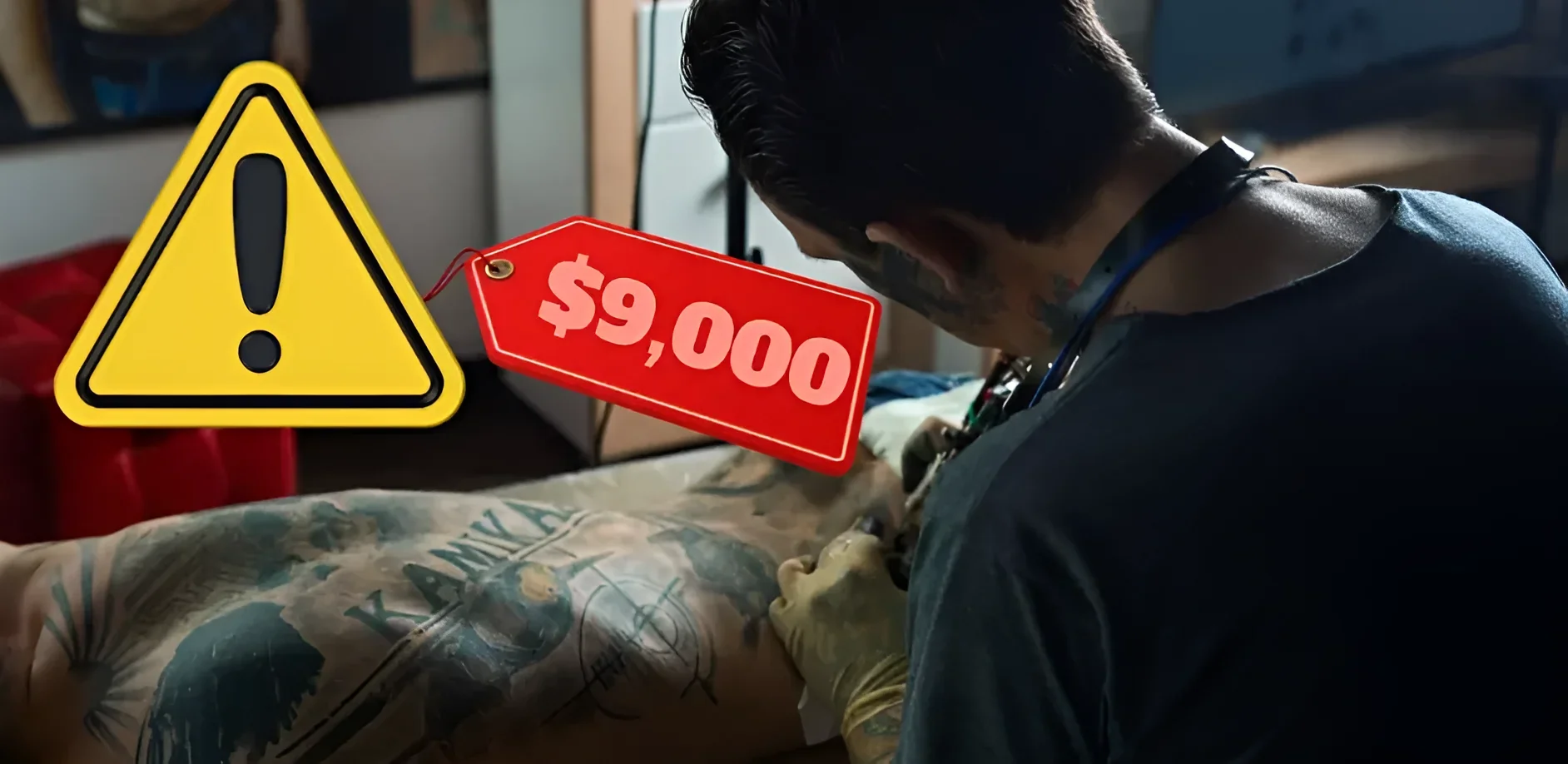
A trend has emerged in the tattoo industry that is both alluring and alarming: Australians are increasingly flying to Bali to get large tattoos under general anesthesia. While the client sleeps, entire teams of artists work on their body simultaneously. This “service” costs from $9,000, and doctors warn that behind the beautiful result lies a real medical risk.
One of the first to gain attention was 46-year-old Anthony Wade from Brisbane. This week, he spent about nine hours in a Balinese hospital: arriving around 8 AM and leaving around 5 PM, having received tattoos on his chest and back. The total bill for the artists’ work and medical expenses came to $9,000. The next day, Wade reported that his recovery was going well: “Everything was pretty good. I got up and started walking almost immediately after waking up. I had no concerns. Everything was done professionally, the medical side was top-notch, the staff were attentive and caring.”
Before the session, he underwent standard preparation: blood tests were taken, his heart and blood pressure were checked, and he was asked about smoking, alcohol, and drug use. Wade himself explained his choice of anesthesia simply – he didn’t believe he could stay awake for the amount of time required to tattoo his entire abdomen. “It’s better to sleep to get a quality result. I could never have sat through and gotten my whole stomach done.”
How the “Five-Day Plan” Works in Balinese Studios
Local studios promote the procedure as a tour package with a mandatory minimum of five days in Bali. The schedule looks like this:
- Day 1 – Arrival and studio visit: discussing sketches, placement, size, and details.
- Day 2 – Medical examination: meeting with a doctor and preparing for the session.
- Day 3 – The session itself: starting at 9:00 AM, lasting about eight hours depending on the project.
- Day 4 – Rest: a full day for recovery, cleaning, and checking the tattoo at the studio.
- Day 5 – Final check and flight home.
Similar projects in Bali are advertised for $15,000. Studios emphasize that in the hospital, four, five, or even six artists can work on one client simultaneously to cover a large area in one day.
Experiences vary. One tattooed man from Western Australia, who wished to remain anonymous, said that four artists worked on him at once – two on his back and two on his leg. The next day, he was already walking. But his friend, who got his back and both legs done, couldn’t move normally for two to three days. “I love extreme adventures, so I went with the anesthesia option, felt safe, and agreed,” he noted. “Everyone’s body and recovery are different. For some, the experience is wonderful, while for others, it’s very difficult.”
The Medical Professionals’ Stance
Dr. Tania Selah, President of the Australian and New Zealand College of Anaesthetists, stated directly that traveling abroad for a planned procedure under general anesthesia is not risk-free. “Any surgical procedure and general anesthesia carry a certain degree of risk,” she said. “If something goes wrong, the facility must have appropriate medical equipment and sufficient staff to resuscitate the patient or manage complications.” She added that the level of surgical qualification, hospital accreditation, and equipment quality abroad “do not always meet the high standards adopted in Australia regarding hygiene and safety.”
For comparison, in Australia itself, general anesthesia must be administered only by a registered anesthesiologist, and in a suitable operating theater or clinic. Even with a successful outcome, tattooing the entire torso leaves a large wound that needs to heal in a tropical climate before flying home.
Context: Why This Matters for Tattoo Culture
From a tattoo culture perspective, this trend is logical but controversial. On one hand, it reflects the demand for “full-body tattoos” as a complete artistic statement that cannot be achieved in a single awake session. Large-scale projects and full-body works have existed for a long time, and anesthesia logically removes the main barrier – pain and fatigue. On the other hand, tattooing is historically linked to trust in the artist and a conscious, “present” experience: the client sees the artwork come to life and participates in the process. A hypnosis or anesthesia session turns tattooing into an almost surgical procedure, where aesthetics give way to logistics and speed.
An expert view also suggests practical risks that are often overlooked. Firstly, a tattoo is a controlled skin trauma, and after general anesthesia, a person cannot immediately assess how their body is reacting to multiple punctures and the anesthesia itself. Secondly, Bali’s tropical climate – high humidity and heat – slows healing and increases the risk of infection, especially if sterilization of instruments and surfaces is not performed to strict standards. Thirdly, in case of any complications, the patient finds themselves in a foreign jurisdiction where the level of care and clinic responsibility may differ from what they are accustomed to.
Therefore, before buying a ticket for a “permanent souvenir,” it’s wise to check: does the studio have proof of sterilization, who exactly is administering the anesthesia and what are their qualifications, is the hospital accredited, and is there an emergency care protocol. Skimping on checks usually ends up being more expensive. The trend of tattoos under anesthesia in Bali has already become part of global tattoo tourism, but its main question remains the same: is the client willing to trade the comfort of sleep for a manageable, but not zero, medical risk?