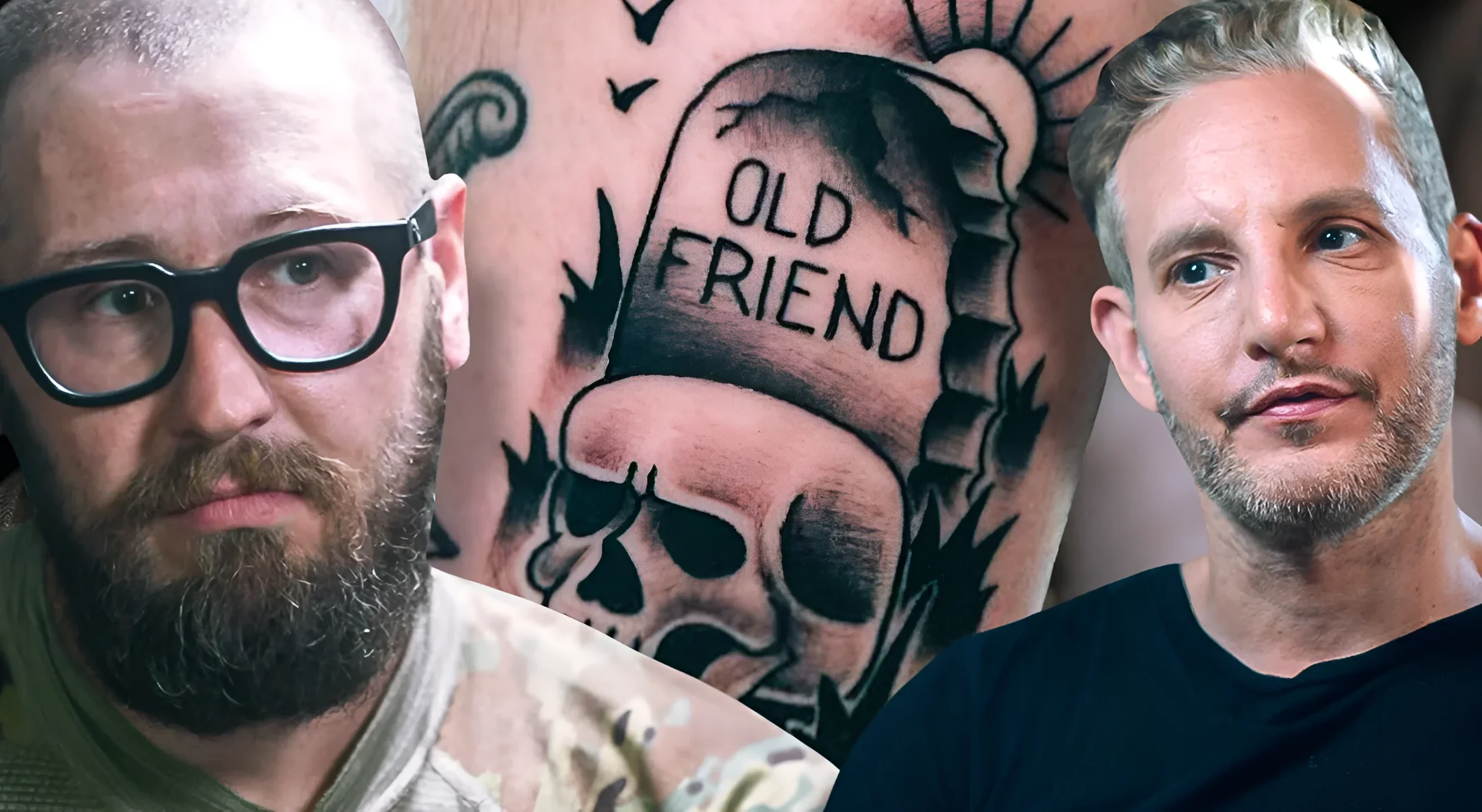
At the Tattoo Hall studio in Dnipro, located about 60 miles from the front line, time flows differently than in peaceful workshops. People come here not for aesthetics or self-expression – they come to capture what would otherwise fade from memory. A local artist named Yulik keeps his own statistics, which most of his colleagues wouldn’t even consider keeping: during the war, his works include over 50 people who died on the front. He himself is now also a soldier, and, as he admits, burying his own works is one of the most difficult experiences of his life.
The fifth year of Russia’s full-scale invasion of Ukraine has transformed tattoos from adornments into tools of remembrance. What was once considered an eternal mark now carries a double burden: on one hand, it’s a promise to oneself and loved ones, and on the other, a reminder of how fragile the life of the person whose skin bears this mark is. In conditions where the front line is within sight, each new work becomes a small memorial.
Who Comes to the Studio
Over two days inside Tattoo Hall, the picture of life in the city behind the front line is read through the people who sit under the needle. Among them is a soldier who came just five days after being wounded by a Russian drone strike: he wanted to get a tattoo before returning to battle. Next to him in line is a 17-year-old who chose the single word “acceptance” for his first tattoo ever. A middle-aged man came with a sketch of a monument to a childhood friend who died in Bakhmut. And a young woman, who survived a missile strike in 2023 that claimed her family, sat under the needle to leave on her body what no one was left to tell.
These stories are not exceptions, but the norm for tattoo culture, which is undergoing a wartime transformation. The world of tattoos has long had a memorial tradition: names of the fallen, dates, silhouettes, symbols of loyalty. But in Ukraine, it has reached a scale that was previously characteristic only of Europe’s post-war generations. Tattoos here are becoming a way to keep a person in the sight of loved ones when the person themselves can no longer do so.
What Tattoo Culture Says About War
From a cultural studies perspective, military tattoos have always served the function of identification and solidarity: from Roman legionaries to modern armies. Today, a psychological function is added to this: tattoos as an anchor, keeping a person grounded in reality when chaos reigns around. For the artist, this means their work ceases to be just a commercial product and becomes part of someone else’s fate.
For Yulik, this is a double burden: he is an artist, a soldier, and essentially a keeper of other people’s destinies. His statistics – over 50 deceased clients – are not just numbers, but evidence of how tattoo culture, in wartime conditions, becomes a chronicle of loss. In a world where a tattoo promises eternity, this eternity turns out to be short, and it is in this contrast that its new, bitter power is born.
For the viewer and reader, accustomed to perceiving tattoos as an element of style or subculture, this story is a reminder that behind every work there is a person, and behind every person – a whole life that war can cut short at any moment. Tattoo Hall in Dnipro is not just a studio, but a place where ink on skin becomes a testament to the fact that people continue to live, love, and remember even when the world around them is burning.