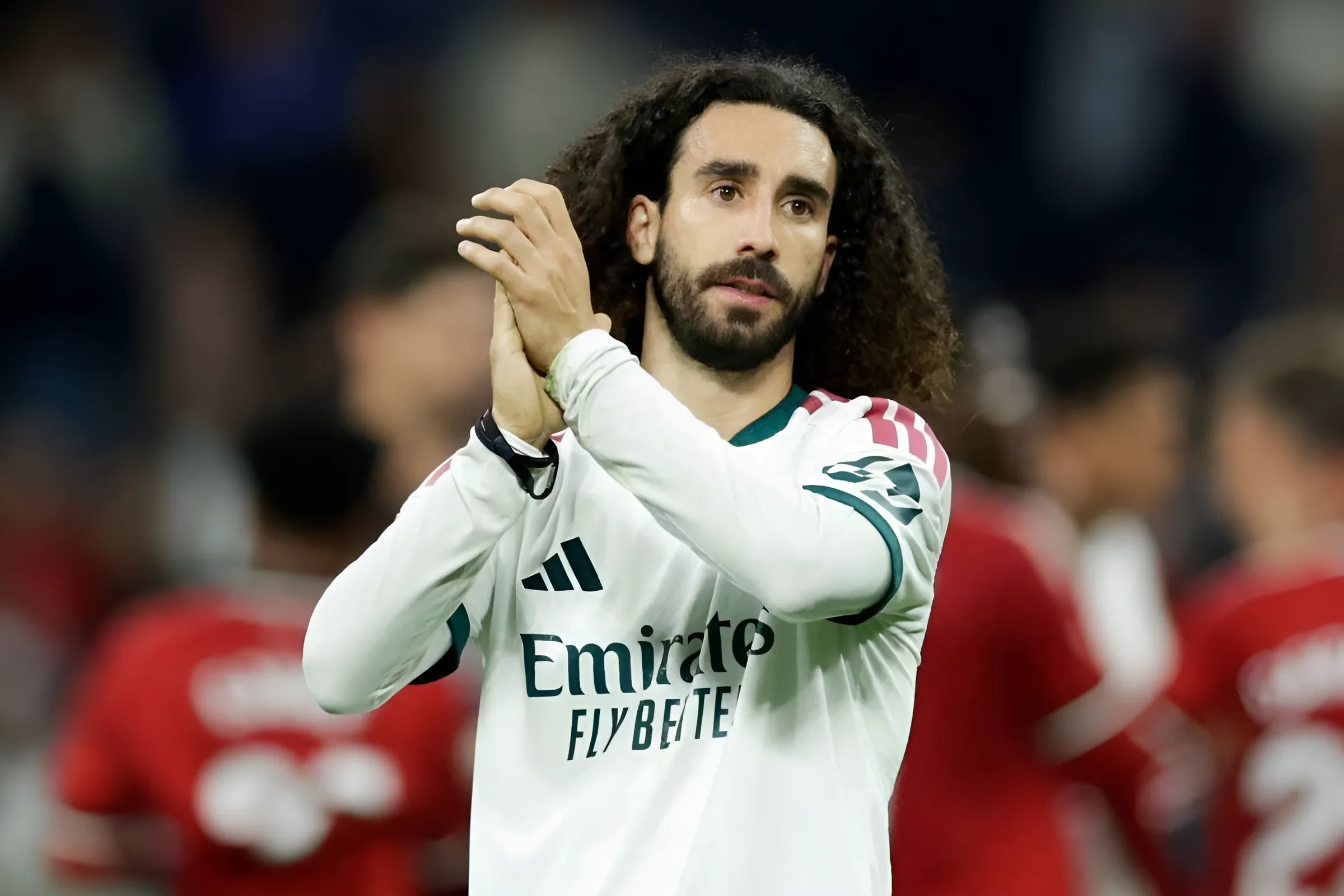
Marc Cucurella returned from the World Cup in July not only with a winner’s medal but also with a new piece of body art. The Spanish national team defender kept the promise he made before the tournament started: if “La Roja” won the trophy, he would honor head coach Luis de la Fuente with a tattoo. And that is exactly what happened — at the next national team training camp, the player appeared with the finished portrait of his mentor, turning a personal promise into a public gesture.
A promise made before the final
In an interview with the Spanish radio station Cadena Cope, Cucurella treated the matter with light humor. “I don’t regret it, honestly,” he said. “I knew you would ask about it. Some even suggested I get Mourinho’s face tattooed.” Such a reaction is typical for the football environment, where a public promise before a major tournament is perceived as part of a ritual, and its fulfillment as a sign of respect for the person who led the team to the top. For fans, such a gesture works more powerfully than any social media post: the body becomes proof of one’s words.
A new coach and a new tattoo
The move to Real Madrid in July added a new twist to the story. According to Cucurella, his new mentor José Mourinho also suggested that he dedicate a tattoo to him. “I remember Mourinho sending me a photo where his face was tattooed on my torso,” the player said. For now, it remains in the realm of a joke, but in tattoo culture, such suggestions from authoritative figures often become a reason for a serious conversation about the boundaries between humor and a permanent decision. A tattoo of a living person’s face is no longer just a drawing, but a statement that stays with the owner for years.
Sports and tattoos: what the culture says
The connection between sports and tattoo culture has long gone beyond personal symbols. In recent years, tattoos have become a full-fledged language through which athletes communicate with fans and colleagues. Several trends are particularly noticeable:
- Portraits of mentors and idols are a rare but emotionally powerful genre. Usually, athletes choose family, dates, or emblems, but a coach’s face on the body is read as a gesture of loyalty in the spirit of “I’m with you until the end.”
- Meme and ironic tattoos are a fast-growing segment. When a player jokes about a tattooed Mourinho face, he plays with the audience’s expectations and turns his own body into a platform for conversation.
- Public promises are a format where a tattoo becomes part of a narrative. The promise to dye his hair red after winning EURO 2024 and its fulfillment show that the player’s body is perceived as an extension of his public image.
For the tattoo community, such stories are important: they prove that a tattoo is no longer a marker of a subculture, but a normal element of professional identity. At the same time, experts emphasize: a tattoo of a living person’s face, especially a mentor, is a decision for years to come, and it should be approached with the same seriousness as any other major project. On social media, such stories garner millions of views precisely because the viewer sees not just a drawing, but the continuation of a story behind which stands a specific person and a specific moment.
What’s next
Spain continues preparations for the Nations League matches, where they will face the Czech Republic on Thursday. The context of the tournament: in the 2026/27 season, 54 UEFA associations are participating in the Nations League, divided into four leagues based on the results of the previous season. Leagues A, B, and C include sixteen teams each, split into four groups of four, while League D has six teams in two groups of three. The start is scheduled for September 2026, with the final matches taking place in June 2027. For Cucurella, the upcoming match is another reason to test how his new tattoo and new club status affect his game and the fans’ perception of his image.