
In 2025, tattoos have definitively moved beyond mere body adornment, transforming into a complex visual language that changes faster than ever. While styles used to form over decades, today, influenced by social media and global knowledge exchange, new directions are taking over metropolises like Toronto, London, or New York in mere months. The professional community notes that contemporary clients increasingly seek a balance between deep personal meaning and sharp formal relevance. This year, we observe a unique collision of a technological future, natural tenderness, and a radical rejection of canons.
 admin
admin
Eyelid Tattoo Removal: Why Jang Yeong-ran Decided on a Painful Procedure for Youth

Popular South Korean TV presenter Jang Yeong-ran has once again found herself at the center of attention in the aesthetic community, openly showcasing her path to external transformation. Following her recent admission of undergoing a sub-brow lift, the 48-year-old star has decided on another radical step as part of her preparation for 2026 – the complete removal of outdated eyelid tattoo. This story has become not just a society chronicle, but a visual guide for thousands of women facing the problem of pigment degradation and age-related changes that are emphasized by unsuccessful permanent makeup from past years.
Ironic Tattoos of Stars: Why Ezra Sosa and Jordan Chiles Chose the Inscription “Just Married”

In the modern tattoo industry, a tattoo has long ceased to be solely a symbol of belonging to a specific subculture or an eternal reminder of profound life upheavals. Today, tattoo art is also a powerful communication tool, a way of ironic interaction with the audience, and even a tool for trolling tabloids. A striking example of this approach was the recent action by professional dancer Ezra Sosa and Olympic gymnast Jordan Chiles, who decided to cement their friendly bond and simultaneously mock engagement rumors with identical “just married” tattoos.
Carlos Alcaraz’s Tattoos: The Symbolism of US Open Victories and the Story of Champion Tattoos

In today’s world of professional sports, an athlete’s body has long ceased to be merely a tool for achieving records, transforming into a living canvas on which the most significant milestones of their biography are recorded. Carlos Alcaraz, a young prodigy of world tennis and a man already hailed as the heir to the “Big Three,” has elevated the tradition of commemorative tattoos to the level of a personal ritual. His skin is not just an aesthetic choice, but a chronicle of triumphs, where every line and every shade of gray tells a story of overcoming, sweat, and the clinking of cups overhead. The new work on his body, dedicated to another victory on the New York courts in 2025, has become a logical continuation of this visual narrative, combining the architectural power of the metropolis with a personal success story.
Tattoo Mantras and God Murugan: Deep Symbolism and Brandon Subramaniam’s Success Story
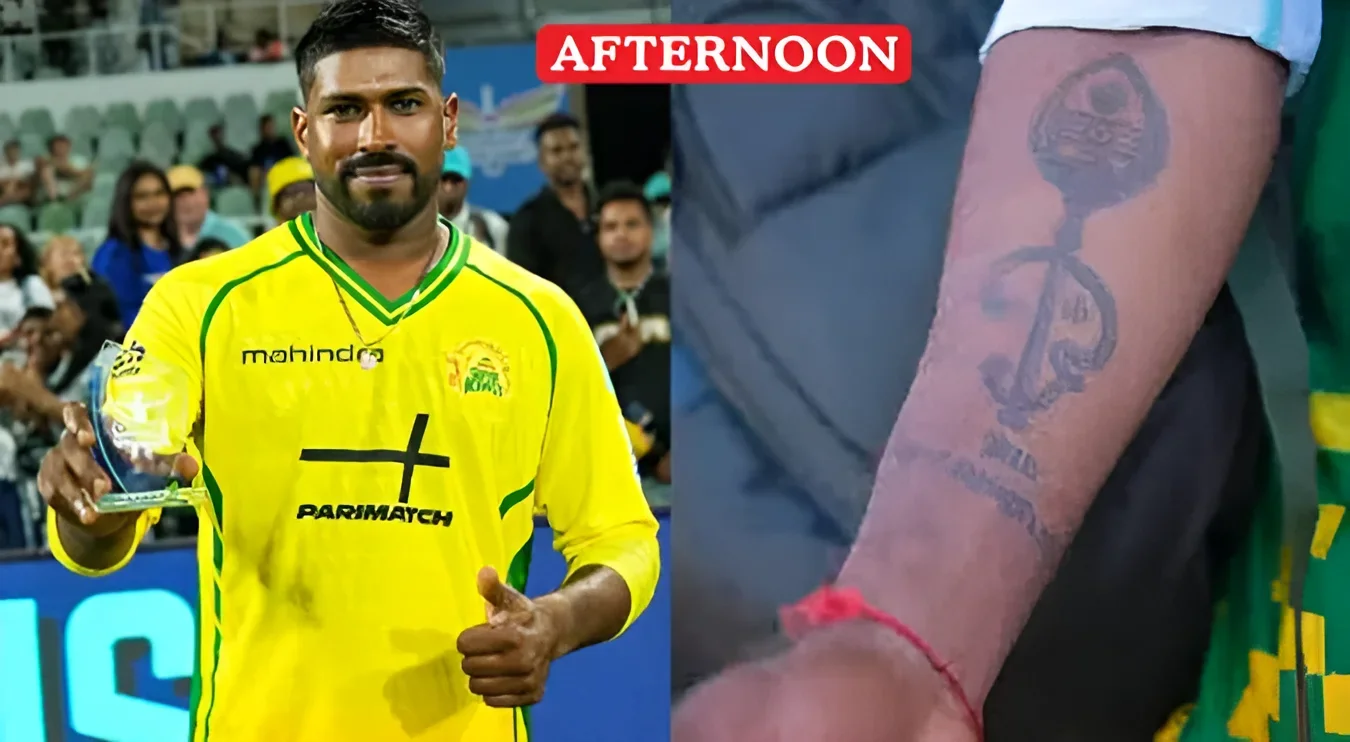
The world of professional sports and the art of tattooing have always gone hand in hand, becoming a way for athletes to express themselves and manifest their inner beliefs. The recent case of South African cricketer Brandon Subramaniam, whose image with a tattoo of the god Murugan and the sacred mantra “Om Saravanabhava” instantly went viral on social media, has become a prime example of how body art unites cultural codes, religious devotion, and personal history. For many fans and tattoo culture enthusiasts, this is not just a drawing on the skin, but a powerful spiritual amulet embodied in the aesthetics of modern graphic art.