
When you leave a tattoo studio with a new, sparkling tattoo, it seems like this masterpiece will last forever. However, the healing process is a complex biological mechanism during which the skin, as a living organ, interacts with foreign pigment. It’s not uncommon, after full recovery (4-6 weeks), to notice that some lines have faded, the color is uneven in places, or small details have blurred. At this point, it’s important not to panic or be disappointed in your artist. Correction is not a sign of poor work, but a natural, and sometimes mandatory, stage in creating the perfect body art. It’s the final touch that allows you to bring the artistic vision to perfection, taking into account the individual characteristics of your regeneration.
Tattoo Articles
What to Do If a Tattoo Affects Your Psychological State
A tattoo is not just pigment injected under the skin, but a serious intervention in bodily integrity and self-perception. For many, this step becomes an act of liberation and self-expression; however, it’s not uncommon for individuals to experience unexpected emotional reactions after the session. Psychological states after getting a tattoo can range from mild insecurity to deep stress and even depressive episodes. It’s important to understand that such feelings are not rare and have perfectly explainable physiological and psychological reasons. On the tatufoto.com portal, we often receive questions from people who feel their new tattoo is ‘weighing them down’ or causing anxiety. In this article, we will delve into why a tattoo can affect your inner world and what specific steps can help restore your mental balance.
What to Do If Your Tattoo Causes Discomfort: A Complete Guide to Healing and Problem Solving

Getting a tattoo is always a stress for the body, as the process involves micro-traumatizing the skin with thousands of needle pricks. It is completely natural to feel some discomfort in the first few days after the session. However, it is important to understand the line between the body’s natural reaction to trauma and signs that something has gone wrong. If your tattoo is causing discomfort, don’t panic, but don’t ignore your body’s signals either. In this article, as experts from tatufoto.com, we will break down all aspects of unpleasant sensations after a session: from physiological causes to methods of eliminating them, so that your journey to owning the perfect body art is as comfortable as possible.
Tattoo Model as Living Art: Symbolism, Aesthetics, and the Path from Subculture to Catwalks

In today’s world, where visual content reigns supreme, the image of a tattoo model has ceased to be something marginal or provocative. Today, a woman with tattoos is not just an object for photos, but a full-fledged co-author of an artistic work, where her own body serves as the canvas. A tattoo model embodies the synthesis of natural beauty and conscious aesthetic choice, turning every centimeter of skin into a manifesto of individuality. This is complex work, requiring not only external attractiveness but also a deep understanding of composition, style, and how ink interacts with the human body’s anatomy under the spotlight. We at tatufoto.com are accustomed to looking deeper than the surface of the epidermis, so today we will break down this phenomenon in all its details: from philosophical subtexts to practical advice on building a career in this specific niche.
Megan Fox’s Tattoo Sleeve: History, Symbolism, and the Evolution of the Actress’s Style
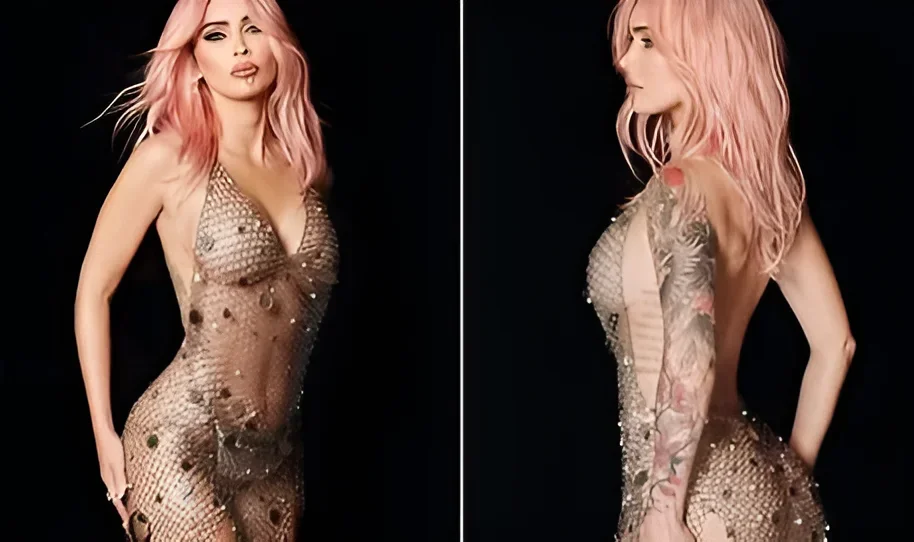
Megan Fox has long ceased to be just a Hollywood star and a sex symbol of the 2000s, transforming into a true icon of modern tattoo culture. Her body is a dynamic canvas that transforms with her inner world, and the most discussed element of this transformation has become her famous sleeve. For fans and professional artists alike, her body art is not just decoration, but a complex chronicle of ups, downs, and spiritual quests. Unlike many of her peers, Megan is not afraid of radical changes: she easily parts with old images, covering them with new, deeper, and technically more complex works.