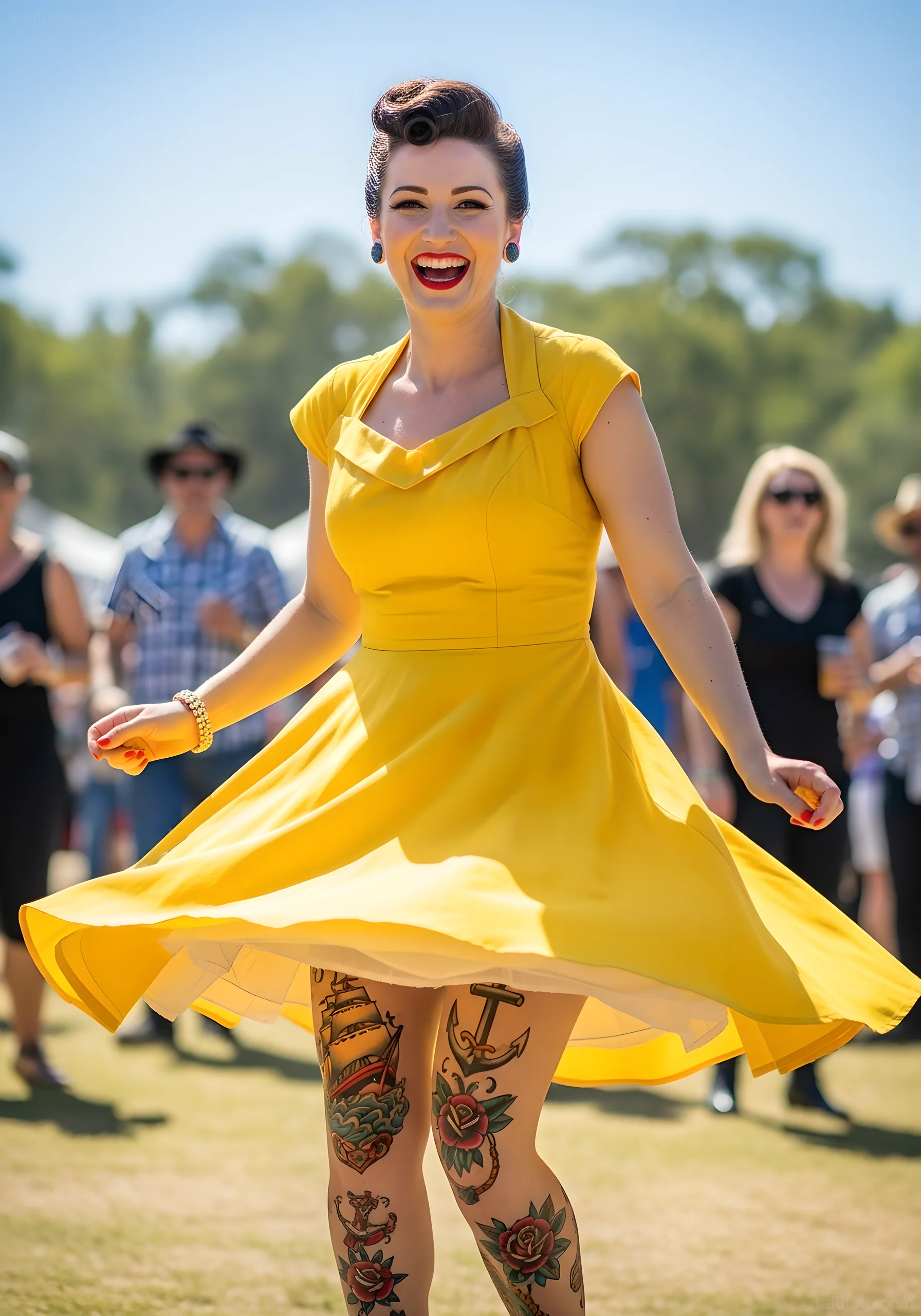
Say “pin-up,” and your mind immediately conjures an image: a charming girl from a mid-20th-century advertisement, her hair styled in perfect waves, her lips painted with iconic red lipstick, and her gaze full of both innocence and a daring promise. This image, born on the pages of men’s magazines and becoming a talisman on the fuselages of American bombers, has long outgrown its simple drawing origins. Today, pin-up is not just another sketch for a tattoo. It’s an entire universe. A global and vibrant subculture with its own music, fashion, automotive icons, and, most importantly, its own philosophy.
Let’s pull back the glossy curtain of stereotypes and see what lies behind it. Why has this style, nearing its centenary, not only survived but is thriving, attracting more and more adherents? How did a simple drawing become a cultural code, and how can one become part of this bright and rebellious world today, in our digital age?
The Roots of the Style: How a Picture for a Soldier’s Locker Became a Cultural Code
The history of pin-up began long before the world knew the word. The precursor to the style can be considered the “Gibson Girls” – illustrations by the American artist Charles Dana Gibson, who at the end of the 19th century depicted a new female ideal: elegant, independent, and ironic. But the real explosion, which turned pin-up into a phenomenon, occurred in the 1940s.
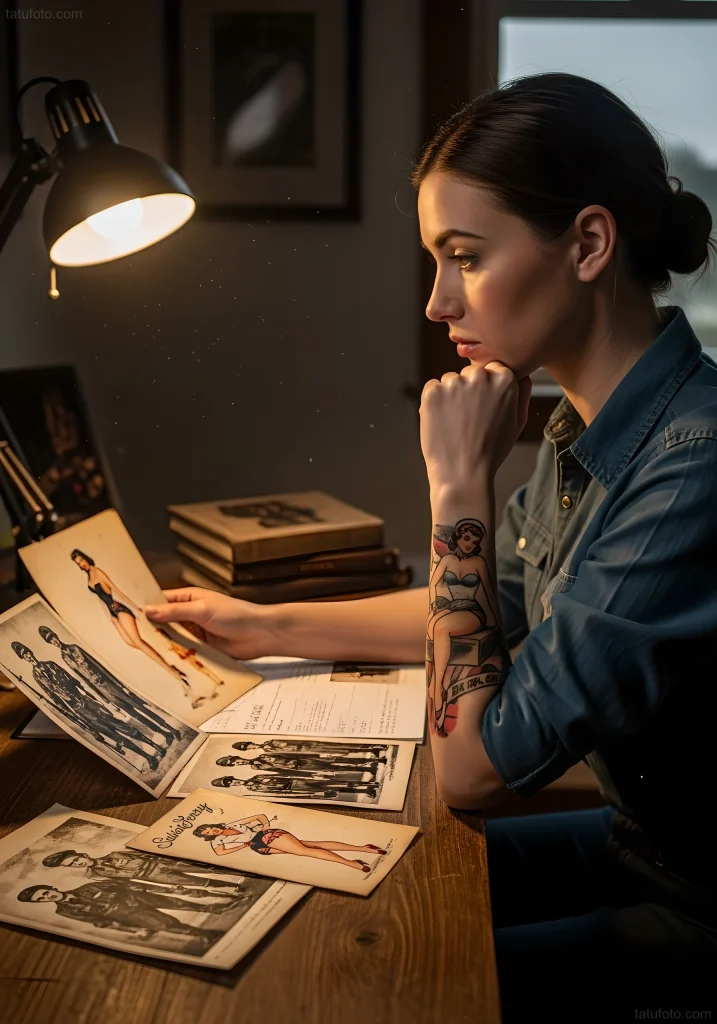
World War II became a catalyst for the style. Illustrations of seductive yet “girl-next-door” girls offered American soldiers a glimpse of peaceful life. They cut them out of Esquire and Life magazines, pinned them to the walls of their tents and locker doors (hence the name pin-up – “to pin up”). These drawings were not just erotic. They were a powerful psychological anchor: a symbol of home, beauty, the very America they were fighting for.
It was then that the pantheon of artists whose names are forever inscribed in the history of the style was formed:
- Gil Elvgren: His specialty was the “girl-next-door” who constantly found herself in funny and piquant situations. The wind lifting her skirt, a dog snatching her swimsuit – his works are full of humor and life.
- Alberto Vargas: His refined watercolor “Vargas Girls” for Esquire magazine became synonymous with glamour. They were more revealing, their images more cold and detached, but no less alluring for it.
- George Petty: The creator of the famous “Petty Girls,” whose figures with disproportionately long legs and slender waists became his signature.
These masters created a visual canon: idealized yet seemingly attainable beauty, mixed with innocence, flirtation, and healthy irony. This image firmly entered the nation’s cultural code and soon found its new haven – on skin.
Pin-Up on Skin: More Than Just a Tattoo
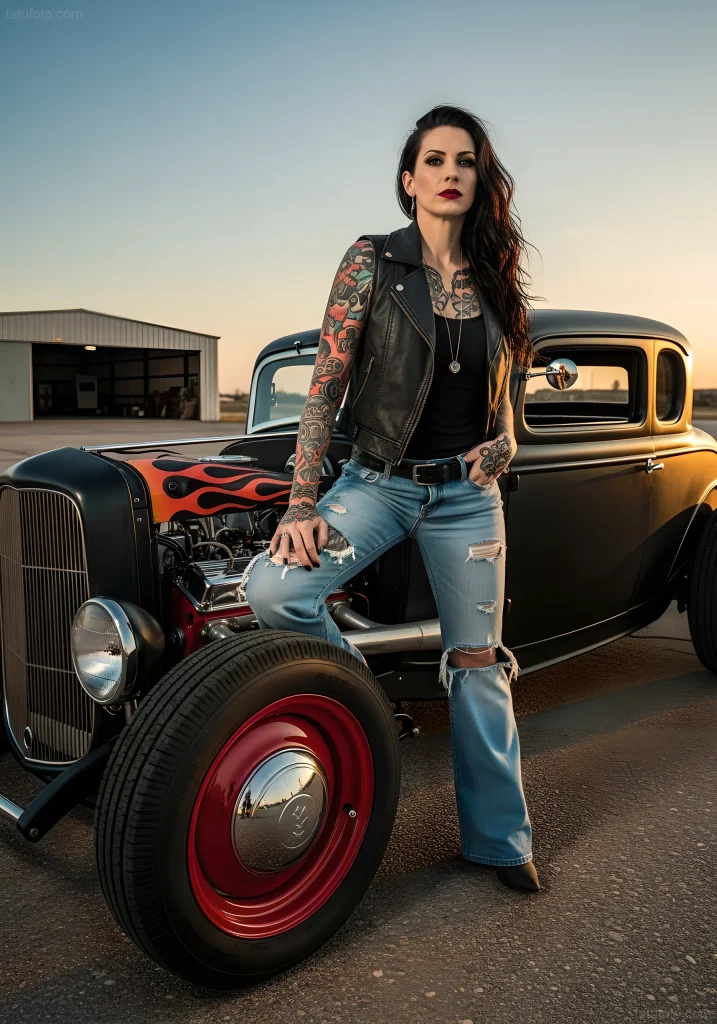
For people whose lives were associated with risk – sailors, pilots, soldiers – tattoos were always more than just drawings. They were personal talismans, pages from their biography, and messages from home. Pin-up girls fit perfectly into this paradigm, quickly becoming one of the pillars of American traditional tattooing.
Why did they become a cult?
- A Lucky Charm. Like “nose art” on airplanes, an image of a beautiful girl on the shoulder or forearm was meant to ward off bullets and bring good luck.
- An Image of a Loved One. Often, the tattoo was not just an abstract beauty but an idealized portrait of a wife or girlfriend waiting on the shore.
- A Symbol of Peaceful Life. The pin-up girl embodied everything worth fighting through the hell of war for and returning home to: beauty, comfort, and femininity.
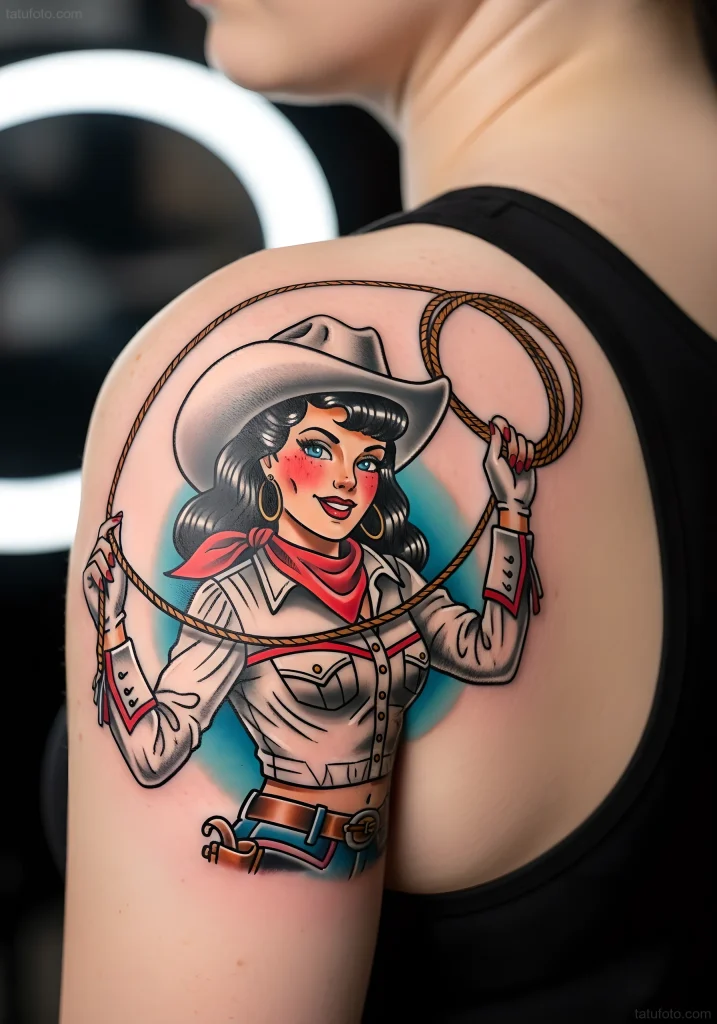
The legendary tattoo artist Norman “Sailor Jerry” Collins made pin-up one of the central themes of his work, creating hundreds of iconic sketches that are still copied today. Today, this style lives on and evolves, going beyond the boundaries of old school.
| Tattoo Style | Pin-Up Execution Features | Who It Suits |
| Old School | Bold black outlines, simple palette (4-5 colors), no volume. Maximum readability and longevity. | Connoisseurs of classics, authenticity, and “that very” nautical tattoo. |
| Neotraditional | Variety of line thickness, wide palette, more details in hairstyles and clothing, shadows and volume appear. | Those who love classic subjects but want a more detailed and modern execution. |
| Realism (B&W or Color) | Photographic accuracy, detailed textures, highlights. Often based on photos of real models (Bettie Page) or actresses. | Fans of maximum detail who want a true portrait on their skin. |
| Chicano | Often monochrome with a predominance of gray and black, but with bright accents. Images are more dramatic, often mixed with religious or gangster themes. | For those seeking a darker and more brutal interpretation of the classic image. |
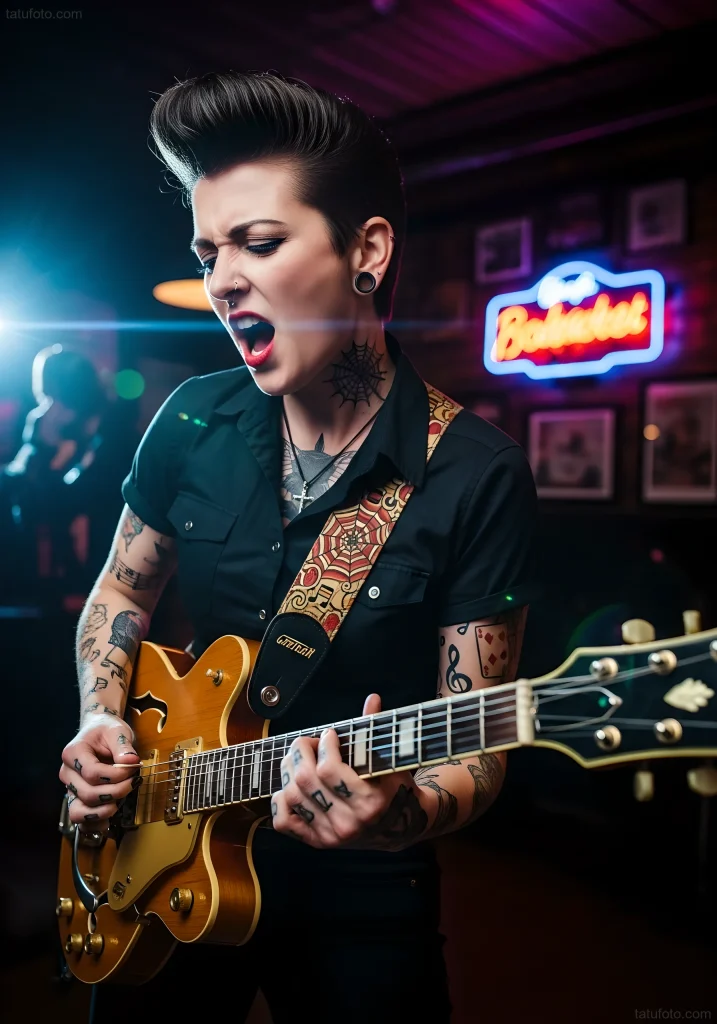
The Soundtrack of an Era: From Fiery Rockabilly to Dark Psychobilly
Understanding pin-up culture is impossible without music. Its pulse, its rhythm – is rockabilly, born in the mid-50s in the southern USA. This wild cocktail of country and rhythm and blues performed by Elvis Presley, Jerry Lee Lewis, and Johnny Cash became the anthem of rebellious youth. The energy, sexual undertones, and drive of rockabilly perfectly matched the visual aesthetics of pin-up.
Parties and dance floors became the runway for the revived style. Guys in cuffed jeans and “motorcycle jackets,” girls in full polka-dot dresses, with high hairstyles and scarlet lips, dancing boogie-woogie and jive. It wasn’t imitation; it was life.
In the 80s, a darker and more aggressive descendant emerged from this melting pot – psychobilly. Bands like The Cramps and The Meteors mixed the primal energy of rockabilly with the fury of punk rock and the aesthetics of B-grade horror films. Pin-up mutated here too: the girls in the sketches became vampires, zombies, Frankenstein’s brides, retaining their seductive forms but adding a healthy dose of black humor to their image.
Creating the Look: A Step-by-Step Guide to Immersing Yourself in the Style
Becoming a “girl from a picture” today is a fascinating quest. It’s not about blind copying but about constructing your own image from canonical elements.
Wardrobe: The main goal is to create an “hourglass” silhouette. Use:
- Sun dresses and skirts that emphasize the waist.
- Pencil dresses and skirts that hug the hips.
- Capri pants and high-waisted jeans (mom-fit).
- Classic prints: polka dots, checks, stripes, cherries.
Makeup and Hairstyle: The two pillars of the look.
- Face: Porcelain skin, thin arched eyebrows, and most importantly – classic black eyeliner.
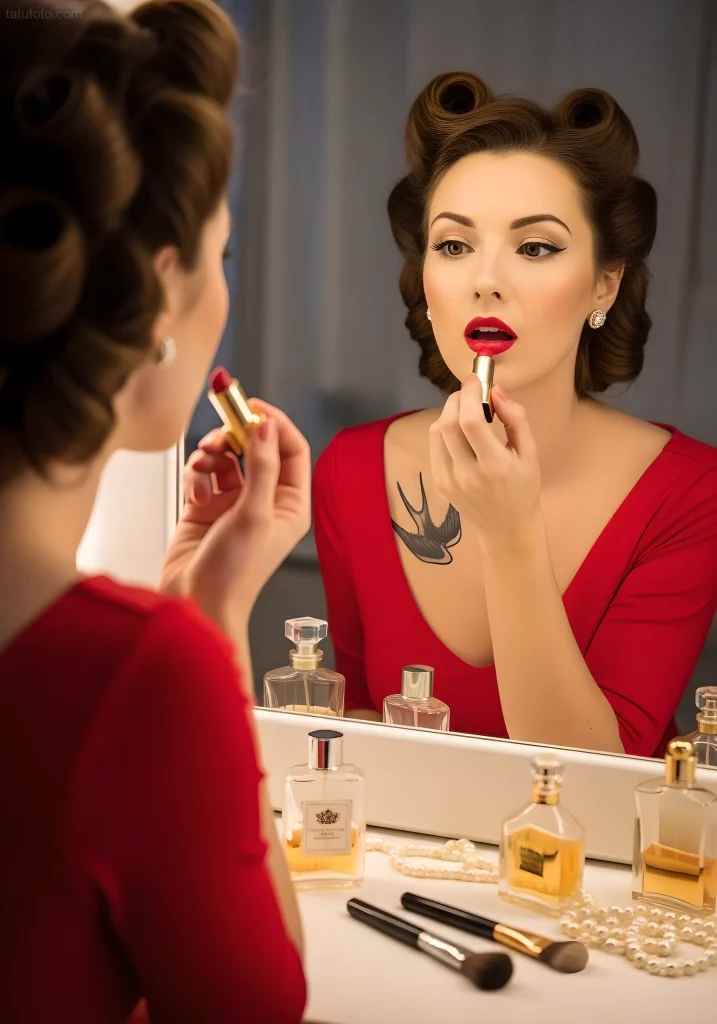
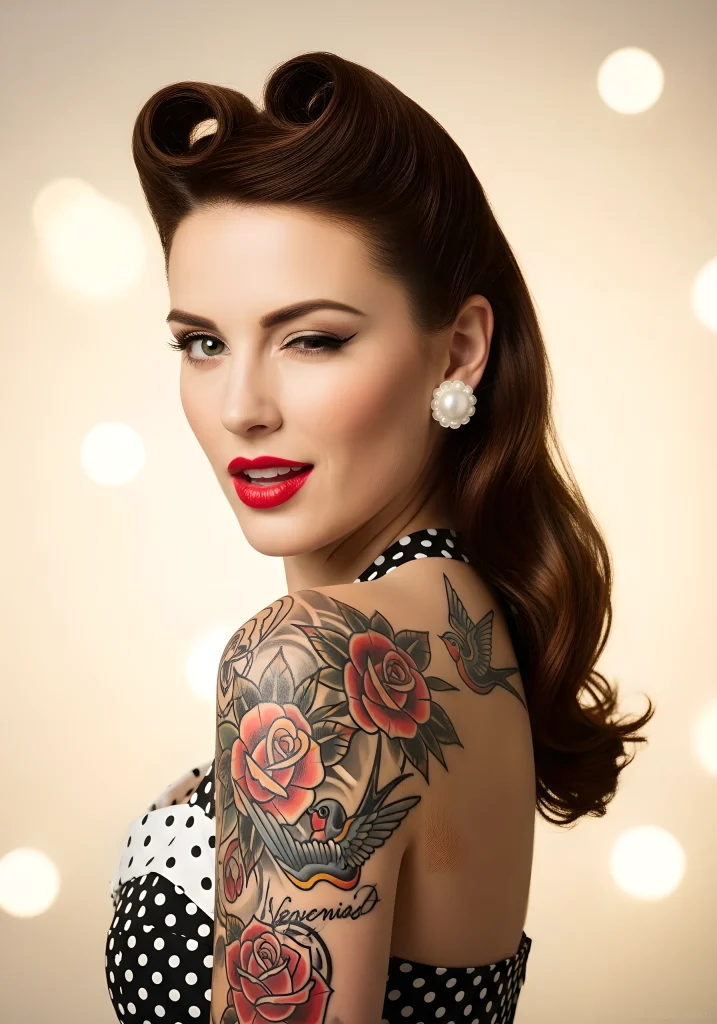
- Lips: An essential element. Matte lipstick in a classic red shade, with a perfectly defined contour.
- Hair: This is the most challenging part. Famous “victory rolls,” high updos, smooth waves. Requires skill, patience, and a lot of hairspray.
Seeking Authenticity: You can go two ways. The first is modern brands that sew replicas and retro-style clothing. The second, more complex and interesting, is vintage stores, second-hand shops, and online flea markets. Finding an original 50s dress there is a real stroke of luck and a source of pride.
The Roar of Engines and the Smell of Gasoline: When a Car is Art
Another crucial element of the pin-up universe is custom cars. Classic American cars manufactured before the 70s, transformed by enthusiasts into true works of art.
- Hot Rods: Speed is paramount here. An old Ford or Chevrolet is taken, stripped of unnecessary parts, and a souped-up V8 is installed under the hood. The goal is maximum power.
- Kustoms: Style is the main thing here. The car is lowered, the body is “smoothed out” by removing door handles, and the lights are redesigned. The pinnacle of craftsmanship is considered unique multi-layer painting using “flake” (glitter) and “candy” (transparent lacquer) techniques, as well as masterful airbrushing or pinstriping (thin line painting).
A girl in a polka-dot dress against the backdrop of a polished-to-a-shine custom car is an icon of style. The car here is not just metal but part of the image, a statement about oneself. Festivals like America’s Viva Las Vegas or Russia’s “Autostrada” and “Custom Convention” gather thousands of adherents of this culture.
Myths and Reality of Pin-Up
There are many stereotypes surrounding the style, especially today. Let’s break down the most popular ones.
- Myth 1: “It’s vulgar and objectifies women.” In reality, classic pin-up walks a fine line between seduction and innocence. It teases rather than undresses. Today, many women see this style not as objectification but, on the contrary, as a tool for emancipation. It’s their conscious choice how to look feminine and sexy according to their own rules, not according to the templates of glossy magazines.
- Myth 2: “It’s only for perfect figures.” Complete nonsense. Pin-up actually celebrates the classic feminine “hourglass” silhouette with full hips and bust. It is incredibly flattering to curves and is a true anthem to body positivity long before the word became mainstream.
- Myth 3: “It’s just a masquerade and nostalgia.” For some, perhaps, it’s just an evening look. But for thousands of people around the world, it’s a daily lifestyle. They listen to this music, drive these cars, and wear this clothing not because they want to go back to the past, but because the aesthetics of this era resonate with their inner world here and now.
The Art of Living Brightly
So, what is pin-up today? It’s not just a collection of clichés from the past. It’s a complex and living constructor from which everyone builds something of their own. For some, it’s a way to emphasize their femininity. For others, a statement of their independence. For a third group, it’s belonging to a community of like-minded people with whom they can spend hours discussing carburetors and the perfect shade of red lipstick.
Pin-up has come a long way from a magazine illustration to a powerful cultural layer that continues to inspire today. It proves a simple thing: a truly strong style doesn’t age. It only acquires new meanings. And being a part of it means making a conscious choice in favor of a world where beauty, self-irony, and passion for life are valued above all else. It’s not an escape from reality, but a way to make it a little brighter.