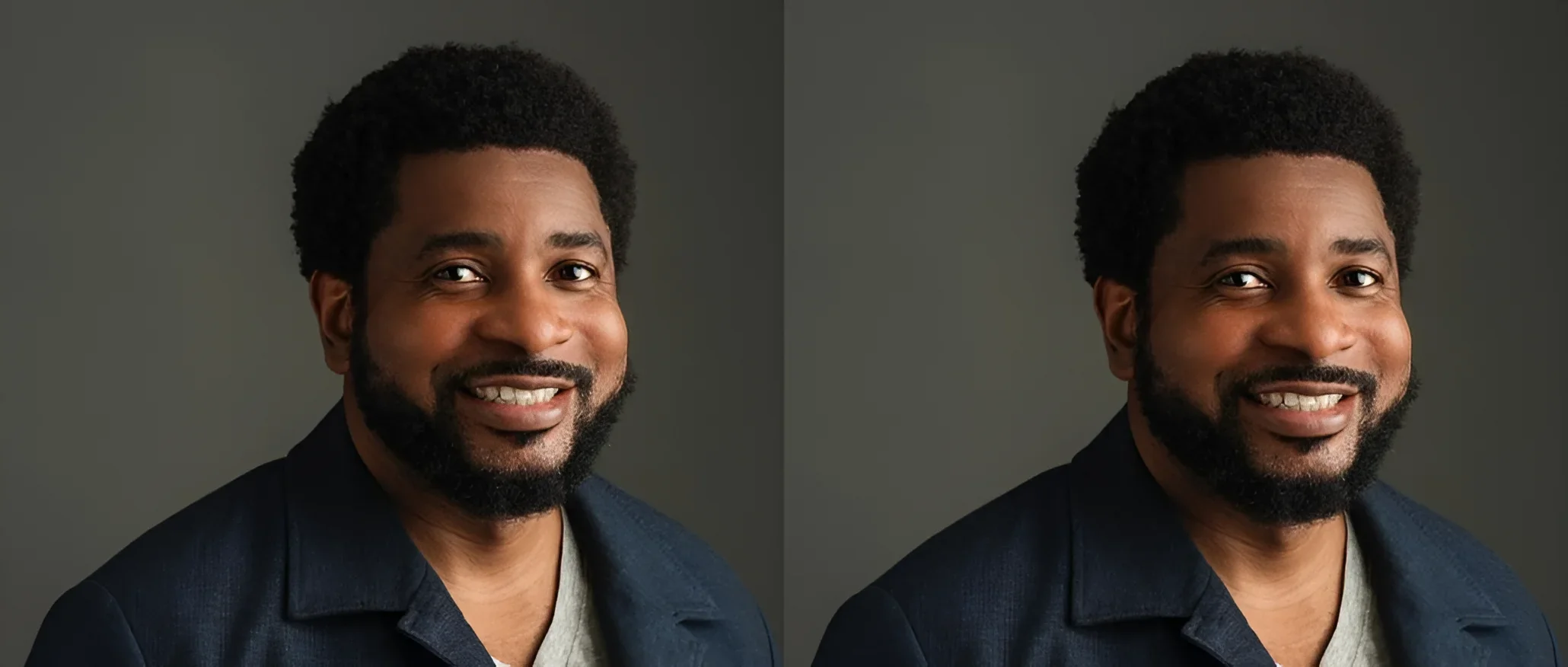
In the Nigerian public sphere, the topic of how tattoos clash with religious norms has surfaced once again. Pastor and relationship expert Kingsley Okonkwo, who leads the David’s Christian Centre, recalled in an interview with journalist Chude Jideonwo an incident where one of his congregants openly mocked his tattoos. The paradox is that the same woman actively supported Afrobeats star Davido, whose appearance and style have long been part of his public image. This episode served as an occasion for the pastor to publicly discuss the issue of selective criticism within Christian circles.
According to Okonkwo, the woman at the service began making harsh remarks directed at him specifically because of his tattoos. The pastor did not argue on the spot, but later decided to check her social media to understand the context. There, he discovered that she regularly posts enthusiastic content about Davido, who himself has visible tattoos and does not hide them. For Okonkwo, this was a reason to ask a direct question: why do the same signs of external self-expression evoke condemnation in one person and admiration in another?
Double standards as the norm
The situation described by the pastor is not an isolated one. In tattoo culture and religious communities, two poles exist simultaneously: on one hand, tattoos are increasingly perceived as a legitimate form of self-expression and even spiritual statement; on the other, in conservative circles, they are still associated with the idea of sin. Okonkwo pointed out directly that there is no specific passage in the Bible that explicitly forbids tattoos, and therefore, the automatic equation of tattoos with sin seems unconvincing to him. He emphasized that one person’s personal standards should not become a measure for another, especially when those same standards are not applied to those whom the person considers an idol.
An expert look at this dispute shows that it is not so much about the tattoo itself, but about a person’s right to bodily autonomy. In modern tattoo culture, a design on the body has long ceased to be a marker of marginality: today, it is chosen by pastors, artists, and corporate executives alike. Conflict arises where a person’s public image begins to be evaluated through the prism of others’ expectations rather than their own values.
Matchmaking program and the role of men
Beyond the dispute over tattoos, Okonkwo revealed details in the same conversation about his project for matching believers. Participation in the program costs 700,000 Nigerian Naira, and the pastor explained that this is not just matchmaking, but comprehensive preparation: participants receive knowledge and guidance on how to build healthy relationships. Separately, he addressed the established model in which a man is automatically obligated to be the sole provider. Okonkwo stated that such a role was not inherent in the nature of a man and called for a reconsideration of this expectation.
- Incident: A congregant criticized the pastor’s tattoos but publicly supported Davido.
- Okonkwo’s position: There is no direct prohibition on tattoos in the Bible, and selective criticism is unfair.
- Matchmaking project: Participation costs 700,000 Naira, and the format includes relationship training.
- Additional thesis: A man is not by definition obligated to be the sole provider.
For the Russian-speaking reader, this case is interesting primarily as an example of how tattoo culture penetrates various social strata and clashes with local norms. The more visible tattoos become as an element of mass culture, the more often they become a cause for public discussion about the boundaries of what is acceptable. Okonkwo’s story clearly shows that the dispute rarely boils down to the drawing on the skin itself: behind it usually lies the question of who has the right to determine how another person should look.