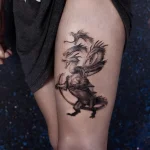
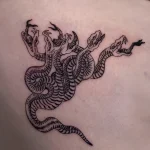
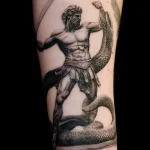
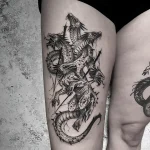
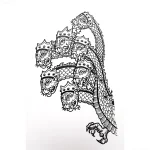
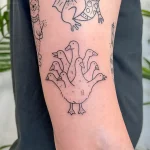
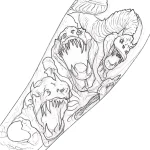
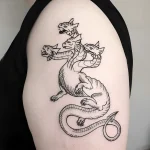
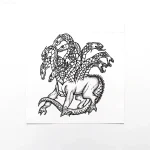
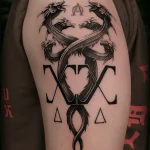
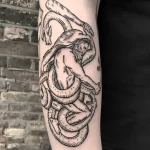
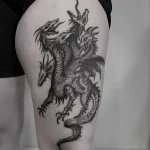
A Hydra tattoo is much more than just an image of a mythical monster. It is one of the most profound and multifaceted symbols in modern tattoo culture, embodying ideas of immortality, indomitable strength, constant struggle, and regeneration. If you are considering getting a Lernean Hydra image on your skin, you are choosing a sign that speaks of your ability to overcome difficulties that seem destined to destroy you, but instead only make you stronger.
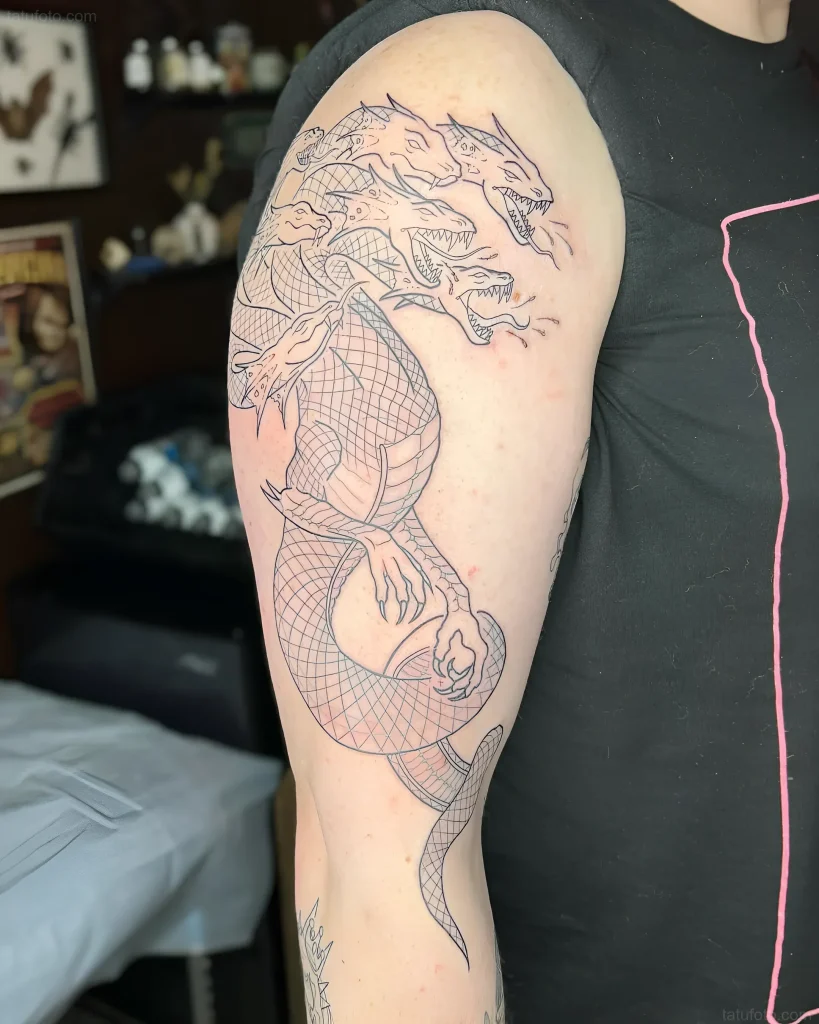
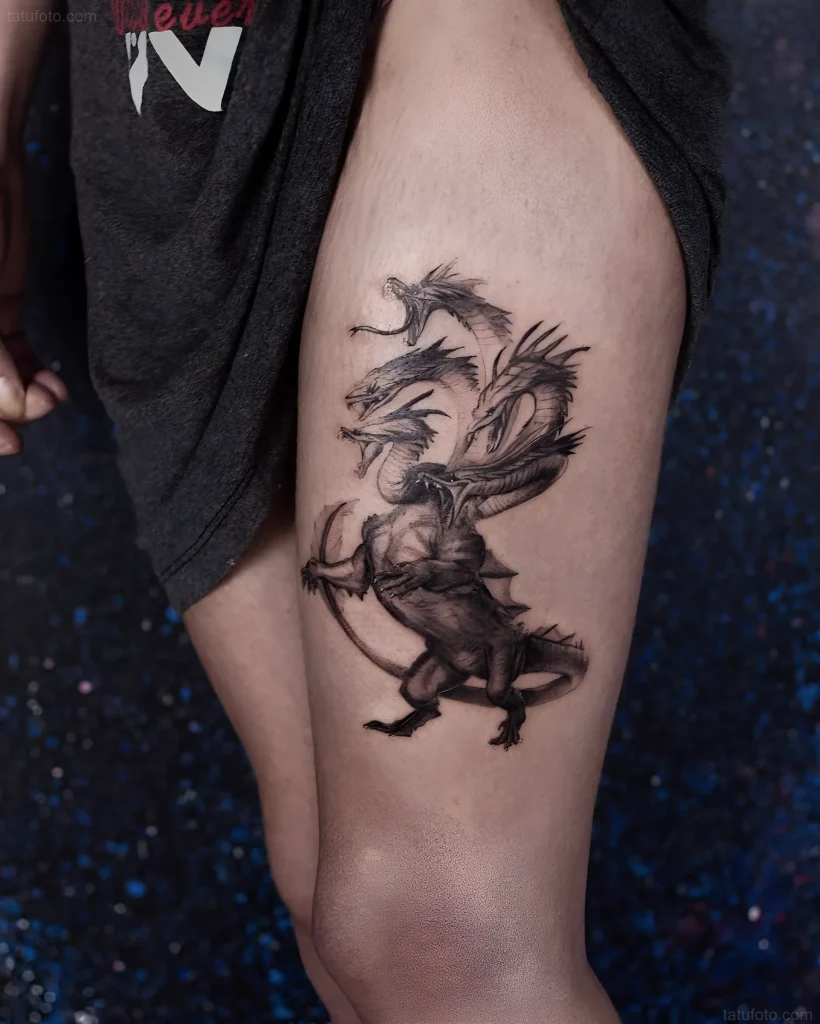
Hydra Tattoo: A Mythological Symbol of Strength and Rebirth
The Hydra, or Lernean Hydra, holds a central place in ancient Greek mythology as the antagonist in one of Hercules’ twelve labors. This multi-headed water monster possessed a unique and terrifying property: if one head was cut off, two new ones would immediately grow in its place. It is this ability for exponential regeneration that makes the Hydra an ideal symbol for those who understand that true strength lies not in the absence of problems, but in the capacity for constant rebirth.
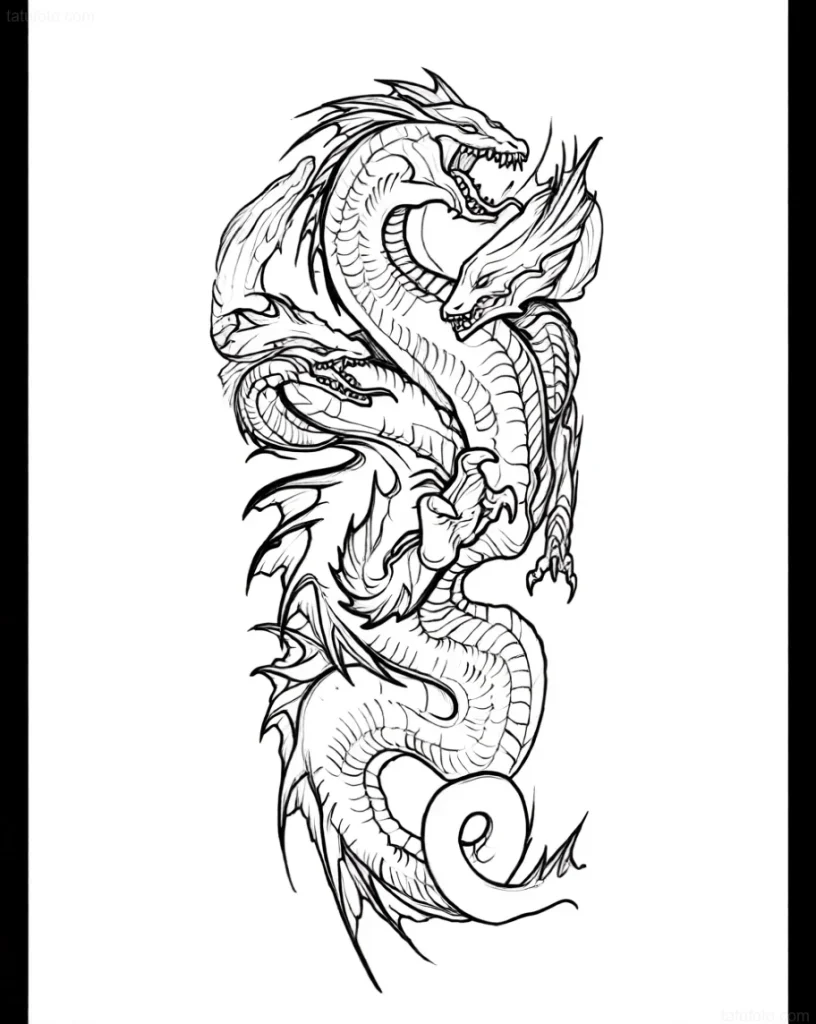


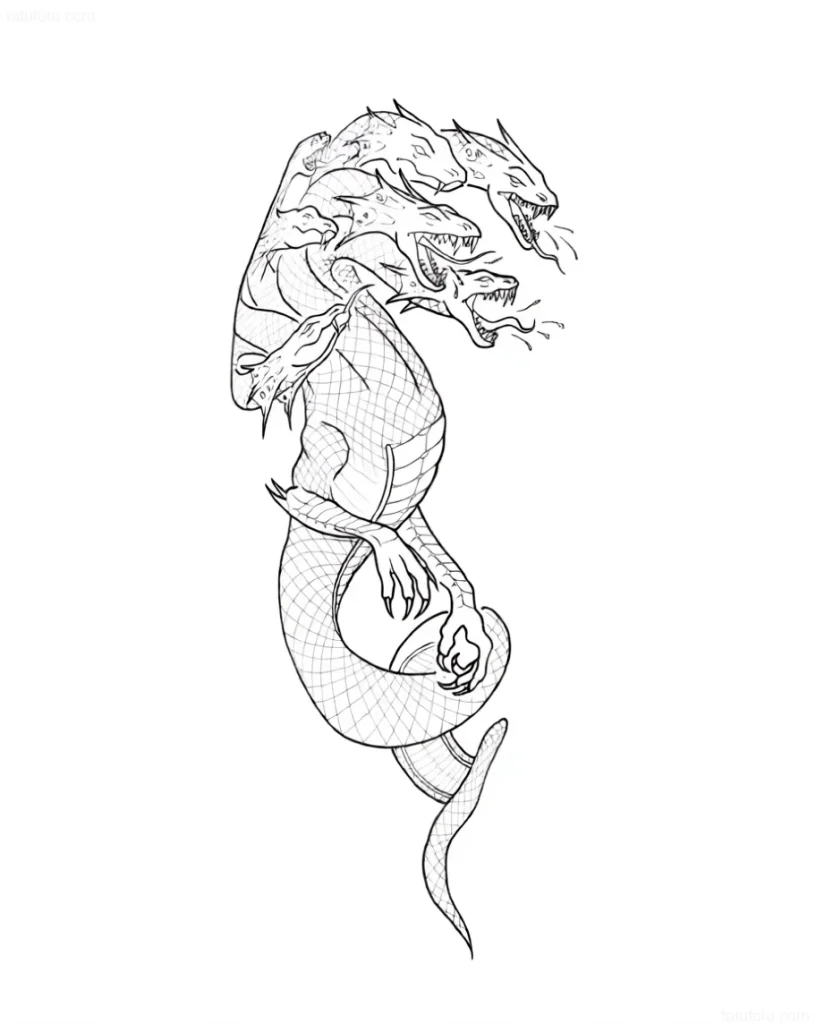
The Hydra symbolizes not just strength, but persistent resistance to destruction. In the context of a tattoo, this is often interpreted as:
- Immortality of the Spirit: The monster only dies when Hercules resorts to fire and cunning. This means that despite all attempts by the outside world to break a person, their inner essence (usually represented by the central, immortal head) remains untouched.
- Overcoming Multiplied Problems: If you face situations where solving one problem immediately creates two new ones (work, personal crises, addictions), the Hydra becomes a powerful talisman, reminding you to seek indirect, strategic solutions.
- The Cycle of Life and Death: Just as a snake sheds its skin, the Hydra constantly renews its heads. This reflects a philosophical acceptance that growth requires passing through the destruction of the old self.
Thus, by choosing a Hydra tattoo, you are not just paying homage to mythology, but also declaring your inner resilience in the face of endless trials.
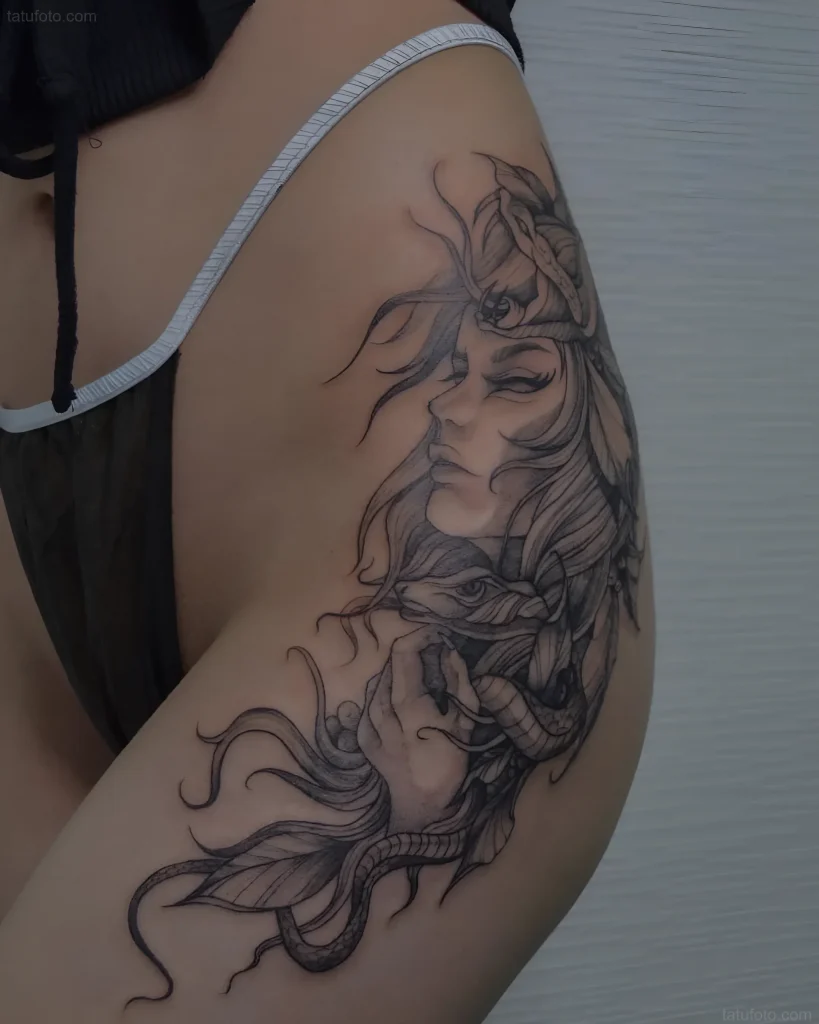
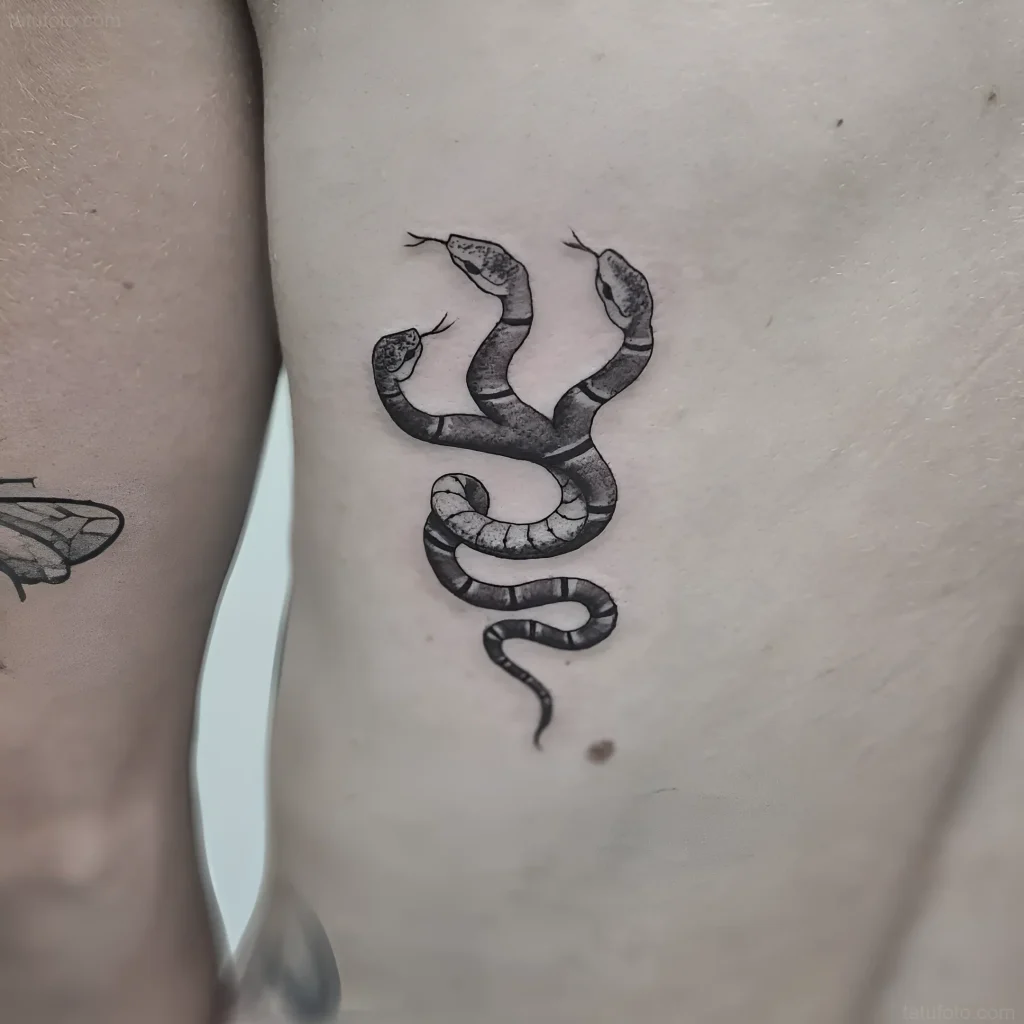
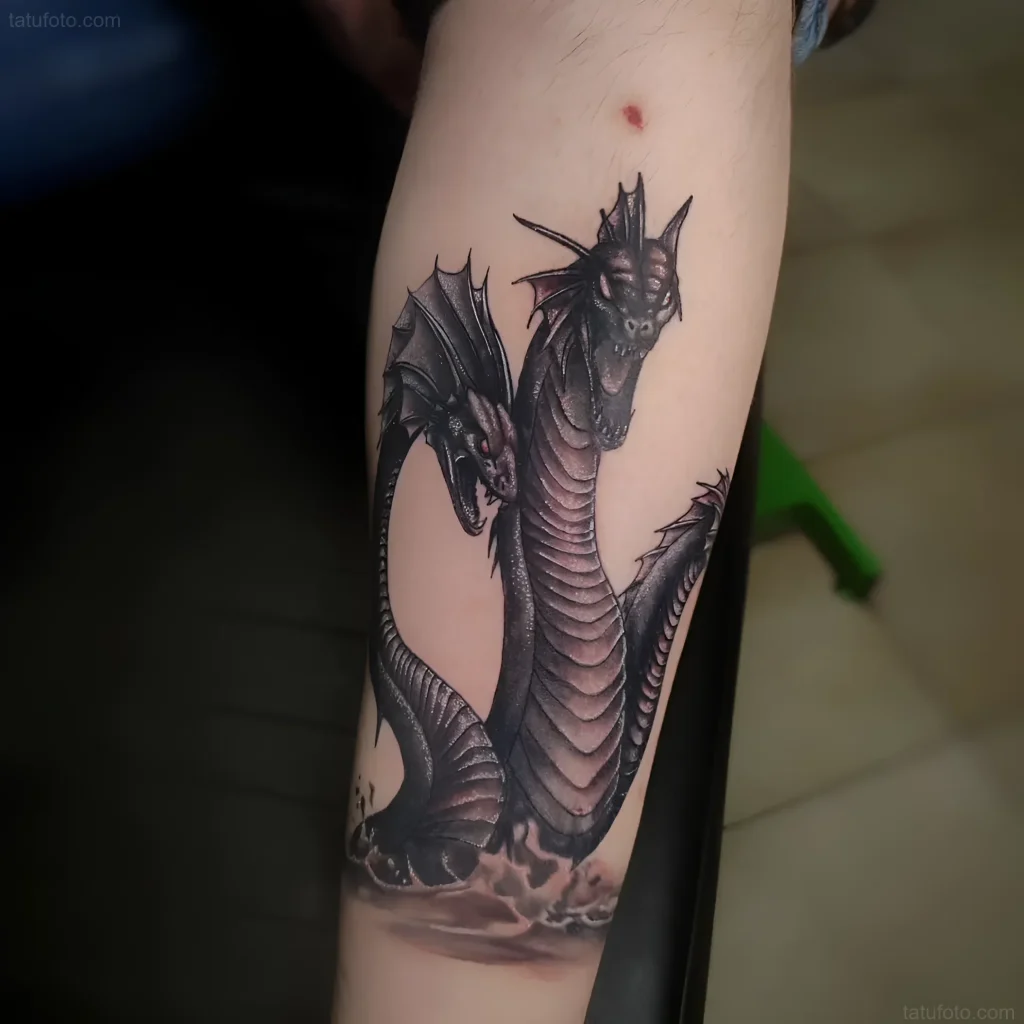
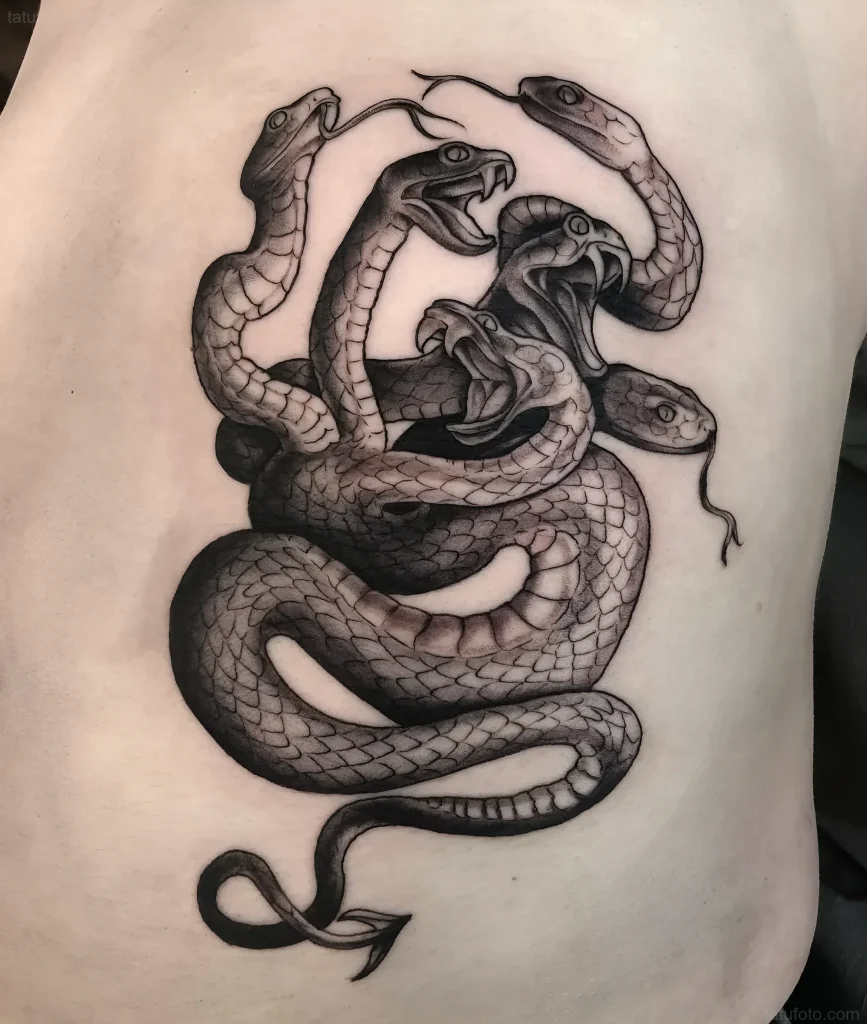
Historical Roots: From Ancient Greek Myths to Modern Interpretations
Although the Hydra is a character firmly rooted in Greek mythology, its symbolic meaning has transformed and enriched over the centuries, finding its place in alchemy, heraldry, and finally, in tattoo art.
Hydra in Antiquity and the Middle Ages
In antiquity, the Hydra was a pure embodiment of evil, chaos, and the destructive force of nature that needed to be tamed. However, in medieval alchemy and early Christianity, its image acquired a more complex meaning:
- Alchemy: The multi-headed monster was often used to denote the prima materia (primary matter) or a complex of difficulties that the alchemist had to overcome to achieve transmutation. Each head could symbolize one of the stages of the “Great Work.”
- Heraldry: In heraldry, the Hydra, like the dragon, symbolized power, authority, and sometimes protection against enemies who, no matter how hard they tried, could not defeat the protected.
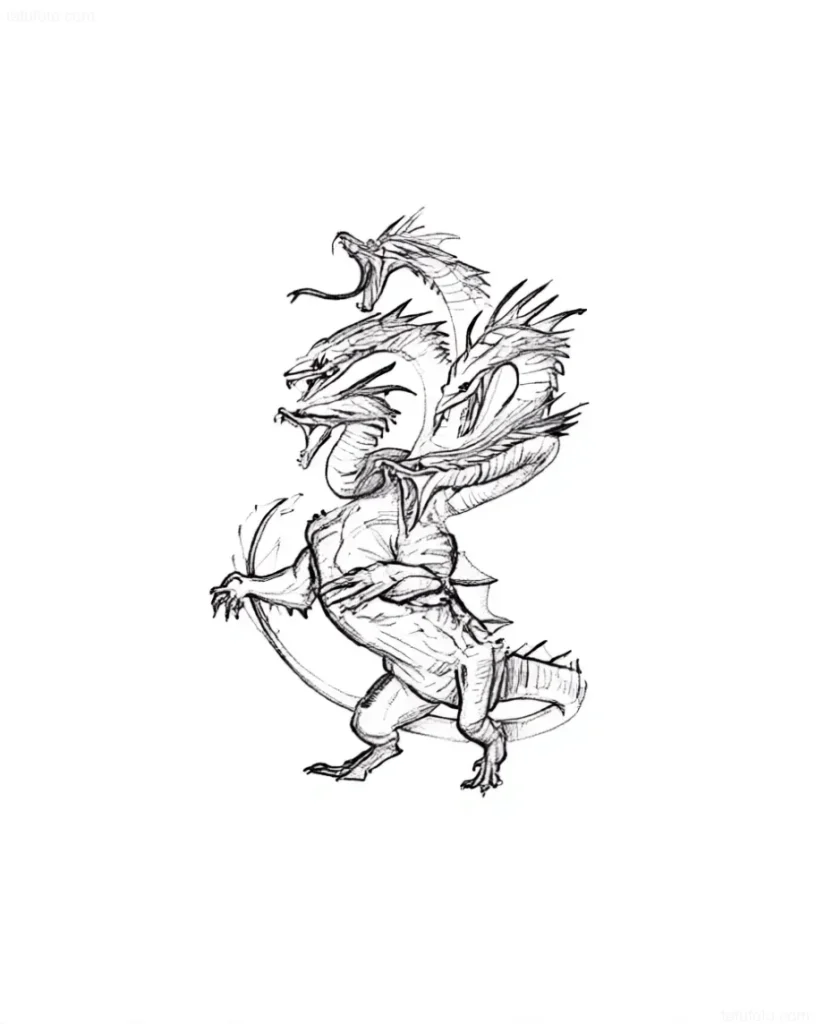
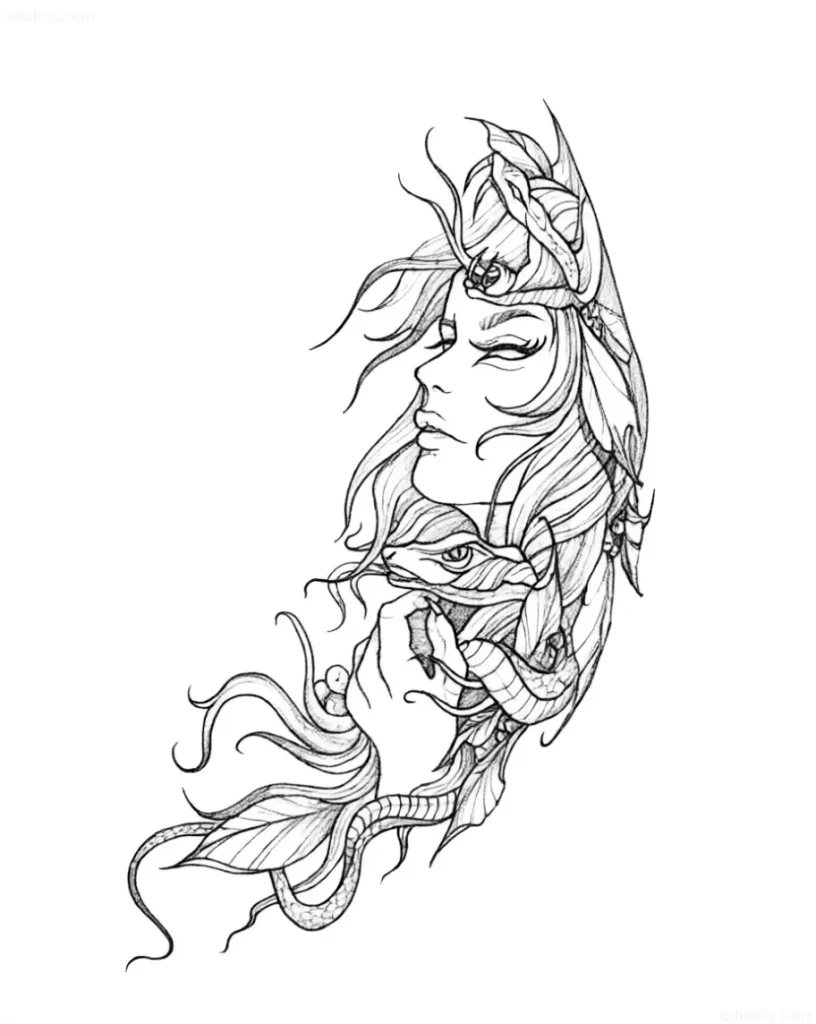


Modern Tattoo Culture: Personal Symbolism
In the 21st century, the Hydra tattoo has moved away from the strict interpretation of “a monster to be slain” and has become a powerful personal symbol. Modern interpretations focus on psychological and spiritual aspects:
- Fighting Inner Demons: The most common modern meaning. The Hydra’s heads often symbolize bad habits, addictions, phobias, or negative character traits. Every time a person tries to get rid of one problem (cuts off a head), it returns in double (two new heads). The tattoo in this context is an acknowledgment of the complexity of the struggle, but also a promise never to give up.
- Symbol of Growth Through Conflict: Unlike the fight against external evil, the Hydra can also represent exponential growth. Surviving a crisis does not weaken you, but adds new skills, knowledge, and experience, making you more multifaceted and stronger.
Thus, the Hydra in a tattoo is not just a picture, but a complex philosophical metaphor for personal journey and evolution.
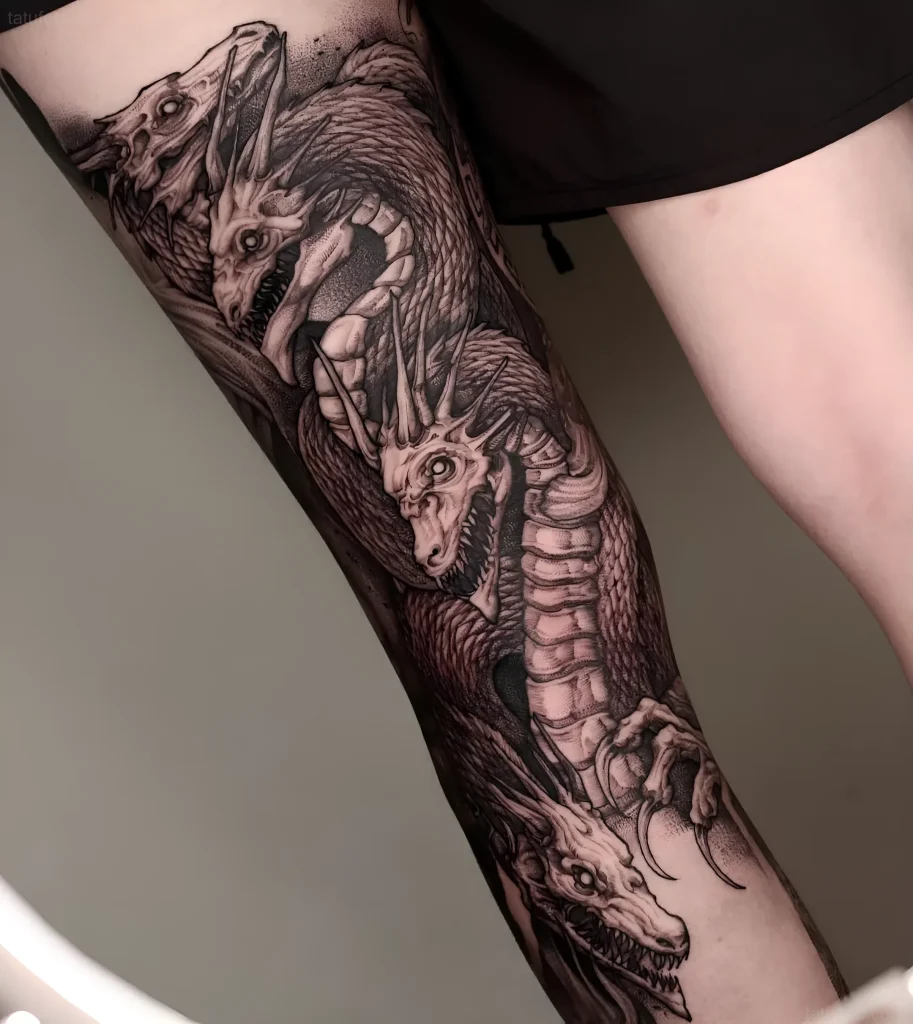
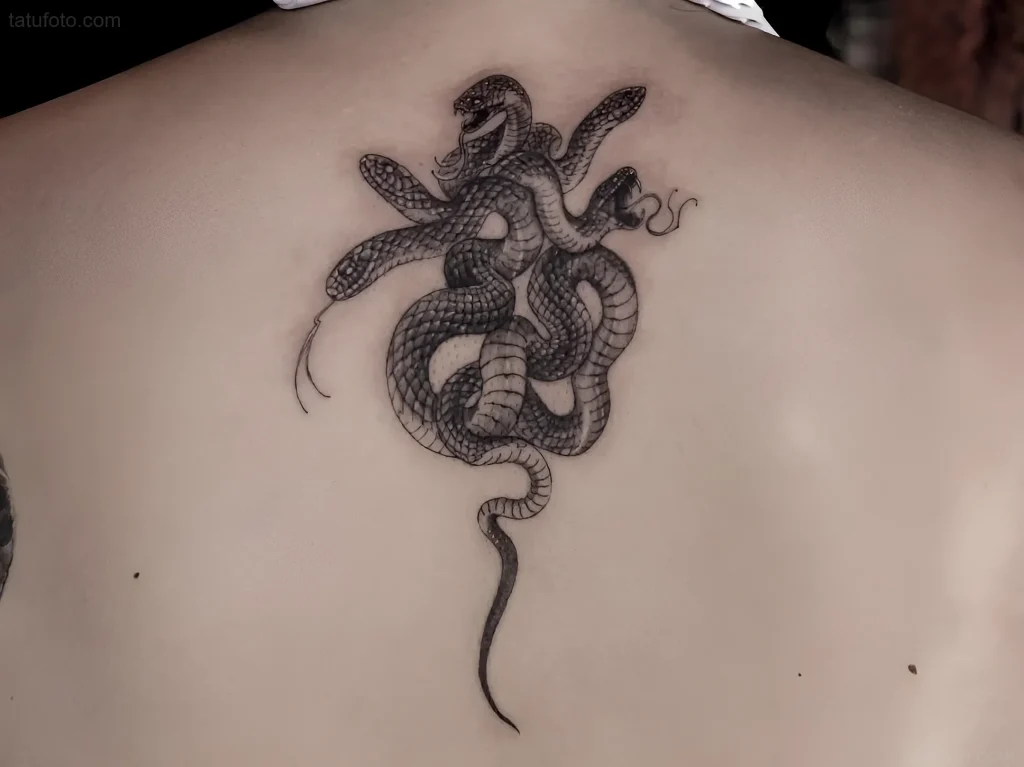
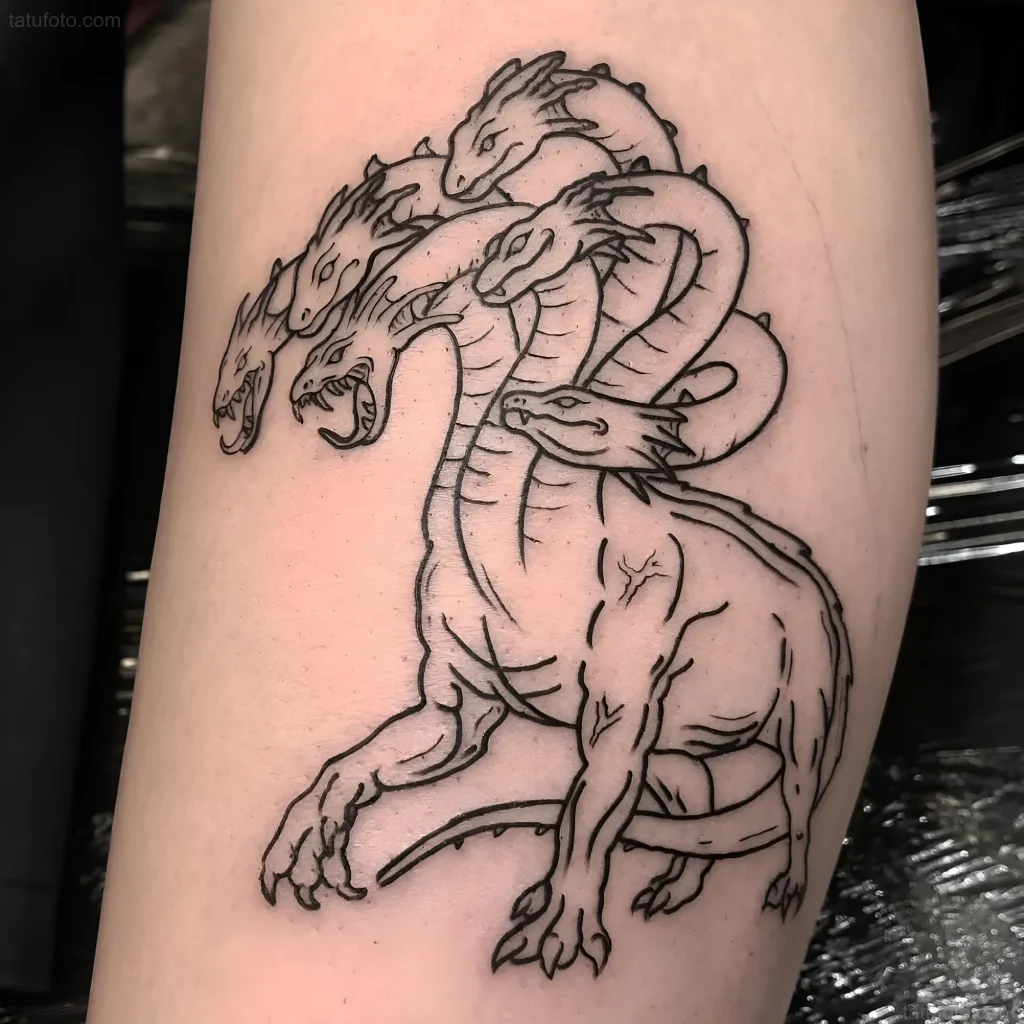
Key Meanings of the Hydra Tattoo: What the Multi-Headed Monster Symbolizes
To fully understand the symbolism of the Hydra tattoo, it’s necessary to divide its meanings into several key categories, each reflecting a specific aspect of the myth.
1. Indomitable Will and Immortality
This is the primary meaning associated with the Hydra’s regenerative ability. The tattoo symbolizes:
- Eternal Life (Not Literal): Denotes the immortality of a person’s ideas, legacy, or spirit. A person wearing a Hydra believes that their influence or inner core cannot be destroyed.
- Invincibility: A demonstration that the tattoo wearer cannot be broken by external forces. Every blow of fate only adds to their strength.
- Persistence and Resilience: The Hydra refuses to die unless unconventional tactics are employed. This is a symbol of a person who will fight to the last.
2. Exponential Growth and Multiplication
This aspect is related to the fact that for every head cut off, two grow back. This can be interpreted both positively and negatively.
- Positive Multiplication: Growth of skills, knowledge, wealth, or influence. Every setback leads to doubled success.
- Negative Multiplication (Complex Problems): An acknowledgment that some life problems seem endless and worsen with attempts to solve them (e.g., debts, addictions, complex family relationships). The tattoo serves as a reminder of the need for a strategic, rather than a direct, approach.
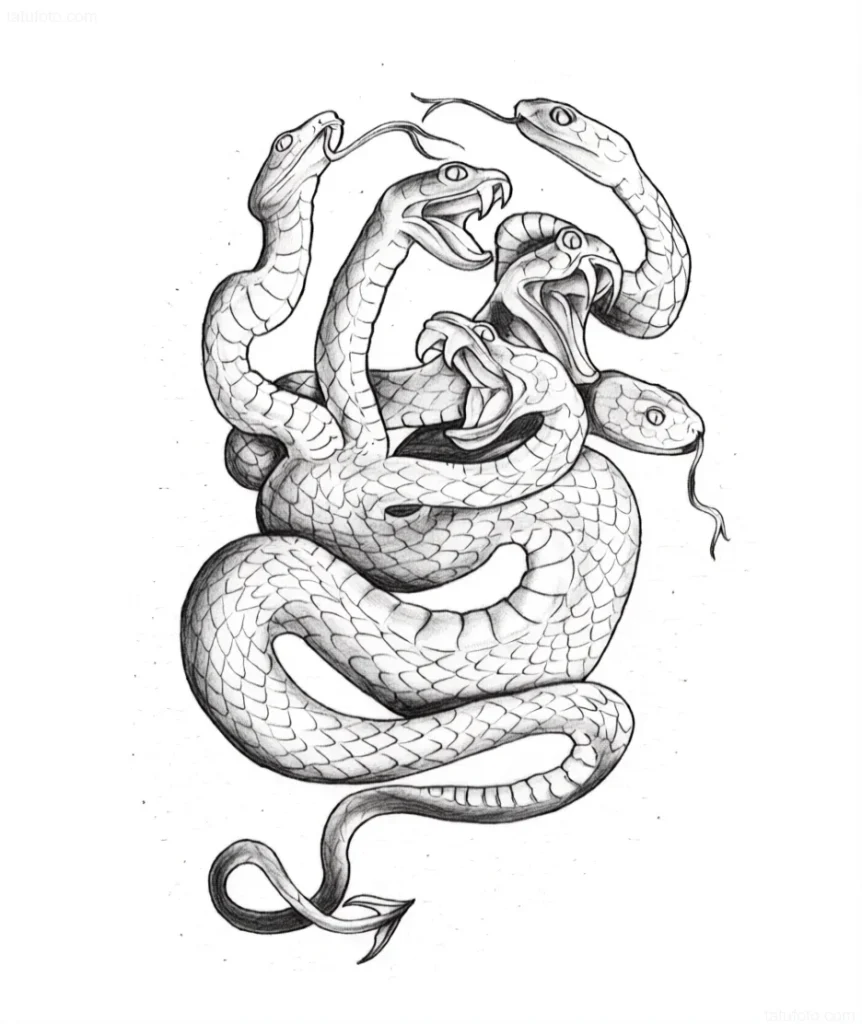
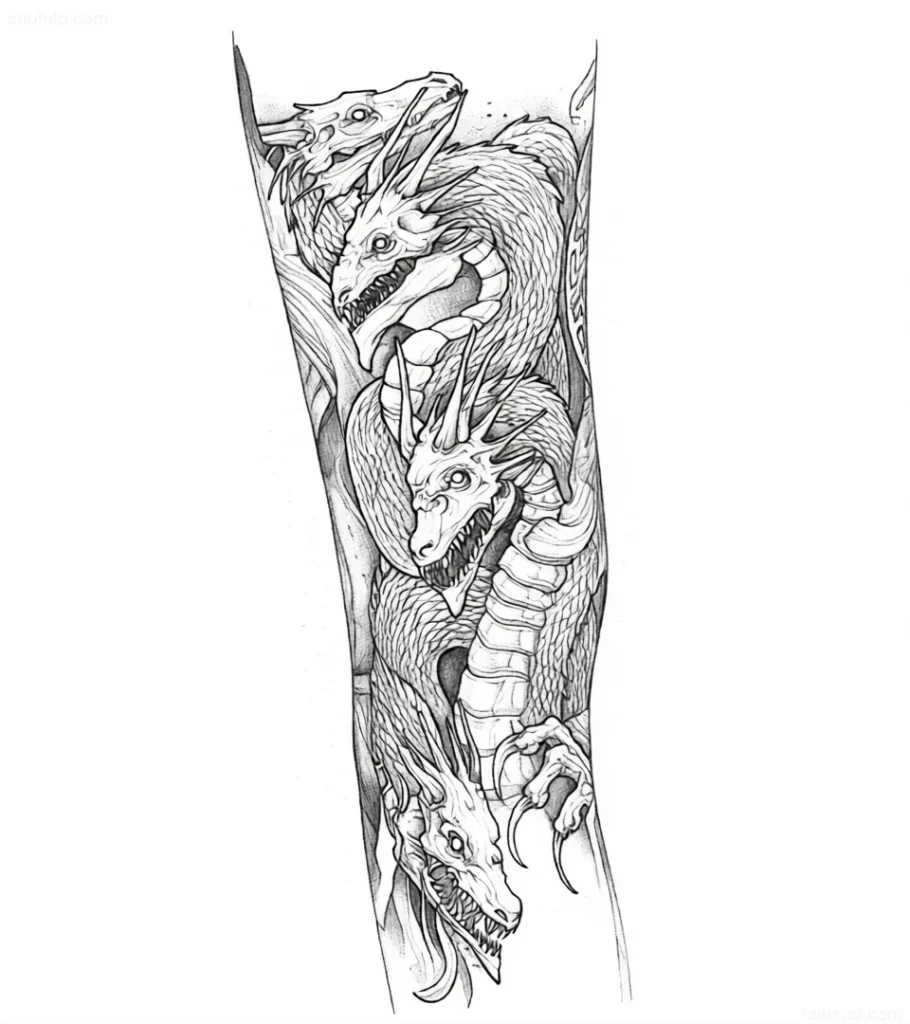
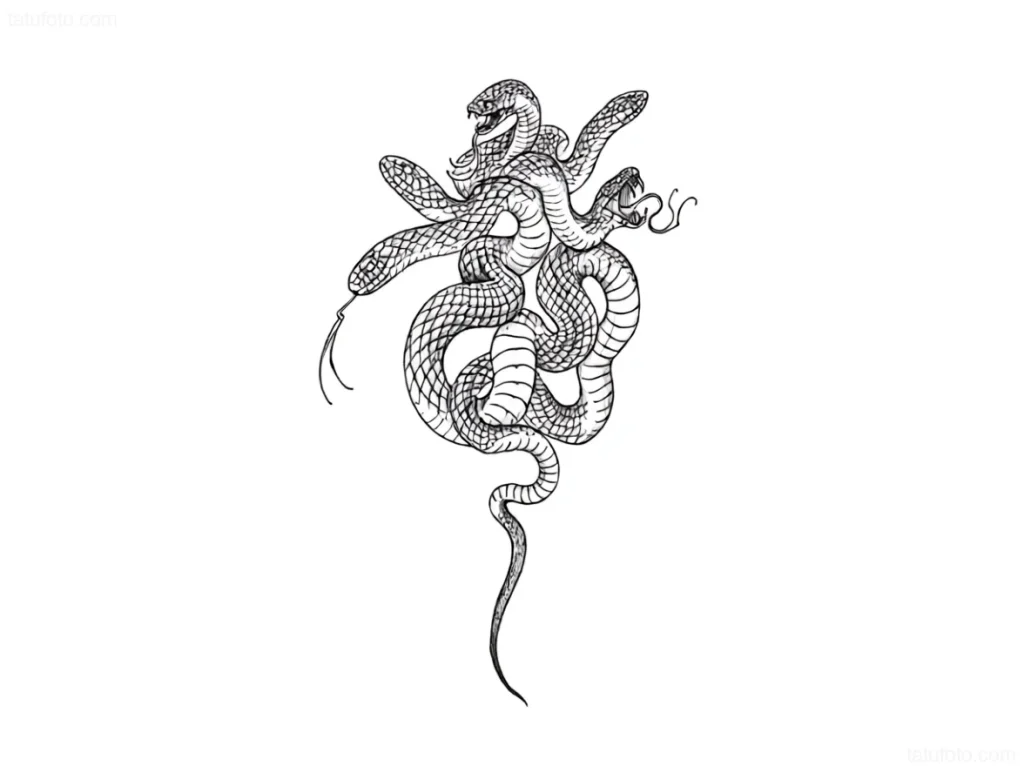

3. Inner Struggle and Self-Discovery
As mentioned earlier, in modern psychology, the Hydra often represents inner conflicts.
- Multiple Personalities: Different heads can symbolize various, sometimes contradictory, aspects of a person’s character (ambitions, fears, desires, moral principles).
- Fighting the Shadow: A reference to Jungian psychology, where the Hydra represents the shadow aspects of the personality that constantly try to take over. The tattoo is an honest acknowledgment of the existence of this struggle.
4. Venomous Nature and Danger
In the myth, the Hydra’s blood was deadly poisonous. This element is also reflected in the symbolism:
- Danger and Protection: A warning to others that the tattoo wearer can be dangerous or has a “stinging” nature if provoked.
- Transformation of Pain: A symbol of a person who has learned to turn their inner “poison” (traumas, pain, negative experiences) into strength and a weapon.
When choosing a Hydra tattoo, you must clearly understand which of these aspects is most important to your personal story, as this will influence the final design and composition.
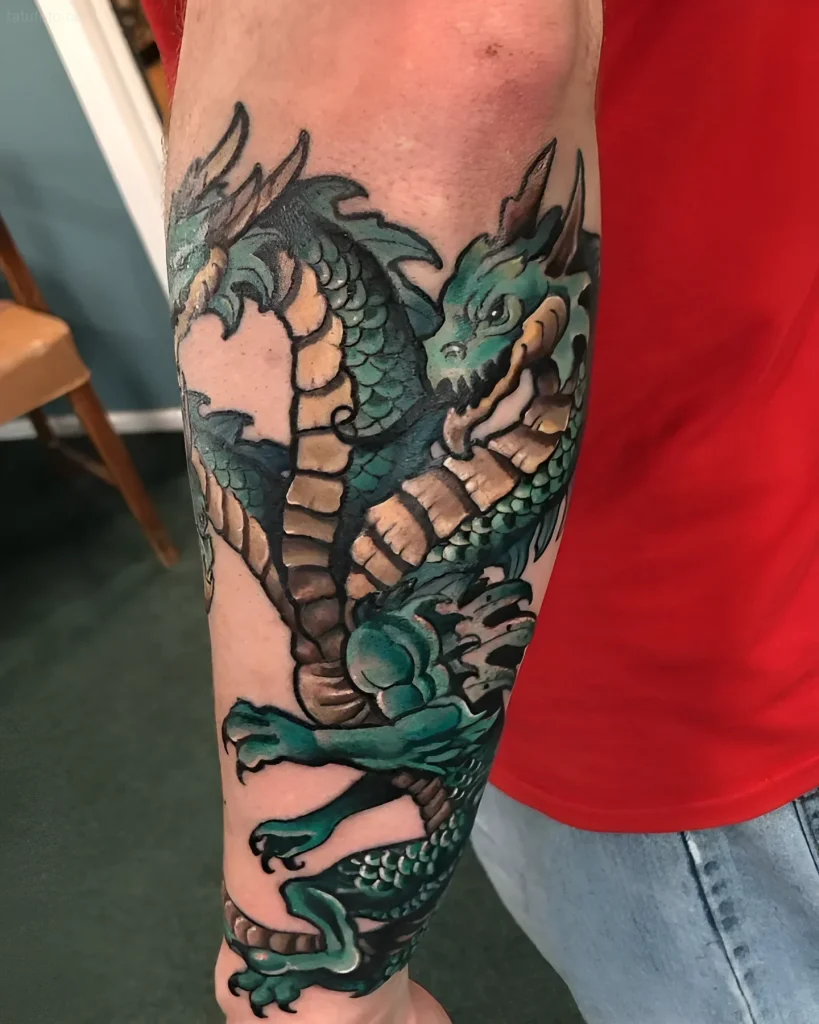
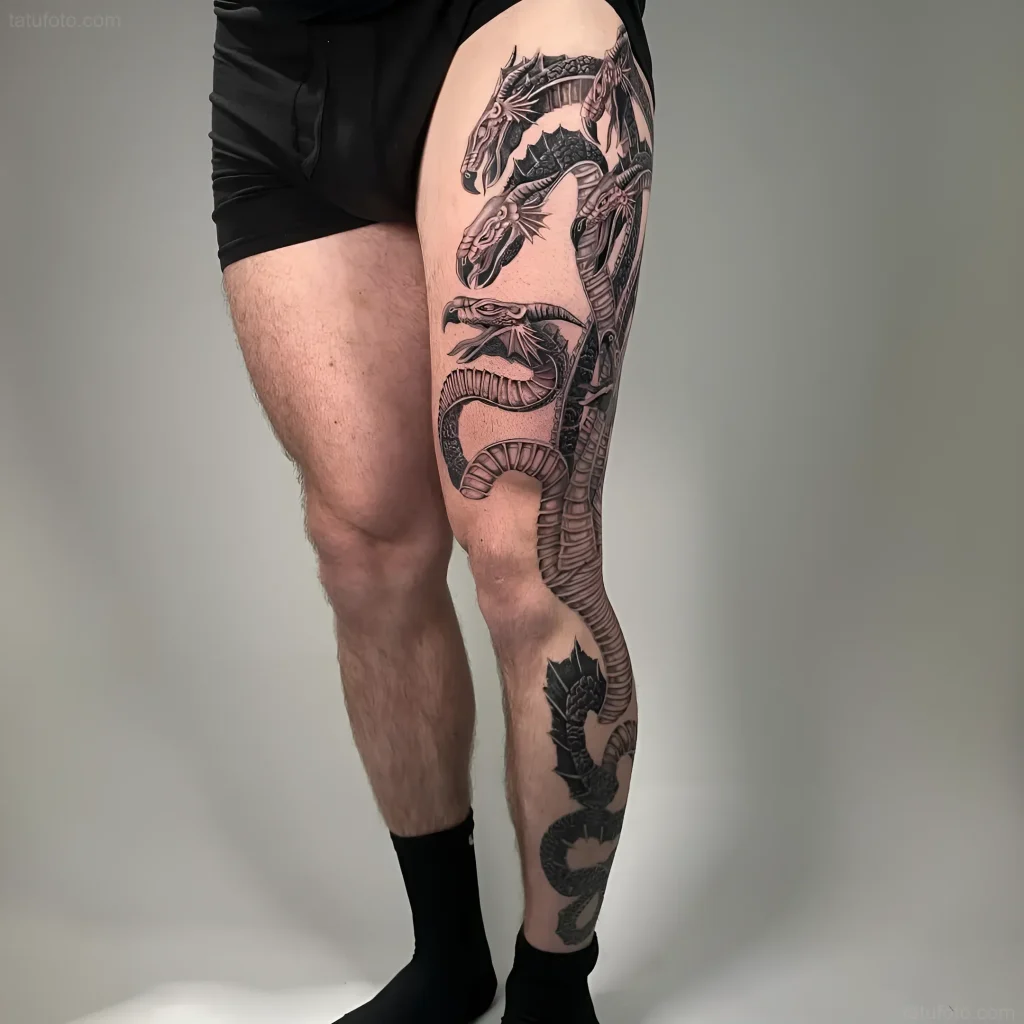
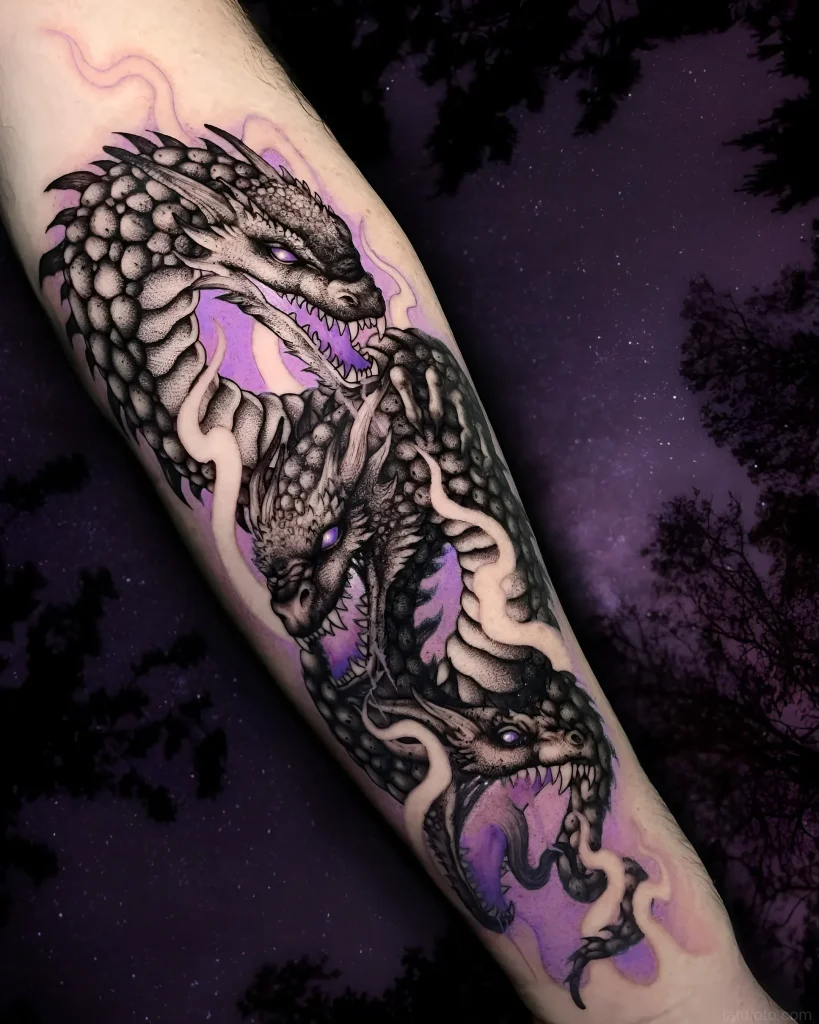
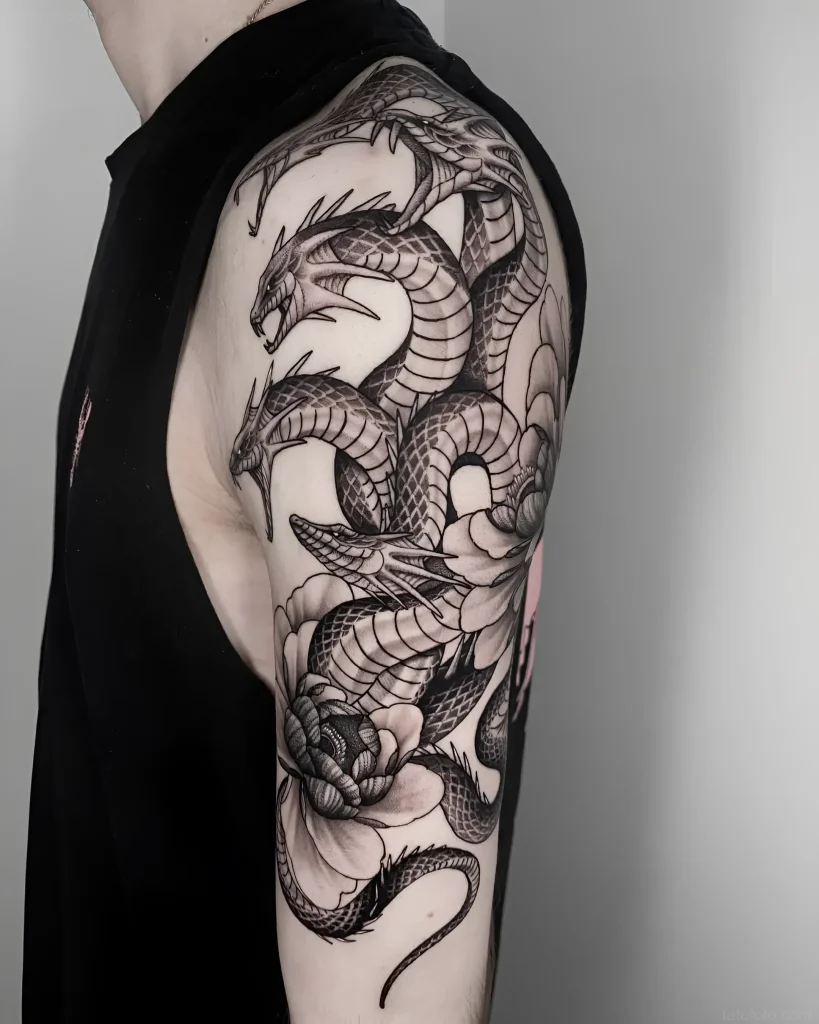
Hydra Tattoo Styles: From Realism to Traditional Approaches
The choice of execution style is critically important, as it enhances or shifts the emphasis in the meaning of the Hydra tattoo. The scale and detail of the Hydra require high skill, so the style should be chosen considering body anatomy and desired symbolism.
1. Realism and Chicano
Symbolic Emphasis: Tension, aggression, naturalism, horror.
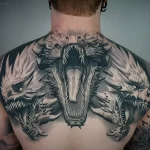
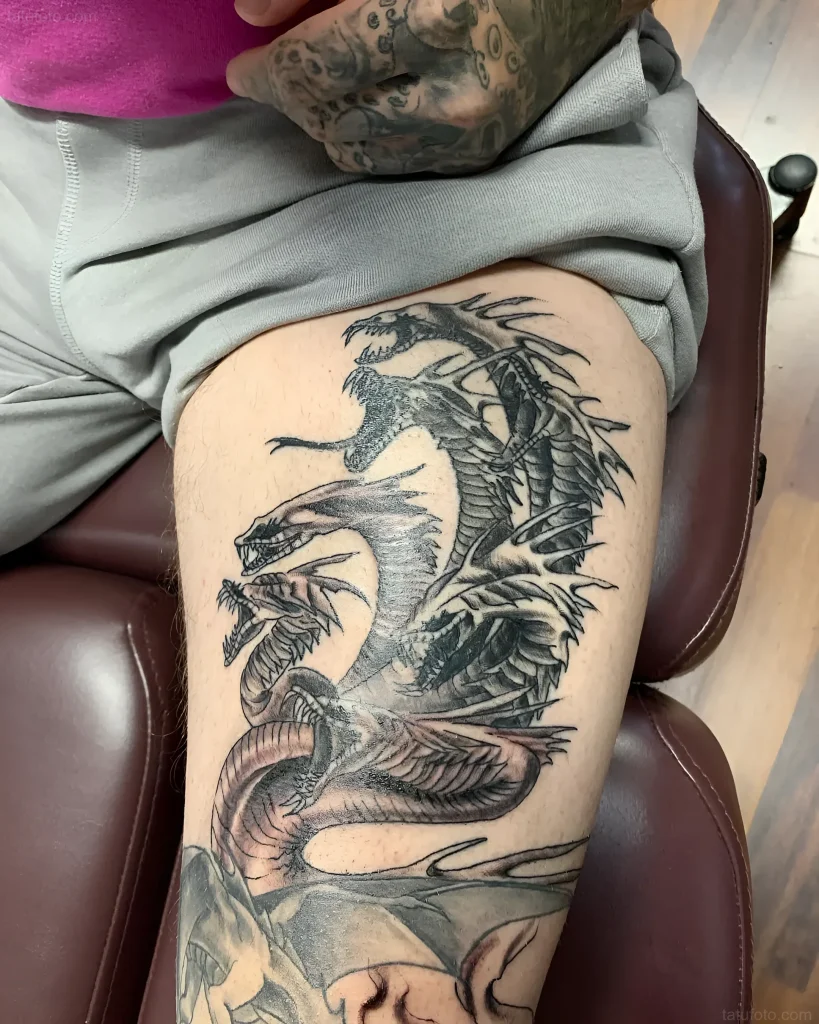
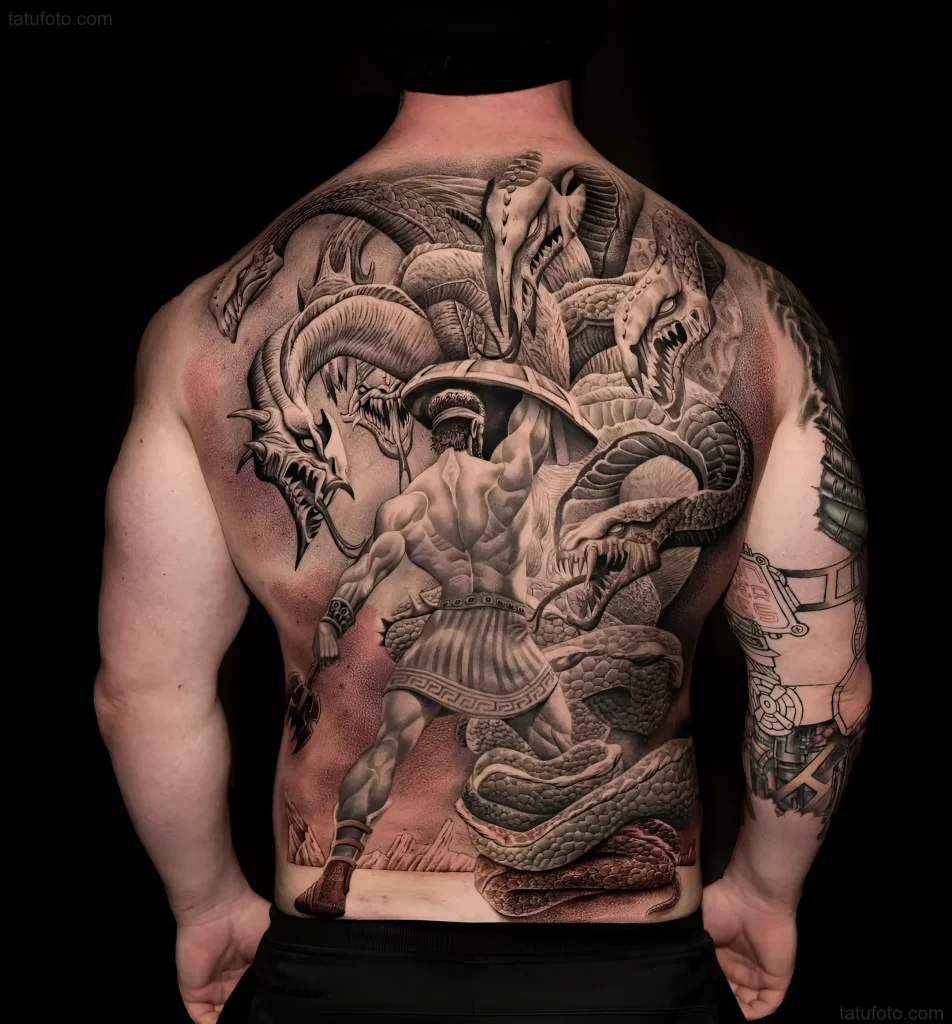
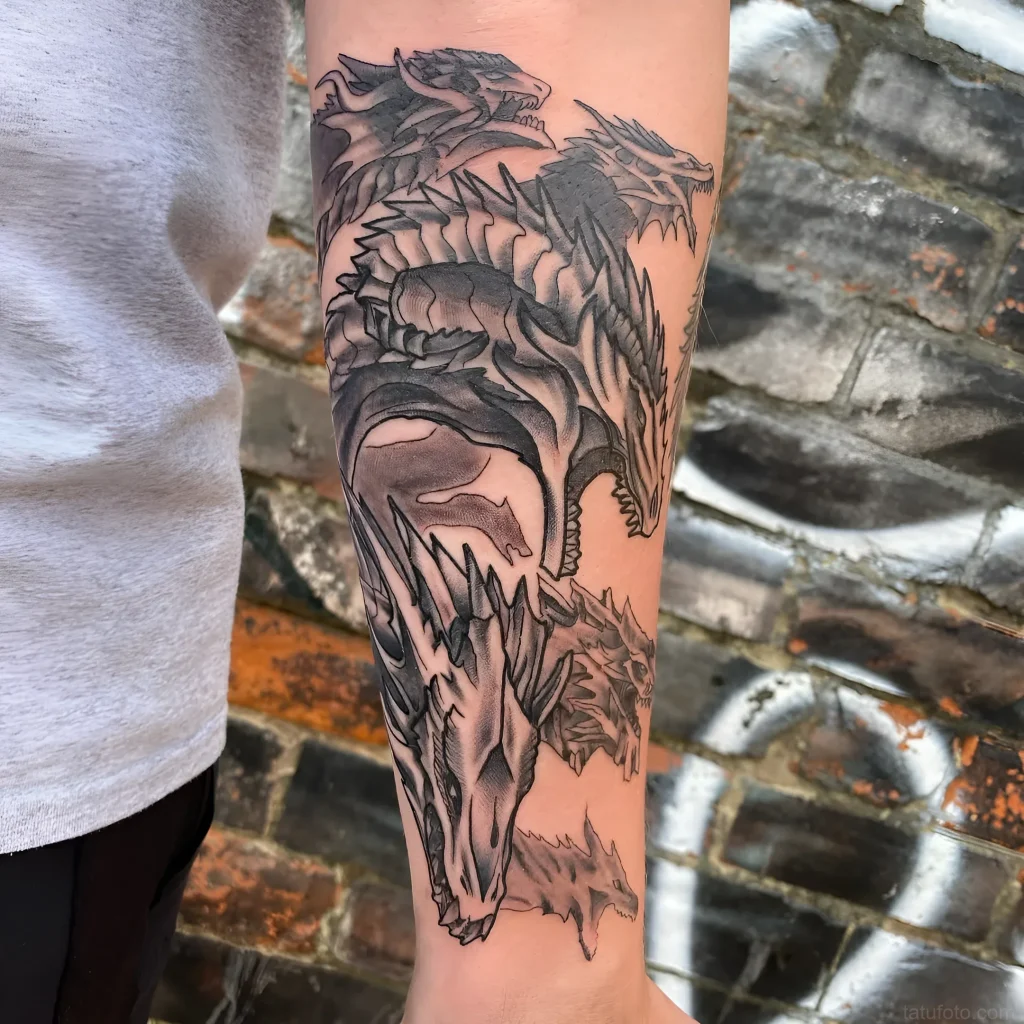
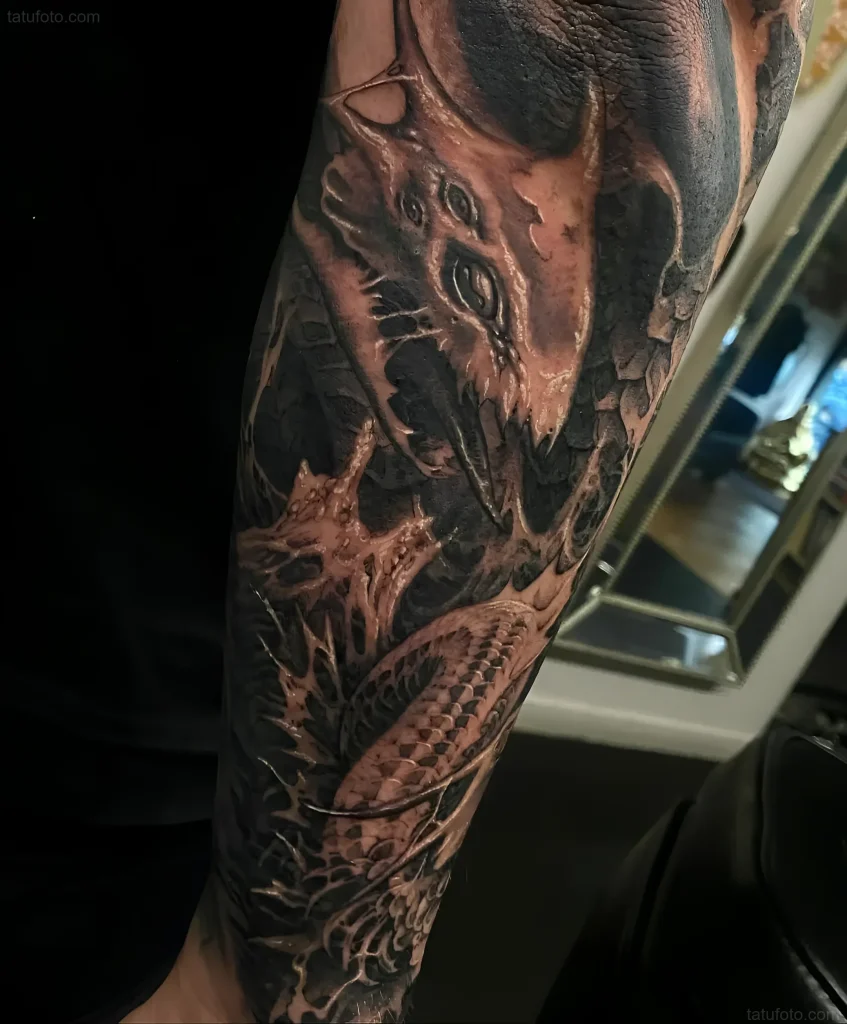
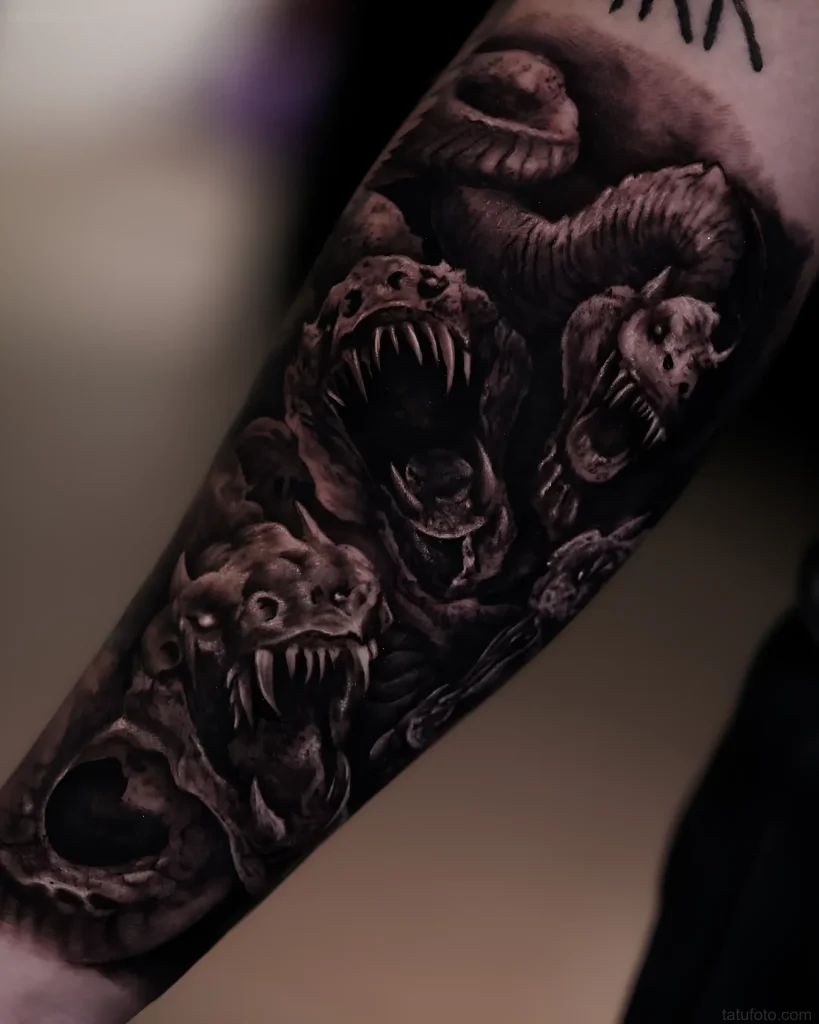
A realistic depiction of the Hydra allows for the maximum detail of scales, fierce gazes of the heads, and the dynamics of the battle with Hercules (if included in the composition). This style is ideal for those who want to emphasize the drama of struggle and physical power. Realism often requires large areas (back, thigh, chest) to accommodate all the heads and convey volume.
- Features: Use of black and gray gradients to create depth and a frightening appearance. If color is used, it is saturated and dark (poisonous green, blood red).
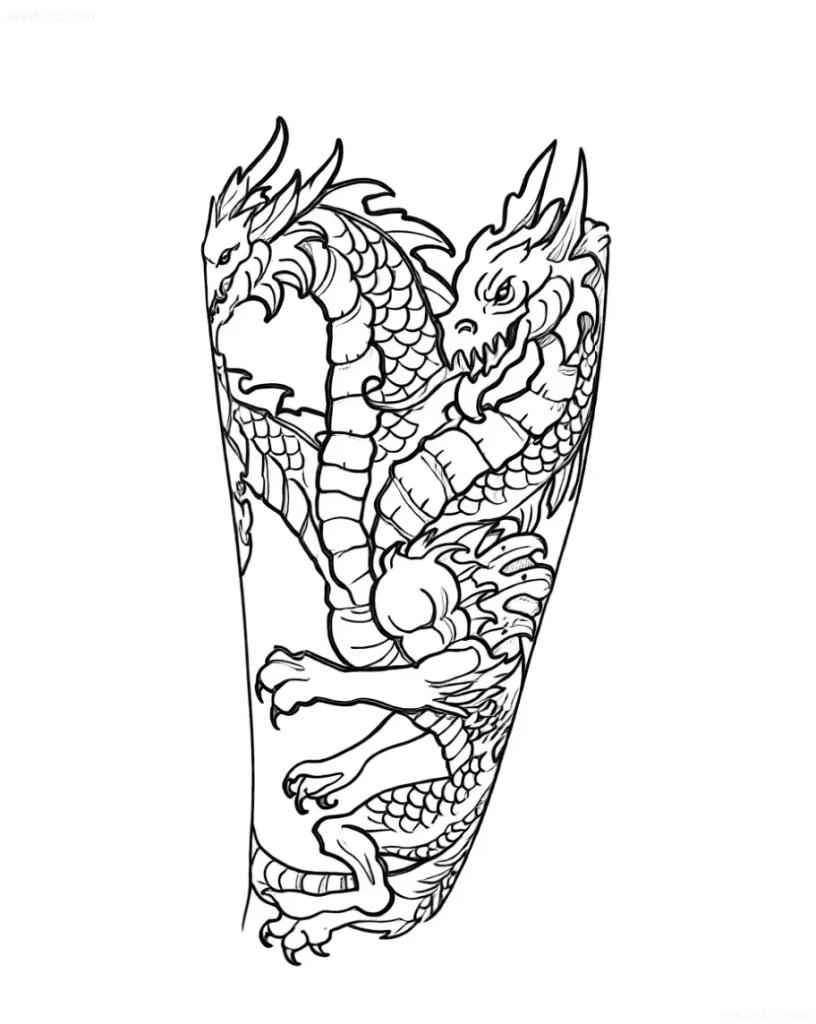
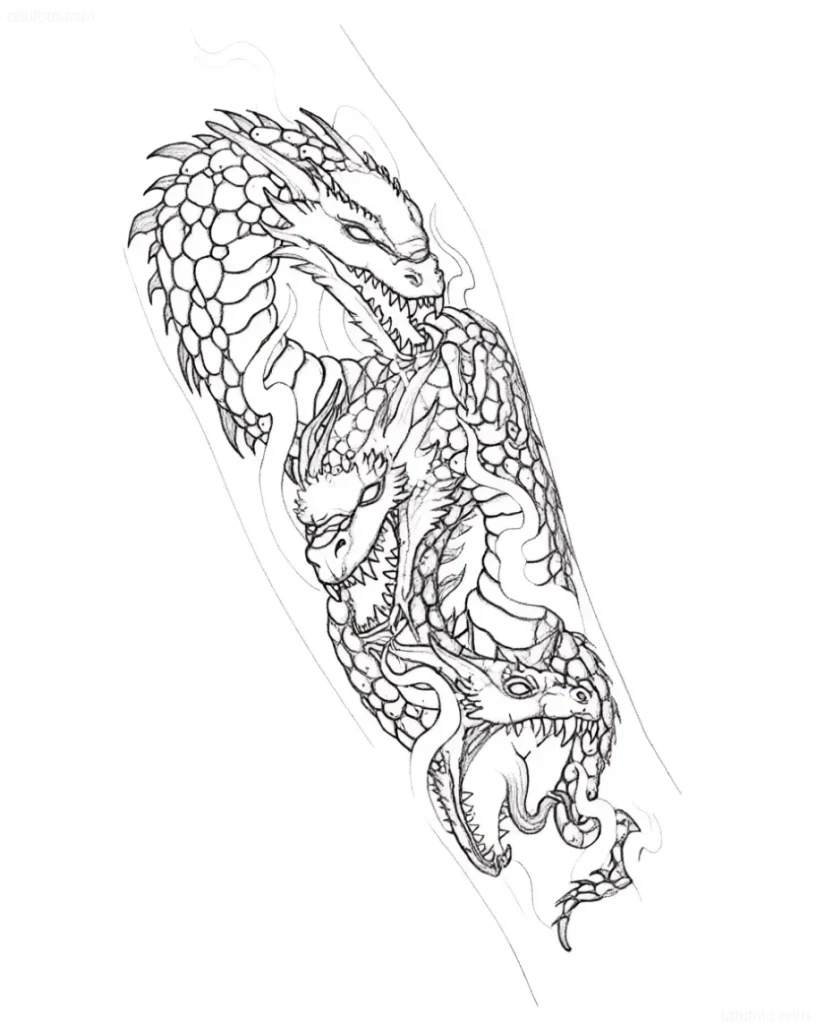
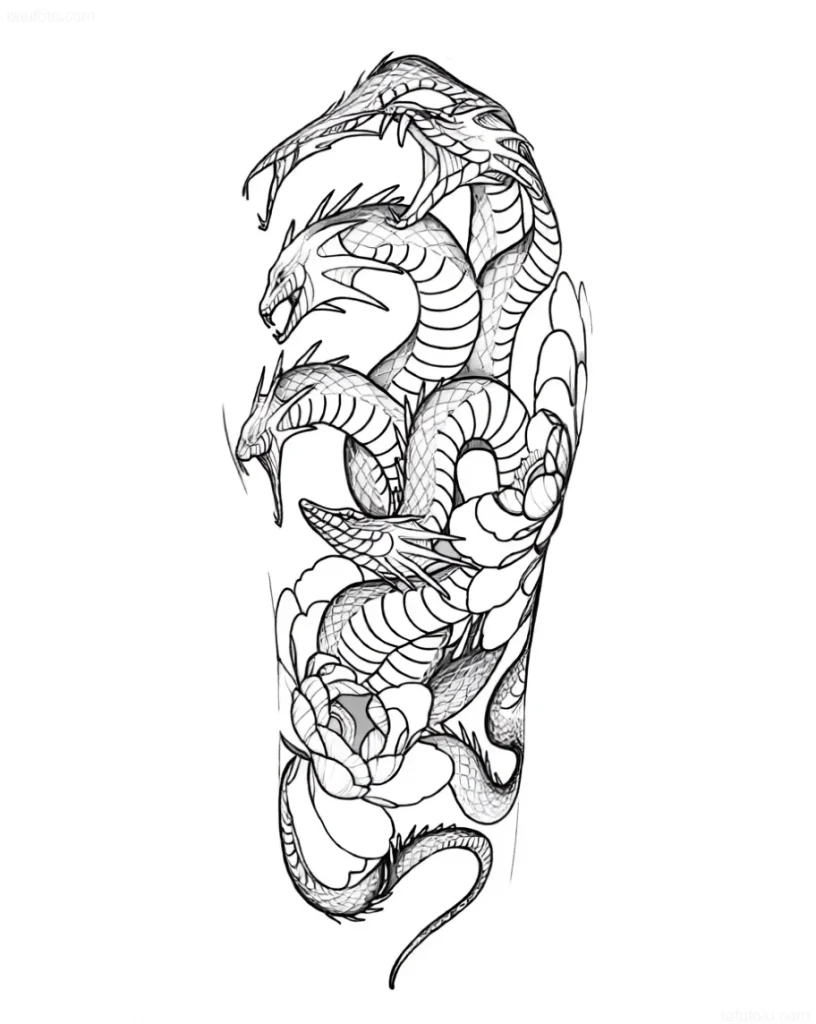
2. Blackwork and Dotwork
Symbolic Emphasis: Philosophy, depth, inner conflict, minimalism of chaos.
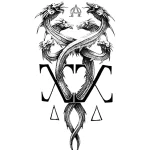
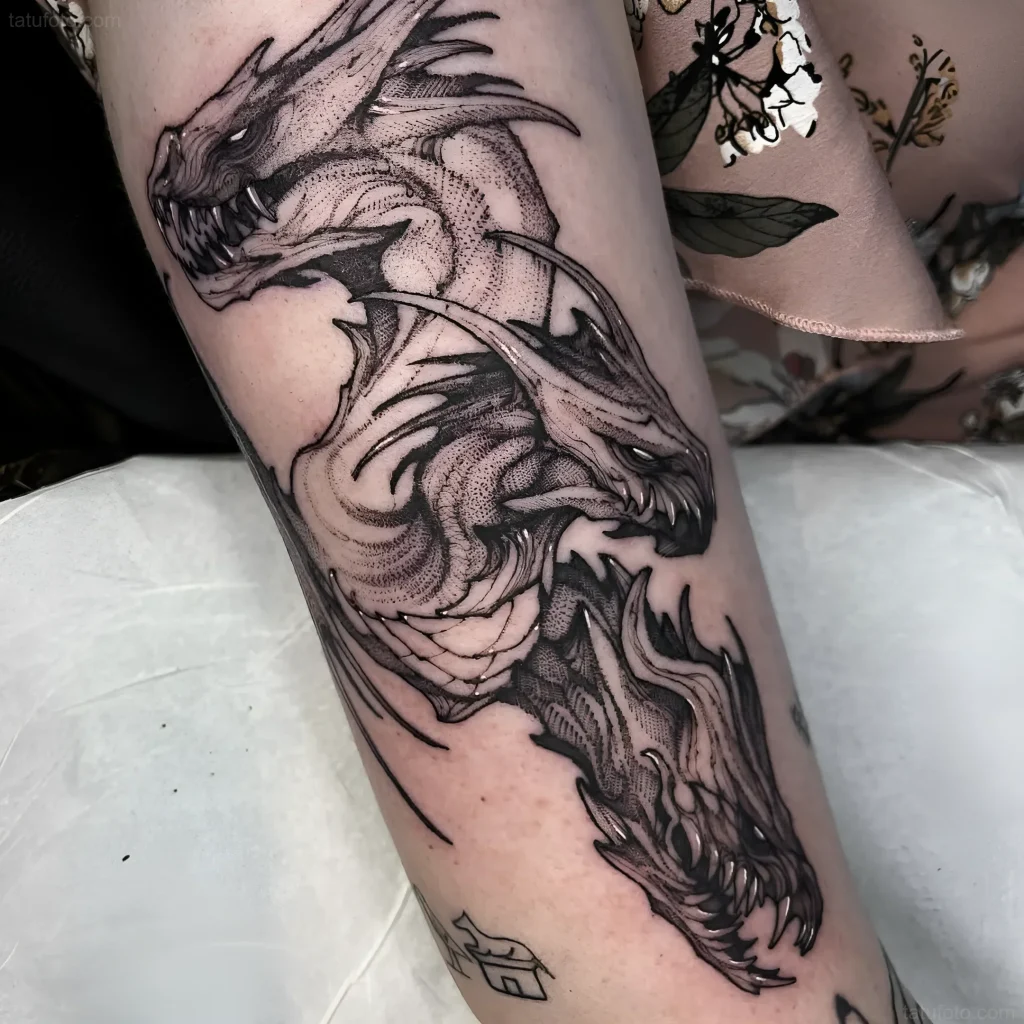
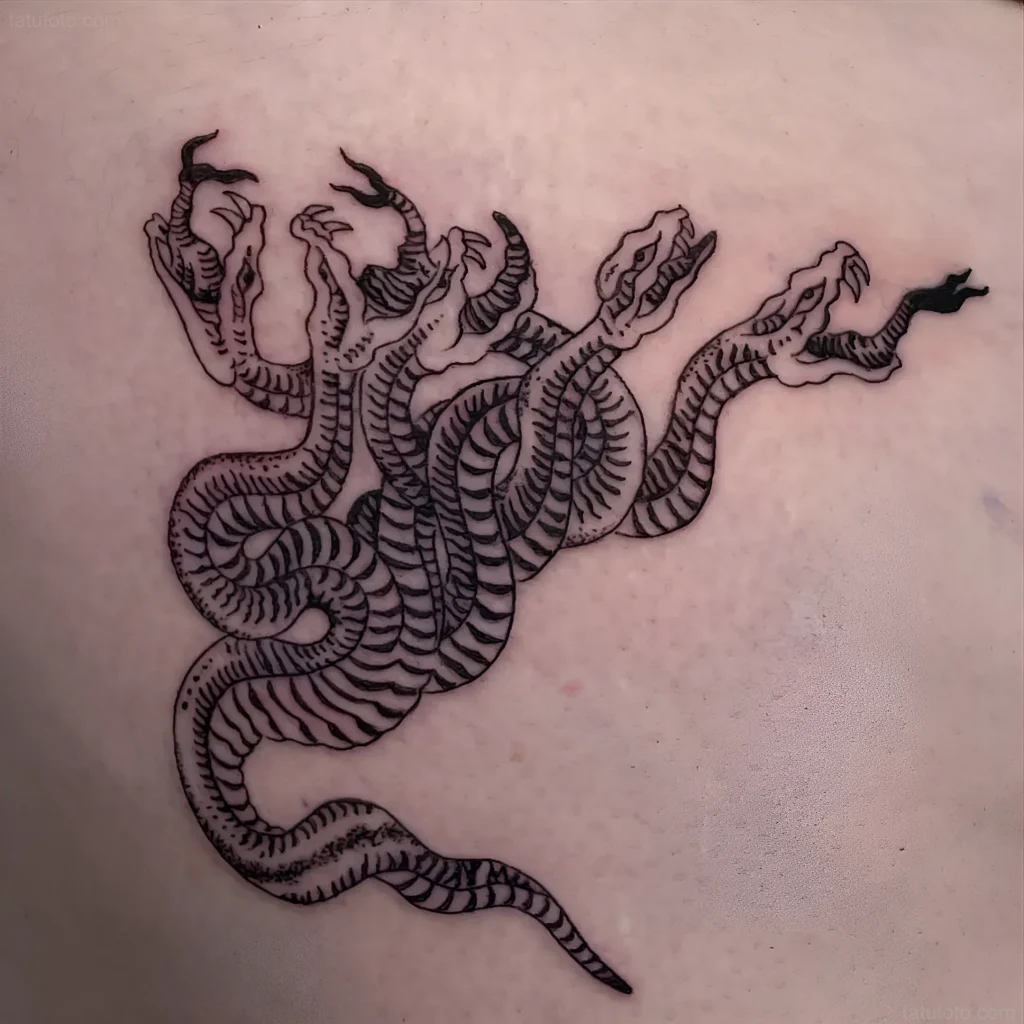
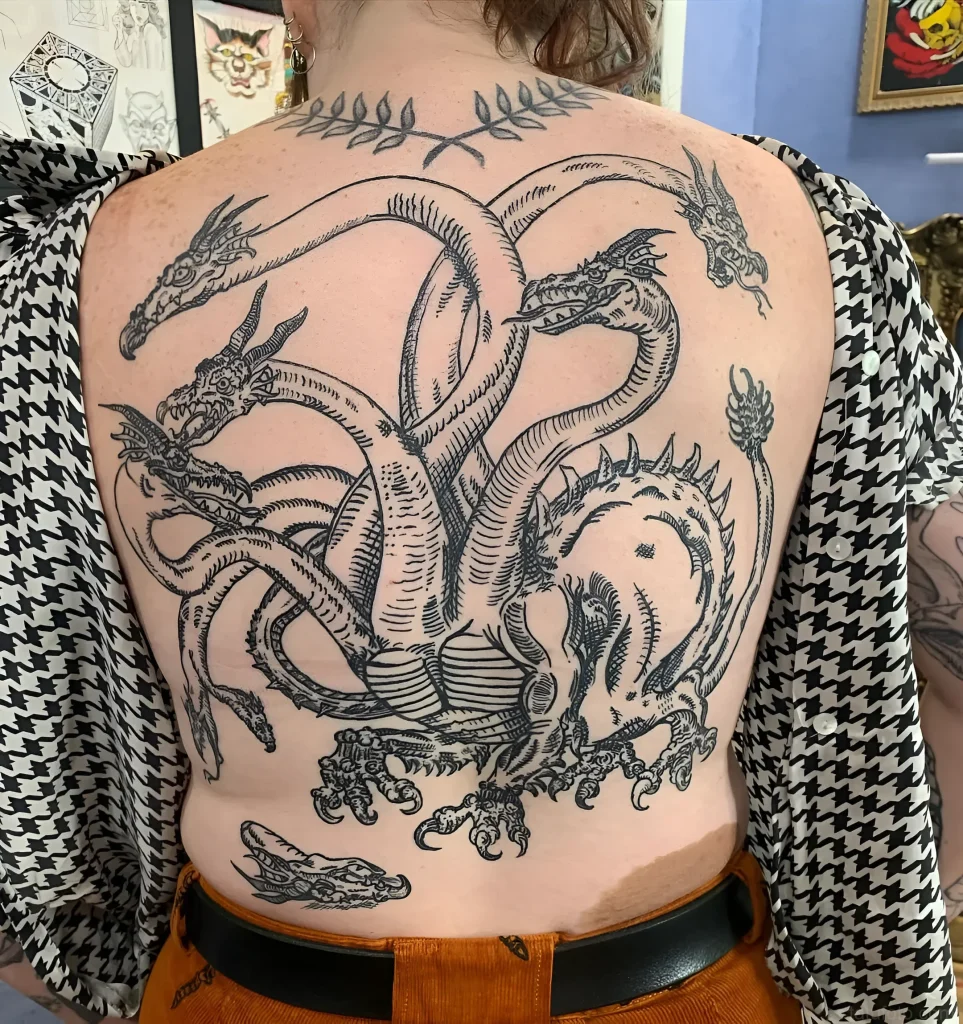
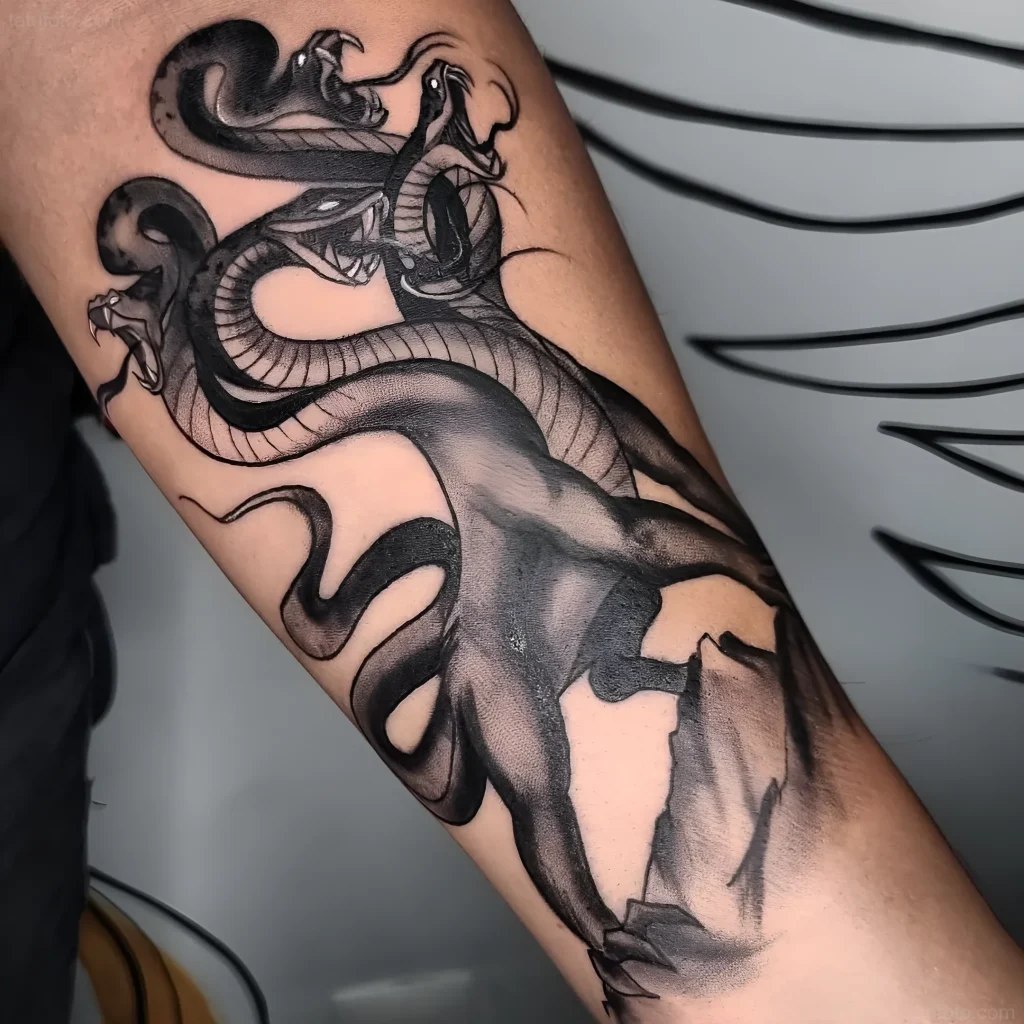
In the Blackwork style, the Hydra is often depicted using dense black fill and sharp lines. This gives the image a graphic and monumental quality. This style emphasizes not anatomical horror, but symbolic weight and the eternity of struggle. Dotwork can be used to create scale texture or to depict smoke/steam emanating from wounds cauterized by Hercules.
- Features: Ideal for abstract or geometric interpretations of the myth. Often, the Hydra is depicted as an endless knot or spiral.

3. Neo-Traditional
Symbolic Emphasis: Mythological beauty, richness of history, decorativeness.
Neo-Traditional is an excellent choice for those who appreciate both symbolism and aesthetics. This style uses thick outlines, saturated colors (often with gold or bronze accents to imitate ancient Greek pottery), and decorative elements (Greek ornaments, laurel wreaths). The Hydra in this style looks majestic and mythologically rich, emphasizing its cultural context and legendary status.
- Features: Clear readability of each head, even with many details.
4. Japanese Style (Irezumi)
Symbolic Emphasis: Power, wisdom, connection to the element of water.
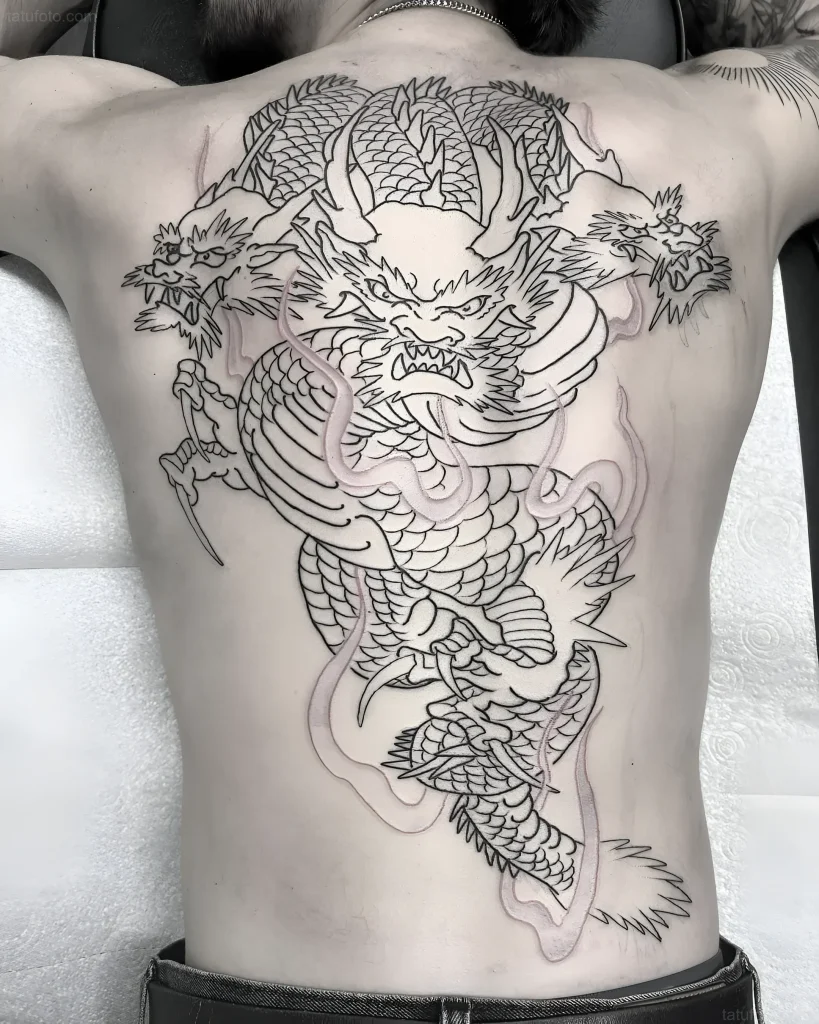
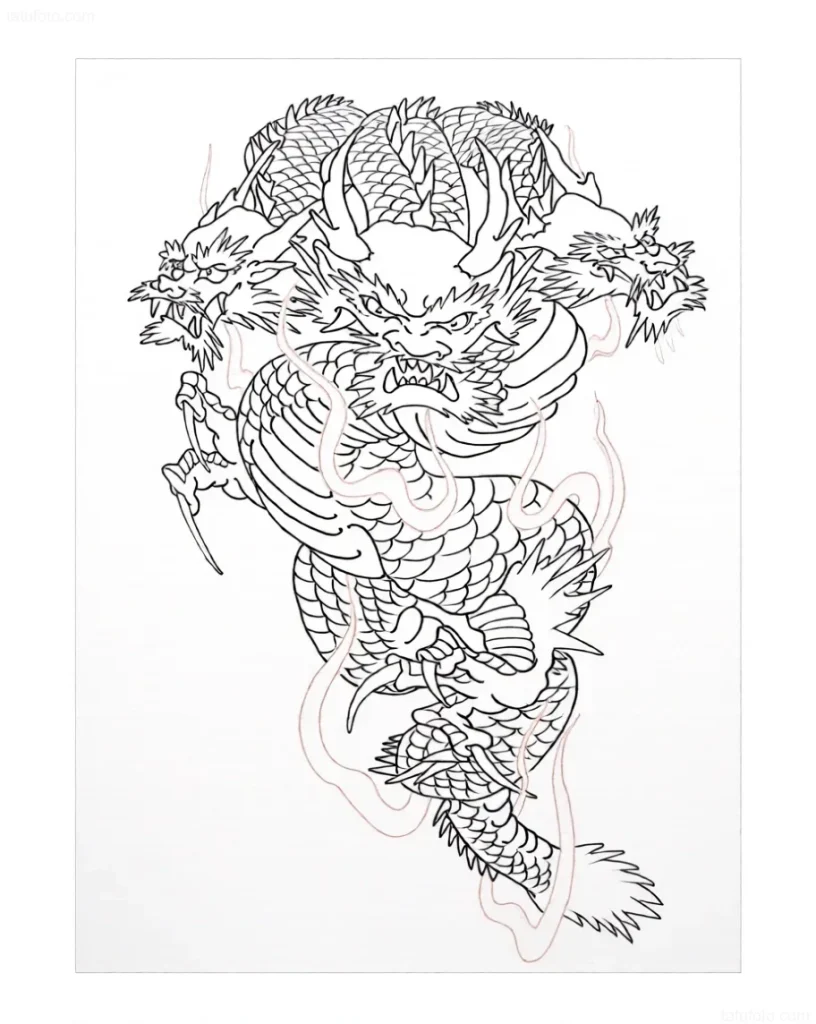
Although the Hydra is a Greek character, it is often depicted in the Irezumi style, especially in compositions where it resembles a multi-headed dragon (Ryu). In this case, it symbolizes wisdom, the power of the element of water, and transformation. The composition usually includes waves, clouds, and elements of fire (Hercules’ cauterization).
- Features: Large-scale works (full suits, sleeves), use of traditional Japanese colors (red, black, gray, green).
Ideal Locations for a Hydra Tattoo: How to Emphasize Scale and Symbolism
The Hydra is a tattoo that requires space. The more “canvas” the artist has, the better they can convey the dynamics, number of heads, and detail, which directly influence the symbolism of regeneration and struggle.
1. Back (Backpiece)
Symbolism: Maximum power, protection, fundamentality.
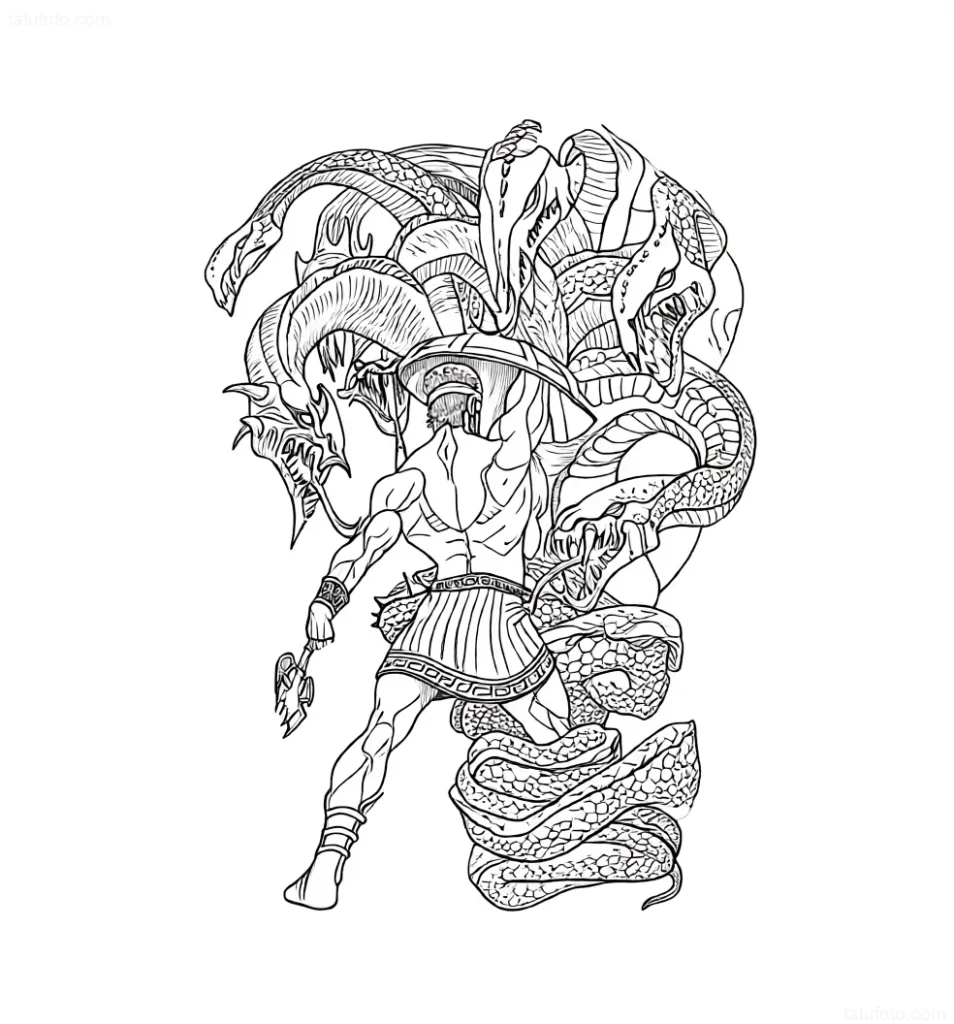
The back is the ideal location for a Hydra. Here, the monster can be depicted in full scale, often in the process of battling Hercules. Each of the nine heads can be individually detailed, symbolizing different aspects of life or personality. The central, immortal head is usually placed along the spine, emphasizing the core essence of the personality.
2. Sleeve and Half-Sleeve
Symbolism: Dynamics, constant activity, ongoing struggle.
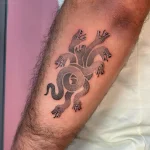
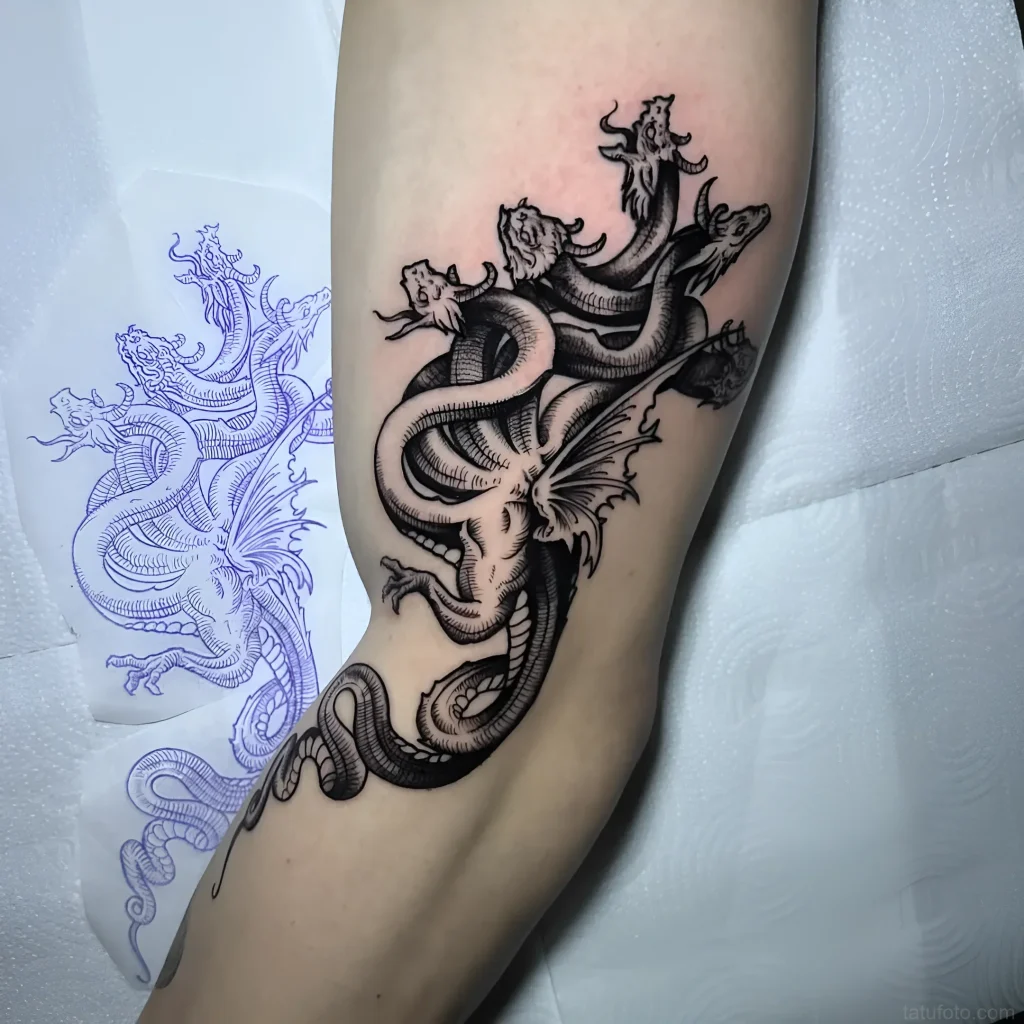
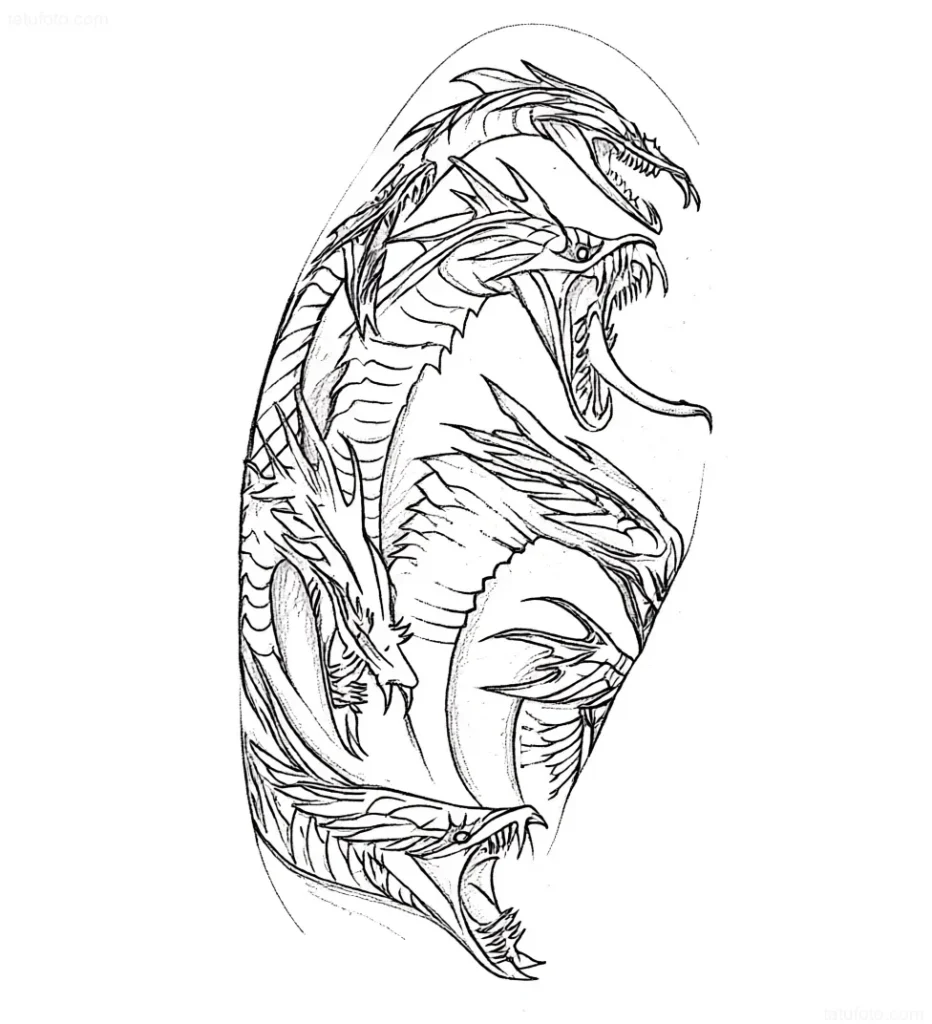
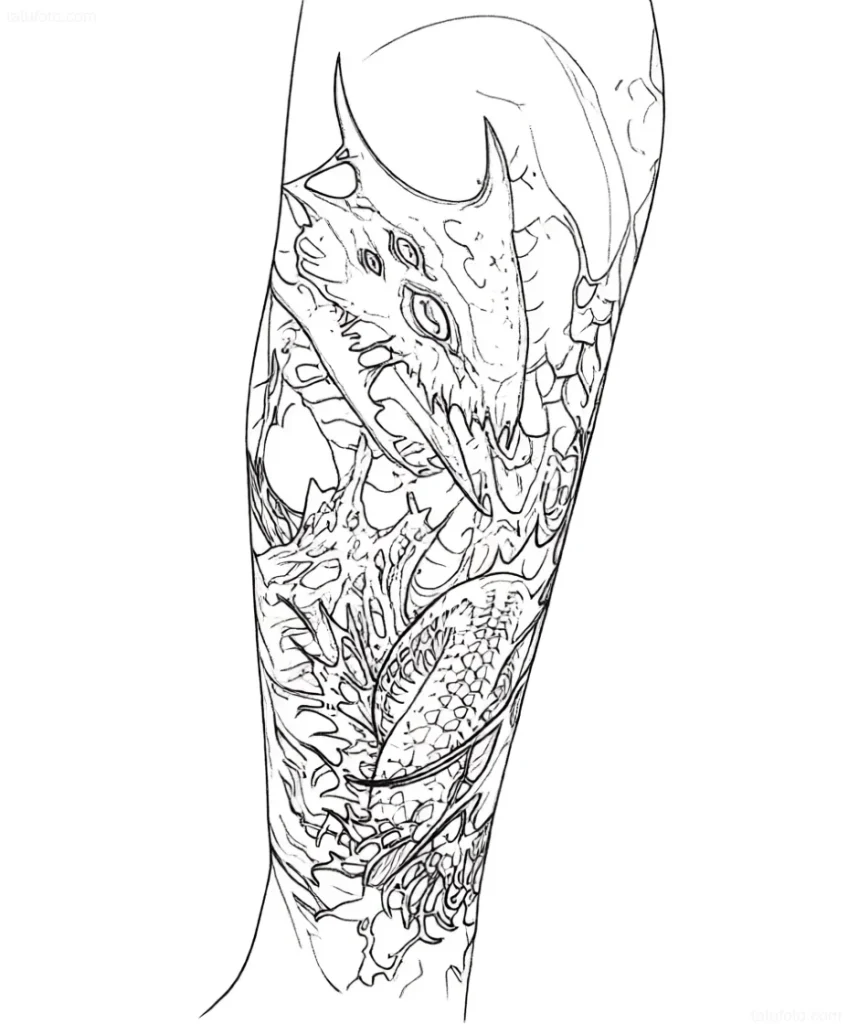
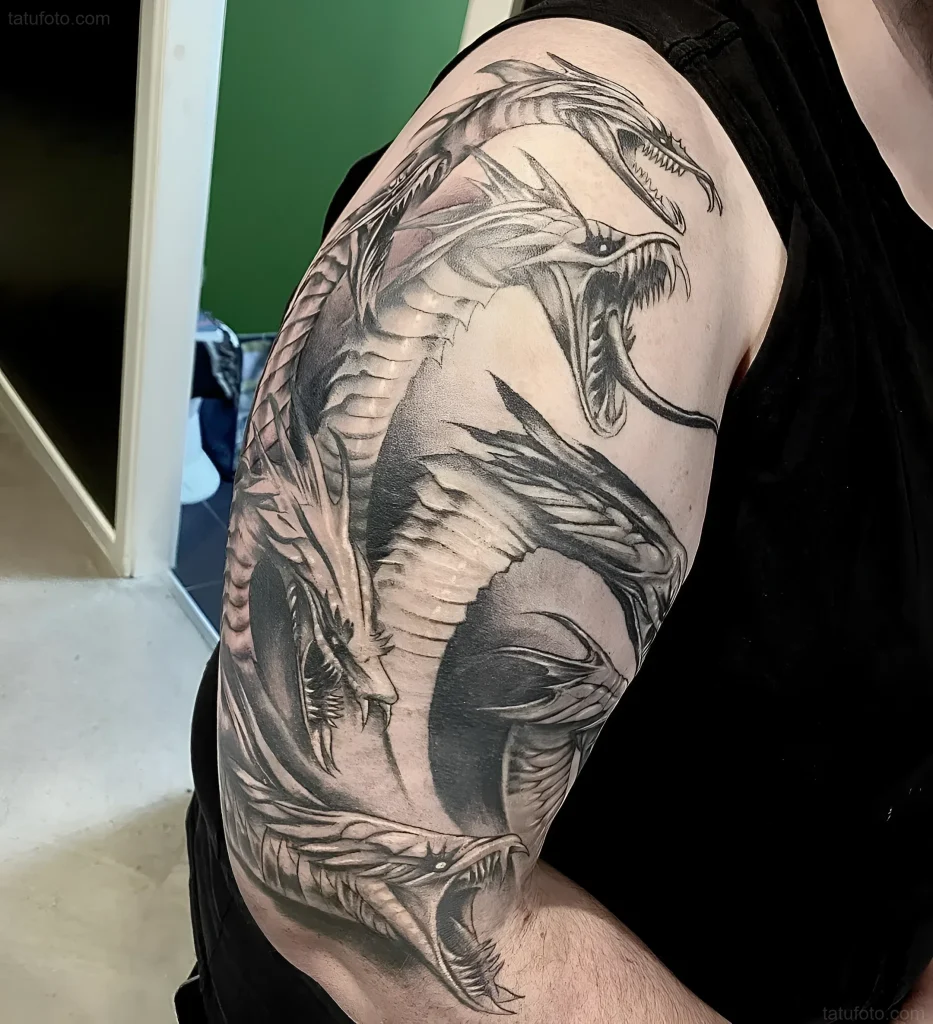
The Hydra fits perfectly into the anatomy of the arm. Its serpentine body can coil around the bicep and forearm, creating a sense of movement. If you choose a sleeve, the technique often used is to have the Hydra’s heads “peek out” from different parts of the composition (shoulder, elbow, wrist), symbolizing the sudden appearance of problems or constant readiness for battle.



3. Chest and Ribs
Symbolism: Personal, inner struggle, protection of the heart.
A tattoo on the chest or ribs is typically more personal and less demonstrative. On the chest, the Hydra can be depicted as a guardian protecting the heart and soul. On the ribs, its body can twist along the torso, emphasizing the struggle with inner demons that are close to vital organs.
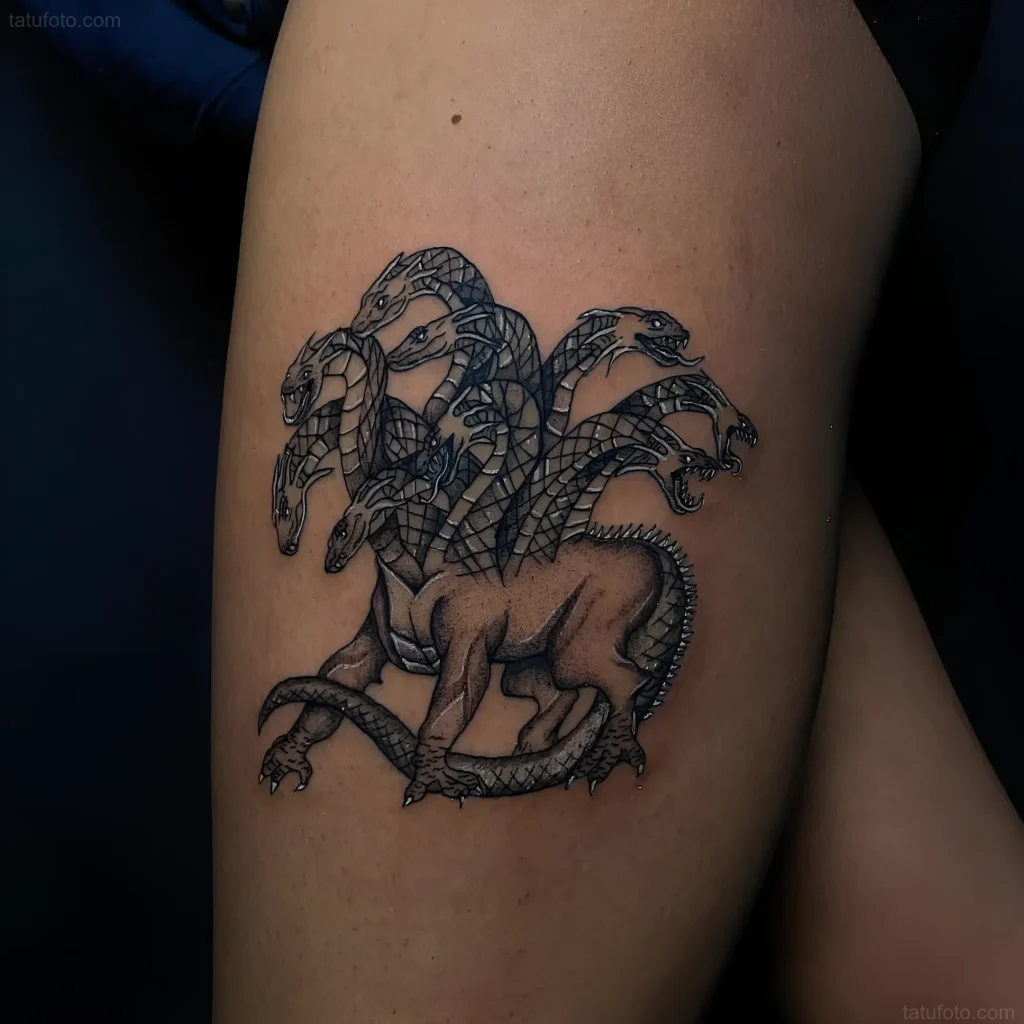
4. Thigh
Symbolism: Stability, foundation, hidden power.
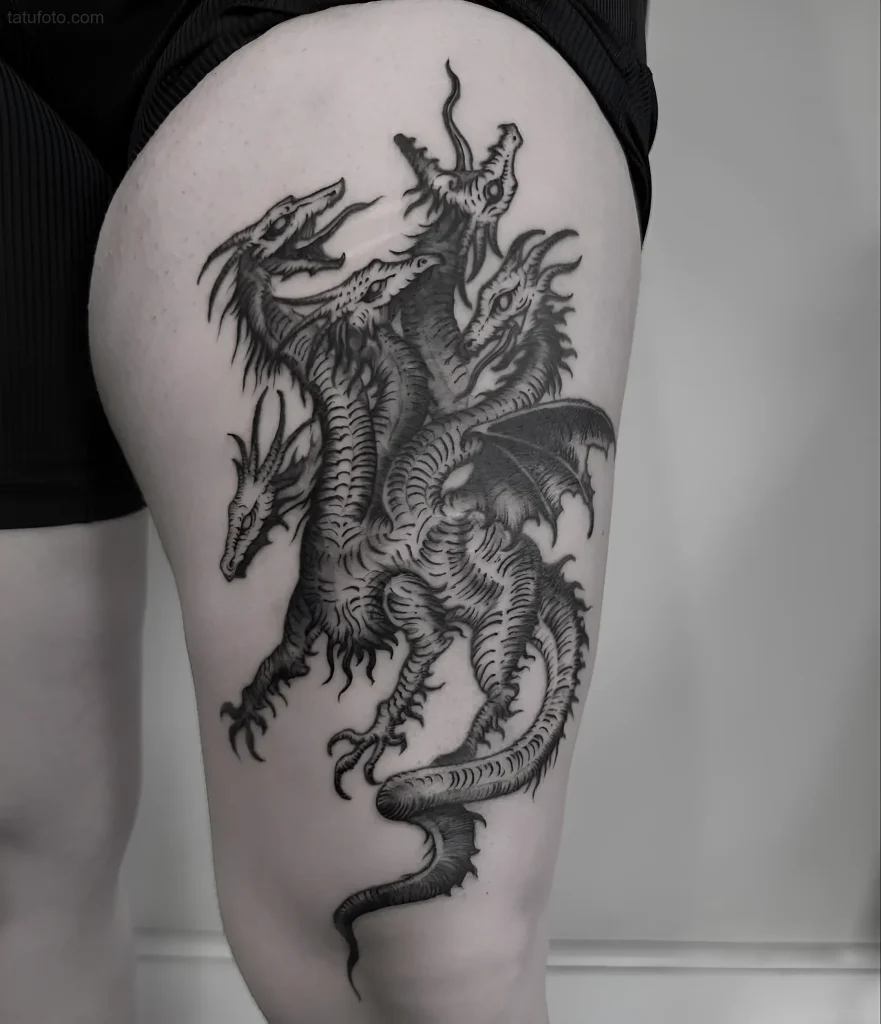
The thigh offers a large flat surface, ideal for detailed realistic or neo-traditional work. This location is well-suited if you want to create a powerful yet easily concealable symbol. A Hydra on the thigh often symbolizes a hidden potential for rebirth and strength that is used only when necessary.
Tips for Choosing an Artist and Caring for a Hydra Tattoo
Given the complexity, scale, and detail that a Hydra tattoo requires, choosing an artist and subsequent care are crucial.
Choosing an Artist: Look for a Specialist in Complexity
A Hydra tattoo is not a design that can be entrusted to a beginner. You should look for an artist with a proven portfolio demonstrating the following skills:
- Large-Scale Compositions: Ensure the artist has experience with backpieces or full sleeves. Depicting a Hydra requires the ability to work with anatomy so that the monster looks naturally coiling.
- Detailing of Scales and Heads: Each head should have a unique expression and clear scale rendering. If you choose realism, look for a specialist in detailed textures.
- Dynamics and Movement: The Hydra is always about movement and struggle. The artist must be able to convey a sense of aggression, venom, and tension.
Tip: When discussing the sketch, be sure to explain to the artist which specific meaning of the Hydra is key for you (regeneration, fighting addiction, or simply mythological power). This will help them correctly emphasize certain aspects in the design (e.g., adding fire if the aspect of victory is important, or more poisonous color if danger is important).


Recommendations for Caring for a Large-Scale Tattoo
Hydra tattoos, especially those done in realism or Japanese style, can take many sessions and require prolonged healing.
- Prolonged Healing: Large-scale works have a significant impact on the skin. Strictly follow the artist’s instructions for using healing films (e.g., Suprasorb F) or traditional care methods.
- Sun Protection: UV rays are the main enemy of detailed tattoos. Use SPF 50+ creams constantly, as fading can “erase” the fine lines and shadows that are critical for a realistic Hydra.
- Touch-ups: Due to the complexity and large amount of black pigment or color, an additional touch-up session may be required after a few months to ensure evenness and saturation of the fill. This is normal practice for blackwork and realism.
Frequently Asked Questions about Hydra Tattoo Meaning (FAQ)
For those who are just planning to get a Hydra image, we have compiled answers to the most popular questions about its symbolism.
Q: Does the Hydra have to be depicted with nine heads?
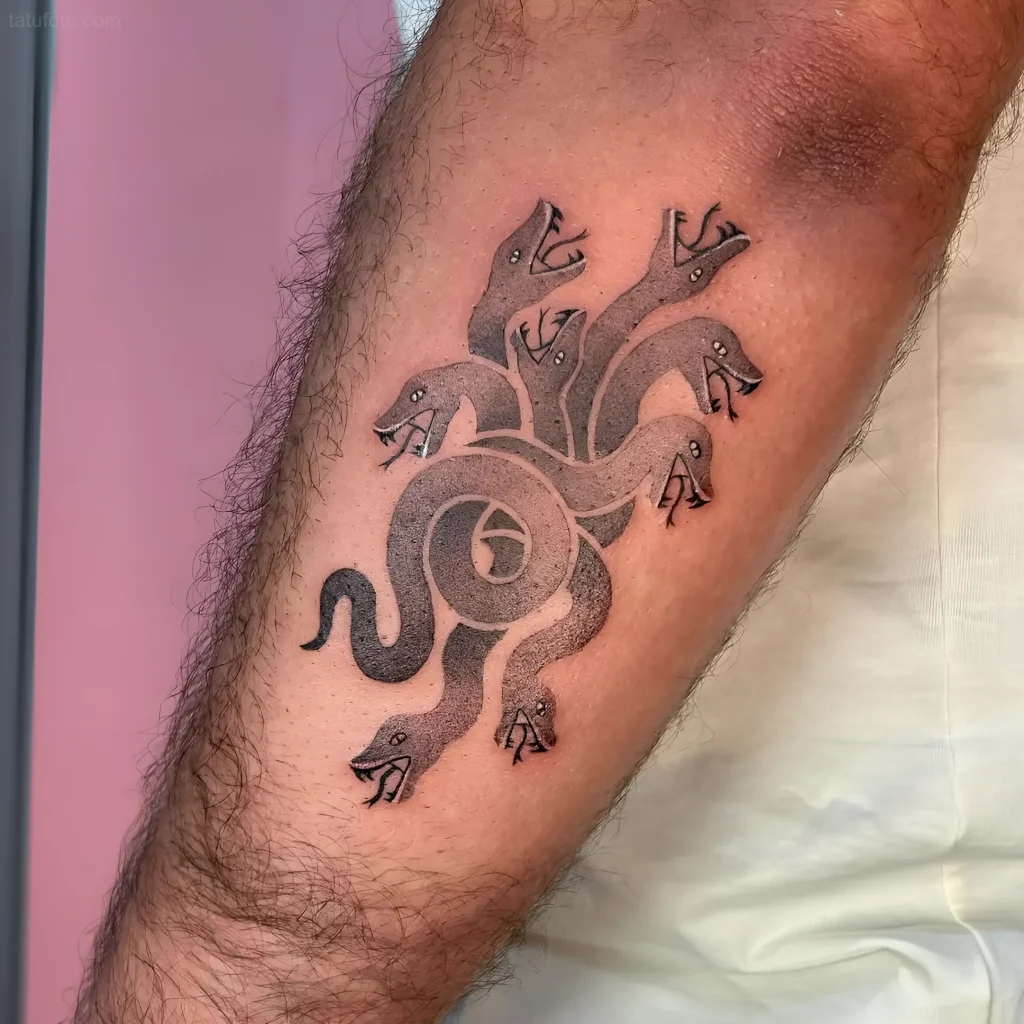
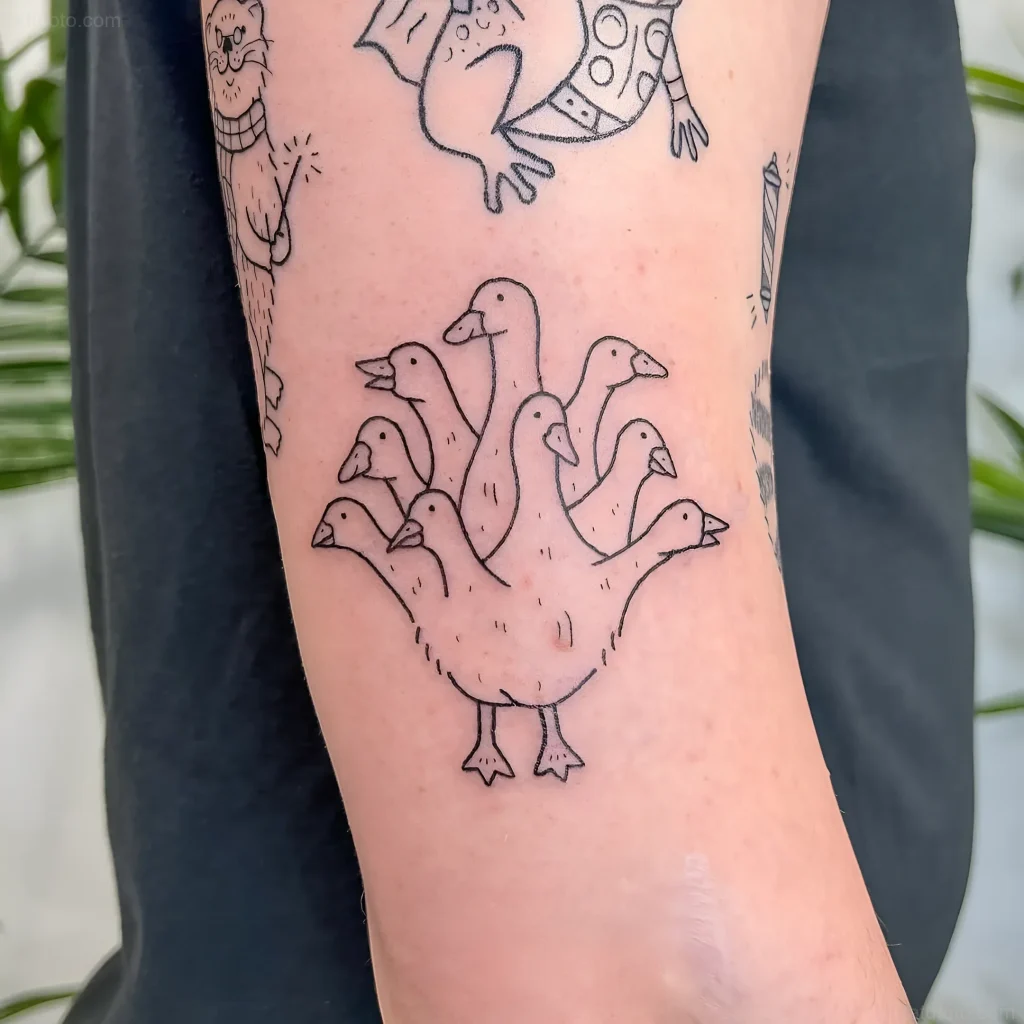
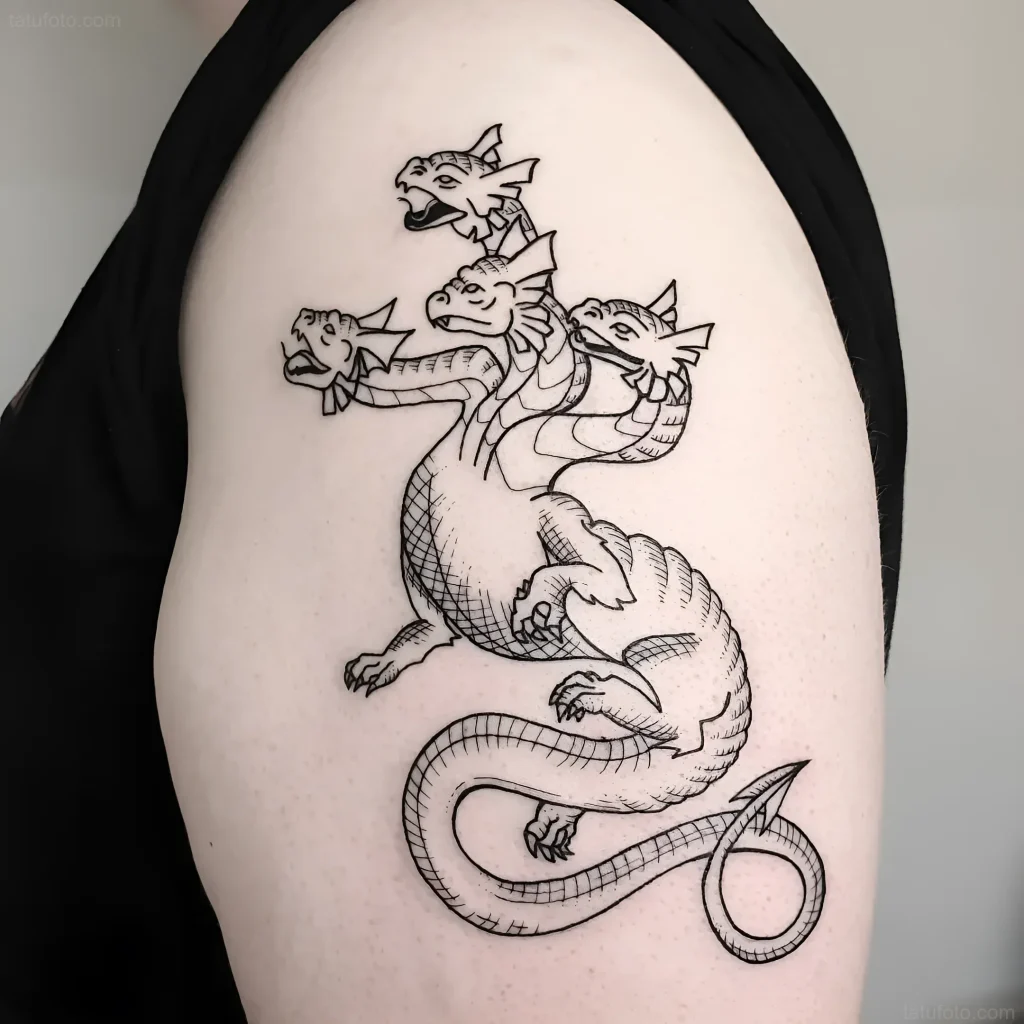
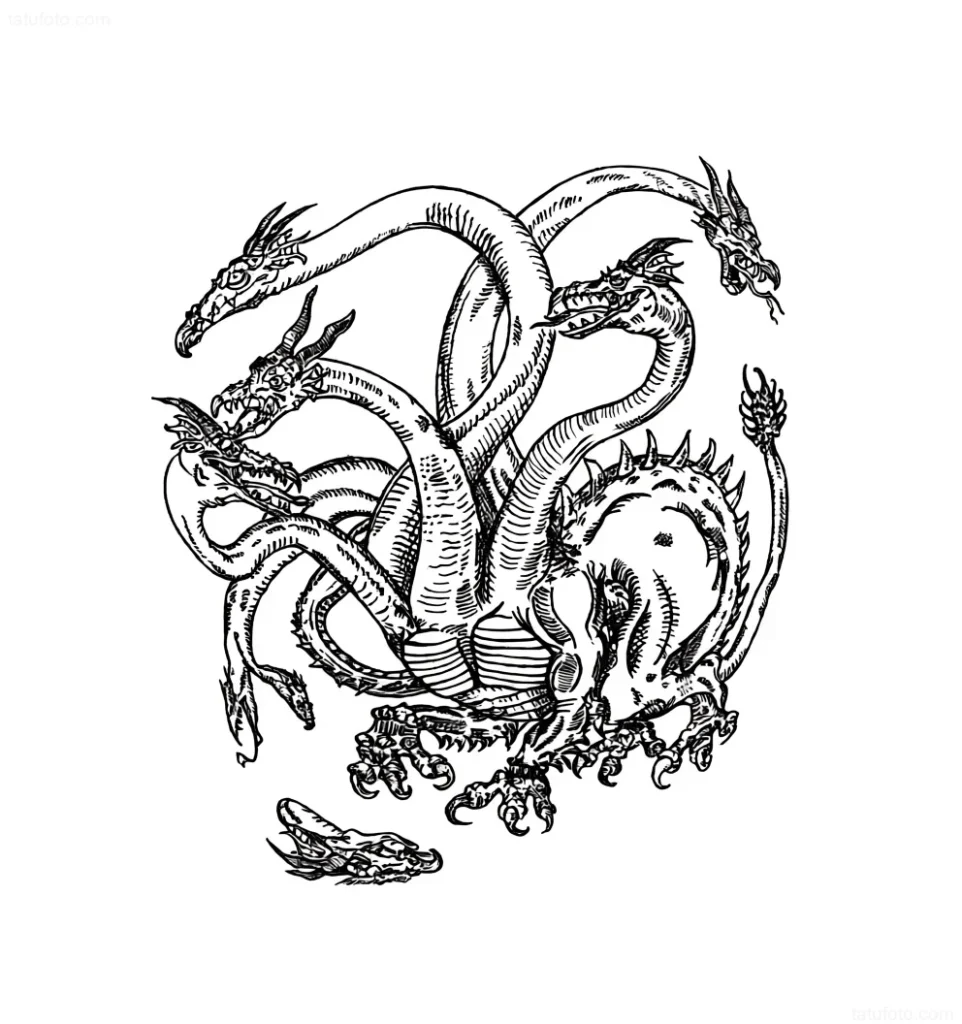
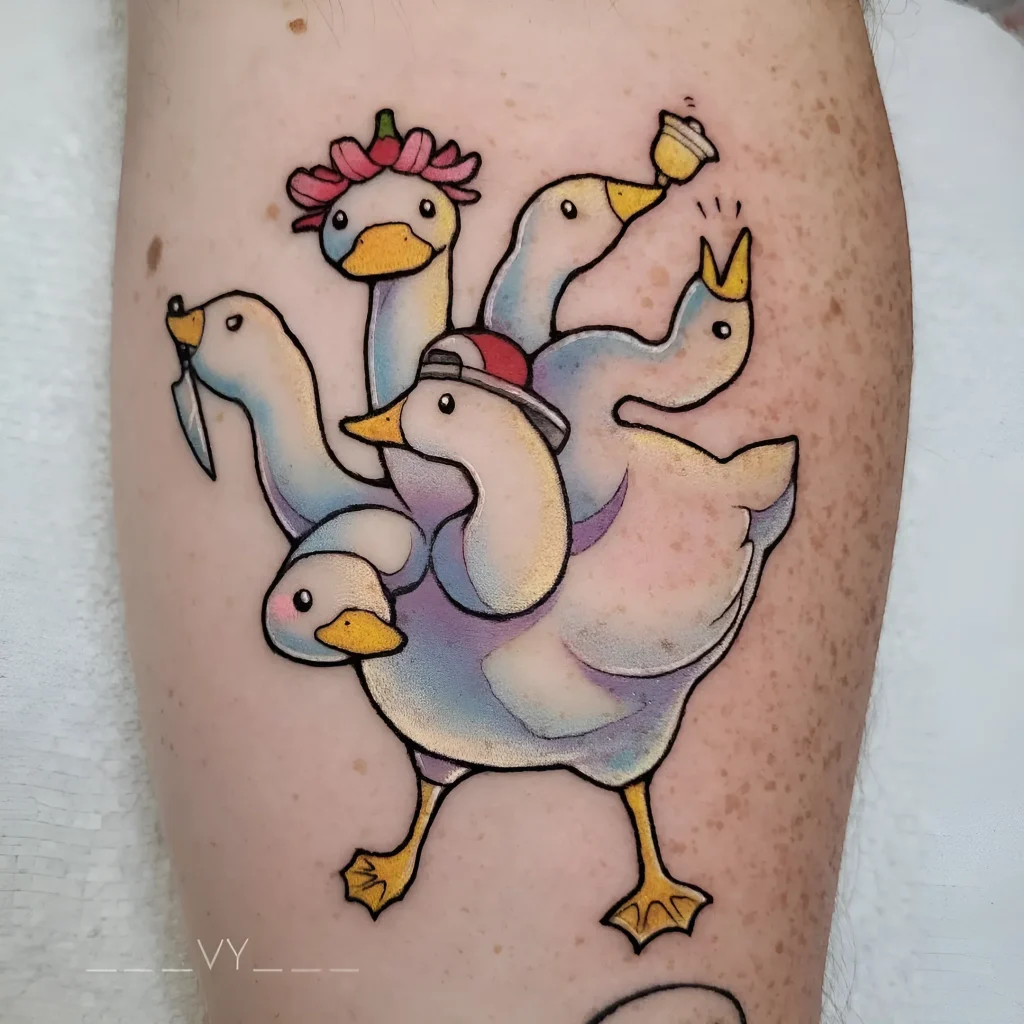
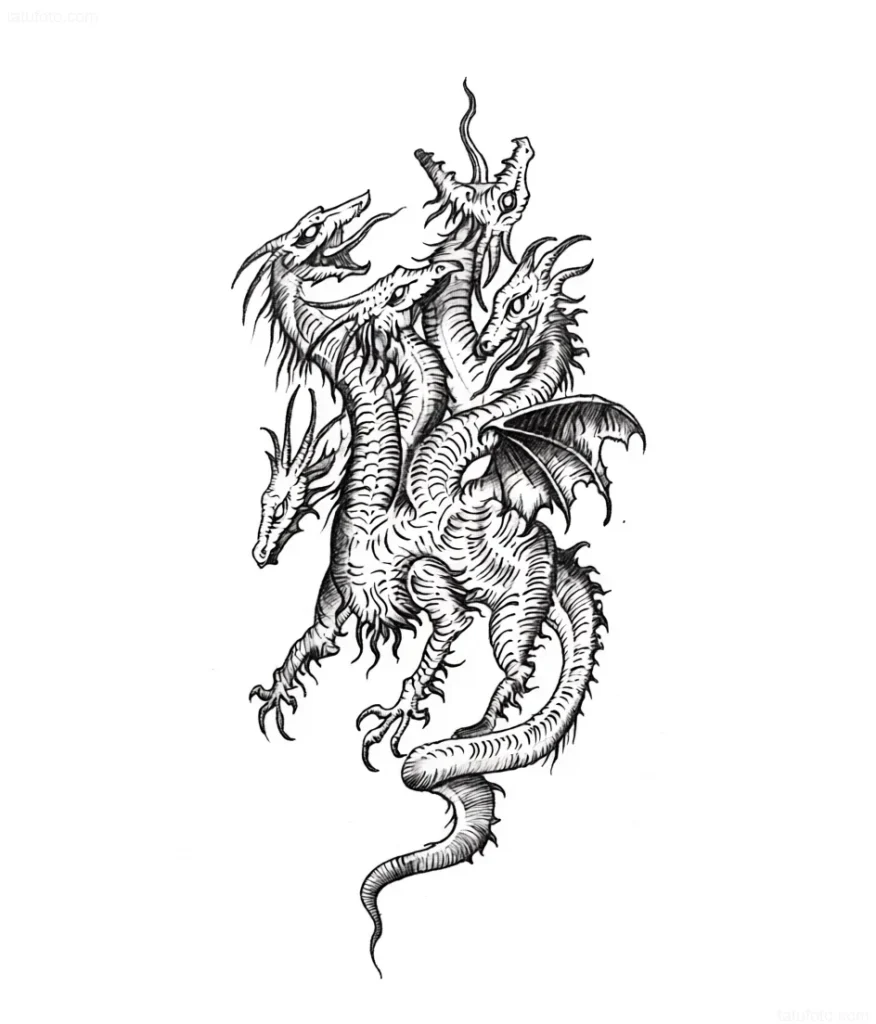
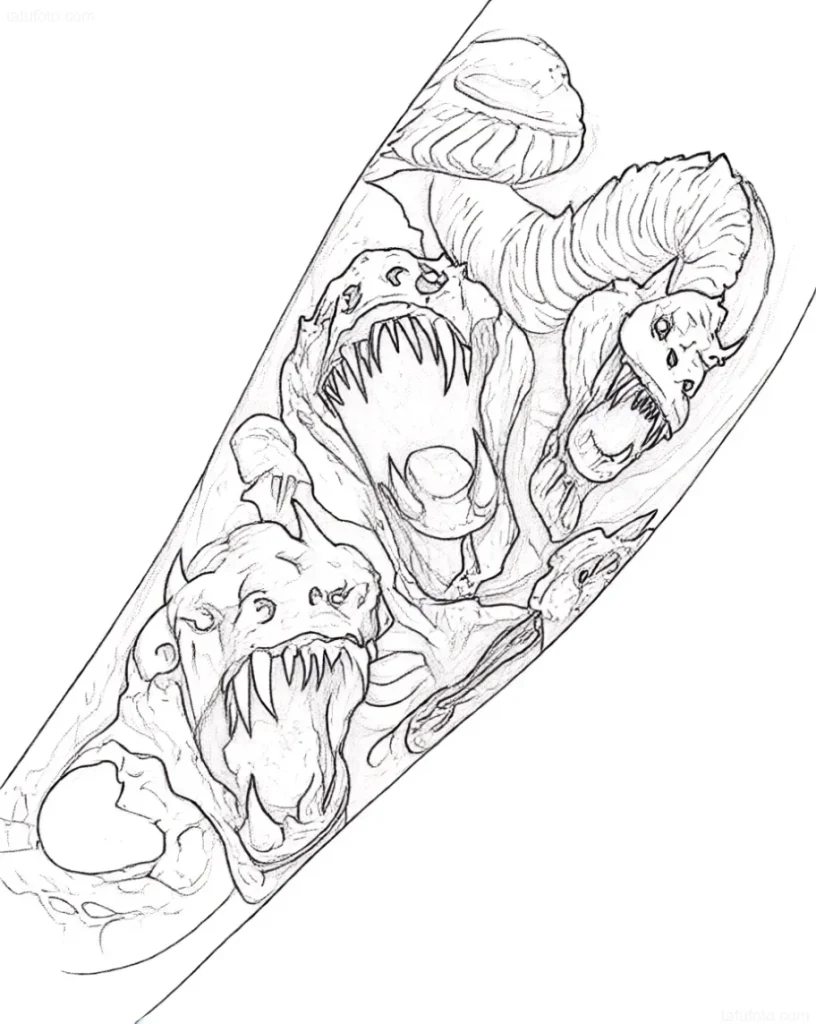
A: No, it’s not mandatory. In the myth, the Hydra is often mentioned as having nine heads, with one being immortal. However, in tattoos, the number of heads can be reduced to three, four, or five. A smaller number of heads (e.g., three) is often chosen to symbolize “past, present, future” or “body, mind, spirit.” The main thing is to preserve the element of regeneration (e.g., by depicting a severed but smoking neck).
Q: Can the Hydra be combined with other mythological symbols?
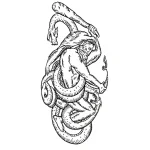
A: Yes, it is very common to depict the Hydra in the context of its battle with Hercules. This reinforces the meaning of triumph over apparent impossibility. It can also be combined with elements of fire (a symbol of ultimate victory) or water motifs (its natural habitat, symbolizing emotions and the subconscious).


Q: Is the Hydra a symbol of evil or good?
A: The Hydra was originally a force of chaos and evil. However, in modern tattoo art, it is more of a neutral symbol of indomitable life force. Its meaning is determined by context: if it is depicted aggressively and without signs of struggle, it can symbolize danger. If it is shown in the process of confrontation or with elements of healing/fire, it symbolizes overcoming and rebirth.
Q: Does it matter which head is immortal?
A: Yes, if you want to convey deep symbolism. In the design, the immortal head is often highlighted by color, placement (central, above the others), or a crown. This head symbolizes the spiritual core or main goal that cannot be broken, despite all external defeats.
Interesting Facts About the Hydra That Will Inspire Your Tattoo
Knowing the cultural context and little-known details of the myth can add depth to your Hydra tattoo sketch.
- Lair in Lerna: The Hydra lived in the swamps of Lerna, which were considered an entrance to the underworld. A tattoo that includes swamp or water elements can symbolize a journey into the subconscious or the need to confront your deepest fears.
- Iolaus’s Help: Hercules could not have defeated the Hydra alone; he was helped by his nephew Iolaus, who cauterized the wounds, preventing new heads from growing. If you depict the Hydra with fire, it can symbolize the importance of support and unconventional solutions in overcoming life’s difficulties.
- Poisonous Arrows: Hercules dipped his arrows in the Hydra’s poisonous blood, making them deadly. This fact in a tattoo can symbolize the transformation of trauma into a weapon or the ability to use one’s negative experiences for protection and achieving goals.
- Connection to Hera: The Hydra was raised by the goddess Hera, who hated Hercules. This makes the Hydra a symbol of the fight against injustice or hostile fate that constantly tries to harm you.
- Constellation Hydra: One of the largest constellations is named after the monster. Depicting the Hydra integrated with star elements or the constellation gives the tattoo a cosmic, eternal scale and symbolizes destiny or predestination.
A Hydra tattoo is a powerful statement about your capacity for endless rebirth, an acknowledgment of the complexity of inner struggle, and a symbol of indomitable will. By choosing this image, you choose a legend that will grow and evolve with you.