
A mortar and pestle tattoo is not just an image of an ancient kitchen or apothecary tool. It is a deep, multifaceted symbol that has its roots in antiquity, encompassing mythology, alchemy, medicine, and even magical practices. For many people, choosing such a sketch becomes a way to emphasize their connection with nature, their professional affiliation with healing, or the inner transformation that everyone undergoes who strives for self-improvement. In modern tattoo art, this image is chosen by those who value tradition, manual labor, and the metaphor of “grinding” life’s difficulties to gain valuable experience.
Mortar and Pestle Tattoo: Meaning and Symbolism

The main meaning of a mortar and pestle tattoo lies in the idea of transformation. To obtain a medicine, paint, or aromatic spice, the raw material must be destroyed, ground, and turned into something new. This process symbolizes a person’s life path: through trials and the “pressure” of circumstances, we gain wisdom and strength. The mortar in this context acts as the feminine principle, a receptive vessel, a womb where the sacrament of creation takes place. The pestle, on the other hand, embodies the masculine principle, active force, energy, and action. Together, they create a harmonious union of opposites, necessary for the creation of life or healing.

For people involved in medicine and pharmacy, such a tattoo is a professional amulet. It recalls times when healing was an art requiring deep knowledge of herbs and minerals. In this sense, the tattoo symbolizes:
- Healing: the ability to turn natural riches into a life-saving remedy.
- Knowledge: mastery of nature’s secrets and ancient recipes.
- Thoroughness: attention to detail, as every grain is important in preparing a potion.
- Patience: the grinding process takes time and effort, reflecting a philosophical approach to life.
History of the Mortar and Pestle: Where the Symbol Came From

The history of this tool spans tens of thousands of years. The first mortars were used in the Stone Age for grinding grain and ochre. However, as a symbol worthy of being immortalized on the skin, the mortar and pestle took shape in antiquity and the Middle Ages. In Ancient Egypt and Greece, these items were inextricably linked with the names of healing gods. For example, in the hands of the followers of Asclepius or Hippocrates, they served as tools for creating ointments and elixirs.
In medieval Europe, the image of the mortar and pestle became the official sign of apothecaries. Signs with these items adorned the entrances to shops where medicines were prepared. It was then that the symbol acquired an aura of reliability and authority. In Slavic culture, the mortar and pestle have an even more mystical undertone, associated with the image of Baba Yaga. Her flight in a mortar, steering with a pestle, is a powerful metaphor for moving between worlds and controlling elemental forces. Thus, the historical context of the tattoo varies from strictly scientific to deeply folkloric and magical.
Deep Meanings of the Mortar and Pestle Tattoo: From Alchemy to Modern Times

If we consider the mortar and pestle tattoo through the prism of alchemy, we encounter the concept of Solve et Coagula (“Dissolve and Coagulate”). The grinding process in the mortar is the first stage of alchemical work, the destruction of the old form (nigredo) for subsequent purification and rebirth. In this light, the tattoo can mean:
- Inner self-work: “grinding” one’s flaws and ego.
- Spiritual quest: extracting the essence from the crude matter of everyday life.
- Protection: in ancient times, it was believed that the sound of the mortar repelled evil spirits.
In a modern context, this tattoo is often chosen by chefs and gourmets. For them, it is a symbol of authenticity, a rejection of factory semi-finished products in favor of living, manual labor. It is a sign of respect for ingredients and the process of creating flavor. For a cook, the mortar and pestle are the heart of the kitchen, the place where aromas are born.
Mortar and Pestle Tattoo Styles: How to Embody the Symbol on Skin

The choice of style plays a key role in the message your tattoo will convey. Since the object is material and has an interesting texture (stone, wood, bronze), there are many execution options:
- Realism: Ideal for conveying the texture of an old cracked mortar or the shine of a metal pestle. Often supplemented with images of medicinal herbs: lavender, sage, poppy, or belladonna.
- Graphics and Engraving: This style refers to ancient medical treatises and alchemy books. Clear lines, hatching, and the absence of unnecessary colors make the tattoo strict and intellectual.
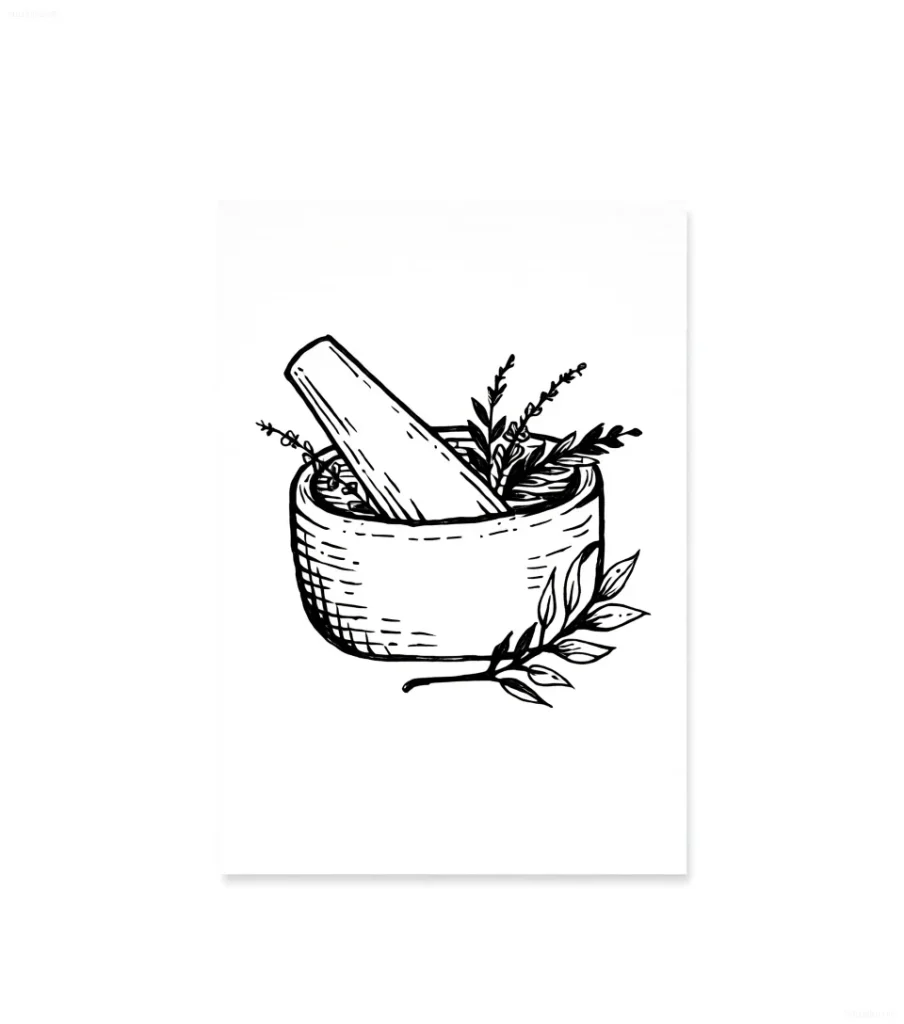
- Old School: Bright colors, bold outlines. The mortar is often depicted with ribbons inscribed with Latin mottos, or surrounded by snakes and skulls.
- Minimalism: A concise outline of a mortar and pestle is suitable for those who want to hide a deep meaning behind a simple form. Usually, such tattoos are small and placed on the wrist or behind the ear.
- New School: Allows for the addition of humorous or fantasy elements, such as sparks of magic flying out of the mortar, or unusual creatures helping in the grinding process.
Ideal Placement of a Mortar and Pestle Tattoo on the Body

The location for the tattoo is chosen based on the size of the sketch and how personal this symbol is to you. Let’s consider the most successful options:
| Body Part | Perception Features | Recommended Style |
|---|---|---|
| Forearm | The most popular place. Symbolizes action and hand skill. | Realism, graphics |
| Calf | Allows for a vertically oriented sketch with plenty of detail. | Old school, neo-traditional |
| Shoulder blade | A hidden place, emphasizing intimacy and personal transformation. | Minimalism, dotwork |
| Wrist | A constant reminder of one’s calling or principles. | Linear style |
| Ribs | A painful but effective place for large compositions with flowers. | Watercolor, realism |
Choosing a Tattoo Artist and Aftercare: Tips for Your Mortar and Pestle Tattoo

Since the image of the mortar and pestle often includes fine details (stone texture, herb leaves, liquid drops), it is extremely important to find an artist who works in detail. Pay attention to their portfolio: how the artist conveys volume and light. Remember that a “stone” mortar should look heavy and massive, while a wooden one should have a characteristic grain pattern.
Aftercare for such a tattoo is standard but requires discipline. In the first few days, use healing ointments and avoid direct sunlight. If the sketch has many small herbal elements, make sure they don’t “bleed” due to improper healing. Quality aftercare will ensure clear lines and vibrant pigment for years to come, preserving the aesthetics of your healing symbol.
Frequently Asked Questions About Mortar and Pestle Tattoos

- Does this tattoo signify a connection to magic? Yes, it is often chosen by people interested in Wicca or modern witchcraft, as the mortar is an important altar tool.
- Can a mortar be combined with a snake? This is a classic combination, referring to the Rod of Asclepius (a symbol of pharmacy), which emphasizes the medical aspect.
- Is this tattoo suitable for men? Absolutely. In a masculine version, it often symbolizes strength, resilience, and the ability to create.
- What herbs are best to add to the sketch? It depends on your intention: rosemary for memory, thistle for protection, rose for the alchemical “Great Work.”
Interesting Facts About Mortars and Pestles in Art and Culture

Did you know that in some cultures, mortars and pestles were considered sacred objects that could not be passed on to strangers? In India, for example, they are involved in many wedding rituals, symbolizing fertility and prosperity. In European Renaissance painting, the mortar often appeared in Vanitas still lifes, reminding of the transience of life and how time “grinds” all earthly things.
It is also interesting that in ancient times, mortars were made from meteorites or rare types of stone, believing that they transferred celestial power to the potions. A tattoo with this symbol is your way of touching this ancient magic, combining the earthly and the sublime, turning your own life into a unique elixir of wisdom and beauty. By choosing a mortar and pestle, you choose the path of conscious creation and respect for the forces of nature.