
The question of combining a fresh tattoo with alcohol, particularly beer, is one of the most popular and pressing among our readers. This is not just a question of post-procedure care; it is a dilemma that directly affects the quality, longevity, and most importantly, the health of your new artwork. Our portal, tatufoto.com, as the leading Russian-language resource dedicated to the art of tattooing, has accumulated extensive data and expert opinions on this matter.
We must immediately make a critically important statement: we are not medical professionals. The information presented in this article is for informational purposes only and is based on the experience of tattoo artists, recommendations from professional studios, and generally known physiological facts concerning wound healing. If you experience any complications, signs of infection, or serious health problems after the procedure, you must seek immediate consultation with a qualified physician.
Beer and Tattoos: Can You Combine Them and What Happens? A Full Analysis
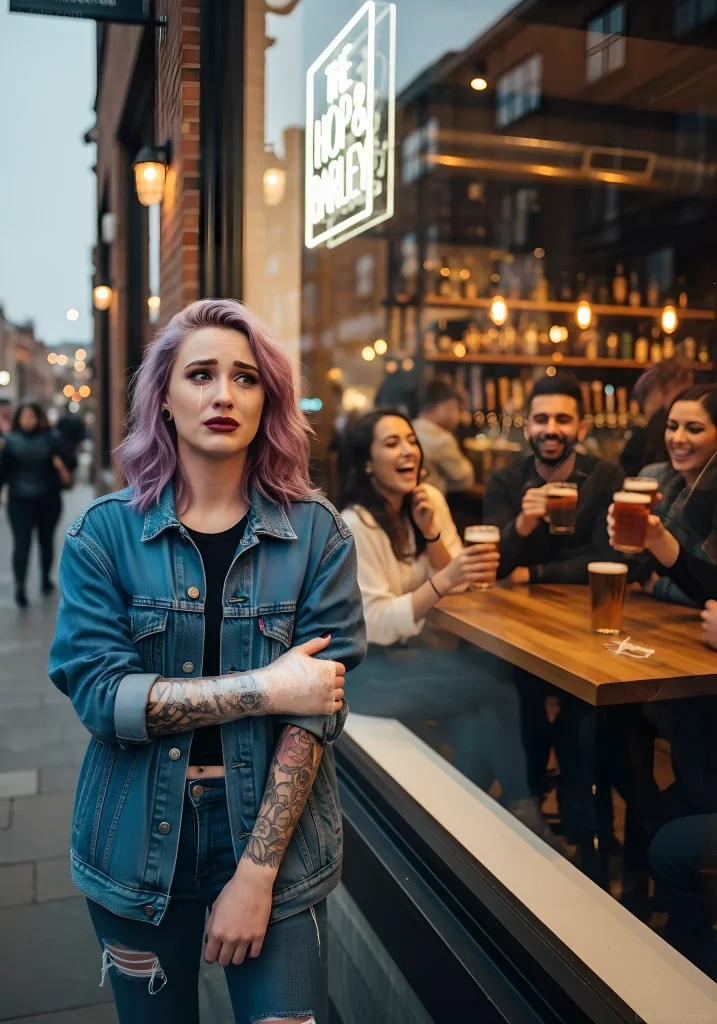
When you leave the studio with a brand new tattoo, you are essentially dealing with an open wound. The tattooing process involves controlled damage to the dermal and epidermal layers of the skin, pigment insertion, and the initiation of the body’s complex immune response. During this critical period, which lasts from 48 hours to a week, the body mobilizes all resources for regeneration and protection.
Why Does the Question About Beer Arise?
Beer, unlike hard liquor, is often perceived as a “light” alcohol that cannot cause serious harm. Many believe that a small dose (one or two mugs) will not affect the process. However, the physiological effects of even low-concentration ethanol during the acute phase of healing can be quite undesirable.
What Happens When You Drink Beer Immediately After the Session:
- Increased Bleeding (Critical Risk): Ethanol is a powerful vasodilator (it widens blood vessels) and hinders normal platelet aggregation. This means that even a small amount of beer can increase blood flow to the tattooed area.
- Increased Lymph and Plasma Discharge: Increased blood flow leads to a more active discharge of plasma and lymph. This not only interferes with the formation of the primary scab (or healing under the film) but also literally “washes out” some of the fresh pigment from the upper layers of the dermis.
- Swelling and Inflammation: Beer, due to its composition and volume, promotes fluid retention in the body, which can lead to significant swelling in the tattooed area. Excessive swelling slows down the delivery of nutrients and oxygen to the damaged tissues.
Conclusion: Combining beer and a fresh tattoo in the first 48–72 hours poses a direct risk to the quality of the work and the healing process. You may lose color saturation, experience uneven healing, and consequently require costly touch-ups.
Alcohol and Tattoo Healing: How They Interact
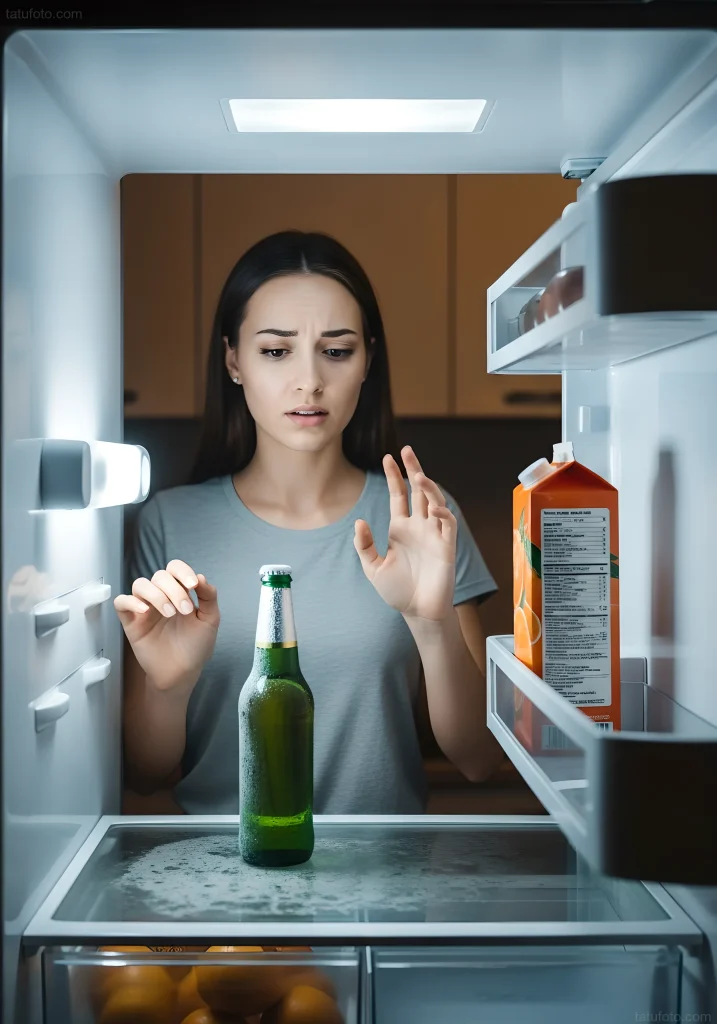
To understand why tattoo artists are so categorical about alcohol, we need to examine the three key physiological mechanisms affected by ethanol.
1. Effect on Blood Clotting (Hemostasis)
As mentioned, alcohol is an anticoagulant. This effect is critically important during the first 24 hours after the procedure. If you drank beer the day before or immediately after the session:
- During the Session: Increased bleeding hinders the artist’s work, dilutes the pigment, and makes the process more painful. Most artists will refuse to work with a client who smells of alcohol, not only for ethical reasons but also due to the risk of ruining the tattoo.
- After the Session: If bleeding and lymph drainage continue longer than usual, it means the protective barrier is forming more slowly. Pigment that should have settled in the dermis is actively expelled with blood and lymph.
2. Dehydration and Skin Condition
Beer, like all alcohol, has a pronounced diuretic effect. It causes increased urination, leading to body dehydration. Healing a wound, especially one as large as a tattoo, requires optimal tissue hydration levels.
Consequences of Dehydration:
- The skin becomes drier and less elastic.
- Cellular regeneration slows down because the transport of nutrients becomes less efficient.
- Dry skin may start peeling too early or unevenly, which also negatively affects color quality.
3. Suppression of the Immune System
The most insidious effect of alcohol is its ability to temporarily suppress the immune response. Tattoo healing is essentially the immune system’s job of isolating and ‘digesting’ damaged cells, as well as fixing the pigment.
Ethanol impairs the function of leukocytes and macrophages—the cells responsible for fighting pathogens and cleaning the wound. With a weakened immune system:
- The risk of bacterial infection in the tattooed area significantly increases.
- The regeneration process slows down; healing becomes sluggish and prolonged.
- The likelihood of excessive inflammation (redness and heat) increases, which can develop into dermatitis or an allergic reaction.
The Effect of Beer on the Tattoo Healing Process: A Detailed Analysis
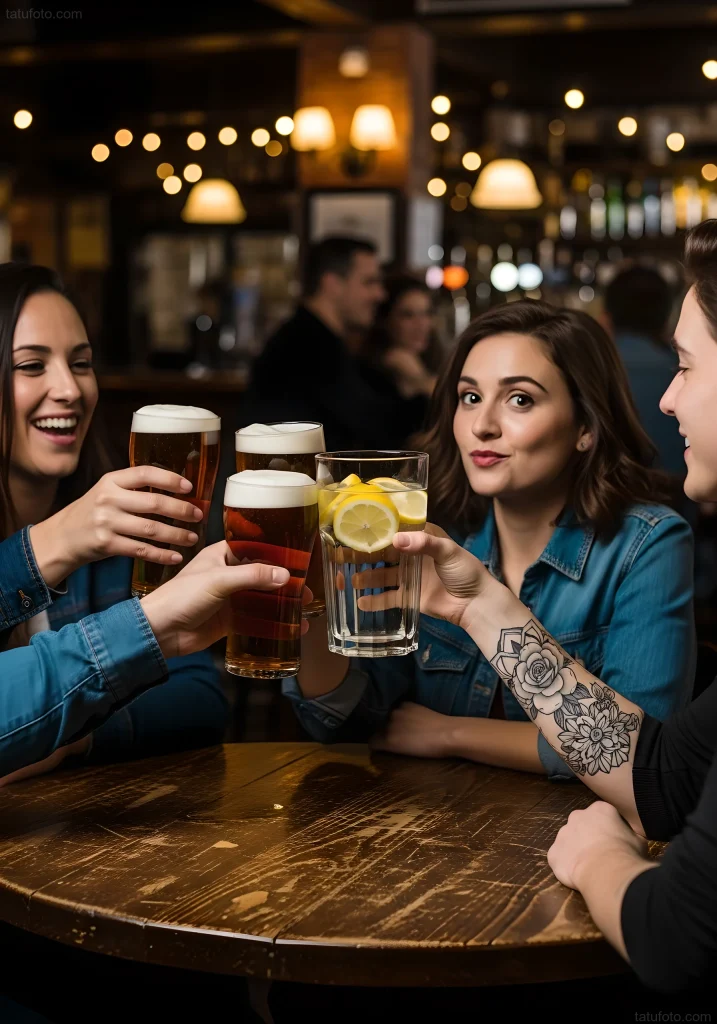
Although the general effect of ethanol is the same for all alcoholic beverages, beer has its nuances that can exacerbate the situation with a fresh tattoo.
Beer vs. Hard Liquor: What’s the Difference for a Tattoo?
While hard liquor (vodka, whiskey) quickly causes severe dehydration and sharp vasodilation, beer acts more subtly but insidiously due to two factors: volume and composition.
| Parameter | Hard Liquor (40%+) | Beer (4-6%) |
|---|---|---|
| Volume Consumed | Small (50–150 ml) | Significant (500–2000 ml) |
| Diuretic Effect | Strong, fast | Gradual, but prolonged |
| Swelling and Fluid Retention | Less pronounced | Highly pronounced due to volume and salts |
| Effect on Pigment | Risk of ‘washing out’ due to bleeding | Risk of ‘washing out’ + risk of uneven healing due to swelling |
Consuming a large volume of liquid (even if it’s beer) when the water-salt balance is disrupted by ethanol creates ideal conditions for localized swelling. This is especially noticeable on the extremities (arms, legs) and joints where the skin is thinner and tension is greater.
Risks Specific to Beer:
- Increased Inflammatory Response: Some types of beer contain yeast and other components that can indirectly enhance the inflammatory response, especially in people with sensitive skin or a predisposition to allergies.
- Disruption of Sleep and Care Routine: Consuming beer, even in moderate amounts, often leads to sleep disruption. When intoxicated or hungover, a person is less attentive to hygiene and the tattoo treatment schedule. This can lead to missed treatments, accidental trauma, or infection.
Remember: During the healing period, your main task is to ensure maximum sterility and rest for the tattoo. Any substance that disrupts the natural course of regeneration is your enemy.
When Can You Drink Beer After a Tattoo: Timelines and Recommendations

The most frequent question is how long one must abstain. There is no single standard, as healing speed is individual and depends on the size of the tattoo, the location, and general health. However, there are clear minimum and recommended timelines.
Critical Abstinence Period (Minimum)
Duration: First 48–72 hours (2–3 days).
This is the time when primary wound closure, cessation of lymph drainage, and the formation of a protective layer (primary scab or film) occur. During this period, the effect of alcohol is maximally negative. Consumption of any alcoholic beverages is strictly prohibited.
Recommended Abstinence Period (Optimal)
Duration: 5–7 days.
By the end of the first week, the tattoo has usually exited the acute phase of inflammation. Redness subsides, swelling minimizes, and the active peeling phase begins. The risk of pigment ‘washing out’ is already extremely low, and the immune system is stabilized. If you plan to consume alcohol, this is the optimal time to start.
Full Healing Period (Safety)
Duration: 2–3 weeks.
By this time, most tattoos have completely shed their top layer of skin. The tattoo looks matte but is no longer an open wound. After two weeks, moderate beer consumption generally poses no risk to the quality of the design. However, if you got a very large piece (e.g., a sleeve), it is better to wait up to three weeks.
Important Note on Session Preparation:
Abstinence rules apply not only to the post-procedure period but also before the procedure. It is strongly discouraged to consume beer or any other alcohol within 24 hours before the session. The reasons are the same: blood thinning and increased skin sensitivity, which makes the artist’s work harder and more painful for you.
Safe Alcohol Consumption After a Tattoo: Tips and Precautions

If you decide to drink beer after the critical period has passed (i.e., no earlier than 5–7 days), you must follow harm minimization rules.
Rules for ‘Safe’ Beer Consumption:
- Strict Dose Limitation: We are talking about one or two standard mugs (0.5 L) of low-alcohol beer (up to 4%). Avoid consuming large volumes.
- Hydration Priority: For every serving of alcohol, you must drink an equivalent or greater amount of plain, non-carbonated water. This helps compensate for the diuretic effect and prevents skin dehydration.
- Avoid Salty Foods: Beer is often accompanied by salty snacks (chips, fish). Salt promotes fluid retention and can increase swelling in the tattooed area, even if it has partially healed.
- Do Not Disrupt the Care Routine: Make sure you have completed all necessary tattoo care procedures (cleansing, applying healing ointment) before consuming alcohol and do not miss the next step due to feeling unwell.
- Monitor Temperature: Alcohol can cause a rush of heat and increase localized skin temperature. Avoid hot baths and saunas after drinking beer.
What to Do If You Drank Too Much?
If you miscalculated the dose and feel severe swelling the next day or notice that the tattoo has reddened again, do not panic, but take action:
- Increase your intake of plain water.
- Apply a cold (but not icy!) dry compress to the swollen area (through a clean cloth, not directly on the skin).
- Continue tattoo care strictly according to your artist’s instructions.
What to Do If You Drank Beer After a Tattoo: Signs of Complications and Actions
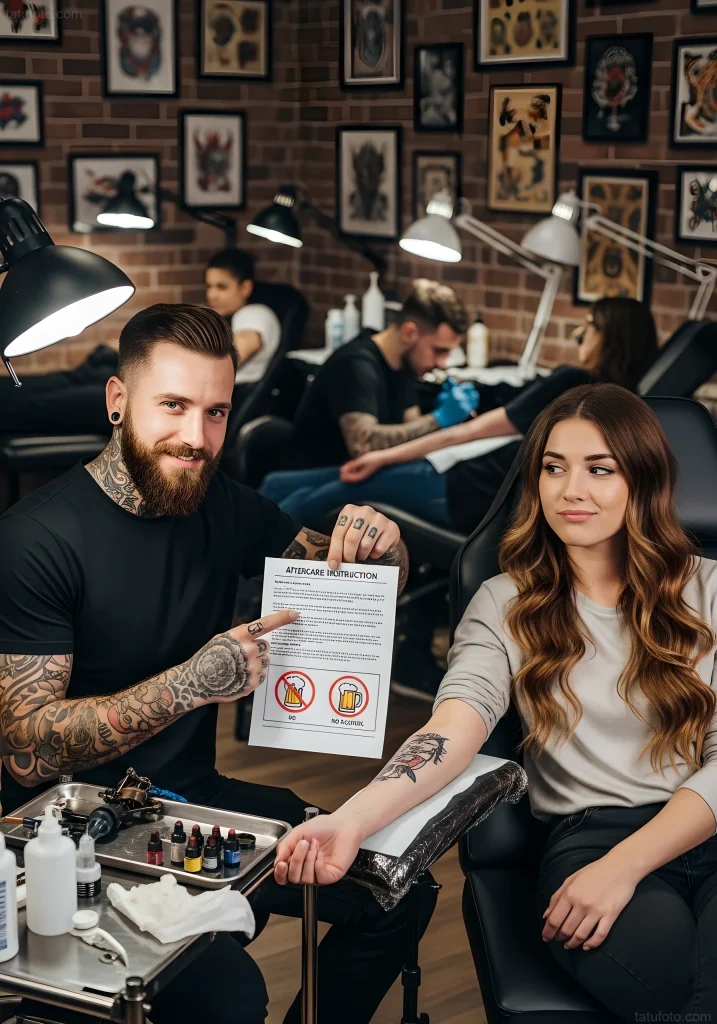
Complications caused by alcohol consumption usually manifest within 12–24 hours after intake.
Signs Indicating Healing Problems Related to Alcohol:
1. Excessive Bleeding and Lymph Discharge (within the first 24 hours):
- If the bandage is saturated with blood or lymph much more than expected the day after the tattoo, it is a clear sign that ethanol has affected hemostasis.
- Action: Carefully remove the bandage (if it is not a healing film), rinse the tattoo with cool water and antibacterial soap, and apply a thin layer of ointment. Do not panic, but be prepared that some pigment may have escaped.
2. Severe Swelling and Pulsation:
- If swelling persists beyond 3 days, or the tattooed area looks puffy and hot to the touch, your body may not be coping with the inflammatory response exacerbated by alcohol.
- Action: Elevate the limb above heart level (if the tattoo is on an arm or leg) to promote fluid drainage. Take a cool shower. If swelling is accompanied by severe pain or pus, seek medical attention immediately.
3. Uneven Healing and Color Loss:
- If, after the tattoo has healed, you notice that some areas are noticeably paler or have ‘disappeared,’ this may be due to active pigment washout during increased lymph drainage provoked by beer.
- Action: Unfortunately, this effect is irreversible. The only solution is to wait for complete healing (4–6 weeks) and consult your artist for a touch-up. Be honest with the artist about the reasons.
Disclaimer: Remember that alcohol is not a direct cause of infection, but it creates favorable conditions for its development by suppressing your immunity. If you see signs of infection (greenish or yellowish discharge, severe pain, increased body temperature), do not self-medicate and consult a specialist.
FAQ: Most Common Questions About Beer and Tattoos
We have compiled the most popular questions clients ask about combining beer and fresh tattoos.
Does Non-Alcoholic Beer Have an Effect?
Answer: Non-alcoholic beer (ethanol content up to 0.5%) does not have a significant effect on blood clotting or immunity, as the ethanol dose is minimal. However, non-alcoholic beer, like regular beer, is a diuretic and contains a high amount of carbohydrates and salts. If you drink it in excessive quantities, you still risk swelling and dehydration. Moderate consumption of non-alcoholic beer after the first 24 hours is usually safe.
Can I Drink Beer the Day Before the Session?
Answer: Highly undesirable. Ethanol remains in the blood and continues to affect clotting for up to 24 hours. If you drink beer in the evening, the tattoo will bleed more during the morning session, complicating the artist’s work and increasing the risk of pigment loss. It is recommended to abstain for a minimum of 24 hours before and 48 hours after.
I only drank one can of beer a day after the tattoo. Should I worry?
Answer: One can (0.5 L) of beer after 48 hours is unlikely to cause catastrophic consequences if you have a healthy body and the tattoo is small. However, you have violated the recommendation. Monitor the tattoo closely for the next 12 hours: if there is no severe swelling or increased lymph drainage, continue standard care. In the future, strictly adhere to the 5–7 day abstinence period.
Does Beer Affect Color Tattoos More Than Black and Gray?
Answer: Yes, indirectly. Color pigments often require deeper and denser application than black and gray. If alcohol causes significant pigment washout, this can affect the saturation and uniformity of colored areas more severely. Furthermore, some people are more sensitive to color inks, and the increased inflammation caused by alcohol may be more noticeable.
Interesting Facts: Myths and Reality About Alcohol’s Effect on Tattoos
Over the years of tattoo culture development, many myths have formed around alcohol and healing. Let’s examine the most common ones.
Myth 1: Alcohol ‘disinfects’ and aids healing.
- Reality: This is an absolute myth. Alcohol, when entering the bloodstream, does not disinfect the wound. On the contrary, it suppresses the natural immune response, which is the best defense against infection, and increases inflammation.
Myth 2: If the tattoo has already started peeling, you can drink anything.
- Reality: Peeling (around day 5–7) means the epidermis is recovering, but the deeper layers of the dermis (where the pigment is fixed) are still in the active regeneration phase. Excessive alcohol consumption can cause severe dehydration, leading to premature and uneven shedding of the remaining skin, which sometimes affects the final look of the tattoo. It is better to wait until peeling is completely finished.
Myth 3: Beer is ‘lighter’ than wine, so it’s safer.
- Reality: The effect on blood clotting is determined by the pure ethanol content. Although beer contains less ethanol per volume, people tend to drink it in much larger quantities, resulting in a higher total ethanol intake and, worse, a strong diuretic effect and swelling due to the large fluid volume. From a healing perspective, any amount of ethanol during the critical period is harmful.
Your tattoo is an investment in art and a part of your individuality. A professional approach to post-procedure care guarantees that this investment will pay off with a perfect result. A little patience and abstaining from beer (or any other alcohol) for one week is the minimum price for preserving color saturation, line clarity, and the health of your skin. Always follow your artist’s instructions and remember the need for medical consultation in case of any serious complications.