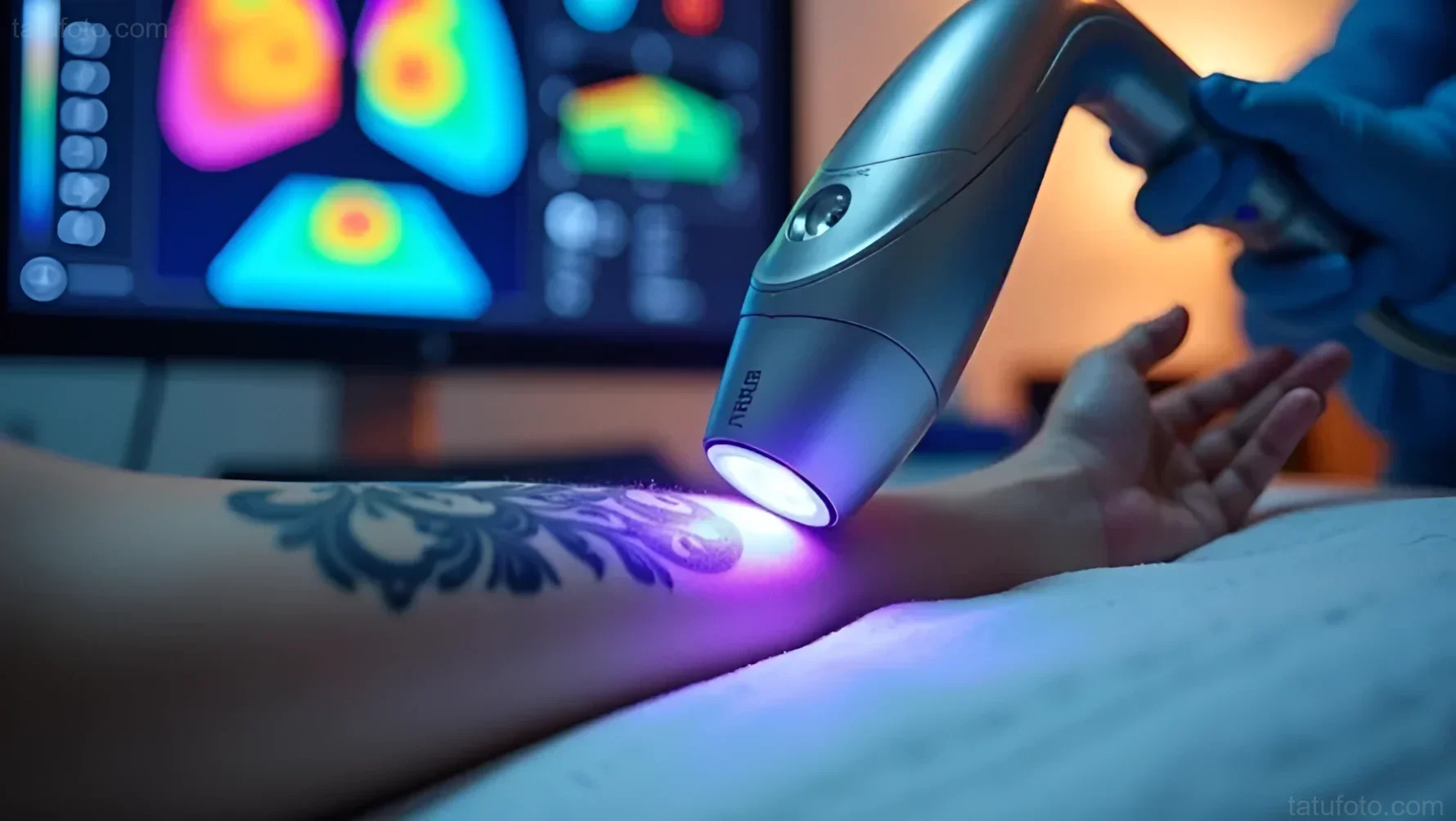
According to expert Steven Miller, nearly 25% of people who adorn their bodies with tattoos eventually regret their ink. Until recently, the process of removing permanent ink was lengthy, painful, and often yielded inconsistent results. However, the technological breakthrough we’re witnessing in 2025 is a complete game-changer. The latest laser systems demonstrate double the speed with minimal discomfort compared to their predecessors. The secret lies in the shift from outdated nanosecond technology to ultra-fast picosecond technology, augmented by multi-wavelength platforms and artificial intelligence. Years of agonizing removal are finally a thing of the past. Let’s dive into the details to understand exactly how these advanced lasers are transforming the tattoo removal landscape by November 2025.
A Fundamental Breakthrough: From Nanoseconds to Picoseconds
The key difference in 2025 lasers compared to previous generations lies in pulse duration and energy delivery mechanism. Modern systems operate orders of magnitude faster, achieving superior results through advanced physical interaction with the pigment. This isn’t just a technical upgrade; it’s a fundamental shift in the physics of the process.
Picosecond Pulse Duration vs. Nanosecond
The evolution of laser tattoo removal has brought us from Q-switched lasers with nanosecond pulses (billionths of a second) to advanced picosecond devices (trillionths of a second). Picosecond pulses operate up to 1000 times faster than nanosecond pulses, delivering ultra-short bursts lasting from 375 to 750 picoseconds, depending on the wavelength.
Why is speed so crucial? Tattoo ink particles range from 20–200 nm in diameter. The thermal relaxation time (the time it takes for a particle to lose heat) for common 40-nm particles is only about 1 nanosecond. Therefore, only picosecond pulses can achieve true thermal confinement, preventing heat from spreading to surrounding tissues.
Clinical studies confirm this advantage. In a direct comparison, 12 out of 16 tattoos showed significantly better clearance with picosecond treatment compared to nanosecond, requiring fewer total sessions.
The Photoacoustic Effect: How Shockwaves Shatter Pigment
The superior efficacy of 2025 picosecond lasers stems from a unique physical mechanism. While nanosecond lasers primarily relied on the photothermal effect (heating), picosecond devices generate a powerful photoacoustic effect—mechanical shockwaves that literally explode ink particles.
The ultra-short pulses cause instantaneous thermal expansion of the pigment, creating pressure waves that mechanically fracture the target particles. The physics are impressive: at equal laser power, a 150-picosecond pulse produces approximately 100 times more tensile stress on tattoo particles than a 15-nanosecond pulse. The result is ink fragmentation into much smaller particles that the body’s immune system, particularly macrophages and white blood cells, can clear much faster.
Reduced Thermal Load and Enhanced Safety
Because the energy is delivered in such a short timeframe, heat transfer to surrounding tissues is minimal. This is a critical aspect that reduces the risk of collateral damage. Less thermal load on the skin leads to several clinical advantages:
- Reduced risk of scarring and hyperpigmentation.
- Less discomfort during the procedure.
- Faster healing time between sessions.
- Safe application for various skin types, especially Fitzpatrick IV–VI.
Patients often describe the sensation as a quick “rubber band snap” rather than the burning discomfort characteristic of older lasers. Through these combined mechanisms—ultra-short pulses, photoacoustic fragmentation, and minimal thermal footprint—modern systems can clear most tattoos in just 4–6 sessions, whereas previous technologies required 10–15.
Color Versatility: The 2025 Multi-Wavelength Platform
Modern tattoo removal systems have evolved beyond single-wavelength treatments into sophisticated multi-wavelength platforms. This versatility is a cornerstone of accelerated removal, allowing for effective elimination of complex, multi-colored designs that were once considered “unremovable.”