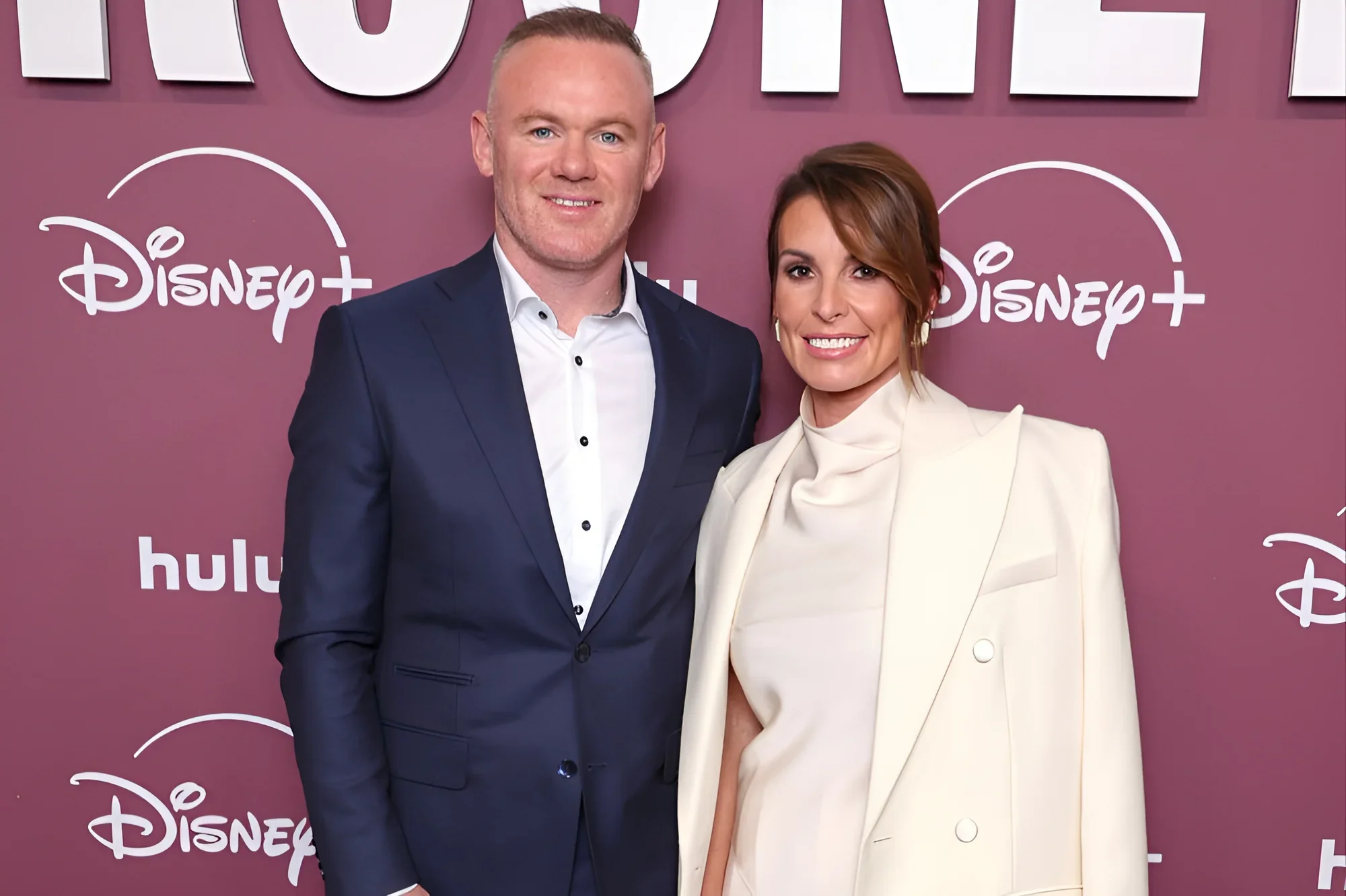
A tattoo of a loved one’s name is one of the most personal and, according to artists, the most “risky” gestures in tattoo culture. A name permanently binds the skin to a specific person, and it is almost impossible to walk back from such a decision. That is why the story of Wayne Rooney, who tattooed his wife Coleen’s name on his arm just two weeks after their first date, sounds like an exception to the rule that became a rule for thousands of fans. The former footballer revealed this detail while talking to campmates in the Australian jungle on the show I’m A Celebrity… Get Me Out Of Here!, and behind the dry fact lay an entire biography of their relationship.
The couple met at age twelve, but it wasn’t until six years later that they actually started dating. Rooney admitted that he walked past Coleen’s house every day on his way to school and asked her every time if she wanted to be his girlfriend. The answer was always no, until he promised that when they grew up, they would get married and have children. Eventually, Coleen gave in and went on a first date with him — to the movies. The euphoria of that evening was so strong that two weeks later, before going to a friend’s birthday party, Wayne stopped by a tattoo parlor and got her name inked on his arm.
How the tattoo became a symbol of loyalty
From the perspective of tattoo culture, this gesture is a classic example of an “impulse tattoo,” but unlike most such cases, it didn’t become a mistake, but rather a marker of devotion. Artists often warn that names, dates, and personal symbols are the most vulnerable category of work because they depend on another person and their decisions. Spontaneity here acts as a filter: if you are ready to burn a name onto your body two weeks after a first date, it means the connection is truly strong. In the case of Rooney and Coleen, this was confirmed — about six months after the relationship began, the couple was already engaged.
The proposal itself was also unconventional. The footballer planned to set the scene in a Chinese restaurant, but didn’t want to do it in front of a crowd. In the end, he settled on a gas station and asked Coleen to marry him right there in the parking lot. After getting a yes, the couple turned around and drove to Wayne’s parents’ house, where they celebrated the event with a bowl of corned beef hash and a glass of champagne. No luxury — just close people and simple food, which is perhaps more honest than any restaurant decor.
The trend for personal markers
Rooney’s story fits into a broad trend in the tattoo industry: moving from large-scale narrative compositions to minimalist inscriptions and personal codes. A name, a date, coordinates, a small symbol — everything that carries meaning only for the wearer and those around them. Such works are cheaper in terms of execution time, but more expensive in terms of emotional weight. They are not designed to be “readable” to outsiders, but serve as an internal anchor.
- A spontaneous decision without consultation is a common scenario for name tattoos.
- A minimalist inscription reads as a personal code, not as decor.
- A long-term connection confirms the choice: the engagement happened after six months.
- An informal proposal at a gas station emphasizes the value of simplicity.
For tattoo culture, this is a clear example of how a piece of work becomes not an ornament, but a document of a relationship. The name on Rooney’s skin is not just a word, but a starting point from which a story began that ended in marriage and a family. In a world where tattoos are increasingly perceived as a way to capture what is important, such a gesture speaks louder than any words.