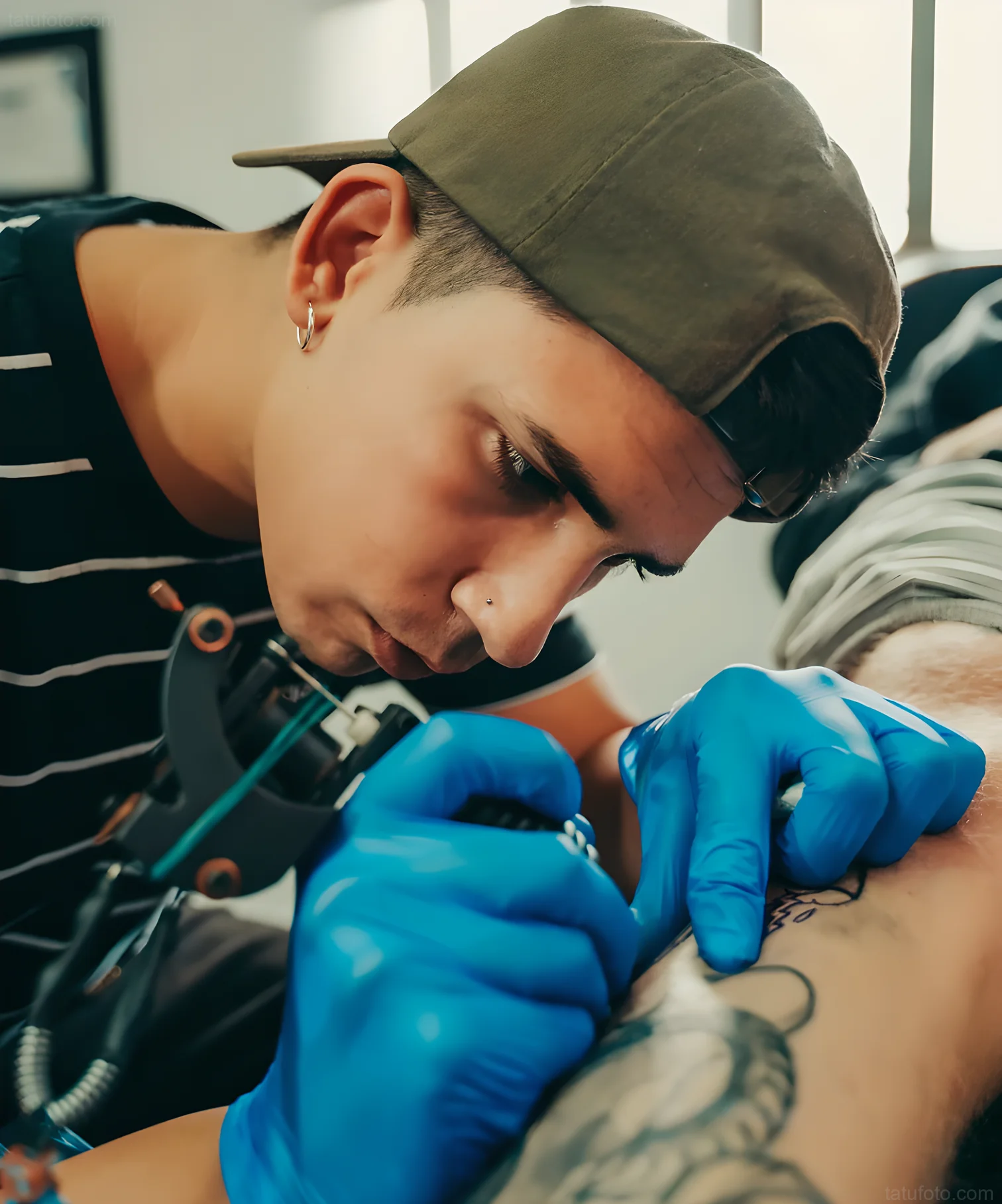
The field of artistic tattooing, like any service industry, has its unwritten rules. One of the most controversial is the mandatory leaving of tips. Recently, this topic once again exploded across the internet when a man who paid an impressive sum of $1000 for his first tattoo was confronted by his “premium master” over the absence of an additional gratuity. A post published on Reddit sparked a wave of discussions about where the line lies between gratitude for work and a forced financial obligation.
$1000 for Art: When the Price Doesn’t Include Gratitude
The situation reported by the user, who grew up in Western Canada but was born in another country, is a classic example of cultural misunderstanding. The man, whose name is not disclosed but whose story was documented by journalist Matt Machado on October 14, 2025, always considered the practice of tipping logical. In his view, tips were a way to compensate for the low base salary of waiters—those who truly rely on extra income for survival.
When it came time to get his first tattoo, he approached an artist he described as a “premium master.” He was completely satisfied with the result. He gladly paid the agreed-upon price of $1000, believing that this amount fully covered the high quality of the work, the unique design, and the time spent. To his surprise, some time later, a mutual friend informed him that the artist was displeased: the client had not left a tip.
“I asked, ‘Wait… what was the $1000 for then?'” the indignant client wrote. “And the friend simply replied, ‘Yes, but the tip is separate.’ I was completely baffled.”‘
Tattoo Etiquette: Unwritten Rules and Financial Pressure
For someone not immersed in the tattoo industry, demanding a tip on top of an already substantial fee seems absurd. However, in North America, the practice of tipping for tattoos is almost standard. Tattoo culture experts traditionally recommend leaving between 15% and 20% of the total session cost, which in this case would be between $150 and $200.
Why do tattoo artists expect tips, even with high rates?
- Increased Responsibility: A tattoo is not just a service but a permanent modification of the body. The client pays not only for time but also for sterility, consumables (needles, inks), and unique artistic talent.
- Studio Rent and Material Costs: A high hourly rate often includes the studio’s operational expenses, not the artist’s net income. Tips are perceived as direct income for the quality of the work performed.
- Industry Tradition: As in hairdressing or barber shops, tipping has become an integral part of compensation, solidified by decades of practice.
Nevertheless, this incident clearly demonstrates a growing phenomenon known as “tipping fatigue.” People are tired of having to make decisions about extra payments literally everywhere: from baristas and sandwich shops to, most absurdly, self-service screens. The client, outraged by the master’s demands, stated that he now clicks “zero” on terminals at Starbucks and Subway without the slightest remorse.
The Canadian Context: The Difference Between Service and Art
The situation is compounded by the fact that it takes place in Canada. Unlike many US states where service workers have a separate, lower “tipped minimum wage,” in most Canadian provinces, waiters receive the standard minimum wage. This removes the economic justification for the original idea of tipping.
“If waiters want more money, perhaps they should discuss it with their employers, not their clients,” wrote the disappointed man. He announced that due to this conflict with the tattoo artist, he plans to completely stop tipping, even in restaurants where this tradition is most entrenched.
Expert Analysis: The Line Between Gratitude and Extortion
From the perspective of the tattoo industry, this conflict is a warning sign. Tattoo artists, especially those in the premium segment, must clearly communicate their pricing policy. If $1000 is a fixed price for a project, the absence of a tip should not be interpreted as an insult or a sign of disrespect for the work. Rather, it reflects growing consumer distrust of the pervasive imposition of additional charges.
Ted Jenkin, co-founder of oXYGen Financial, commenting on the general trend, noted that the problem is not clients’ desire to reward good work, but the pressure exerted by automated systems. “It is precisely this pressure that creates a counter-culture where people want to give fewer tips,” the expert emphasized.
WalletHub research confirms that this problem is widespread: almost 9 out of 10 Americans believe the tipping culture has gotten out of control. Moreover, 3 out of 5 respondents are convinced that companies use customer tips to substitute for the wages they should be paying their employees.
Another observation is telling: nearly 30% of Americans are inclined to leave a smaller tip when presented with a choice on a terminal screen. This suggests that coercion, even soft coercion, causes a backlash and undermines the very meaning of gratitude.
For the tattoo industry, where client loyalty and personal relationships with the artist are critically important, such scandals can have long-term consequences. Artists who place financial expectations above client satisfaction risk losing the trust of an audience already tired of endless financial demands in every corner of the service sector.