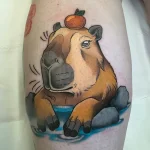
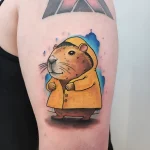
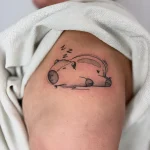
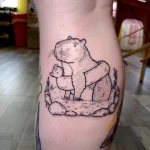
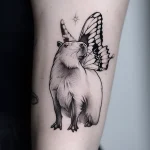
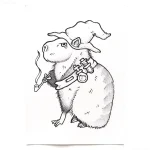
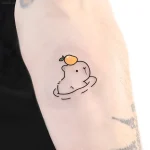
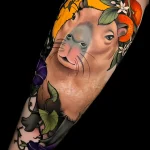
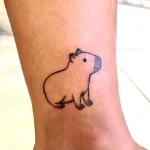
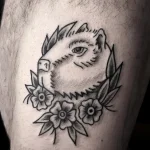
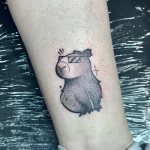
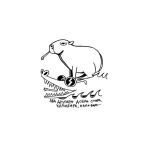
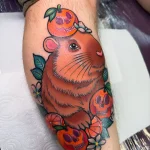
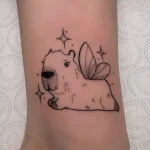
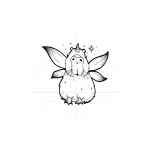
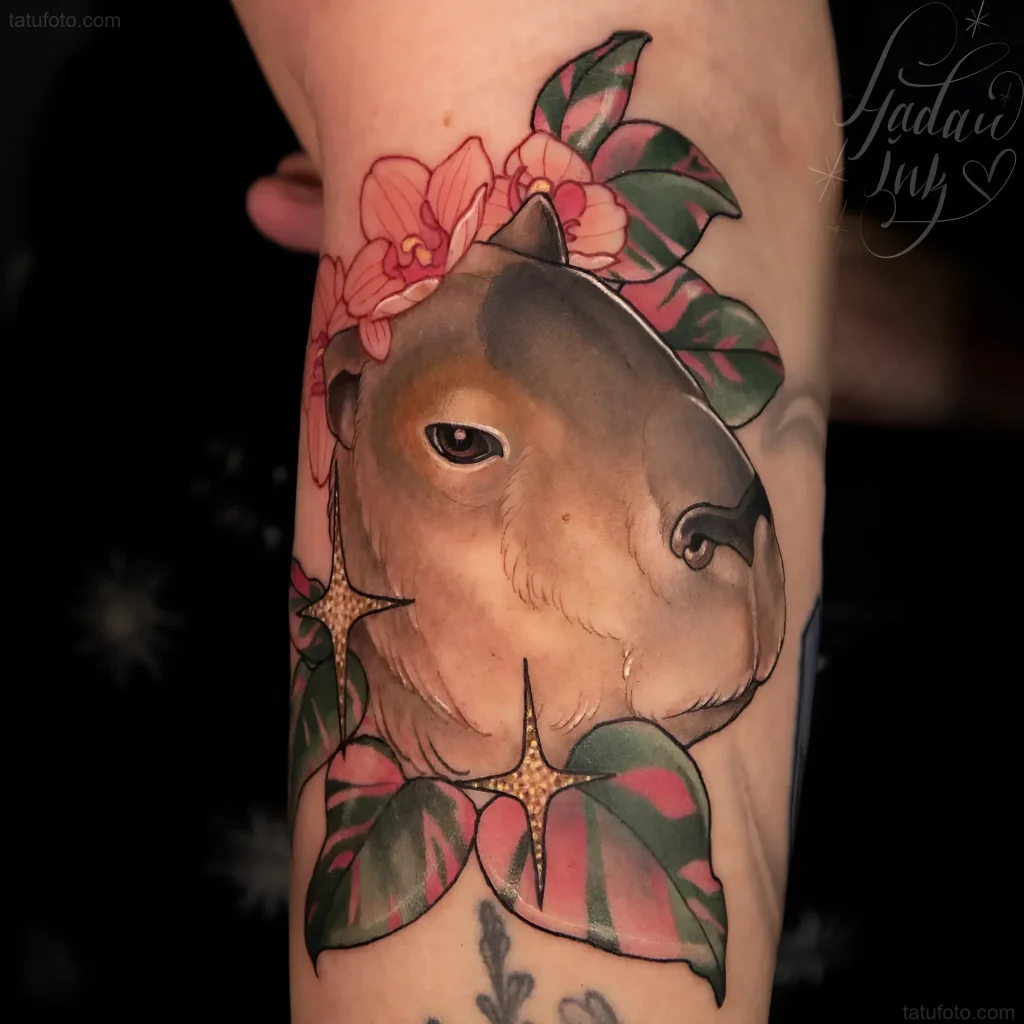
The capybara, or water pig, is the largest rodent in the world, which in recent years has rapidly conquered not only the internet but also the world of tattoos. The uniqueness of this animal lies in its incredible friendliness and ability to coexist with almost any other species. A capybara tattoo is not just a tribute to a fleeting trend; it is a deeply personal symbol reflecting calmness, sociability, and inner harmony. If you are considering an image of this amazing creature for your body, you need to understand the multifaceted symbolism and cultural context behind this choice.

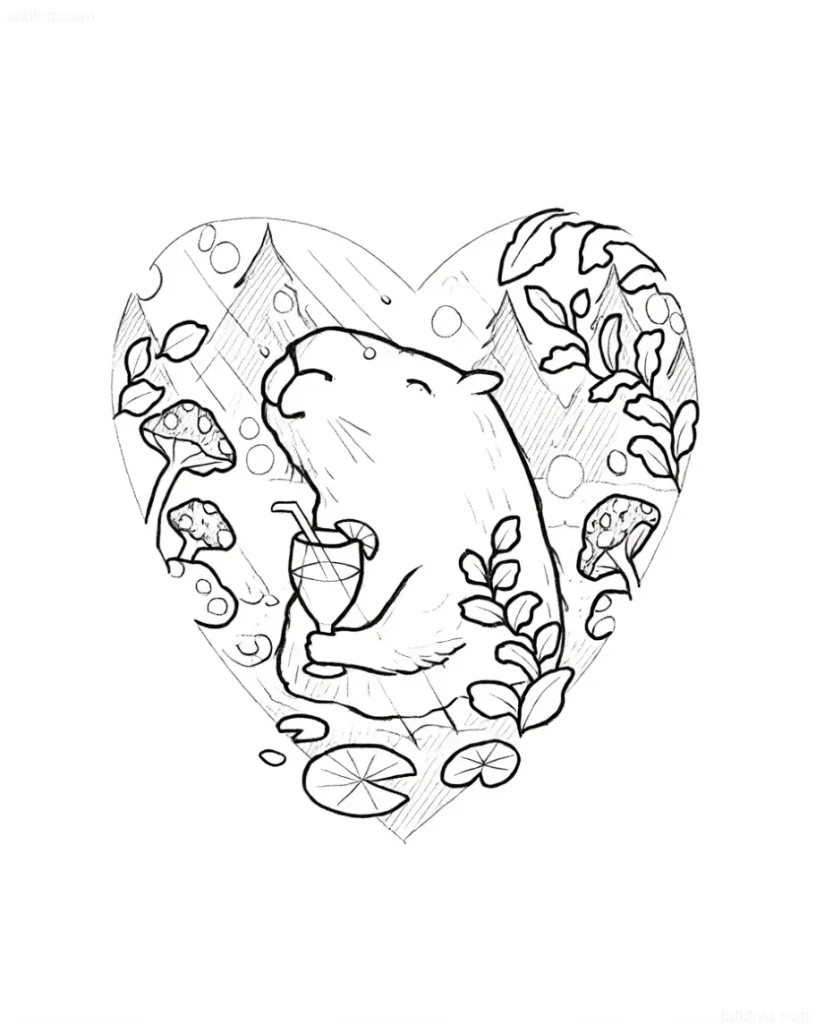
Capybara Tattoo Meaning: A Complete Guide for Rodent Lovers
A capybara tattoo, despite its relative novelty in the mainstream, carries a powerful and unequivocally positive charge. Unlike predators or mythical creatures, the symbolism of the capybara is simple, pure, and focused on qualities that modern people often lack: acceptance, calmness, and social adaptation. Experts from our portal highlight several key meanings attributed to this image:
- Composure and Zen: Capybaras are known for their remarkable ability to remain calm in any circumstances. They are often depicted swimming or sitting with a completely serene expression. For the tattoo owner, this is a symbol of personal composure, the ability to “go with the flow,” and maintain inner peace in stressful situations.
- Sociability and Friendliness: The capybara is an example of interspecies communication. These rodents coexist peacefully with birds, monkeys, and even crocodiles. A tattoo symbolizes openness to the world, the ability to find common ground with different people, and a high level of empathy.
- Acceptance and Adaptation: The capybara adapts perfectly to life both on land and in water. This reflects a person’s ability to adapt to new conditions, accept themselves and others without judgment. It is a talisman for those who value flexibility of thought.
- Connection with Nature: Being an inhabitant of South American waters, the capybara symbolizes harmony with natural cycles, love for wildlife, and the element of Water.
Thus, by choosing a capybara tattoo, you declare yourself as a peace-loving, stable person who highly values social connections and inner peace.
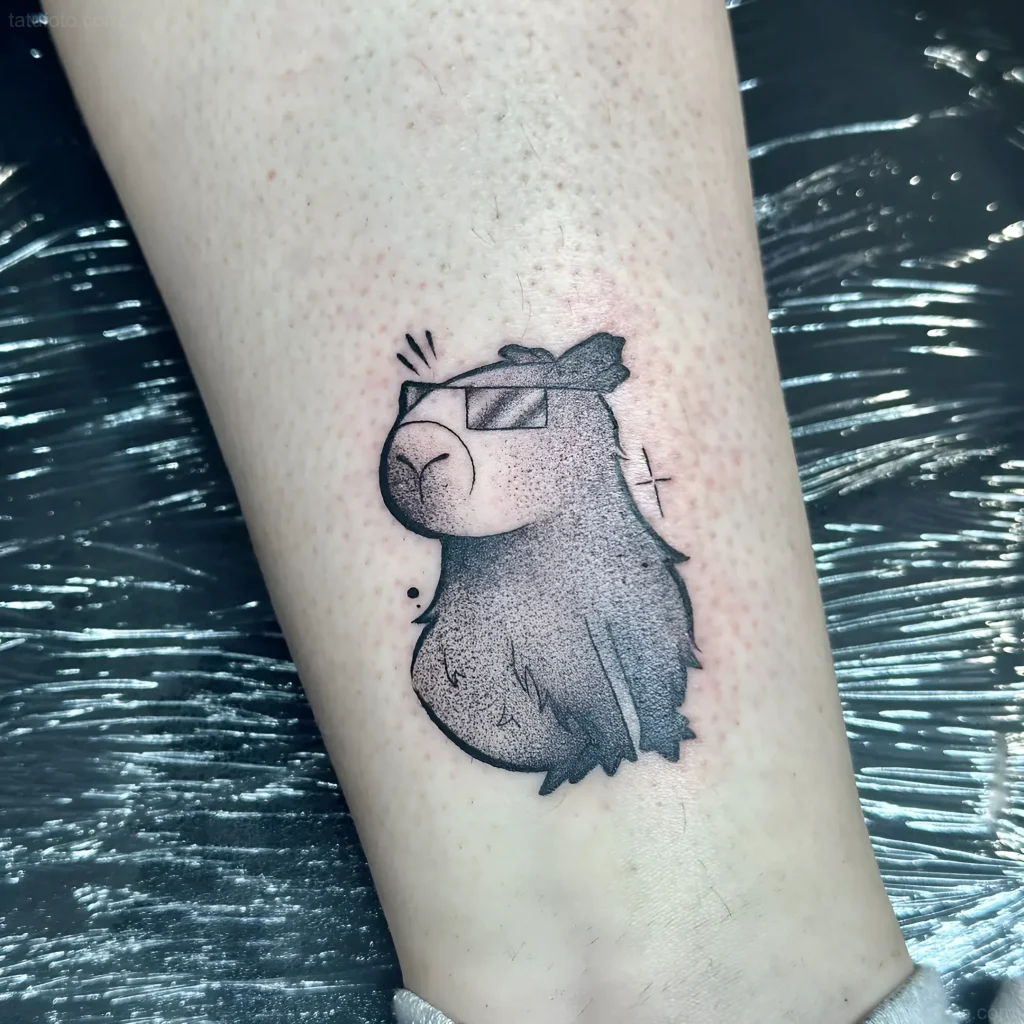

Capybara in Culture and History: From Mythology to Modernity
To fully understand the symbolic depth of a capybara tattoo, one must turn to its roots – the culture of South America, where it is endemic. The capybara is rarely found in classical European mythology but holds an important place in the folklore of the continent’s indigenous peoples.
Historical and Linguistic Context
The name “capybara” comes from the Tupi language, where it sounded like kapi’iûara, literally meaning “owner of thin grasses” or “one who eats thin grasses.” This emphasizes its role as a peaceful herbivore, not a predator, occupying its niche in the ecosystem. In cultures like the Guarani, the capybara was often associated with water spirits and fertility, symbolizing the calmness and abundance that the river brings.
Modern Cultural Phenomenon
In the 21st century, the capybara has experienced an incredible cultural surge, becoming a symbol of “chill” and absolute tranquility in internet culture. This modern meaning has added an extra layer to the tattoo’s symbolism:
- “Chill Guy” Meme: Images of capybaras bathing, riding crocodiles, or allowing birds to sit on their heads have gone viral. This has cemented the animal’s image as one of absolute peacefulness and “chill” in the best sense of the word. A tattoo in this context is often a humorous yet profound reminder to relax and not take life too seriously.
- Symbol of Acceptance: Because capybaras do not reject anyone, they have become an unspoken symbol of tolerance and acceptance of diversity. A tattoo can serve as a manifesto for these values.
Religious Quirk
An interesting cultural fact is a historical quirk in Venezuela, where in the 16th century, the Catholic Church classified the capybara as “fish” for fasting purposes, as it spends a lot of time in water. This allowed believers to consume its meat during Lent. This unusual story, while not a direct symbolic meaning, highlights the capybara’s unique status at the intersection of worlds.
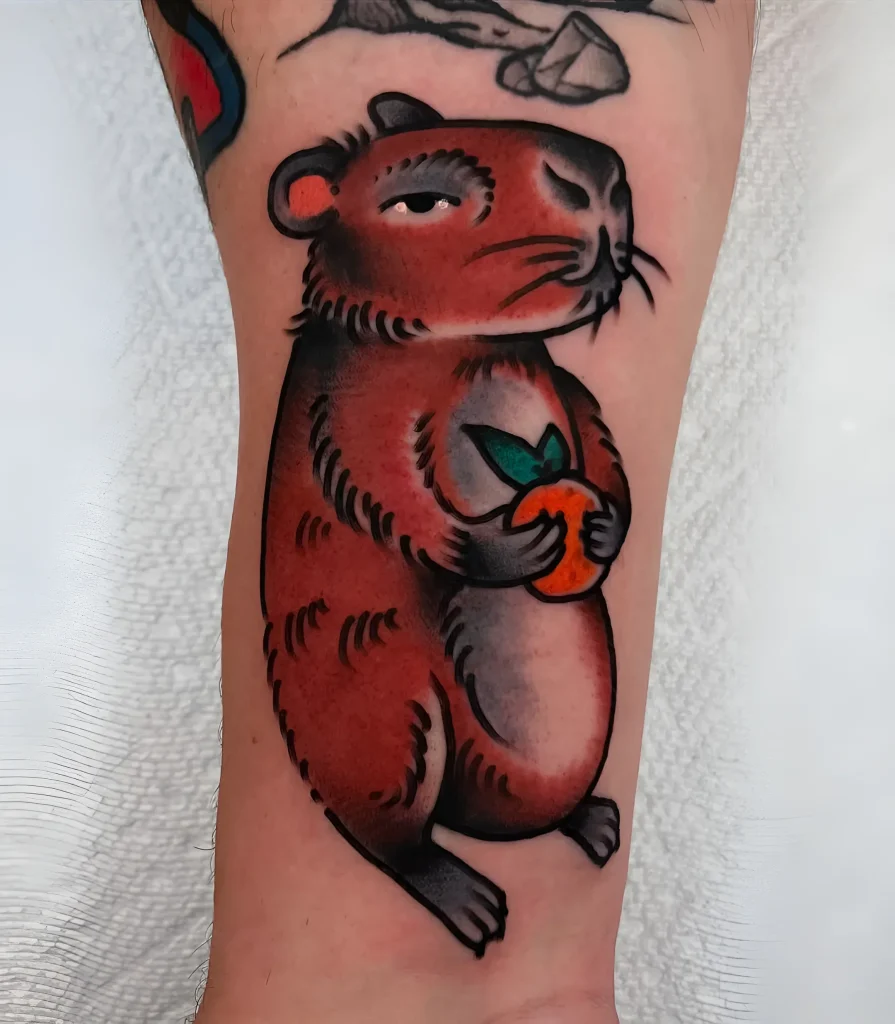
Symbolism of the Capybara Tattoo: What the Image of the Largest Rodent Means
The symbolism of a capybara tattoo can be refined and deepened depending on how the rodent is depicted and what additional elements are present in the composition. The choice of details is critically important for conveying the precise personal message.
Key Symbolic Interpretations
A capybara tattoo can be divided into several main categories of meaning:
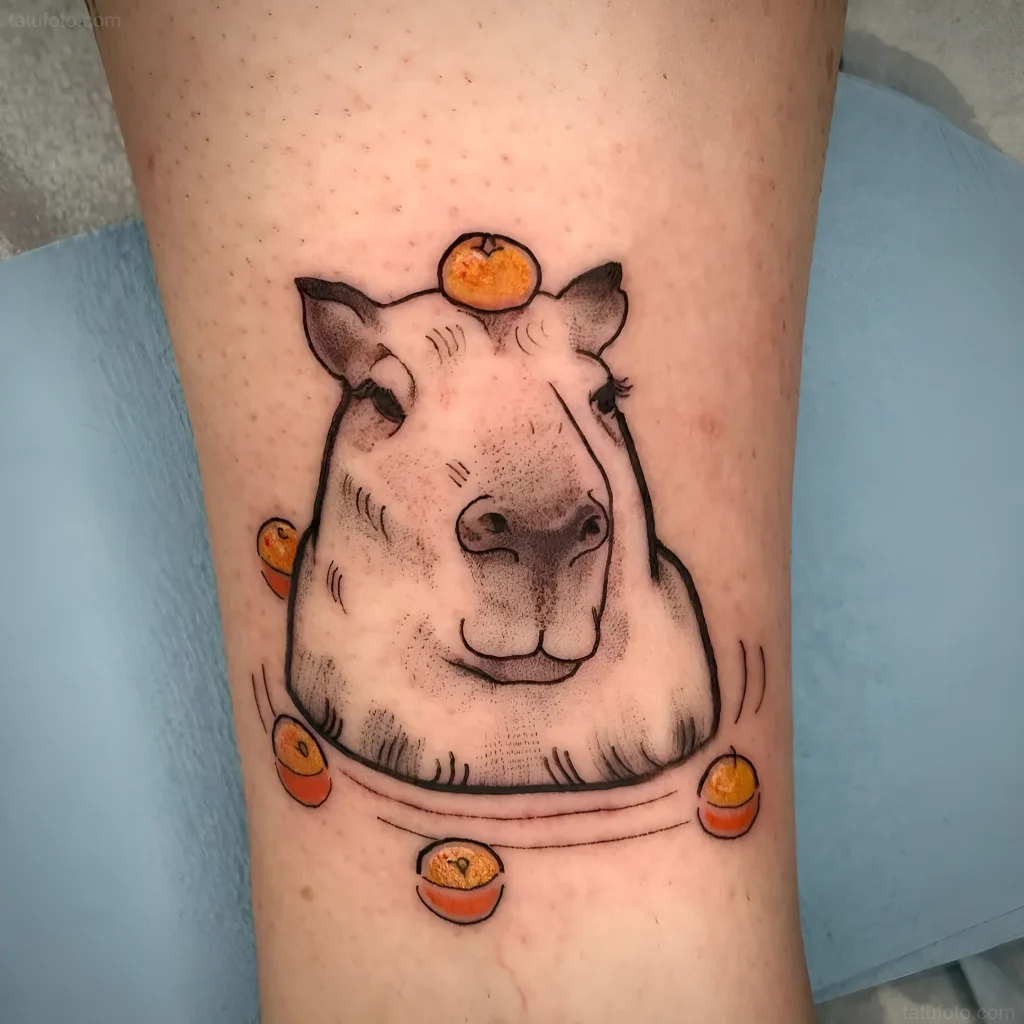
1. Capybara in Water (Swimming or Bathing):
- Meaning: Purity, emotional balance, meditation. Water represents the subconscious and emotions. A capybara in its element symbolizes a person who knows how to manage their feelings and has found their inner “flow.”
- Examples: An image done in watercolor or realism style, emphasizing water ripples.
2. Capybara with Other Animals (Birds, Monkeys, Kittens):
- Meaning: Social harmony, peacemaking, unconditional love and acceptance. The more different species of animals surround the capybara, the stronger the emphasis on the tattoo owner’s ability for unbiased communication and friendship.
- Examples: A miniature where a parrot sits on the capybara’s head, or a composition where it shares food with a turtle.
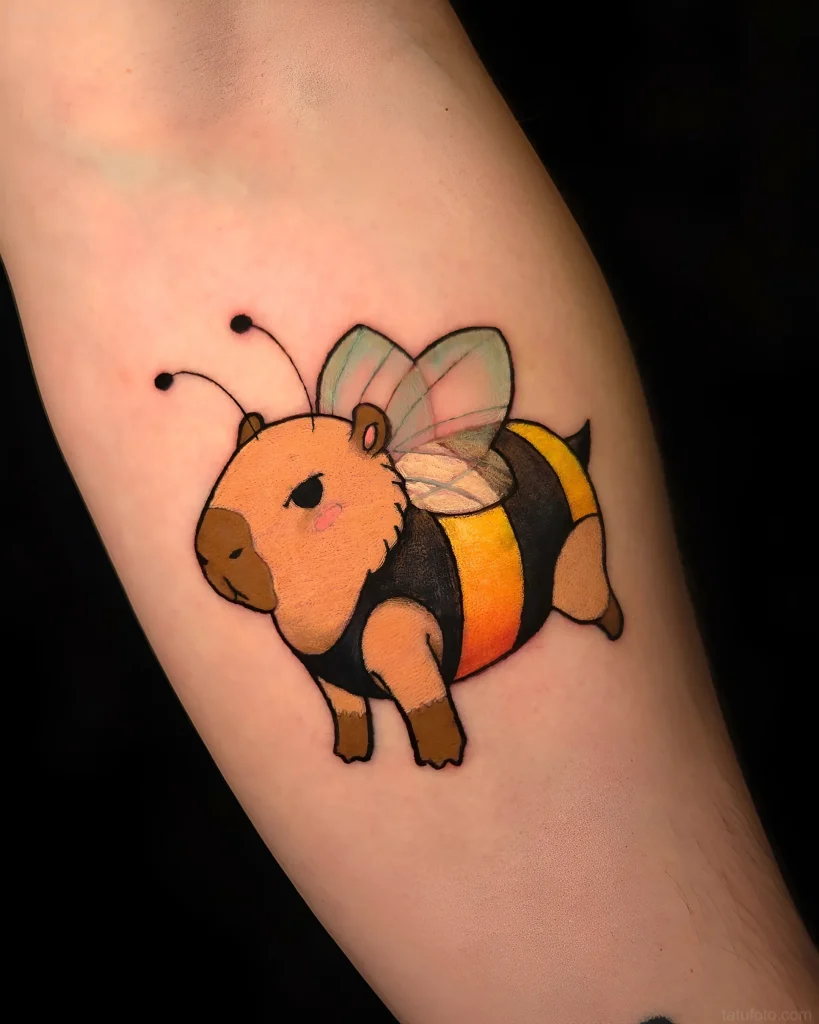
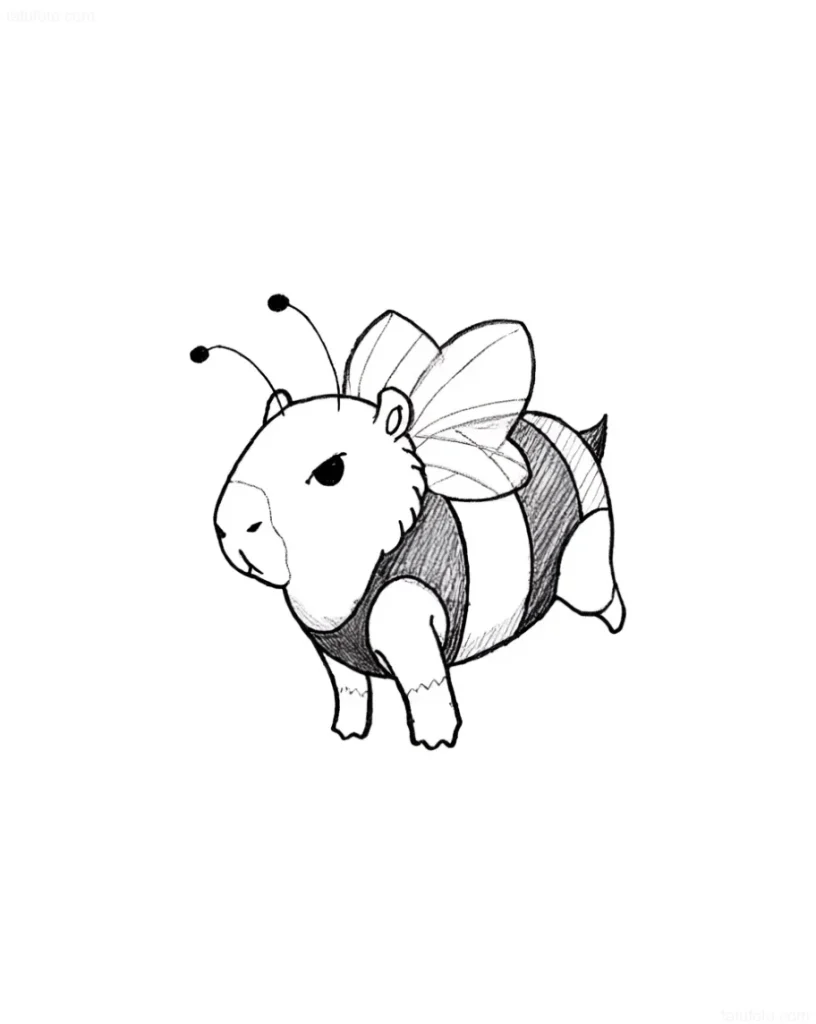
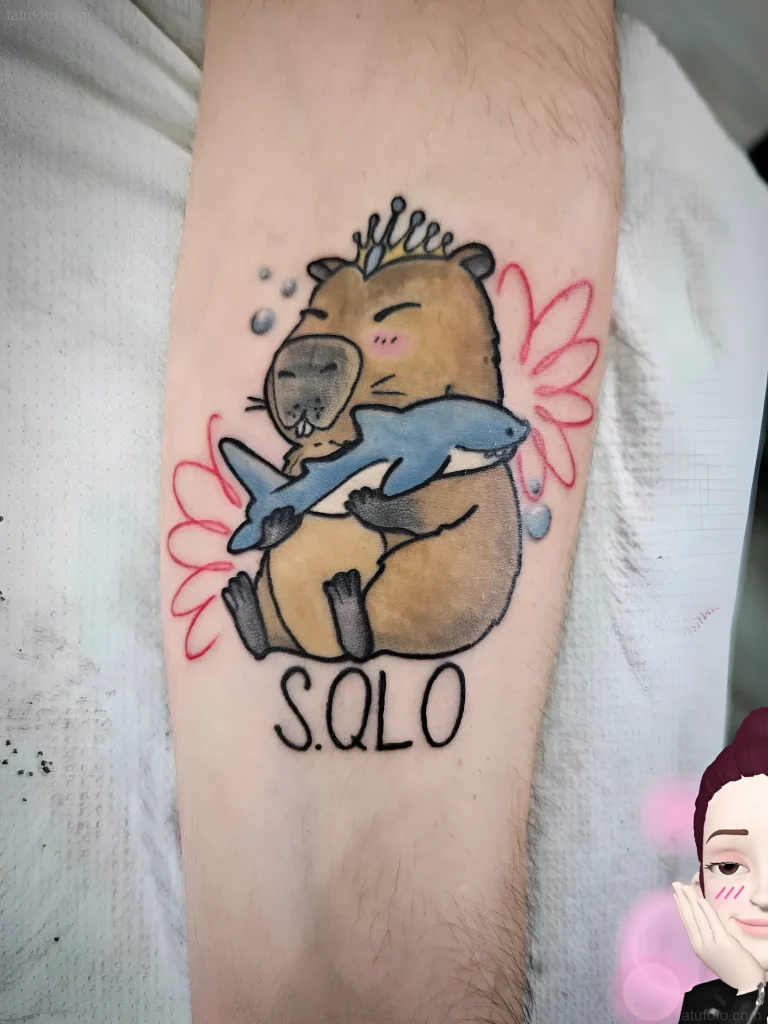
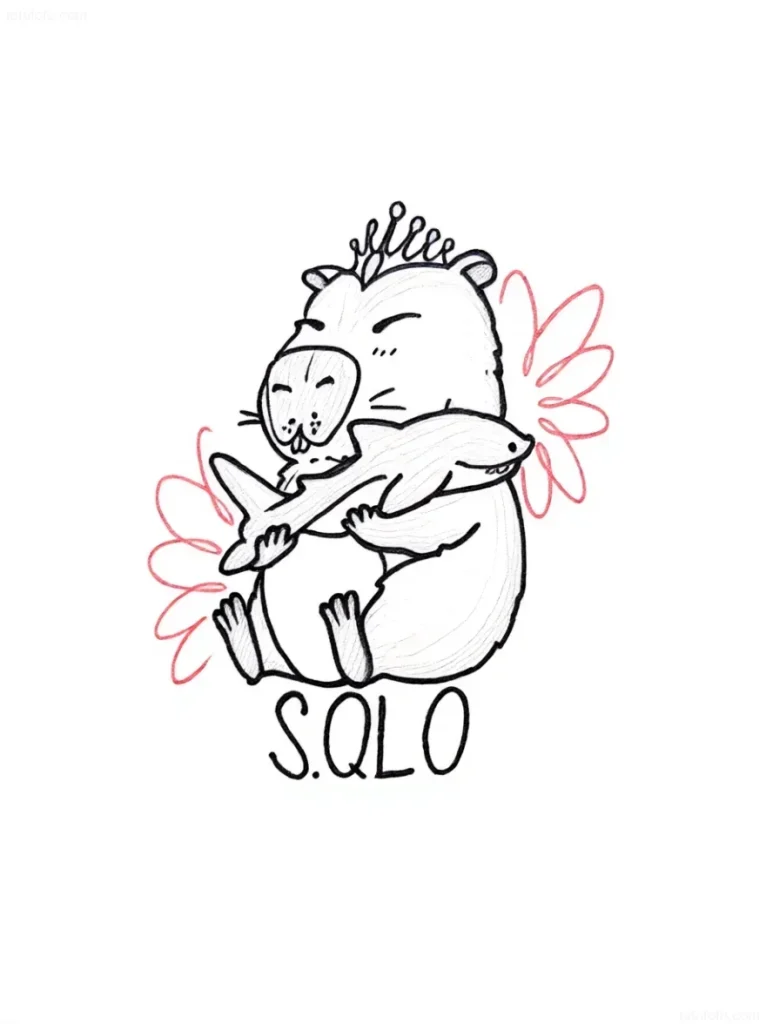
3. Capybara with a Crown or in a Suit:
- Meaning: Humor, self-irony, “king of calm.” Such elements are often used in New School or Neo-Traditional styles and emphasize that the person is the master of their inner world, ironically treating external attributes of power.
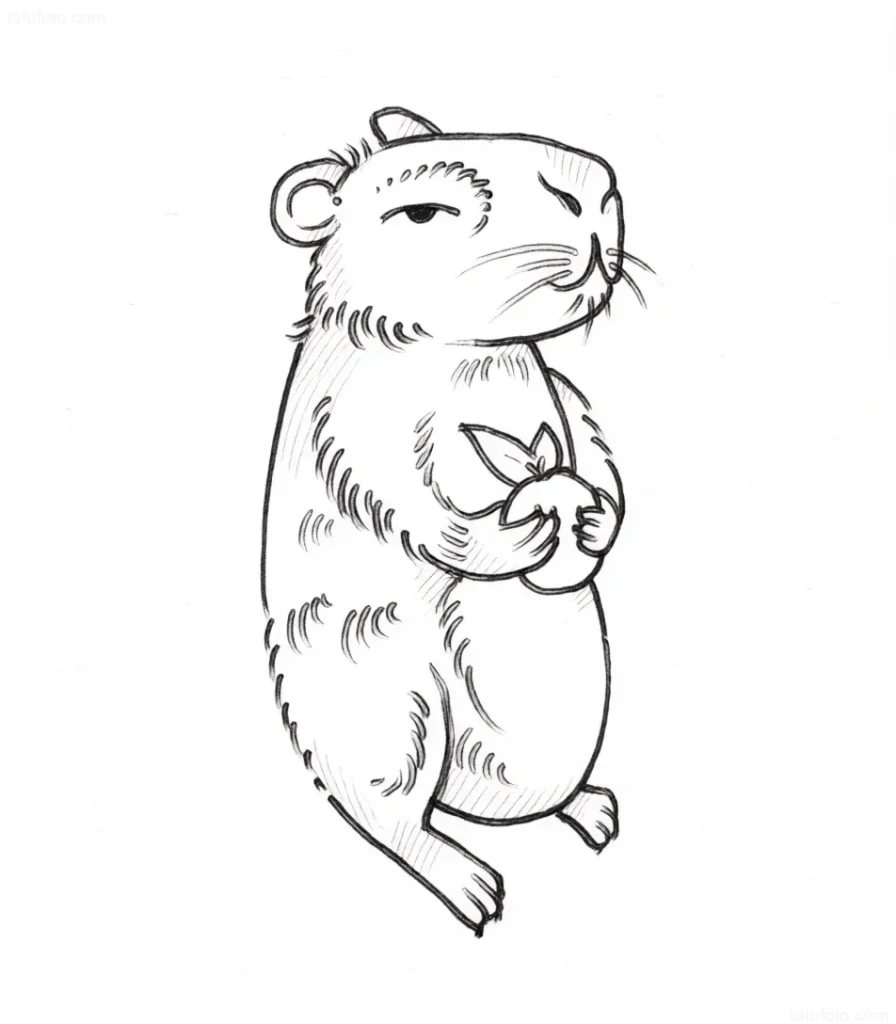
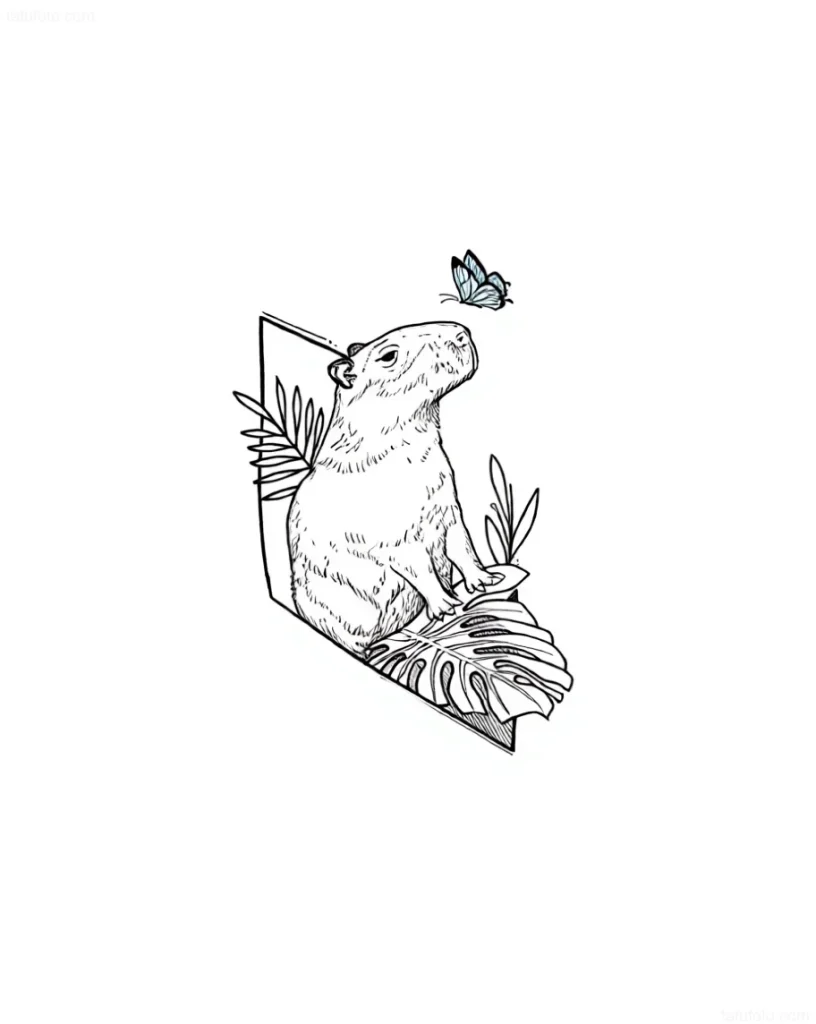
4. Minimalist or Outline Capybara:
- Meaning: Restraint, elegance, focus on the essential. This is a choice for those who want a symbol of calmness as a personal amulet without attracting excessive attention.
Psychological Aspect
From a psychological perspective, choosing a capybara tattoo often indicates that a person is tired of the aggression and competition of the modern world. They strive for authenticity and simplicity. This is an animal that does not pretend, does not hunt, and does not seek dominance, making it an ideal symbol for introverts or those seeking a peaceful path in life.
Capybara Tattoo Styles: From Realism to Cartoon
The choice of artistic style radically changes the perception and depth of the capybara tattoo’s symbolism. We will explore how different execution techniques affect the final meaning.
Realism and Microrealism
Characteristics: Detailed rendering of fur, a moist sheen in the eyes, natural earthy tones (brown, ochre, green). Requires high skill and the use of magnums to convey texture.
Symbolism in Style: In realism, the capybara appears as a majestic, natural creature. The emphasis is on its animalistic strength, patience, and connection to the ecosystem. This choice is suitable for those who value naturalness and strive for maximum authenticity in their symbol.
New School and Cartoon Style
Characteristics: Bright, saturated colors (often unnatural), bold outlines, exaggerated features (large eyes, expressive smiles). The capybara can be anthropomorphized (e.g., holding a coffee cup or wearing glasses).
Symbolism in Style: This emphasizes humor, lightness, and the social aspect. The capybara becomes a “meme” symbol, reminding us of the need for a positive outlook on life. Ideal for those who want their tattoo to evoke a smile and convey absolute “chill.”
Traditional (Old School) and Neo-Traditional
Characteristics: Old School uses thick black outlines and a limited palette (red, yellow, green). In Neo-Traditional, the palette is wider, but the outlines remain sharp, and the detail is higher.
Symbolism in Style: These styles give the symbol durability and classic significance. An Old School capybara looks like a traditional amulet or talisman, symbolizing reliability and constant calmness. It is often accompanied by elements traditional to the style: roses, banners with inscriptions, or elements of South American flora.
Graphic and Dotwork
Characteristics: Uses only black pigment, hatching, or dots to create volume and shadow. High geometricity and minimalism.
Symbolism in Style: Dotwork and graphics emphasize structure, restraint, and meditative qualities. The capybara here is a symbol of philosophical calmness, ideal for those who appreciate minimalism and seek a pure, non-distracting meaning.
Where to Get a Capybara Tattoo: Popular Locations and Their Features
The choice of tattoo placement is always related to its meaning and size. For the capybara, as a symbol of calmness and friendliness, both visible and more personal areas are suitable.
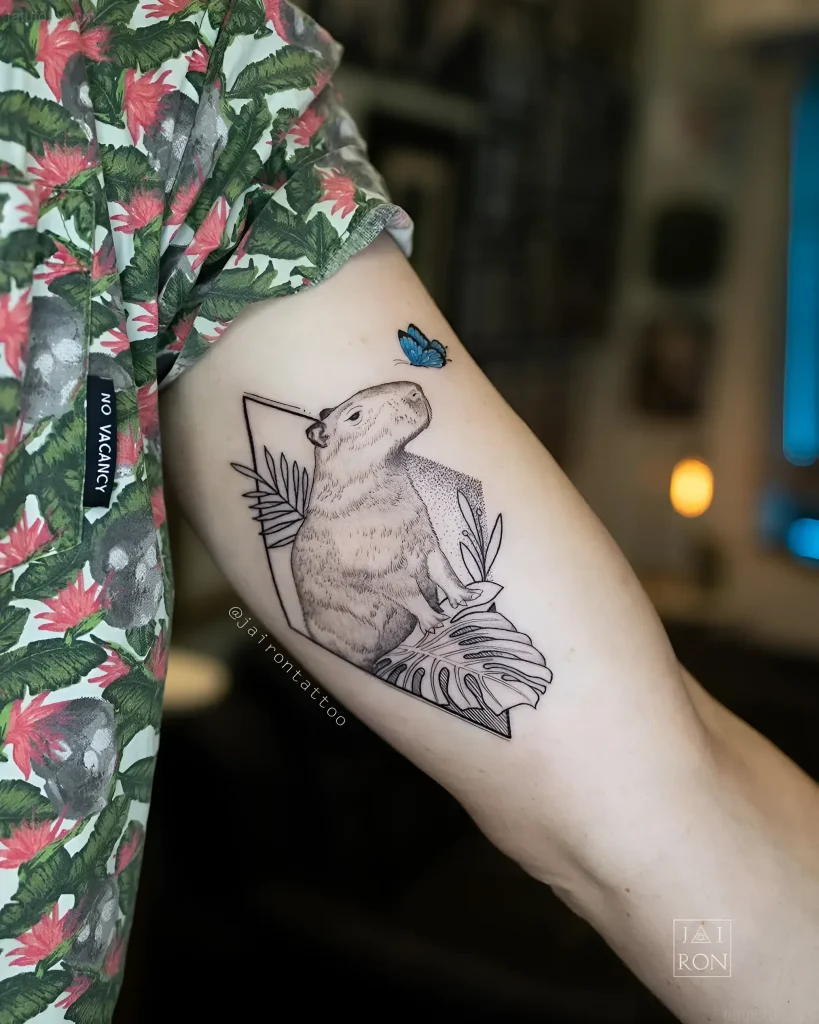
1. Forearm and Bicep
Features: These areas provide excellent visibility and a relatively smooth surface, ideal for realism and Neo-Traditional. The forearm is often chosen for displaying social symbols.
Symbolic Meaning: Placement on the arm, which we extend for a greeting, emphasizes the owner’s sociability, openness, and friendliness. It can also be a symbol of personal strength and composure that you demonstrate to the world.
2. Ribs and Side
Features: Ideal for large, detailed compositions where the capybara is depicted in its natural environment (with a body of water, plants, and other animals). The area is quite painful but allows for a true “canvas.”
Symbolic Meaning: Tattoos on the side, closer to the heart and internal organs, often carry a deeply personal and meditative character. Here, the capybara symbolizes the inner harmony that the owner seeks to preserve, protecting it from the outside world.
3. Ankle or Calf
Features: Suitable for small, minimalist, or old-school designs. Great for a first tattoo or for those who prefer hidden symbols.
Symbolic Meaning: On the legs, the capybara can symbolize a calm, confident path through life. It is a symbol that the owner is not in a hurry but always moves towards their goal with composure.
4. Wrist or Mini-Tattoo Behind the Ear
Features: Ideal for microrealism or outline work. Small, discreet tattoos.
Symbolic Meaning: In this case, the capybara acts as a personal talisman of calmness, which is always nearby, reminding you to maintain zen amidst the daily hustle.

Capybara Tattoo Care: How to Keep the Design Bright and Sharp
Since capybara tattoos often use natural, earthy tones (various shades of brown and beige) and can include intricate fur texture (especially in realism), proper care is crucial to preserve their aesthetic value.
First Weeks: Color Stabilization
After the session, your artist will cover your tattoo with a special film or bandage. Follow standard but strict rules:
- Cleansing: For the first two weeks, use only mild, unscented antibacterial soap. Wash the tattoo 2-3 times a day, gently patting it dry with a clean towel or paper towel.
- Moisturizing: Apply a thin layer of the ointment recommended by your artist (e.g., based on dexpanthenol) 3-4 times a day. Important: do not over-moisturize; the tattoo needs to breathe.
- Avoid Water: For the first month, avoid prolonged soaking (pools, baths, saunas). The water pig loves water, but your fresh tattoo does not.
Long-Term Care: Protection Against Fading
Tattoos done in realism using natural brown and gray tones are particularly sensitive to UV rays, which can quickly “eat away” at subtle transitions and color depth.
- Sunscreen is your best friend: Always use sunscreen with SPF 50+ when the tattoo is exposed. This is the most important advice for maintaining the sharpness of the fur and the natural color of the capybara.
- Skin Moisturization: Regular moisturizing of the skin with quality lotions helps maintain skin elasticity and pigment brightness. Healthy skin = bright tattoo.
- Touch-ups: If your capybara is done in realism or has many fine lines (graphics), schedule a touch-up session in 6-12 months so the artist can restore the smallest details of the fur and outlines that may have blurred slightly during healing.
Frequently Asked Questions About Capybara Tattoos (FAQ)
When choosing such an unusual and specific symbol as the capybara, clients often have questions regarding its perception and longevity.
1. Is a Capybara Tattoo Exclusively a Female or Male Choice?
Expert Answer: A capybara tattoo is absolutely universal and gender-neutral. Its symbolism—calmness, friendliness, adaptation—is not tied to gender. While women are more likely to choose New School or minimalist styles, men may prefer realism or graphics to emphasize composure and inner strength. The main thing is the personal meaning you invest in it.
2. Does a Capybara Tattoo Have Negative or Prison Meanings?
Expert Answer: No. The capybara is a relatively new and exclusively positive symbol in tattoo culture, not associated with traditional or criminal meanings. It has no negative connotations related to fear, aggression, or the criminal underworld. It is one of the safest choices in terms of symbolism.
3. What Composition Should I Choose to Emphasize Its Sociability?
Expert Answer: To best emphasize sociability, choose compositions where the capybara interacts with other animals. These could be birds sitting on its back, or small monkeys. If you want to highlight your connection with a specific person, paired tattoos are popular, where two capybaras are depicted together, often with elements symbolizing friendship or love (e.g., flowers, coffee cups).
4. Is the Capybara Just a Fleeting Trend?
Expert Answer: While the capybara’s popularity has grown due to internet culture, its symbolism (calmness, acceptance) is timeless. If you choose a tattoo based on a deep resonance with these qualities, rather than just its appearance, this symbol will remain relevant to you regardless of fashion trends.

Interesting Facts About Capybaras and Their Tattoos
Knowing unique facts about capybaras can add an extra layer of depth and uniqueness to your tattoo when discussing its meaning.
1. Kings of Calm Coexistence: Capybaras don’t just tolerate; they actively seek company. In the wild, they often serve as “living chairs” for other animals, making them an ideal symbol for people who are a pillar of support and a refuge for their friends and family.
2. Unique Physiology for Tattoo Art: Capybaras have very short and stiff fur, which in realism tattoos is rendered using complex texture and many fine lines. An artist working with a capybara must possess a high level of skill in whip shading or stippling techniques to imitate this texture.
3. A Name with History: The full scientific name of the capybara is Hydrochoerus hydrochaeris, which translates from Greek as “water pig.” If you want to add an academic touch to your tattoo, you can include the Latin name in the composition.
4. Aromatic Symbol: Male capybaras have a gland called a morrillo, located on the upper part of their snout, which is used for marking territory. If a tattoo depicts a capybara with a very pronounced snout and bump, it can symbolize the ability to assert oneself calmly but confidently, without aggression.
By choosing a capybara tattoo, you are choosing a symbol that radiates peace, kindness, and unparalleled calmness. It’s not just a drawing; it’s a philosophical statement about your inner readiness to accept the world as it is and remain in harmony with yourself.