
A tattoo on the shoulder, specifically in the deltoid muscle area, is one of the most popular and sought-after locations for permanent body art. This area is attractive due to its visibility, volume, and relatively low pain level for the client. However, for a beginner tattoo artist, working with the deltoid requires a deep understanding of anatomy, knowledge of skin stretching nuances, and specific techniques for working with a curved surface. This expert guide from tatufoto.com aims to provide you, as a professional, with comprehensive information on how to master shoulder tattoos.

Shoulder Anatomy and Tattooing the Deltoid Muscle
The success of a shoulder tattoo depends 90% on your understanding of the anatomical structure of this area. The deltoid muscle (Musculus deltoideus) is a large, triangular muscle that gives the shoulder its rounded shape and consists of three parts (heads): anterior, middle (acromial), and posterior.
Technical Challenges Related to Anatomy
1. Mobility and Stretching: The deltoid muscle is actively involved in arm movements. When working, it’s crucial to position the client in a way that the muscle is maximally relaxed and stretched. Skin tension should be uniform, especially when working with outlines, which can distort with the slightest movement.
2. Contour Changes: With muscle gain or loss, the shape of the deltoid changes significantly. The artist must consider how the design will look in motion and with changes in muscle tone. A classic circular design placed precisely in the center of the deltoid is least prone to distortion.
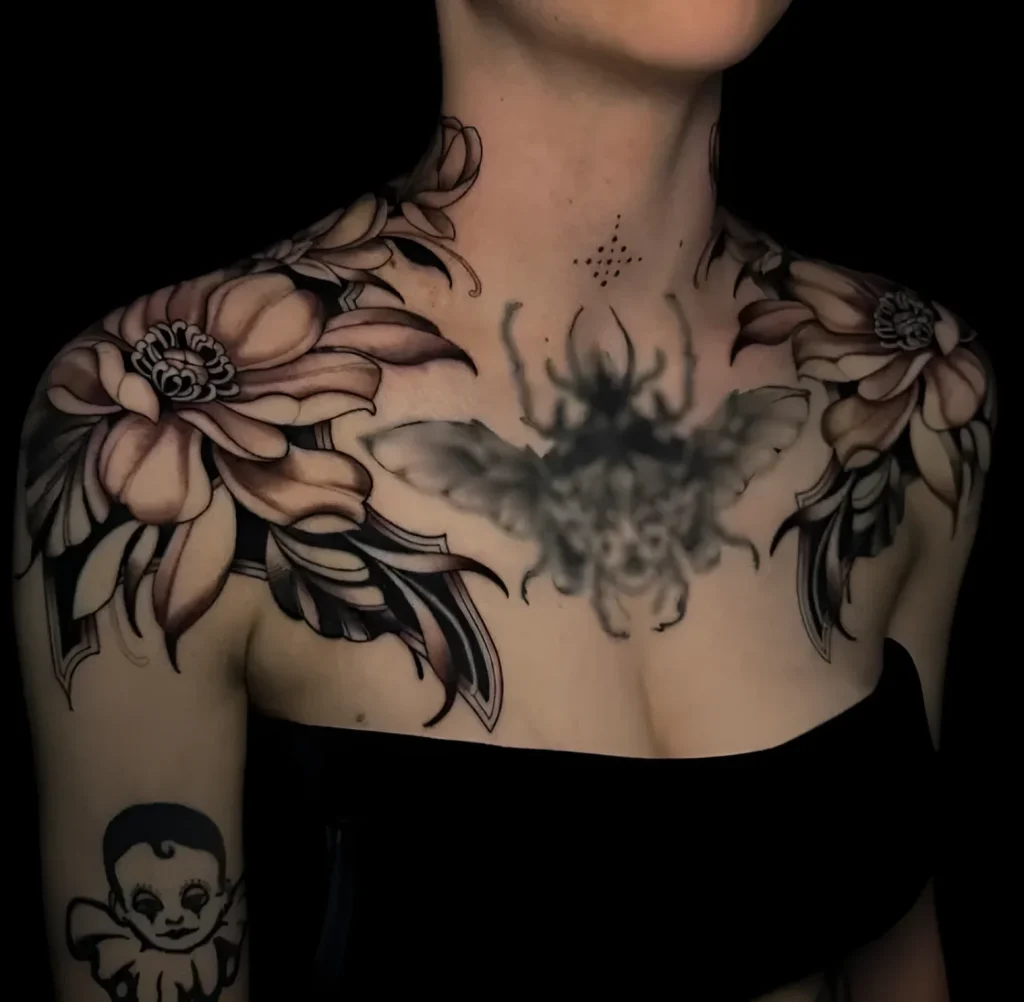
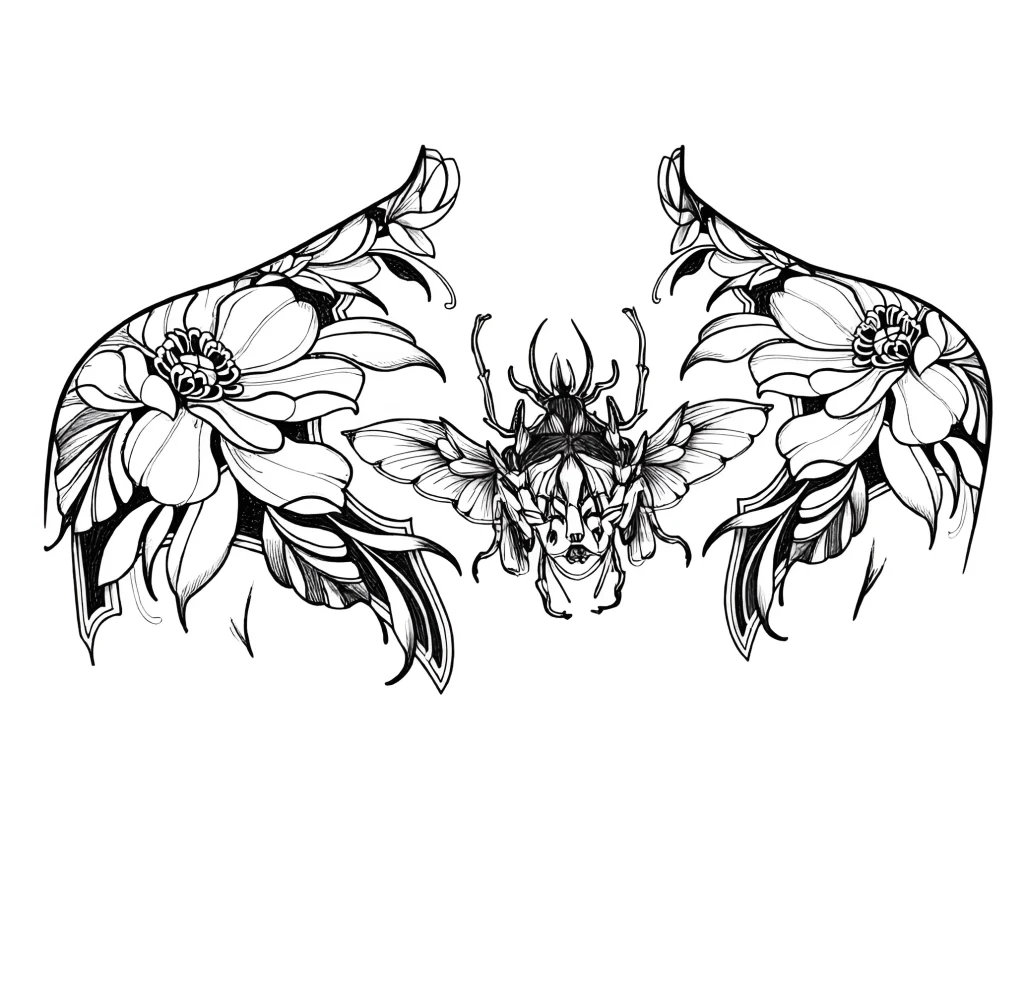
3. Proximal Area (Clavicle and Acromion): The upper part of the shoulder, closer to the acromial process of the scapula and the clavicle, has thinner skin and a smaller layer of subcutaneous fat. Here, the client’s pain sensation increases, and the risk of needle blowout is higher due to the proximity of the bone. In this area, it’s necessary to reduce needle depth and work more carefully.
4. Nerve and Vascular Bundles: Although the deltoid muscle itself is well-vascularized, which promotes quick healing, the artist must remember the passage of large nerves and vessels beneath it. This doesn’t directly affect tattooing technique, but knowing the areas of increased sensitivity (especially on the sides and lower part of the deltoid) will help you better manage the process and the client’s reaction.
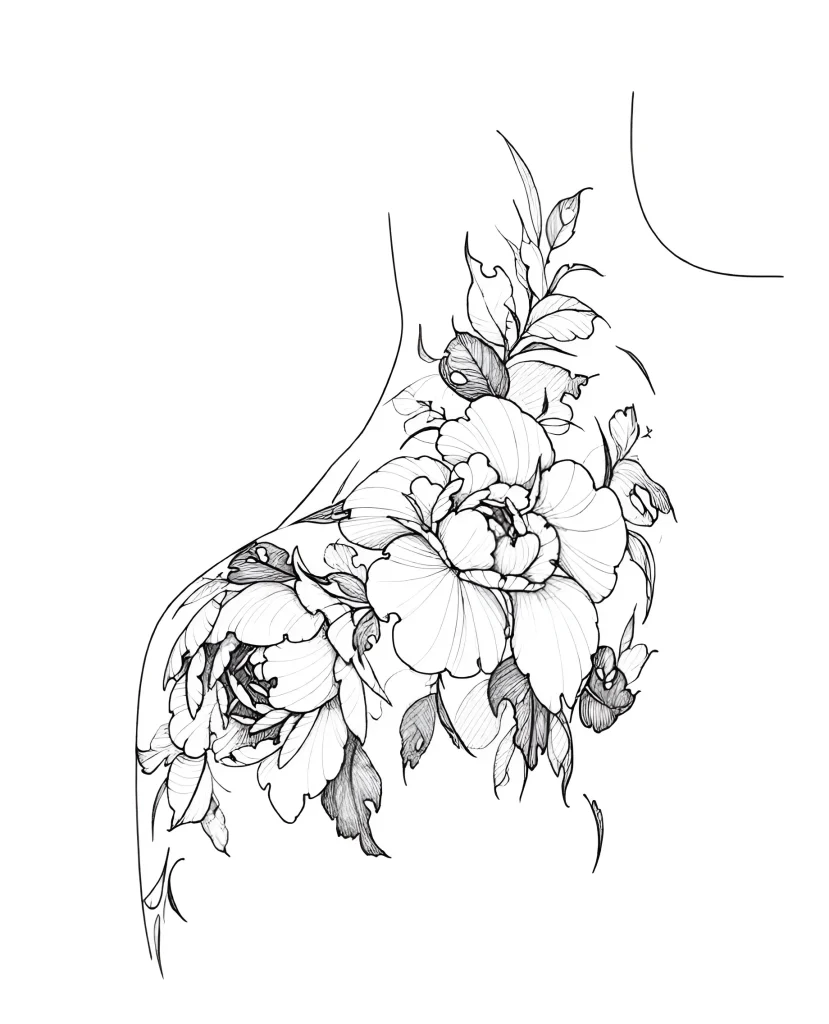
History of Shoulder Tattoos: From Warrior Traditions to Modern Aesthetics
The shoulder has been a favorite spot for tattoos for millennia. Understanding the historical context will help you explain the significance of choosing this area to your client.
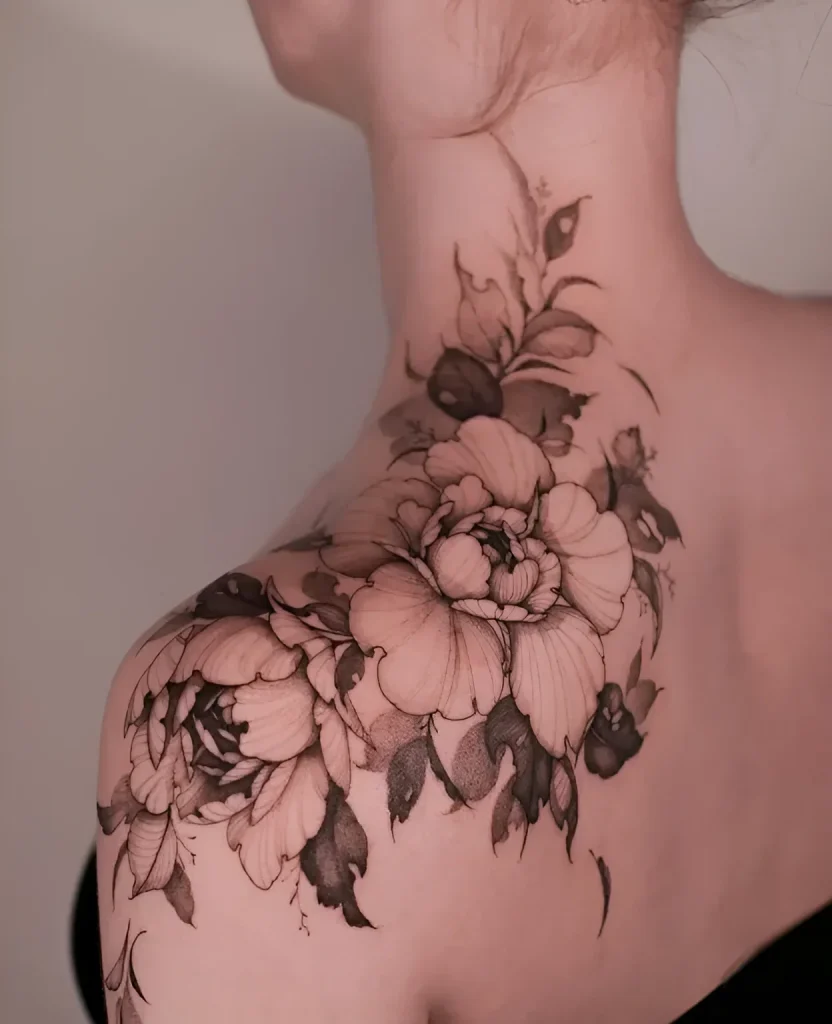
- Warrior and Protective Symbolism: In ancient cultures (e.g., Celts, Vikings, and Polynesian traditions), the shoulder, as a center of strength and the attachment point for a shield, was often covered with tattoos symbolizing protection, valor, rank, and tribal affiliation. Deltoid tattoos frequently included images of totem animals or geometric patterns intended to “strengthen” the warrior’s spirit.
- Nautical Tradition: With the development of sailing fleets, shoulder tattoos became a distinctive mark of sailors. Anchors, swallows, and sailing ships on the deltoid symbolized miles traveled and experience. It was a visual passport, visible even in uniform.
- Modern Aesthetics: Today, shoulder tattoos are valued for their ideal “canvas” — a rounded, usually large surface that allows for detailed, three-dimensional designs. They are easily concealed by clothing yet can be impressively displayed.
Meanings of Shoulder Tattoos: Symbolism and Popular Motifs
Placing a tattoo on the deltoid muscle enhances symbolism related to strength, action, and responsibility. The choice of motif often reflects the client’s desire to emphasize physical or moral fortitude.
Symbolism Enhanced by Shoulder Placement
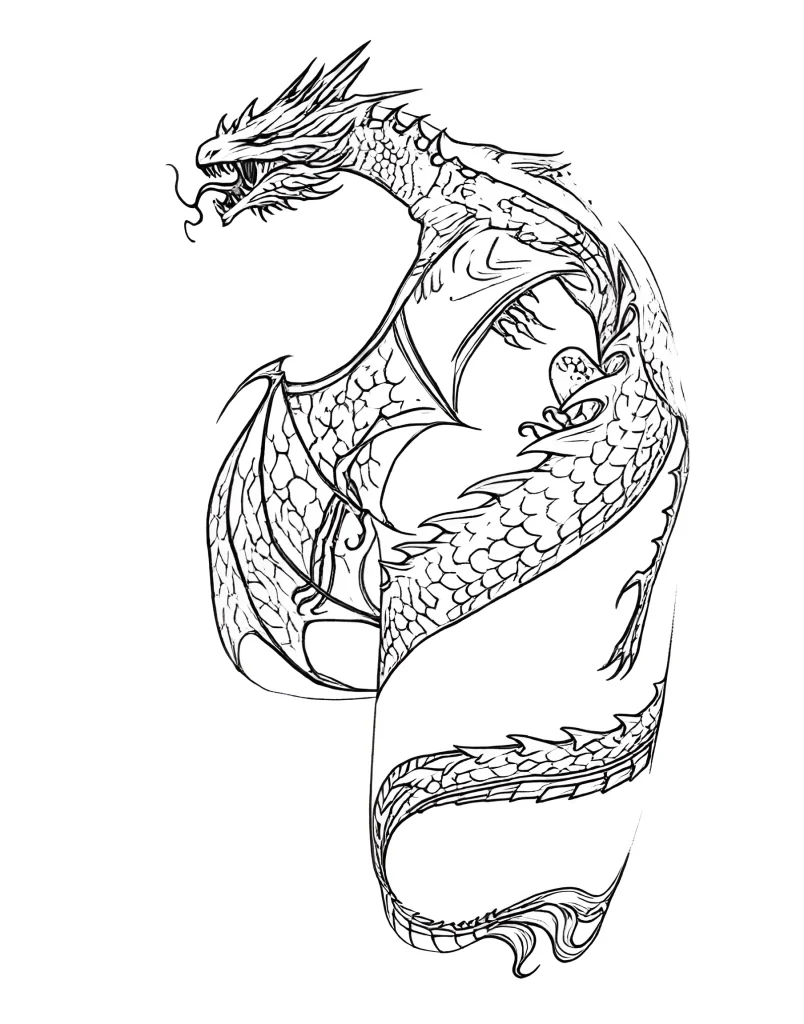
- Strength and Power: Images of predators (bear, lion), mythical creatures (dragon), or machinery (gears, biomechanics) on the shoulder are directly associated with physical strength, which is manifested in arm movements.
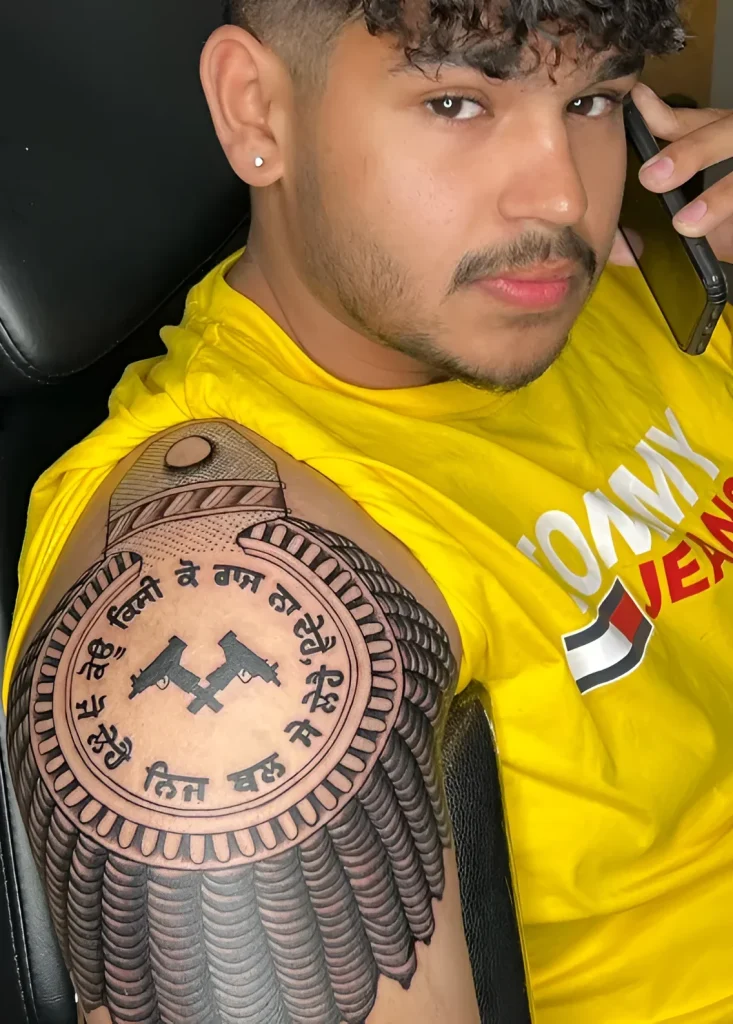
- Protection and Support: Symbols related to protection (shields, armor, mandalas) are often placed on the shoulder as a “support point” of the body.
- Responsibility and Burden: In a more philosophical sense, shoulder tattoos can symbolize the burden or responsibility a person carries (e.g., portraits of loved ones, symbols of faith).
Popular Motifs for the Deltoid Area
As an artist, you should be able to adapt these motifs to the deltoid’s shape:
1. Portraits and Realism: The deltoid muscle provides a sufficiently flat and large surface for detailed realism. However, it’s important to position the portrait so that its features are not distorted when the arm is raised.
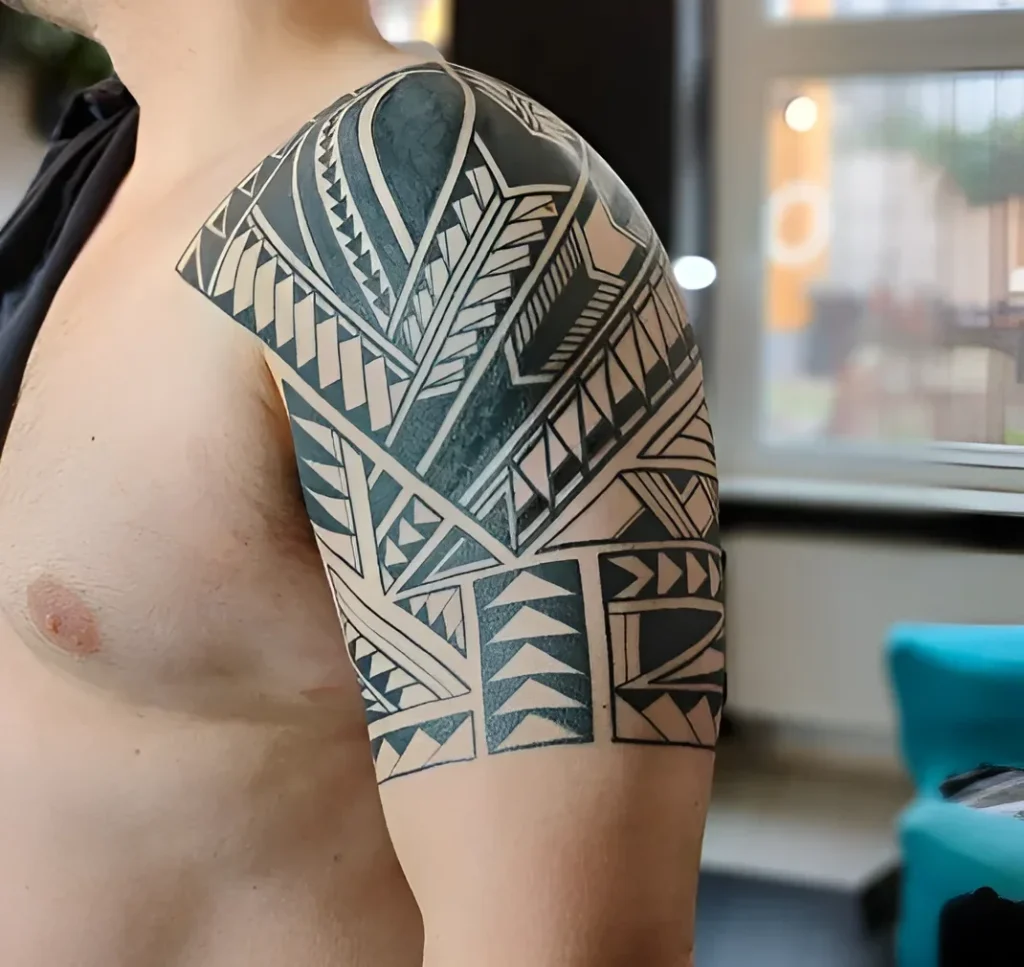
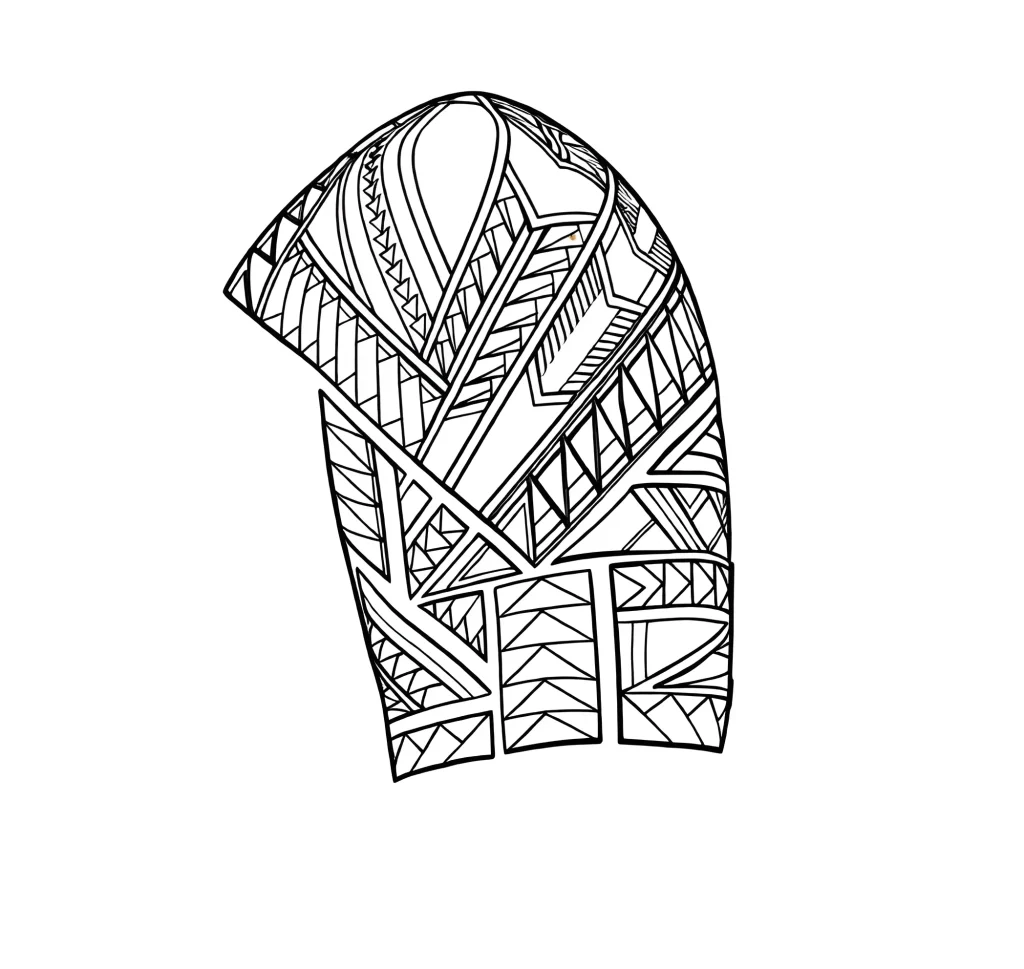
2. Geometry and Ornamentation: Ideal for accentuating the rounded shape of the shoulder. Polynesian motifs, mandalas, or Celtic knots are often used to create a “shoulder cap” that smoothly transitions into the bicep or chest.
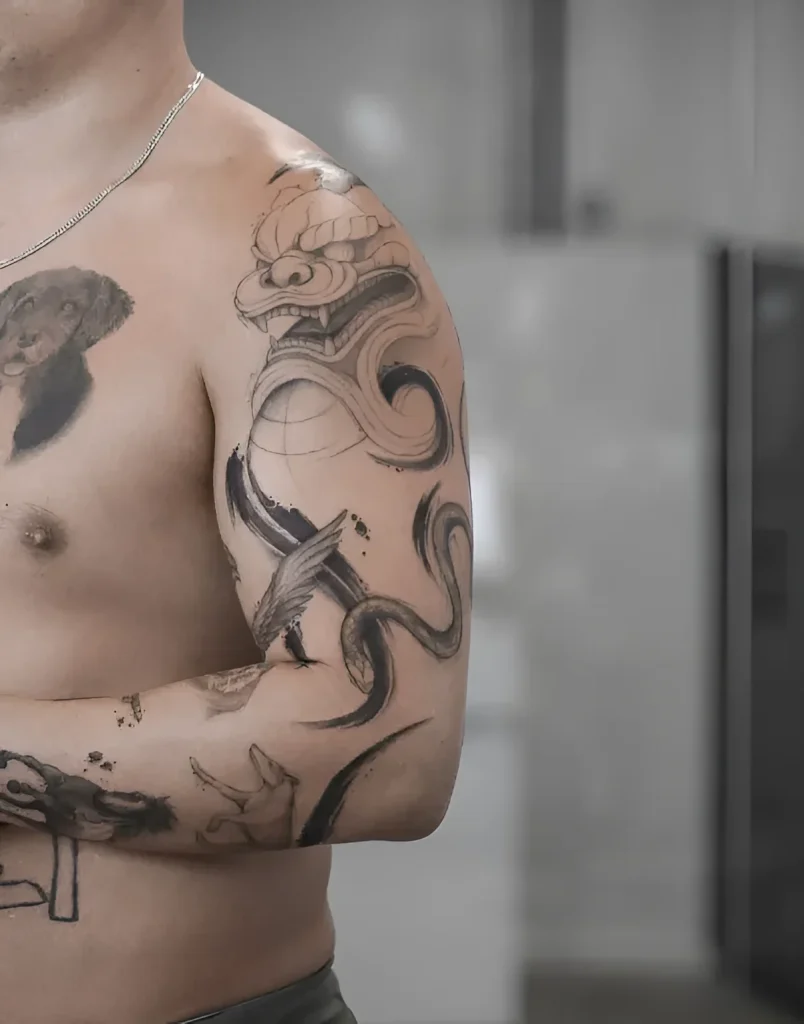
3. Wildlife: Animal heads, open mouths, or predator eyes placed on the front or side of the deltoid create a sense of volume and movement.
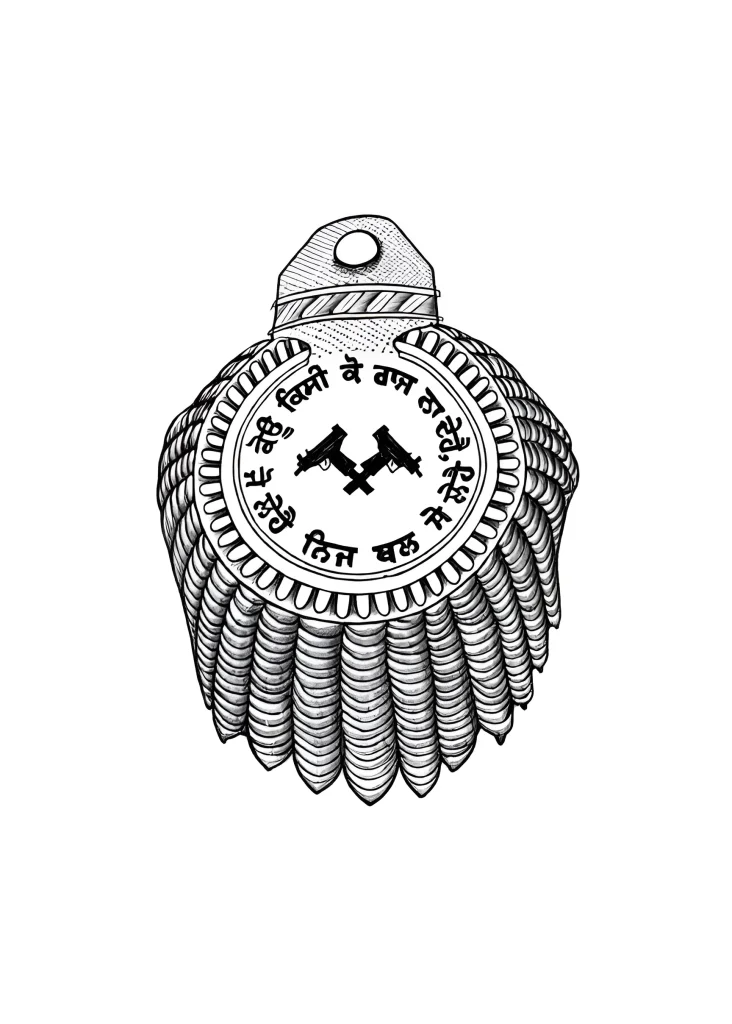
Tattoo Styles for the Shoulder (Deltoid Muscle): From Traditional to Modern
Not every style looks equally good on a curved surface. The choice of style should be dictated not only by the client’s preferences but also by how well it will “sit” on the dynamic contour.
Styles Best Suited for the Deltoid
1. Traditional and Neo-Traditional:
- Advantage: Bold, thick outlines and saturated colors hold up well on shoulder skin, which is usually dense. Clear lines don’t require a perfectly flat surface and look expressive even on curves.
- Artist’s Tip: Use the natural curve of the deltoid to give objects additional volume (e.g., for a sphere or a rose).
2. Blackwork and Geometric:
- Advantage: Allows for the creation of “armor” or “sleeve starter” effects. Solid black fills (especially on the acromial area) are very striking.
- Artist’s Tip: When creating symmetrical patterns, ensure the central axis of the design precisely matches the anatomical axis of the deltoid, otherwise the symmetry will appear “off.”
3. Biomechanical and Organic:
- Advantage: The shoulder is an ideal location for simulating torn skin with exposed mechanisms or bones, as this area itself is a powerful joint.
- Artist’s Tip: Use the deltoid’s shape to create an illusion of depth by placing dark shadows where the muscle recedes into the joint.
4. Dotwork and Linework:
- Advantage: Works well for creating light, uncluttered designs that can smoothly transition to the chest or scapula.
- Artist’s Tip: Dotwork requires perfect hand stability, as even the slightest tremor or uneven skin tension can disrupt the density of the dots.
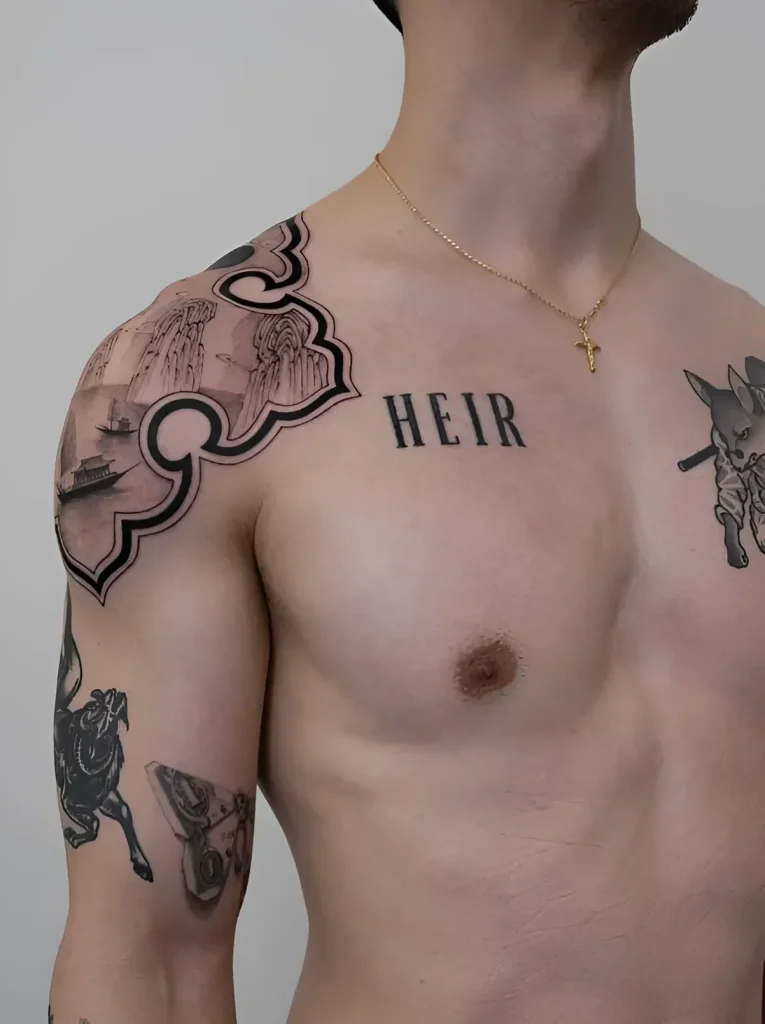
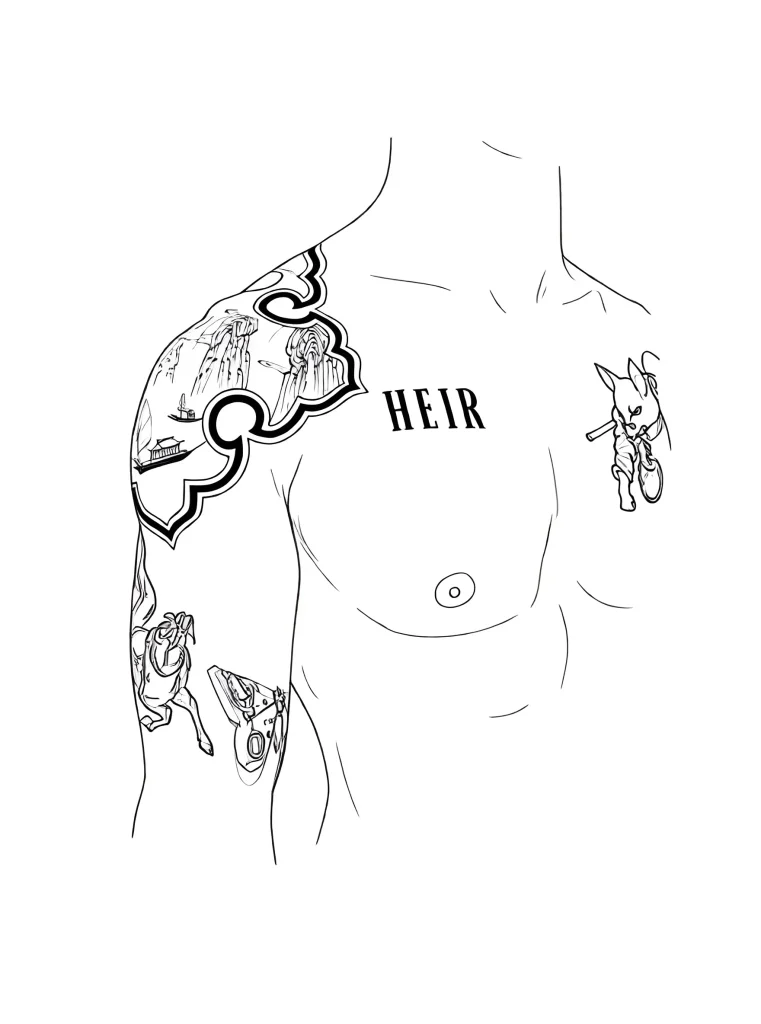
Best Placement Options for Shoulder Tattoos: Considering Anatomy and Design
Effective placement is not just about transferring a sketch; it’s about adapting it to the body’s movement and form. The shoulder is divided into several key zones, each with its own characteristics.
Zoning the Deltoid Area for Tattooing
1. “Shoulder Cap”:
- Description: Covers the upper and side parts of the deltoid, often used as the start of a “sleeve.”
- Features: Ideal for large, centered elements that need to appear voluminous. Smooth transitions to the neck and scapula are important here.
- Artist’s Tip: When applying the stencil, ensure it perfectly follows the curve. Avoid straight lines that might “break” on the bend.
2. Anterior Deltoid:
- Description: The area facing the chest. Visible when a person stands upright.
- Features: Often used for more personal, hidden motifs that the client wants to see themselves. This area is more sensitive as the skin is thinner than on the side.
- Artist’s Tip: Ideal for vertical or slightly diagonal compositions that follow the line of the clavicle.
3. Posterior Deltoid:
- Description: The area facing the scapula.
- Features: Ideal for designs that require integration with the scapula or triceps (e.g., wings, large animals looking backward).
- Artist’s Tip: Working in this area requires the client to sit or stand in the most stable position possible, as the skin stretches significantly when leaning forward or bringing the shoulder blades together.
4. Inner (Axillary) Area:
- Features: Extremely sensitive, thin skin, many lymph nodes.
- Artist’s Tip: Avoid dense pigmentation in this area unless it’s part of a full sleeve. Work more gently, using a lower machine speed.
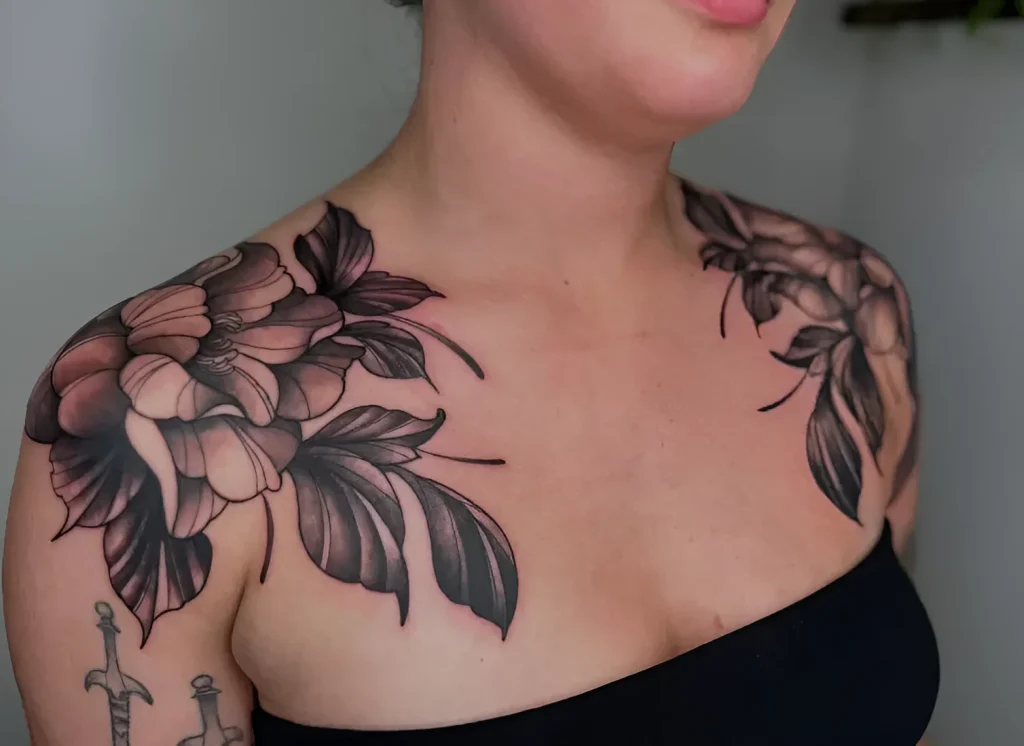
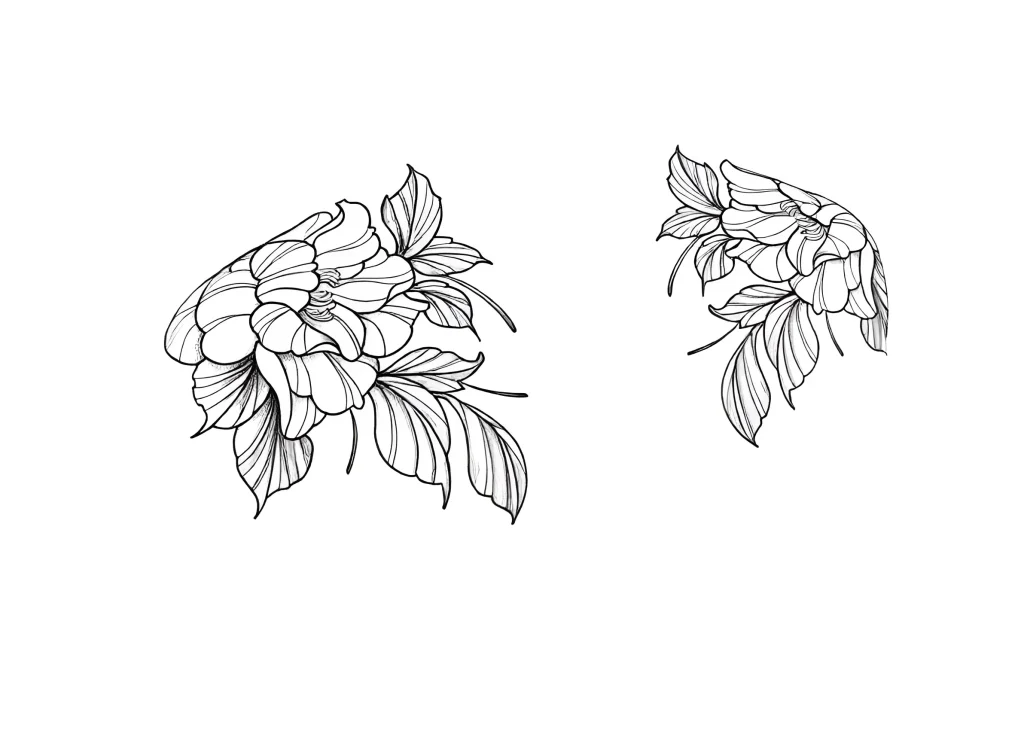
Tips for Beginner Tattoo Artists: How to Create the Perfect Shoulder Tattoo
Working with the deltoid requires specific techniques different from working on flat surfaces (forearm or shin).
Technical Nuances of Working with Curves
1. The Art of Stretching:
- Three-Point Stretch Rule: Use a three-point stretching technique, not just two. Two tension points (artist’s fingers) hold the skin, and a third (e.g., client’s palm or your second hand) supports the muscle from below to prevent it from shifting during work.
- Working with Outlines: When drawing long lines along a curve (e.g., outlining the edge of the “shoulder cap”), work with short, confident strokes, constantly changing the stretching angle to keep the line smooth, not jagged.
2. Needle Entry Angle:
On flat areas, we aim to hold the machine perpendicular to the skin (90 degrees). This is impossible on the deltoid. The angle should be as close to 90 degrees as possible relative to the specific curved section, but as the machine moves, the angle will constantly change. When working with steep curves (especially at the peak of the deltoid), the angle can be 45–60 degrees to avoid lifting the skin.
3. Working with Pigment and Color:
Shoulder skin generally accepts pigment well. However, due to movement and friction from clothing (especially for men), solid fills may require deeper saturation. Beginner artists are advised to do a second pass to check color density, especially for Blackwork or solid color realism.
Organizing the Workflow
- Client Position: For working on the anterior and lateral deltoid, a seated position is best, with the arm resting on a support at a 90-degree angle. For the posterior deltoid, the client often needs to lean forward slightly to stretch the skin over the scapula.
- Lighting: Due to the rounded shape of the shoulder, shadows can significantly distort the perception of the work. Use directional lighting that can be easily moved to avoid shadowed “gaps” during filling.
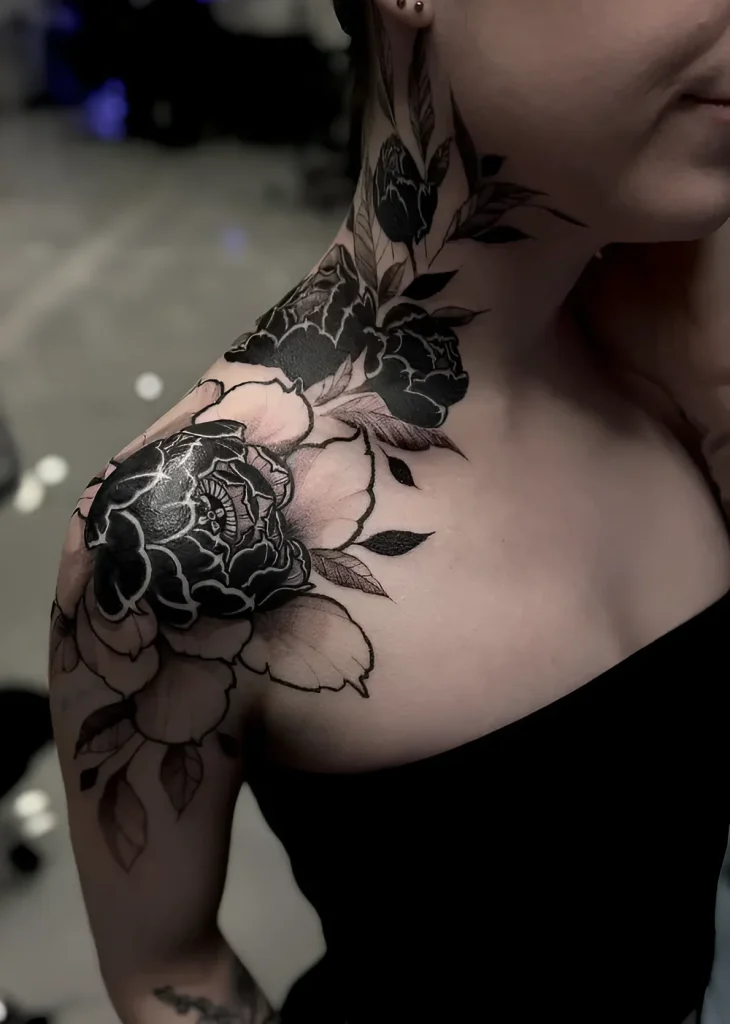
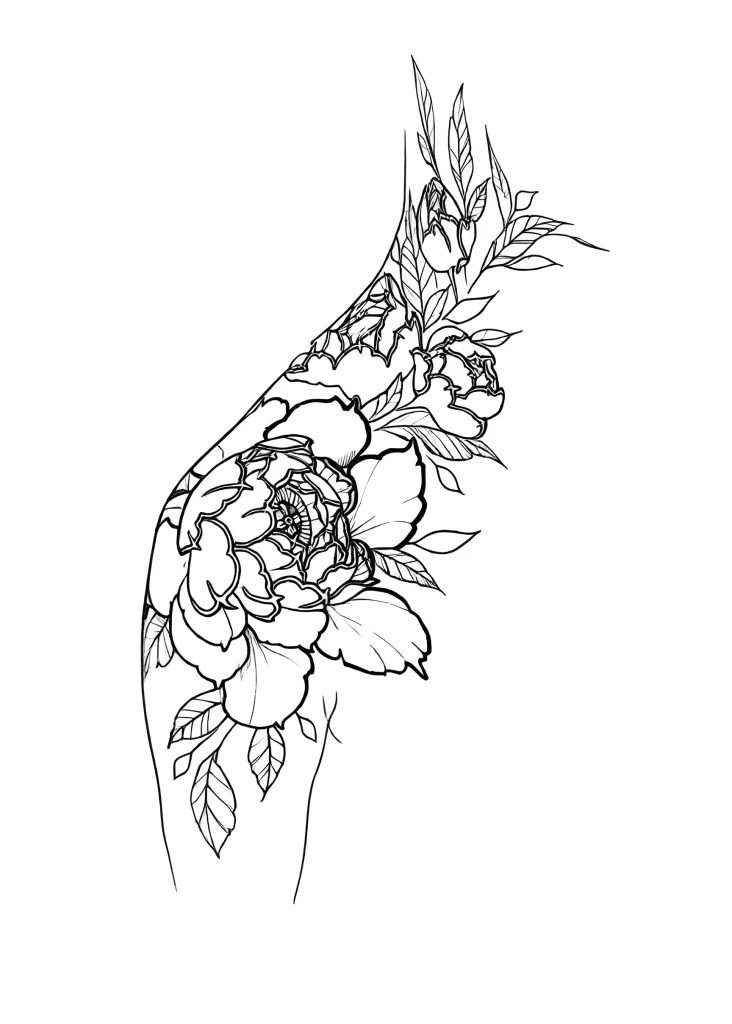
Shoulder Tattoo Aftercare: Recommendations for Clients and Artists
Healing a shoulder tattoo has its peculiarities related to constant movement and clothing friction.
Client Recommendations (What the Artist Should Explain)
1. Limiting Movement: For the first 3–5 days, the client should minimize sharp shoulder movements (especially lifting heavy objects, push-ups, swimming). Excessive stretching of a fresh tattoo can lead to thicker, uneven scabs and pigment loss.
2. Clothing: Avoid tight clothing, especially with rough seams (e.g., seams on t-shirts or hoodies). Loose cotton underwear is recommended, which won’t chafe the deltoid. If the tattoo is close to the armpit, friction can be a significant problem.
3. Sleep: The client should try to sleep on the opposite side to avoid the tattoo sticking to the bedding. Since the shoulder is often in contact with the mattress, using protective film (e.g., Dermalize or Suprasorb F) in the first few days is crucial.
The Artist’s Role in Aftercare
- Assessing Healing: During a touch-up session (if needed), carefully examine areas where the skin experienced maximum stretching or friction. Small pigment losses can often be observed at the peak of the deltoid.
- Physical Activity Consultation: If your client is an athlete or works out regularly, clearly specify the timeline for returning to training (usually 10–14 days for light exercise, 3 weeks for full workouts).
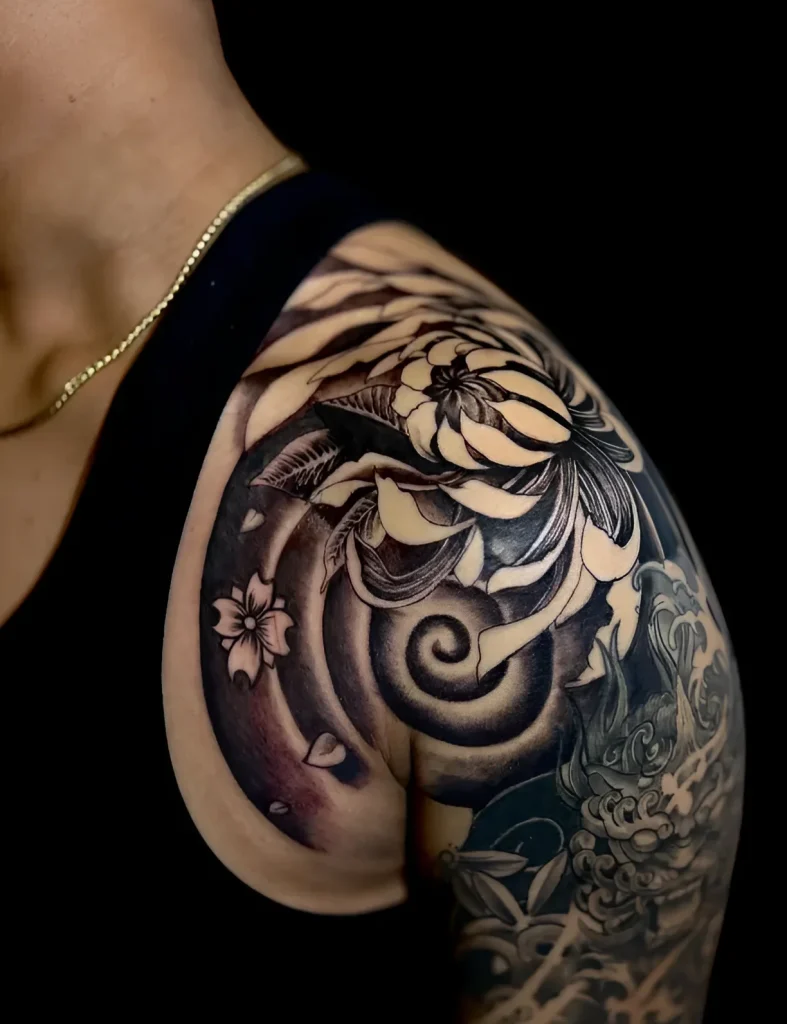
FAQ: Frequently Asked Questions About Shoulder Tattoos
Questions from Artists
1. How painful is the deltoid area?
Generally, the deltoid muscle is considered a low to medium pain area, especially compared to the ribs or elbows. The most sensitive spots are the upper part near the bone (acromion) and the inner part near the armpit.
2. How to avoid design distortion with movement?
Use curved and organic shapes. Avoid long, perfectly straight lines unless they are part of a geometric design that is specifically meant to emphasize the shape. Always check the sketch by asking the client to raise and lower their arm before starting to work.
3. Can a shoulder tattoo be the start of a sleeve?
Yes, the deltoid muscle is an ideal starting point. Its rounded shape allows for a strong visual accent that can then smoothly transition either down (to the bicep/triceps) or up (to the neck) and back (to the scapula).
Questions from Clients
- How quickly does a shoulder tattoo heal? External healing takes 7–14 days. The deltoid is an area with good blood flow, which promotes rapid recovery if there is no significant friction.
- Does a tattoo affect muscle growth? No, a tattoo is in the dermis, while muscles are deeper. However, rapid muscle mass increase can slightly stretch and distort the design, especially if the tattoo is very dense and detailed.
Interesting Facts About Shoulder Tattoos
In addition to technical and symbolic aspects, there are several curious facts associated with shoulder tattoos that can be useful in conversations with clients:
1. The “Dressy” Canvas: In the 19th century, when tattoos were just beginning to gain popularity among European and American aristocracy, the shoulder was the most popular area for family crests and insignia. This was because in formal wear or evening attire, the tattoo remained hidden yet was located in a “prestigious” place.
2. The “Sunburn” Problem for Military Personnel: For military personnel and those working outdoors, shoulder tattoos are exposed to strong UV radiation. Artists should further instruct clients on the necessity of using SPF 50+ sunscreen, as sunburn on the deltoid occurs faster than on less exposed areas of the body.
3. The “Rock of Ages” Phenomenon: One of the most classic and recognizable motifs in traditional tattooing, “Rock of Ages,” was often placed on the shoulder. This image symbolized unwavering faith and resilience, and its rounded shape was perfectly suited for the central part of the deltoid.
Working with the deltoid muscle is an excellent opportunity for a beginner artist to demonstrate their skill in working with volume and dynamics. Remember: a detailed knowledge of anatomy, proper skin stretching, and adapting the design to the curvature are the three pillars upon which a perfect shoulder tattoo is built.
Additional Images
Gallery of remaining images (click to view):


