Tattooing on the buttocks is one of the most complex and specific areas to work on, requiring the artist not only to have a high artistic level but also a deep understanding of anatomical and technical nuances. This area, despite its extensiveness, has unique characteristics related to the density of adipose tissue, skin elasticity, and the inevitable friction during the healing process. We have prepared the most detailed and expert guide to help beginner tattoo artists confidently master working with this part of the body, minimizing risks and ensuring an ideal result for the client.
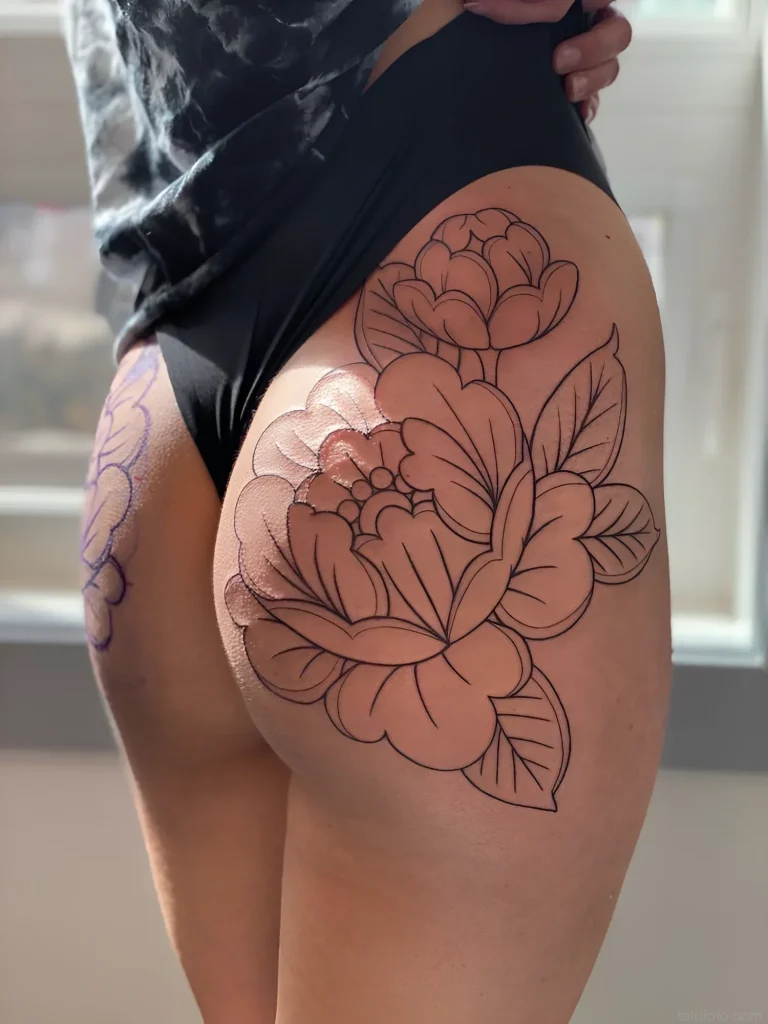
Tattoos on the Buttocks: A Complete Guide for Beginner Tattoo Artists – Where to Start
The first step towards successfully tattooing the buttocks is thorough preparation, encompassing both psychological and technical aspects. As this is an intimate area, client trust and artist professionalism are paramount.
1. Consultation and Confidentiality
- Building Trust: First and foremost, you must ensure maximum comfort and confidentiality. Discuss the design, size, and placement in a private setting. Make sure the client understands that specific body positioning will be required.
- Positioning: Explain to the client how they will be positioned during the session. Most commonly, lying on the stomach or side with the upper leg raised is used. For tattoos covering the side or the area under the gluteal fold, multiple position changes may be necessary.
- Skin Assessment: During the initial consultation, it’s important to assess the skin condition. The skin on the buttocks is often thicker and softer than on other areas, but it may have stretch marks or cellulite, which must be considered when developing the sketch.

2. Sketch Selection and Adaptation
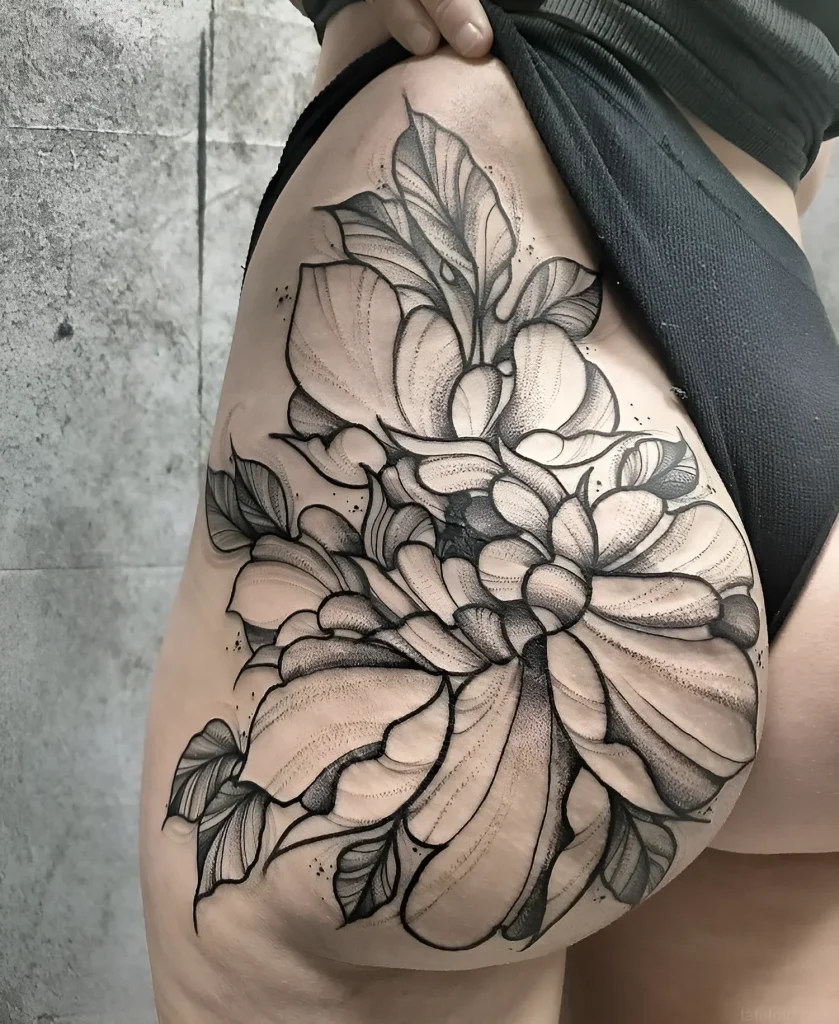
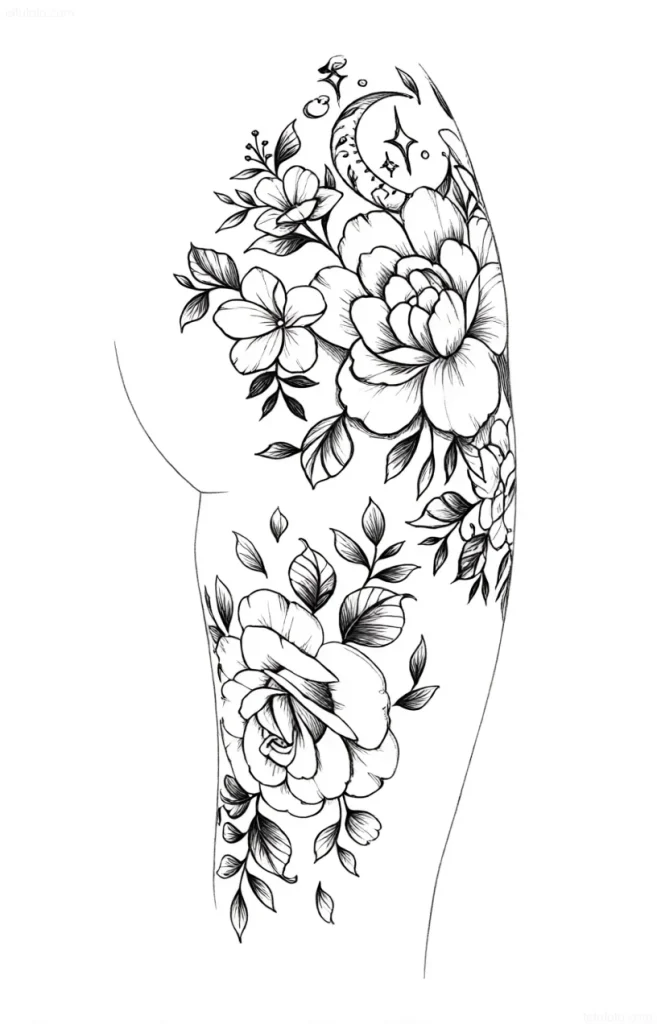
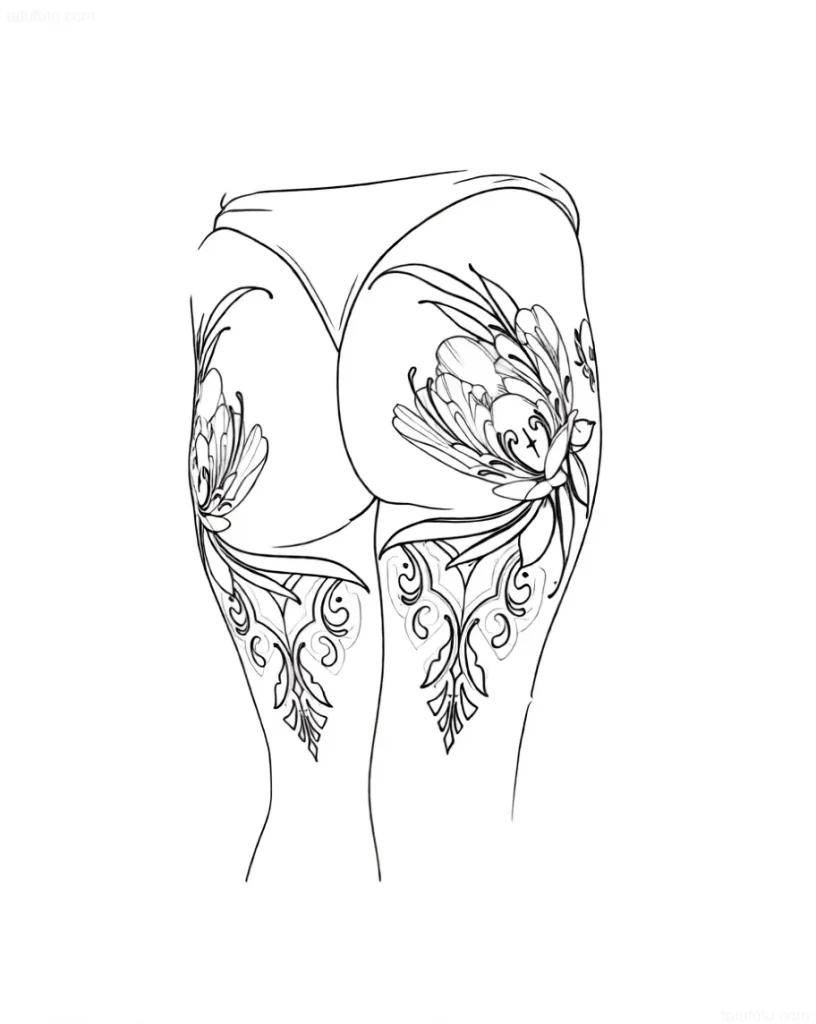
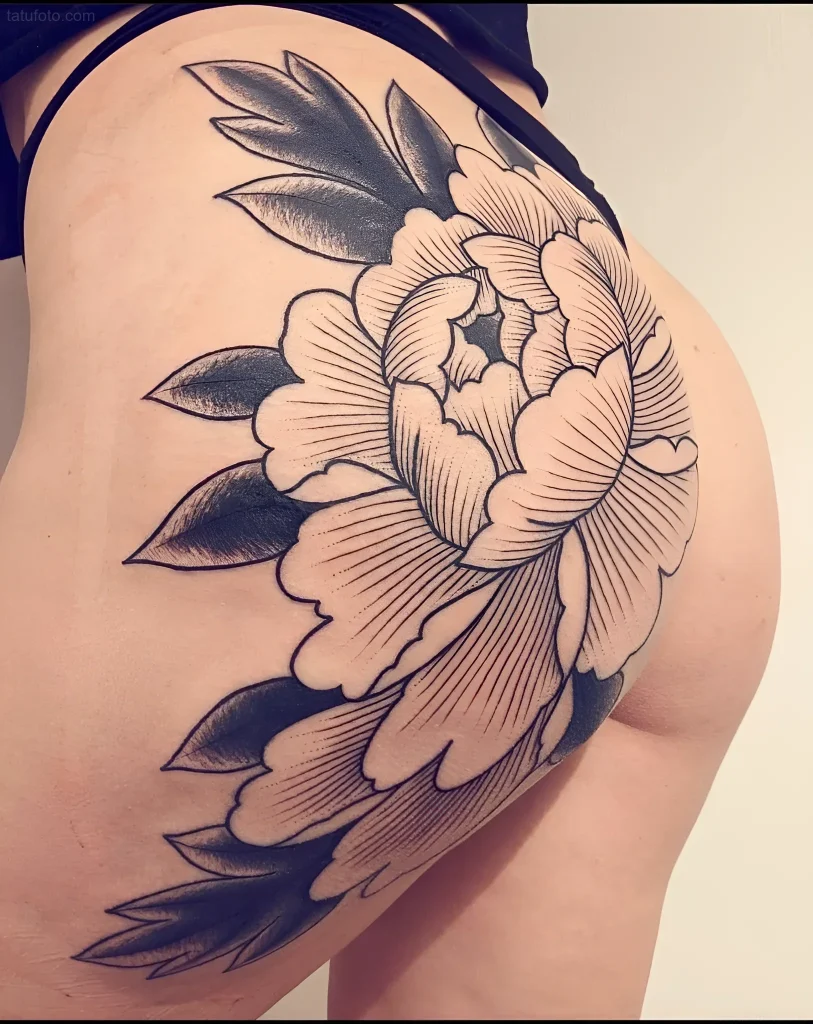
A sketch for the buttocks should consider the rounded shapes and movement. Avoid designs that might distort when the posture changes (standing/sitting). Choose designs that fit harmoniously on the volume. Large, flowing shapes (florals, ornaments) usually look better than small, detailed compositions.
3. Workspace Preparation
The workspace should be organized to provide maximum access to the tattooing area while maintaining sterility and privacy. Ensure you have enough disposable sheets, barriers, and good, adjustable lighting that allows you to see the needle depth through the thick layer of skin.

Buttock Anatomy and Skin Characteristics for Tattooing: Important Nuances
For a beginner artist, understanding the anatomy of this area is critical, as it directly affects the tattooing technique, client sensation, and healing quality. The gluteal region consists of three main muscles (gluteus maximus, medius, and minimus), covered by a significant layer of subcutaneous adipose tissue.
1. Skin Thickness and Fat Layer
- Needle Depth: The skin on the buttocks, especially in the central part, is significantly thicker than, for example, on the forearm or ankle. This requires a more confident and possibly slightly deeper needle penetration. Beginner artists often lack confidence, leading to incomplete pigment insertion (fading).
- “Cushion” Effect: The fat layer acts as a shock absorber. This can complicate skin stretching and stabilization. If too much pressure is applied, the machine can “sink in,” causing trauma.
- Area Under the Gluteal Fold: The skin here is thinner and prone to creasing, requiring extremely careful stretching and a more delicate approach, similar to working on the inner thigh.

2. Elasticity and Movement
The skin of the buttocks is very elastic. When the body’s position changes (standing, sitting, leaning), its shape and tension change drastically. This requires the artist to pay special attention to how the tattoo will look in static and dynamic states. The placement of the sketch should consider the tension lines to avoid visual distortion.
3. Sensitivity and Pain Threshold
Overall, the buttocks are considered a zone with a moderate pain threshold, as there are fewer nerve endings here than on bony prominences or joints. However, sensitivity can sharply increase at the edges (closer to the tailbone, lower back, or inner thigh). Warn the client about possible discomfort when working on these peripheral areas.
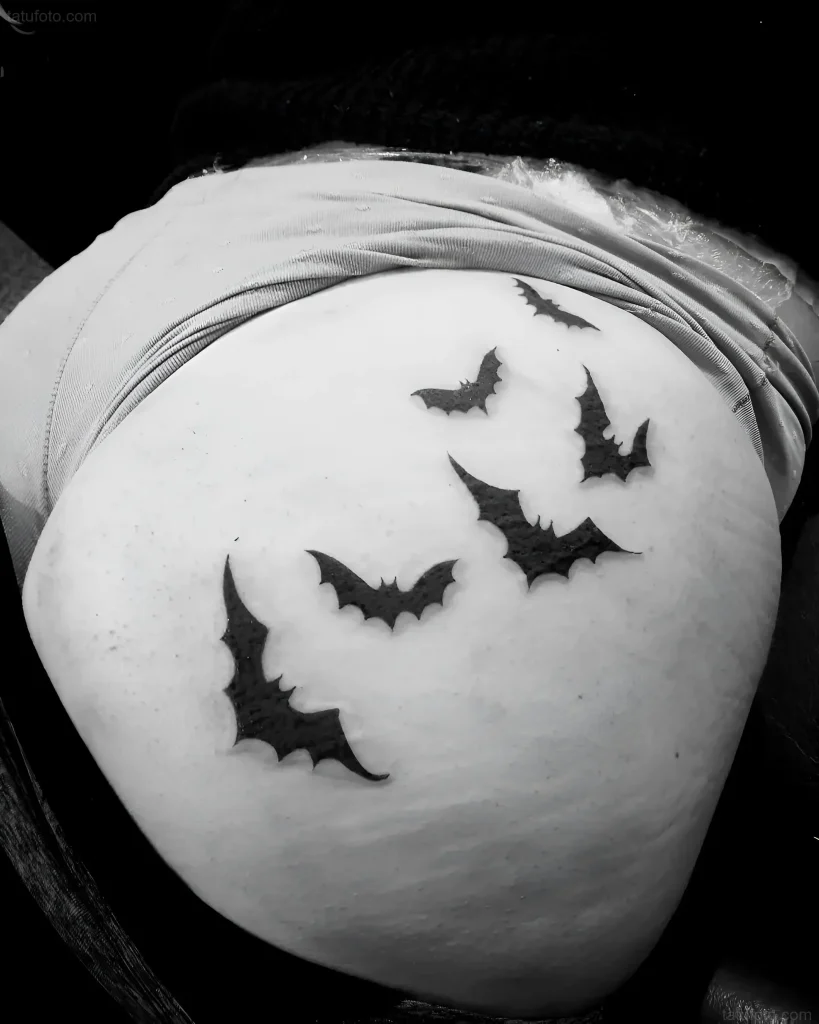
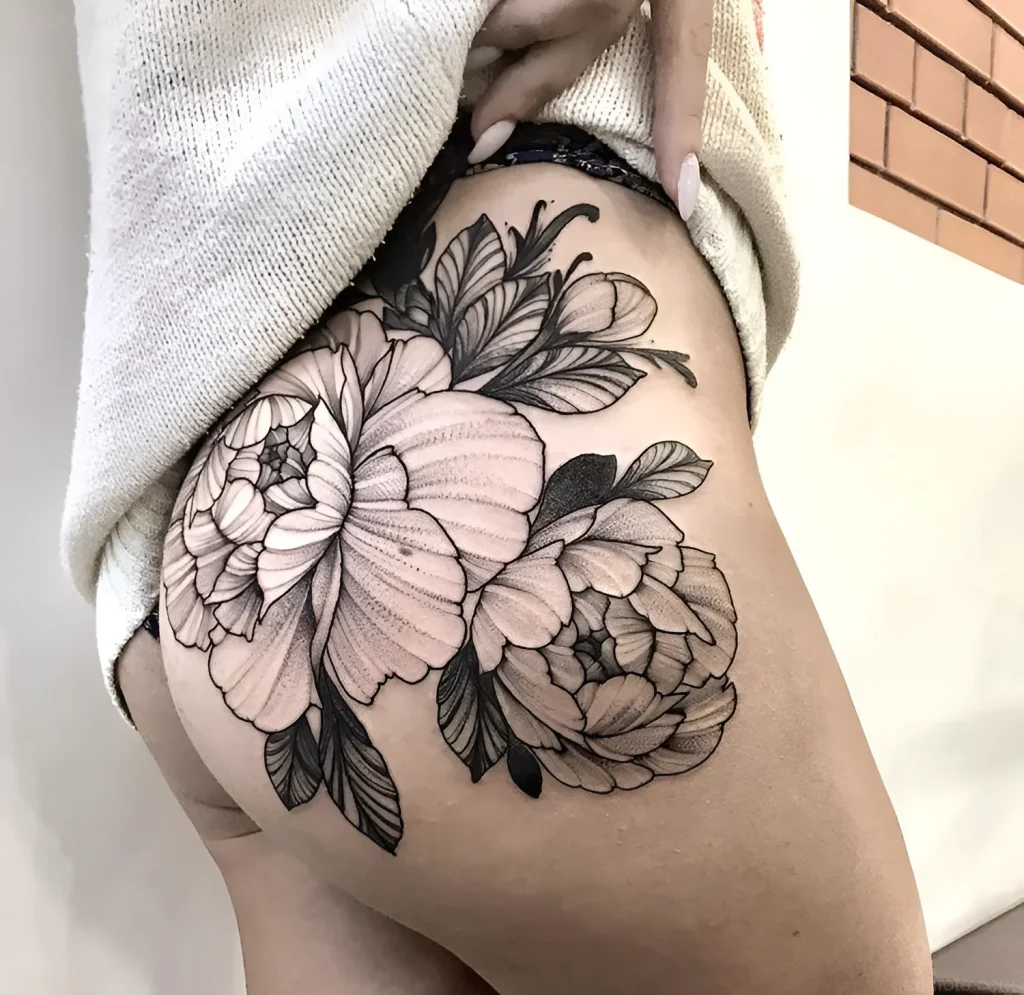
Popular Buttock Tattoo Designs: Ideas and Inspiration for Artists
The choice of a sketch for the buttocks is often dictated by the need to adapt the design to a large, rounded, and mobile surface. Artists should focus on styles that best accentuate the body’s form.
1. Ornaments and Mandalas
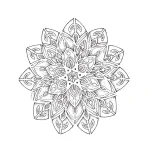
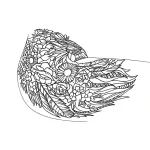
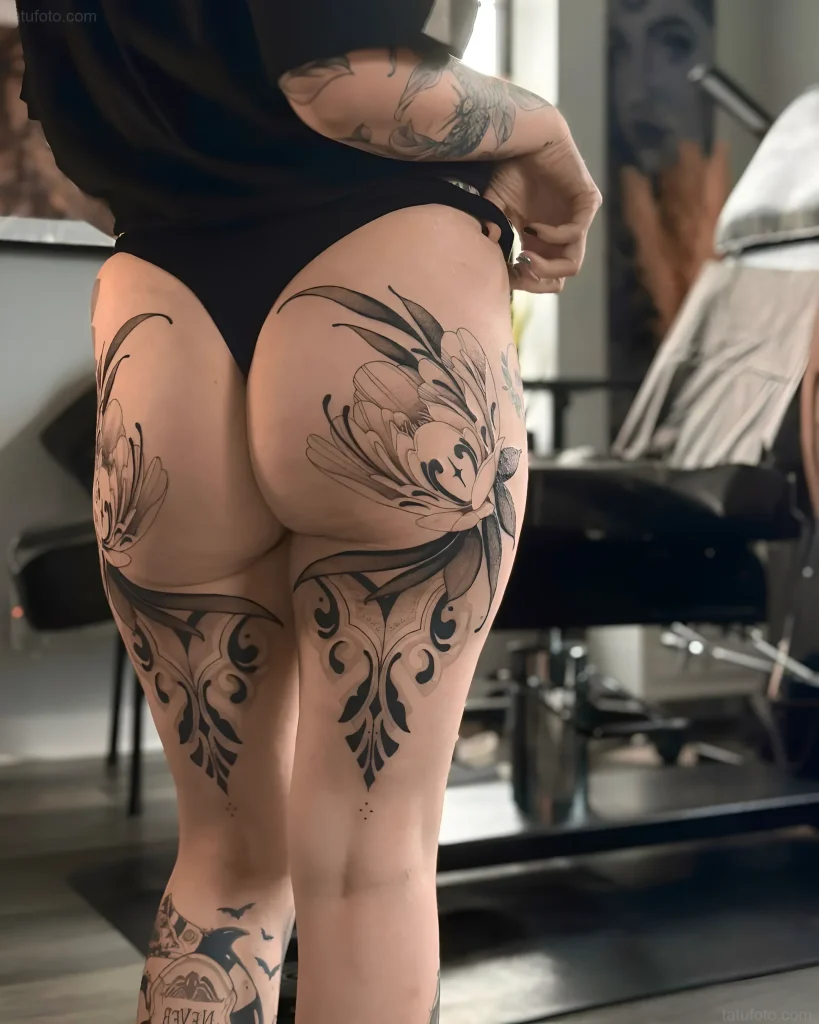
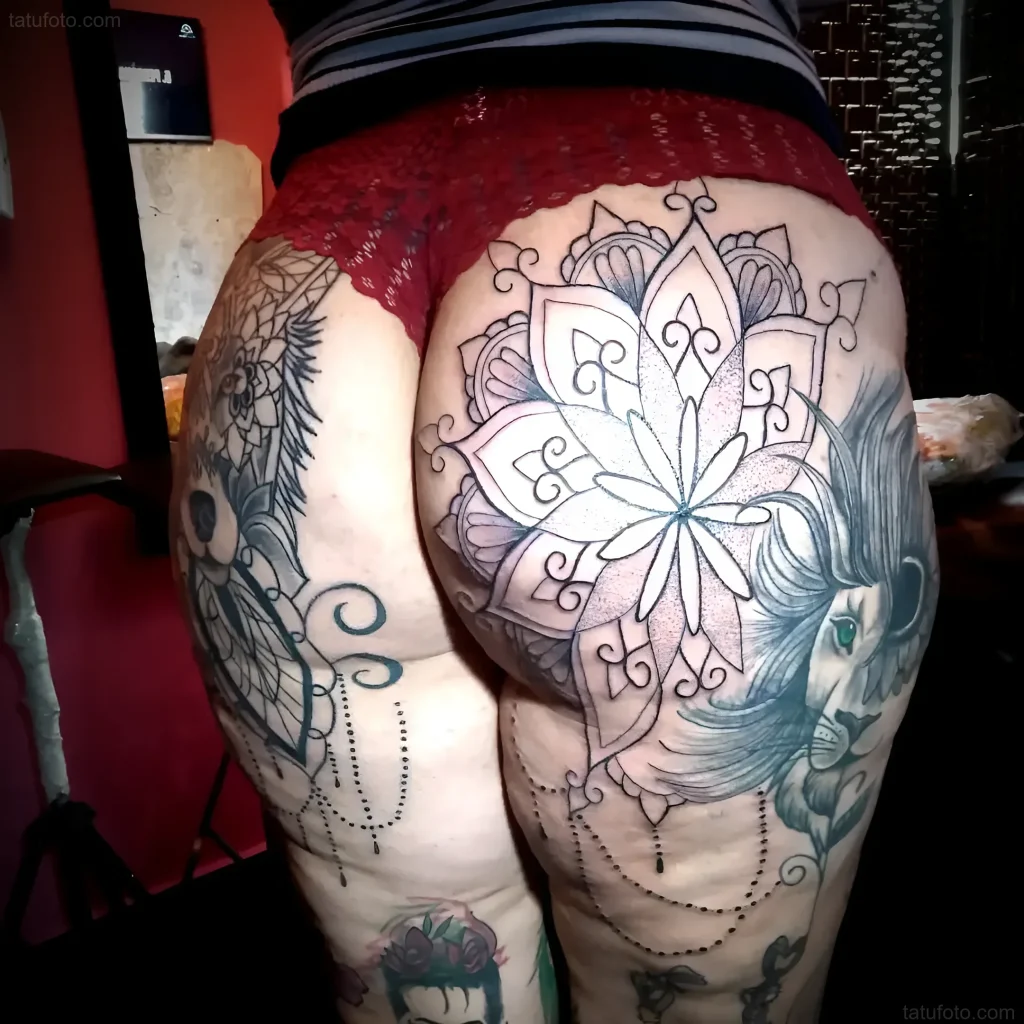
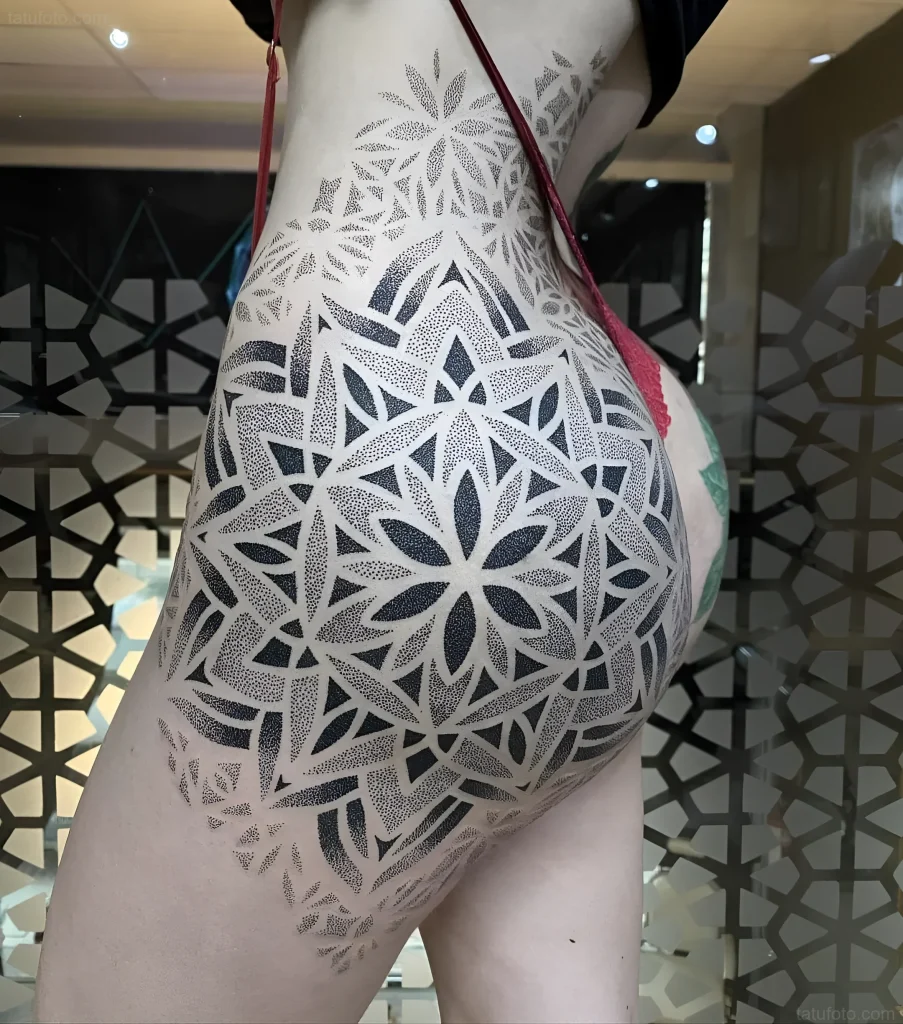
Ornaments and mandalas are among the most popular choices, as they perfectly fit the rounded shape. The central elements of a mandala are often placed on the most convex part of the buttock, with radial patterns extending outwards, following the contour. This requires high precision in symmetry and the use of quality stencils.
- Key Styles: Dotwork, blackwork, lace ornaments.
- Advantage: Allows for a “wrapping” effect around the form, minimizing visual distortions during movement.
2. Florals and Realism
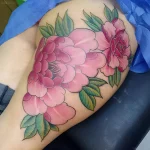
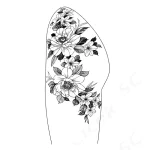
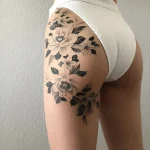
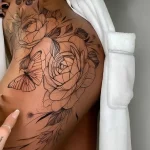
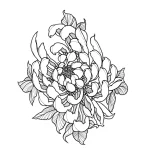
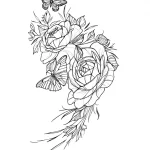
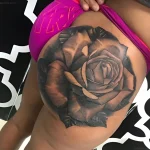
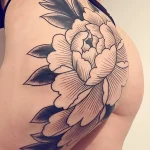
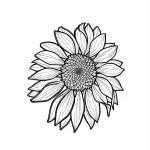
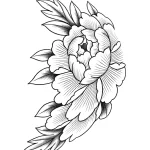
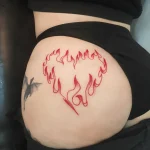
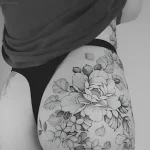
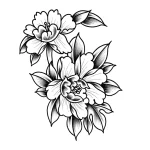
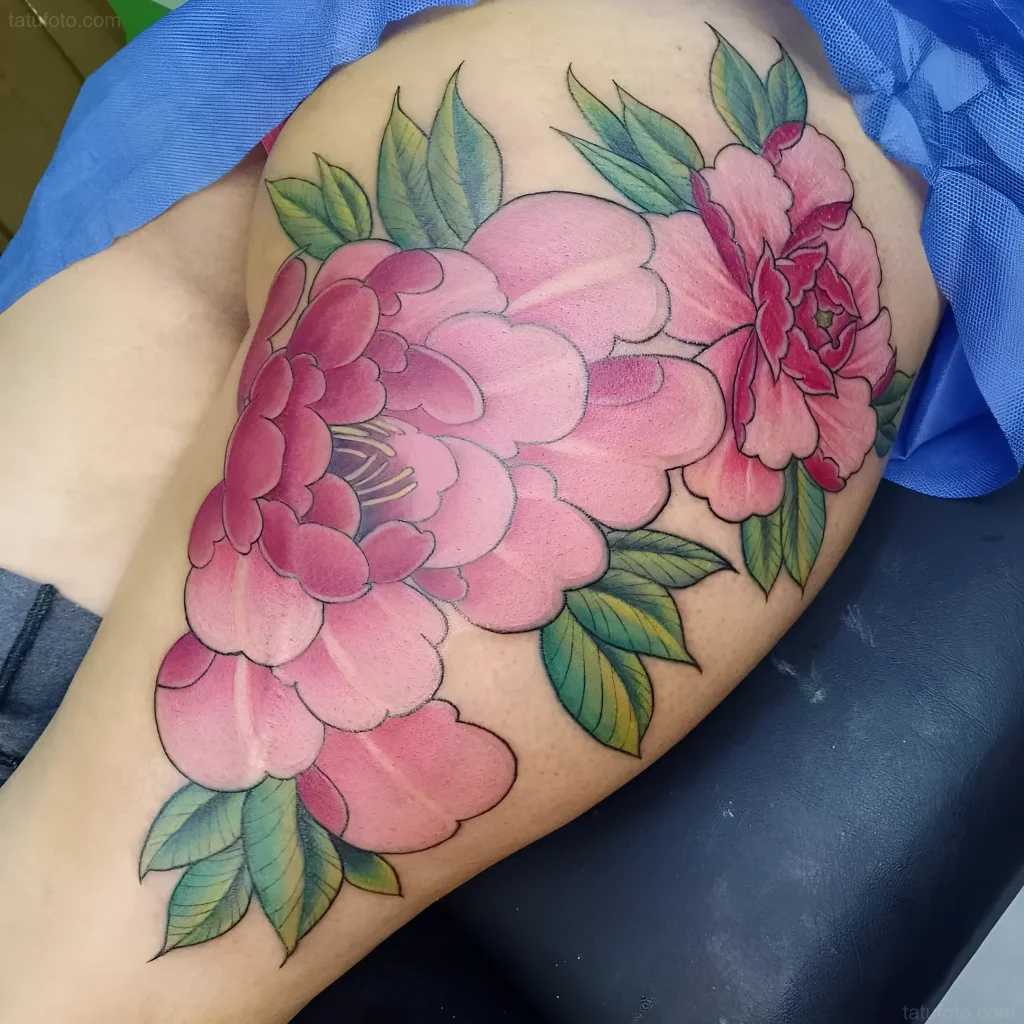
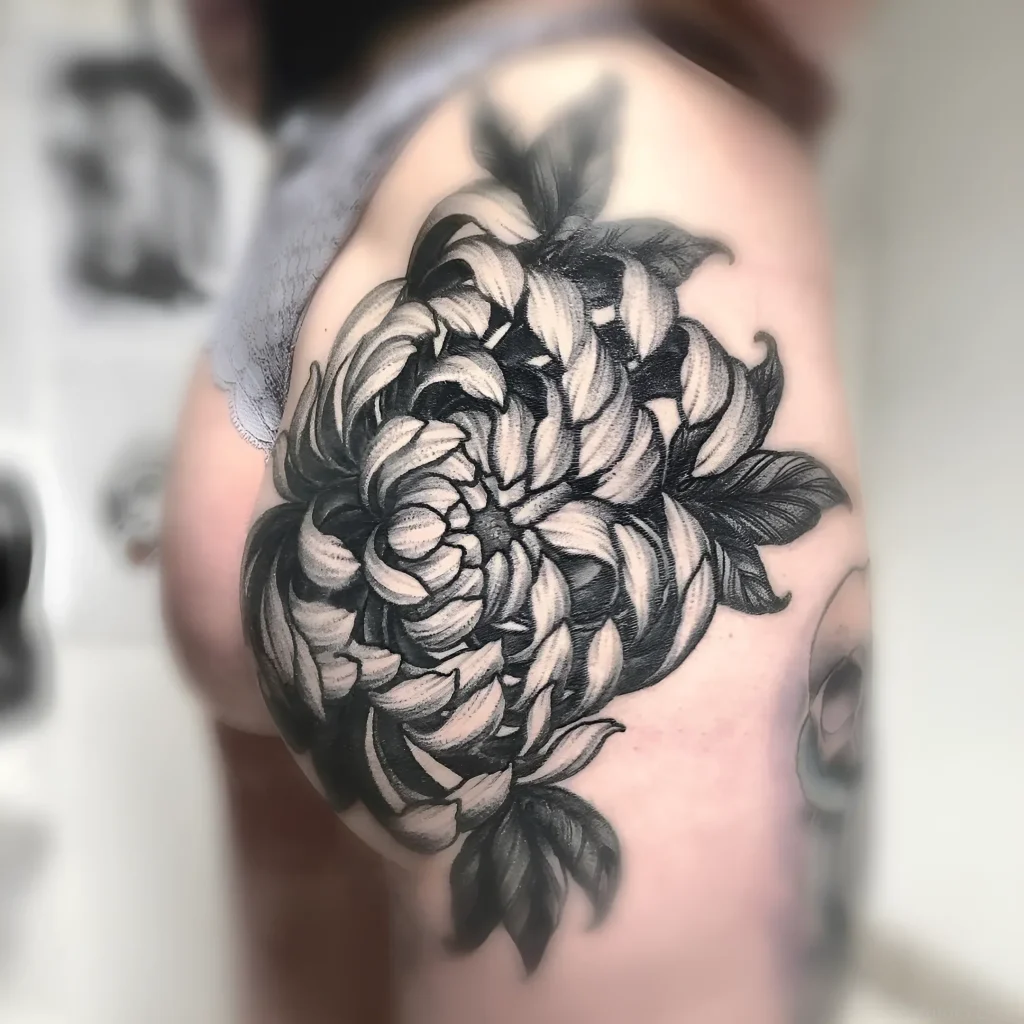
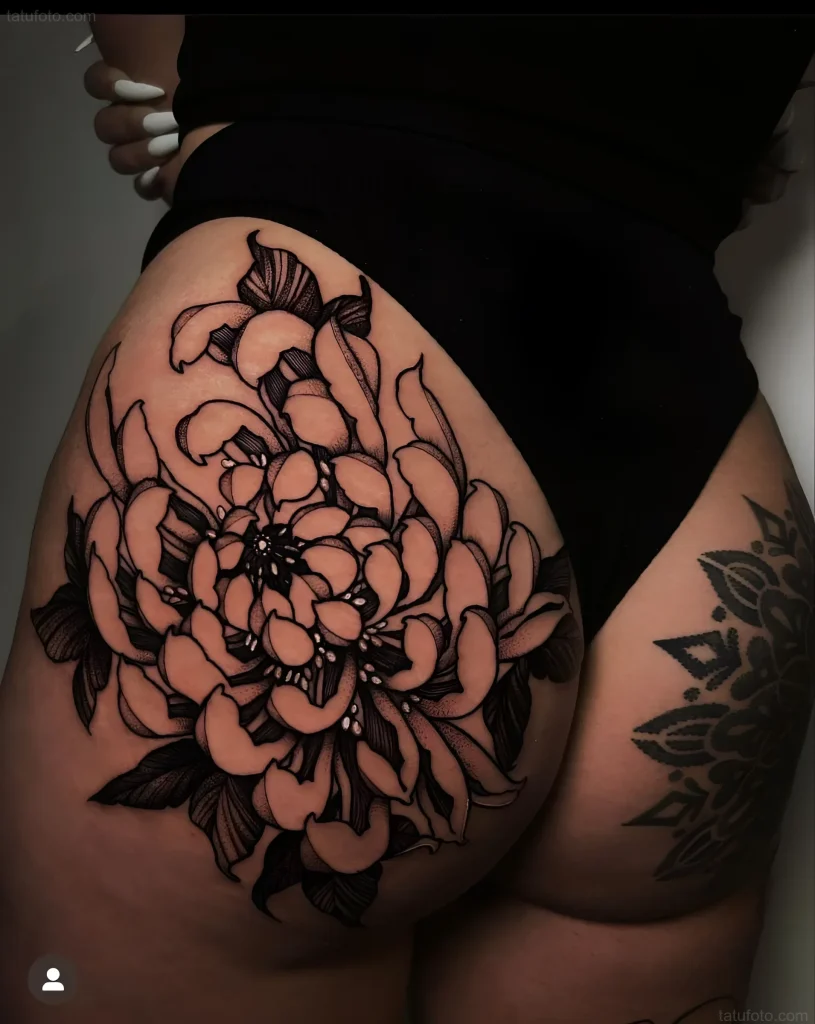
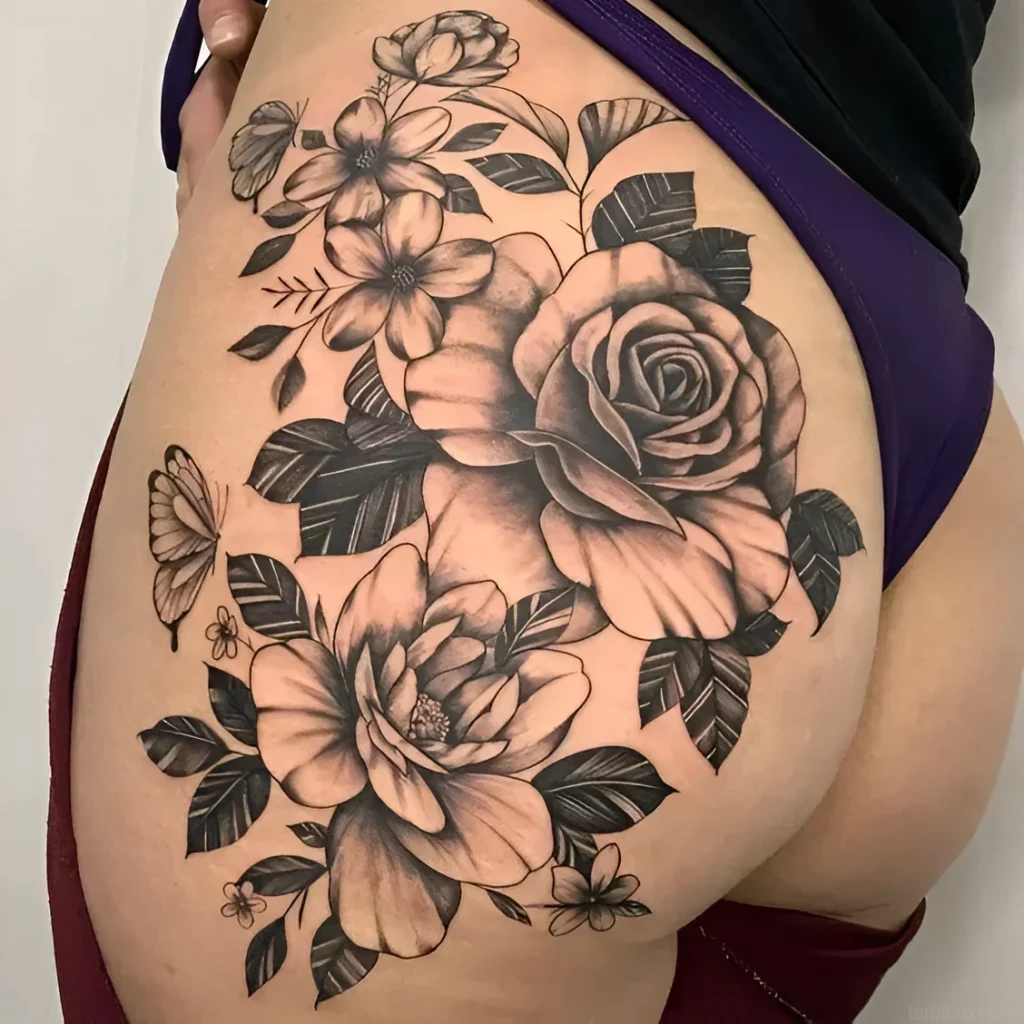
Large, flowing floral compositions (roses, peonies, lotuses) or branching patterns work wonderfully in this area. They can start from the lower back and gently descend to the thigh, creating a sense of movement. Florals allow for asymmetry, which is often easier to adapt than strict symmetry.
3. Geometry and Lines
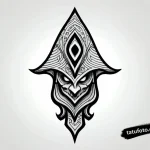
Clear geometric lines and patterns (e.g., art deco or tribal motifs) require flawless skin stretching. Any mistake in needle penetration or a shaky hand will be noticeable. Geometry is often used to frame the gluteal fold or create a “corset” effect.
4. Matching Tattoos (Symmetry)
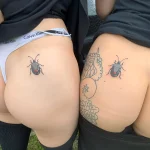
Tattoos placed symmetrically on both buttocks (e.g., two large lions, two dragons, or two mirrored flowers) require exceptionally precise stencil transfer. Beginner artists are advised to use laser levels or specialized measuring tools to ensure perfect symmetry relative to the spine and the body’s midline.
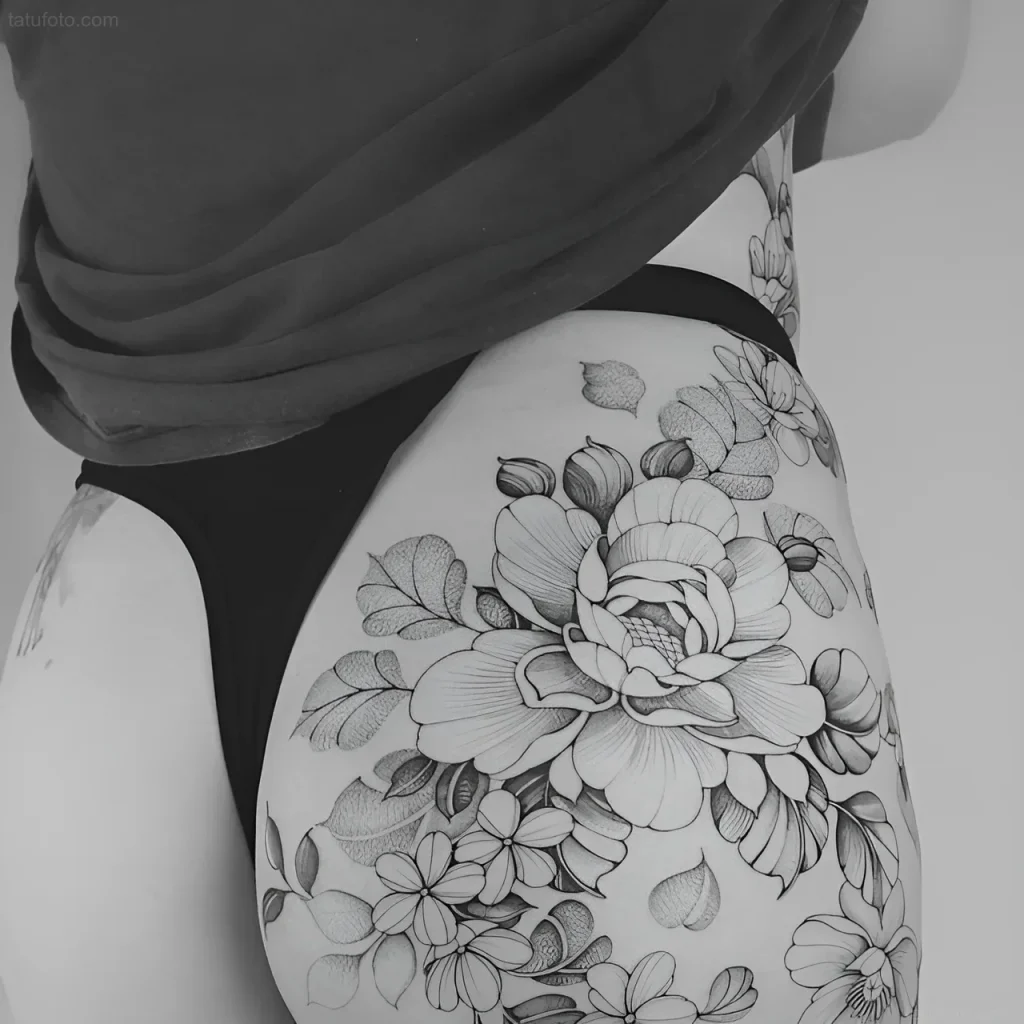
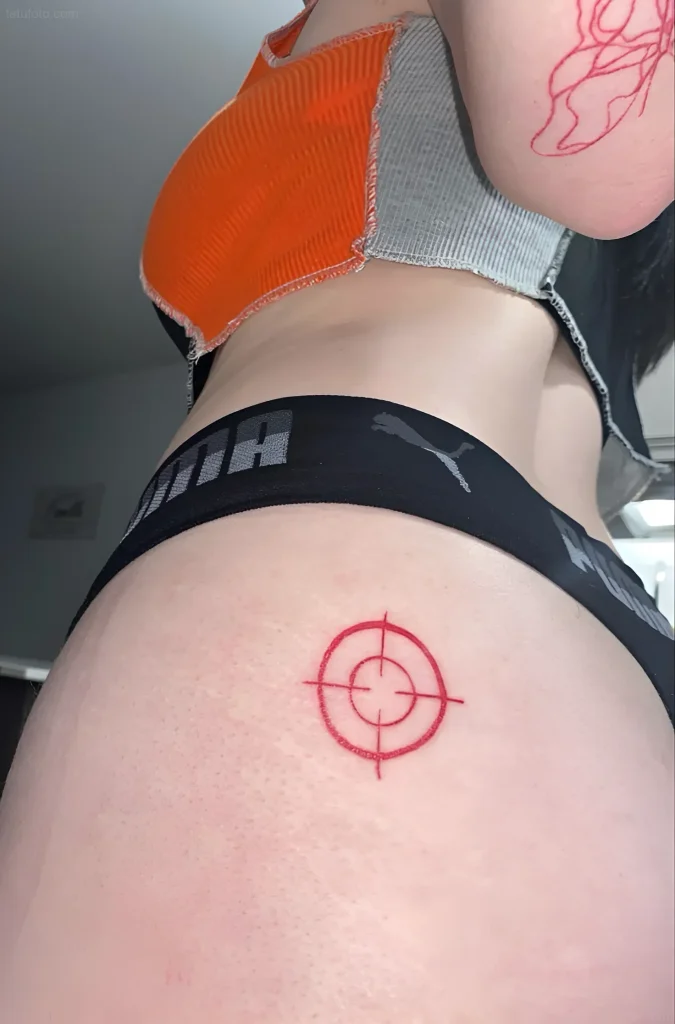
Buttock Tattooing Technique: Step-by-Step Instructions and Tips
The technique for working on the buttocks differs drastically from working on flat or bony surfaces. The main challenges are skin stretching and depth control.
1. Skin and Stencil Preparation
Thorough skin preparation (shaving, degreasing) is mandatory. Applying the stencil is the most challenging stage. Due to the rounded shape, a standard stencil may lie with creases. Use a high-quality transfer gel and let it dry completely before the client changes position.
2. Client Positioning
Proper positioning is critical for stretching. Ask the client to lie on their stomach. For working on one buttock, ask the client to turn slightly onto the opposite side or place a roll under their pelvis. This allows for maximum stretching of the skin in the working area.
3. Stretching Technique
More aggressive and multi-directional stretching is often required on the buttocks than on other areas.
- Two-Way Stretching: Use both hands to stretch. One hand pulls the skin in the direction opposite to the needle’s movement, and the second hand pulls perpendicularly.
- Working with an Assistant: When working on very large or complex sketches, especially in the thigh and gluteal fold area, an assistant may be needed to hold the skin taut.
- Avoid “Creases”: Constantly ensure that small skin creases do not form under the needle, which can lead to pigment “blowouts” or contour distortion.
4. Equipment Settings and Depth
Due to the skin thickness, a longer needle extension (up to 3.5–4 mm for outlines, depending on the machine type and client’s skin) may be required than you are used to. However, this must be compensated by less pressure to avoid deep trauma.
- Outline: Use a slower hand speed and confident, stable pressure. Ensure the pigment is inserted evenly along the entire length of the line.
- Coloring and Shading: For solid packing, use magnum needles with a large number of needles. Work with circular or “polishing” motions to avoid excessive trauma, which on thick skin can lead to bruising.
5. Pain Management and Session Duration
Buttock sessions are often lengthy. Prolonged staying in one position can cause numbness and discomfort. Take short but regular breaks to allow the client to change position, stretch, and restore circulation. This also helps the artist maintain concentration.
Buttock Tattoo Aftercare: Recommendations for Clients and Artists
Healing a buttock tattoo has its unique challenges related to constant pressure, friction, and sweating. The artist must provide the client with comprehensive instructions to minimize the risk of infection and pigment loss.
1. The Main Enemy: Friction and Pressure
The buttocks are an area that constantly comes into contact with clothing and sitting surfaces. Friction can cause severe irritation, inflammation, and, consequently, color loss.
2. Using Protective Films (Second Skin)
Strongly recommend the use of specialized breathable medical films (such as Suprasorb F, Dermalize, Saniderm) for the first 3–5 days. This film protects the fresh tattoo from friction with clothing and underwear, and also minimizes the risk of infection in conditions of high humidity.
3. Clothing Recommendations
- Loose Fit: The client should wear the loosest, most breathable clothing possible (cotton, linen) that does not stick to the tattoo or constrict it.
- Avoid Seams: Seams on underwear or jeans that run directly over the tattoo create localized pressure and friction. Recommend wearing seamless underwear or boxers.
4. Restrictions for the First Two Weeks
- Sitting: The client must minimize sitting time as much as possible. If this is impossible (e.g., office work), donut cushions or gel cushions should be used to relieve pressure directly from the tattooed area.
- Sleeping: It is recommended to sleep on the stomach or side, avoiding direct contact of the tattoo with bedding.
- Physical Activity: Intense workouts, especially those involving gluteal muscles (squats, running), should be avoided for at least two weeks, as sweat and skin stretching can negatively affect healing.
Safety and Hygiene in Buttock Tattooing: Preventing Complications
Hygiene and safety in working with intimate areas must be of the highest standard. The risk of cross-contamination is higher here due to its proximity to underwear and natural body folds.
1. Strict Barrier Control
- Coverings: Use barrier films not only on equipment but also on the examination table. Ensure the area where the client lies is completely isolated.
- Glove Use: Always use two pairs of gloves: one for skin preparation and stencil application, and a second pair for the tattooing itself. If changing position or contacting a non-sterile surface is necessary, gloves must be changed immediately.
2. Managing Positioning and Sterility
If the client needs to stand up or change position, you must ensure that the tattooed area does not come into contact with clothing or the examination table until it is completely cleaned and covered. Use sterile wipes to temporarily cover the working area during breaks.
3. Infection Prevention
Sweating and humidity are higher in this area, creating a favorable environment for bacteria. Be sure to use antiseptic solutions to clean the skin before starting work and during the session (if necessary). Emphasize to the client the importance of daily showers and changing underwear during the healing period.
4. Working with Delicate Areas
Be especially careful when working near the anal fold or bikini area. These areas require maximum sterility, as well as discussion with the client about comfort and privacy boundaries. If the design extends beyond the buttock, clearly define the limits of your work.
Frequently Asked Questions About Buttock Tattoos (FAQ)
Beginner artists should be prepared to answer common questions related to the specifics of this area.
Q: How painful is it to get a tattoo on the buttocks?
A: Most clients rate the pain as moderate. It is one of the least painful areas compared to the ribs or knees. The highest sensitivity may be closer to the inner thigh or tailbone. The main discomfort is not related to pain, but to the necessity of lying in an uncomfortable position for a long time.
Q: Can a tattoo stretch or deform over time?
A: Yes, as the buttocks are an area where fat and muscle mass can change significantly. The key to longevity is correct sketch placement that considers tension lines. Significant weight gain or loss, as well as pregnancy, can affect the appearance of the tattoo. Your task as an artist is to explain this to the client in advance.
Q: Can I sit immediately after the session?
A: It is highly undesirable. Sitting creates pressure that hinders normal blood circulation and can damage the fresh pigment, especially in the first 24–48 hours. It is recommended to lie down or stand as much as possible. If sitting is unavoidable, use a soft cushion that relieves pressure on the tattooed area.
Q: How often should the protective film be changed?
A: If a specialized breathable film (Suprasorb, Dermalize) is used, the first layer is changed after 12–24 hours, and the second can be left on for 3–5 days. If regular plastic wrap is used, it needs to be changed every 3–4 hours, which is strongly discouraged for this area due to high sweating.
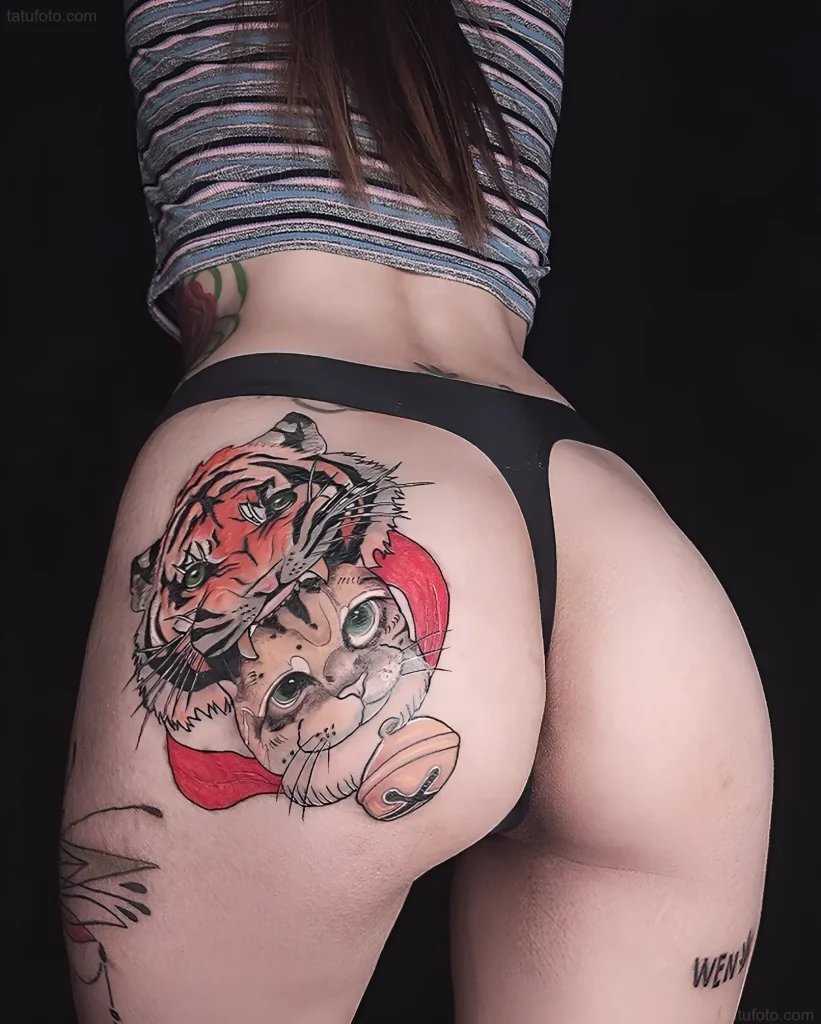
Interesting Facts and Trends in Buttock Tattoos
Buttock tattoos have long been a taboo or exclusively intimate subject. However, modern trends in body art have made this area popular for large-scale, highly artistic work.
1. The “Peach Tattoo” Movement
With the development of social media and the body positivity culture, buttock tattoos (often called “peach tattoo” or “popa tattoo” in the Russian-speaking segment) have become a symbol of confidence, sexuality, and body acceptance. This trend stimulates demand for large, detailed, and often symmetrical works.
2. Expanding the Area: From Buttock to Thigh and Lower Back
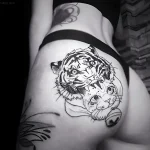
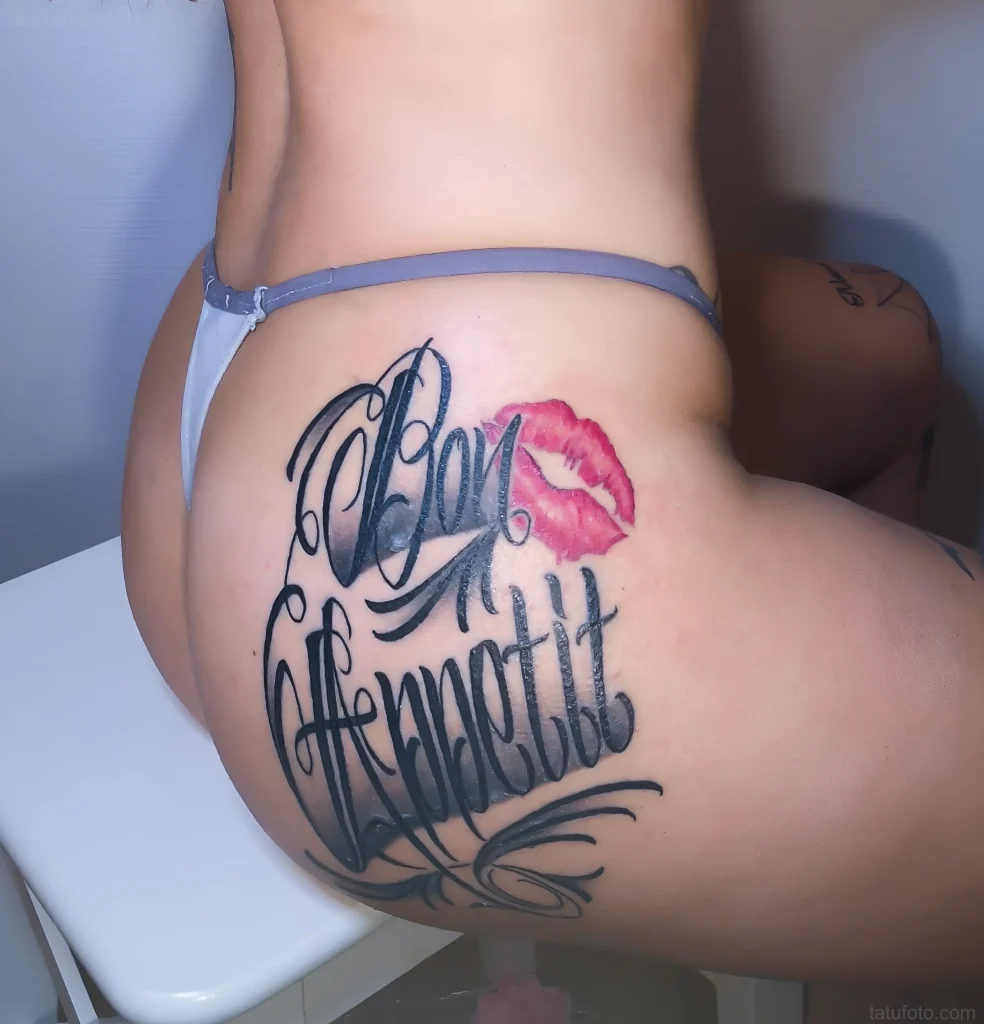
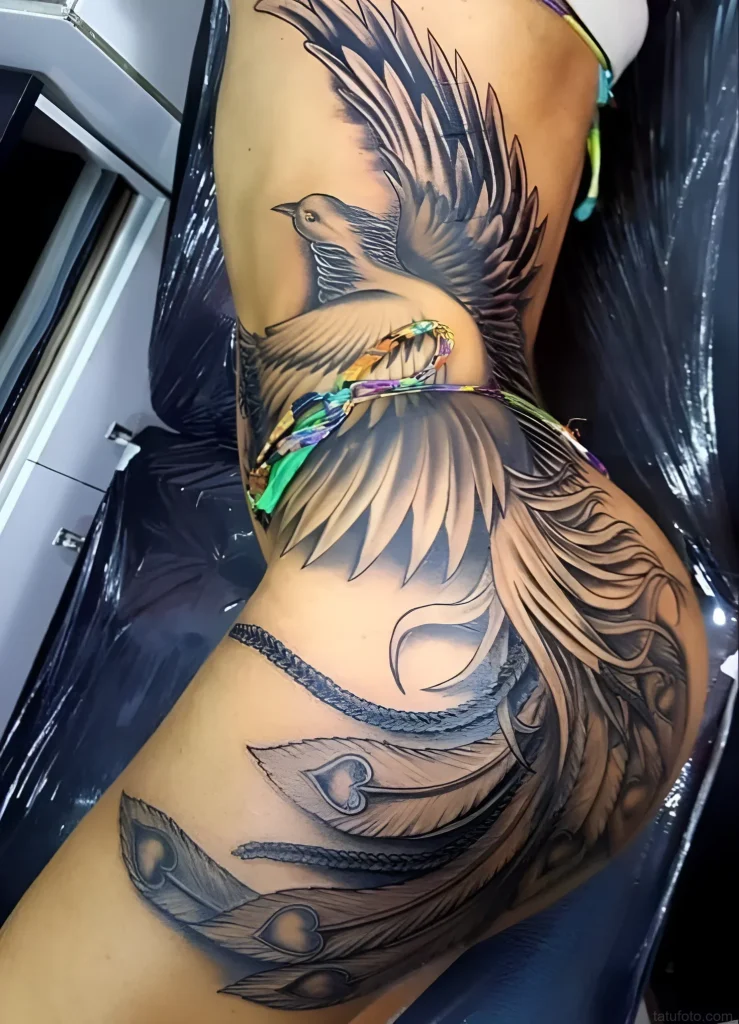
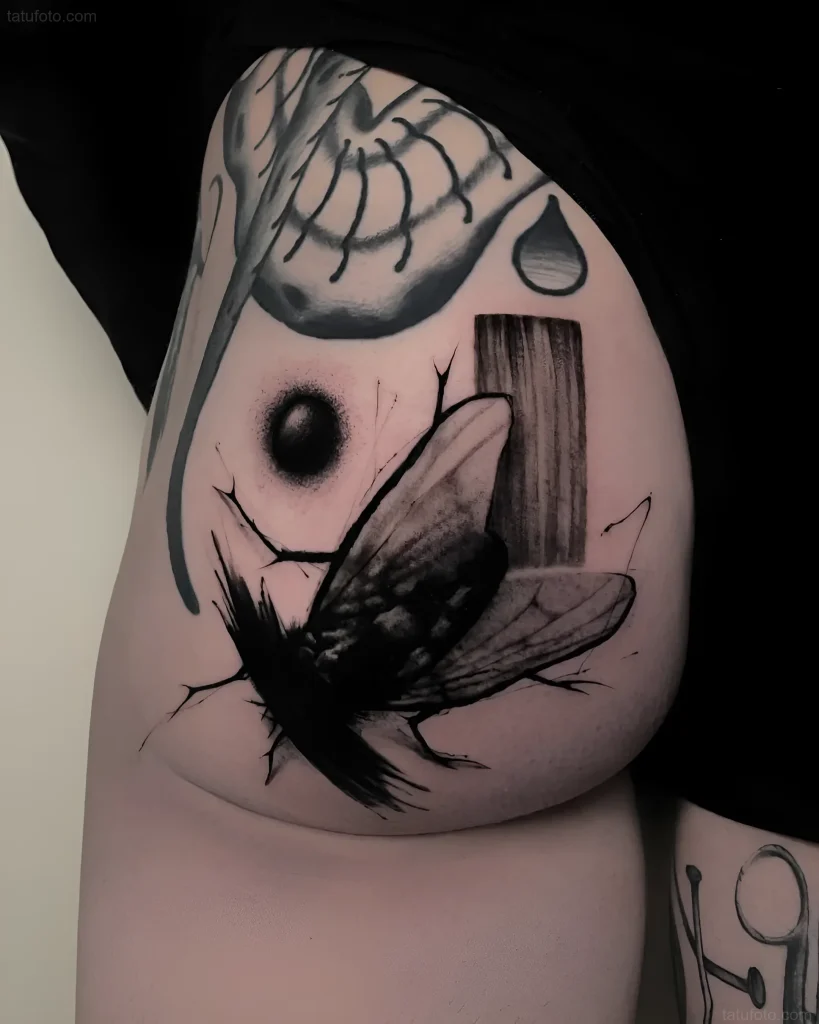
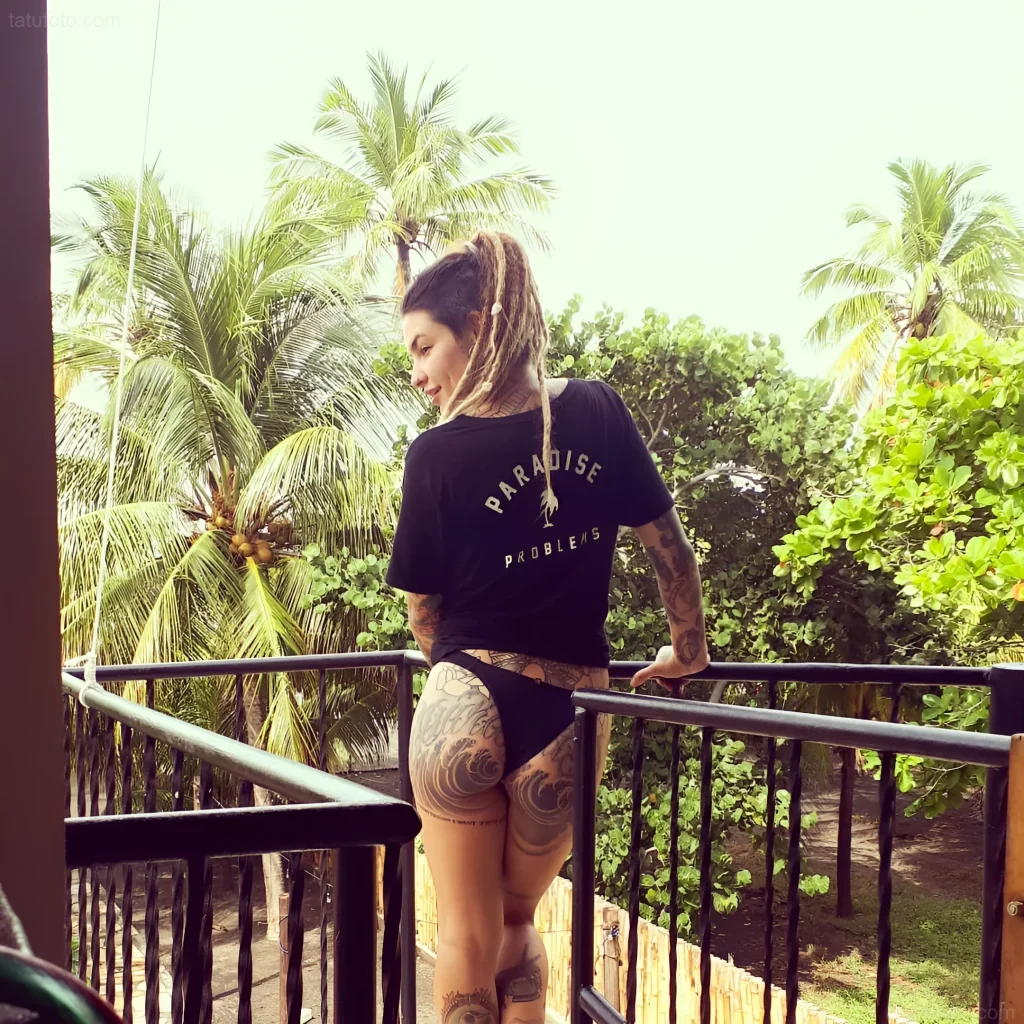
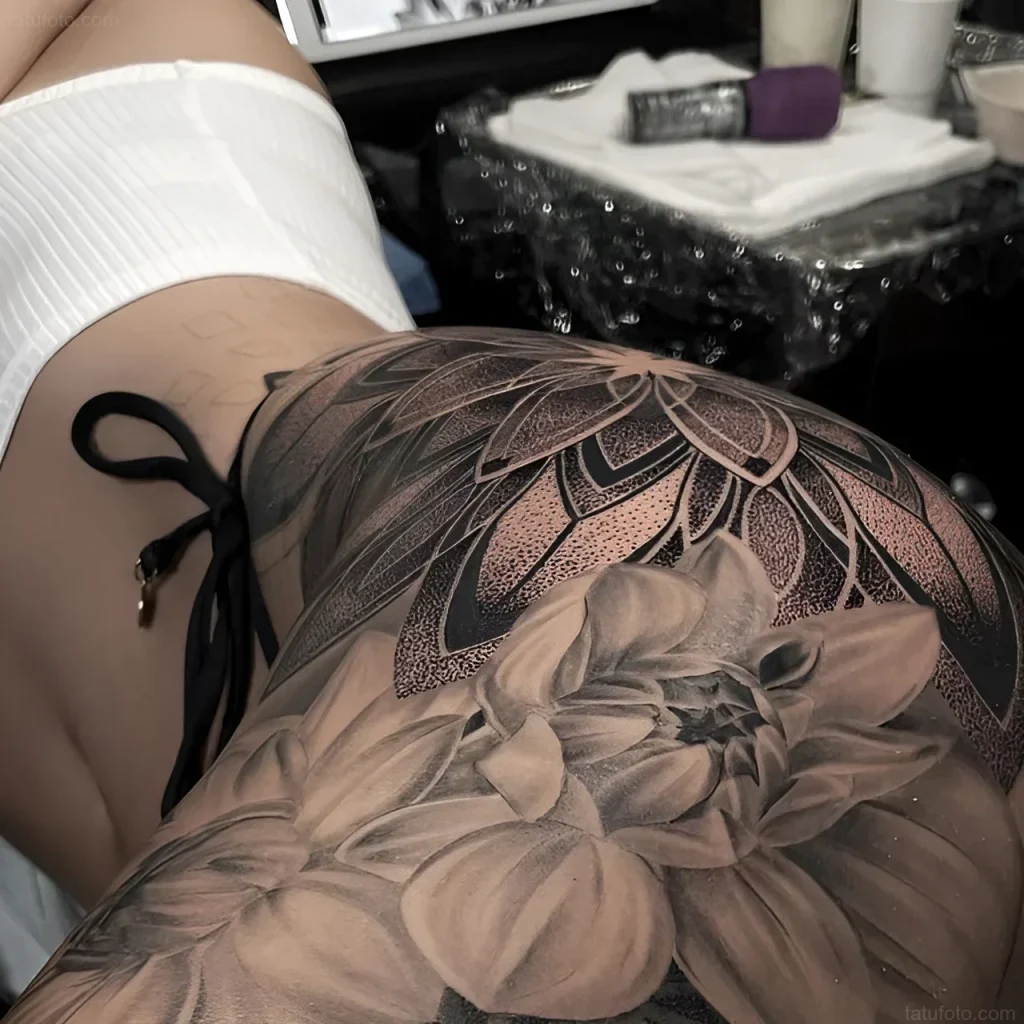
Modern sketches are rarely limited to one buttock. There is a steady trend towards “wrapping” designs that smoothly transition to the back of the thigh, side, or lower back. This requires the artist to be able to work with transitions in skin texture and consider the dynamics of limb movement.
3. Fineline and Minimalism Style
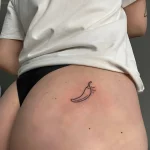
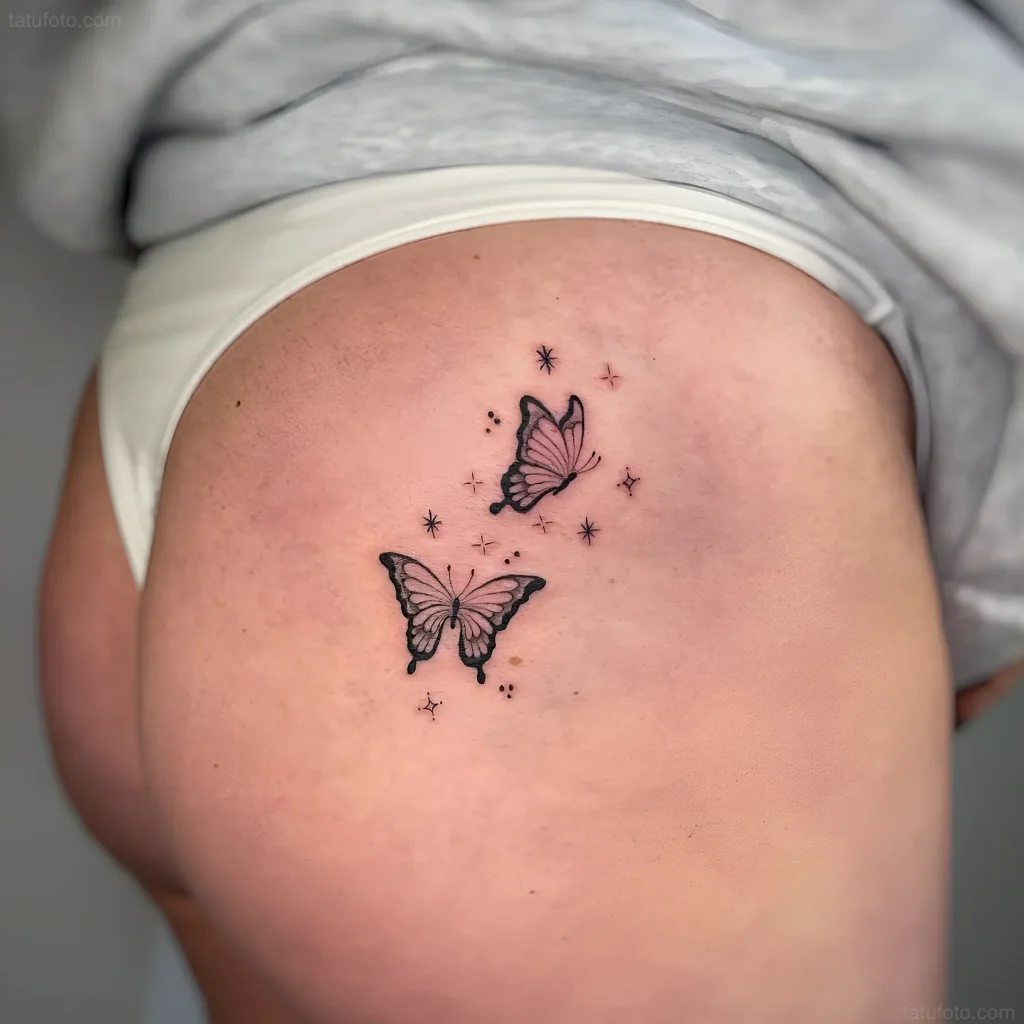
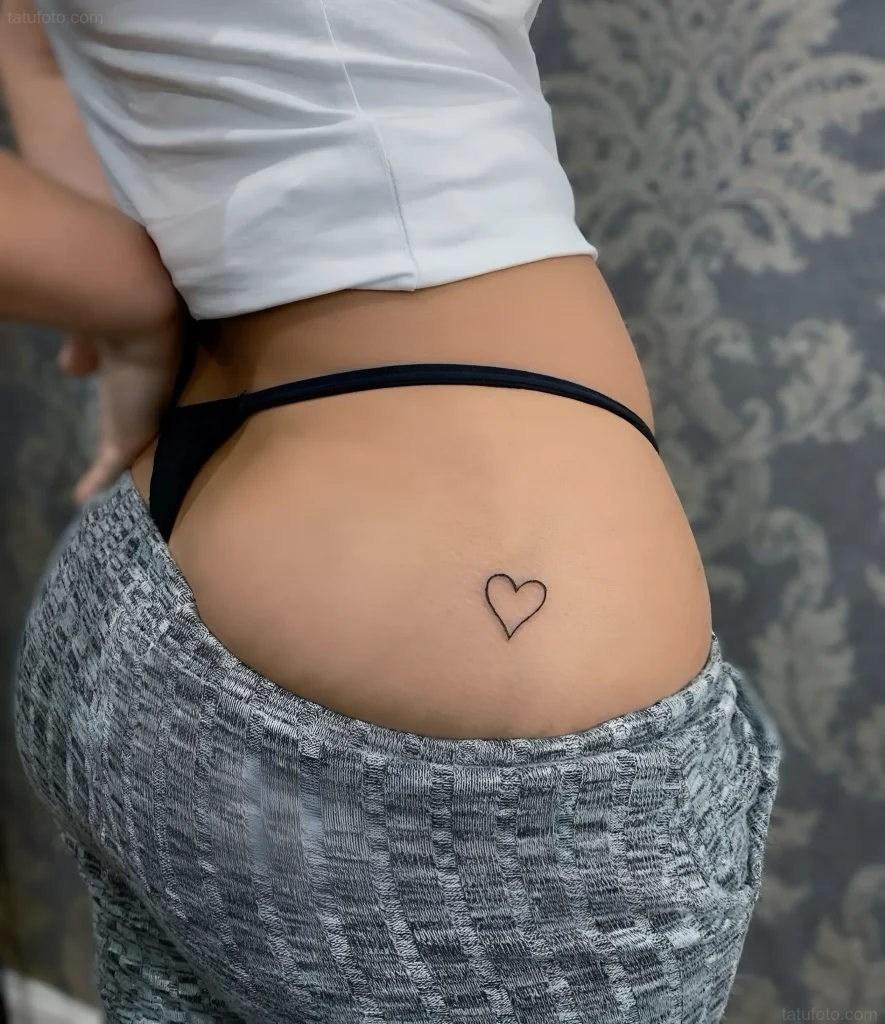
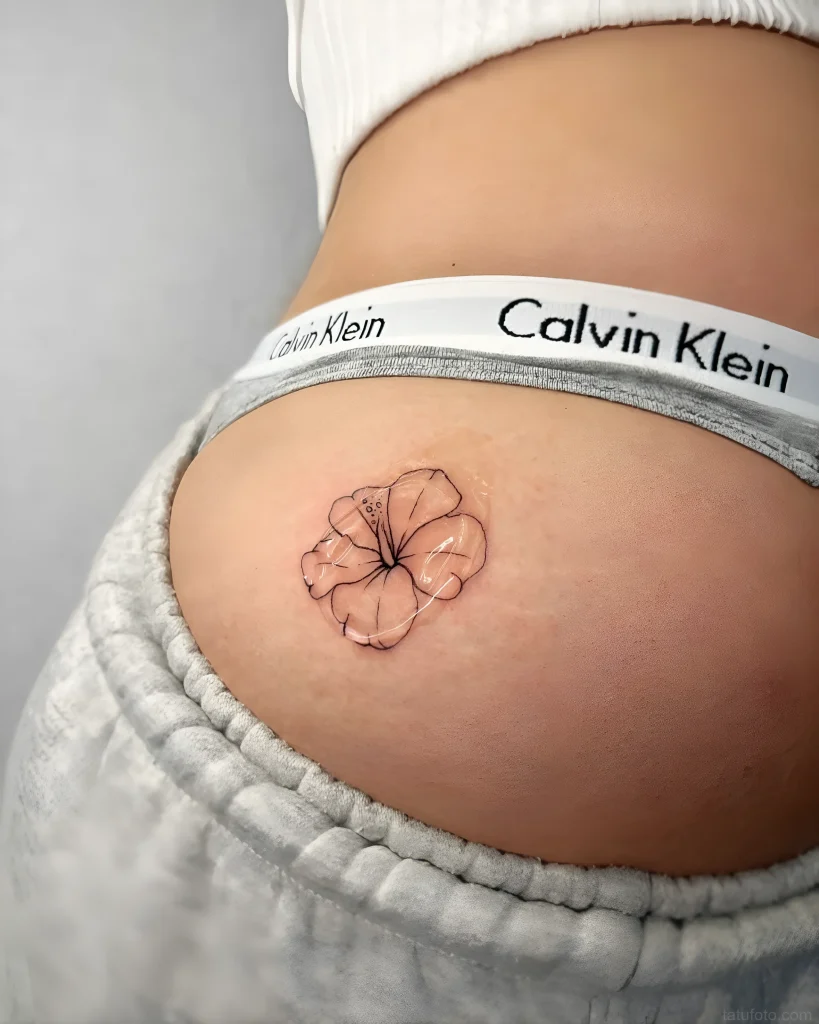
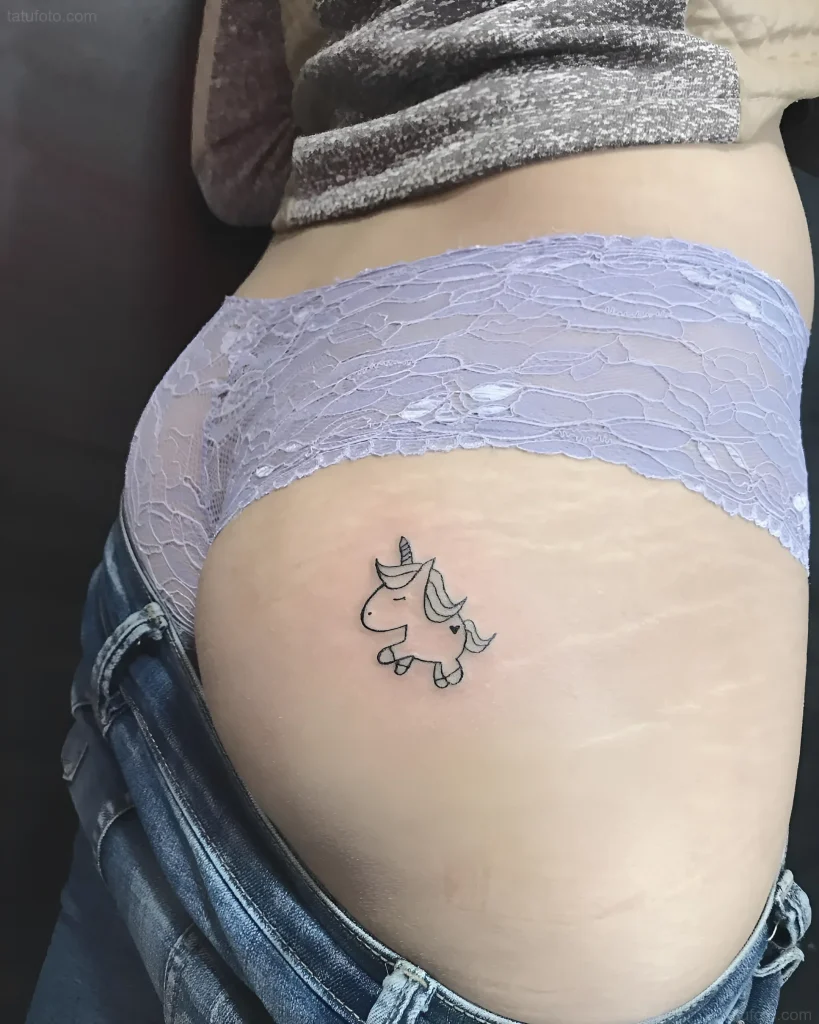
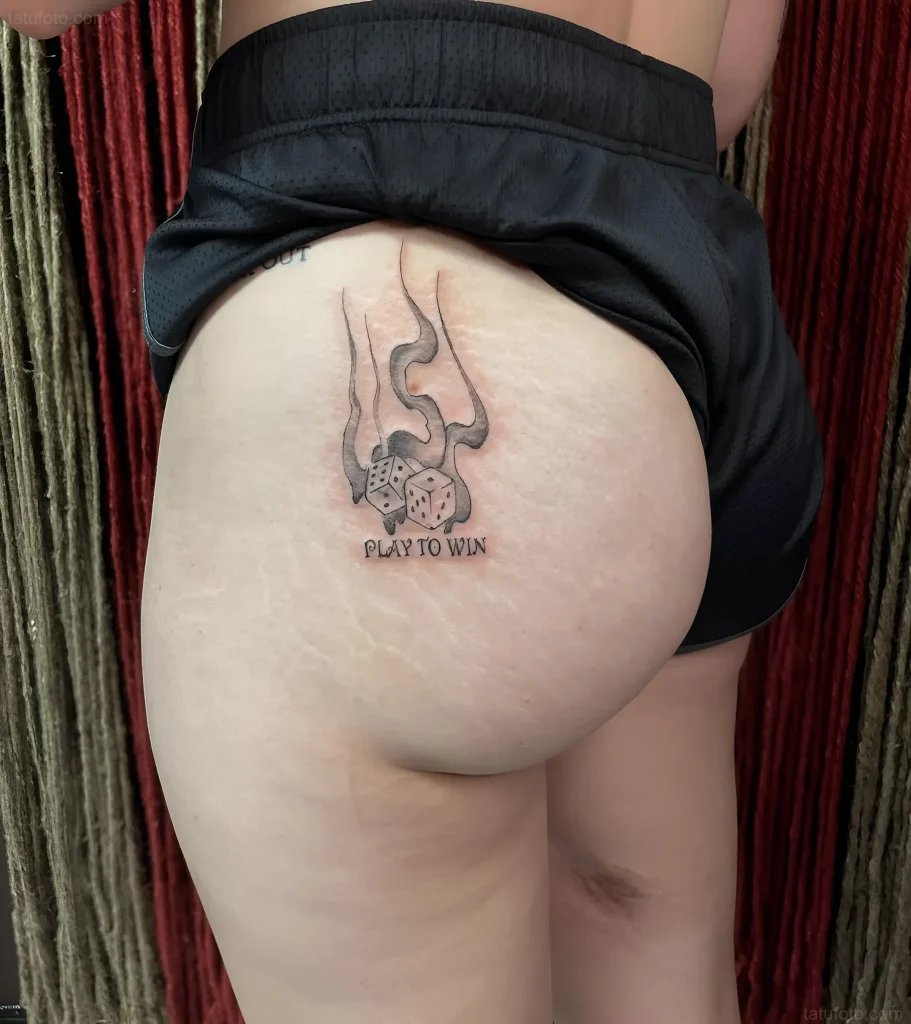
While large blackwork pieces remain popular, there is a growing demand for thin, minimalist tattoos (fineline) on the upper part of the buttocks or under the fold. These works, requiring jeweler-like precision, emphasize the elegance of the form but require perfect skin stretching.
4. Cultural Context: From Hidden to Demonstrative
Previously, buttock tattoos were almost always hidden. Today, thanks to the fashion for open swimwear and lingerie, they have become part of demonstrative body art. This raises the bar for the quality of execution and pigment durability, as the work must look flawless even after many years.
Working with buttock tattoos is a great opportunity to showcase your technical arsenal and ability to work with volume and form. If you, as a beginner artist, master the nuances of anatomy, proper stretching, and specific aftercare, you will be able to create durable, aesthetically perfect works in this sought-after and complex area. Always remember the client’s comfort and confidentiality – this is the key to a successful session and an excellent result.