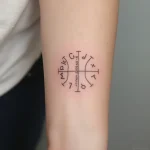
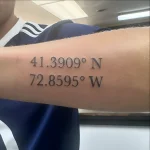
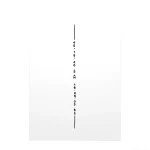
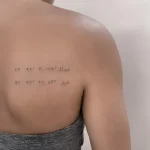
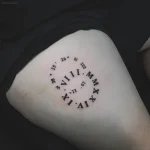
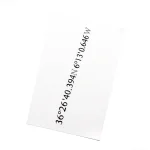
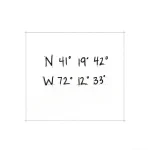
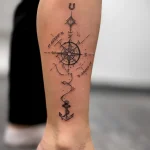
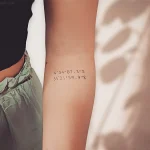
A tattoo representing a set of geographical coordinates is one of the most intimate, concise, and yet multi-layered symbols in modern body art. It’s not just a fashion trend, but a deeply personal anchor fixed on the skin, indicating a place that changed your life or a point you always strive to return to. On the tatufoto.com portal, we aim to reveal not only the visual but also the semantic load of each symbol. Coordinate tattoos are an encrypted message, understandable only to you, and a powerful tool for preserving the memory of the most significant moments of your journey.
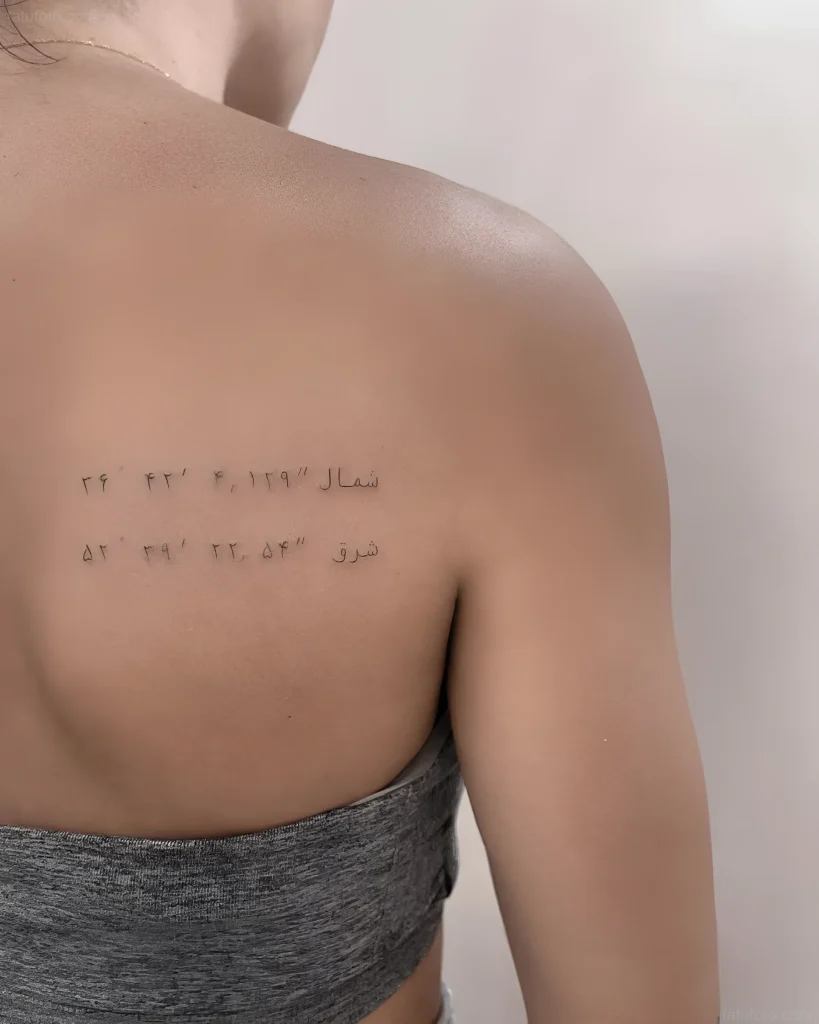
Coordinate Tattoos: What is this Symbol and Why is it So Popular
Geographical coordinates, represented as a tattoo, are a unique phenomenon in tattoo culture. They combine the rigor of scientific language (longitude and latitude) with maximum emotional impact. In essence, it is an absolute, unchanging mark indicating a specific point on planet Earth.
Symbolism of Precision and Immutability. Unlike abstract symbols (like a bird or a flower, for example), whose meaning can vary depending on culture and context, coordinates possess absolute precision. They tie you to a specific place and moment in time, making the tattoo an eternal monument to an event or location.



Reasons for Incredible Popularity:
- Personalization: Coordinates are the purest form of personalization. They cannot be copied or interpreted otherwise; it is strictly your story.
- Hidden Meaning: The tattoo looks like a set of numbers, which allows its true meaning to be kept private. Visually, it is concise, but for the owner, it holds immense significance.
- Minimalism: Fine Line and minimalism styles dominate modern tattoo art. Coordinates fit perfectly into these trends, requiring minimal space and ink, but providing maximum aesthetics.
- Connection to Home and Travel: For those who travel a lot or, conversely, value their roots, coordinates serve as a constant reminder of “home” or a place where spiritual transformation occurred.
A Brief History of Coordinate Tattoos: From Personal Marks to Fashion Trends
Although the fashion for coordinate tattoos flourished in the 2000s and 2010s, their ideological predecessors are rooted in maritime and military culture. Initially, precise geographical marks were used for navigation and location determination.
Navigational Context. Sailors and soldiers, especially those serving far from home, often got small, functional tattoos that served as personal talismans or reminded them of bases, ports, or locations of important missions. While not always precise modern GPS coordinates, the idea of marking a place had practical and emotional significance.



Transition to Mainstream. In the early 21st century, with the widespread adoption of GPS technology and the ability to easily determine the coordinates of any point on Earth using a smartphone, this symbol became accessible to the general public. Celebrities and influencers, wanting to mark the birthplaces of children, weddings, or significant travels, popularized this trend. Coordinates became a symbol not only of place but also of the time spent there.
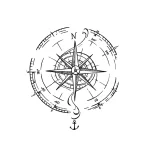
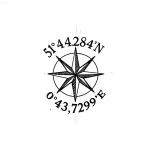
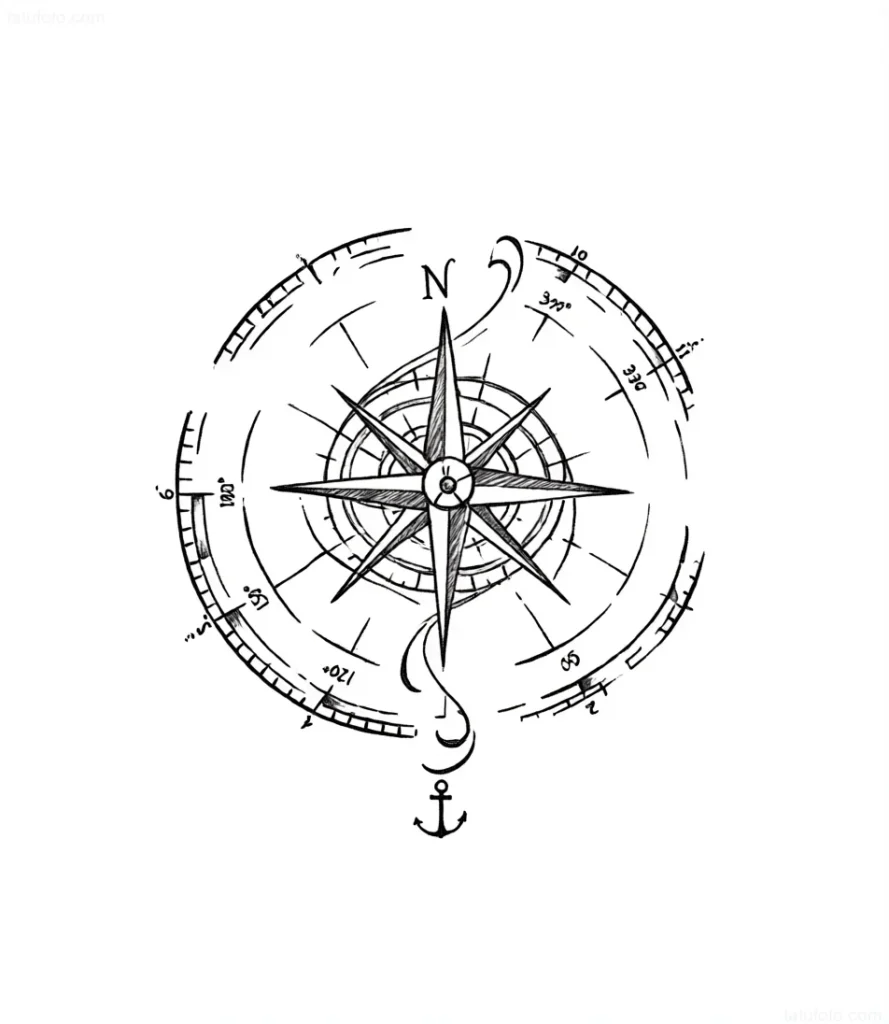
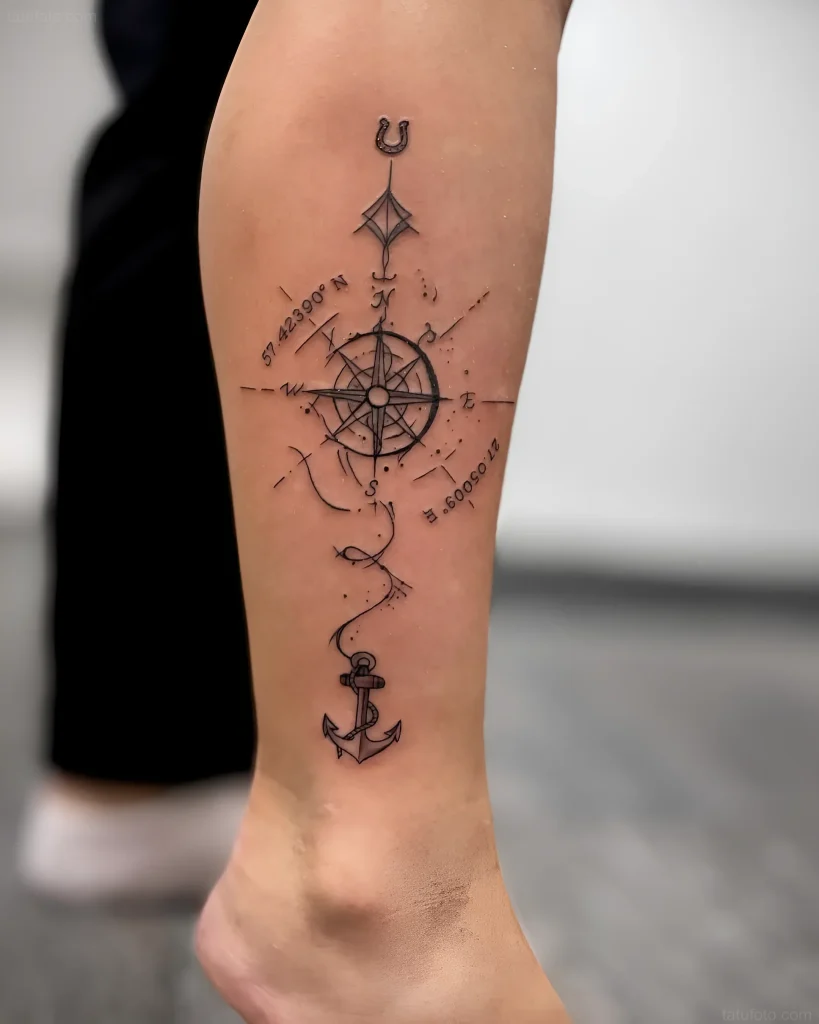
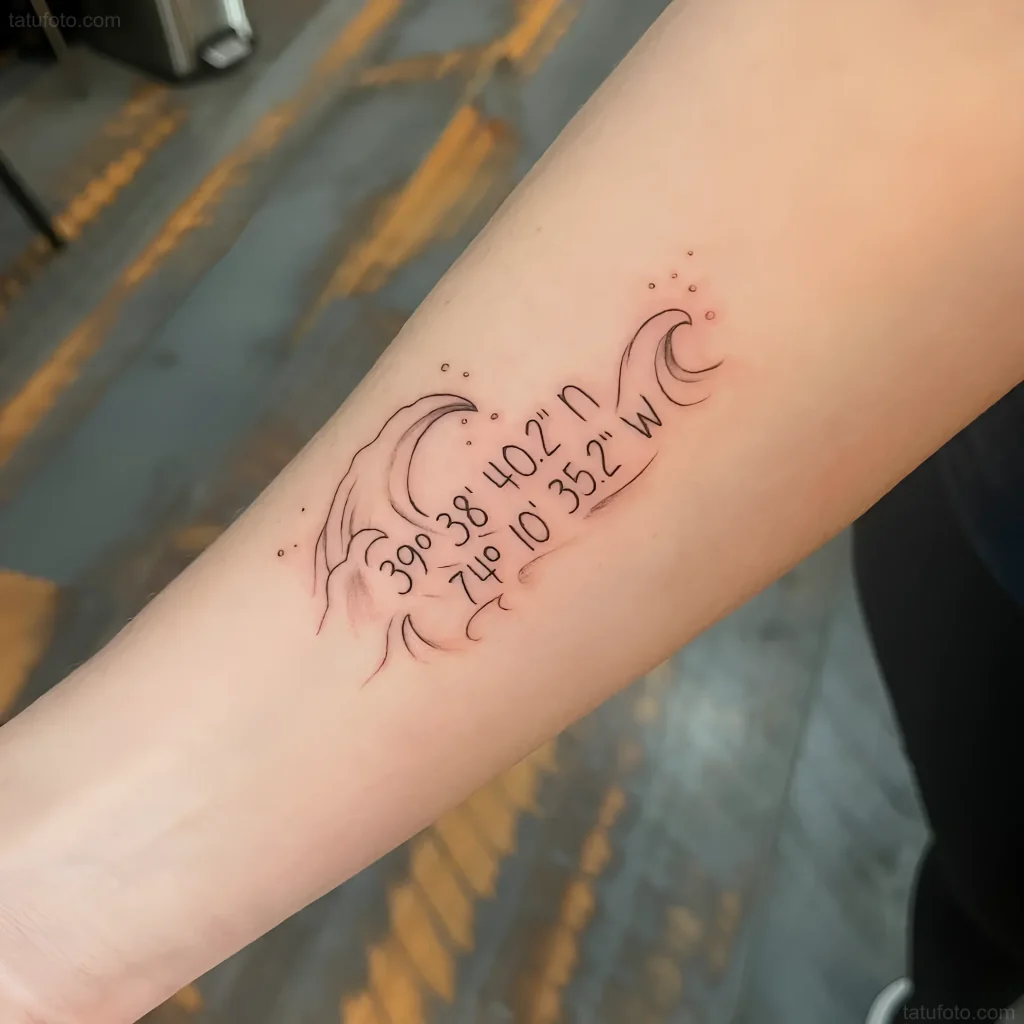
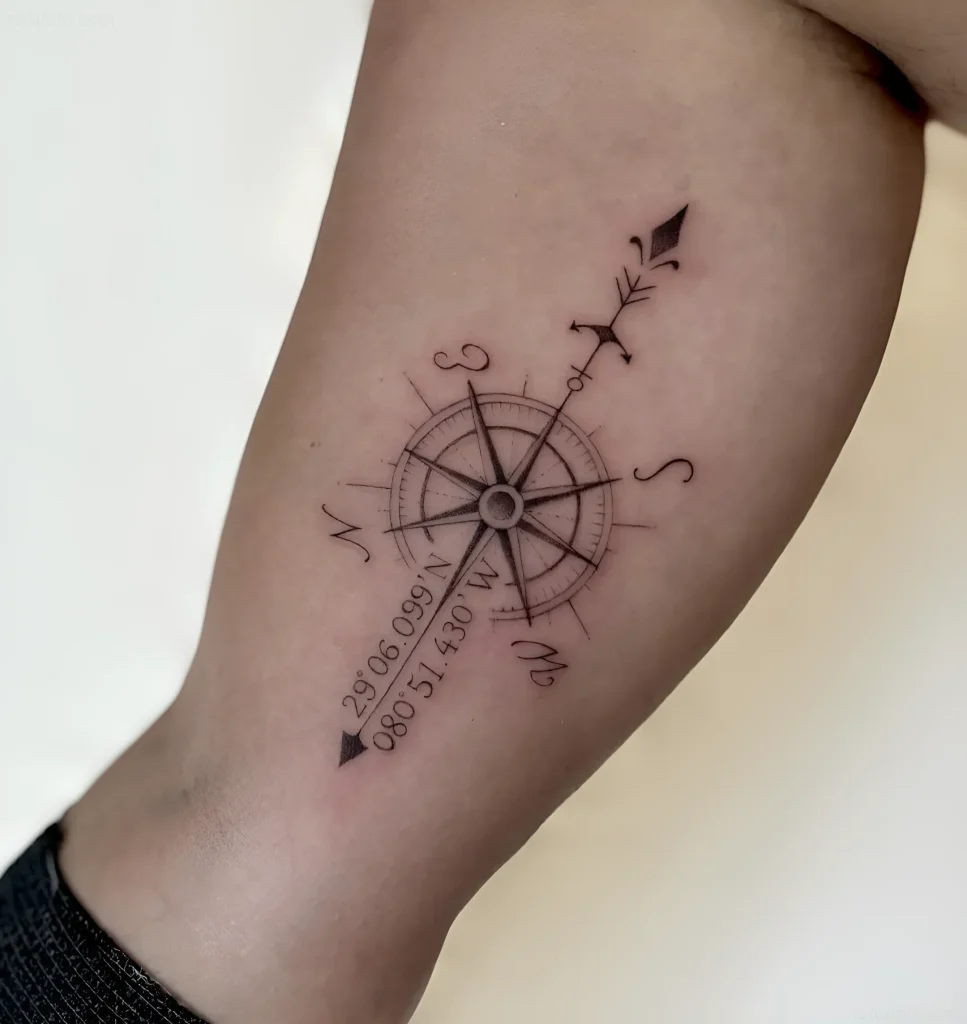
Evolution of Style. While early versions might have been done in a crude font, modern execution tends towards elegant, thin lines, often integrated into other symbols – for example, next to a compass, a wind rose, or a graphic depiction of waves.
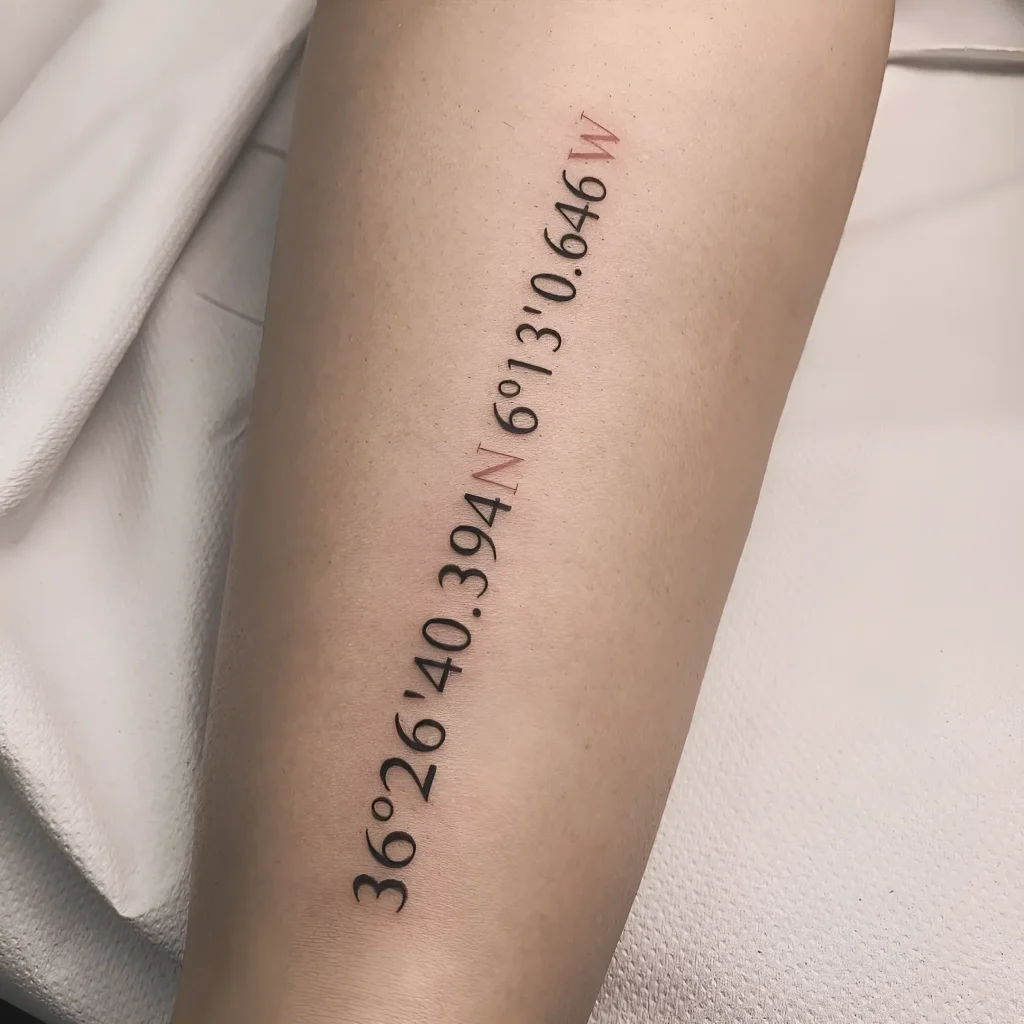
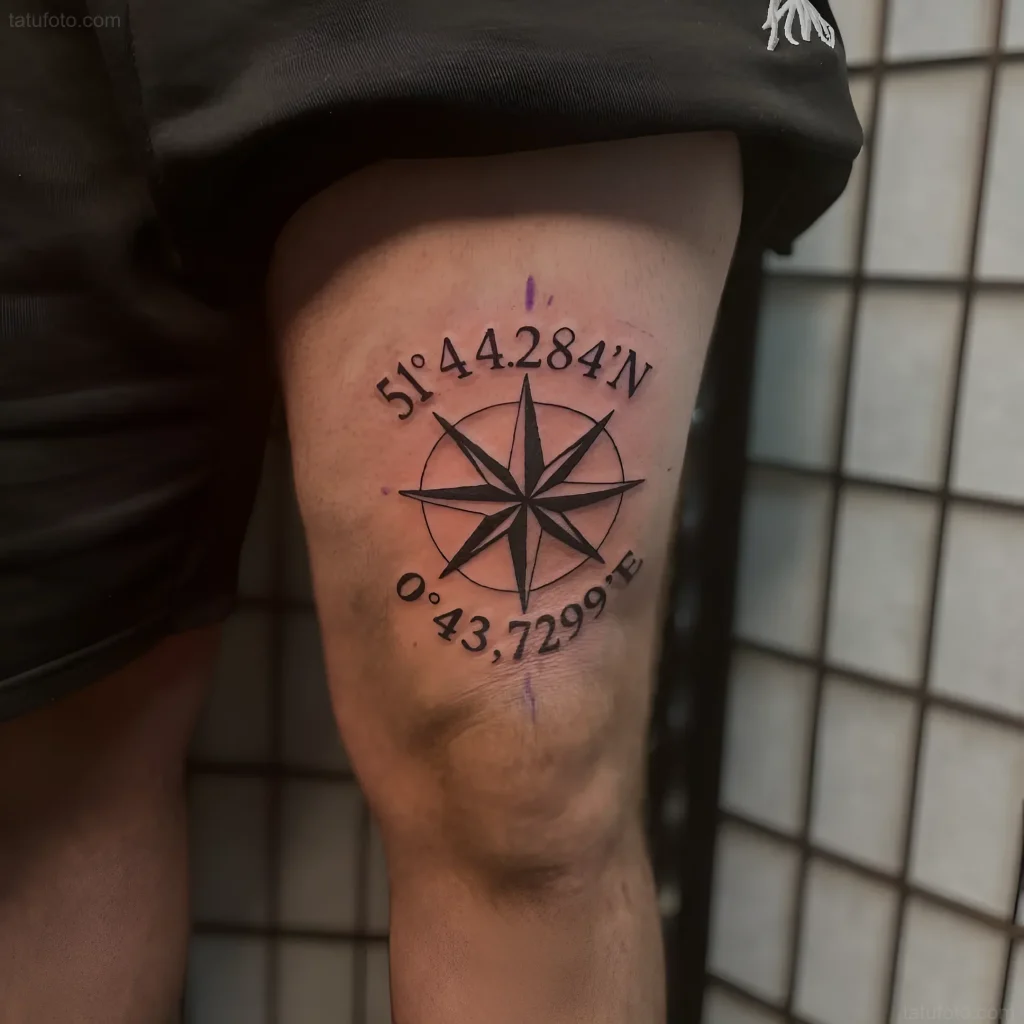
The Deep Meaning of Coordinate Tattoos: How to Encrypt Important Places and Moments
The meaning of a coordinate tattoo always lies in the realm of personal history and attachment. The choice of a place to encrypt is always a conscious decision, imbuing a set of numbers with exceptional meaning. Let’s consider the most common and profound meanings invested in these tattoos.
1. Marking the Beginning of the Journey (Birthplace)
The coordinates of one’s birthplace are a tribute to one’s roots, family, and the beginning of life’s journey. It is a symbol of identity and belonging. People who live far from their hometown or country, but want to maintain an unbreakable connection with their homeland, often choose such a tattoo.
2. Place of Meeting and Love
For couples, coordinates can be a more original and less cliché symbol than wedding rings or names. They encrypt:
- The place of the first meeting.
- The spot where the proposal was made.
- The coordinates of the wedding venue or honeymoon location.
It is a symbol of a shared journey and the immutability of feelings, fixed at a specific spatio-temporal point.
3. Memory of Achievements and Turning Points
Coordinates can mark places where key events that shaped a person occurred:
- Graduation from university or receiving a diploma.
- The place where a fateful decision was made (e.g., the summit of a mountain or a specific city that changed one’s worldview).
- The coordinates of a place where a serious life crisis was overcome or a spiritual breakthrough occurred.


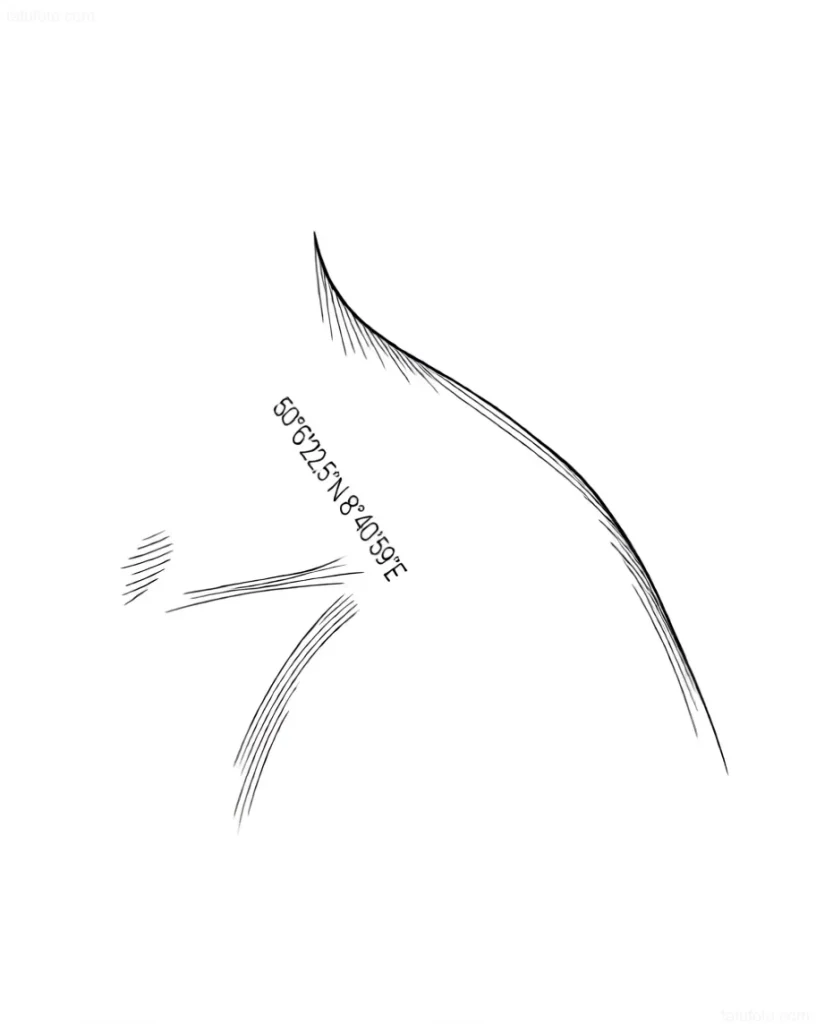

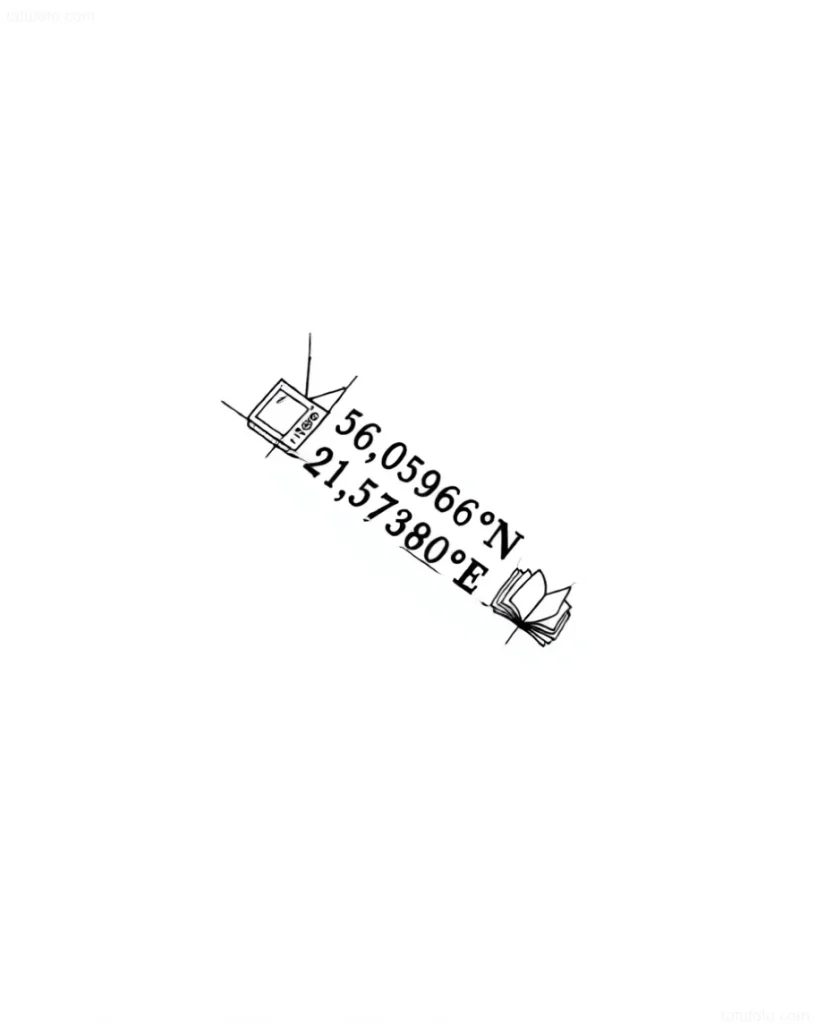
4. Commemorating Loss
In this context, coordinate tattoos acquire a memorial character. This could be:
- The resting place of a loved one.
- The coordinates of a place associated with their last or best memories.
Such a tattoo serves as a quiet, personal way of grieving and preserving memory, without requiring explanations to others.
5. Symbol of Aspiration and Dreams
Sometimes, coordinates indicate a place where a person dreams of visiting or where they plan to move. In this case, the tattoo becomes a motivator, a kind of “North Star” pointing the direction of movement and goals.
6. Technical Aspect: Choosing the Format
It is critically important for the meaning of the tattoo to choose the correct and precise format for recording coordinates, as it affects readability and aesthetics:
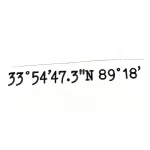
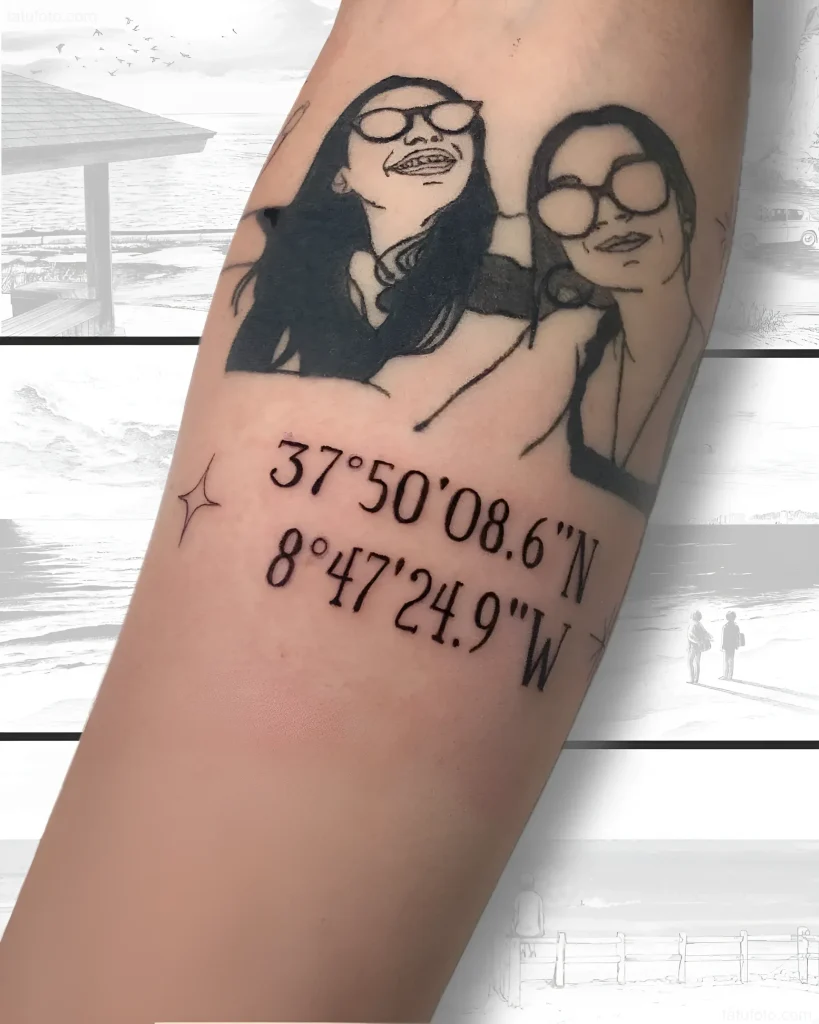
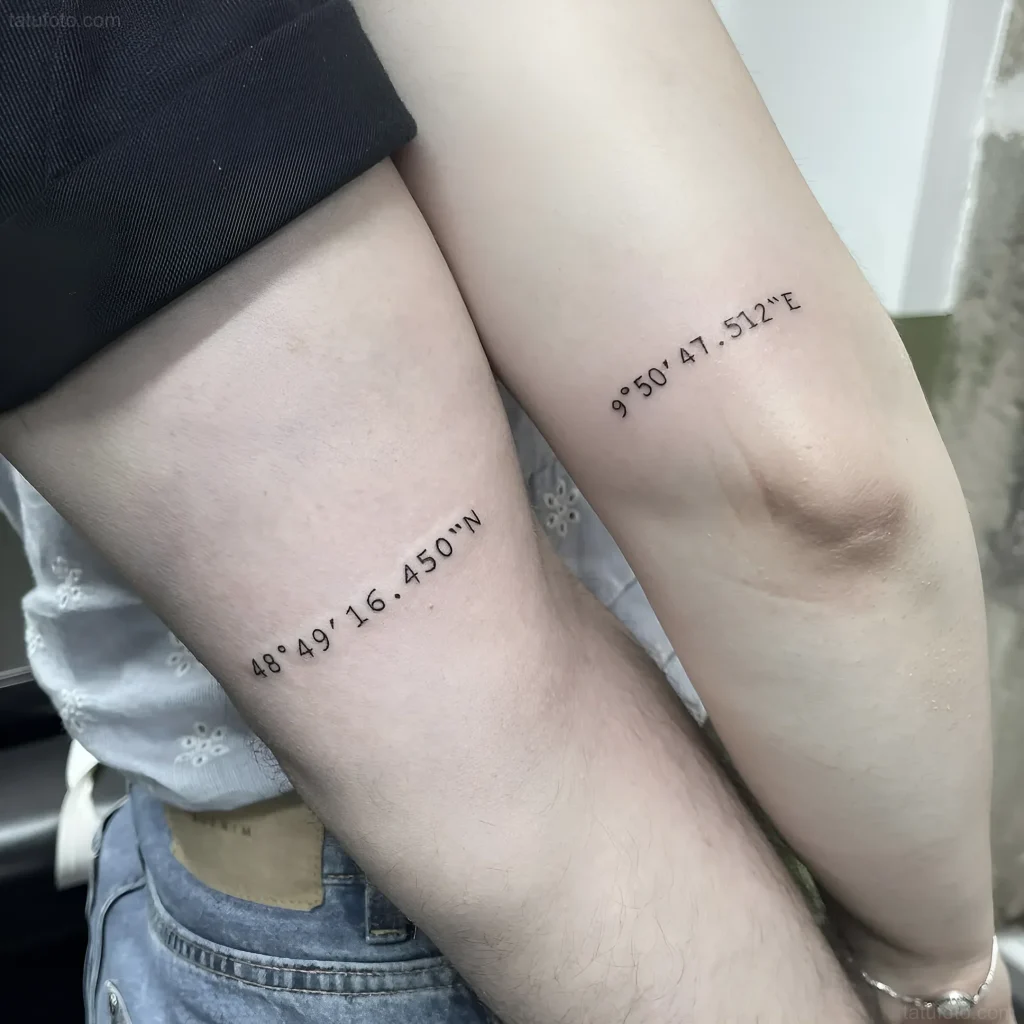
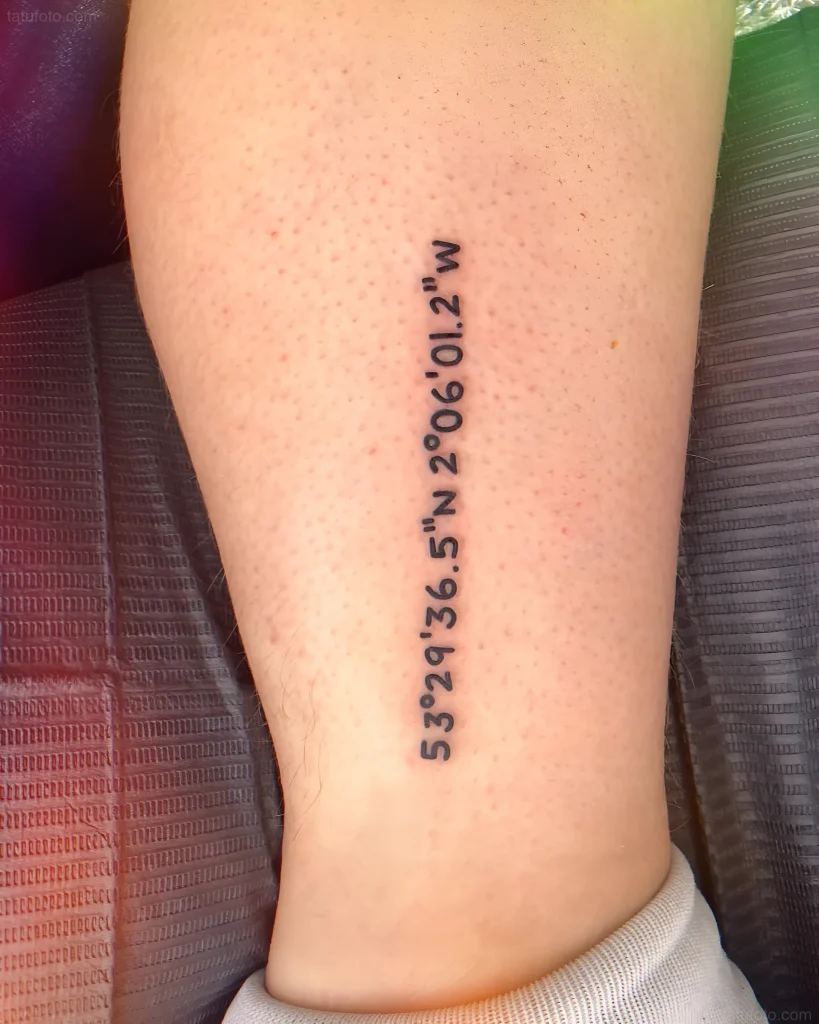
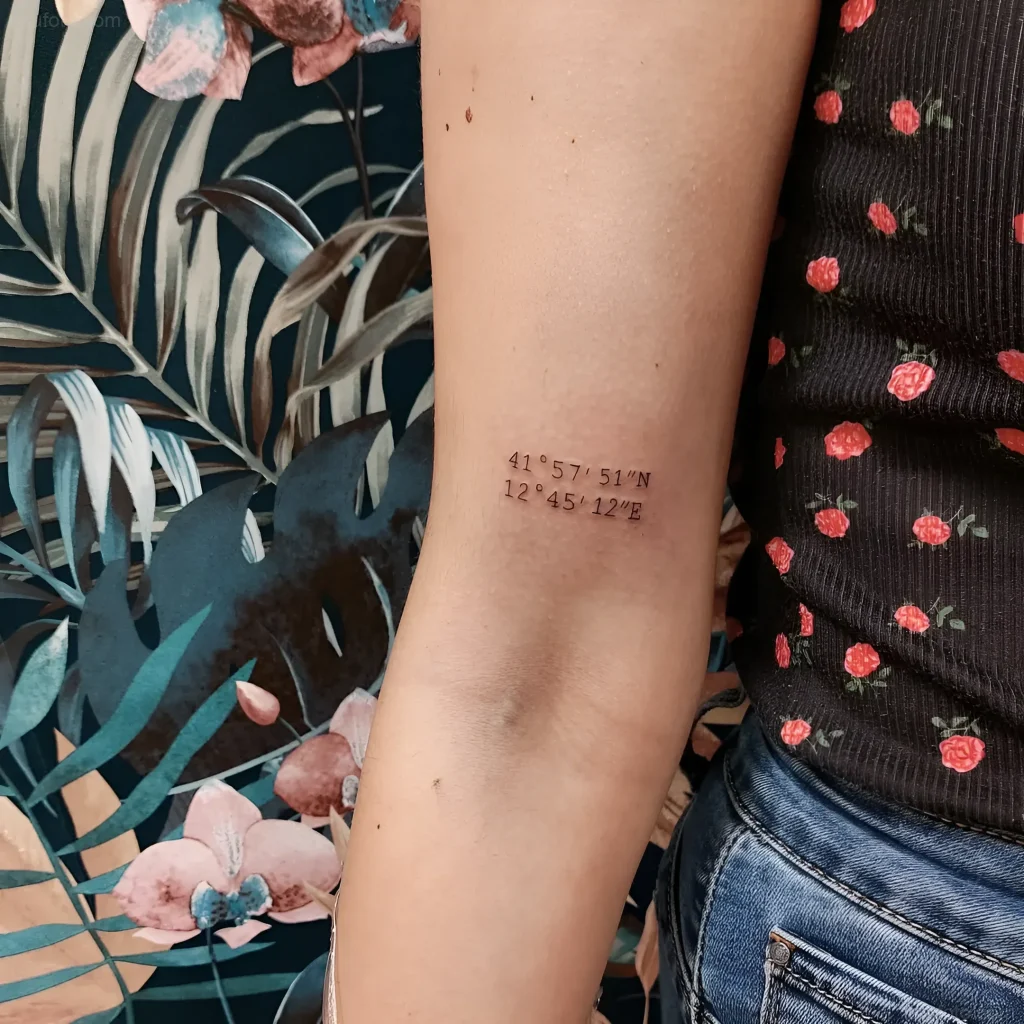
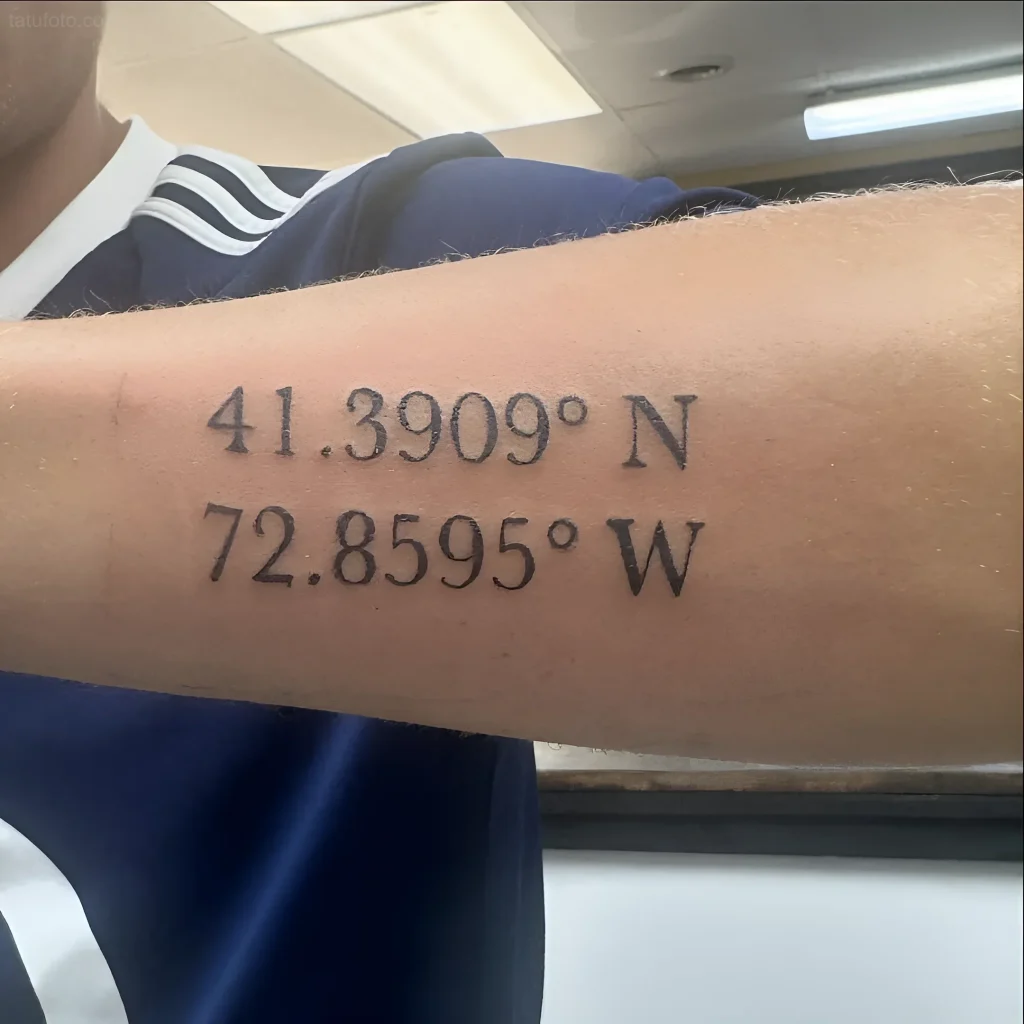
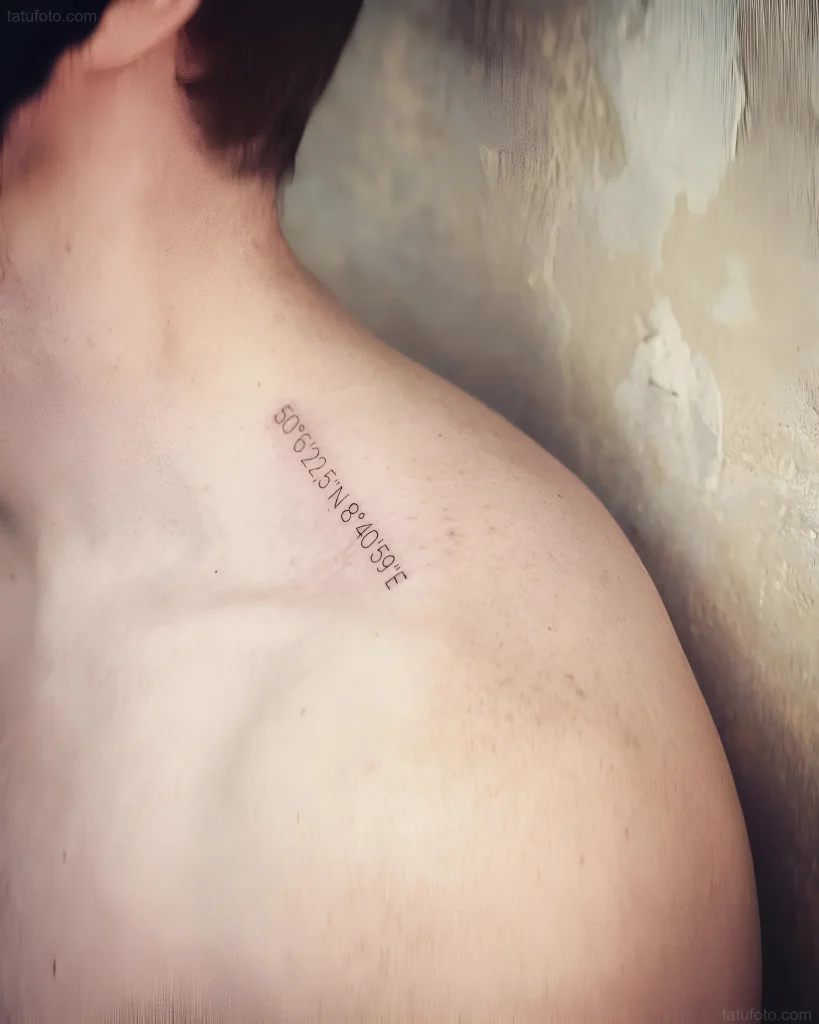
- Degrees, Minutes, Seconds (DMS): For example, 40° 44’ 55” N 73° 59’ 11” W. This format is the most traditional and aesthetically pleasing for tattoos, as it includes degree symbols and apostrophes that break up the long string of numbers.
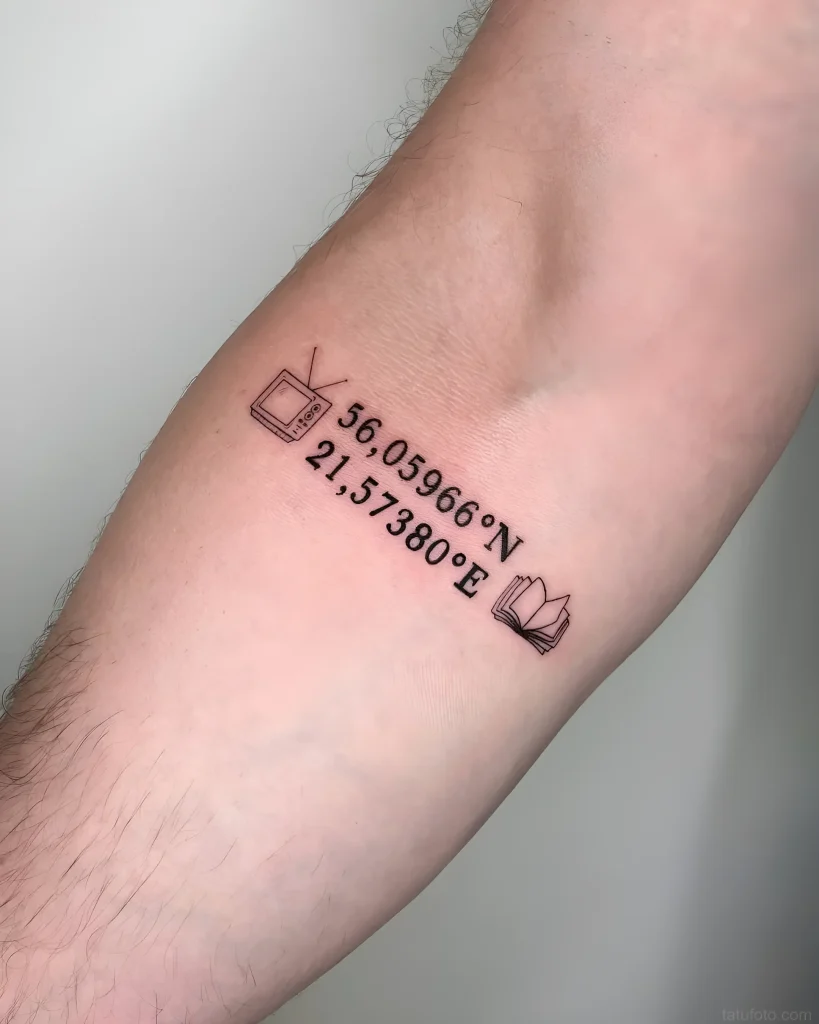
- Decimal Degrees (DD): For example, 40.748611, -73.986389. More compact, but less traditional for navigation. Used in minimalist styles.
Expert Advice: Before visiting a tattoo artist, always verify the coordinates from multiple sources and decide on the exact format to avoid errors that cannot be corrected.
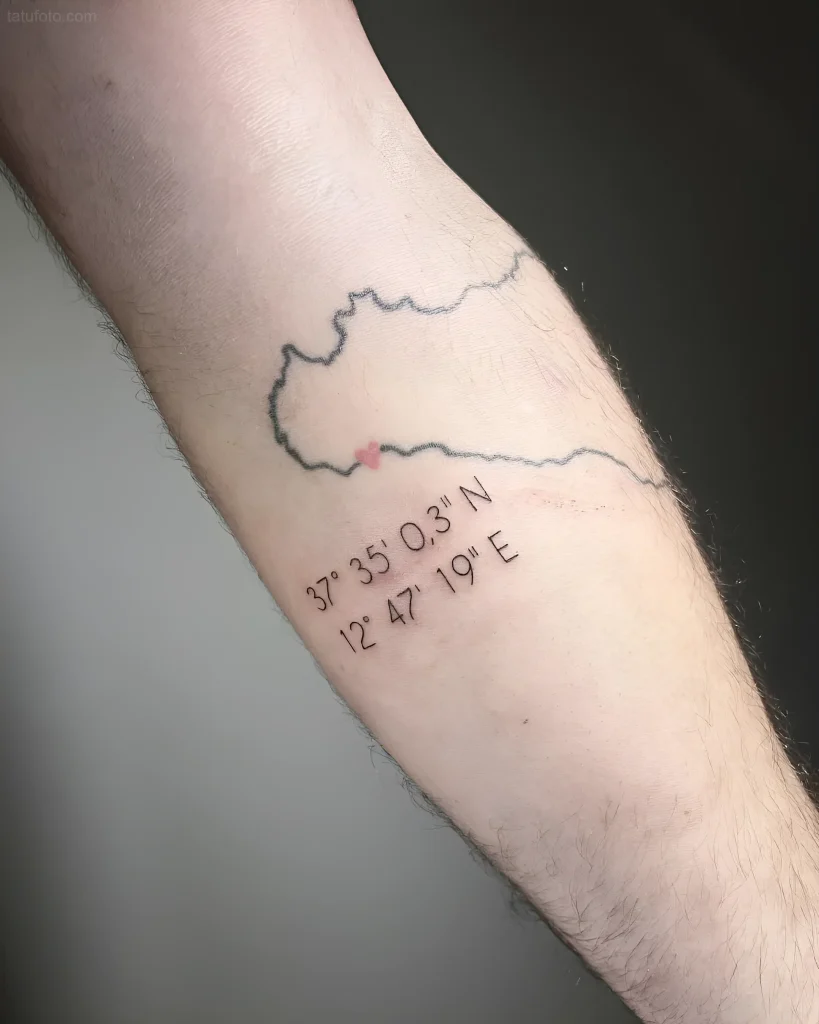
Styles and Variations of Coordinate Tattoos: From Minimalism to Realism
Although a coordinate tattoo is always a set of numbers, the way it is visualized can vary drastically, adapting to personal style and the overall concept of the tattoo.
1. Pure Minimalism (Fine Line)
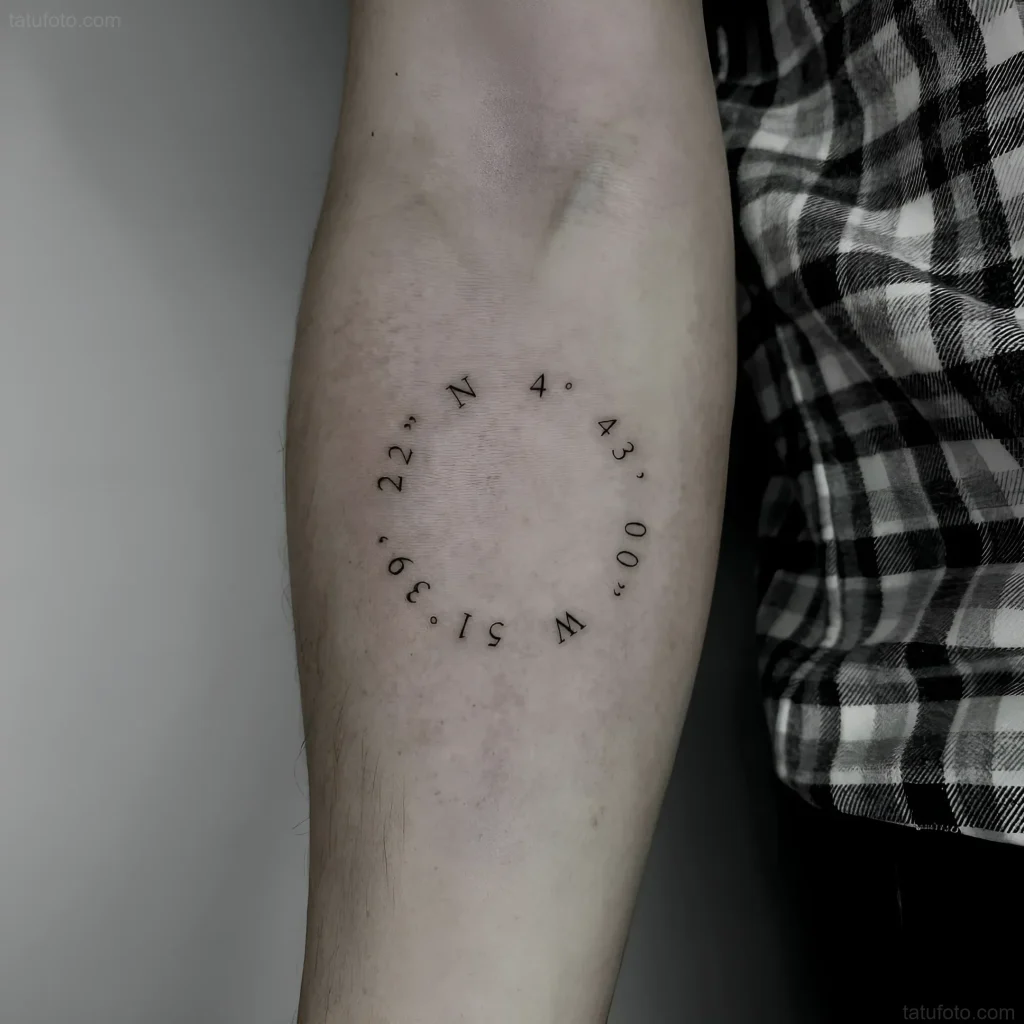
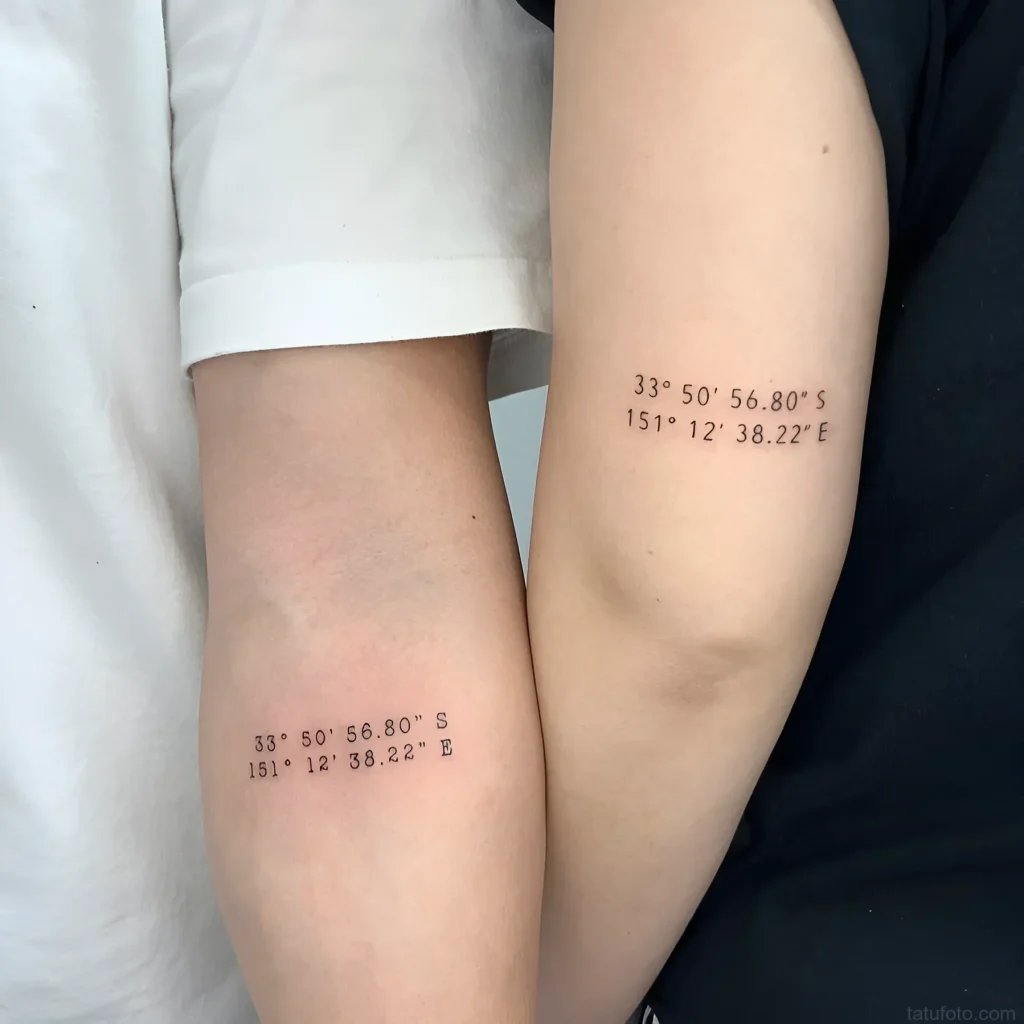
This is the most popular option. Coordinates are done with a very thin needle (Single Needle Technique) in a strict, often printed font. Key features:
- Size: Often very small, placed on the wrist, behind the ear, or on the side of a finger.
- Color: Exclusively black or gray pigment.
- Emphasis: The entire semantic load lies on the numbers and latitude/longitude symbols themselves.
2. Integration with Dates and Names
Coordinates are often accompanied by other elements that help reveal the context:
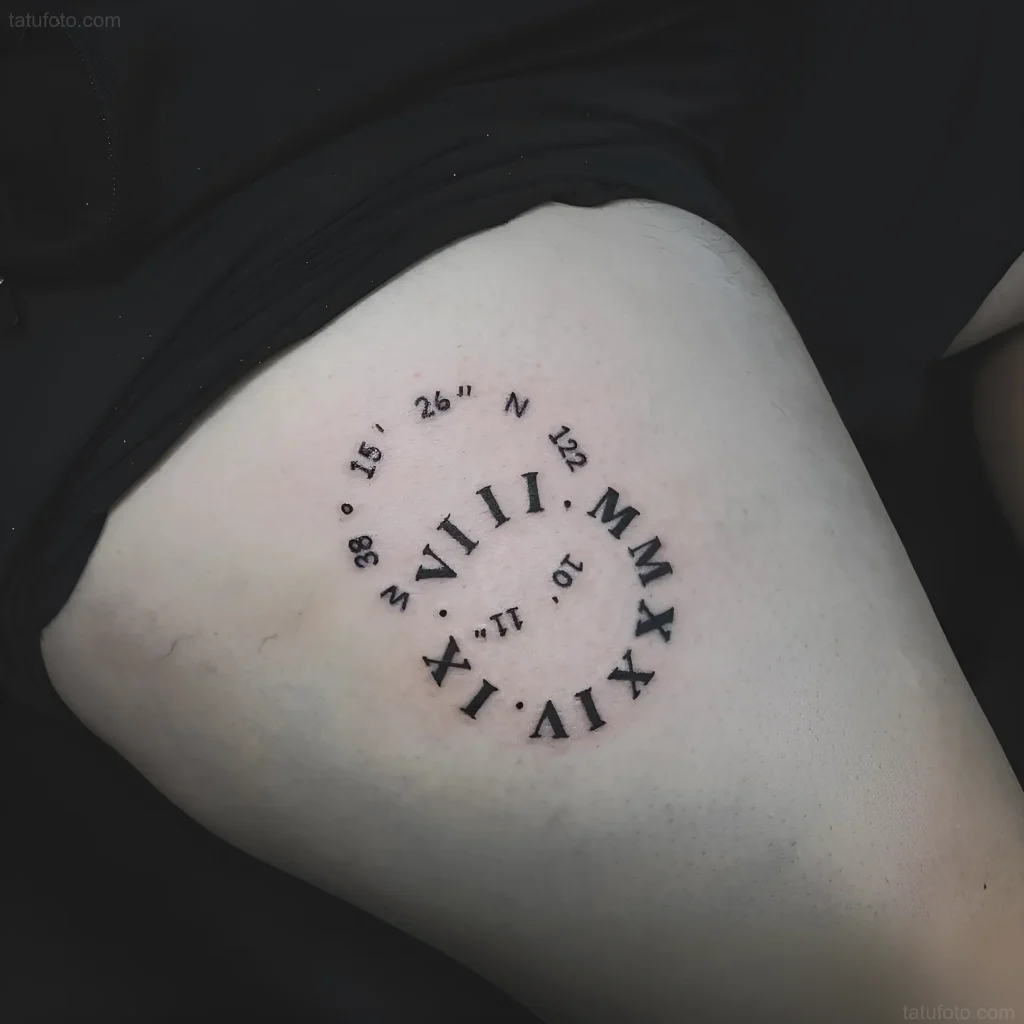
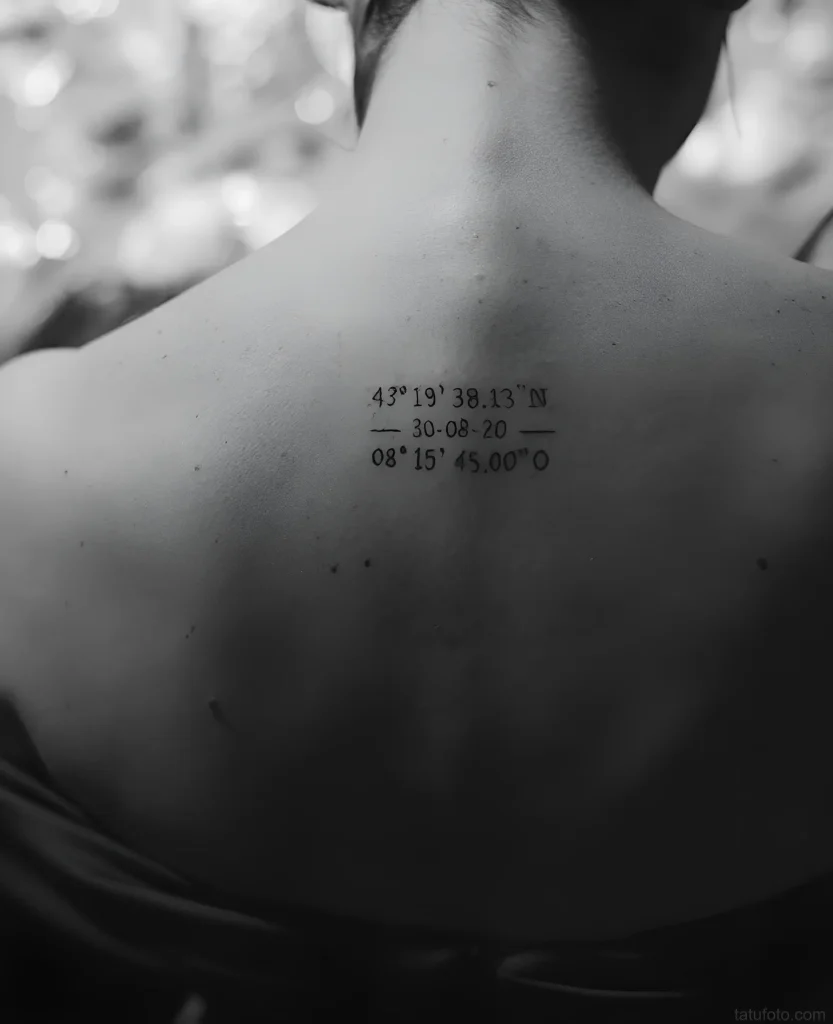
- Date: Below or above the coordinates, the date of the event that occurred at this location is inscribed (e.g., a child’s birth date).
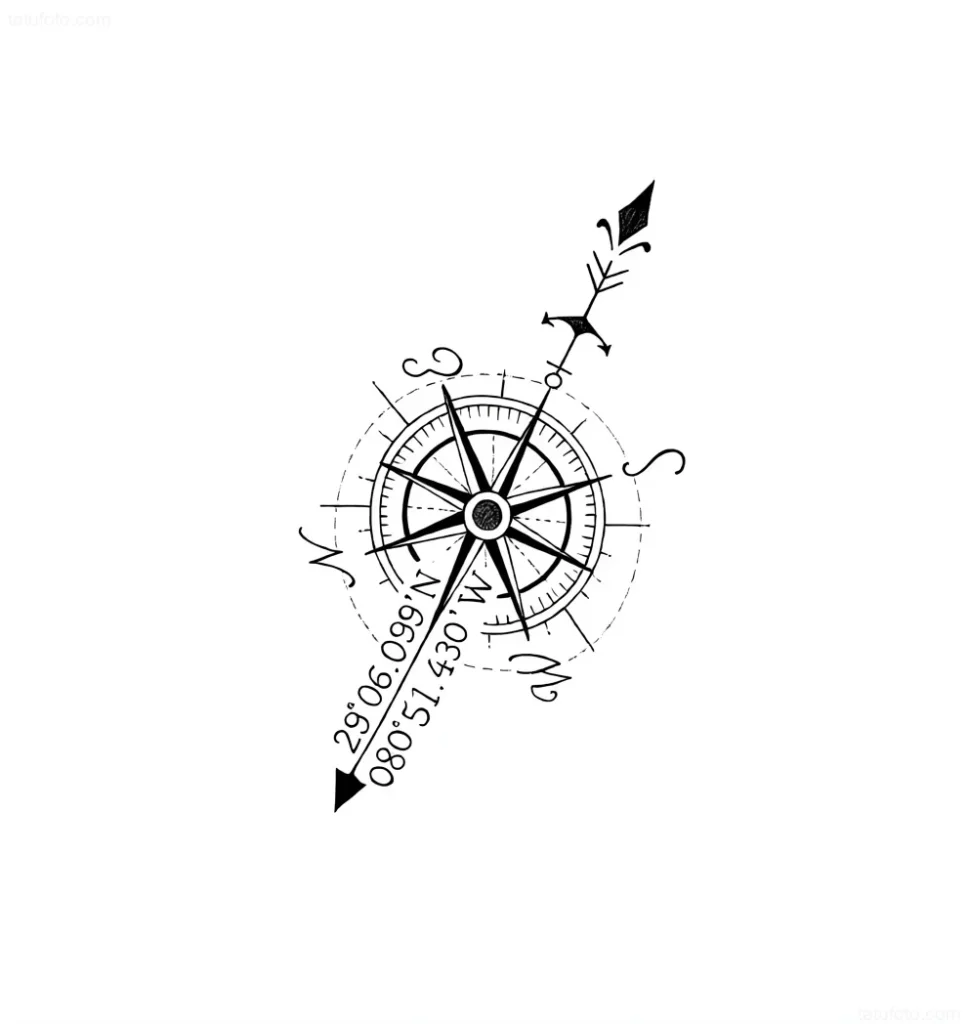
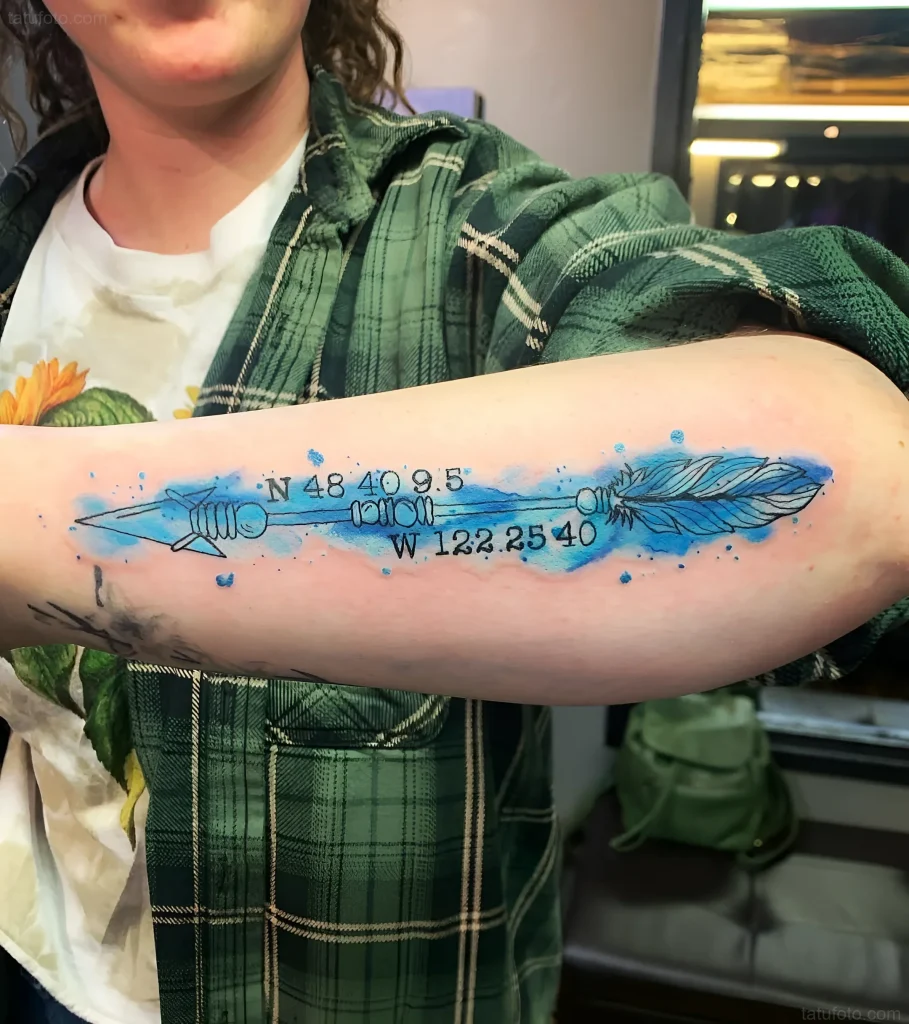
- Arrows or Compass: Indicate the navigational nature of the symbol, emphasizing that it is a “direction” or “landmark.”
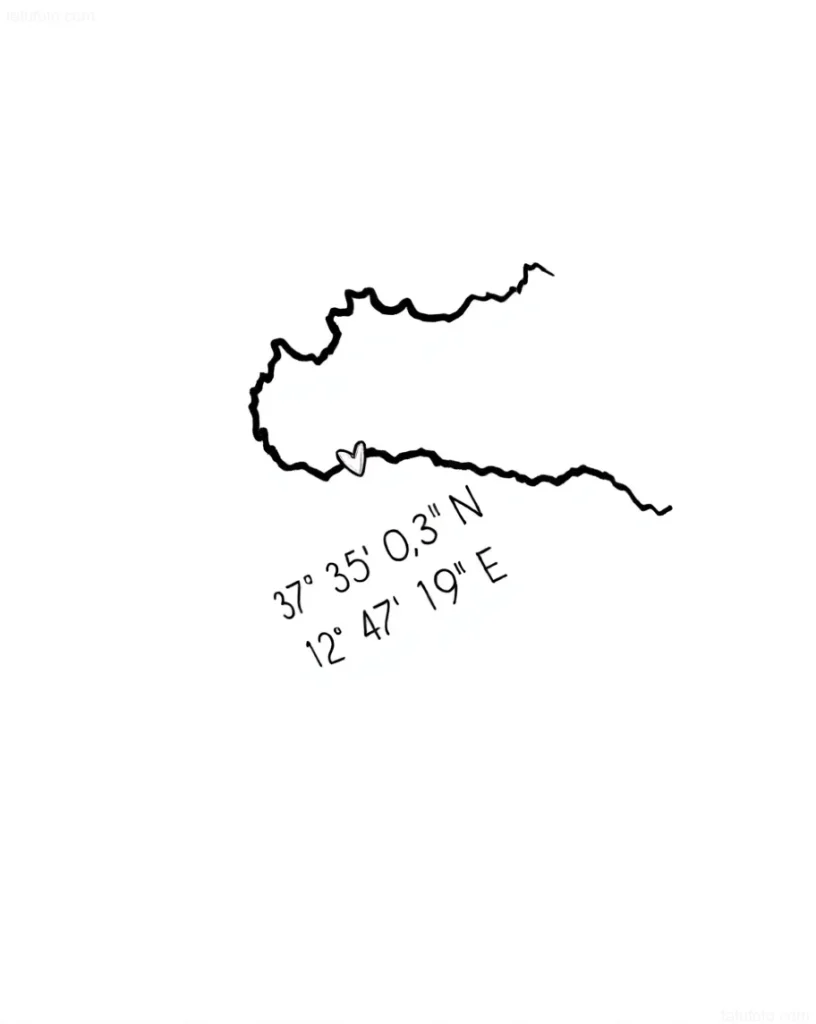
- Symbols: Small symbols such as a heart, airplane, or wave can be added at the end of the line to visually denote the type of place (love, travel, sea).
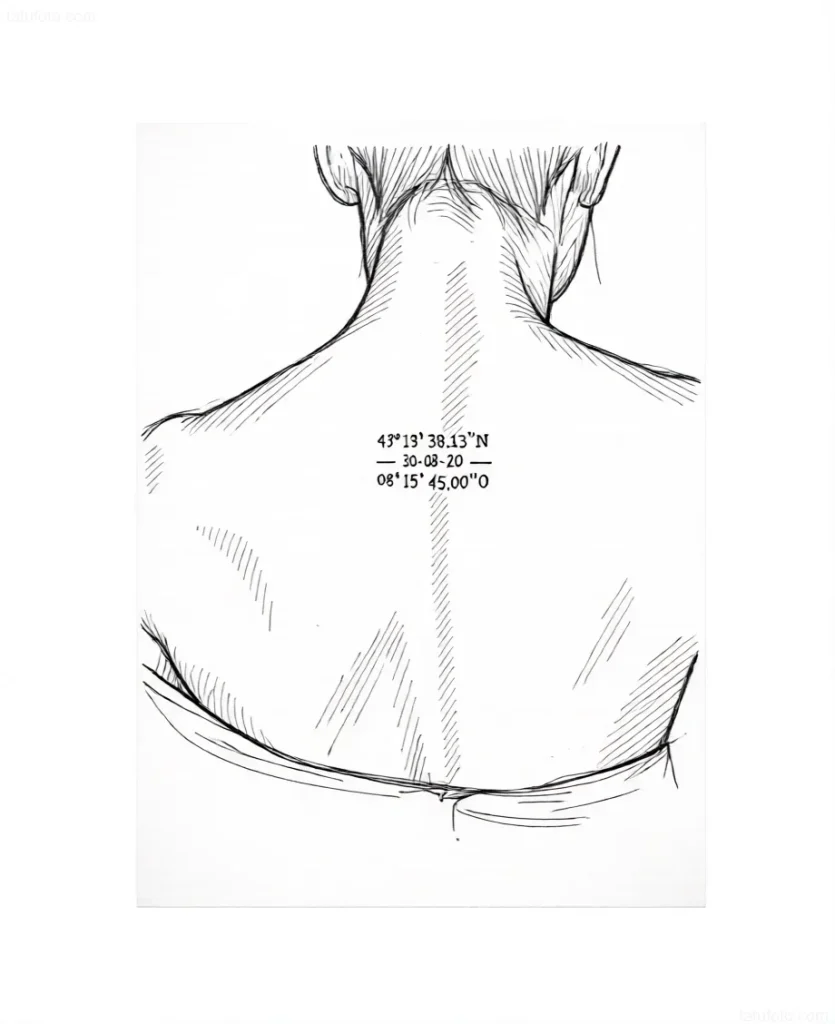

3. Geometric and Graphic Style
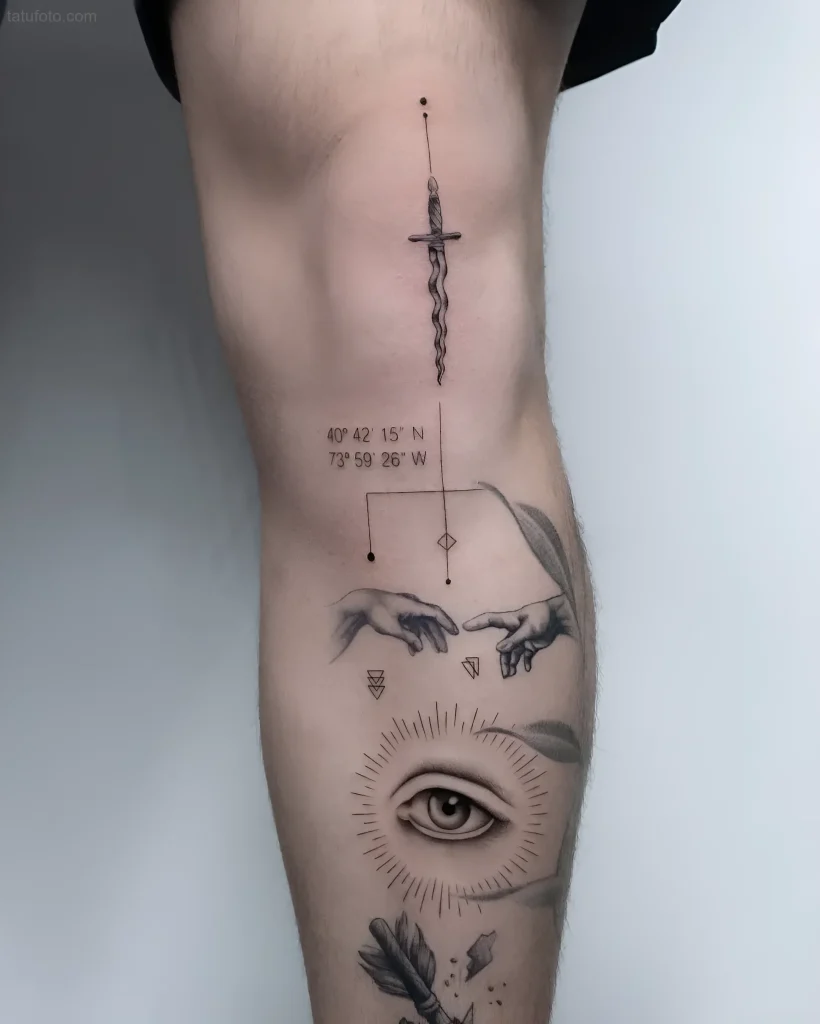
In this case, coordinates are integrated into a more complex composition:
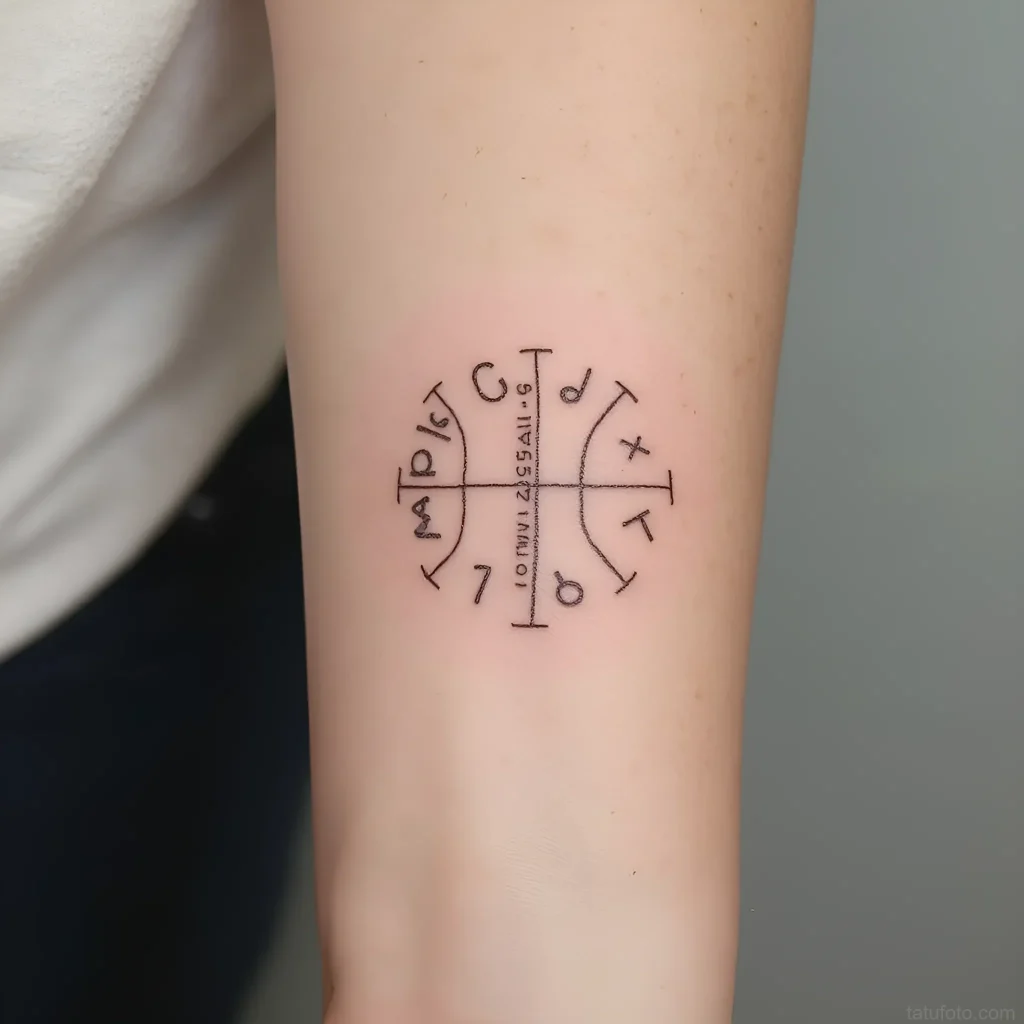
- Frames: Coordinates can be enclosed in a geometric frame or circle, symbolizing a globe or map.
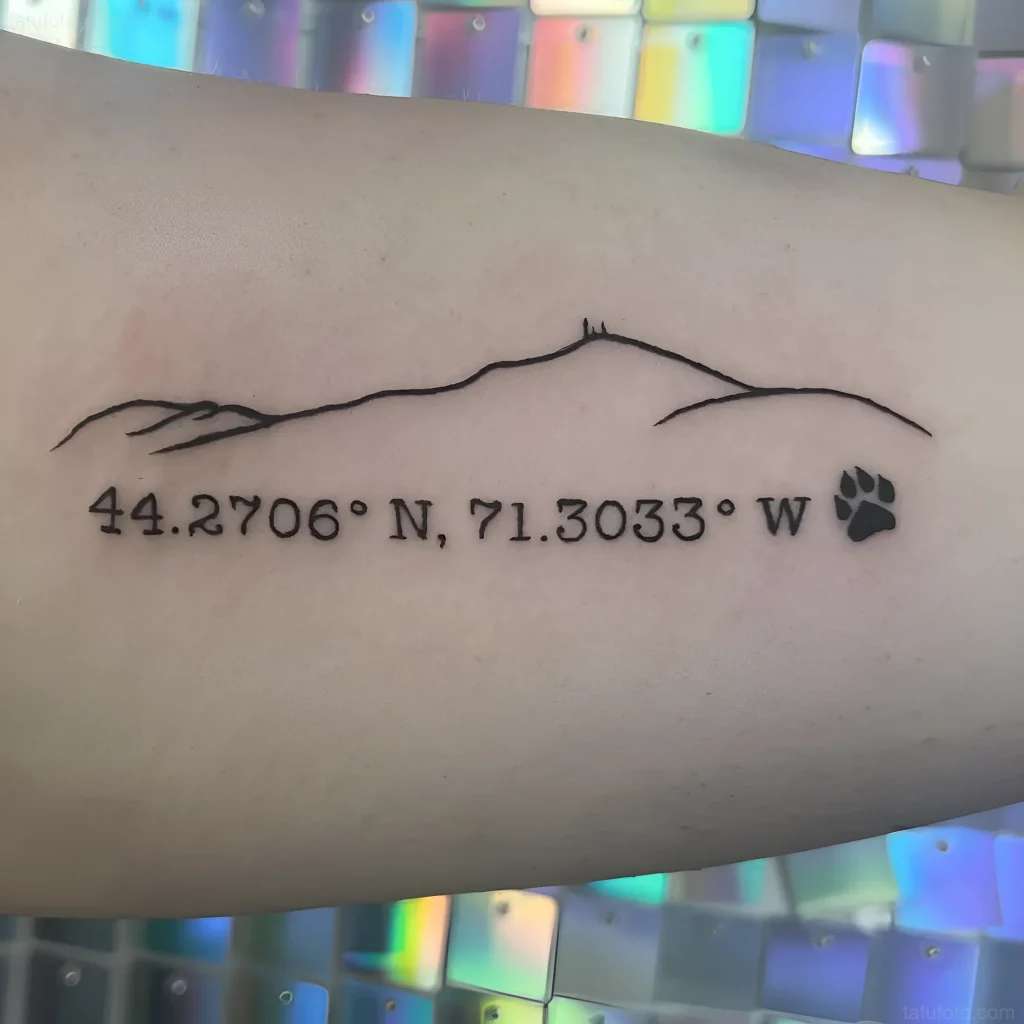
- Cartography: Use of a stylized fragment of a map or terrain outline, against which numbers are applied.
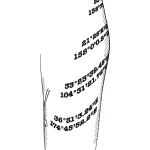
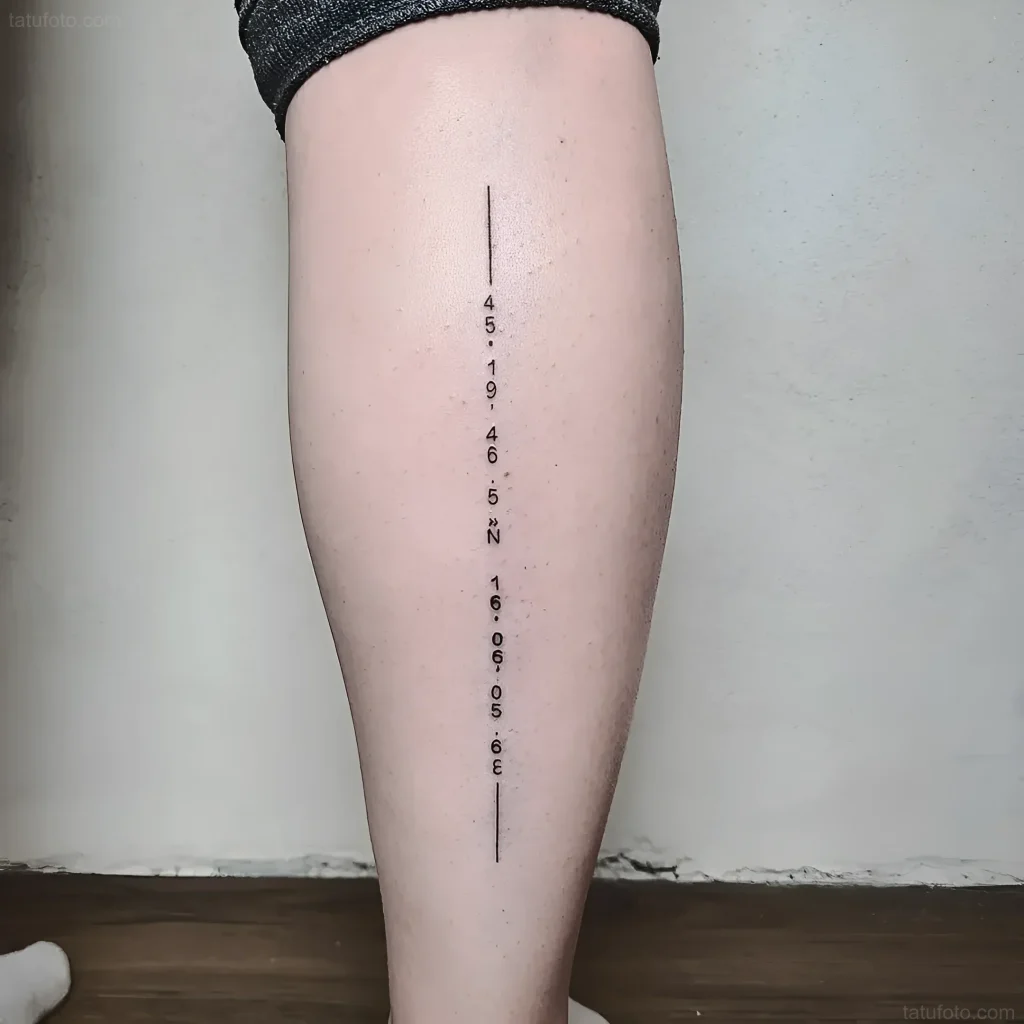
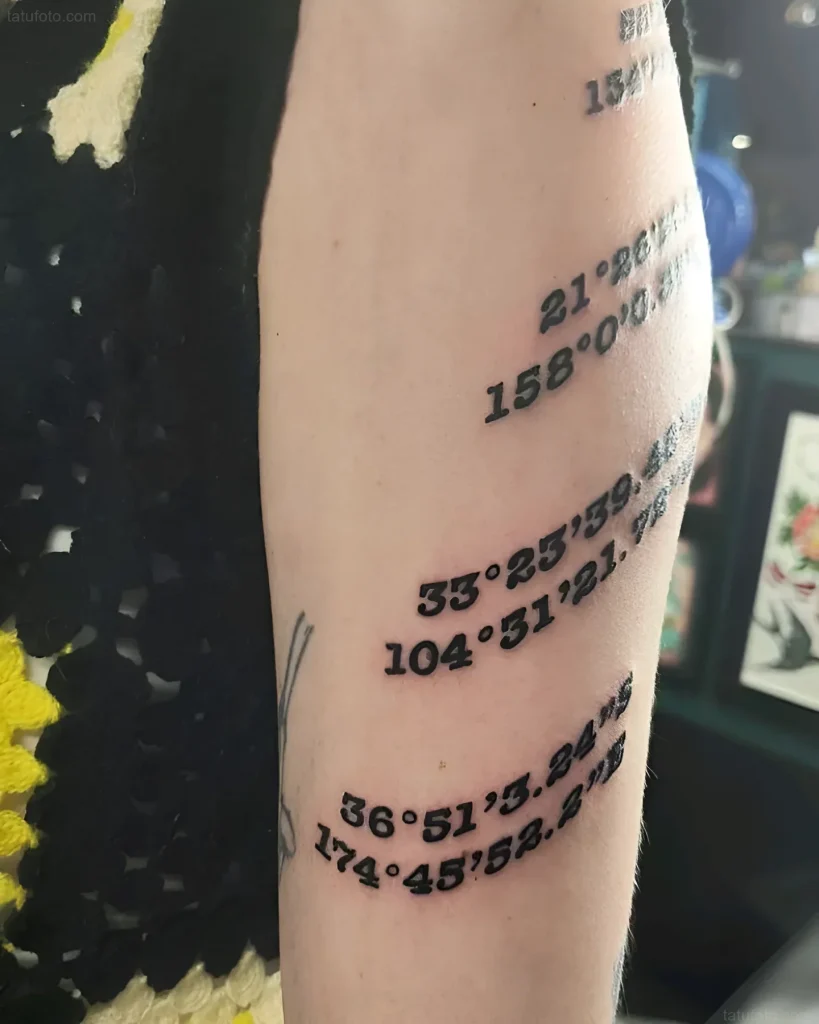
- Lines: Coordinates can be part of a continuous line that wraps around an arm or leg, becoming an element of an abstract or geometric design.
4. Realism and Landscape
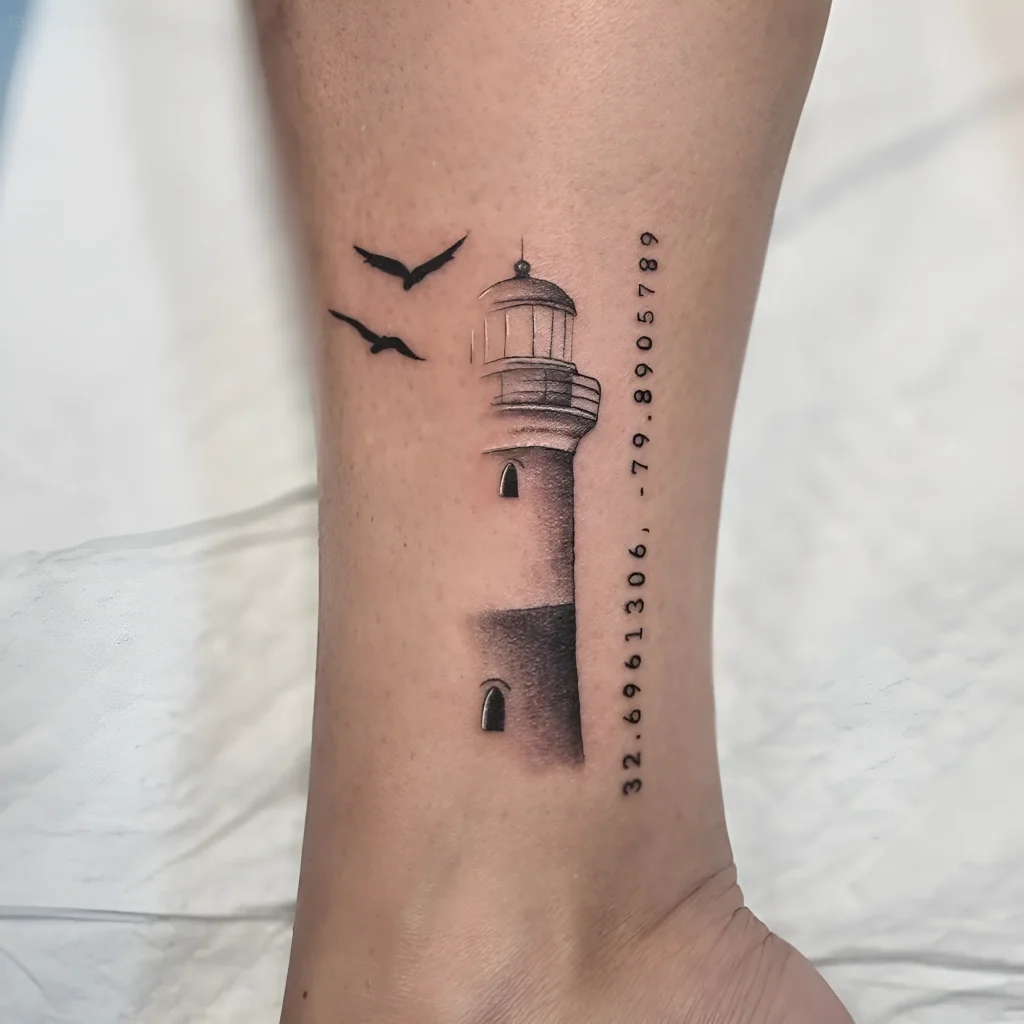
While realism is rarely applied directly to numbers, it is used to create a background that visually depicts the place encrypted in the coordinates. For example, below the line of coordinates, a miniature, detailed landscape can be depicted – a silhouette of a city, mountains, or a lighthouse corresponding to the indicated point.
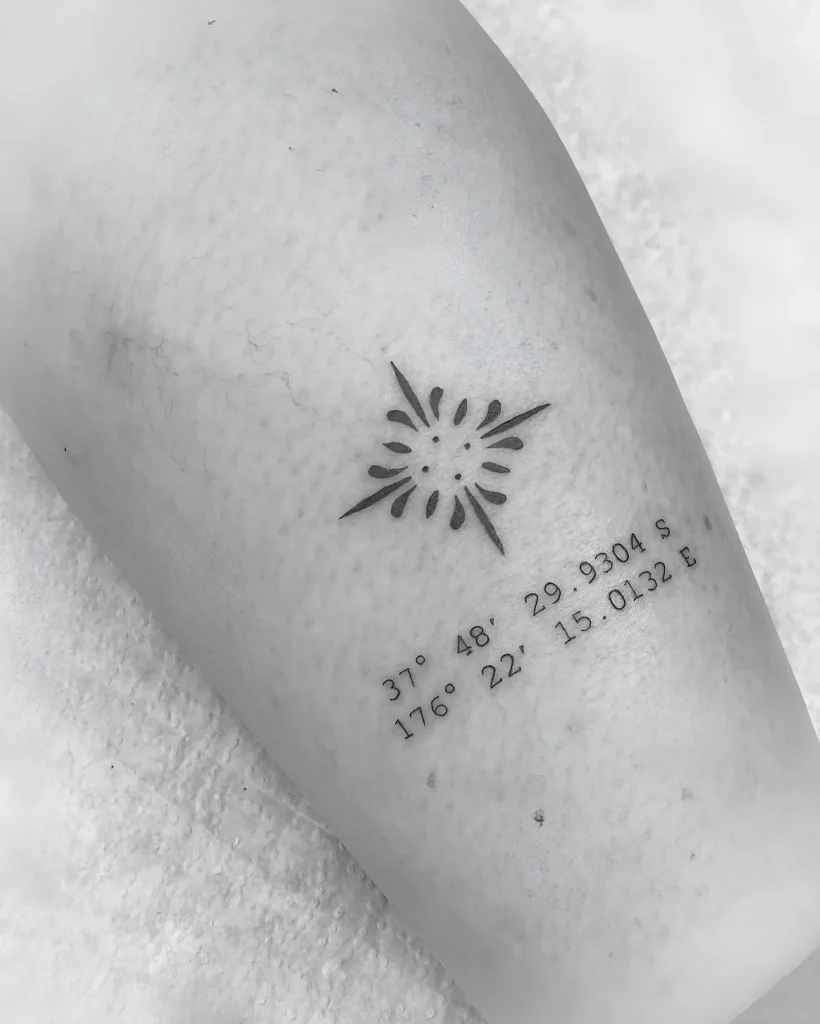
Best Locations for Coordinate Tattoos: Where to Place Your Personal Landmark
The choice of location for a coordinate tattoo depends on how personal and hidden you want this message to be, as well as the length of the number string itself.
1. Hidden and Intimate Places
These areas are ideal if the meaning of the coordinates is deeply personal and not intended for public display.
- Ribs (side of the torso): An excellent long surface for horizontal placement of the string. A very painful but intimate location.
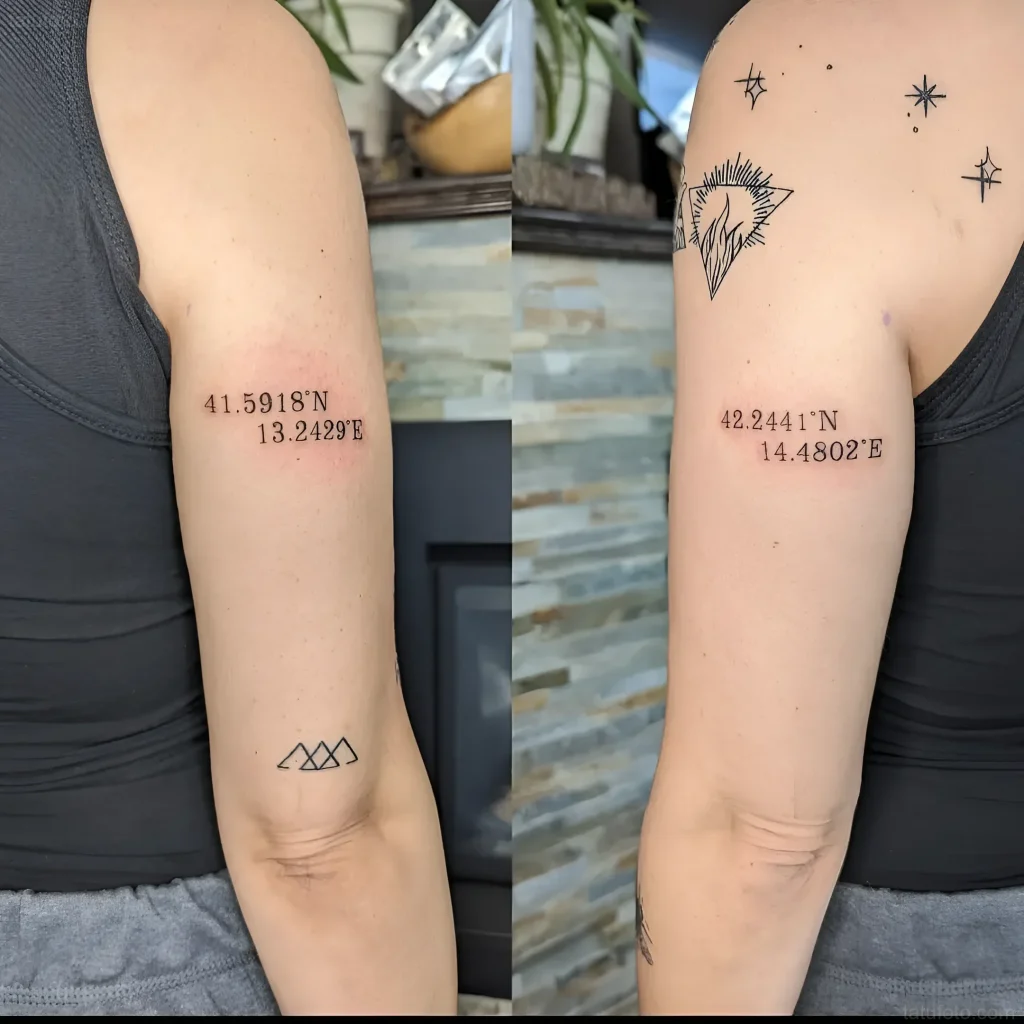
- Inner Bicep: Coordinates remain hidden when the arm is down and are only visible when the arm is raised or bent.
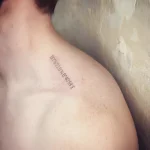
- Collarbone Area: An elegant but less noticeable spot. The string beautifully accentuates the curve of the bone.
- Back (along the spine): Ideal for vertical placement of coordinates, symbolizing the “axis” or “core” of your life.
2. Visible and Functional Places
These locations emphasize that the coordinates are your constant landmark and part of your identity that you do not hide.
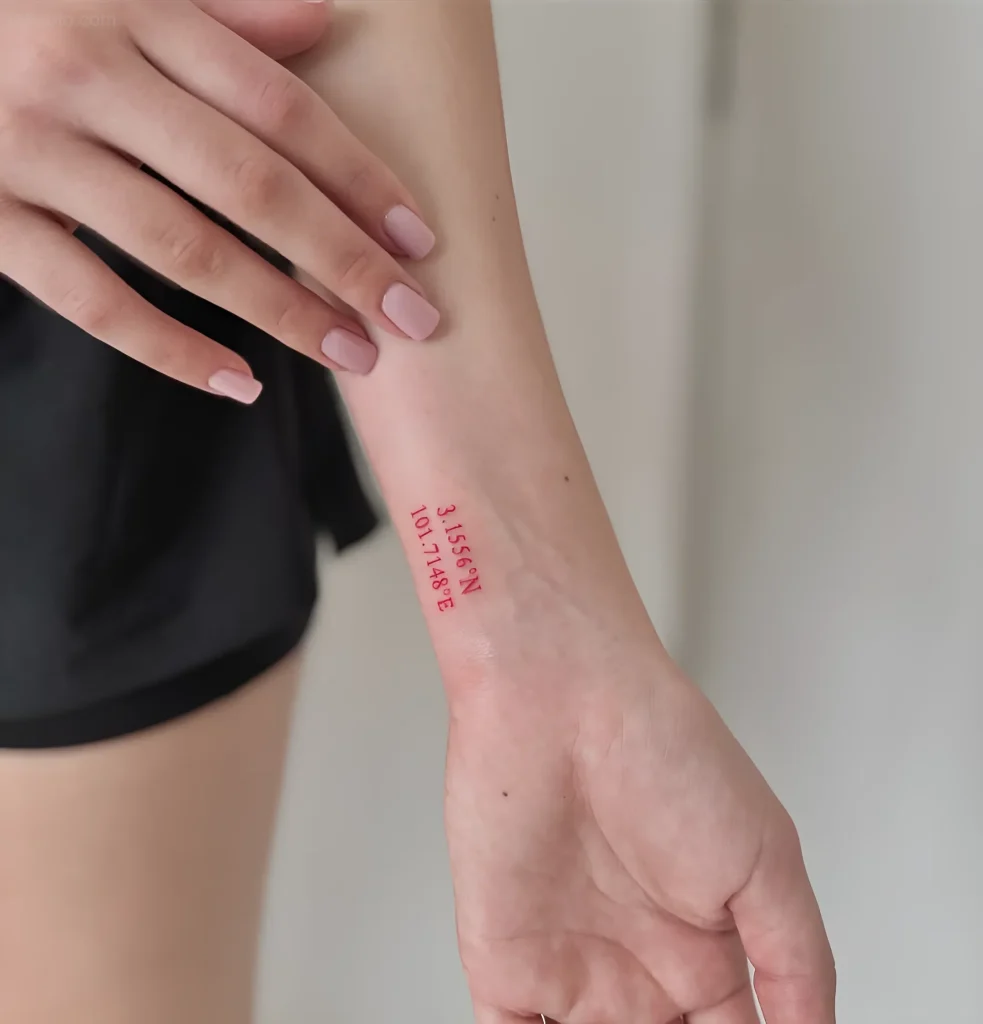
- Wrist (inner or side): The most popular location. Coordinates are easily visible and serve as a constant reminder. Due to the small area, the decimal format (DD) is often used here.
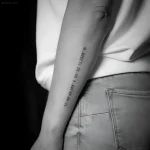
- Forearm: Allows for a larger and more complex font, as well as the integration of additional elements (compass, dates).
- Foot or Ankle: Popular for marking coordinates of places related to travel or “the path.”
3. Paired and Symmetrical Placements
If you are getting a tattoo related to two different places (e.g., birthplace and meeting place), symmetrical placement is often chosen:
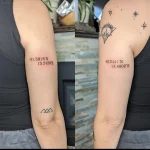
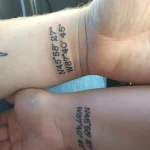
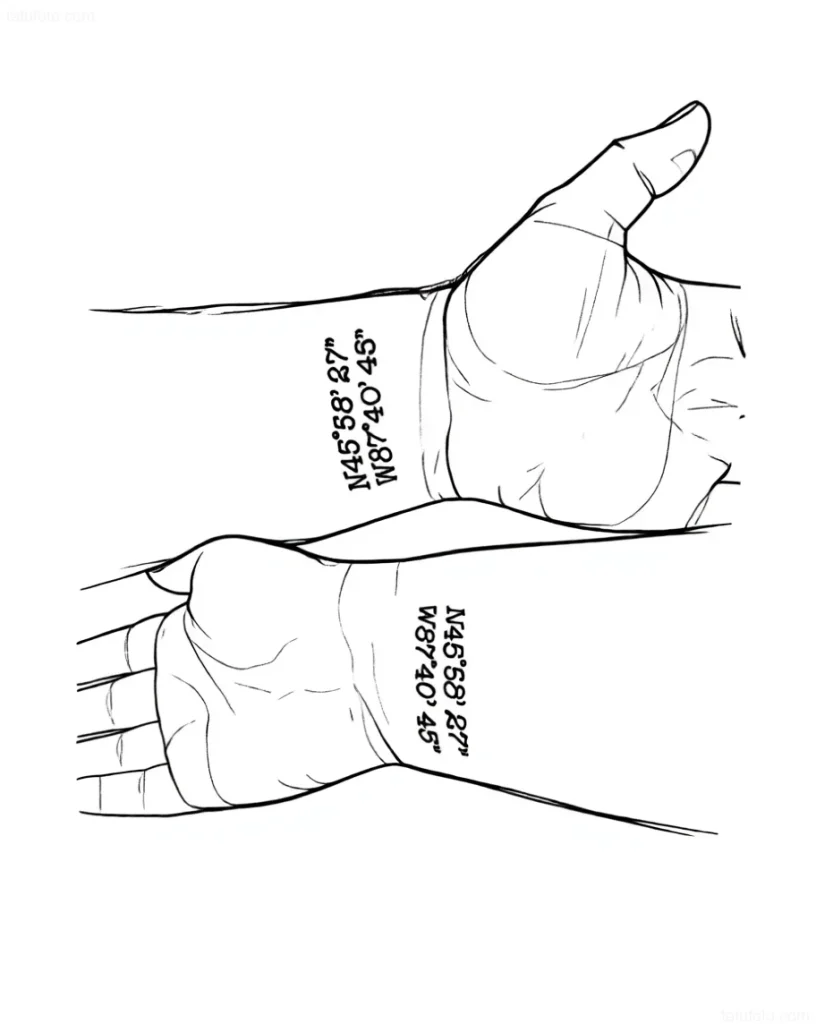
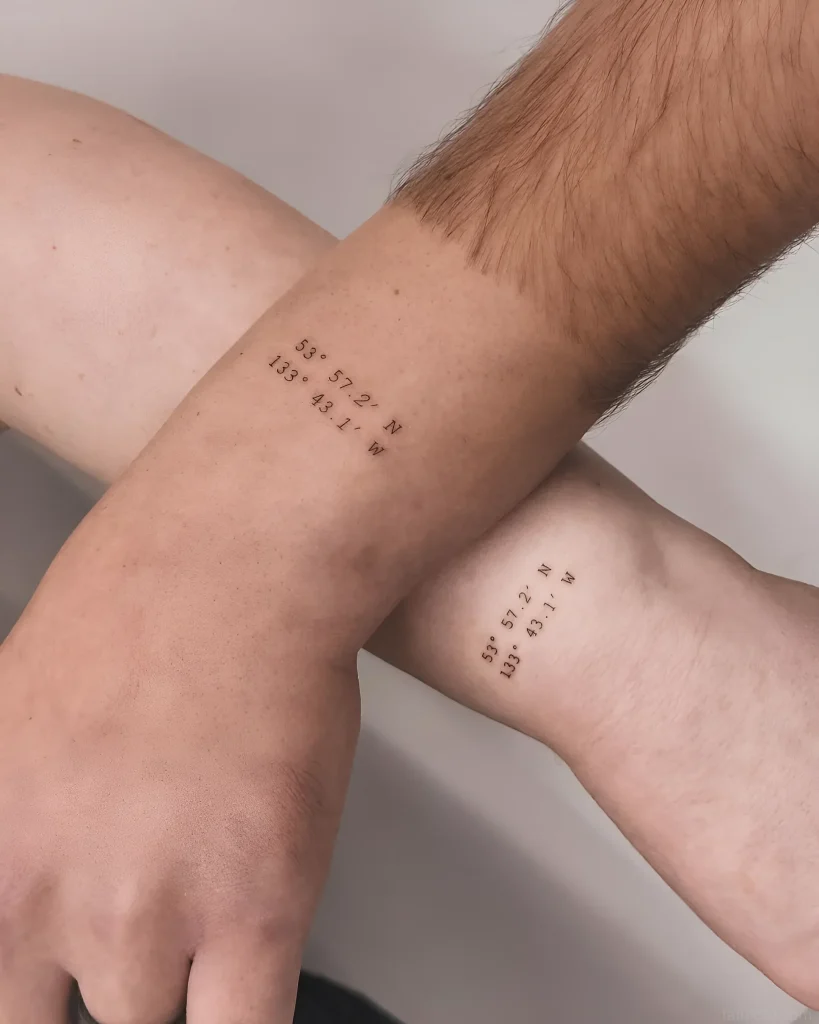
- Both arms (wrists or forearms).
- Inner sides of both ankles.
Preparation and Aftercare: How to Keep Your Cherished Numbers Clear and Readable
Coordinate tattoos, especially those done in the Fine Line style, require special attention to detail and aftercare, as small, thin numbers are most susceptible to bleeding and fading.
Preparation for the Session: Precision Above All
1. Fixing the Format: Ensure you provide the artist with the exact, final version of the coordinates, including all symbols (° , ’ , ” , N/S/E/W). An error in one digit or letter completely changes the meaning of the tattoo.
2. Choosing the Font: Discuss with the artist how the chosen font will look at a small scale. Fonts that are too thin or too serifed can “bleed” over time, turning numbers into an indistinguishable line.
3. Skin Test: Always ask the artist to create a stencil and apply it to the chosen location. Check readability from different viewing angles and in different poses.
Aftercare for Coordinate Tattoos
Since coordinate tattoos often feature a small, linear design, the key task is to prevent ink bleeding and ensure perfect healing.
- Minimal Friction: If the tattoo is on the wrist or ankle, avoid wearing tight clothing, bracelets, or watches for the first two weeks. Friction is the main enemy of thin lines.
- Thorough Moisturization: Use healing ointments recommended by your artist. Moisturizing helps keep the skin elastic and prevents the formation of thick scabs that can pull out pigment.
- Sun Protection: This is critically important. Ultraviolet rays degrade thin black pigment the fastest. After complete healing, always use sunscreen with SPF 50+ to keep the numbers sharp and prevent fading.
- Monitoring for “Bleeding” Lines: Monitor the tattoo for the first few months. If the lines start to noticeably blur (the “blur” effect), consult your artist immediately.
Frequently Asked Questions About the Meaning of Coordinate Tattoos
1. What if I make a mistake in the coordinates?
An error in coordinates is one of the most regrettable situations, as it changes the encrypted location. If the mistake is noticed immediately, the artist can try to correct it during the session if possible. If the error is discovered later, there are usually three options:
- Correction: If the error is minimal (one digit), it can be corrected by thickening the line or adding a dot.
- Camouflage: If the error is significant, the coordinates can be covered by a larger, related symbol (e.g., a compass or a rose).
- Laser Removal: As a last resort, the erroneous part can be removed, and the correct string can be applied again.
2. Can you encrypt the coordinates of a non-existent place?
Yes, this is a popular approach in symbolic tattooing. Some people get coordinates of fictional places that have metaphorical meaning for them (e.g., the Shire from “The Lord of the Rings” or the setting of a favorite movie/book). In this case, the meaning of the coordinate tattoo shifts from geography to personal mythology and ideals.
3. What is the best way to write coordinates to make them look beautiful?
For aesthetics and readability, tatufoto.com experts recommend using the Degrees, Minutes, Seconds (DMS) format. It looks more elegant and traditional. Use symbols (°) and (‘, ”) for separation. Also, avoid using very long strings of decimal places if you choose the DD format, as this overloads the composition.
4. Can multiple sets of coordinates be combined in one tattoo?
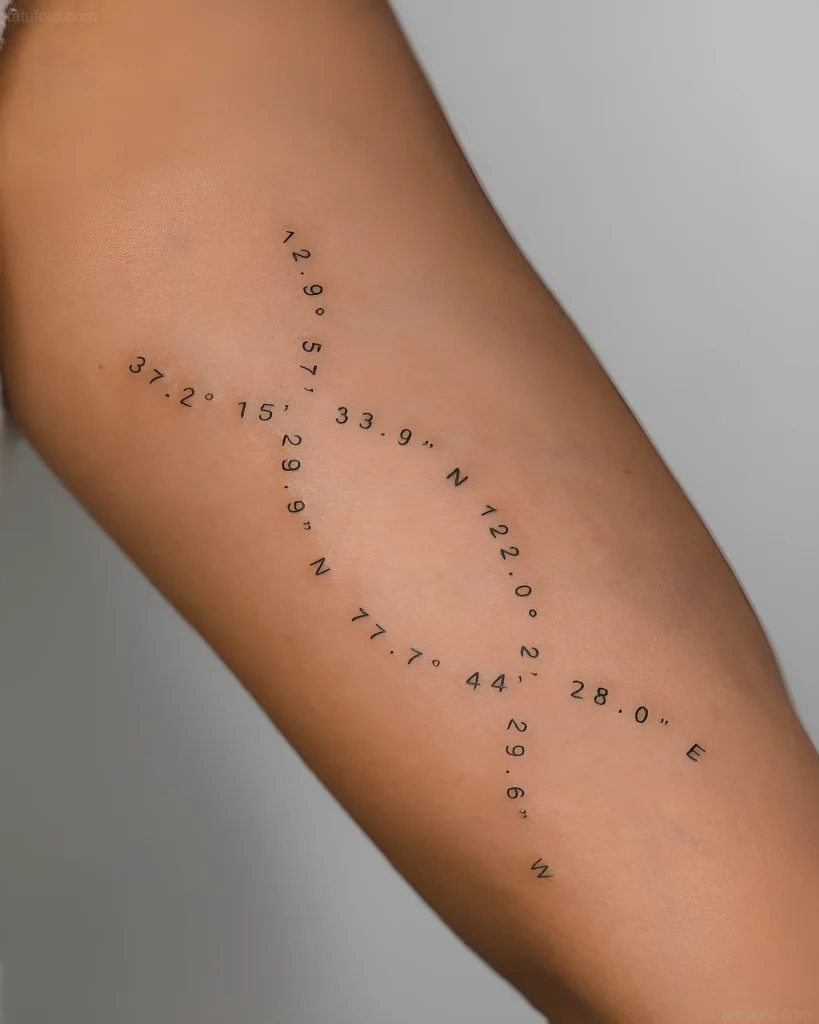
Yes. This is often done to mark the birthplaces of children or important life stages. They can be arranged vertically one below the other, separated by dots or dashes, or placed symmetrically on different parts of the body (e.g., on each wrist).
Interesting Facts About Geographical Mark Tattoos
1. Celebrity Coordinates as Trendsetters
The trend for coordinate tattoos was largely initiated by celebrities who showcased personal yet concise symbols. For example, Angelina Jolie has the coordinates of her children’s birthplaces on her left shoulder. This instantly boosted the popularity of this type of tattoo, emphasizing its deep family and personal value.
2. Coordinates and Astronomy
Some people use celestial coordinates, not terrestrial ones – astronomical coordinates (declination and right ascension) to mark the position of a specific star or constellation at the moment of an important event (e.g., birth). This gives the tattoo a cosmic, timeless meaning.
3. Hidden Meaning in the Number of Digits
Sometimes clients choose coordinates not only for the place but also for the numerological significance of the numbers they contain. For example, if the number 7 (luck) or 3 (trinity, harmony) appears frequently in the coordinates, it can be an additional layer of symbolism that enhances the emotional attachment to the place.
4. Coordinates as Part of a Travel “Diary”
For avid travelers, coordinate tattoos can become a form of “passport” or “diary.” They add a new set of coordinates after each significant trip, creating a continuous route on their arm or leg that reflects their geographical and spiritual discoveries. This demonstrates not just a love for travel, but also the marking of a path of self-discovery through spatial movement.
A coordinate tattoo is a powerful statement about what “place” means to you. It combines precision, minimalist aesthetics, and the boundless depth of personal memory. By choosing this symbol, you are not just getting numbers tattooed; you are imprinting your personal map of the world onto yourself, where the most important points will always be with you.