Tattoo inscriptions are one of the most personal and meaningful forms of body art. But when it comes to Spanish inscriptions, we enter a realm where personal expression combines with the fiery expressiveness of the Latin spirit. Spanish, being a language of passion, philosophy, and deep emotions, offers a unique palette for those who wish to capture not just words on their skin, but an entire story filled with meaning and character. Choosing a Spanish phrase is not just a nod to fashion; it’s a conscious decision that carries echoes of a rich culture, from the romanticism of Spain to the mysticism of Latin America. As leading experts in the field of tattooing, we will help you navigate the subtleties of linguistic symbolism and artistic execution.
Spanish Tattoo Inscriptions: Beauty and Meaning in Every Word
The Spanish language, español or castellano, ranks second in the world by the number of native speakers, making it a universal means of communication, even when it comes to the non-verbal art of tattooing. However, its popularity in tattoo culture is due not only to its global spread but also to its phonetic and emotional characteristics.
Spanish words often sound more melodic and rhythmic than their counterparts in other languages, giving inscriptions a special aesthetic appeal. Furthermore, many phrases chosen for tattoos carry a philosophical or existential subtext that is difficult to convey in a single word in Russian or English. Spanish tattoo inscriptions allow you to express:
- Passion and Emotion: Phrases about love, fate, and struggle that convey the temperament of Spanish culture (e.g., Mi alma — My soul).
- Philosophy of Life: Deep reflections on time, choice, and freedom (e.g., Carpe diem, although it’s Latin, the Spanish equivalent Aprovecha el momento is often used).
- Cultural Affiliation: For those with Latin American or Spanish roots, these inscriptions are a direct expression of identity.
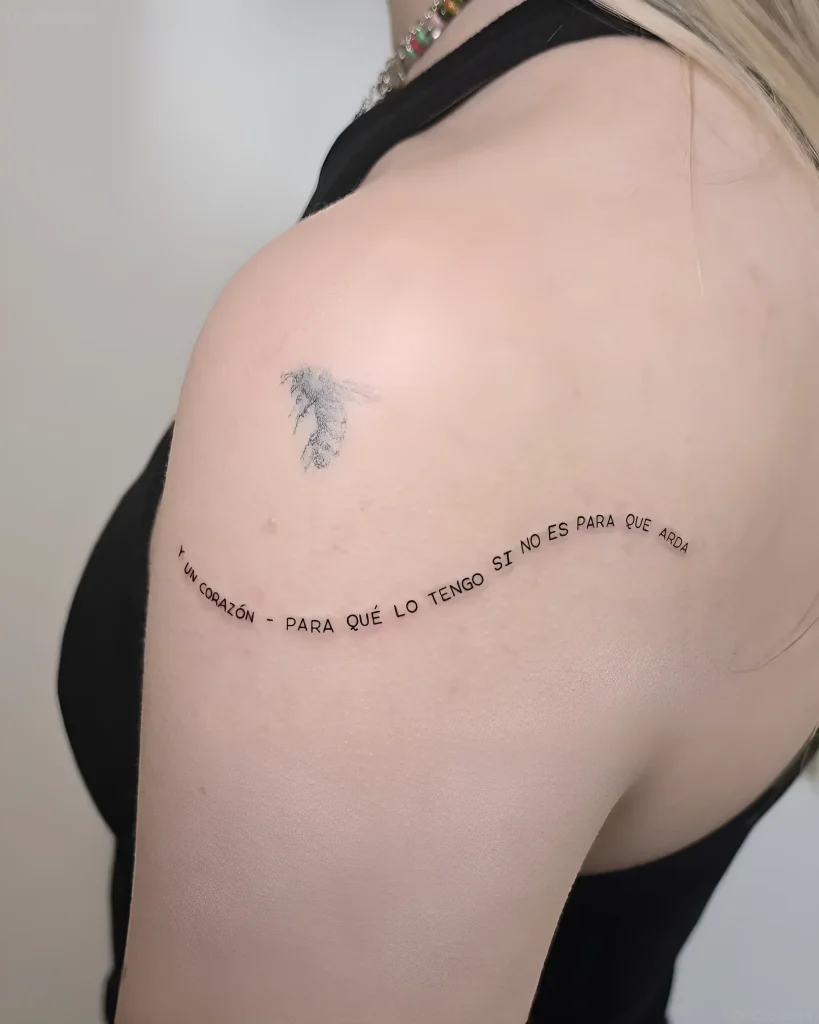
The History of Using Spanish in Tattoos: From Traditions to Modernity
The history of tattoos with Spanish inscriptions is closely linked to the development of tattoo culture in the USA, specifically with the Chicano movement. In the mid-20th century, a unique style emerged among Latino gangs and prisoners in California and Texas, which became the progenitor of many modern directions in tattoo lettering.
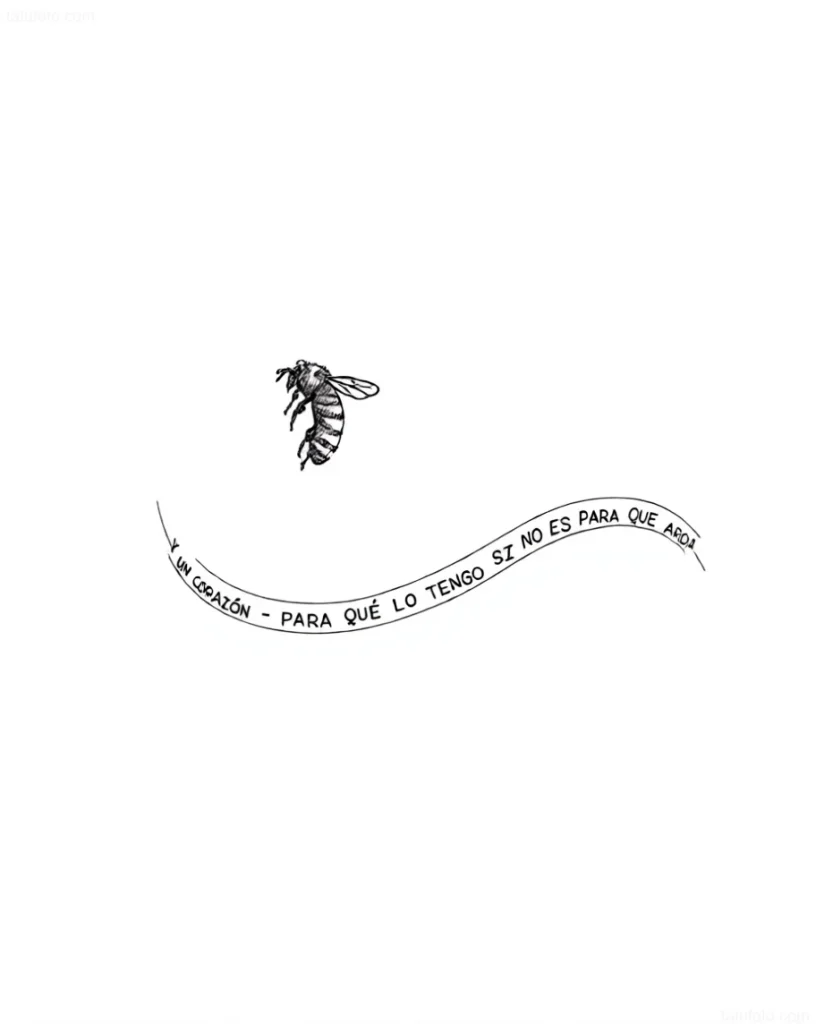
Chicano Lettering and Its Cultural Weight
Tattoos in the Chicano style often included not only images (saints, portraits, lowriders) but also Spanish inscriptions. These inscriptions were not just decoration but a code of honor, loyalty to family (Familia), and neighborhood (Barrio). They served as an identifier, a declaration of life principles, and a way to maintain cultural connection to their homeland.
- Key Motifs: Loyalty, respect, remembrance of the fallen, love for mother.
- Font Style: Use of complex, ornate Gothic fonts (Blackletter) or calligraphy, which emphasized the seriousness and significance of the text.
Today, as the Chicano style has moved beyond subculture and become part of the global tattoo mainstream, Spanish tattoo inscriptions are no longer exclusively an attribute of ethnic identity. They have become a symbol of rebellious spirit, deep attachment to values, and an expression of personal strength, while retaining their historical aesthetic.
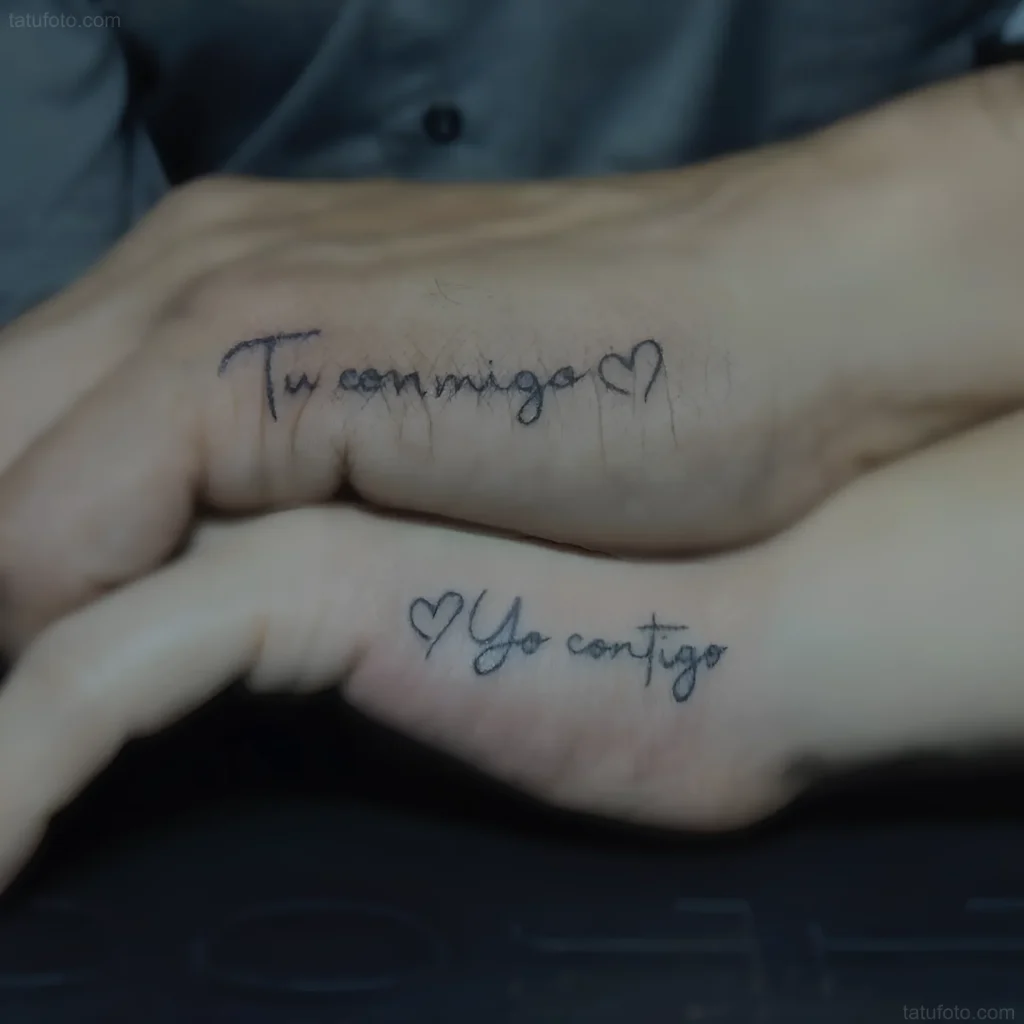
Meanings of Popular Spanish Tattoo Inscriptions: Choosing a Phrase with Character
Choosing a specific phrase requires careful consideration, as it will be with you forever. We have categorized the most sought-after Spanish tattoo inscriptions by theme so you can find one that resonates with your life experience.
Philosophy of Life and Fate
These phrases reflect acceptance of fate, strength of spirit, and the need to live in the present moment.
- La vida es bella (Life is beautiful). A classic affirmation of optimism and gratitude for each day lived.
- Solo Dios puede juzgarme (Only God can judge me). A phrase often found in Chicano culture, expressing independence from others’ opinions and faith in higher justice.
- No te rindas (Don’t give up). A motivational inscription symbolizing resilience and perseverance in the face of difficulties.
- El tiempo dirá (Time will tell). A symbol of patience and faith in the natural course of events.

Love, Family, and Loyalty
Spanish, as a language of romance, is ideal for expressing deep feelings.
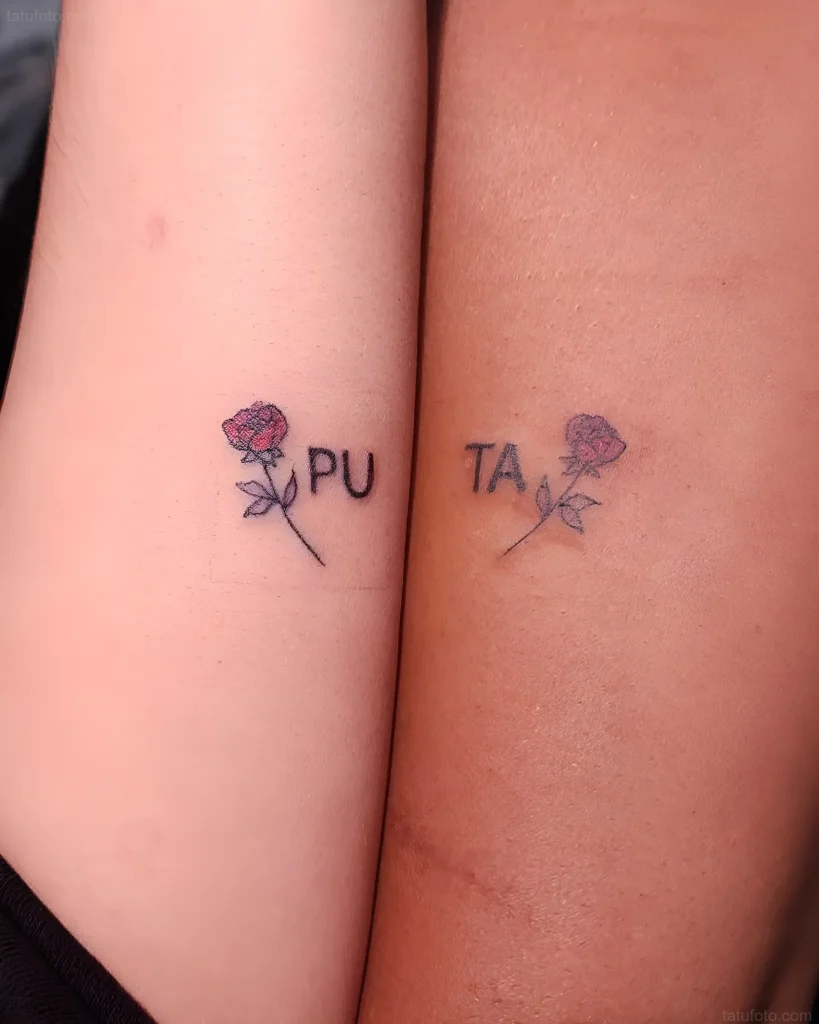
- Mi amor eterno (My eternal love). Perfect for matching tattoos or a dedication to a loved one.
- Familia es todo (Family is everything). An extremely popular phrase emphasizing the priority of family ties.
- Fidelidad (Fidelity). Often used as a single, powerful declaration of devotion.
- Madre mía (My mother). A deeply personal dedication to a mother, carrying immense respect and love.
Motivation and Personal Strength
Short and impactful phrases that serve as daily reminders of your inner strength.
- Libre (Free). A powerful single word expressing the pursuit of independence.
- Sueña (Dream). A call to action and to follow your ideals.
- Fuerza (Strength). A short but very significant symbol of resilience.
- Vivir sin arrepentimiento (To live without regret). A philosophy of accepting past mistakes and moving forward.
Important Linguistic Note: When choosing a Spanish tattoo inscription, be sure to consider grammar and gender. If you are a woman and want the inscription to reflect your state, make sure adjectives end in -a (e.g., Libre is universal, but Valiente means brave for both genders). If you are unsure, always consult a native speaker or a professional translator, not online translators.
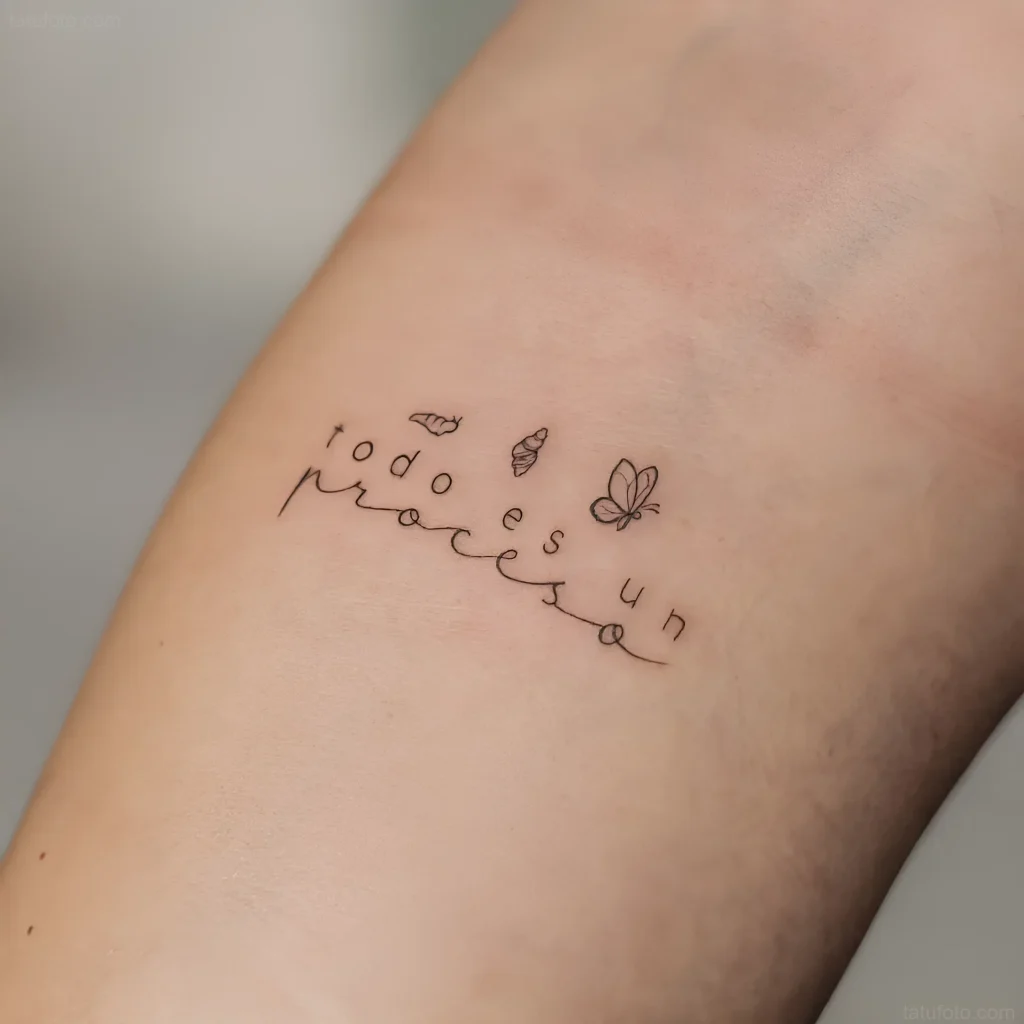
Styles of Tattoos for Spanish Inscriptions: From Classic to Minimalism
The effectiveness of a Spanish tattoo inscription depends 90% on the correctly chosen font and style. Different styles carry different cultural and visual weight.
1. Chicano Lettering
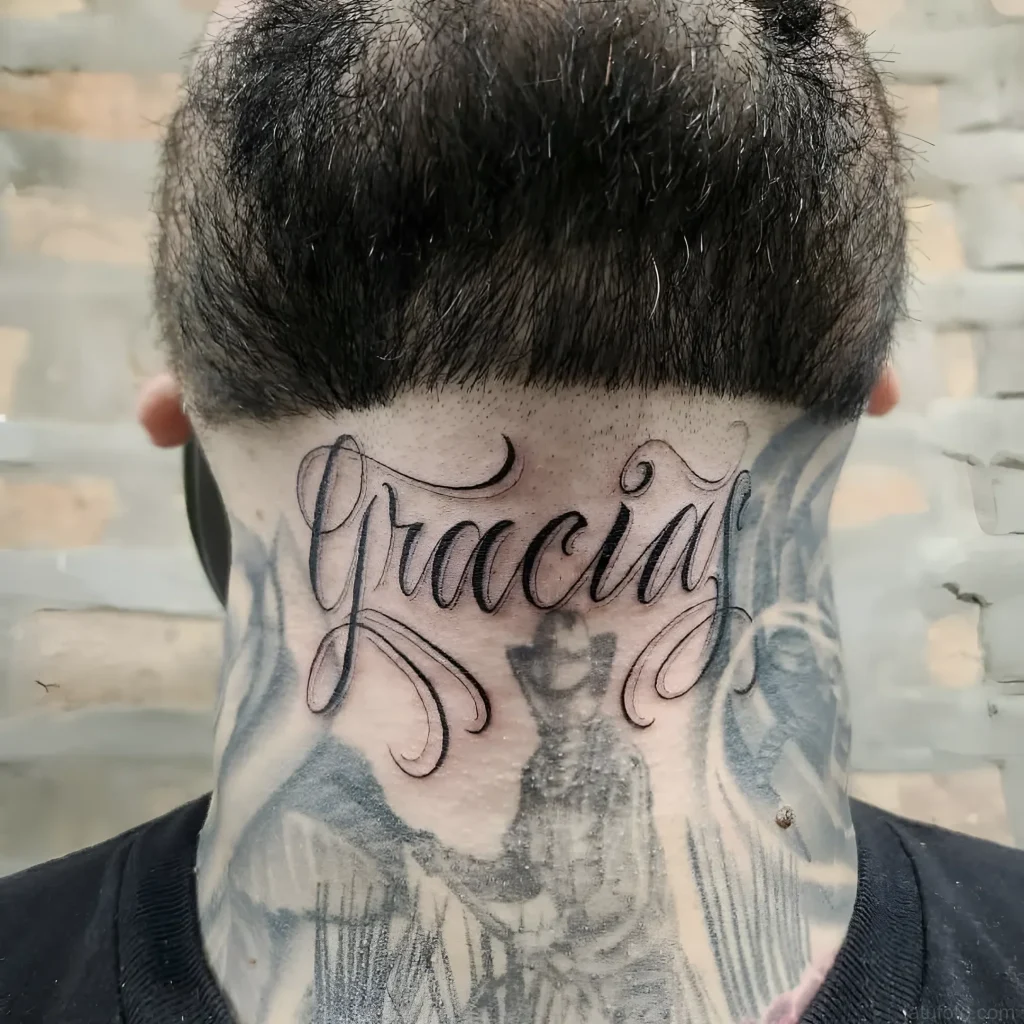
This is the most authentic and historically significant style for Spanish inscriptions. It is characterized by complex, often Gothic or handwritten fonts with strong, sharp lines and decorative flourishes (swashes).
- Features: High detail, solid black ink, often mimicking handwriting done with a fine pen or prison machine.
- Ideal for phrases: Mi vida loca, Familia, Por vida.
- Emotion: Brutality, loyalty, deep attachment to traditions.
2. Calligraphy and Script
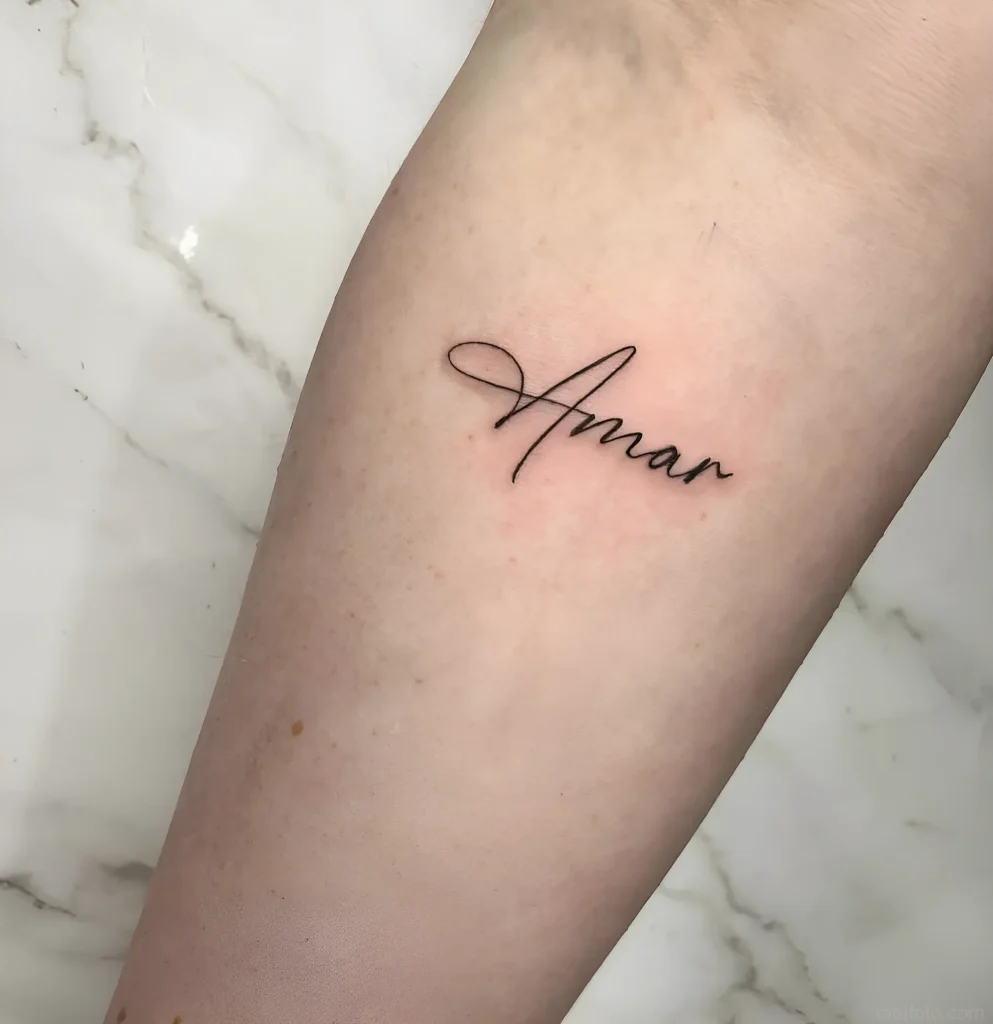
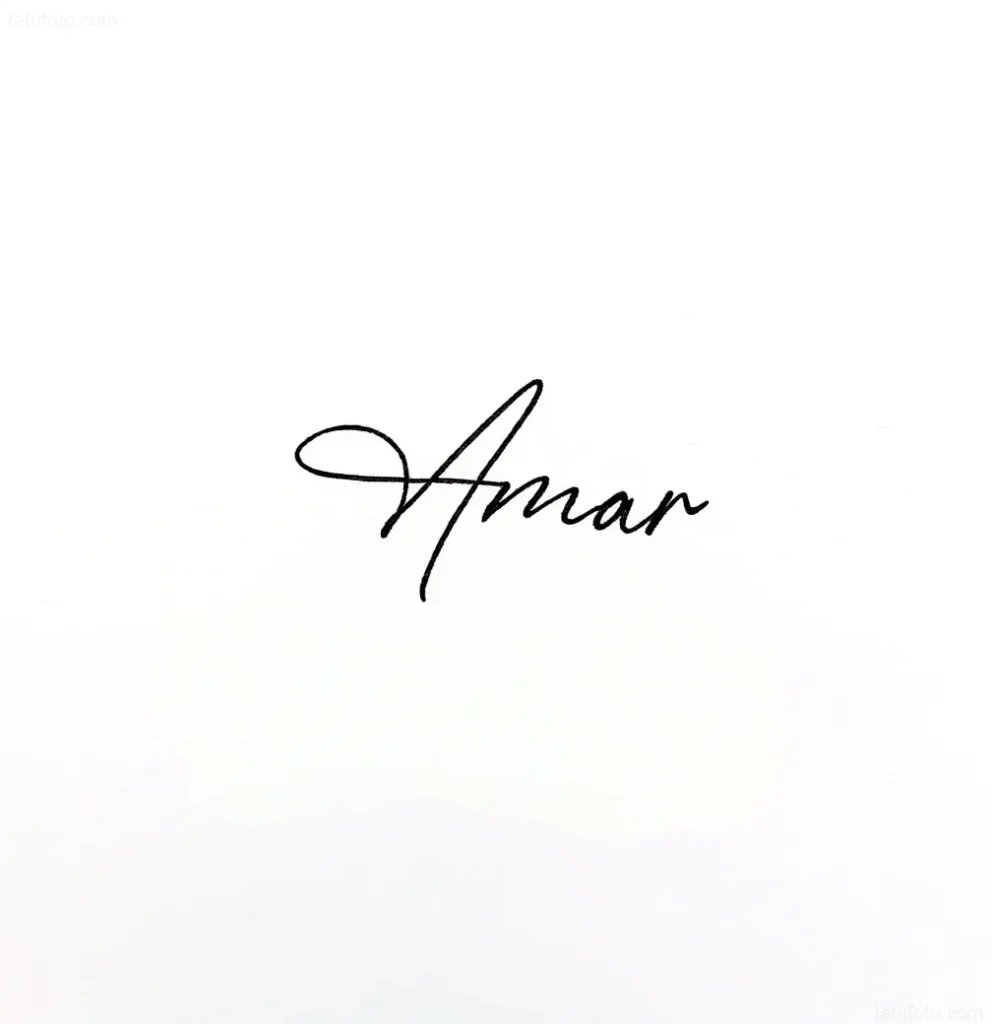
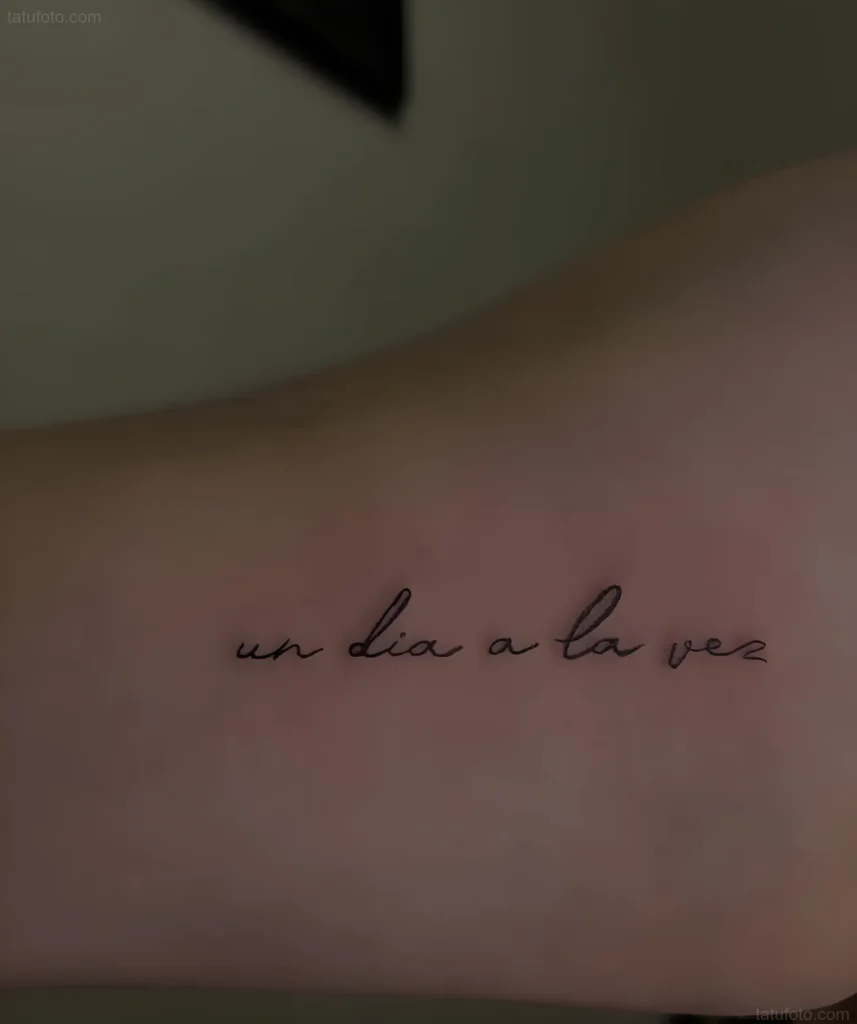
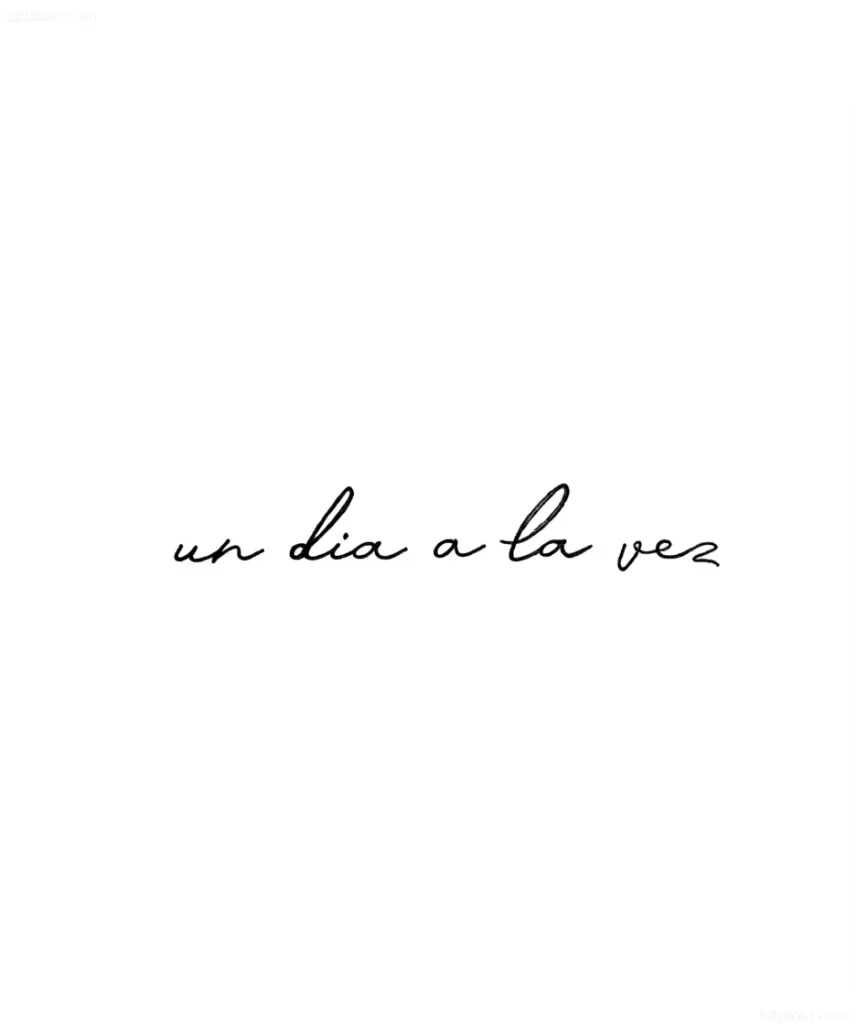
This style is ideal for romantic or philosophical Spanish tattoo inscriptions, as it emphasizes the melodiousness of the language. Fonts mimic elegant handwriting, often with a subtle shadow or gradient.
- Features: Fluidity, elegance, ability to vary line thickness.
- Ideal for phrases: La vida es sueño, Mi alma.
- Emotion: Grace, lyricism, softness.

3. Minimalism and Fine Line
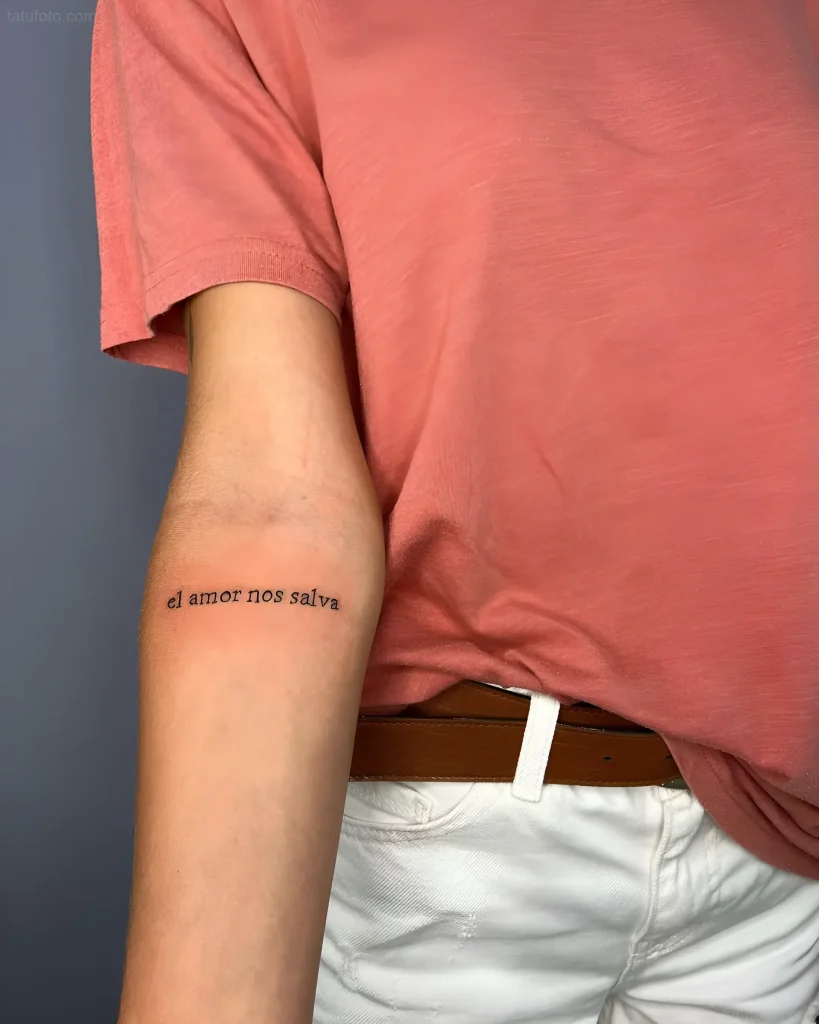
If you are looking for a restrained yet meaningful expression, a fine line or minimalist font (e.g., Sans Serif) will be the best choice. This style avoids the excessive aggression characteristic of Blackletter and focuses solely on the meaning of the word.
- Features: Clean, thin lines, no shadows or decoration. The inscription often looks printed.
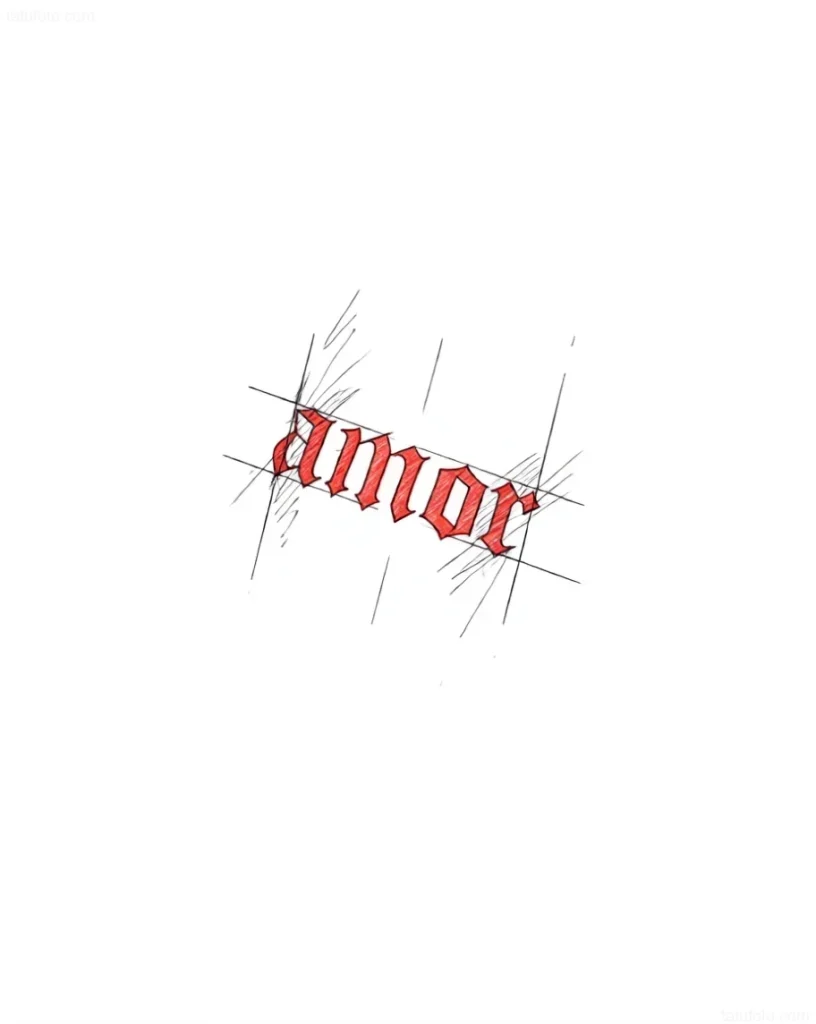
- Ideal for phrases: Short words (Fuerza, Amor, Paz) or dates.
- Emotion: Restraint, modernity, focus on content.
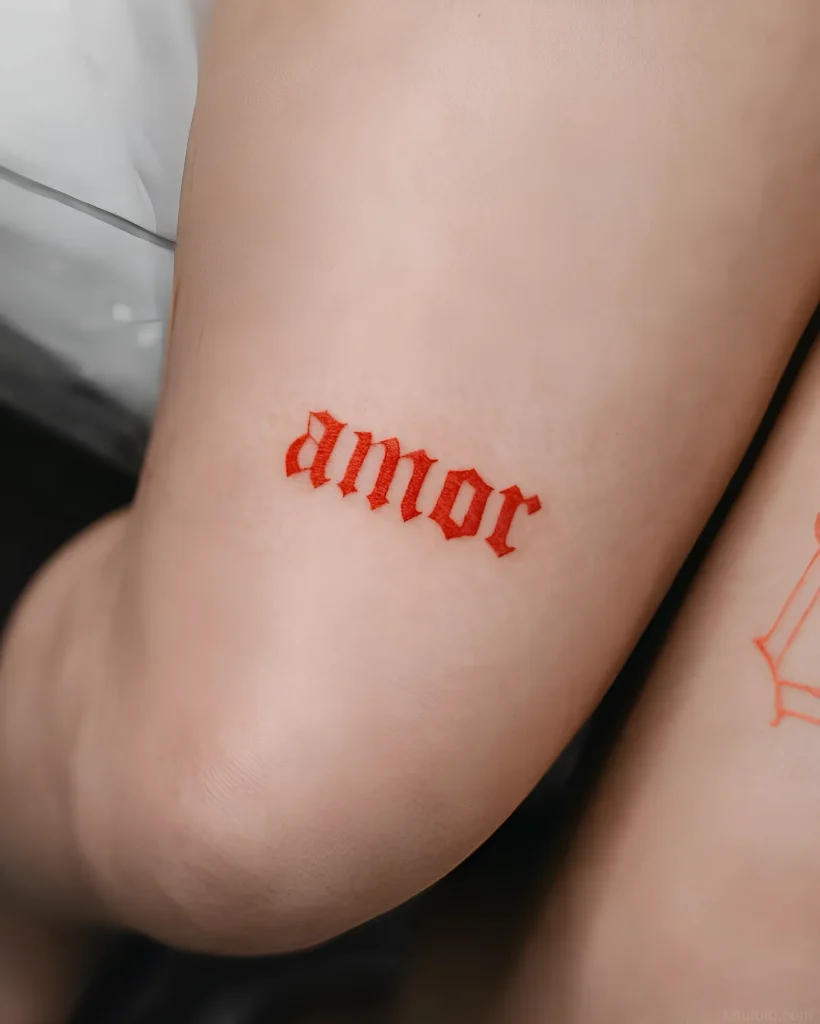
4. Gothic and Blackletter
Although this style is often associated with German or English culture, it is widely used in Spanish lettering (especially in the Chicano context). Gothic adds weight, historicity, and a slightly dark but majestic look to the inscription.
Where to Get a Spanish Tattoo Inscription: Best Body Locations and Their Specifics
The placement of a Spanish inscription is of great importance, as it determines its visibility, size, and, to some extent, its symbolic meaning.
Forearm and Bicep (Visibilidad y Declaración)
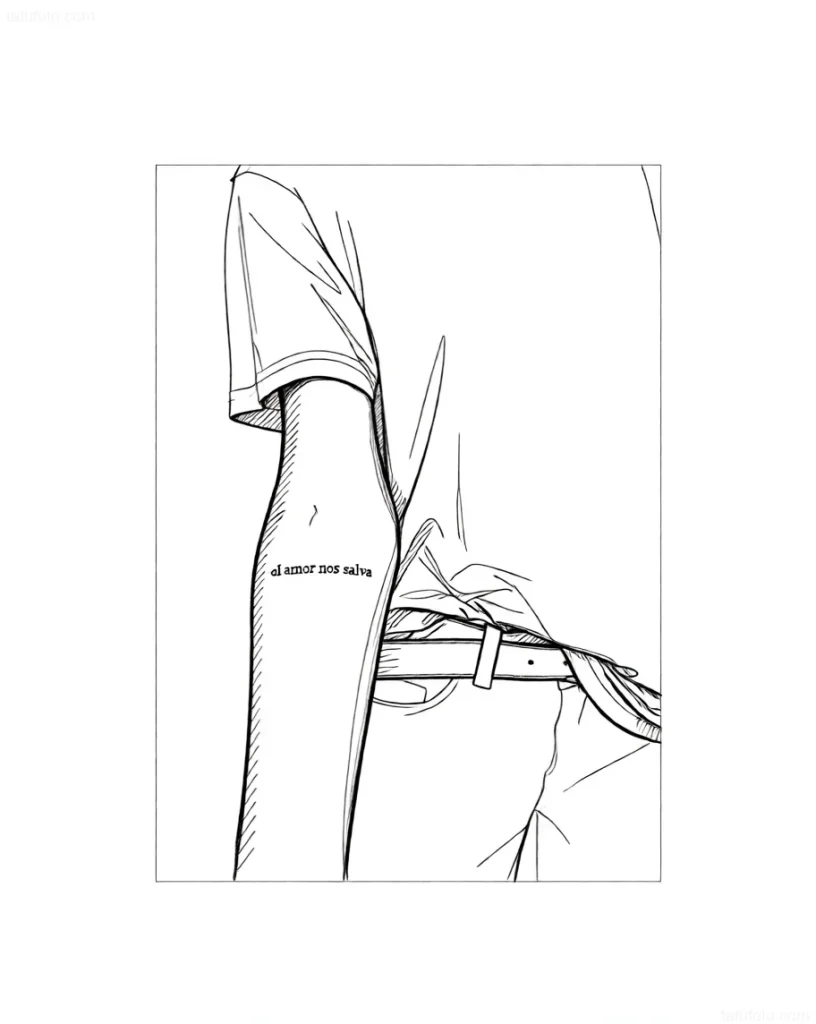
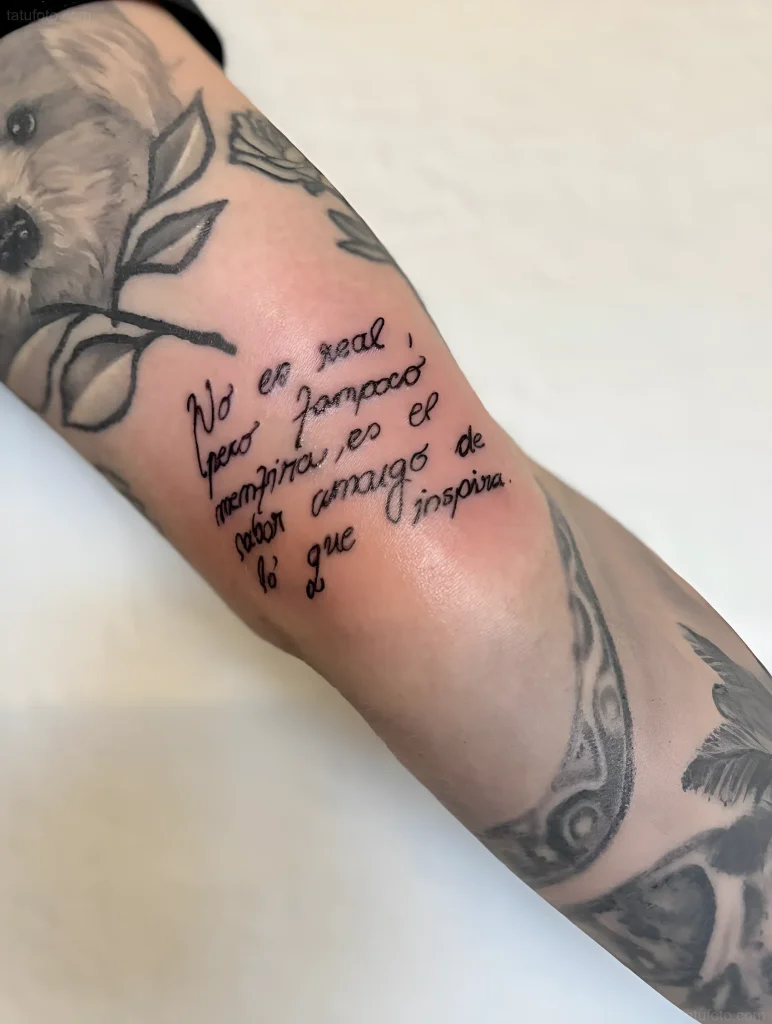
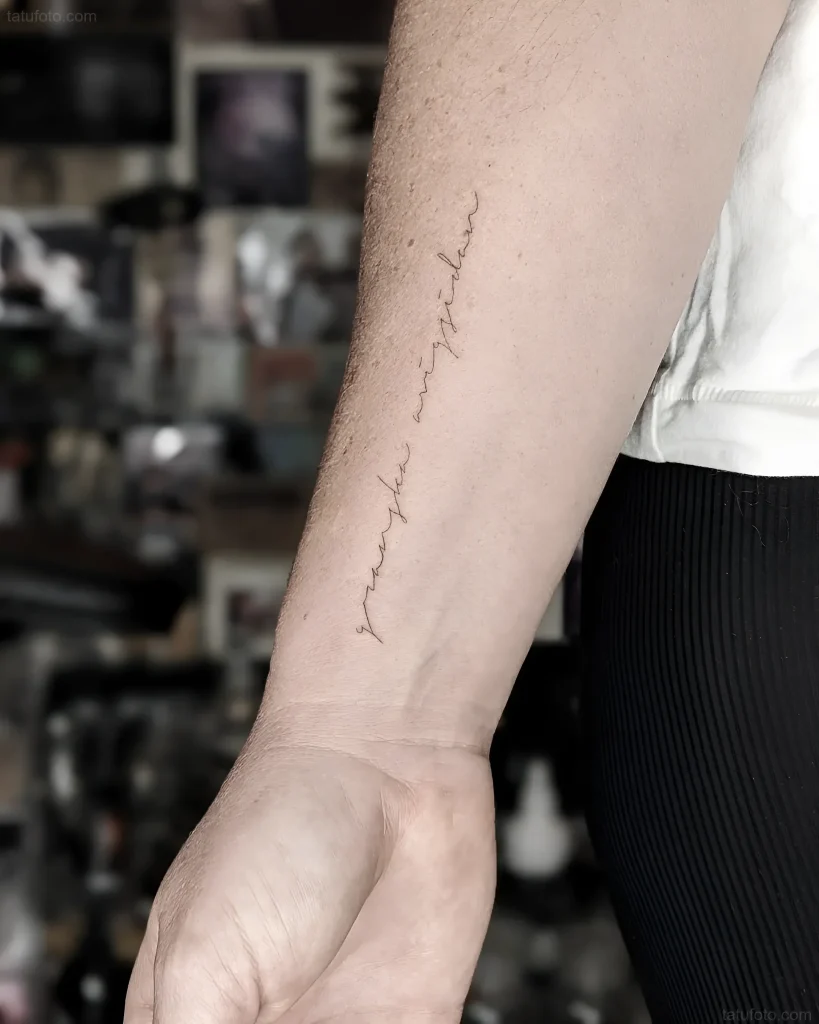
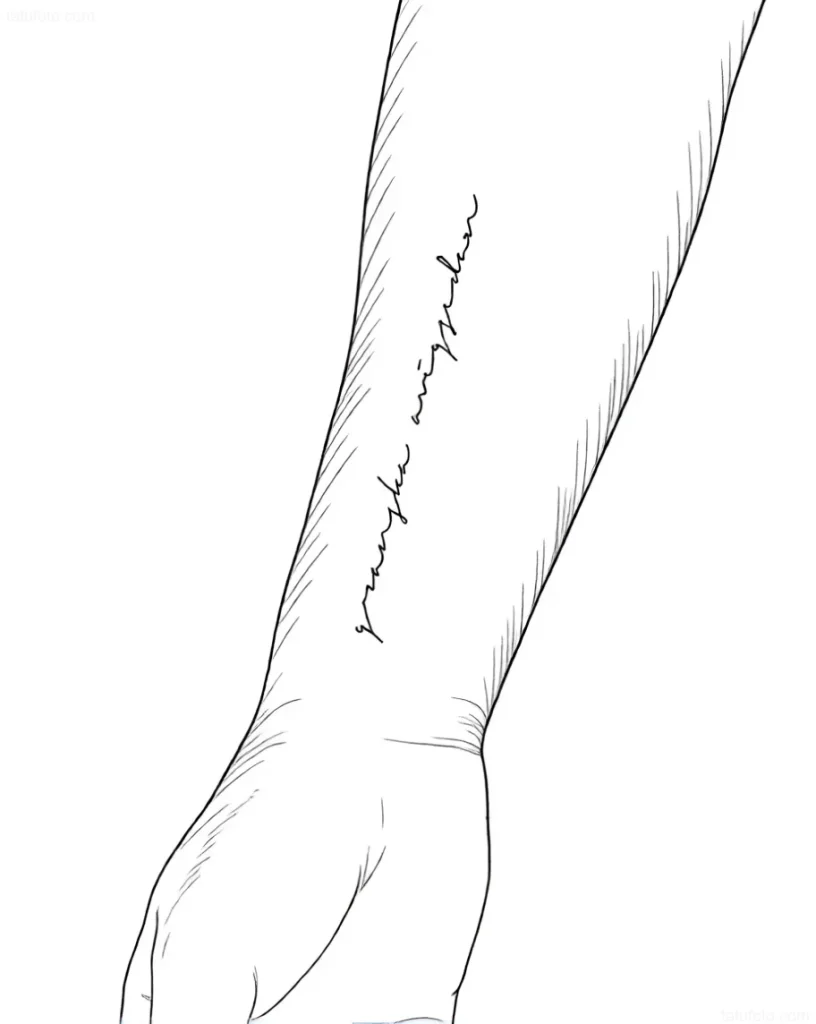
These are among the most popular locations for tattoo inscriptions. They allow for relatively long phrases, and the text remains easily readable.
- Meaning: An open declaration of principles, beliefs, or life creed. Ideal for motivational phrases (No te rindas).
- Features: Well-suited for Chicano lettering and large calligraphic fonts.
Ribs and Side (Intimidad y Profundidad)
A tattoo on the ribs or side is considered more personal and hidden. These locations are suitable for phrases with a deeply intimate or tragic meaning that is not intended for public display.
- Meaning: Remembrance, personal vows, phrases about love or loss (Siempre en mi corazón — Always in my heart).
- Features: High pain level, but a beautiful, flat surface for long, thin calligraphic inscriptions.
Wrist and Inner Arm (Recordatorio Personal)
Ideal for short, single-word Spanish tattoo inscriptions that serve as a personal reminder, visible to the wearer several times a day.
- Meaning: Daily motivation, a key symbolic word (Fuerza, Paz).
- Features: Requires the use of minimalist or thin fonts due to limited space.
Collarbone and Neck (Elegancia y Привлекательность)
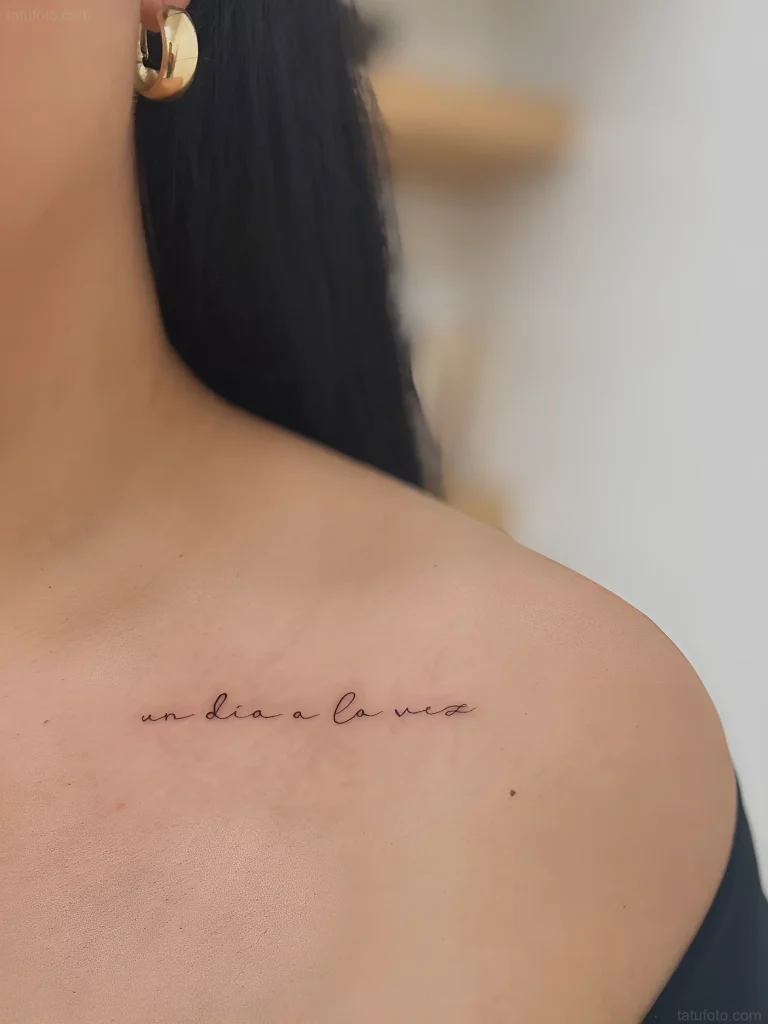
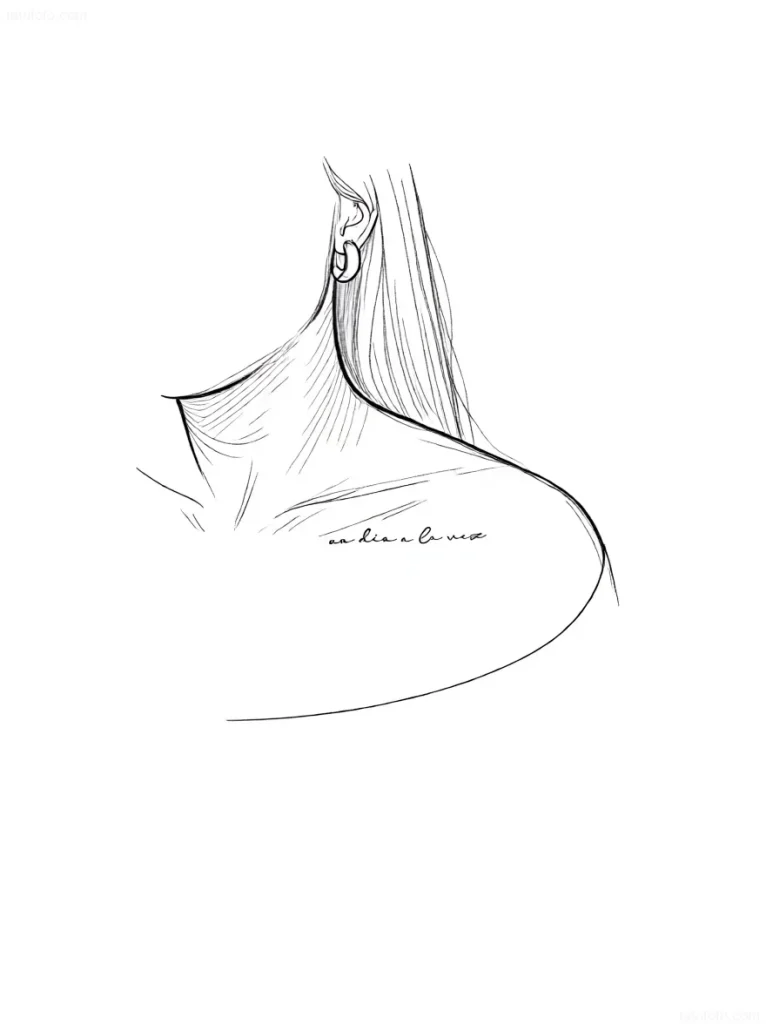
Inscriptions on the collarbone look very elegant and are often associated with romanticism or poetry. On the neck (especially the back), an inscription can be easily hidden or, conversely, emphasized.
- Meaning: Aesthetic phrases related to beauty or inspiration (Mi luz — My light).
- Features: Calligraphy and thin fonts work best here.
Tips for Choosing an Artist and Caring for a Spanish Tattoo Inscription
The technical execution of lettering requires special skill. Straight lines, even ink distribution, and proper spacing between letters (kerning) are critically important. An error in an inscription, unlike an error in an image, is immediately noticeable.
1. Checking Linguistic Accuracy
This is the most important step. You need not just to translate a phrase but to ensure it has the correct cultural and grammatical context. Avoid using automatic translators for complex or idiomatic expressions. It is best to:
- Ask a native Spanish speaker (from the country whose culture you wish to reflect) to check the phrase.
- Verify that all diacritical marks (tilde “ñ”, accents “á, é, í, ó, ú”) are in place, as their absence can completely change the meaning of a word (e.g., Año — year, Ano — anus).
2. Choosing a Master Specializing in Lettering
Not every tattoo artist who excels in realism or traditional styles is equally skilled in lettering. When choosing an artist, pay attention to their portfolio:
- Look for examples of their work specifically with Spanish or Latin alphabet inscriptions.
- Assess how straight and clear the lines are, especially in complex fonts (Blackletter, Chicano).
- Ensure the artist can adapt the font to the curves of your body.
3. Tattoo Inscription Care
Inscriptions, especially those done in Fine Line style, require very delicate care to avoid ink blowouts and maintain the clarity of the outlines.
- Minimal Stretching: In the first few weeks, avoid excessive stretching of the skin in the tattoo area (e.g., at the elbow or wrist bend) to prevent damage to thin lines.
- Sun Protection: The clarity and contrast of lettering quickly fade under UV rays. Use a high SPF sunscreen, especially if the inscription is on an exposed area of the body.
Frequently Asked Questions About Spanish Tattoo Inscriptions (FAQ)
1. Are there any Spanish phrases that are considered taboo or overused?
As with English inscriptions, some phrases have become clichés. For example, Mi vida loca (My crazy life) or Amor y Paz (Love and peace). While they have deep cultural context, their widespread use can diminish their uniqueness. There are generally no taboo phrases, but it is crucial to avoid phrases related to criminal slang unless you are part of that culture.
2. How difficult is it to apply accents and tildes in a tattoo?
From a technical standpoint, accents (acentos gráficos) and tildes (la tilde) do not pose a challenge for an experienced artist. However, they require attention to detail and precision. When choosing a very small font, accents can blur or merge with the letter over time, so it is better to choose a slightly larger font size for minimalist works.
3. Can Spanish proverbs be used for tattoos?
Yes, Spanish proverbs (refranes) are an excellent choice as they carry folk wisdom and are often very poetic. For example, Quien mucho abarca, poco aprieta (He who embraces too much, grasps little – the equivalent of “Don’t bite off more than you can chew”). They are longer, so they require more space on the body (e.g., on the back or thigh).
Interesting Facts About Spanish Tattoo Inscriptions
Linguistic Traps: False Friends
In Spanish, there are many words that seem familiar but have completely different meanings. For example, the word embarazada means “pregnant,” not “embarrassed” (as one might assume from the English word embarrassed). Using such “false friends” in a tattoo can lead to awkward and incorrect interpretations, highlighting the need for professional consultation.
Influence of Catholicism
Due to the strong influence of Catholicism in Spanish-speaking countries, many Spanish tattoo inscriptions have a religious or spiritual character. Phrases dedicated to the Virgin Mary (Virgen María) or saints are very common, especially when combined with elements of Chicano style or realism.
Geographical Differences in Tattoo Phrases
Although the Spanish language is unified, phrases can carry different meanings depending on the region. For example, Pura Vida (Pure life) is an informal national motto of Costa Rica, symbolizing carefree living and positivity. If you want to give your tattoo a regional flavor, it’s worth clarifying how universally understood your chosen expression is.
By choosing a Spanish tattoo inscription, you are choosing not just a foreign text, but a language that has served for centuries as a tool for expressing the strongest human emotions – from pride and loyalty to mad passion. We hope this detailed overview will help you find the perfect combination of meaning, style, and placement for your future tattoo.