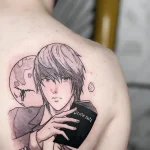
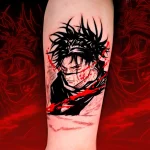
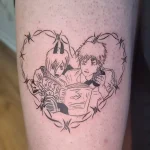
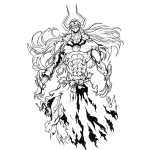
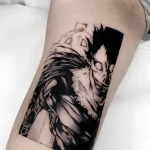
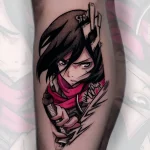
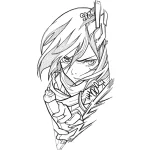
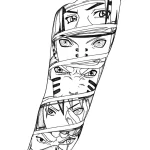
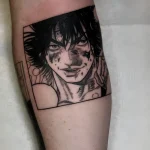
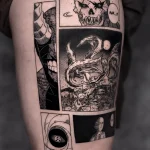
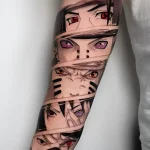
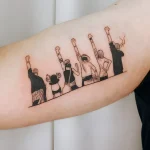
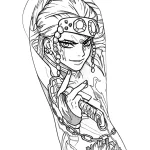
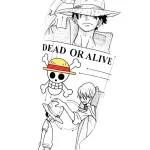
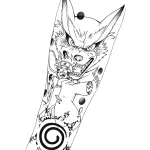
The world of tattoos is constantly expanding, absorbing cultural phenomena from all corners of the globe. One of the most striking and dynamically developing trends of recent decades has been manga-style tattoos. This is not just a nod to fashion or an obsession with Japanese animation; for many, it is a deeply personal way to express their values, ideals, and even their life path. The meaning of a manga-style tattoo extends far beyond a superficial depiction of a favorite character. It immerses us in a rich world of symbolism, cultural references, and individual interpretation, making every such piece a unique work of art on the skin.
On the pages of tatufoto.com, we strive to reveal the full depth and multifaceted nature of the art of tattooing. In this article, we will take a detailed look at what is hidden behind the seemingly simple lines and bright colors of manga tattoos, explore their history, key symbols, and provide practical advice to help you create a truly meaningful and expressive work on your body.
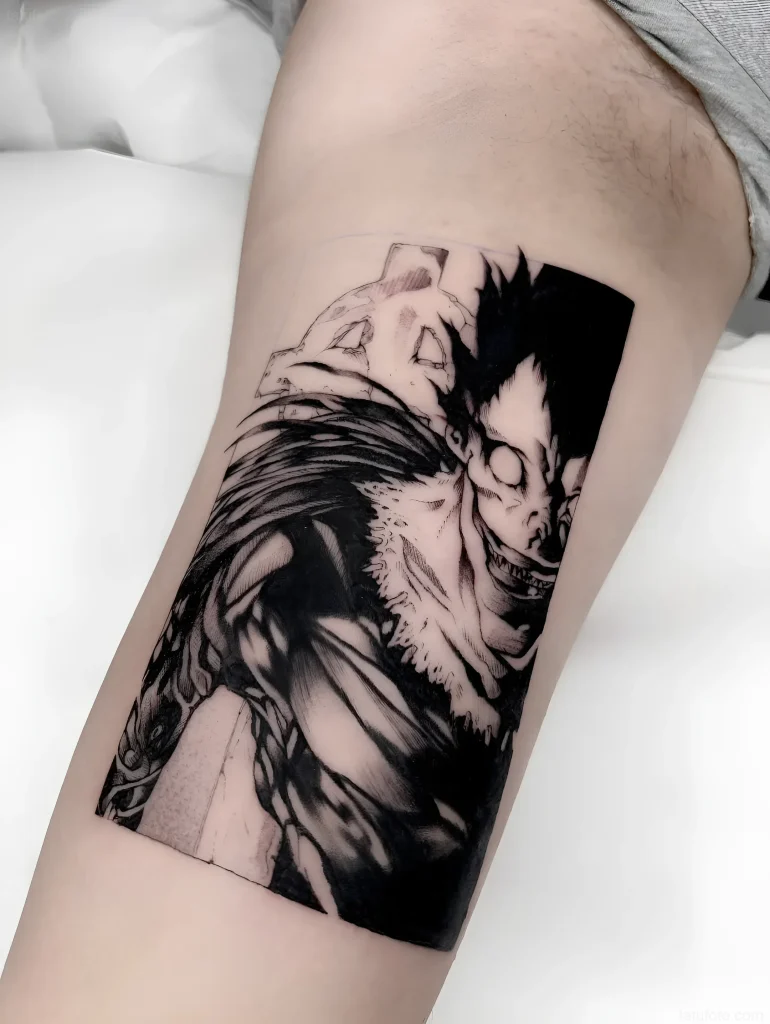
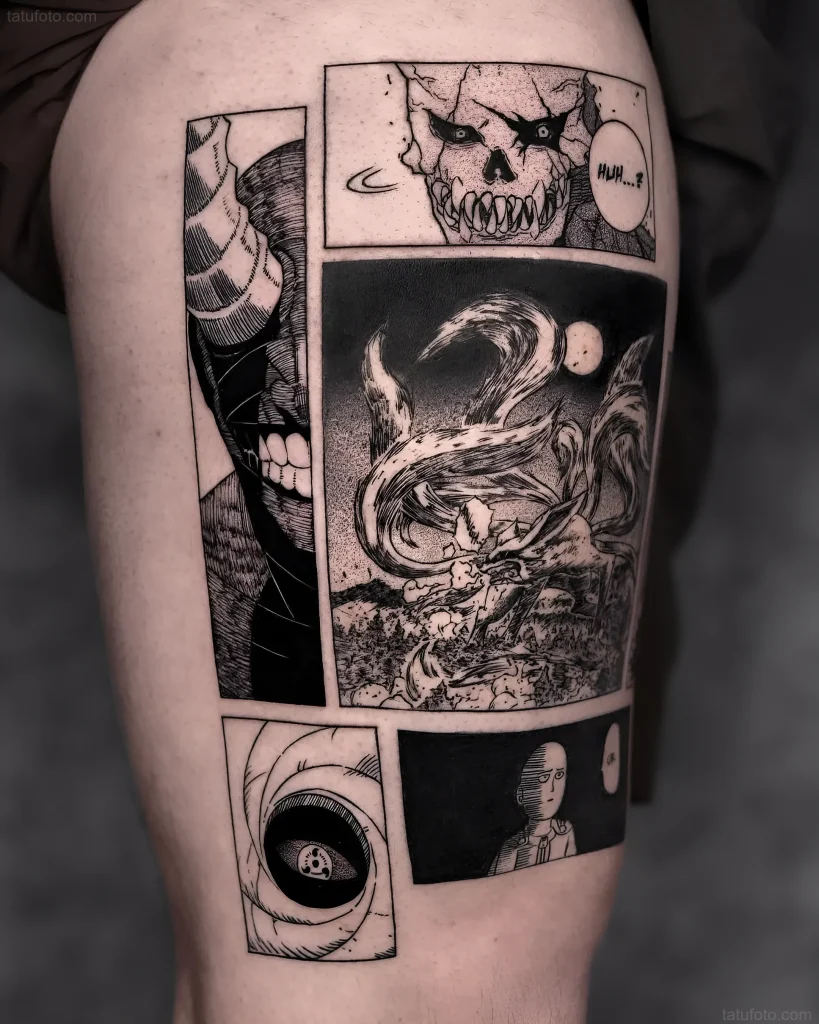
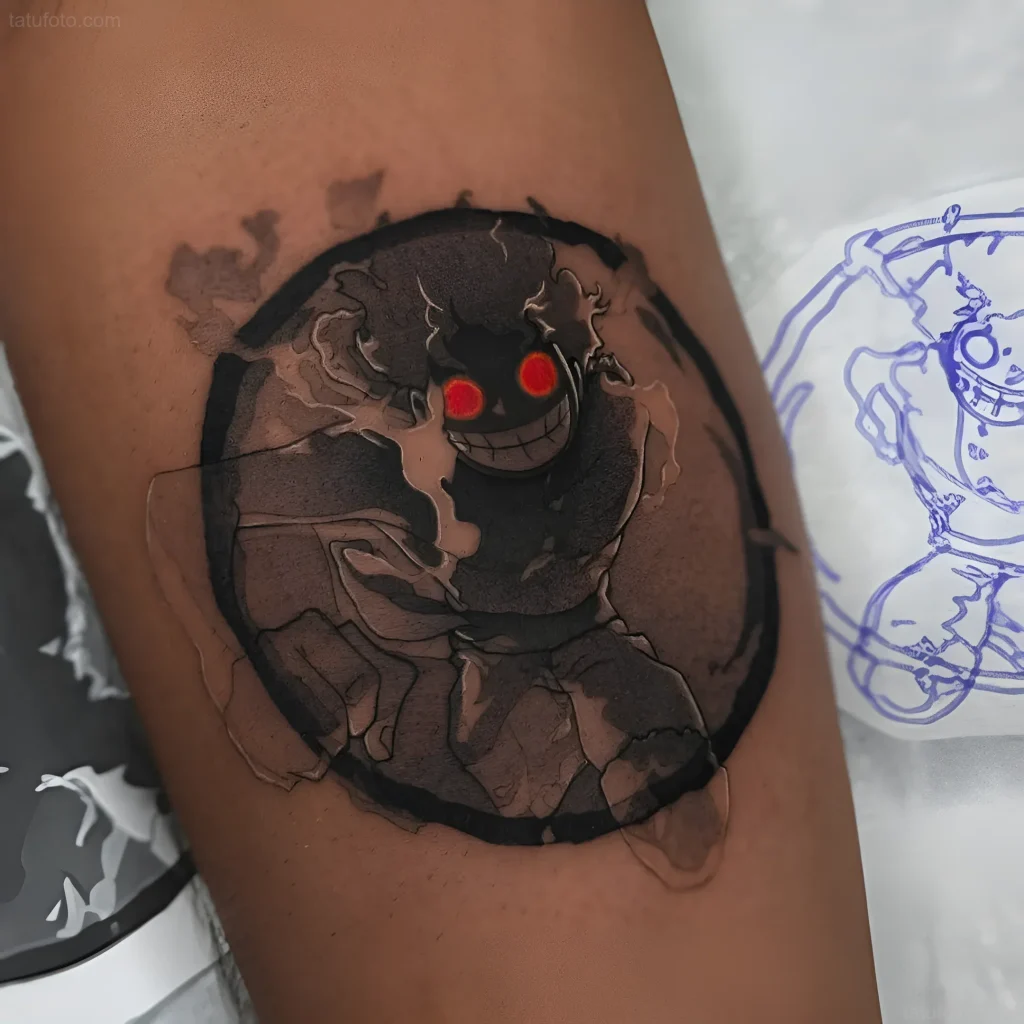
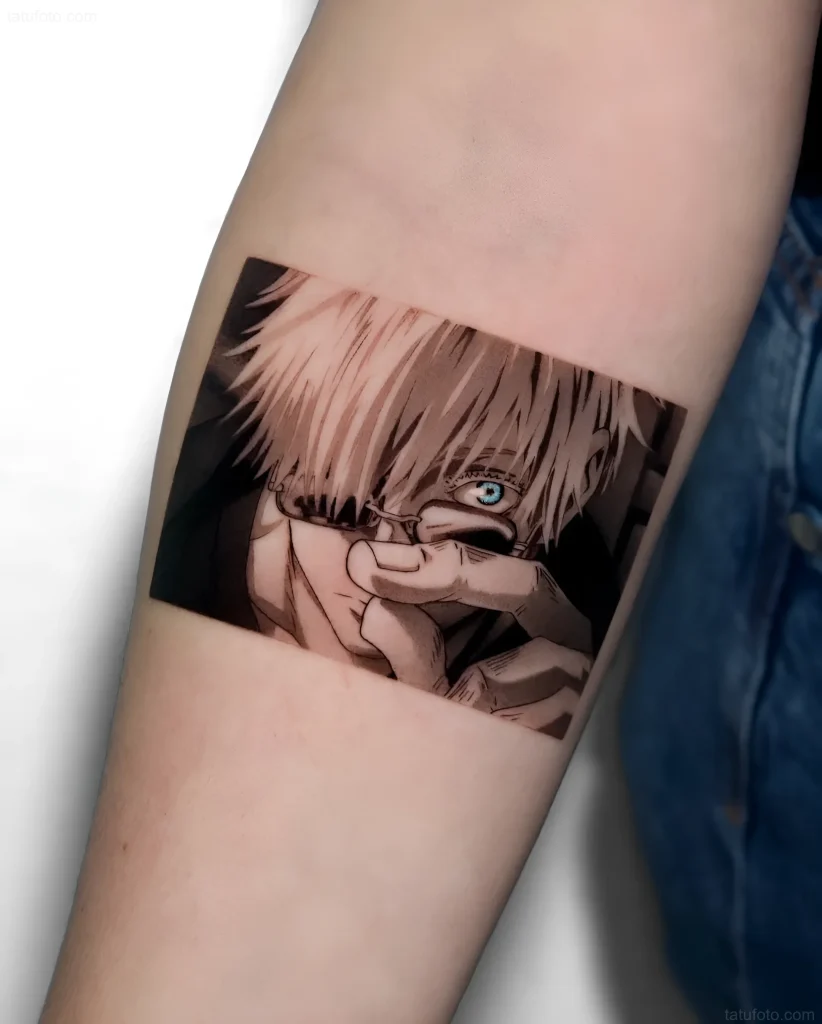
The Meaning of Manga Tattoos: Diving into the World of Japanese Graphics
Manga tattoos are a phenomenon that cannot be ignored. They have moved beyond subcultural fascination and become a full-fledged direction in tattoo art, attracting the attention not only of fans of Japanese comics but also connoisseurs of unique visual solutions. But what exactly makes them so attractive and, most importantly, meaningful?
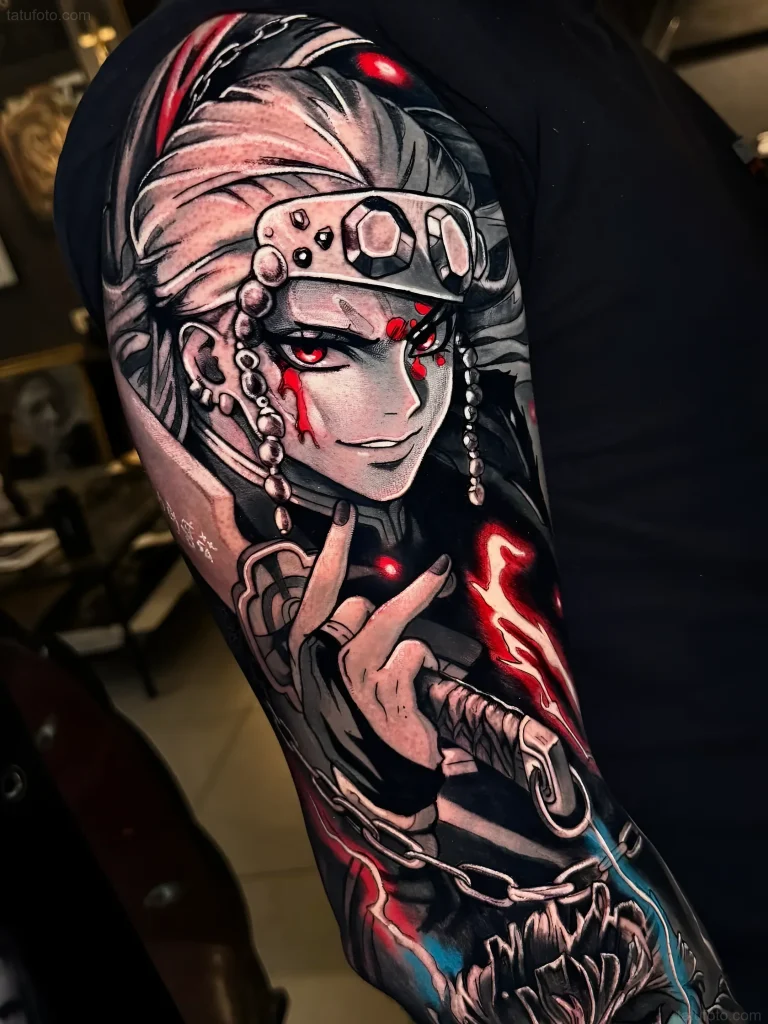
At its core, a manga-style tattoo represents the transfer of the aesthetics and narrative of Japanese comics onto the skin. This can be an image of a specific character, an entire scene, a symbolic object, or even stylized text. However, the true meaning of such a tattoo lies not only in the recognizability of the image but also in the meaning it carries for the wearer. This can be:
- Identification with Ideals: Many manga characters embody certain qualities – courage, perseverance, justice, kindness, the pursuit of dreams. A tattoo featuring such a hero becomes a personal manifesto of these ideals.
- Symbol of Life Path: Manga plots often tell stories of overcoming difficulties, growth, and development. A tattoo can reflect personal trials and victories, serve as a reminder of the path traveled or the aspiration for self-improvement.
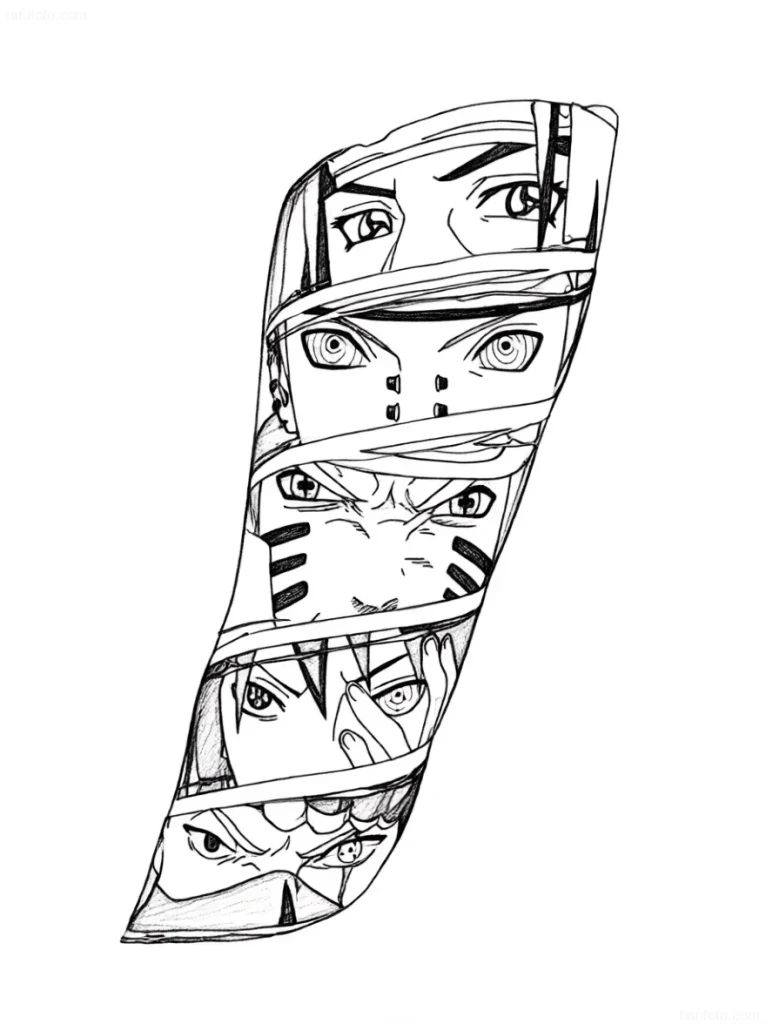

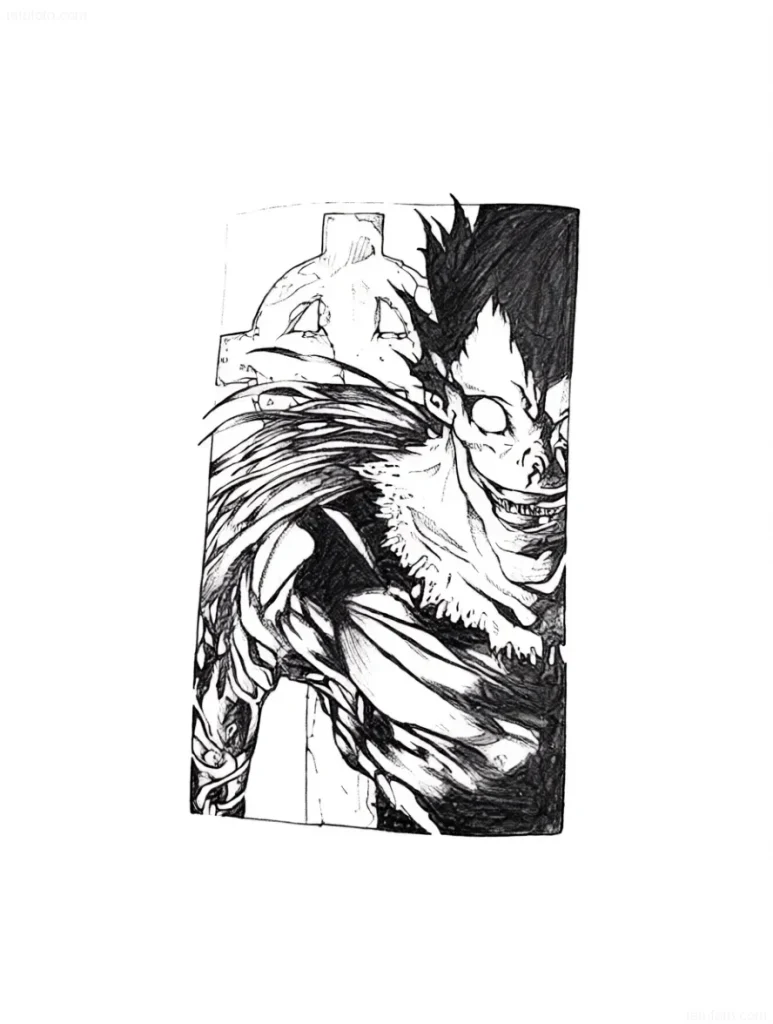
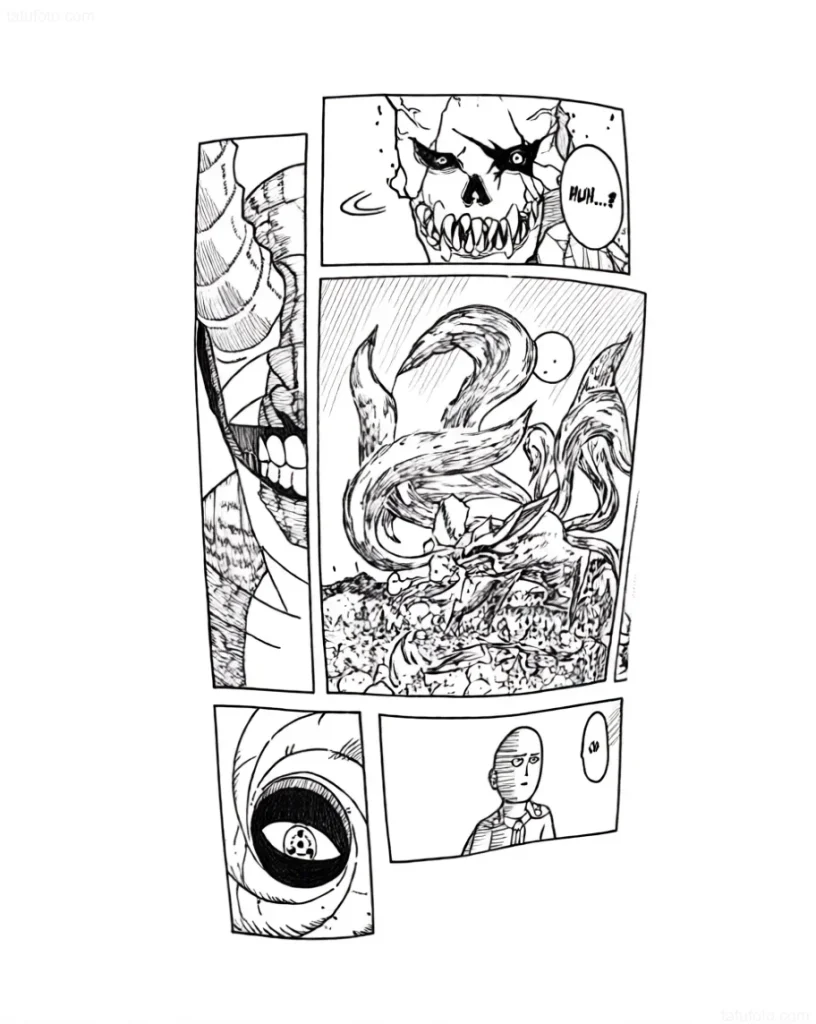
- Expression of Unique Aesthetics: The manga style possesses a unique visual language – dynamic lines, expressive eyes, exaggerated emotions, bright palette or, conversely, strict monochrome. Choosing this style is a statement about one’s taste and preferences.
- Connection to Community: For many fans of manga and anime, such a tattoo is a way to show their belonging to a global community of like-minded people, to find common ground with others who share their interests.
- Remembrance or Tribute: The tattoo may be dedicated to a favorite work that significantly influenced the person’s life, or it may be a way to preserve important memories associated with this art form.
Thus, the meaning of a manga-style tattoo is always a multi-layered story combining artistic expression, personal meaning, and cultural context. It is not just a picture, but a window into a whole world of feelings and ideas.
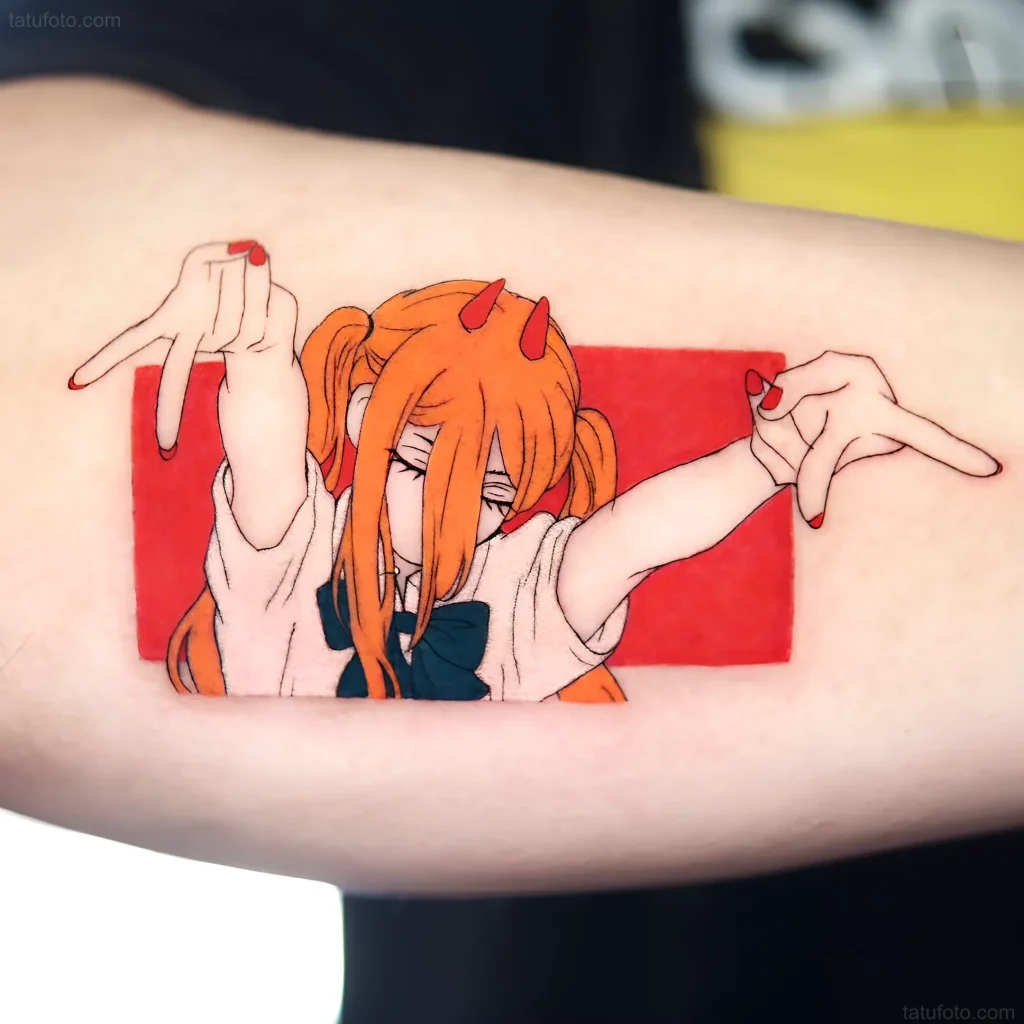

History of Manga and Its Influence on Tattoo Art
To truly understand the meaning of a manga-style tattoo, it is important to look back at the origins of the phenomenon itself. Manga, in its modern form, originated in post-war Japan, experiencing a rapid boom thanks to pioneers like Osamu Tezuka, often called the “God of Manga.” His works, such as “Astro Boy,” laid the foundation for the visual language that remains recognizable and beloved today.
Initially, manga was focused on the domestic Japanese market, but over time, especially starting in the 1980s and 1990s, it began to conquer the world. The emergence of anime adaptations, and later the globalization of the internet, allowed manga to penetrate the most remote corners of the planet. Along with it, the unique features of its artistic style spread:
- Emotional Expressiveness: Large, expressive eyes, often the focus of the character’s face, have become the hallmark of manga. They can convey a wide range of emotions – from innocence and surprise to deep sadness and determination.
- Dynamism and Movement: The use of “speed lines,” dynamic angles, and exaggerated poses creates a sense of movement and energy, which is ideal for tattoos striving to convey action or power.

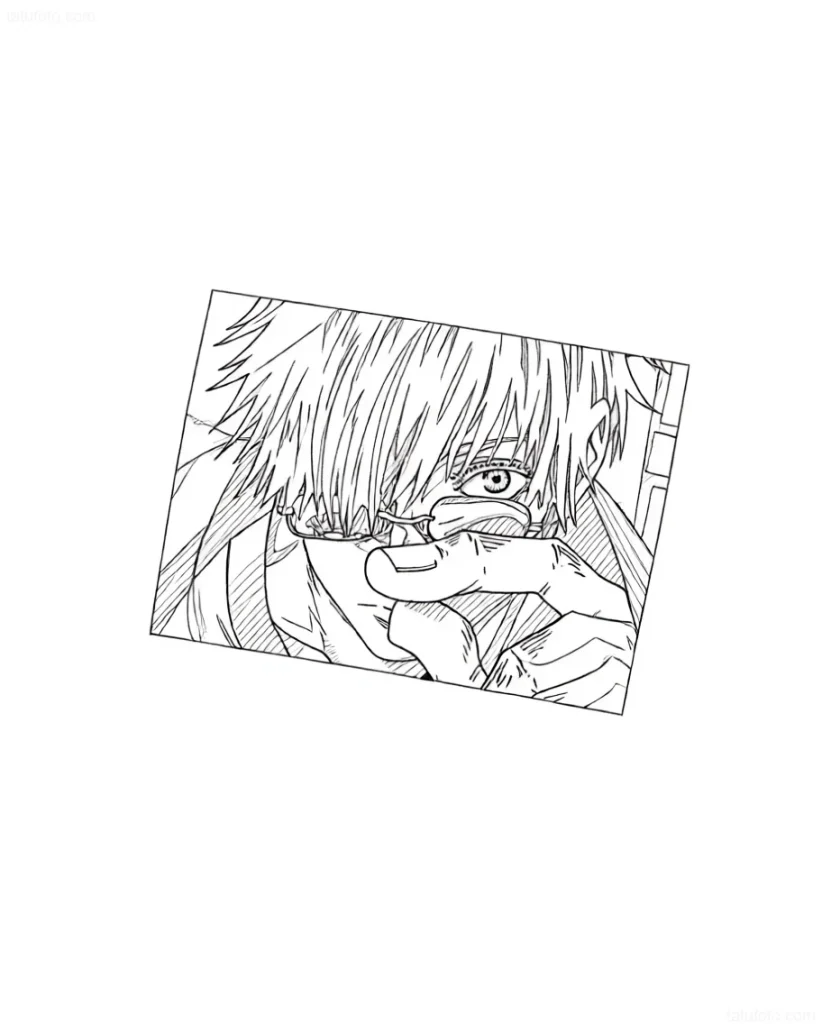
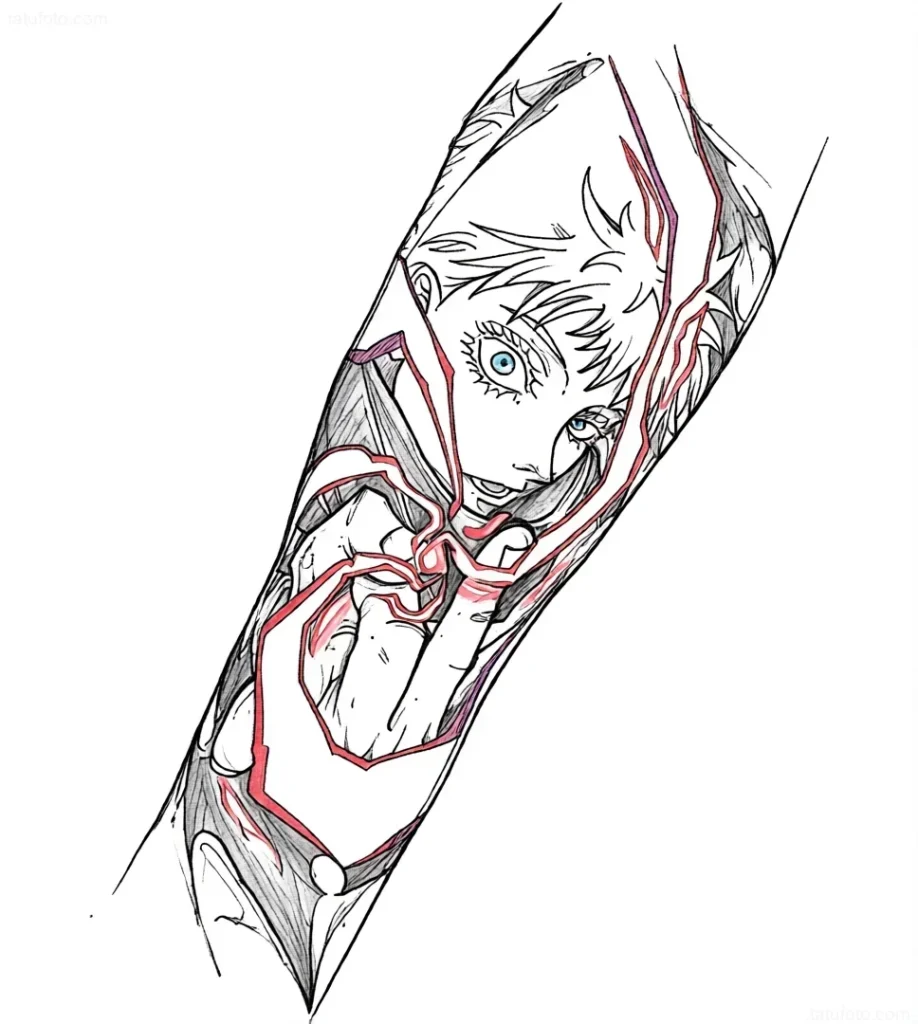
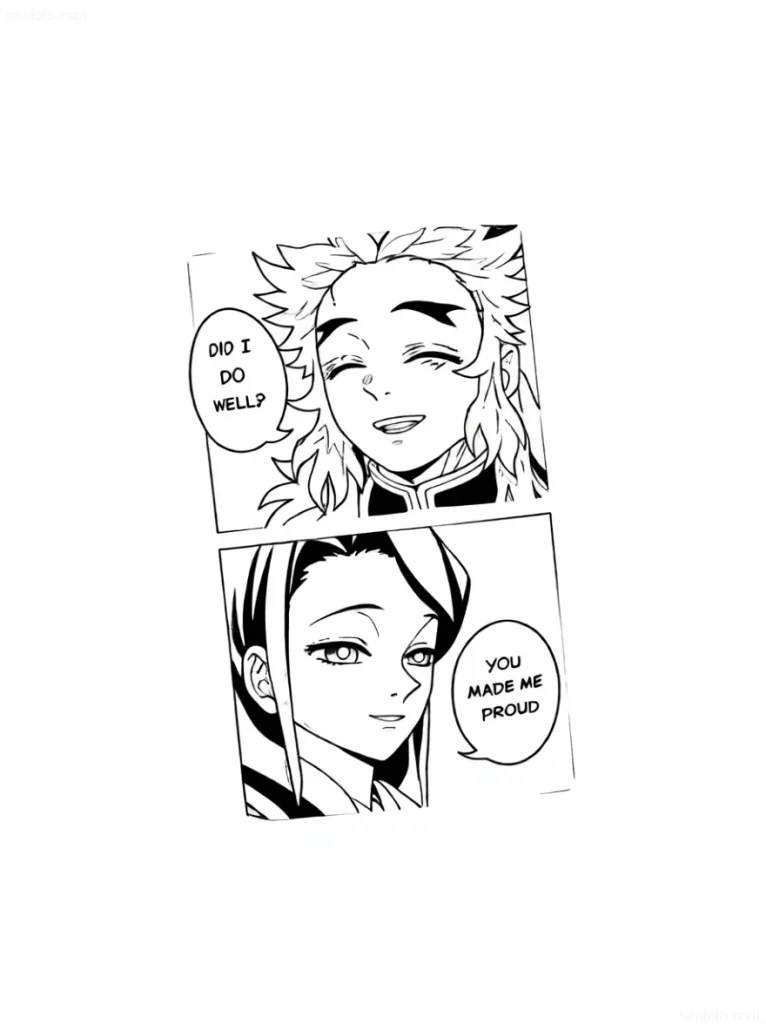
- Variety of Genres: Manga is not limited to one genre. There is Shōnen (for boys, often about adventure and friendship), Shōjo (for girls, about romance), Seinen (for adult men), Josei (for adult women), Kodomo (for children), and many others. Each genre brings its own visual and thematic characteristics that can be adapted in a tattoo.
- Unique Character Design: A distinctive feature of manga is the deep development of characters, each possessing their own story, personality, and recognizable design. This makes them ideal subjects for tattoos, as they already carry a certain narrative.
The influence of manga on tattoo art became particularly noticeable in the late 20th and early 21st centuries. Tattoo artists, inspired by this graphic style, began experimenting with transferring it onto the skin. This led to the emergence of artists specializing specifically in manga tattoos, capable of recreating the subtle lines, bright colors, and unique atmosphere of Japanese comics with stunning accuracy and artistry. Thus, the history of manga is not just the history of comics; it is the history of the formation of a new aesthetic language that has found its powerful embodiment in the world of tattooing.
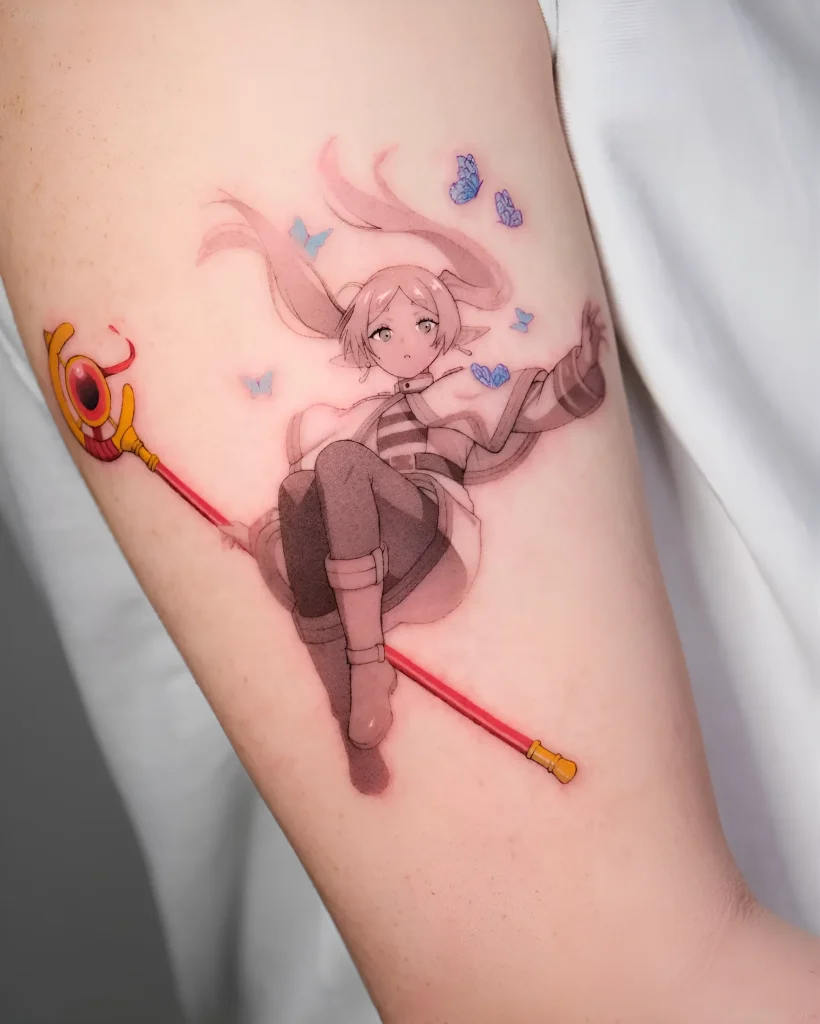
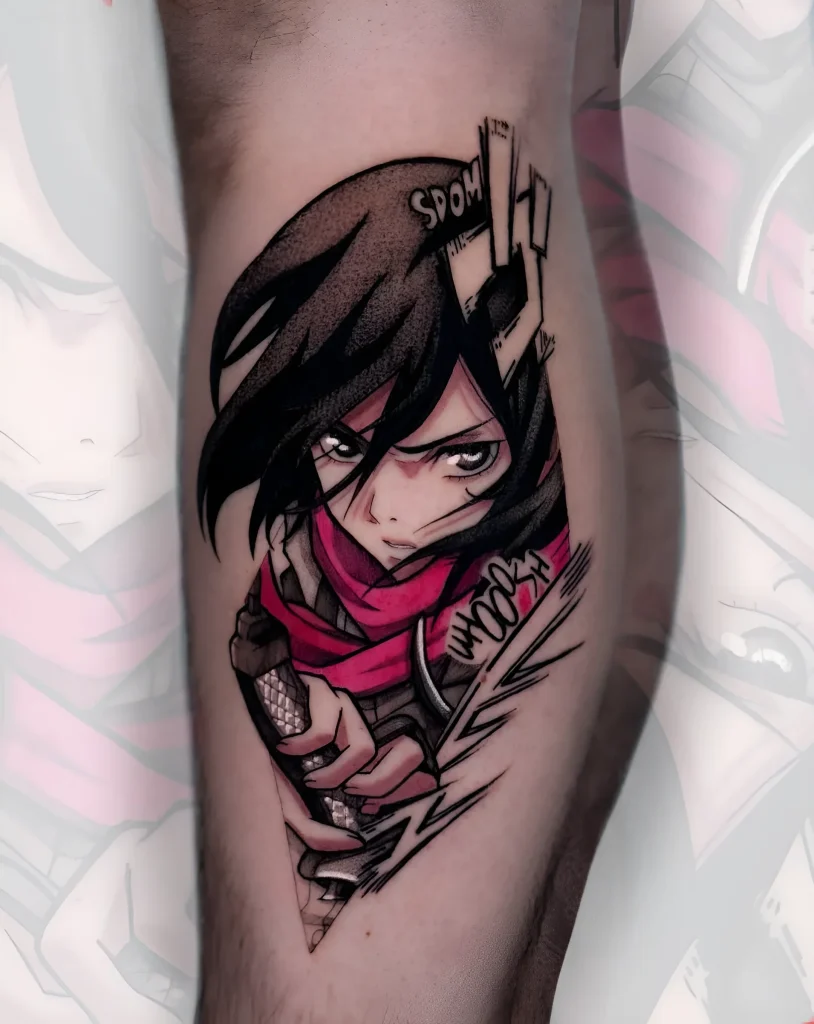
Key Motifs and Symbols in Manga Tattoos: What They Say About You
The meaning of a manga-style tattoo is largely determined by the choice of specific motifs and symbols. Every element in manga carries its own weight, and when transferred to the skin, it acquires an additional, personal meaning. Let’s look at the most common motifs and their interpretations:
1. Manga Characters
- Protagonists: Depicting a protagonist often symbolizes the pursuit of the ideals that this hero embodies. For example:
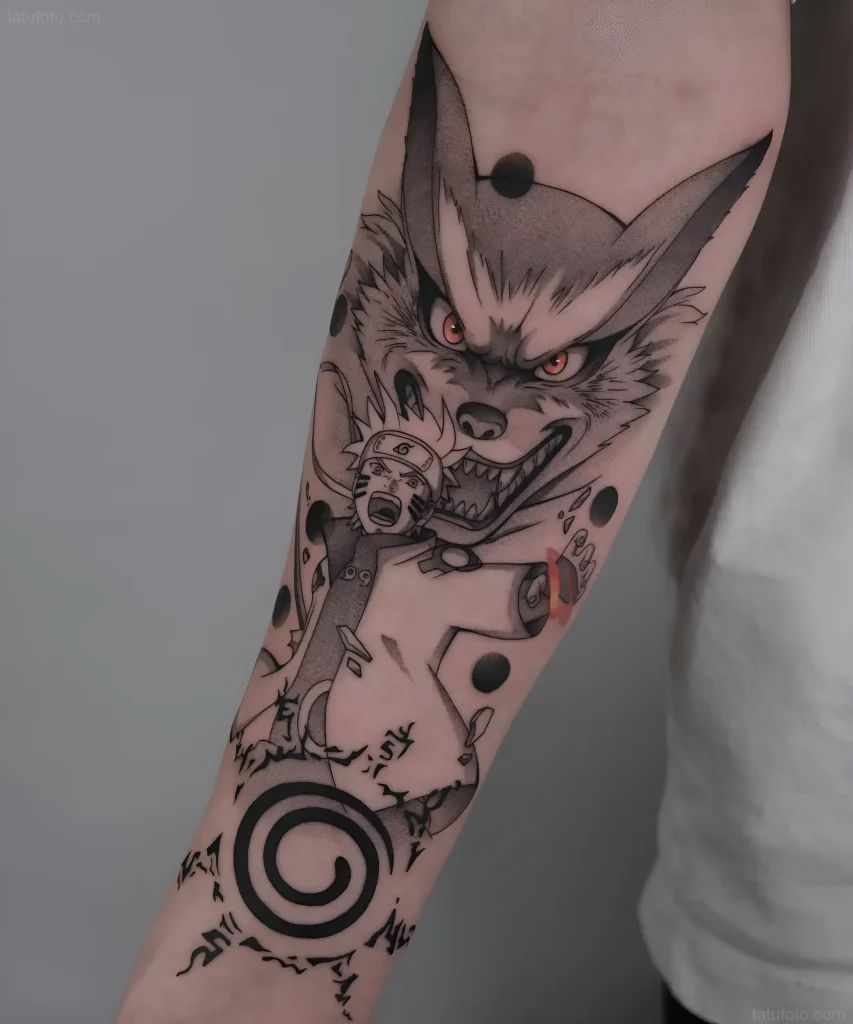
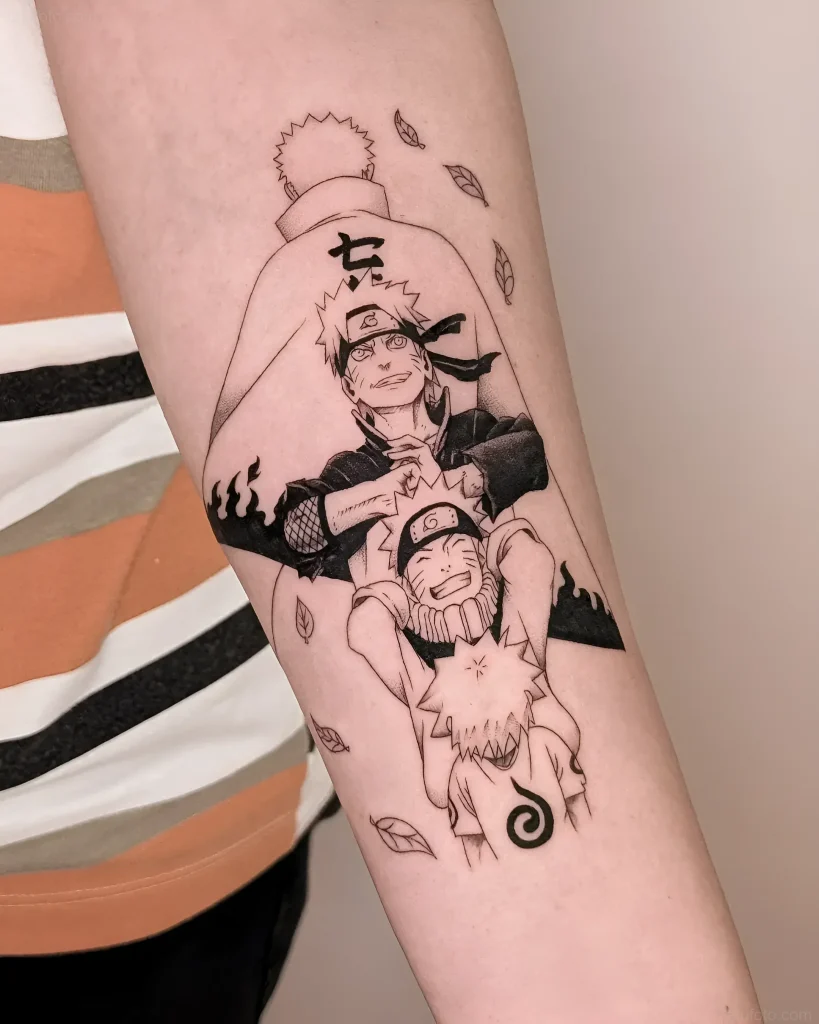
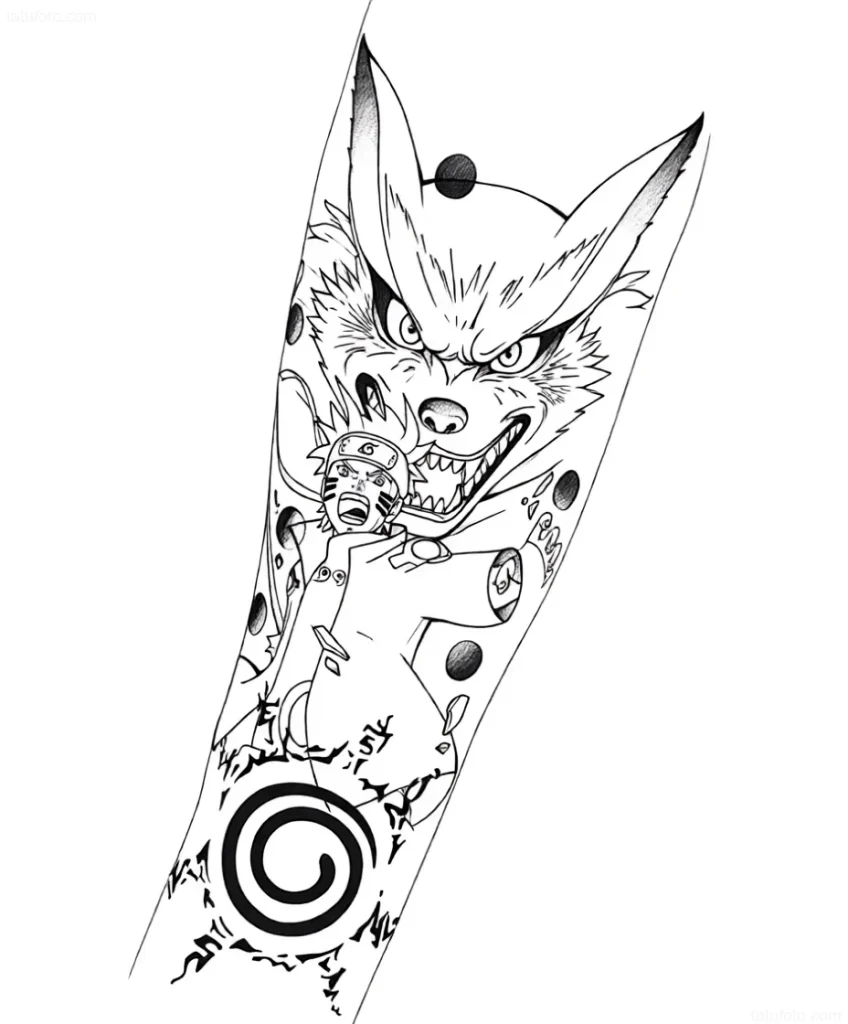
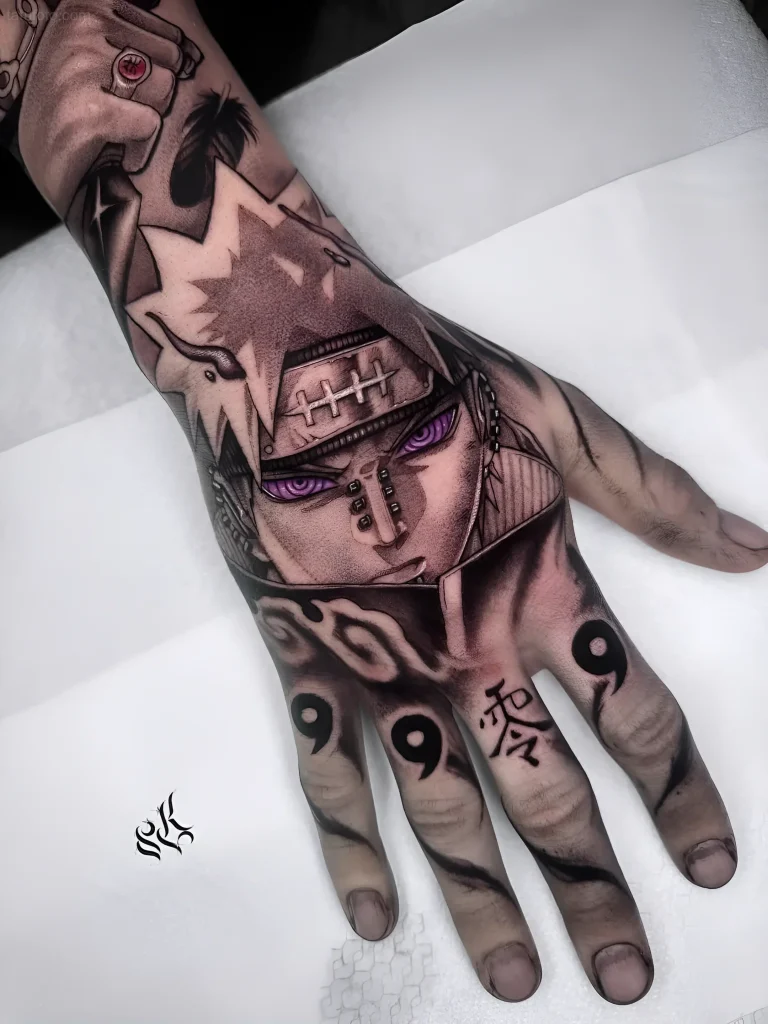
- Naruto Uzumaki (Naruto): A symbol of unyielding will, perseverance, friendship, loyalty to one’s principles, and the pursuit of recognition despite all obstacles. A tattoo with Naruto can speak of your readiness to fight for your dreams and protect loved ones.
- Sailor Moon (Sailor Moon): Embodiment of justice, love, female power, and the ability to overcome evil. May symbolize inner strength and belief in good.
- Son Goku (Dragon Ball): A symbol of limitless strength, the pursuit of self-improvement, the joy of battle, and the protection of the world. Speaks of your energy, life force, and desire for development.
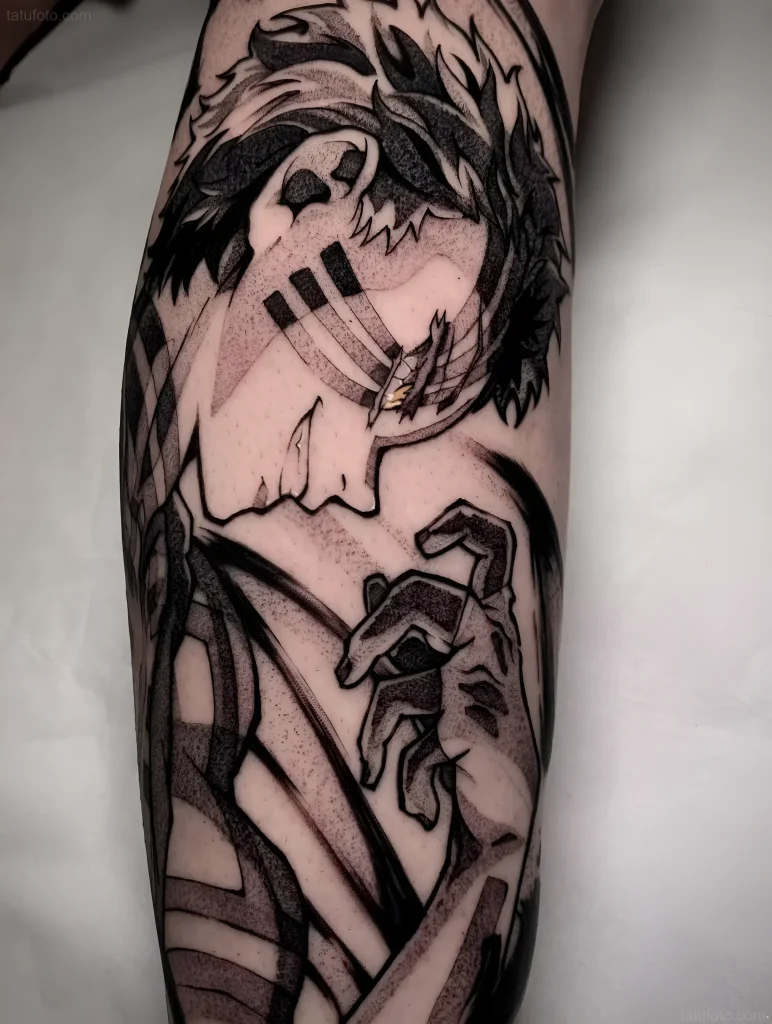
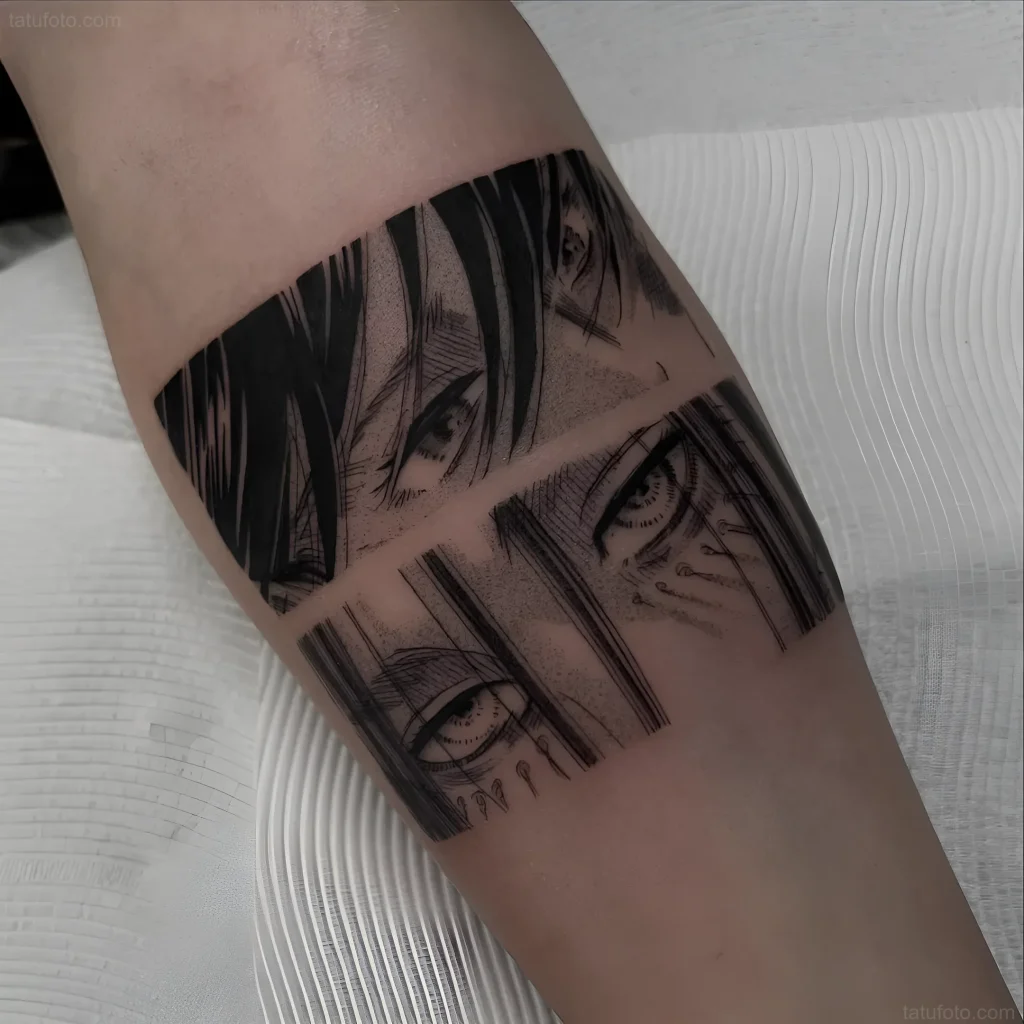
- Eren Yeager (Attack on Titan): Embodiment of freedom, fury, and the determination to fight to the end for one’s ideals. May reflect a rebellious spirit and readiness for sacrifice for a higher goal.
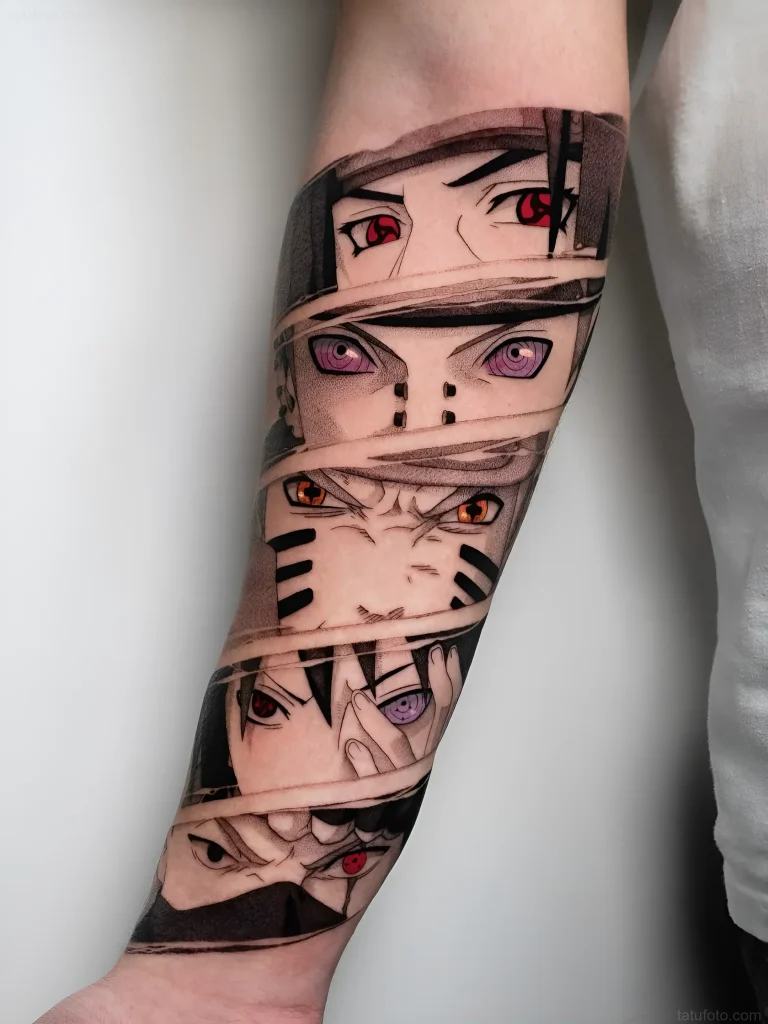
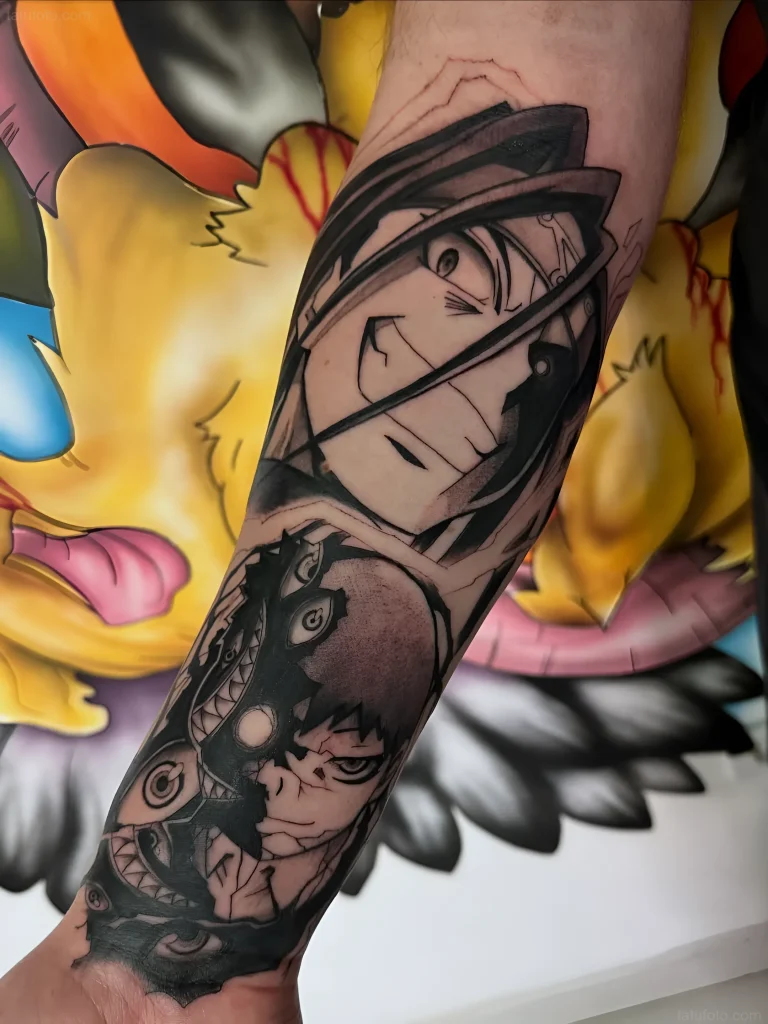
- Antagonists (Villains): Do not always symbolize evil. Often they embody the complexity of human nature, internal struggle, tragedy, or rebellion against the system. For example, a tattoo with Itachi Uchiha (Naruto) can symbolize self-sacrifice, difficult choices, and hidden motives, while one with Griffith (Berserk) symbolizes ambition, fall, and redemption.
- Supporting Characters (Sidekicks): Often symbolize loyalty, support, friendship, and the importance of the team. For example, Pikachu (Pokémon) can be a symbol of joy, playfulness, and an unbreakable bond with a companion.
2. Symbolic Objects and Elements
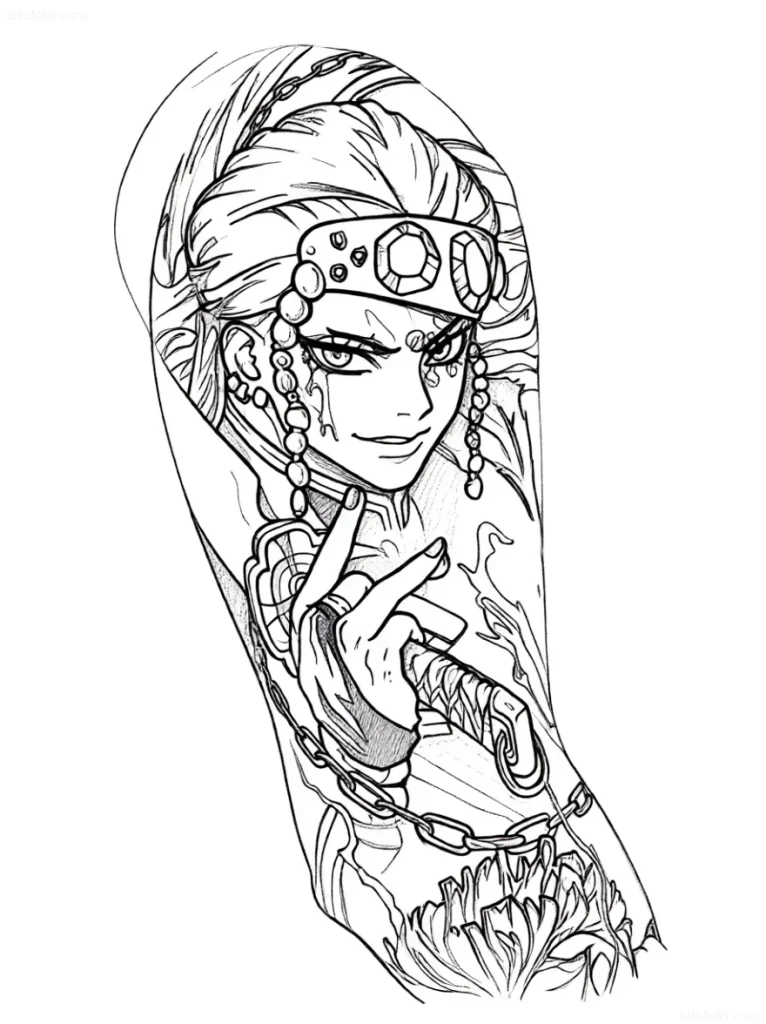
- Katana or other weapon: A symbol of honor, discipline, willpower, protection, and readiness for battle.
- Magical artifacts (wands, books, amulets): Embody knowledge, wisdom, hidden powers, connection to magic, or the desire to explore the unknown.
- Scrolls, maps: A symbol of knowledge, journeys, the search for truth, the fulfillment of prophecy, or one’s personal path.
- Elements of Nature (fire, water, air, earth):
- Fire: Passion, energy, destruction, and rebirth.
- Water: Adaptability, calmness, fluidity, emotionality.
- Air: Freedom, intellect, change.
- Earth: Stability, solidity, connection to nature.
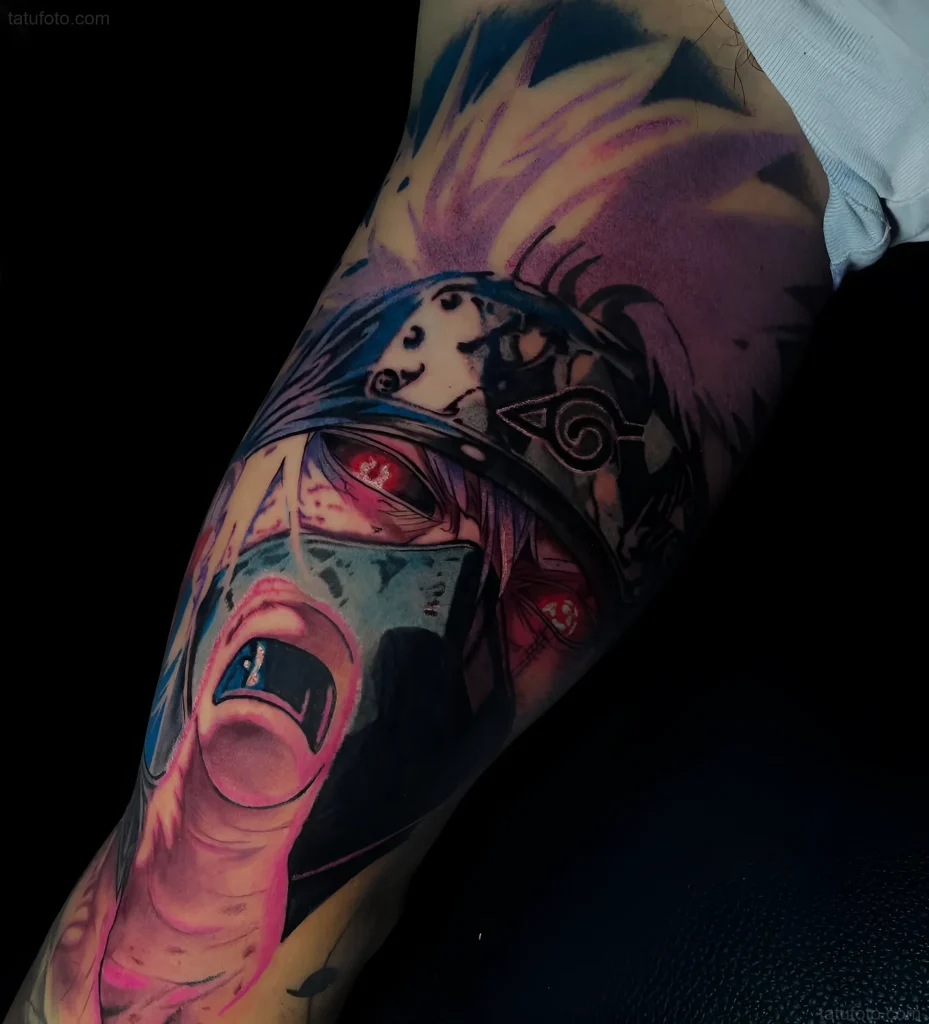
- Clan or organization symbols: For example, the Konoha symbol (Naruto) signifies belonging to a community, protecting one’s village, and loyalty to tradition.

3. Emotions and Expressions
Manga is known for its exaggerated depiction of emotions, which in itself can be symbolic:
- Large, shining eyes: Innocence, purity, surprise, hope.
- Sweat dripping from the temple: Nervousness, embarrassment, humor, stress.
- Distorted faces in anger or despair: Intensity of emotions, internal struggle, strength of spirit in the face of adversity.
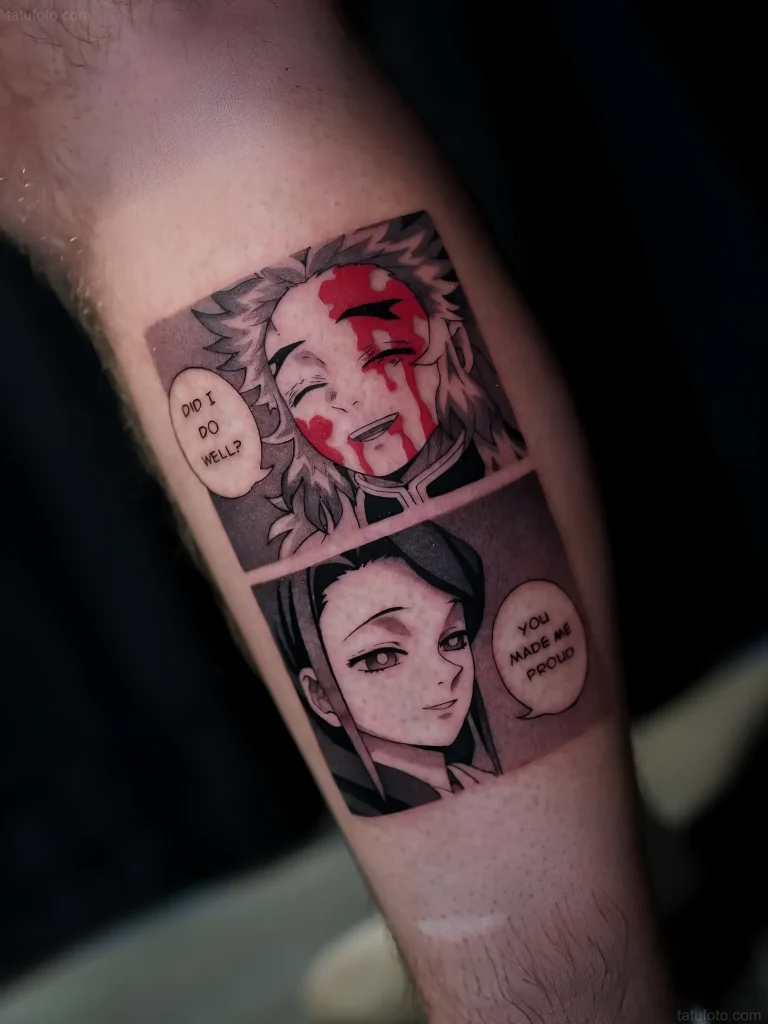
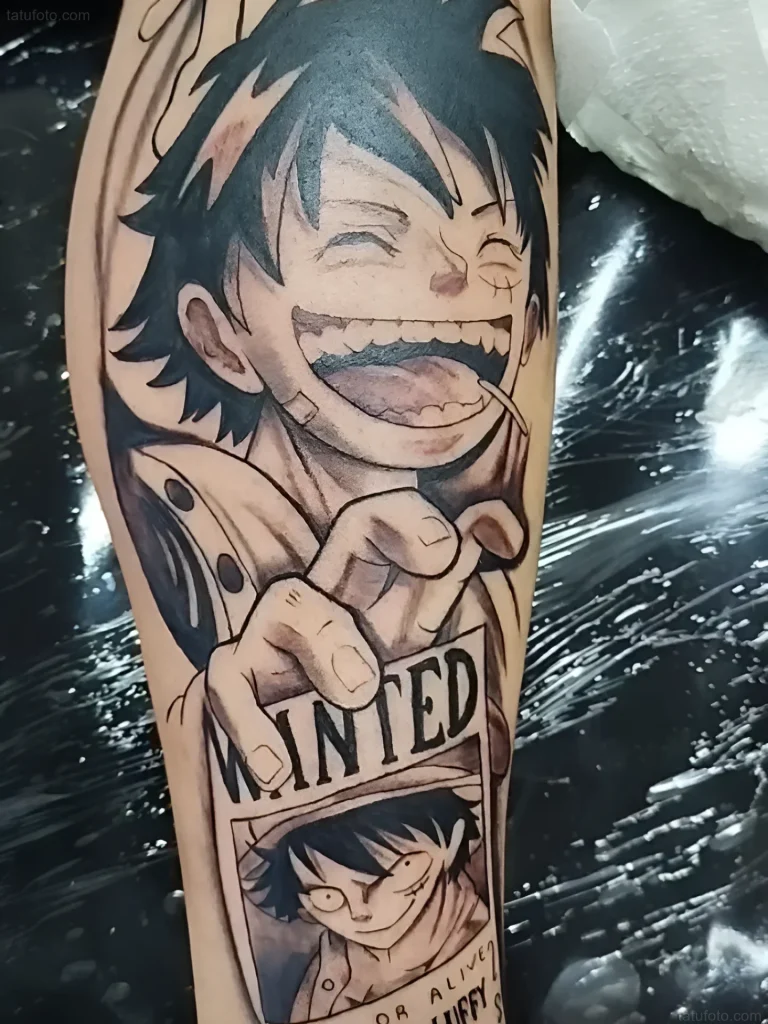
- Smile: Often carries a deep meaning – from genuine joy to masking pain or determination.
4. Themes and Concepts
Besides specific images, manga-style tattoos can embody more abstract themes:
- Friendship and Bond: Many manga plots revolve around unbreakable bonds of friendship. A tattoo can be dedicated to the importance of these connections in your life.
- Overcoming: The theme of struggling with difficulties, self-improvement, and achieving goals no matter what.
- Fate and Choice: Reflections on predestination and free will, on how our decisions shape our lives.
- Love and Loss: Deep emotional experiences related to attachment and bereavement.
- Dream and Ambition: Striving for something greater, inexhaustible energy in achieving what is desired.
Choosing a motif for a manga-style tattoo is not just choosing a beautiful picture; it is a deep dive into oneself, searching for an image that most accurately reflects your personality, your beliefs, and your story. This is where the true meaning of a manga-style tattoo lies.
Variety of Manga Tattoo Styles: From Neo-Traditional to Chibi
Manga tattoos are not a monolithic style; they represent a whole spectrum of artistic approaches, each possessing its own unique aesthetic and capable of conveying different moods and meanings. Understanding these styles will help you formulate your requests to the artist more precisely and choose the one that best suits your idea.
1. Classic Manga Style (Old School Manga)
- Features: Inspired by the works of early masters like Osamu Tezuka. Characterized by simpler but very expressive lines, often in black and white or a limited color palette. Characters may have rounder shapes than in modern styles.
- Meaning: Nostalgia, respect for the origins of the genre, emphasizing the classic values and themes embedded in early works. Can be a symbol of purity and innocence.
2. Modern Shōnen/Shōjo Style
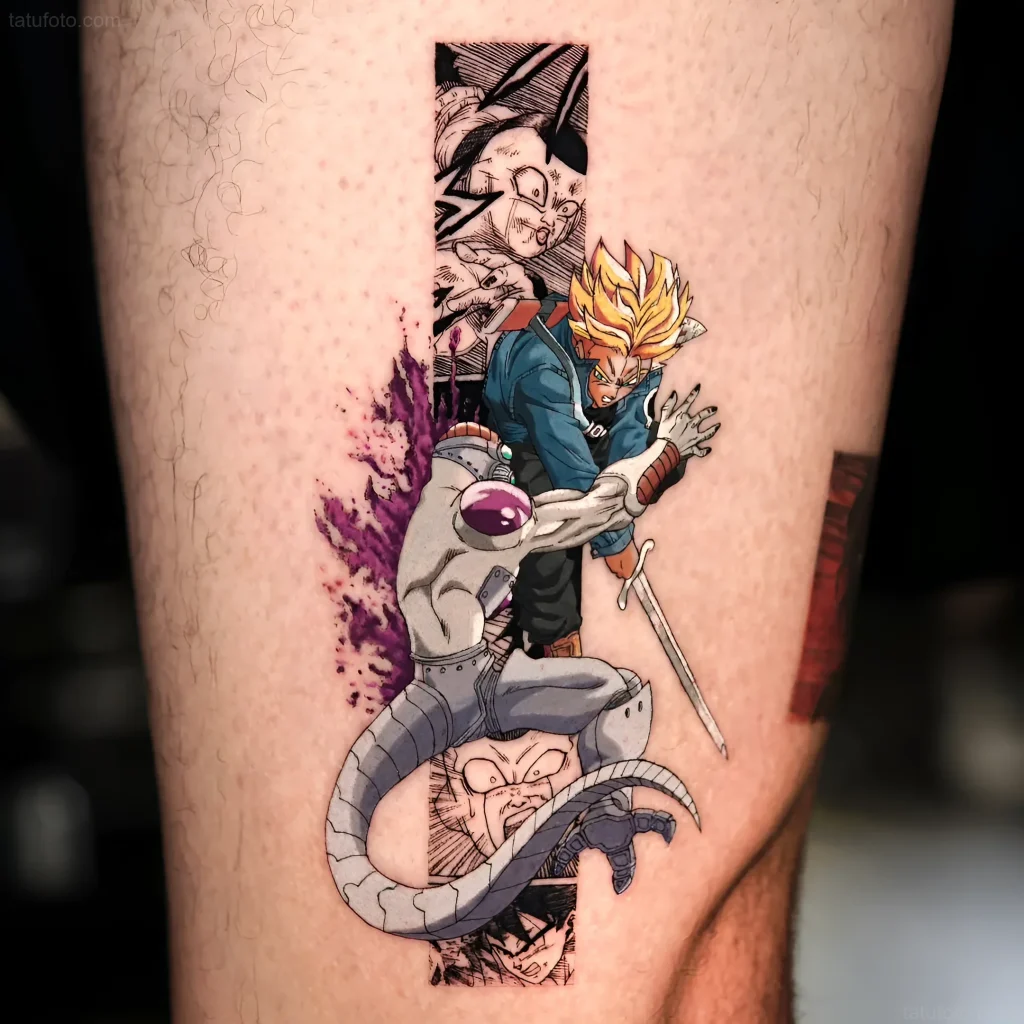
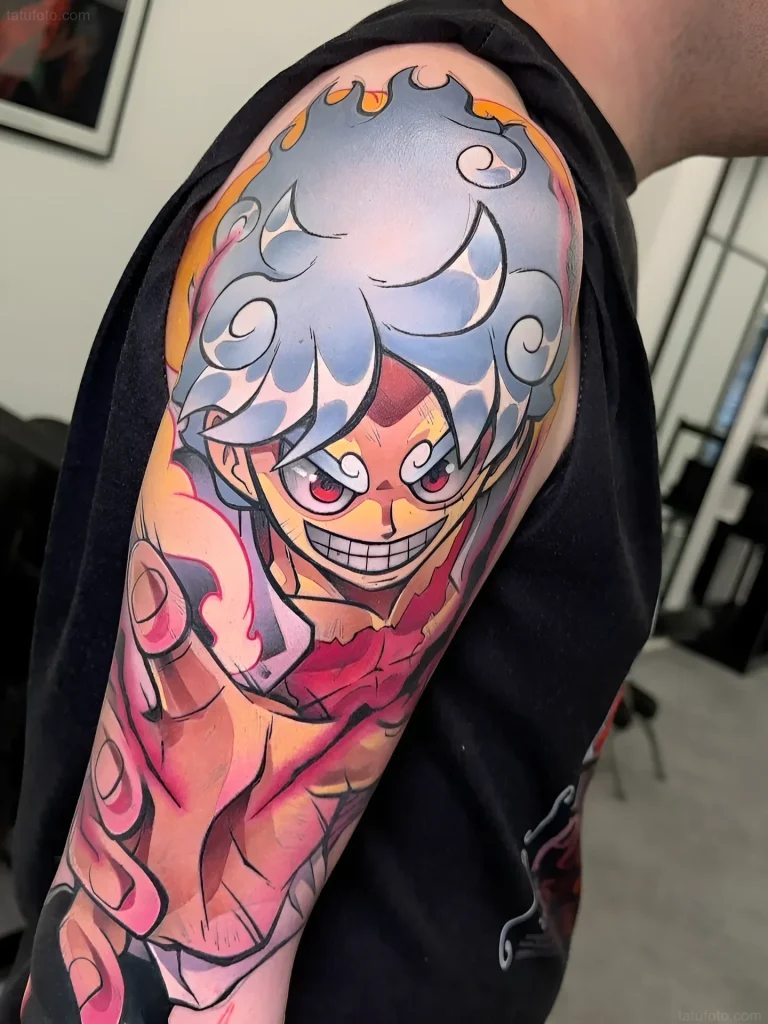
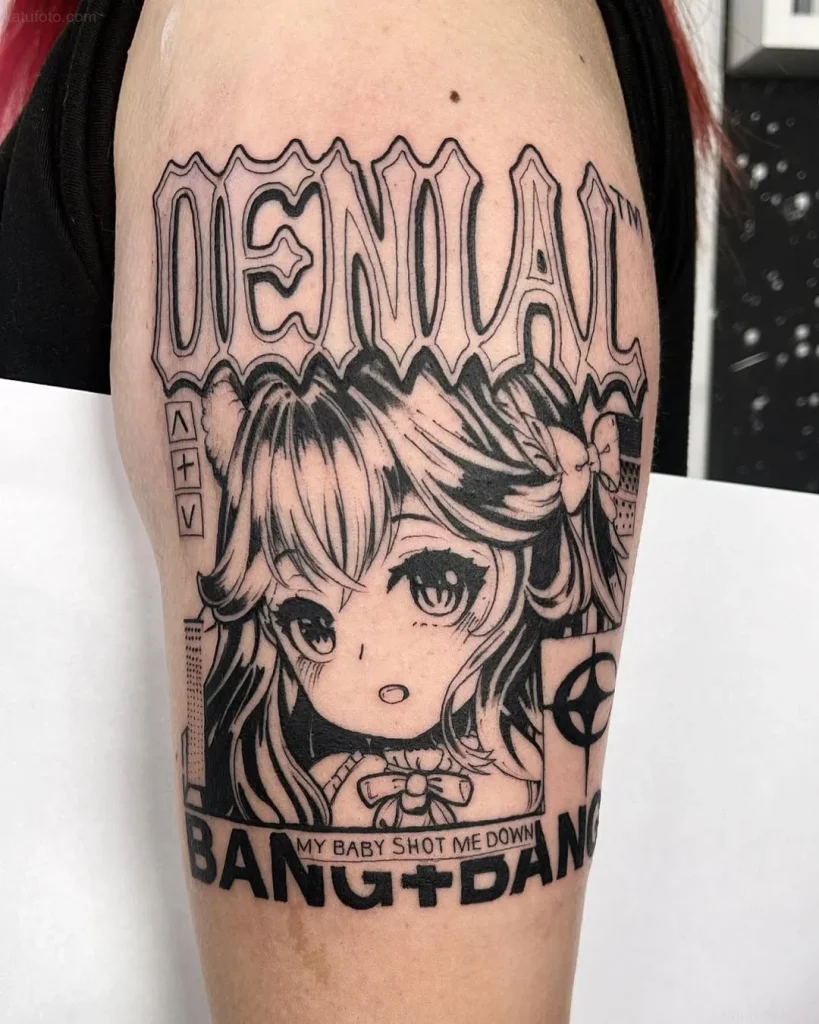
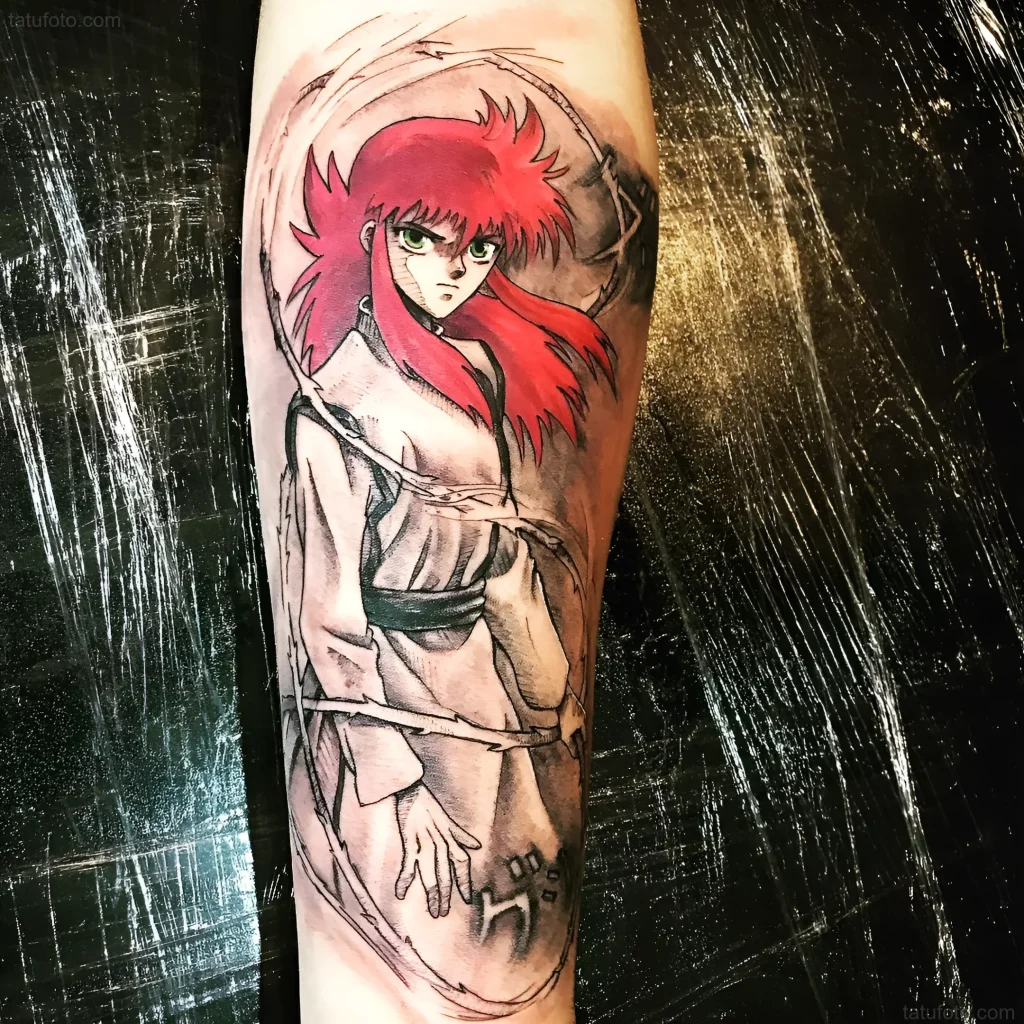
- Features: The most recognizable and popular style. Characterized by dynamic poses, a bright palette, detailed hair and clothing, and characteristic large, expressive eyes. Speed lines and effects are often used to convey movement.
- Meaning: Embodiment of energy, adventure, friendship, love, selflessness, and the pursuit of victory. Ideal for conveying vivid emotions and active plots.
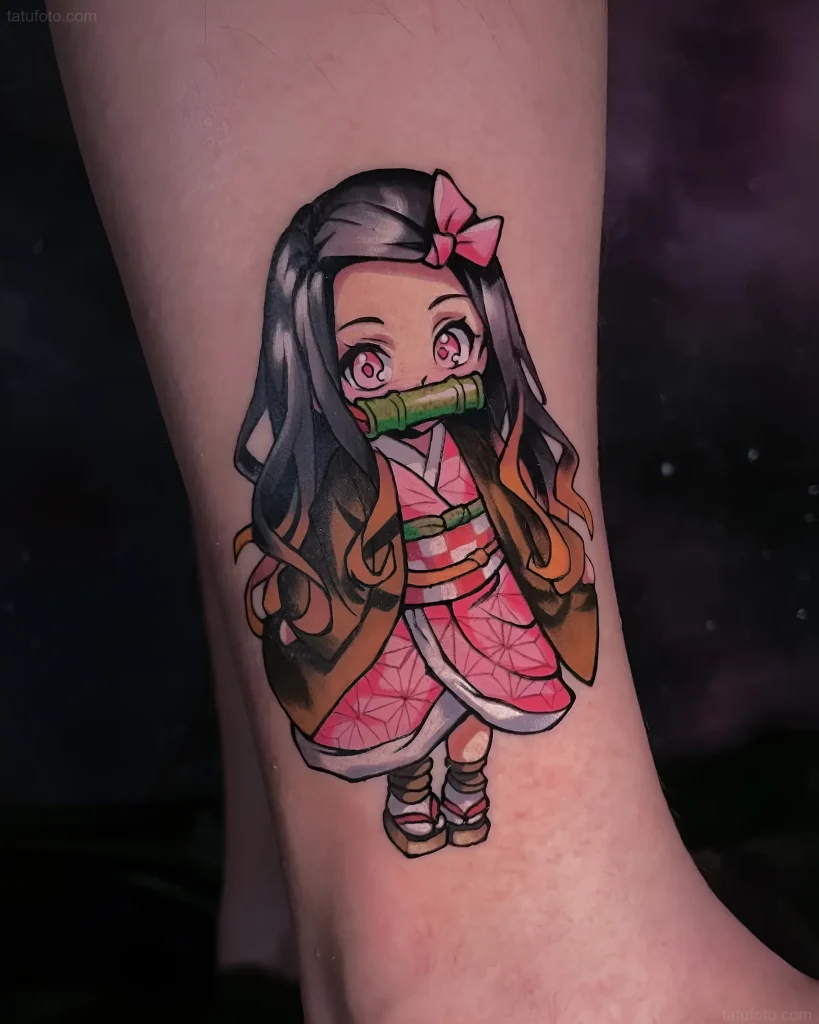
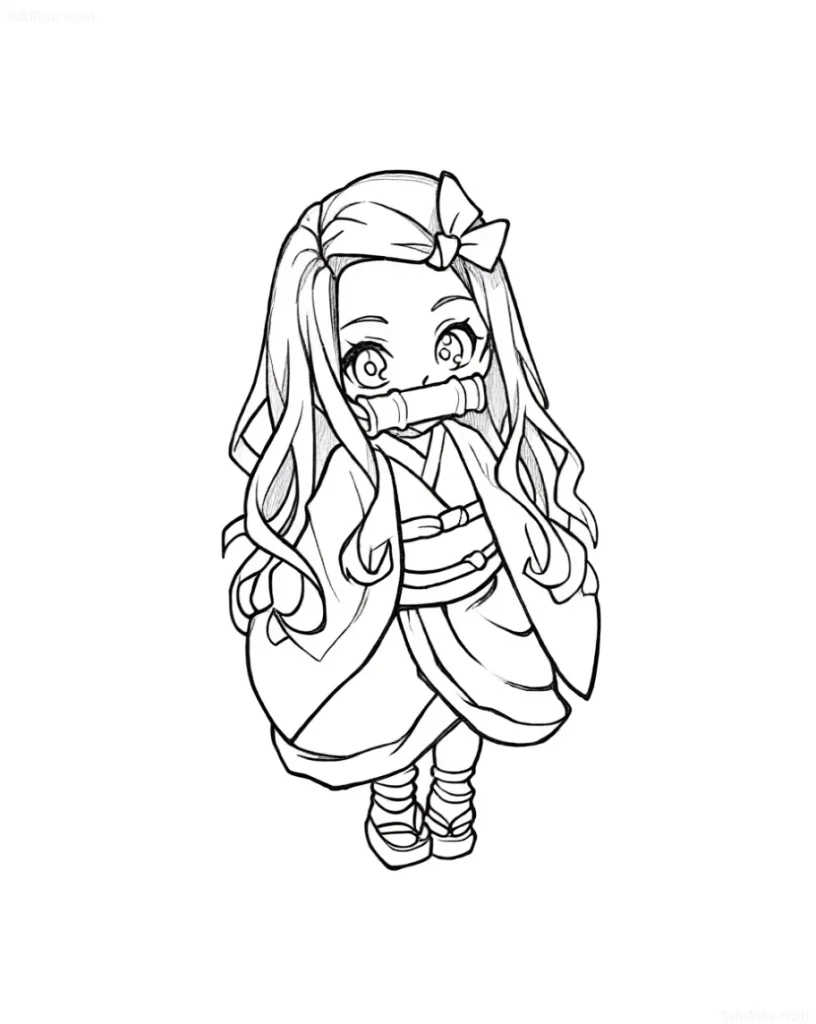
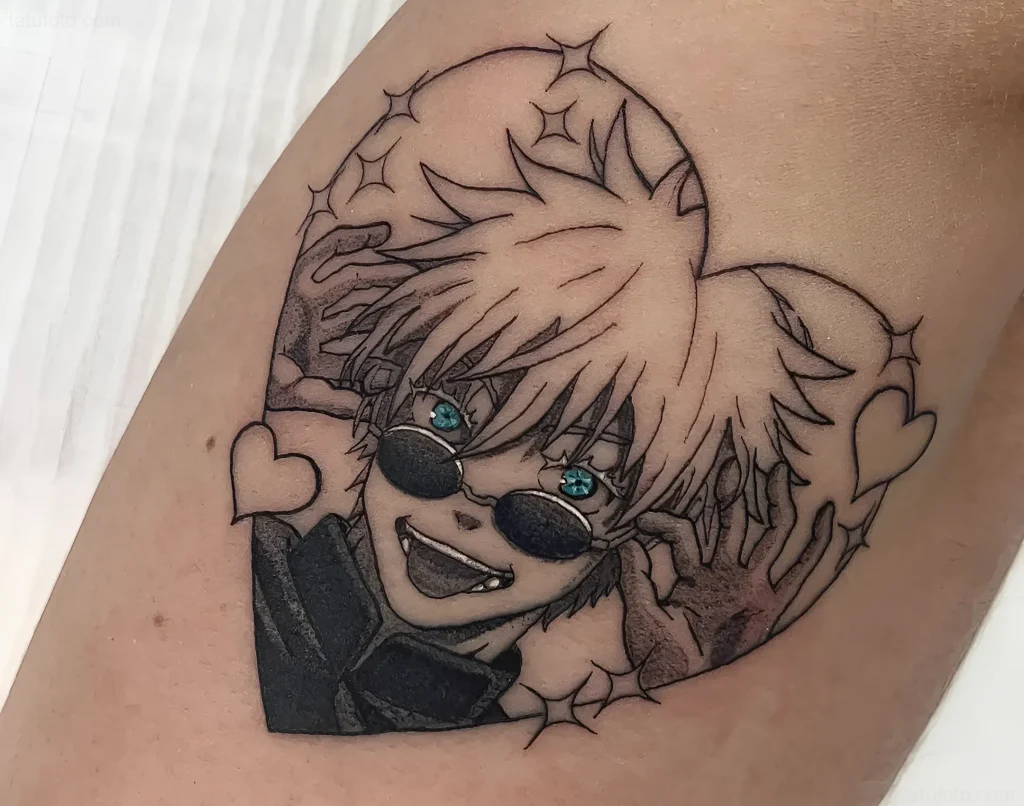
3. Chibi Style
- Features: Characters are depicted in a reduced, stylized form with a large head, small body, and exaggerated facial features, giving them a charming and cute appearance. Often used to create a comedic or tender effect.
- Meaning: Lightness, playfulness, humor, tenderness, carefree spirit. A chibi-style tattoo can be a way to express one’s softer side, love for cute things, or simply to add positivity to life.
4. Manga Realism Style
- Features: This is a hybrid style that combines the characteristic features of manga (expressive eyes, specific hairstyles, clothing) with more realistic rendering of anatomy, shadows, and textures typical of Western realism.
- Meaning: The pursuit of depth and detail, emphasizing the seriousness of the character or scene, lending greater weight and drama to the image while retaining the recognizable aesthetics of manga.
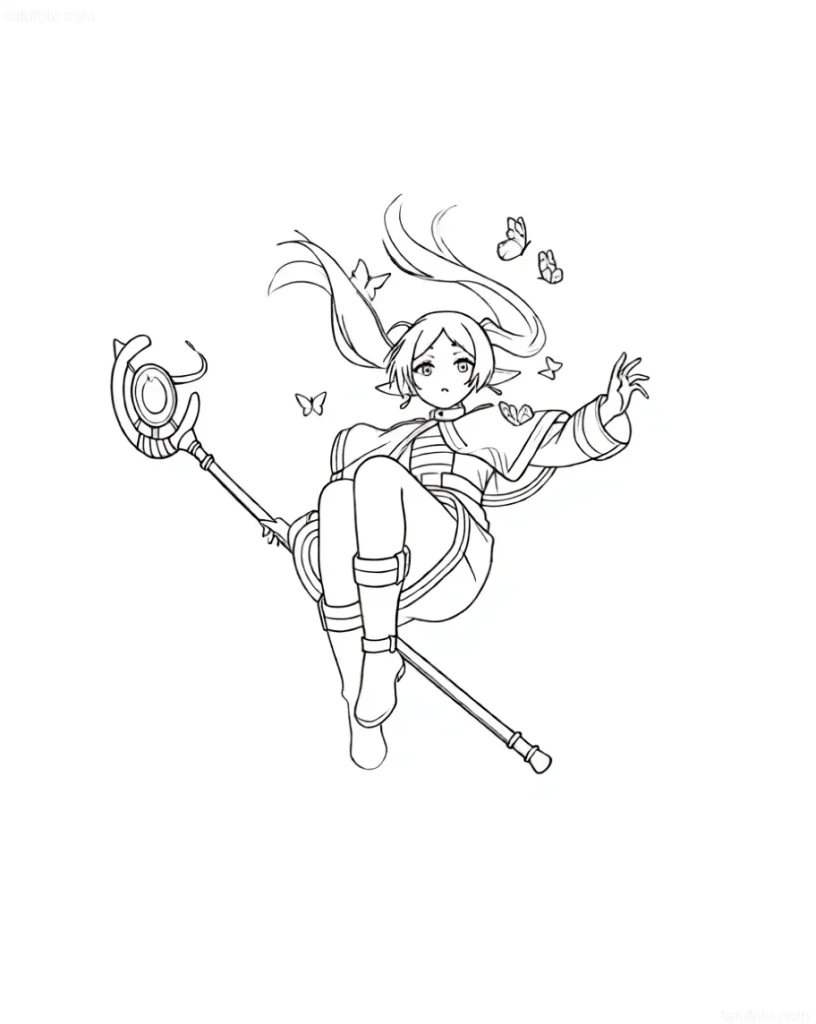
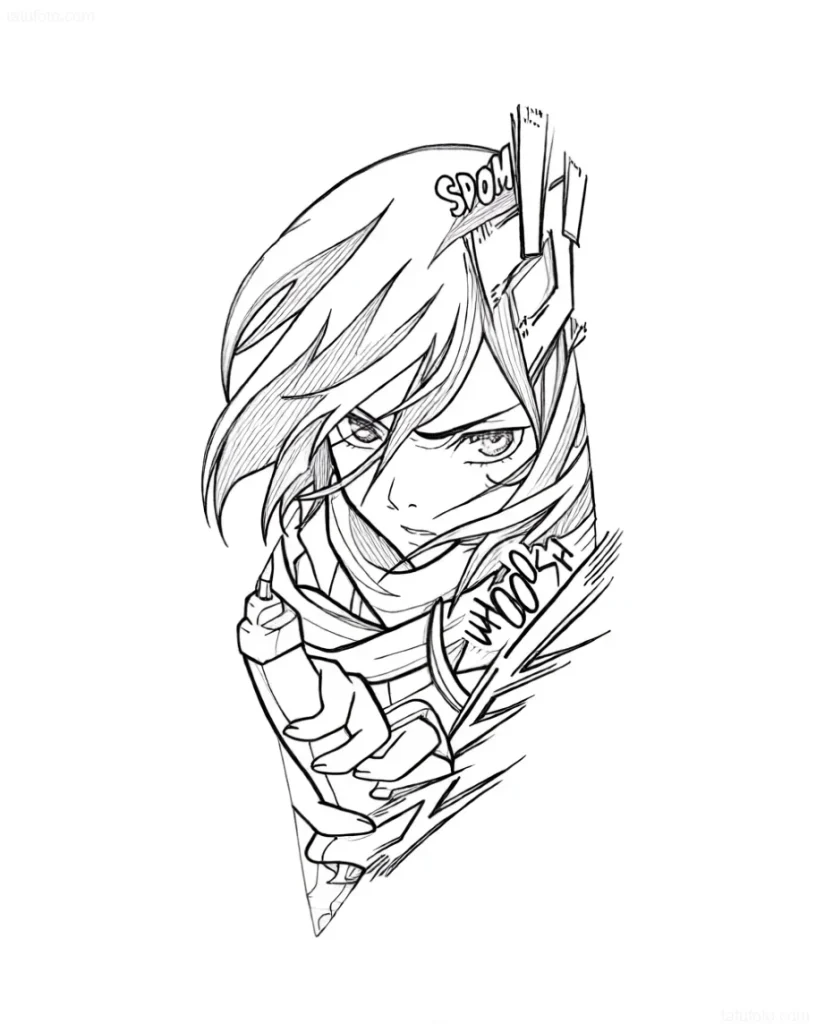
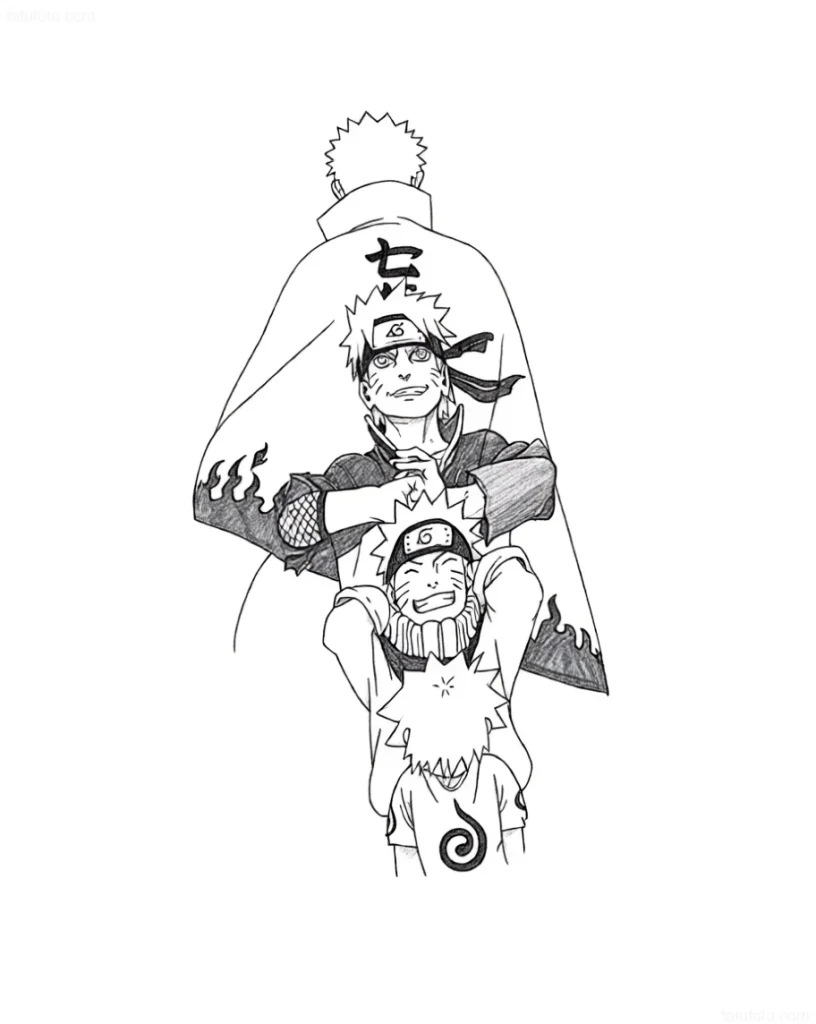
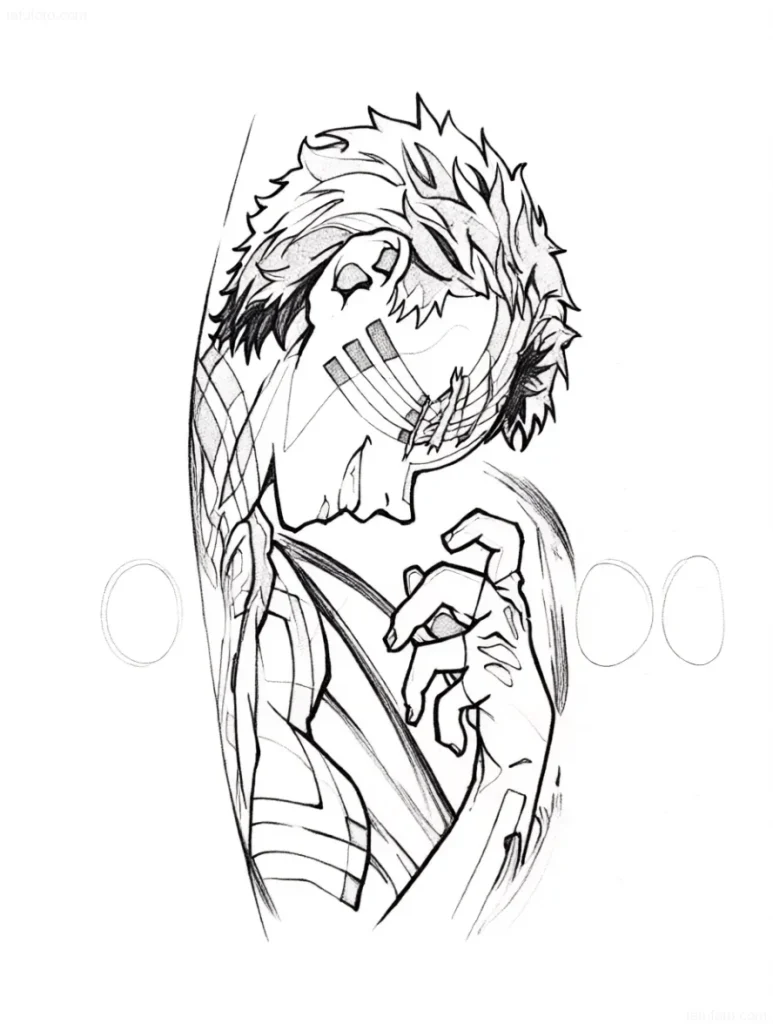
5. Manga Neo-Traditional
- Features: Combines elements of traditional Japanese or Western Neo-Traditional tattooing (thick outlines, rich colors, recognizable ornaments) with images of manga characters or plots. May include traditional Japanese backgrounds such as waves, clouds, or flowers.
- Meaning: The fusion of old and new, respect for the traditions of tattoo art while simultaneously expressing modern interests. Creates a unique, powerful, and highly stylized image.
6. Gothic/Guro Manga Style
- Features: Inspired by darker, gloomier, or surreal genres of manga. Characterized by the use of dark tones, detailed anatomy (sometimes distorted), and an emphasis on emotions of fear, despair, or melancholy.
- Meaning: Expression of the complexity of human nature, interest in the dark sides of existence, melancholy, existential questions, rebellion.
When choosing a style, you are not just choosing an appearance; you are choosing the mood, depth, and specificity of the message your tattoo will carry. Discussing these nuances with the artist is key to creating the perfect manga tattoo that will not only carry deep meaning but also look flawless.
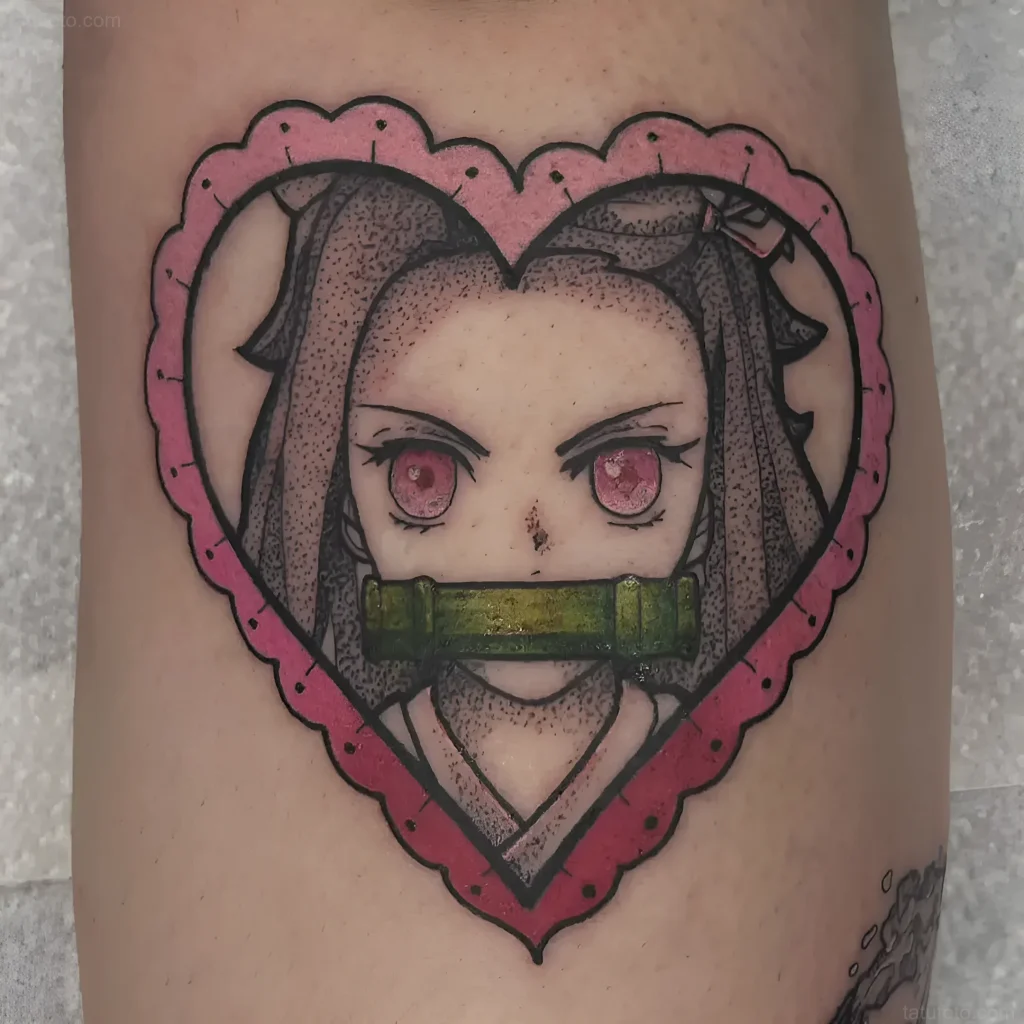
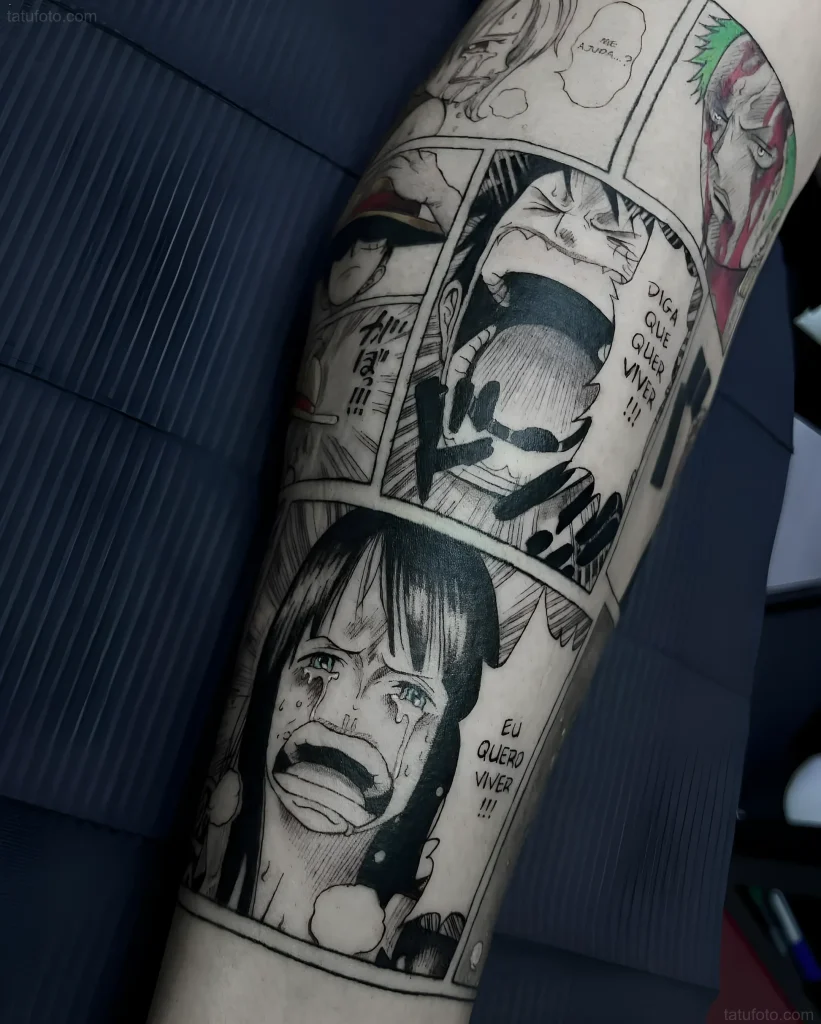
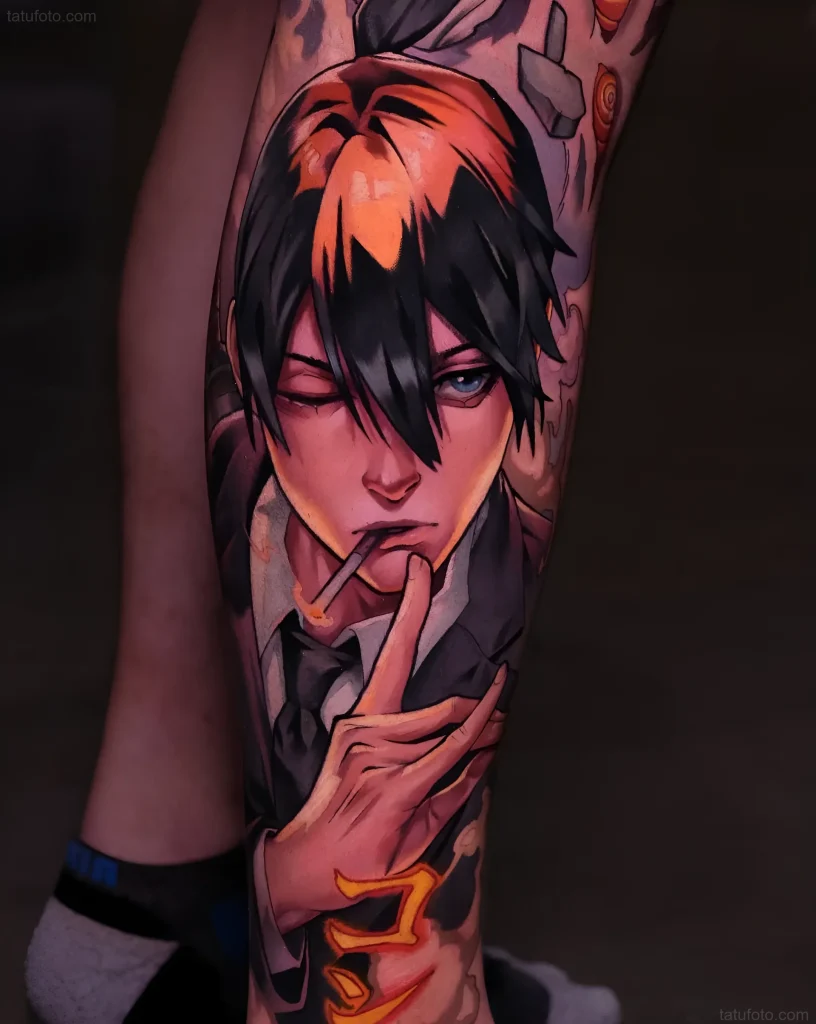
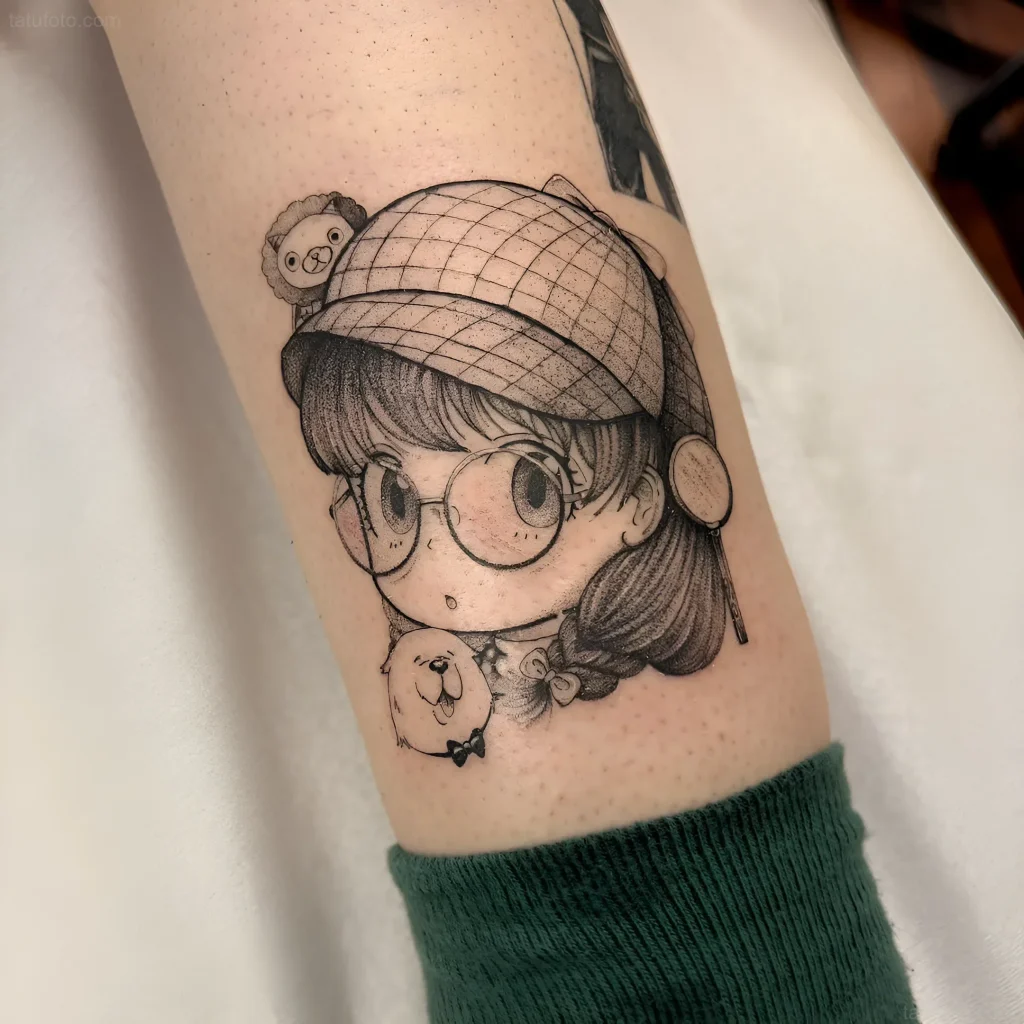
Ideal Placement for a Manga-Style Tattoo on Your Body
Choosing the placement for a manga-style tattoo is as important as the design itself. The right placement can enhance the meaning of the tattoo, emphasize its dynamism, and make it an organic part of your body. Manga often uses dynamic poses and angles, and these features should be considered when planning.
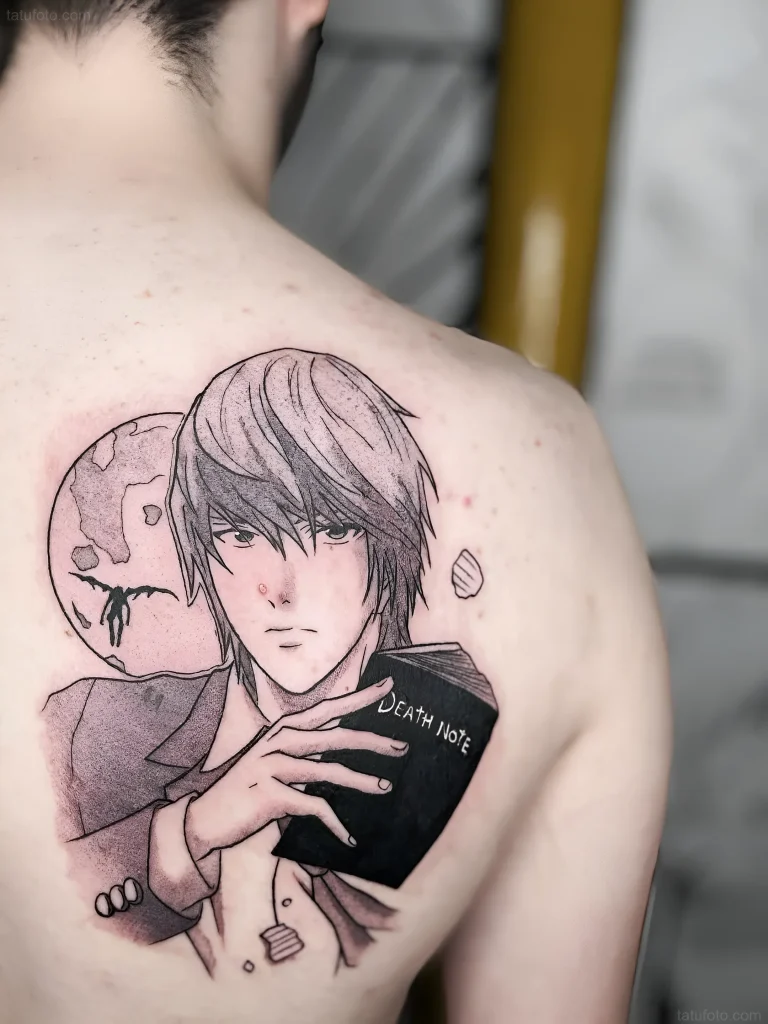
1. The Back: A Canvas for Epic Stories
- Why: The large, flat surface is ideal for large-scale, detailed scenes. You can place several characters, a complex background, or an entire story from the manga here.
- What to place: Epic battles, key plot moments, panoramic views, portraits of several main characters with background elements. For example, the final battle from “Naruto” or a panorama of the city from “Attack on Titan.”
- Meaning: Emphasizes the scale of your idea, the global significance you invest in the tattoo. It is a statement that is not immediately revealed but makes a strong impression.
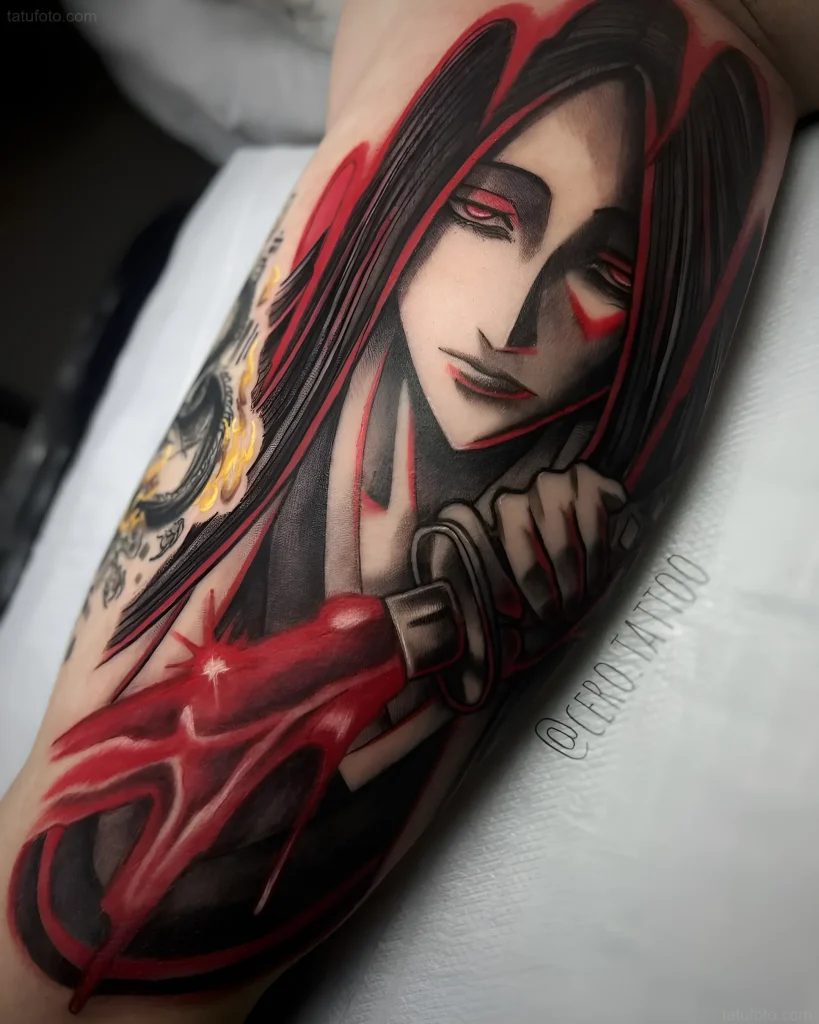
2. The Arm (Sleeve): Dynamism and Continuity
- Why: The arm offers a long, cylindrical surface perfect for dynamic compositions that unfold as the arm moves.
- What to place:
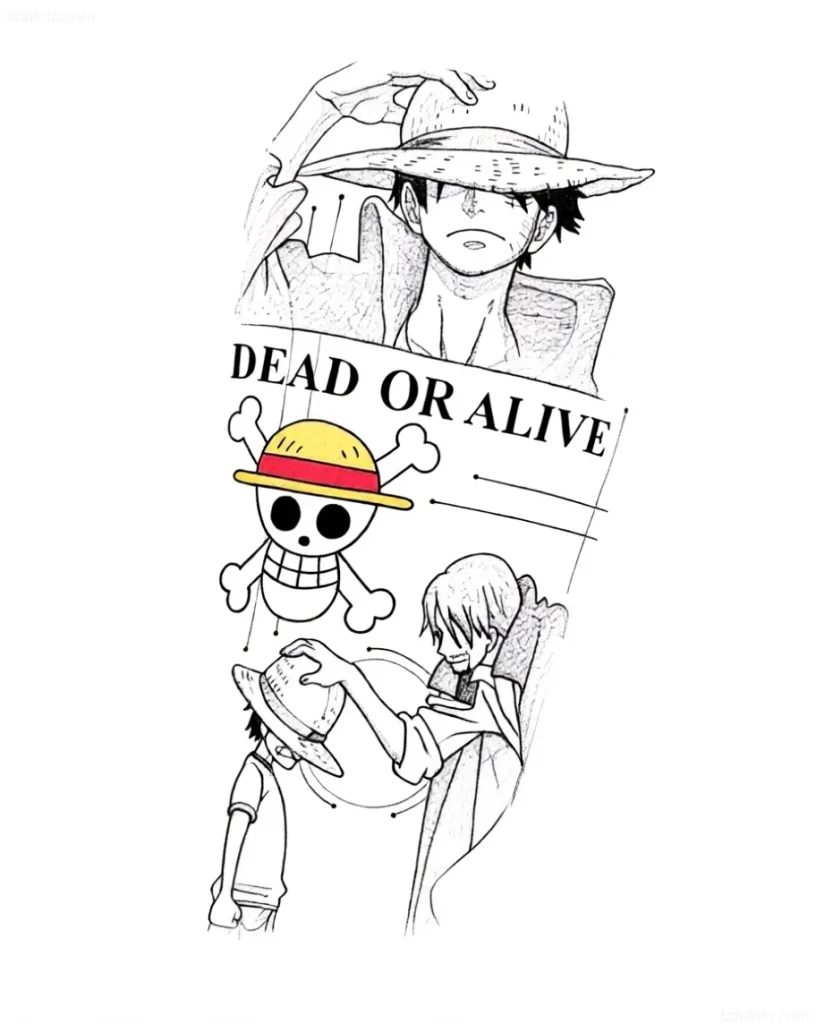
- Full sleeve: Chronological sequence of events, character evolution, or a collage of symbols and characters united by a common theme.
- Forearm: Dynamic poses of one or two characters, symbolic objects that are easy to view.
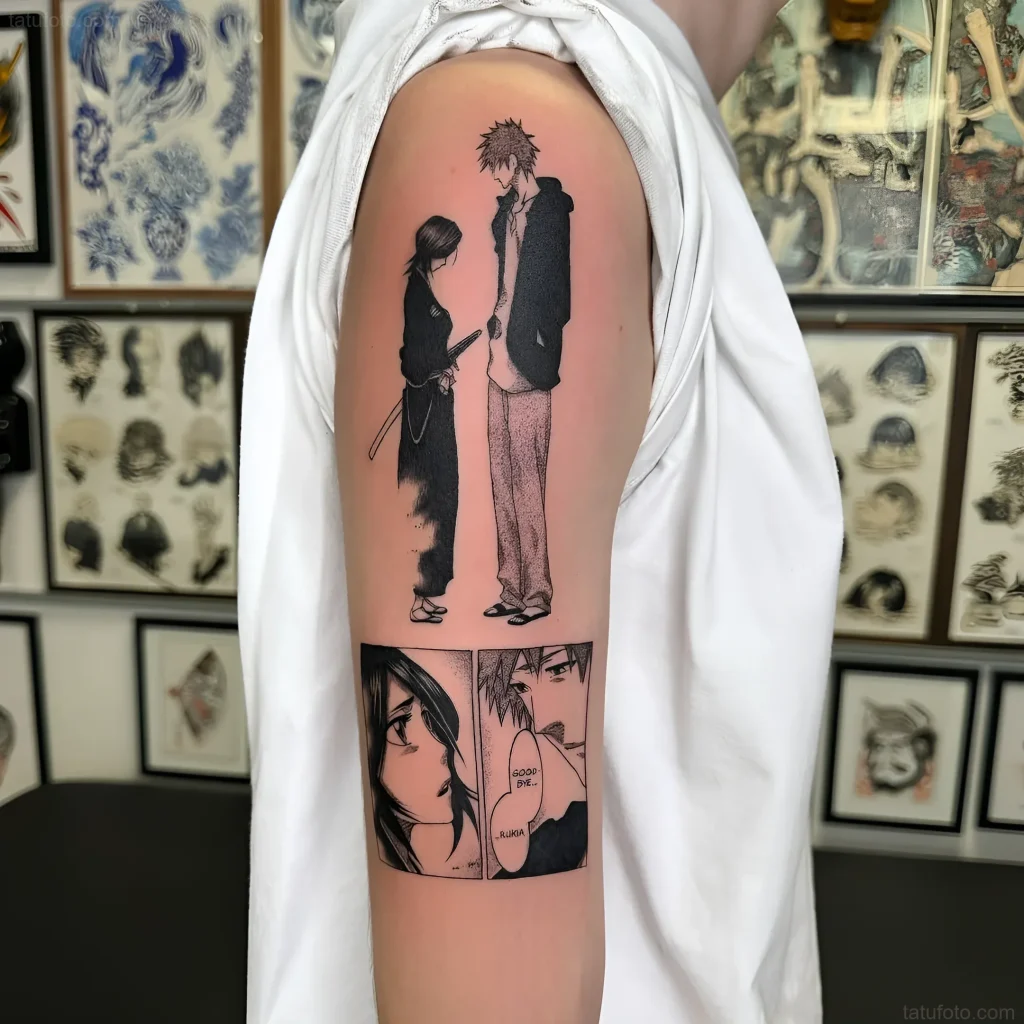
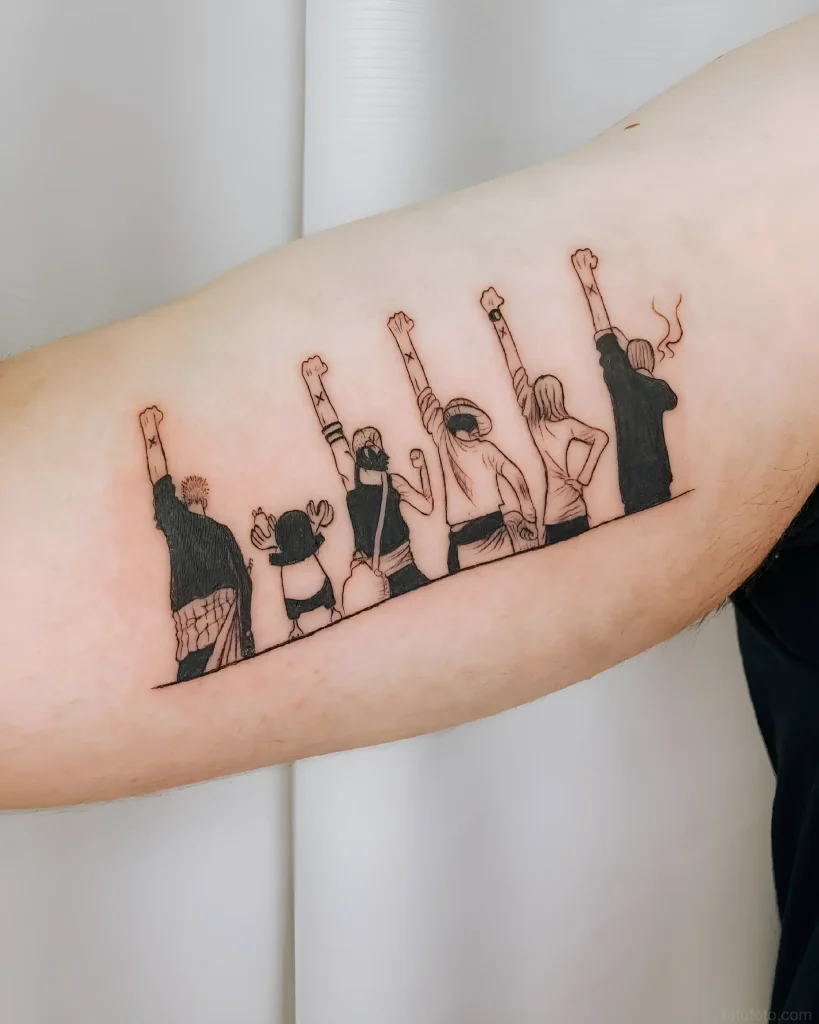
- Shoulder/Bicep: Powerful, heroic portraits or symbols of strength.
- Meaning: Symbolizes your path, development, strength, or constant forward movement. The visibility of the sleeve allows you to easily demonstrate your attachment to the chosen work or character.
3. The Leg (Calf, Thigh): Hidden Strength and Volume
- Why: Like the arm, the leg offers good area for vertical compositions. The calf is ideal for dynamic images, while the thigh is suitable for wider scenes.
- What to place: Active poses of characters running or jumping; large portraits; scenes requiring more volume.
- Meaning: Can symbolize your foundation, movement, the ability to move forward. The thigh offers more privacy, allowing you to keep the tattoo’s meaning more personal.
4. The Chest: The Heart of the Story
- Why: The center of the body, close to the heart. An excellent flat surface for symmetrical or central compositions.
- What to place: Portraits, symbolic crests, logos, key elements that have deep emotional significance for you.
- Meaning: Emphasizes a deep personal connection to the image, its importance to your inner world. It can be a symbol of your passion or values.

5. Ribs/Side: Elongated and Hidden Stories
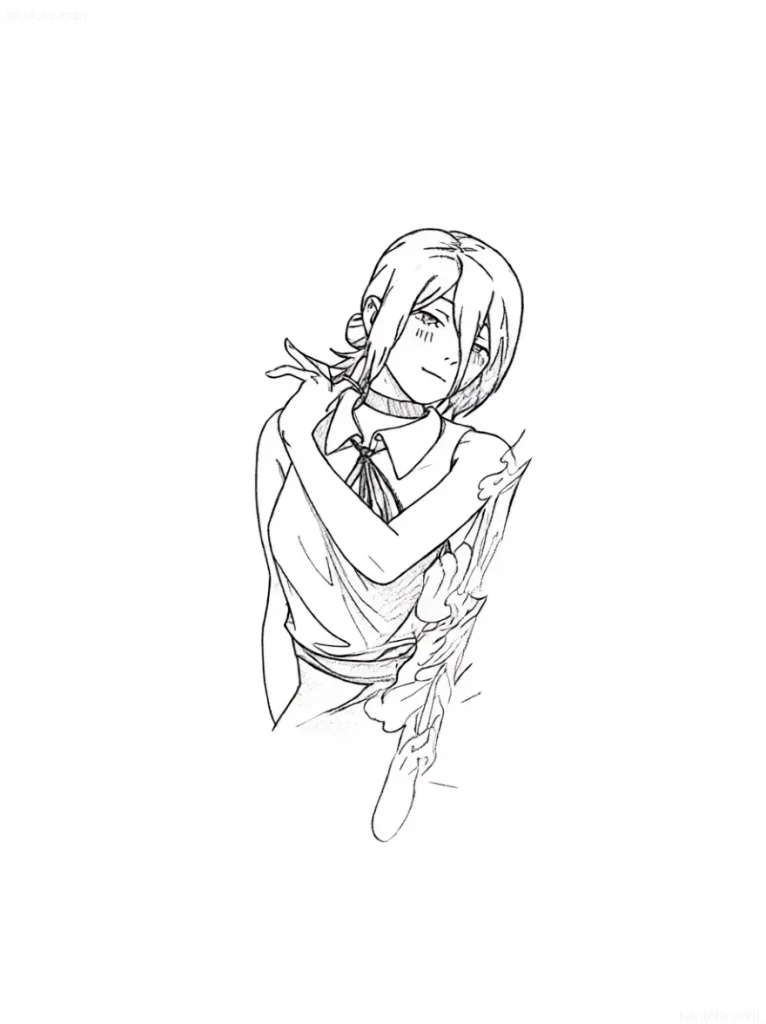
- Why: A long, curved surface that can be both hidden and shown. Suitable for elongated compositions.
- What to place: Long, flowing scenes, serpentine creatures, characters in flight or with flowing elements.
- Meaning: A personal, intimate meaning that you don’t necessarily want to show everyone. May symbolize hidden aspects of your personality or deep experiences.
6. Wrist/Ankle: Small but Significant Accents
- Why: Ideal for small, symbolic images.
- What to place: Miniature chibi characters, symbols, logos, important dates, or small but recognizable elements from manga (e.g., Sharingan, village symbol).
- Meaning: A reminder, a talisman, a symbol that is always with you. Can be a subtle nod to your hobby, understood only by insiders.
When choosing a placement, always consider:
- Body Anatomy: How the design will look when moving.
- Visibility: Whether you want the tattoo to always be visible or remain more personal.
- Detailing: Small details look better on flat, easily viewable areas.
- Pain: Some areas of the body (ribs, spine, ankles) are more sensitive to pain.
Always discuss your ideas with an experienced tattoo artist. They can suggest the optimal placement, taking into account your body shape and the specifics of the chosen manga design, so that your tattoo not only carries deep meaning but also looks flawless.
Tips for Choosing an Artist and Creating a Unique Manga Tattoo
Creating a manga-style tattoo is not just about transferring an image onto the skin; it is a collaboration between your idea and the artist’s skill. To ensure your tattoo not only carries deep meaning but is also executed at the highest level, it is crucial to approach the choice of artist and the sketch creation process correctly.
1. How to Choose an Artist Specializing in Manga Tattoos
- Portfolio is Your Main Guide: Look for artists whose portfolio already features works in the manga or anime style. This shows that the artist is familiar with the style’s specifics:
- Lines: Assess the cleanliness and sharpness of the outlines. Manga often requires very thin and precise lines.
- Color: Pay attention to saturation and smooth transitions. Manga is known for its bright, vibrant colors.
- Expression: The ability to convey the characteristic emotions of manga characters is a key skill. Eyes, facial expressions, and the dynamism of the pose must be recognizable and expressive.
- Anatomy: Even in stylized images, correct anatomical representation is important so that the character does not look ‘crooked.’
- Experience and Specialization: Some artists specialize specifically in Japanese graphics or pop culture. Such artists usually not only master the technique but also understand the cultural context, allowing them to create more authentic and profound works.
- Reviews and Reputation: Look for reviews of the artist online, talk to their former clients. Important not only is the artistic side but also professionalism, adherence to hygiene standards, and communication skills.
- Consultation: Be sure to schedule an in-person or online consultation. This is your chance to discuss the idea, ask all your questions, assess the artist’s approach, and feel how comfortable you are working with them.
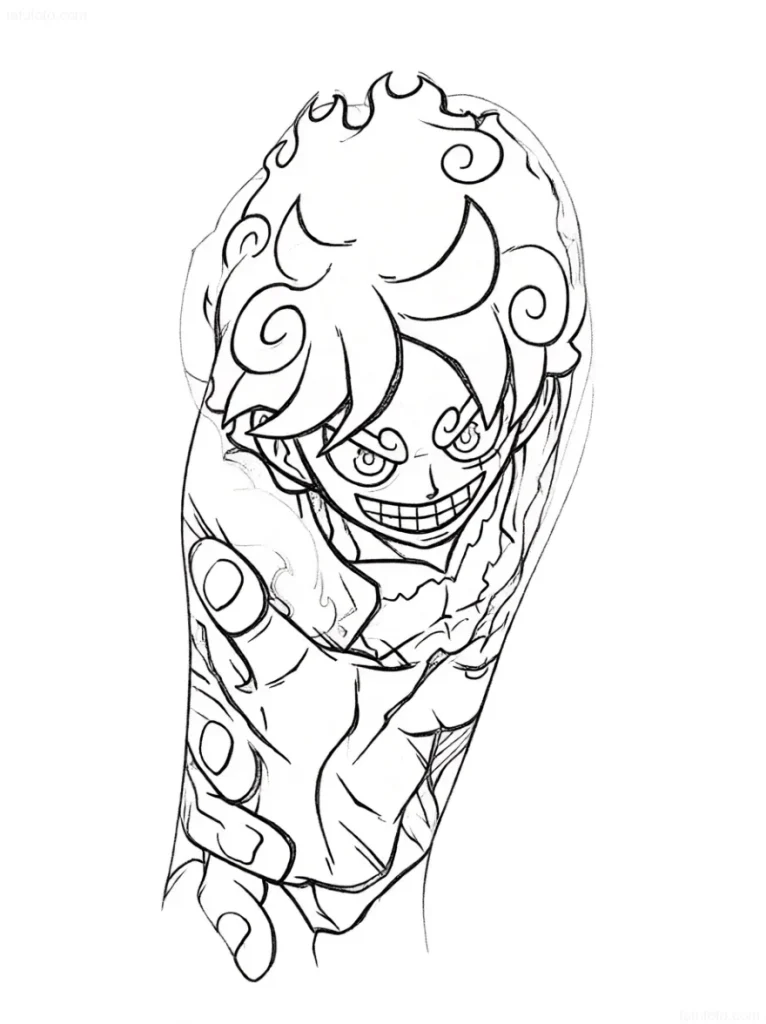
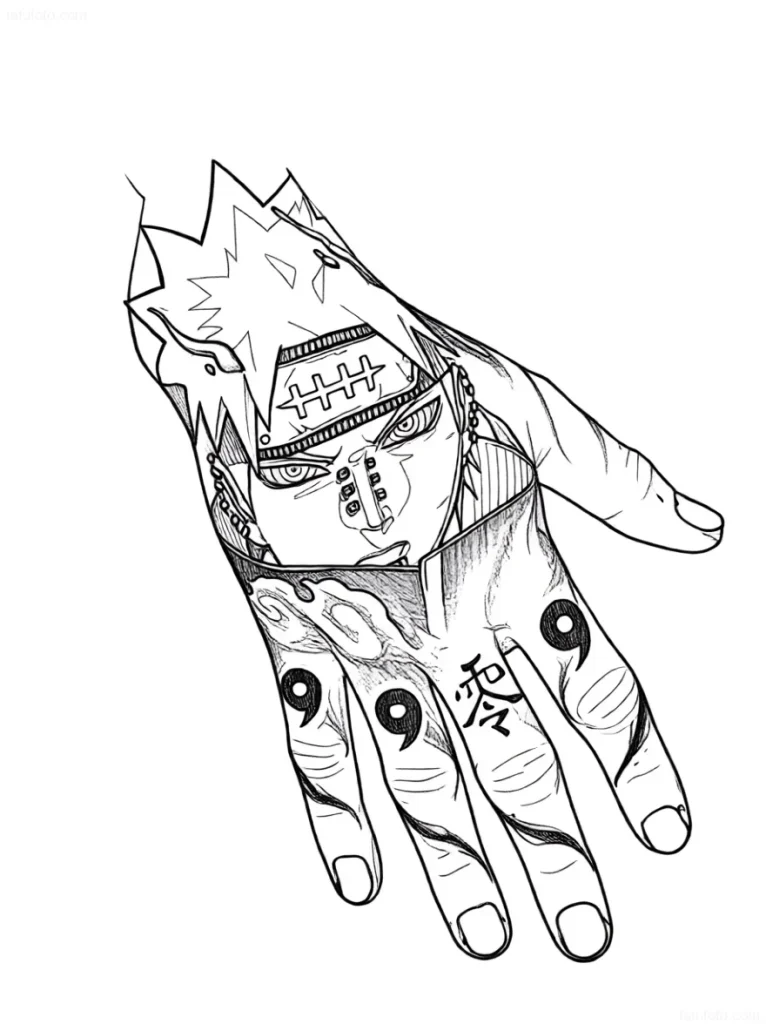

2. Creating a Unique Manga Tattoo: From Idea to Sketch
- Clearly Formulate the Idea: Before going to the artist, think through what you want in as much detail as possible.
- Character: Which character exactly? From which work?
- Scene/Moment: Is there a specific scene or key moment you want to capture?
- Symbolism: What meaning will this tattoo have for you? What emotions or qualities should it convey?
- Style: Which of the above manga tattoo styles do you prefer? (classic, modern, chibi, realistic, etc.)
- Prepare References: Gather as many images as possible. These can include:
- Screenshots from manga/anime with the desired character/scene.
- Examples of other tattoo artists’ work whose style or execution you like.
- Images conveying the required mood or color scheme.
- Be Open to the Artist’s Suggestions: An experienced artist can suggest how to improve your idea, make it more suitable for a tattoo. Sometimes a direct copy from a manga panel won’t look as effective on the skin as an original, reworked sketch.
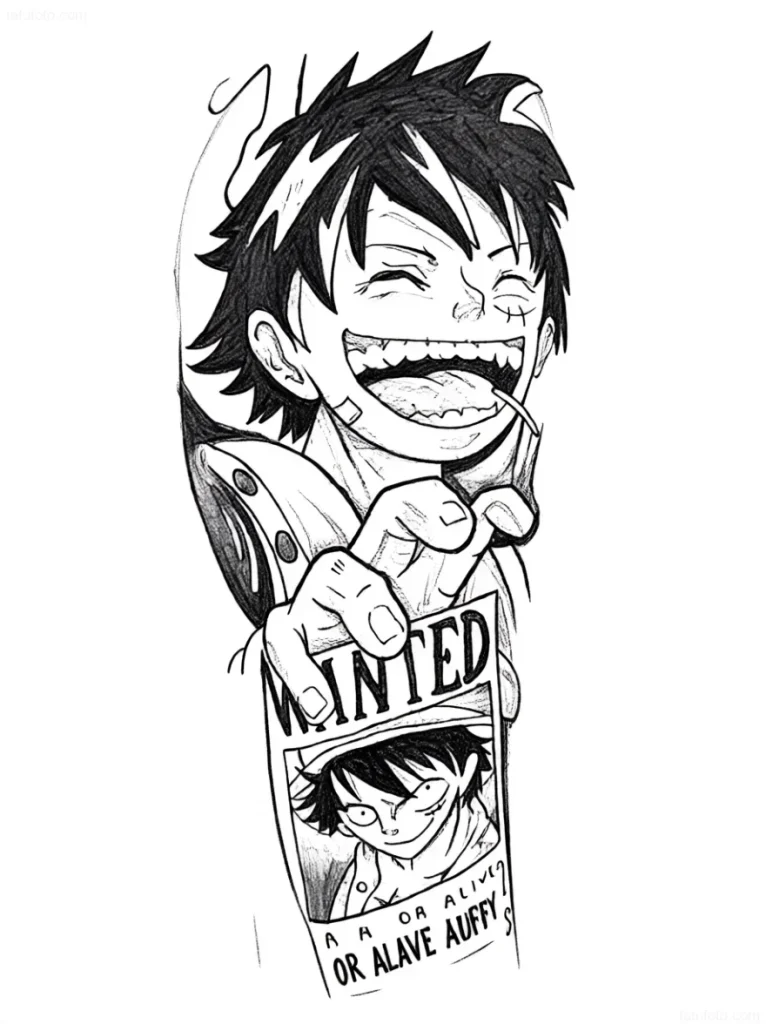
- Custom Sketch: True uniqueness is achieved through a custom sketch. Avoid the idea of simply printing an image from the internet and asking the artist to copy it. A good artist will create a sketch specifically for you, taking into account the features of your body and your wishes.
- Patience: The process of creating a detailed sketch and the tattoo itself can take time. Do not rush the artist, especially if it is a complex and meaningful work. Quality takes time.
Remember that your manga tattoo is not just a drawing; it is a part of your story embodied in art. The right choice of artist and careful consideration of the idea guarantee that this story will be told beautifully and meaningfully.