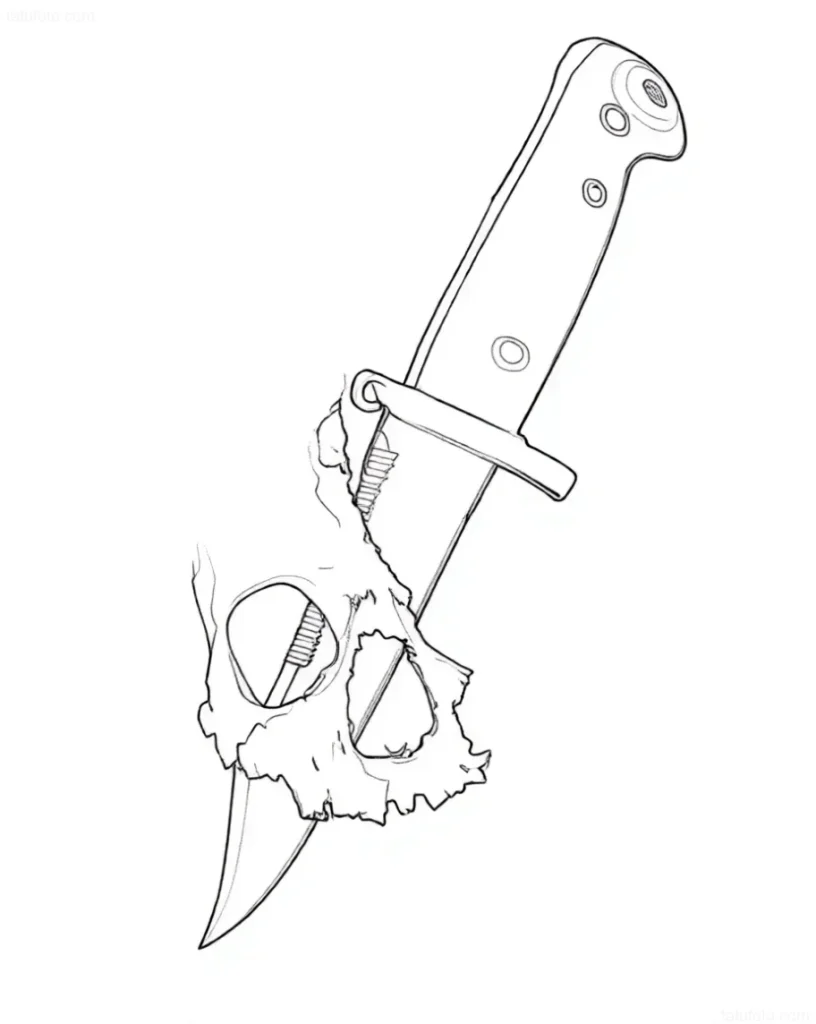
A bayonet tattoo is not just an image of a cold weapon on the skin; it is a deep, multifaceted symbol that carries a message of determination, protection, honor, and uncompromising will. For many, it becomes the embodiment of personal resilience, a warrior spirit, or a memory of an important life stage. On our portal tatufoto.com, we strive to reveal every aspect of this powerful symbol so that you can make an informed decision when choosing a design that truly reflects your history and values.
If you are considering a bayonet tattoo, you are likely attracted not only by its aesthetics but also by the depth of meaning it can convey. In this article, we will thoroughly examine all the nuances associated with this unique image, from its historical significance to modern interpretations in various tattoo styles.
The Meaning of a Bayonet Tattoo: Deep Significance and Symbolism
The bayonet tattoo possesses one of the most powerful and unambiguous symbolic charges among all images of cold weapons. Originally, the bayonet was a weapon of last resort, a symbol of the final, uncompromising fight when there was nowhere left to retreat. This idea forms the basis for most of its interpretations in tattoo art.
- Uncompromisingness and Determination: The bayonet personifies the readiness to go to the end, not to surrender in the face of danger or difficulties. It is the choice of a person who accepts no half-measures and always sees things through, even if it requires maximum effort and sacrifice.
- Protection and Amulet: As a weapon designed for defense, the bayonet becomes a powerful amulet. Its wearer demonstrates a readiness to protect themselves, their family, their principles, and values. It is a symbol of steadfastness against external threats.
- Warrior Spirit and Honor: For many, a bayonet tattoo is directly associated with military service, the army, duty, and honor. It can be a sign of belonging to a warrior brotherhood, a memory of trials endured, a symbol of courage and valor shown in battle or service. It is a way to pay tribute to veterans or immortalize the memory of fallen comrades.
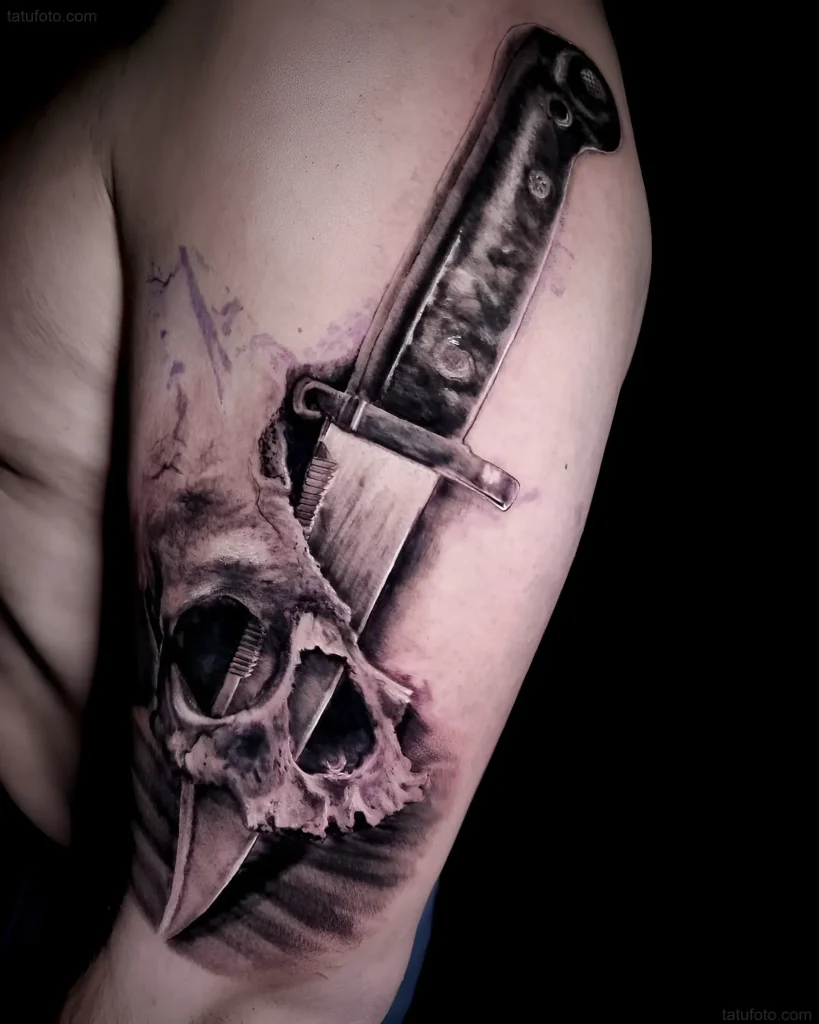
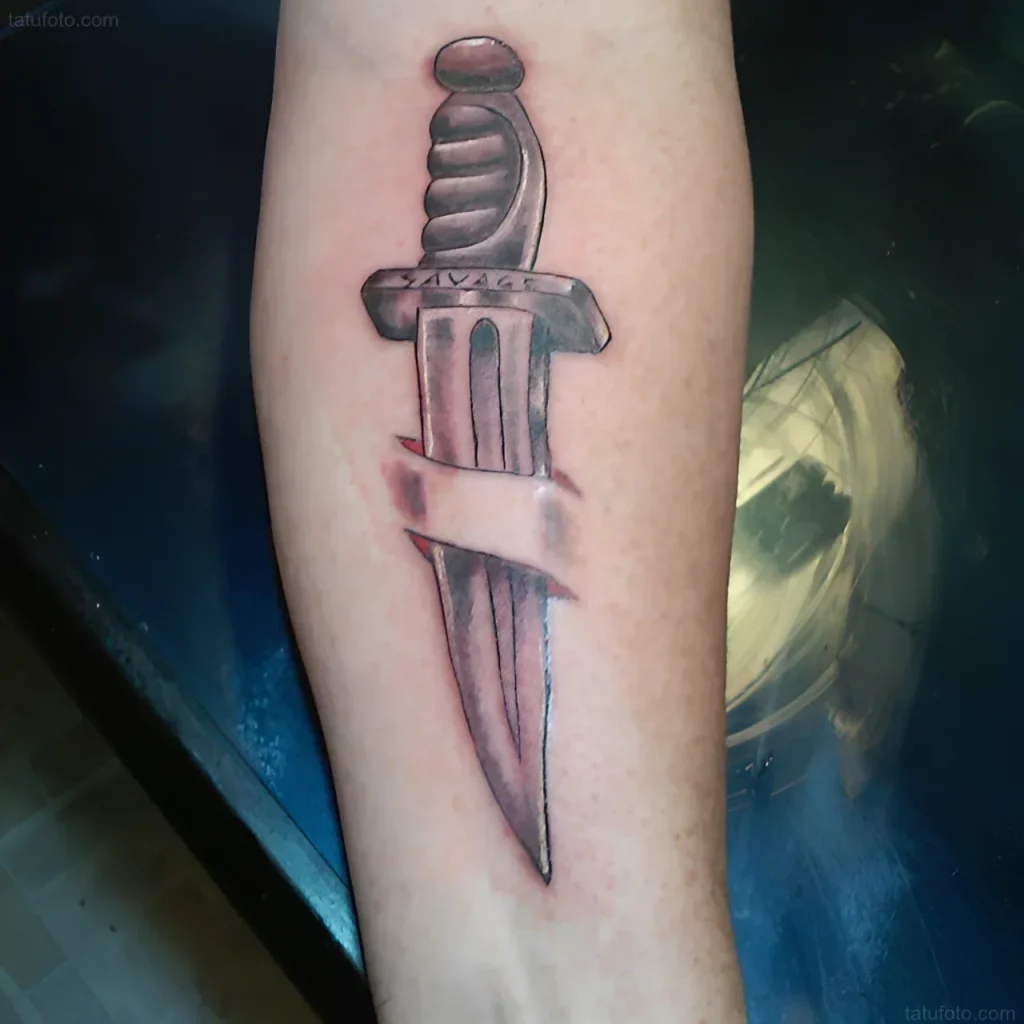
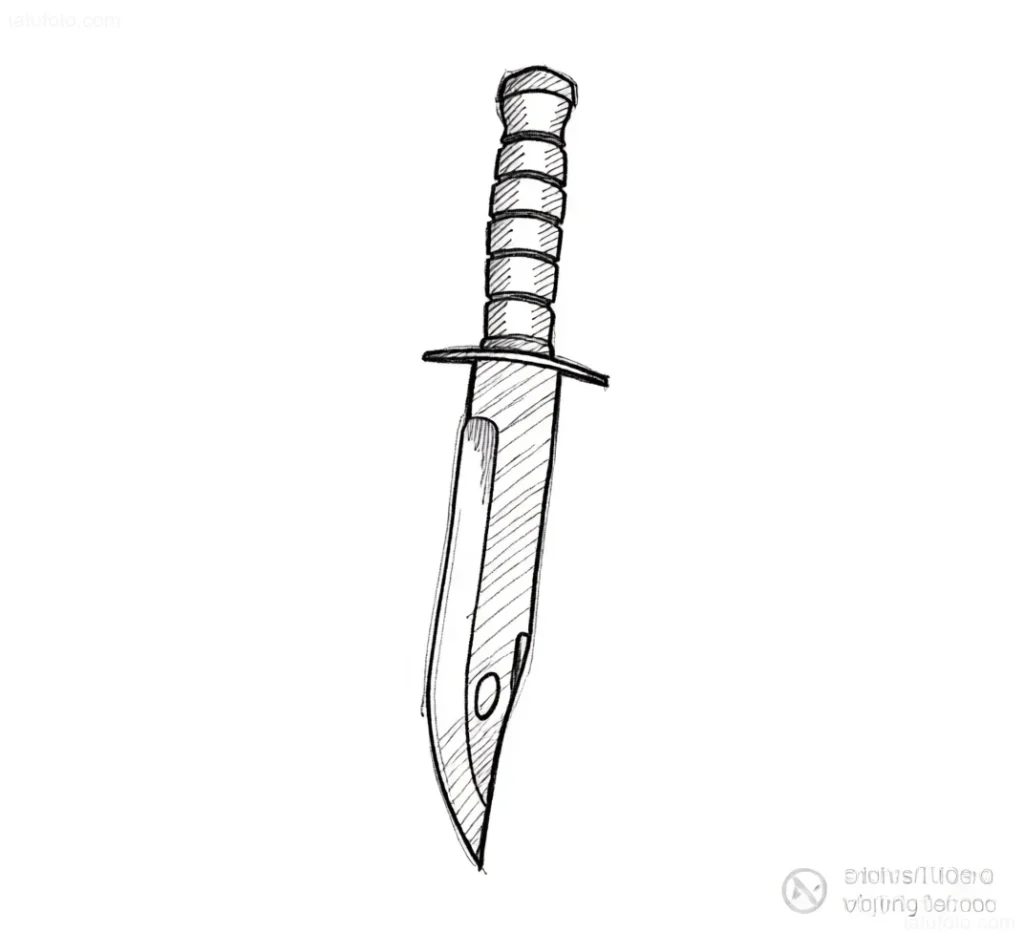
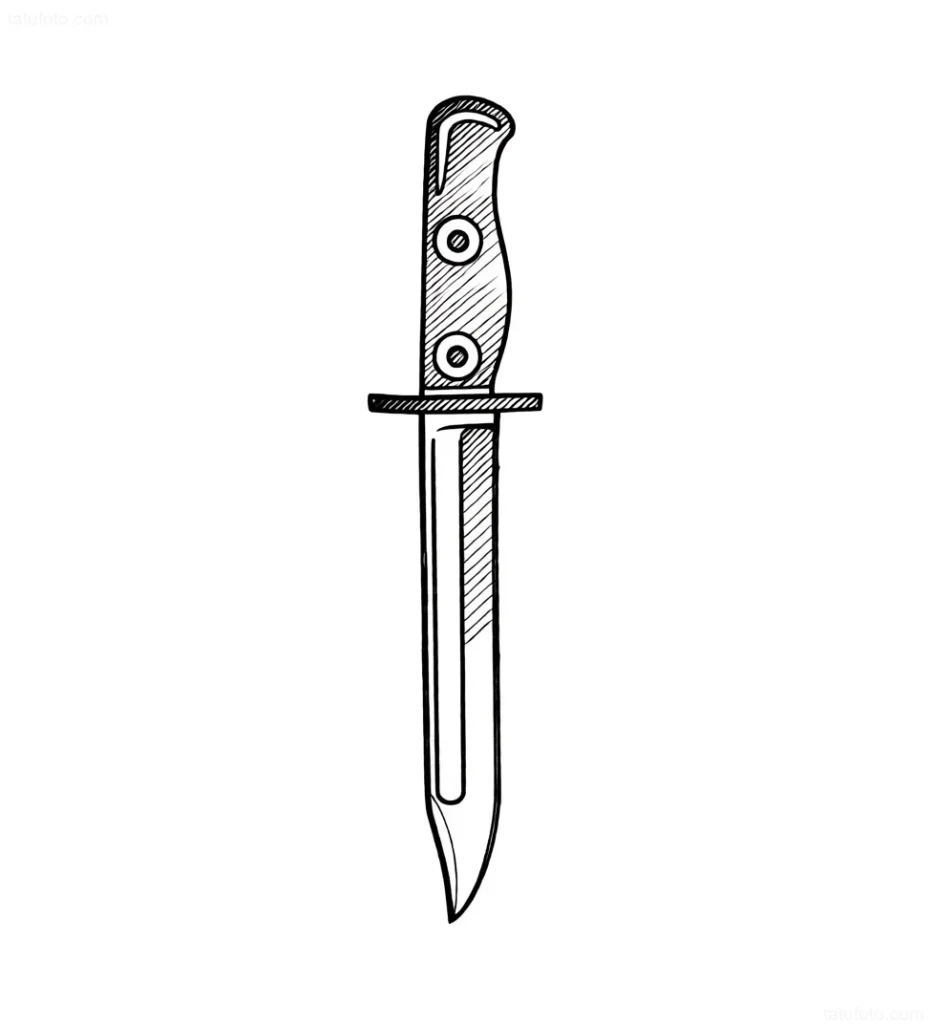
- Self-Sacrifice and Duty: In the context of military service, the bayonet is often associated with readiness for self-sacrifice for a higher purpose – the Motherland, comrades, ideals. Such a tattoo can be a reminder of the importance of duty and responsibility.
- Resilience and Courage: Outside the military context, the bayonet symbolizes a person’s inner strength, their ability to overcome life’s obstacles, withstand the blows of fate, and remain unshaken. It is a symbol of personal struggle and victory over oneself or circumstances.
- Justice: In some interpretations, the bayonet can be associated with the fight for justice, the readiness to defend truth and principles, even if it requires harsh measures.
By choosing a bayonet tattoo, you are choosing a symbol that speaks of you as a person with a strong character, ready to face challenges and protect what is dear to you.
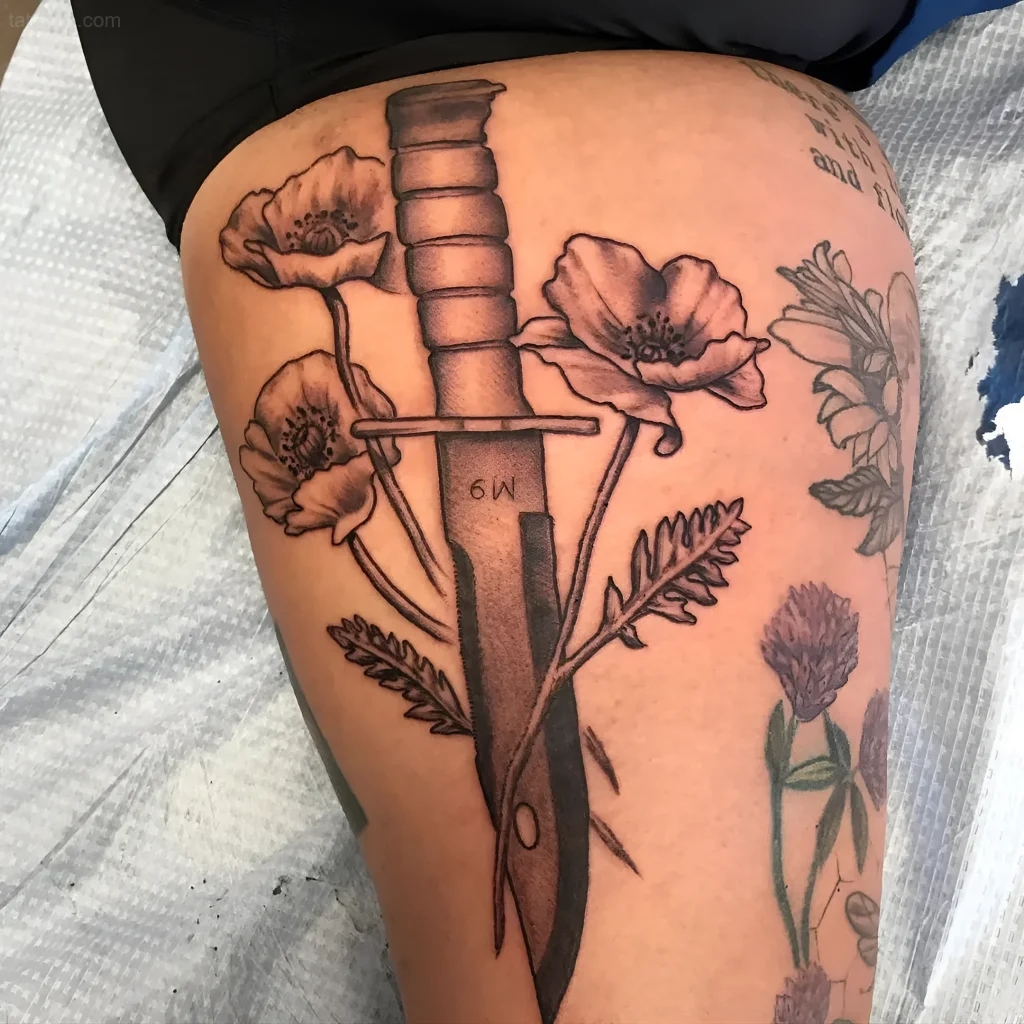
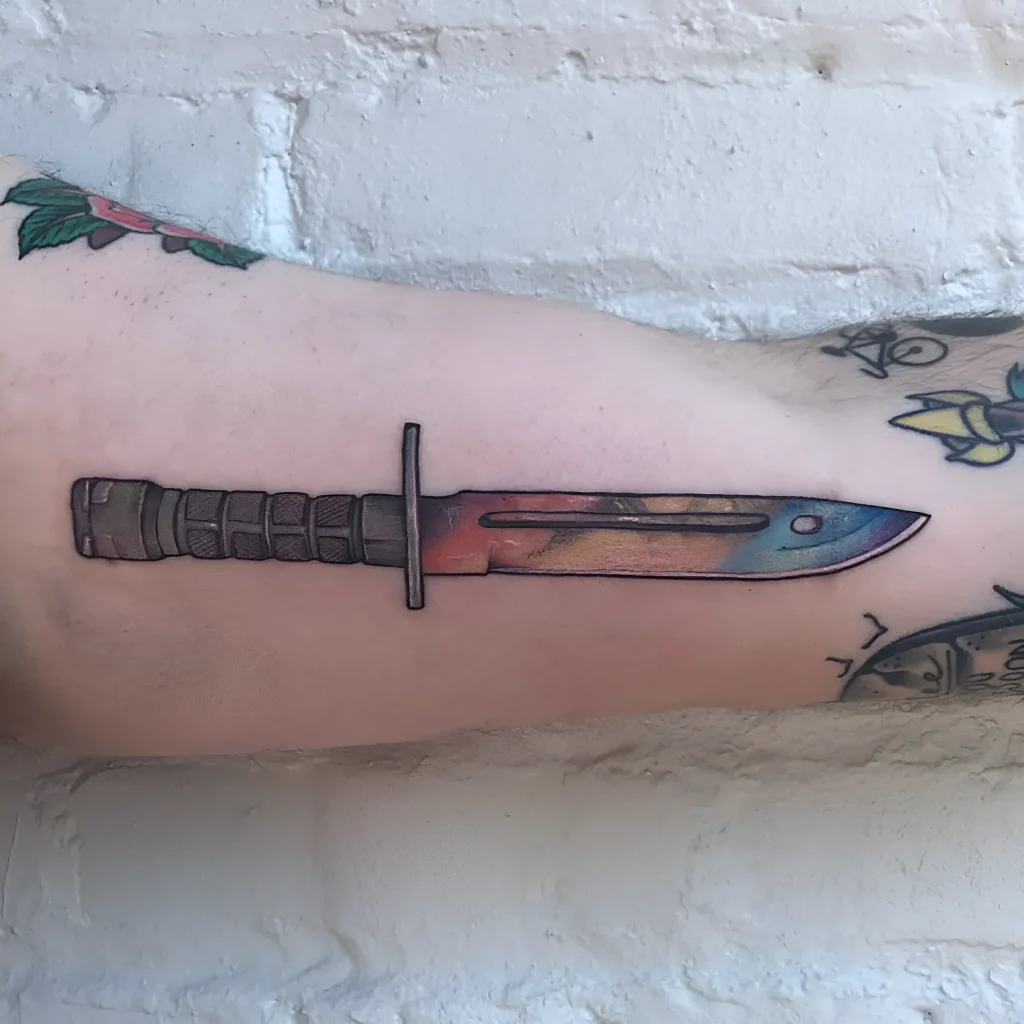
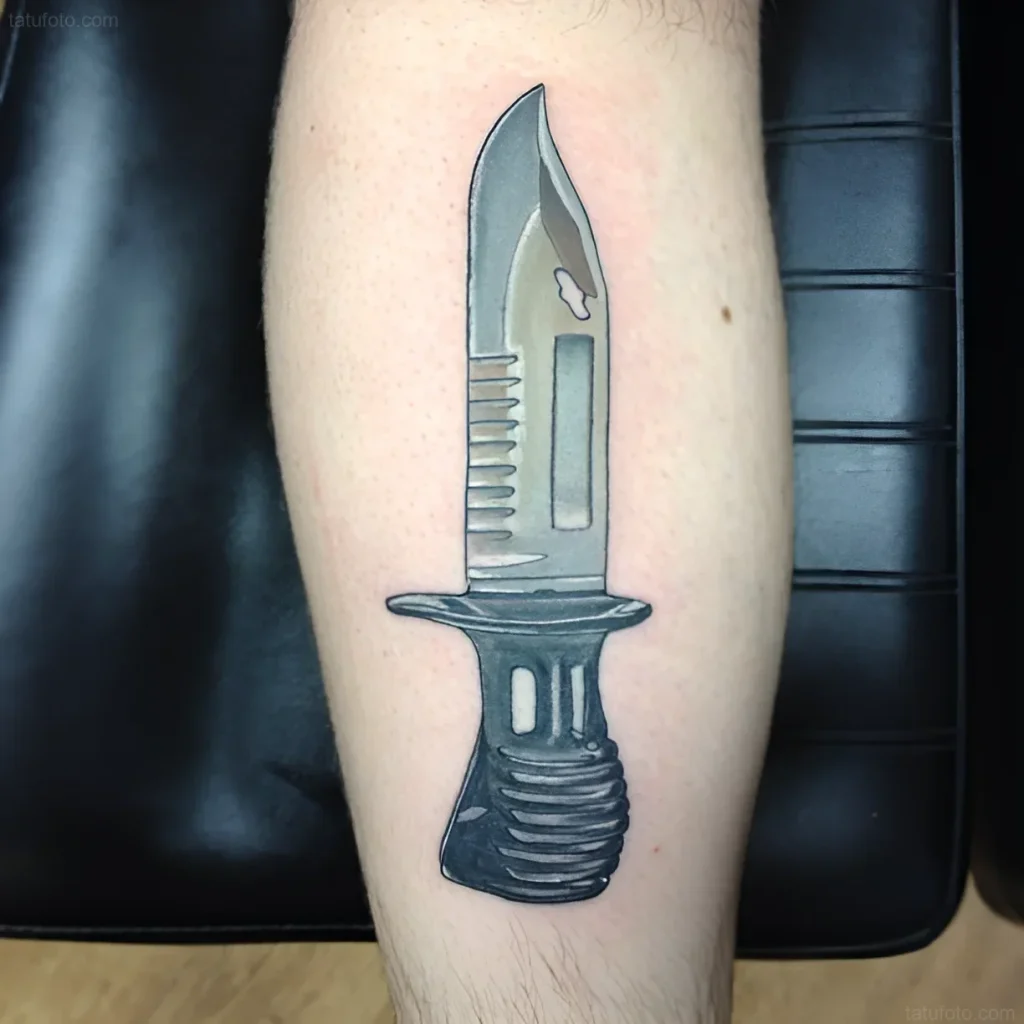
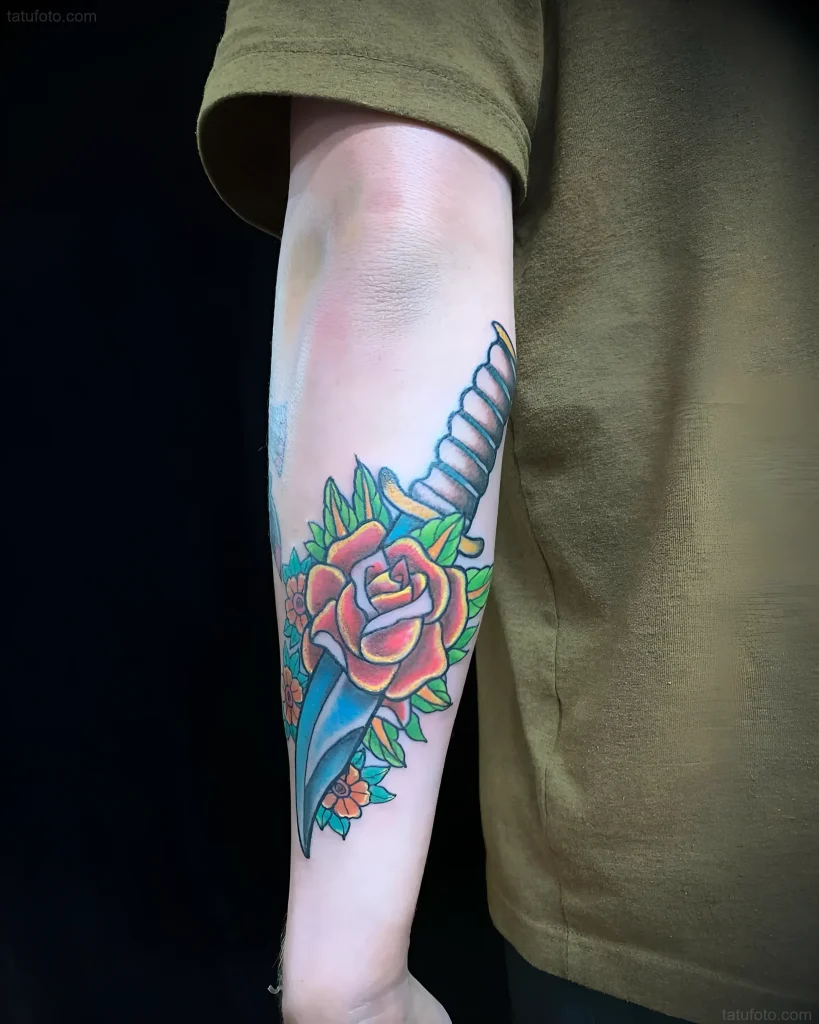
History of the Bayonet: From Weapon to Symbol
To fully grasp the depth of the bayonet tattoo’s symbolism, one must look to its history. The bayonet has come a long way from a primitive device to a high-tech multi-tool, and each stage of its evolution has left its mark on its symbolic meaning.
- Early Forms: The first bayonets appeared in the 17th century in France. These were the so-called ‘plug bayonets,’ which were inserted directly into the muzzle of a musket, turning it into a kind of spear. The drawback was obvious – it was impossible to shoot the weapon. However, even then, the bayonet symbolized the last resort, the final chance in close combat.
- Evolution and Development: The introduction of the ‘socket bayonet,’ which attached to the outside of the barrel, allowed for simultaneous firing and use of the weapon as a stabbing tool. This significantly increased the combat effectiveness of infantry and solidified the bayonet’s reputation as an integral part of the soldier’s arsenal. In the 18th-19th centuries, the bayonet became a standard piece of armament, participating in all major military conflicts.


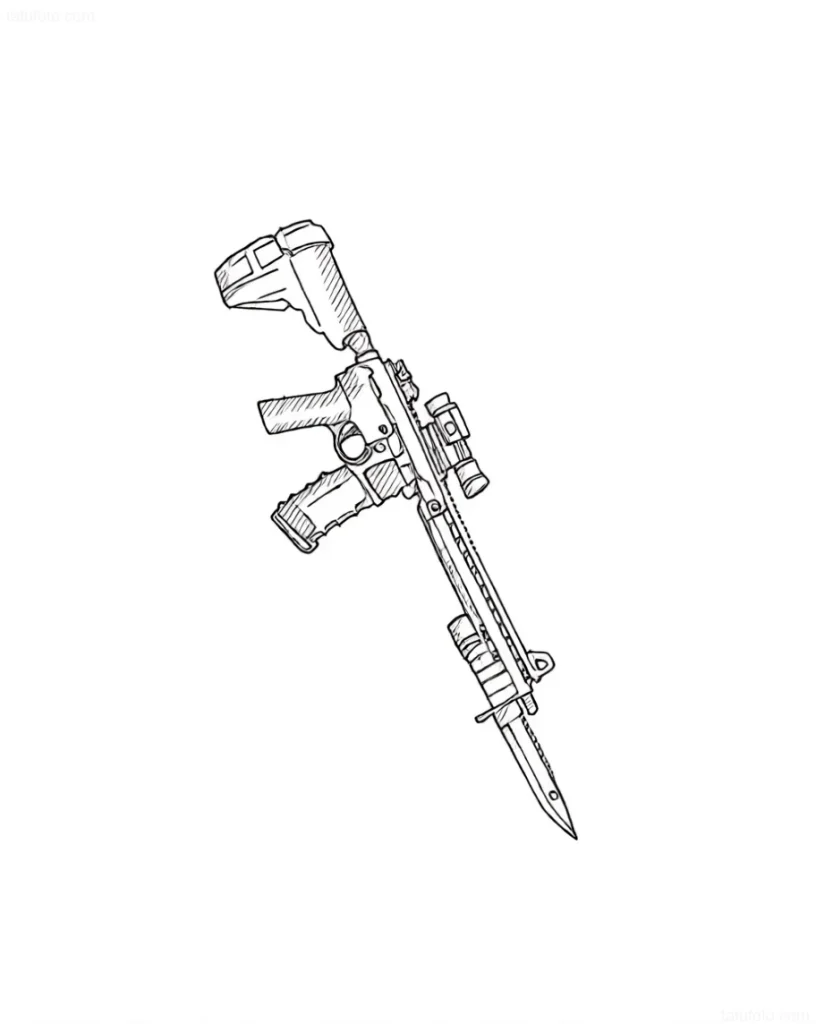
- 20th Century and Modernity: With the development of automatic weapons and changing combat tactics, the role of the bayonet as the primary close-combat weapon diminished. However, it did not disappear but transformed into a versatile tool – the combat knife. Modern bayonets are often used for cutting wire, sawing, opening cans, as well as a combat knife. This multifunctionality adds the idea of versatility and readiness for any conditions to its symbolism.
- Transition from Weapon to Symbol: It was in the 20th century, especially after the World Wars, that the bayonet firmly established itself in the collective consciousness as a symbol of soldierly valor, self-sacrifice, and resilience. It became associated with the final push, the decisive blow, a symbol of a spirit that cannot be broken. In this context, it ceased to be just a tool of killing, turning into a powerful cultural and military symbol.
Thus, the bayonet tattoo carries not only military history but also the memory of countless acts of courage, determination, and survival, making it deeply meaningful for those who choose this symbol.

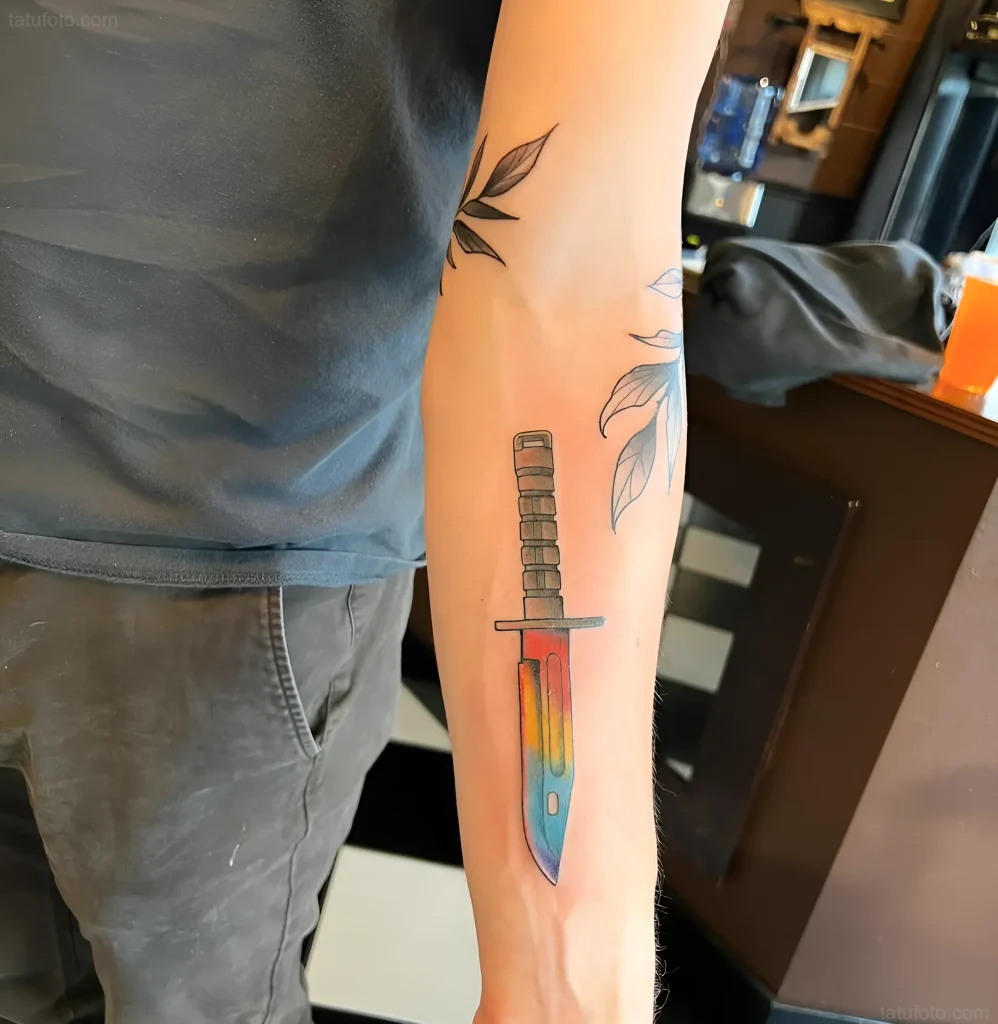
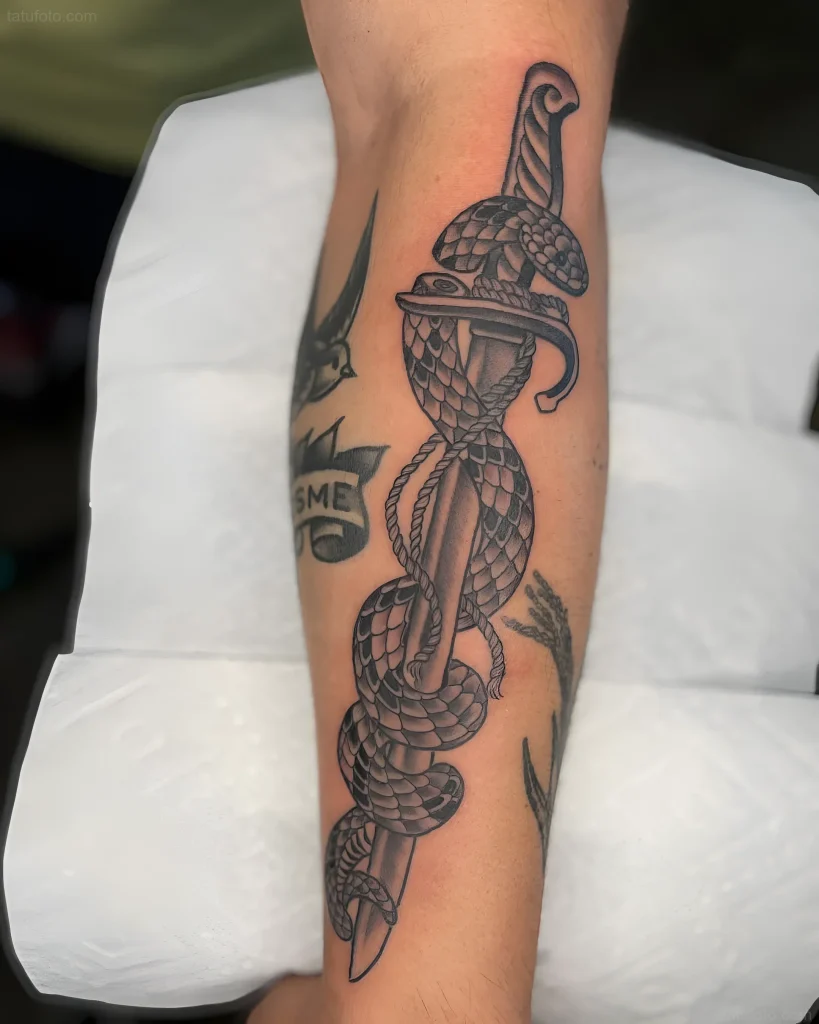
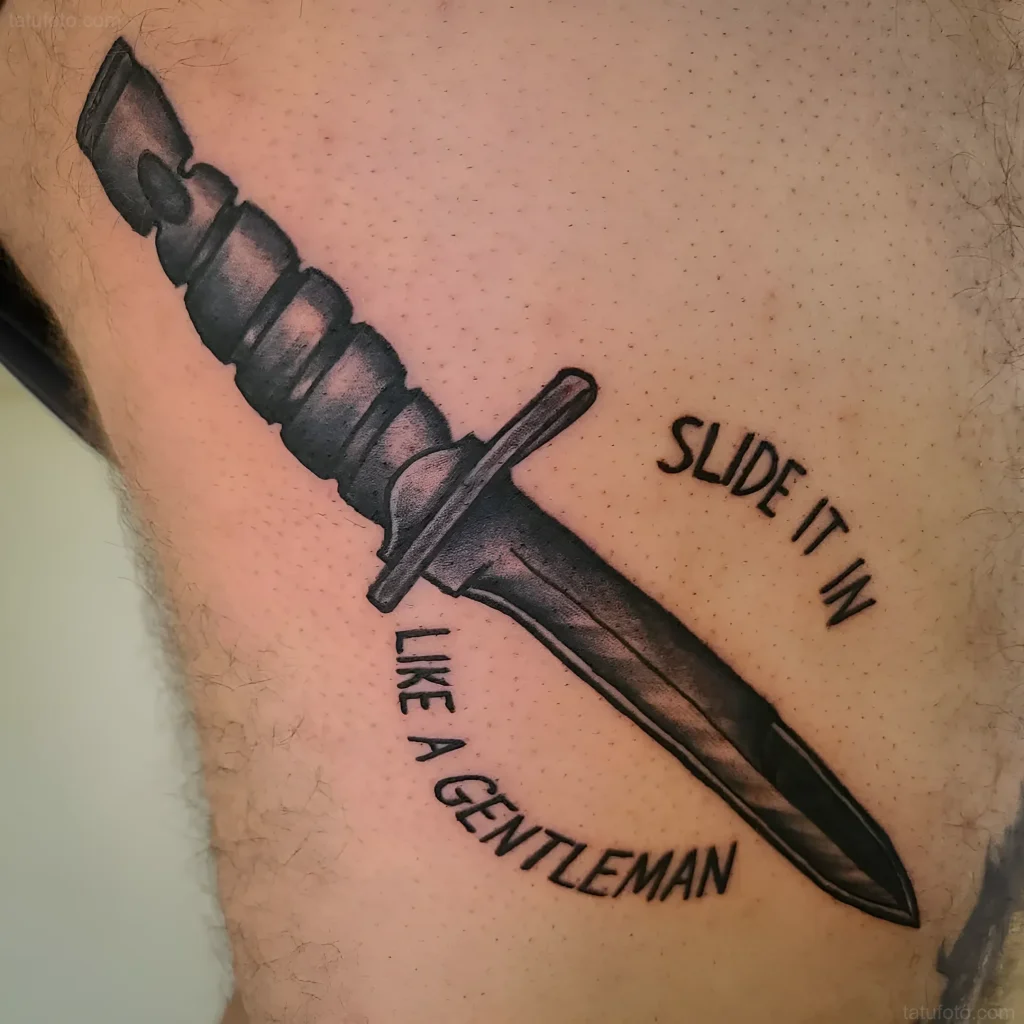
Main Meanings of a Bayonet Tattoo: Military Service, Protection, and Determination
As we mentioned, the bayonet tattoo has a wide range of meanings, but three of them are central and most common. Let’s examine them in more detail so you can find what resonates specifically with you.
Military Service and Memory
- Symbol of Affiliation: For active service members and veterans, a bayonet tattoo is often a direct reference to their service. It is a way to express pride in their profession, the path they have taken, and their affiliation with the warrior brotherhood. It may symbolize a specific branch of service if the bayonet is depicted with a unit emblem or colors.
- Memory of Comrades and the Fallen: The bayonet can serve as a memorial tattoo dedicated to the memory of those killed in action or deceased comrades. In such cases, it is often supplemented with dates, names, or other elements that recall specific people or events. It is a way to preserve the memory of those who gave their lives for duty.
- Reflection of Personal Experience: For many veterans, the bayonet is not just a symbol but a personal reminder of what they have experienced. Of the hardships, dangers, but also of the strength of spirit, of camaraderie, of the moments that shaped their personality. It can be a symbol of overcoming and survival.
- Respect for Military Traditions: The tattoo can express deep respect for the history of the army, its traditions, and values. It is a way to show that the person honors and remembers the feats of their ancestors and is ready to follow their example.

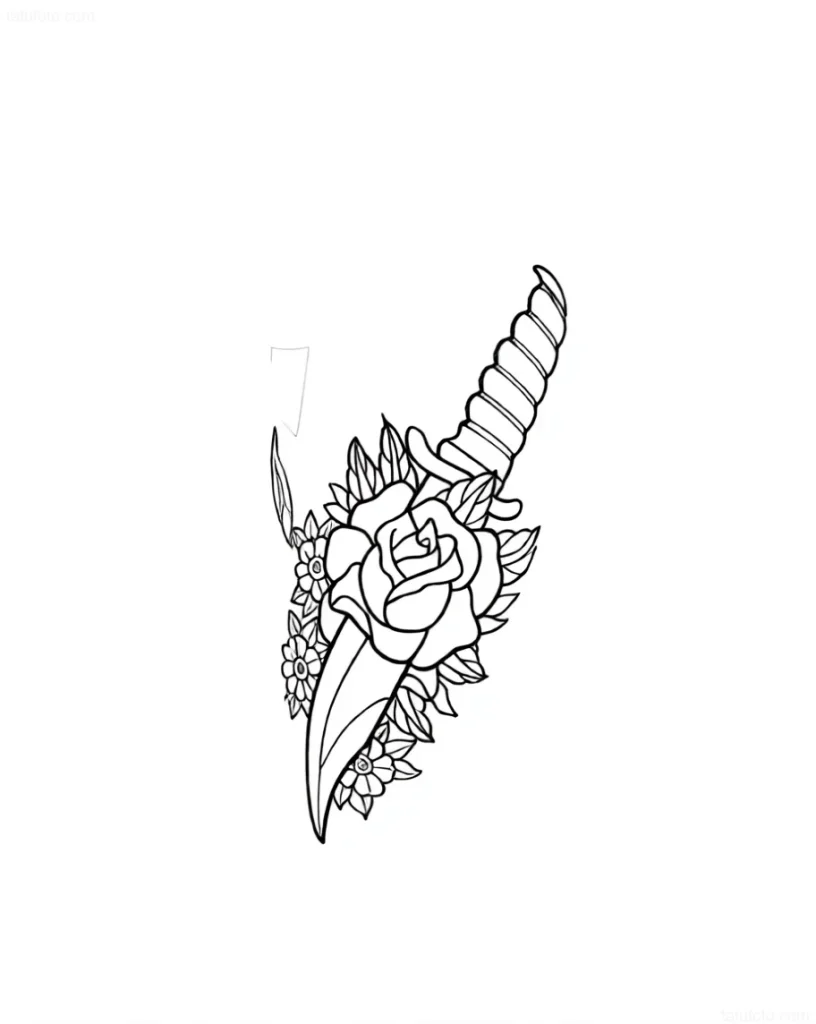

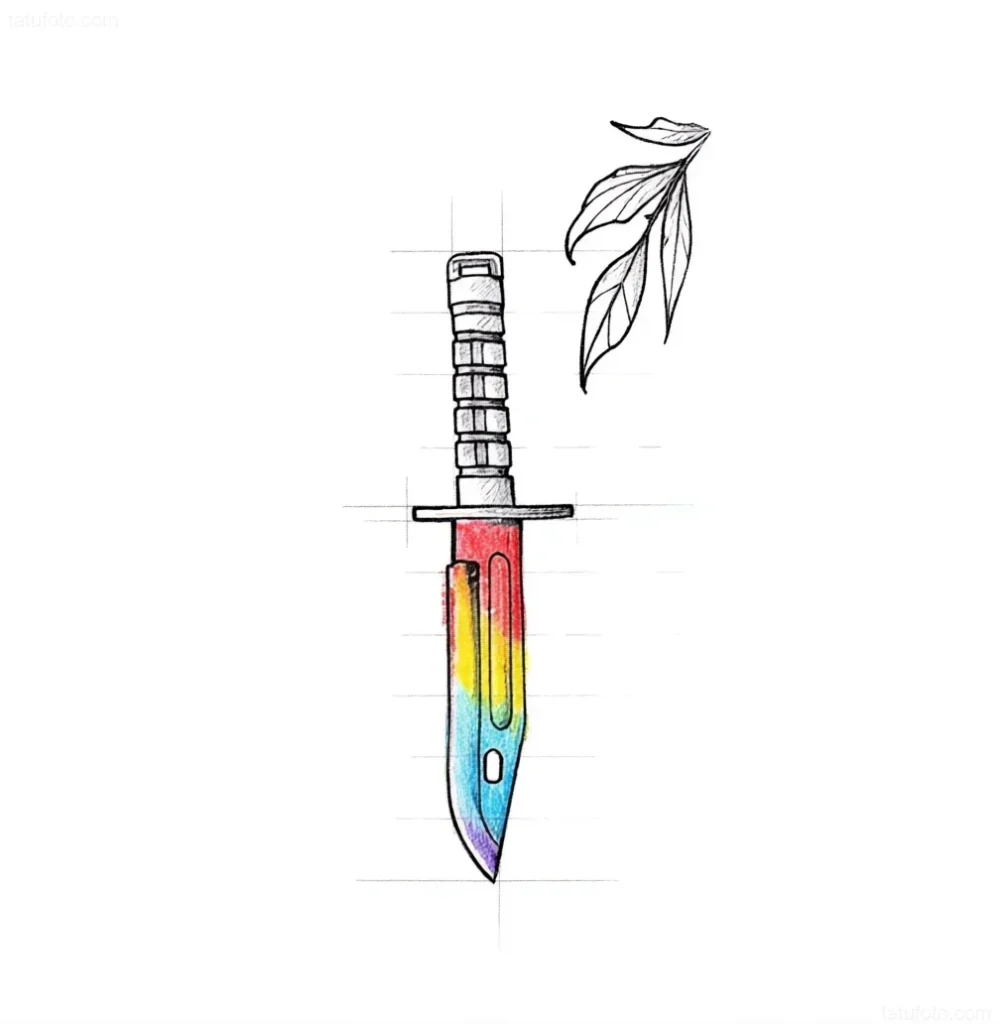
Protection and Amulet
- Readiness for Self-Defense: The bayonet as a symbol of protection speaks to the readiness of its wearer for active measures in case of threat. This is not necessarily aggression, but rather a warning that the person will not allow encroachments on their boundaries, on their loved ones.
- Amulet Against Evil: In a mystical sense, sharp weapons are often viewed as protection against evil forces and negative energy. A bayonet tattoo can function as a talisman, warding off troubles and misfortunes.
- Protection of Values and Principles: This symbol can mean that the person is ready to stand guard over their beliefs, their truth, their honor. They will not allow anyone to trample on what is sacred to them. It is a symbol of inner fortitude and inviolability.
- Family Protection: Often, the bayonet is combined with images symbolizing family – names of children, birth dates, images of guardian animals. In this context, it signifies the readiness of the head of the family or any member to stand up for their relatives.
Determination and Uncompromisingness
- Unshakeable Will: The bayonet is a symbol of absolute determination. It means that the person has made a decision and will not deviate from the path, despite obstacles. It is a symbol of unbending will and purposefulness.
- The Last Argument: In a metaphorical sense, the bayonet is the “last argument” in a dispute or struggle. This means that the person is prepared to use all available means to achieve their goal when other methods are exhausted. This does not imply recklessness, but rather a strategic readiness for extreme measures.
- No Retreat: Historically, the bayonet was used in situations where there was nowhere to retreat. Therefore, the tattoo can symbolize a life stance where a person never gives up and always fights to the end, leaving no path for retreat.
- Purposefulness: For people who set ambitious goals and are ready to put forth maximum effort to achieve them, the bayonet can be a powerful motivator, reminding them of the need to be decisive and persistent.
Thus, a bayonet tattoo can be both a direct reflection of a military biography and a deep symbol of personal qualities and life philosophy.
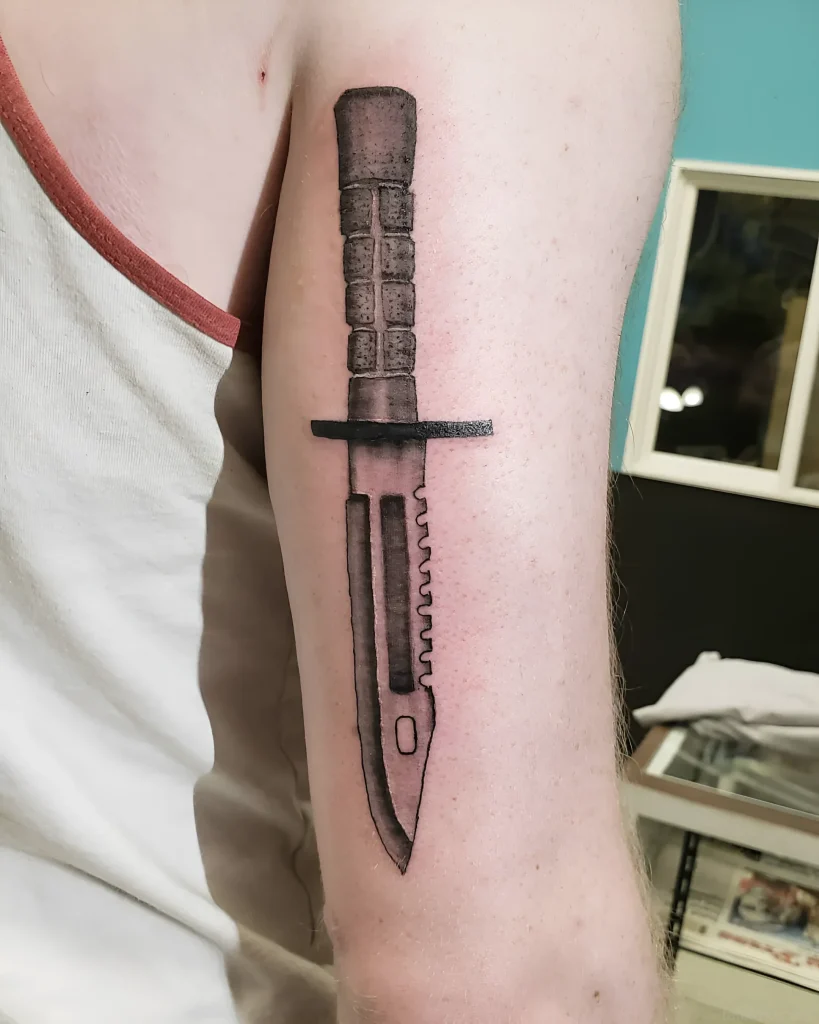
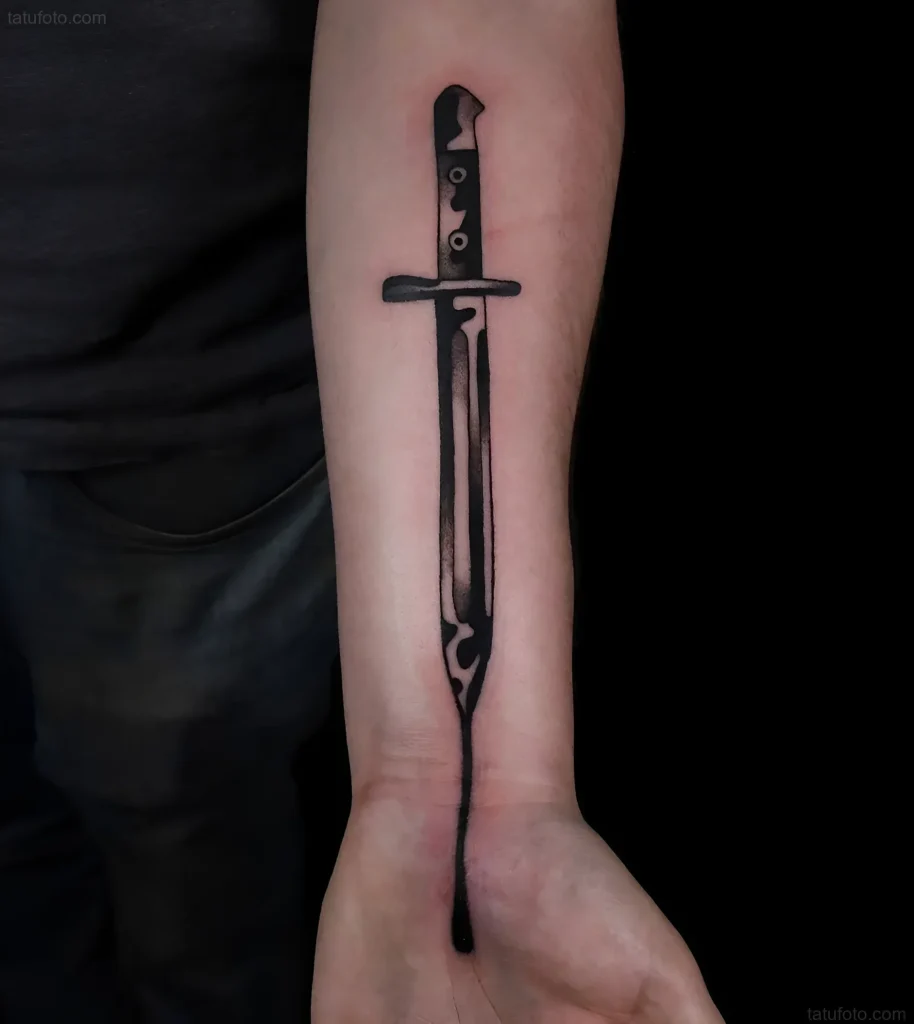
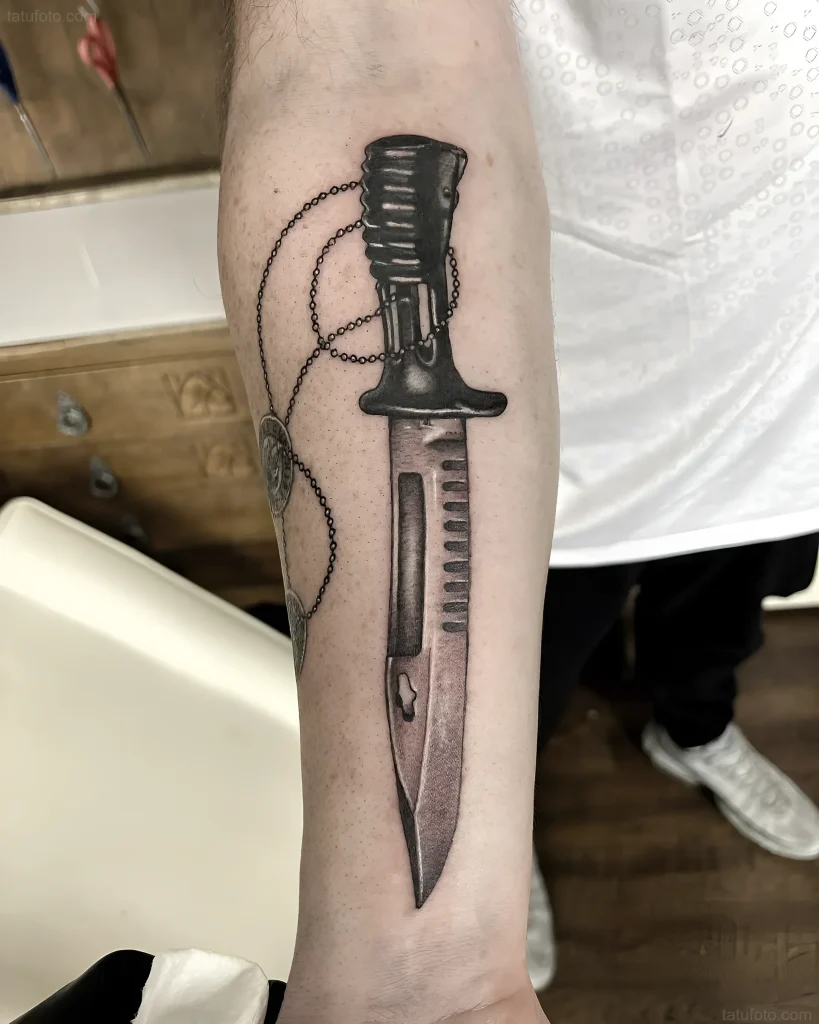
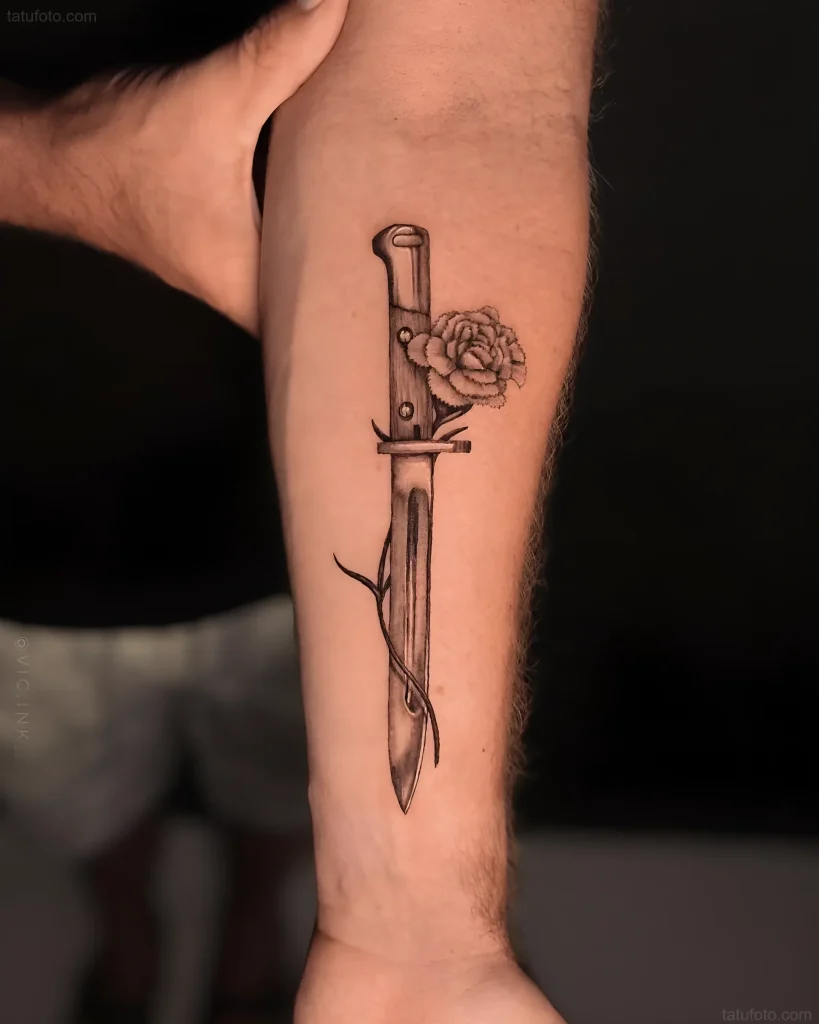
Styles of Bayonet Tattoos: From Realism to Minimalism
The choice of style plays a key role in how your bayonet tattoo will be perceived and what additional semantic nuances it will acquire. Each style offers its own unique way of depiction, refined by masters to perfection.
- Realism:
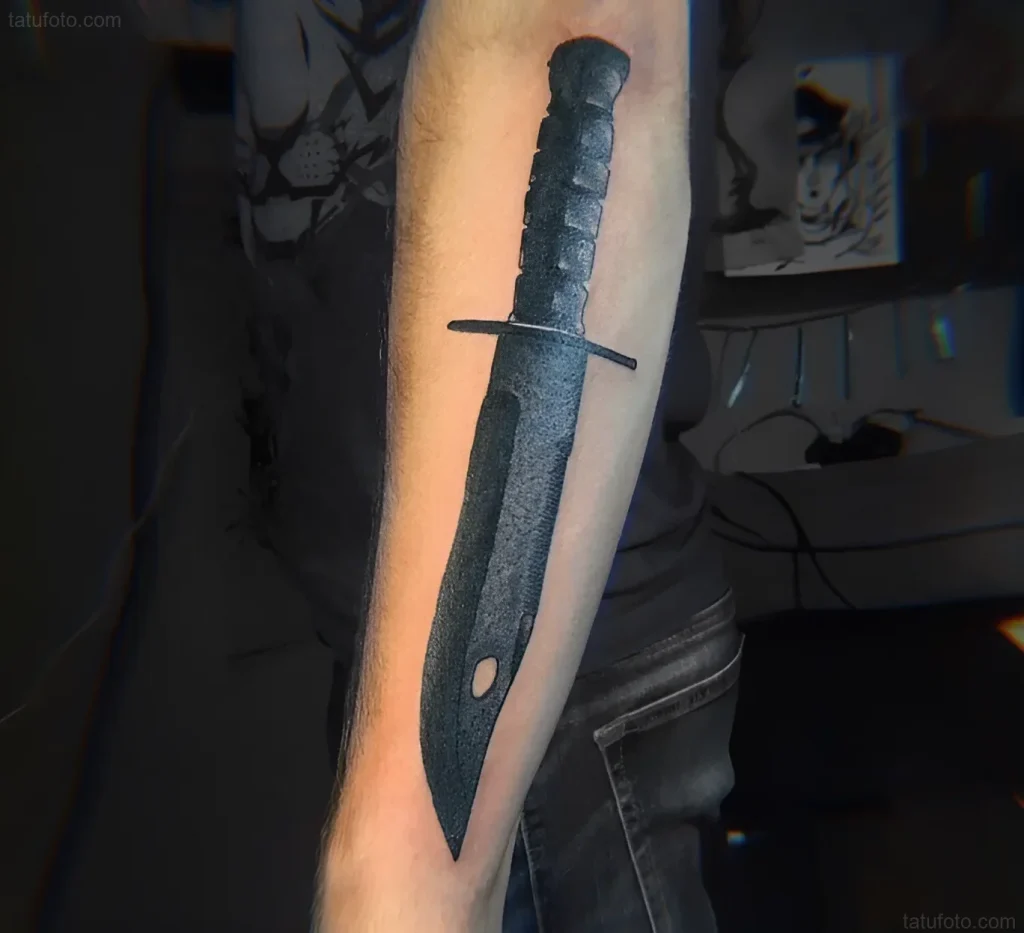
Description: A maximally accurate and detailed depiction of a bayonet, striving for photographic accuracy. All the smallest details are conveyed: metal texture, highlights, shadows, scuffs, signs of use. Realistic background elements such as camouflage, military gear, flags, battlefield landscapes are often used.
Symbolism: Ideal for those who want to immortalize a specific historical moment, a bayonet model (e.g., AK-47, M9), or convey a sense of presence. Emphasizes authenticity, memory of real events, deep connection to military history or personal experience. - Traditional (Old School):
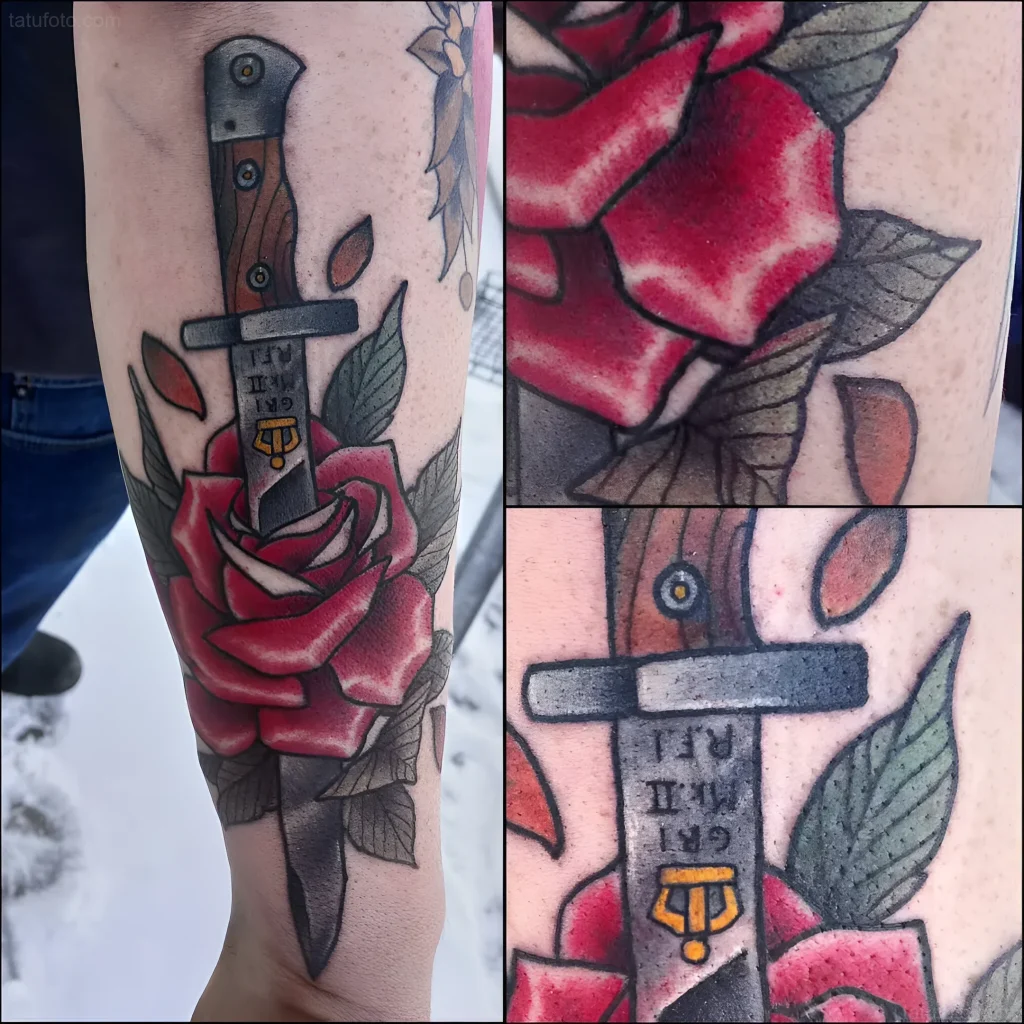
Description: Characterized by clear, thick outlines, rich but limited colors (red, yellow, green, blue, black), and simplified forms. The bayonet is often depicted in combination with classic old-school elements: roses, skulls, banners with inscriptions, anchors.
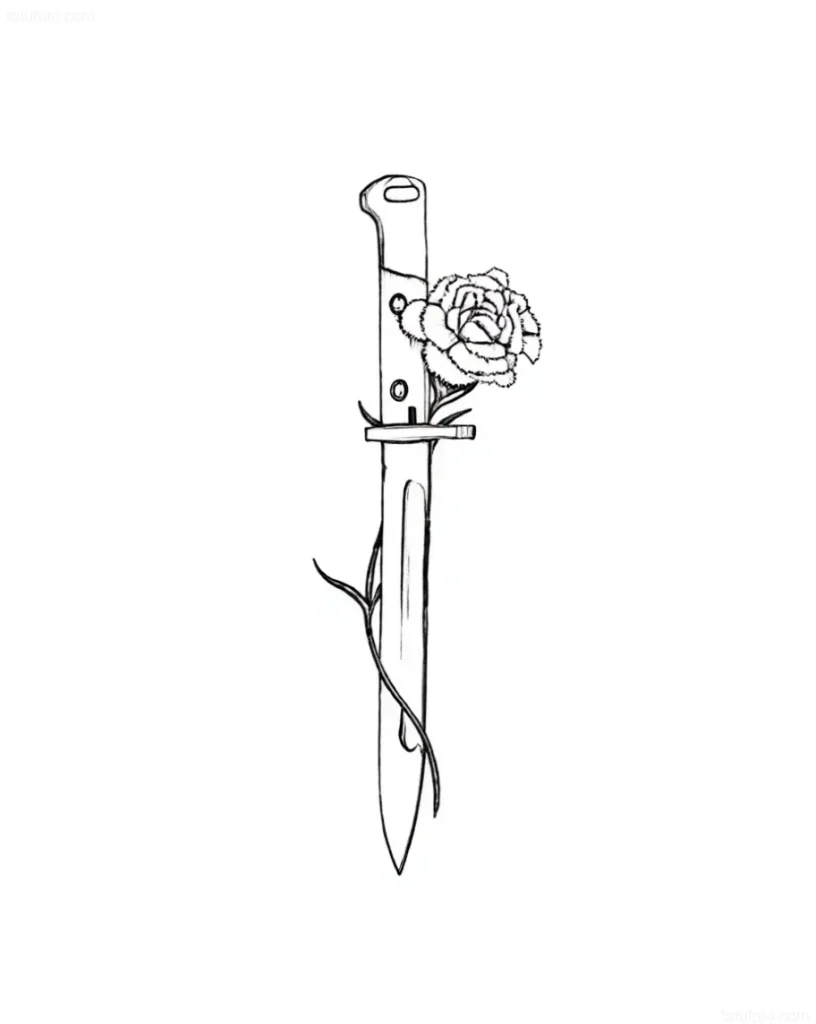
Symbolism: Gives the tattoo a more classic, timeless look. Can symbolize resilience, devotion to tradition, the undying value of courage. Combination with a rose, for example, can signify ‘beauty in danger’ or ‘a life lived on the edge.’ - Neo-Traditional (Neo-Trad):
Description: This is a modernized version of the traditional style, combining its clear outlines and richness with more complex details, volumetric shapes, an expanded color palette, and elements of realism. The bayonet here can be more dynamic, with expressive highlights and shadows.
Symbolism: Allows for a more artistic and modern depiction while maintaining the recognizability of the traditional style. Ideal for those who want to express deep meaning through a more refined and detailed aesthetic. - Graphic/Linework:
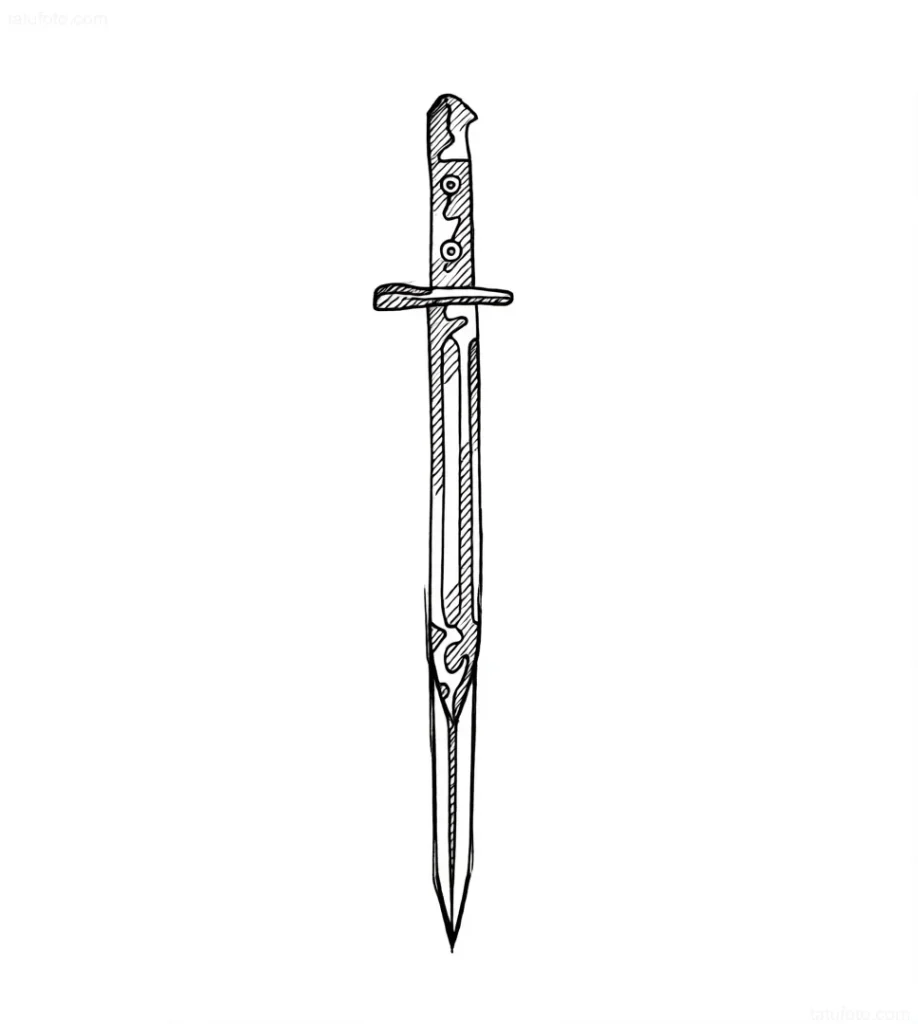
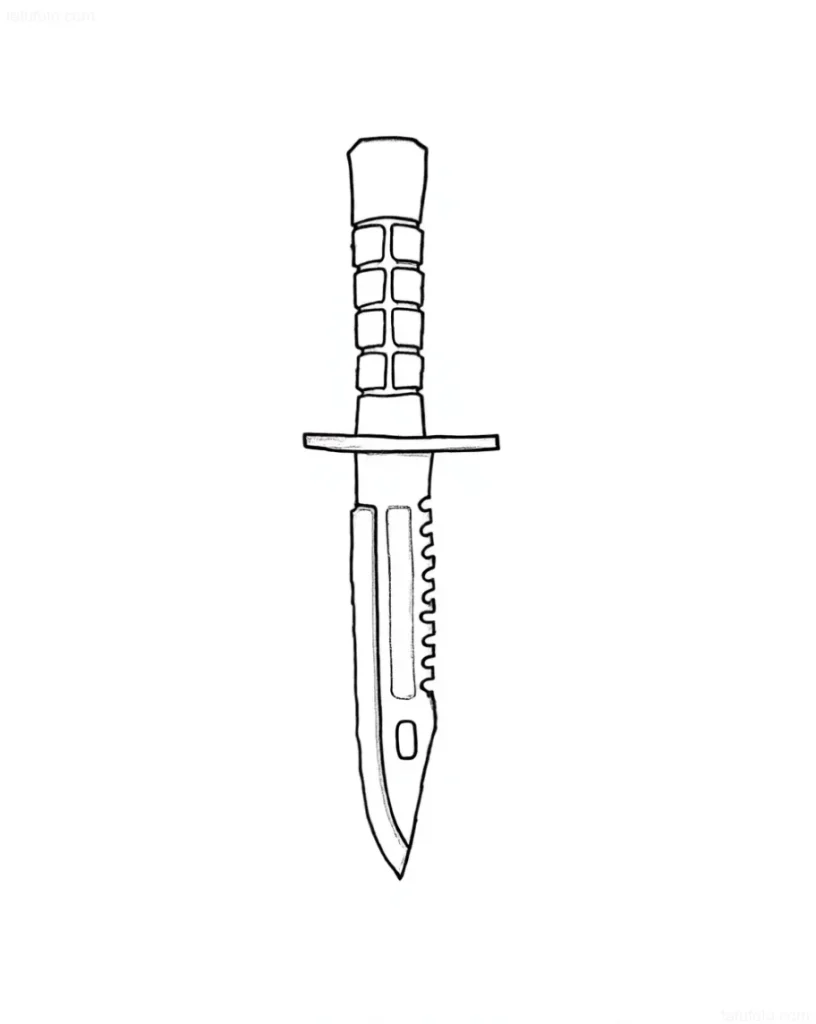
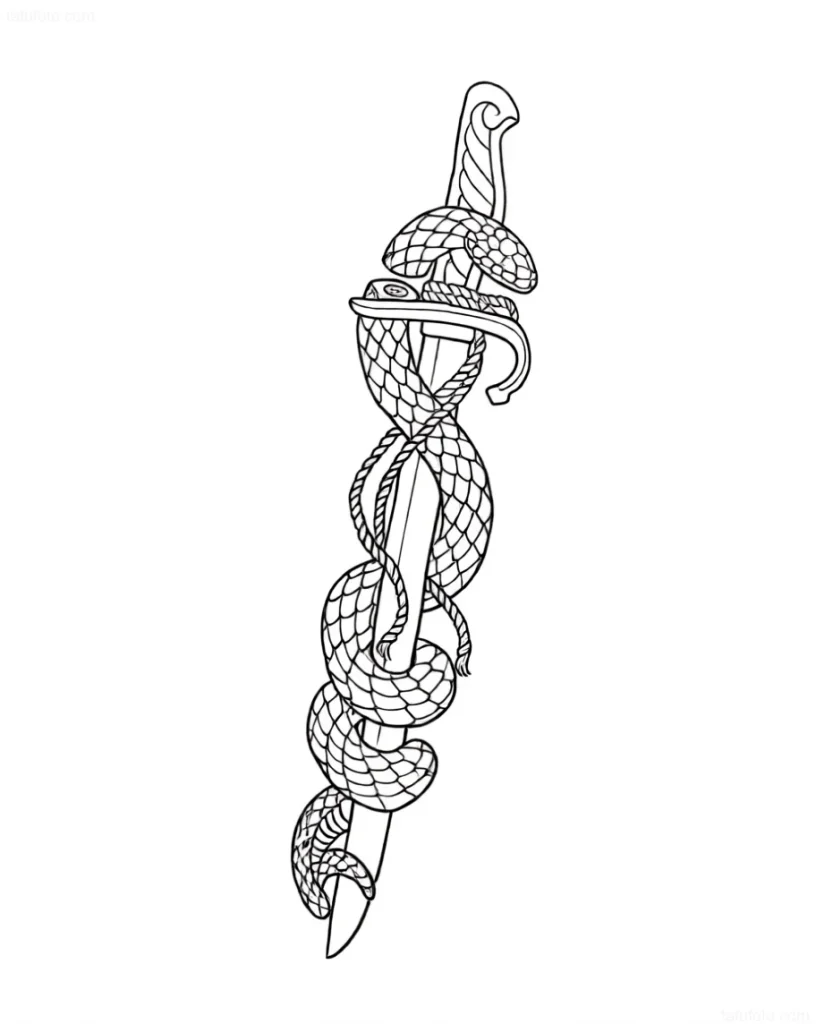
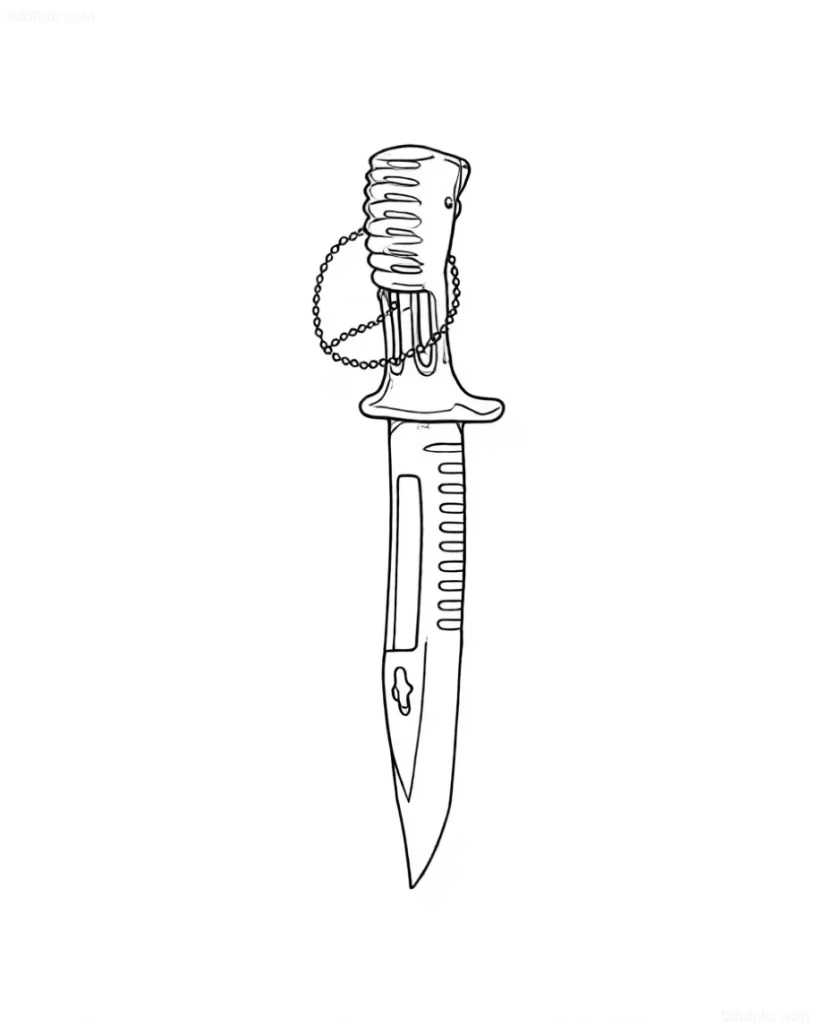
Description: Based on the use of clean lines and geometric shapes. The bayonet can be depicted schematically, focusing on the contours and silhouette. Often only black ink is used.
Symbolism: Suitable for those who prefer a minimalist yet expressive approach. Symbolizes clarity of thought, precision of intent, the fundamental nature of principles. Can look more abstract, focusing on the idea rather than the specific object.

- Blackwork/Dotwork:
Description: Blackwork uses solid black fills, creating a powerful, dramatic effect. Dotwork creates images from numerous dots, giving the tattoo a unique texture and depth. These styles are often combined.
Symbolism: These styles give the bayonet tattoo special power and graphic quality. Blackwork can symbolize severity, steadfastness, might. Dotwork adds mysticism and depth, creating the feeling of an ancient symbol. - Chicano:
Description: A style originating in the US Latin American culture, characterized by black and gray tones, fine lines, and high detail. Often includes portraits, religious motifs, inscriptions, roses, dice. The bayonet in this style can be part of a larger composition, such as with an image of a soldier girl or a skull.
Symbolism: Gives the bayonet tattoo a touch of street culture, the struggle for survival, honor, and loyalty to one’s circle. It can symbolize the protection of family and community in difficult living conditions. - Trash Polka:
Description: A unique style that combines realistic elements with abstract strokes, splashes, inscriptions, and red and black colors. Creates a feeling of chaos, dynamism, expression.
Symbolism: A bayonet in the Trash Polka style will look aggressive, provocative, symbolizing rebellion, protest, desperate struggle, or destructive power. Ideal for those who want to express their individuality and an unconventional view of the world.
The choice of style should harmonize with the personal meaning you invest in the tattoo, as well as your aesthetic preferences. Discuss this with your artist so they can suggest the optimal solution.
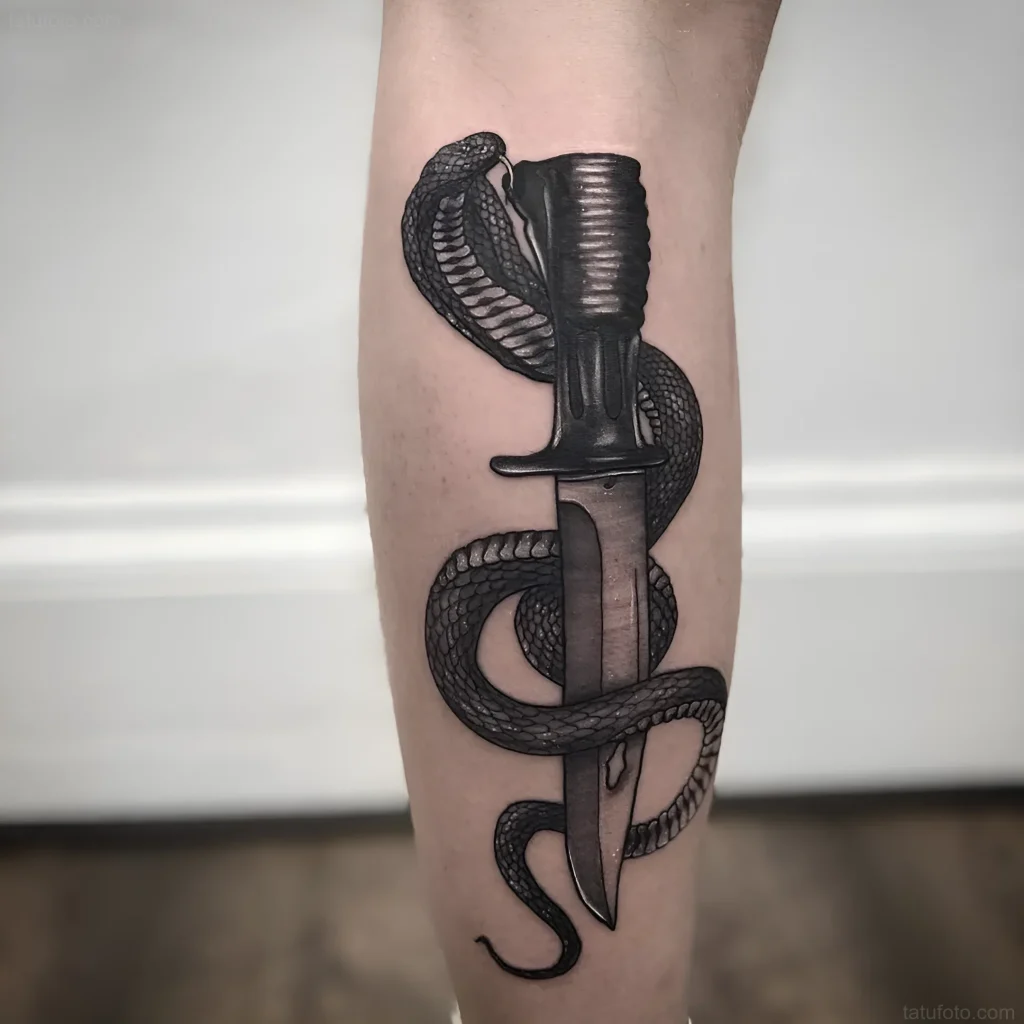
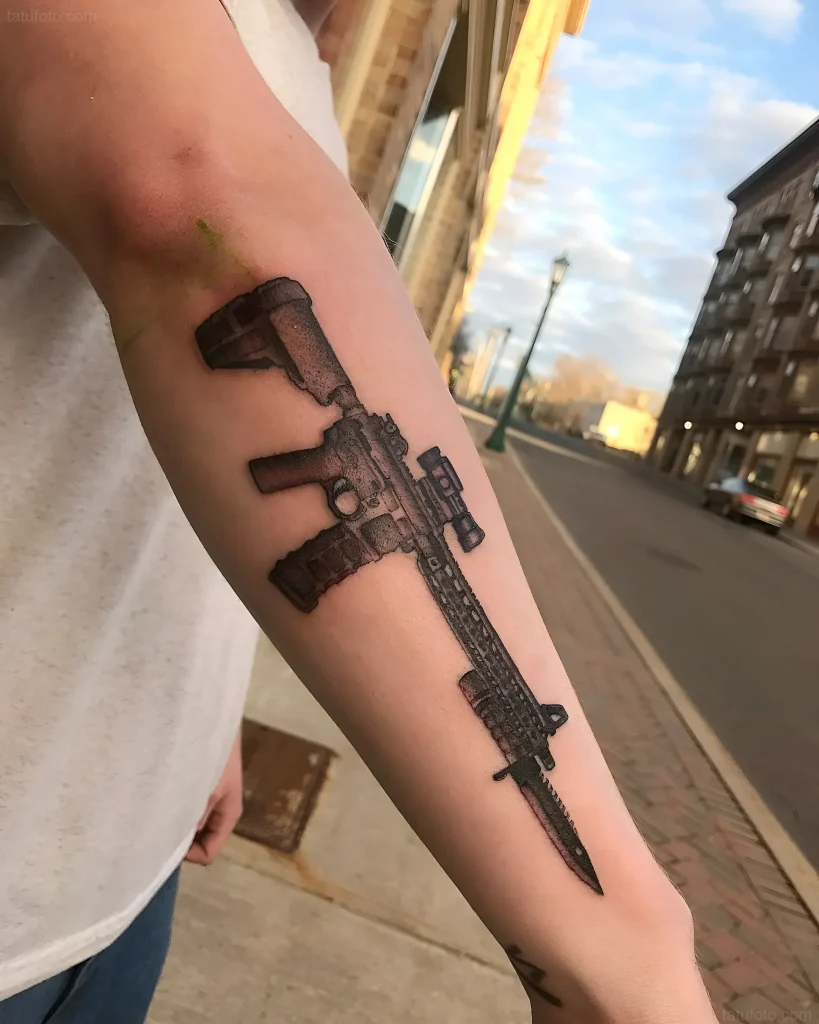
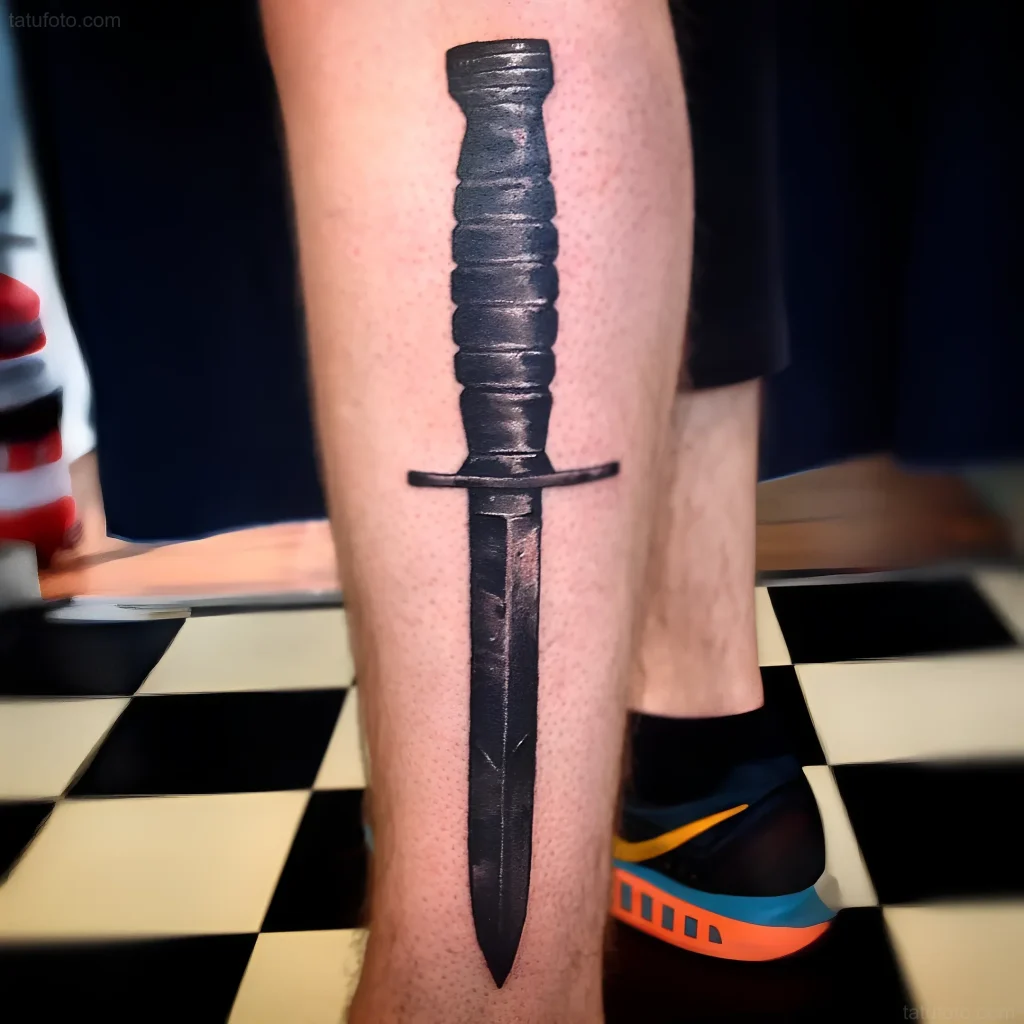
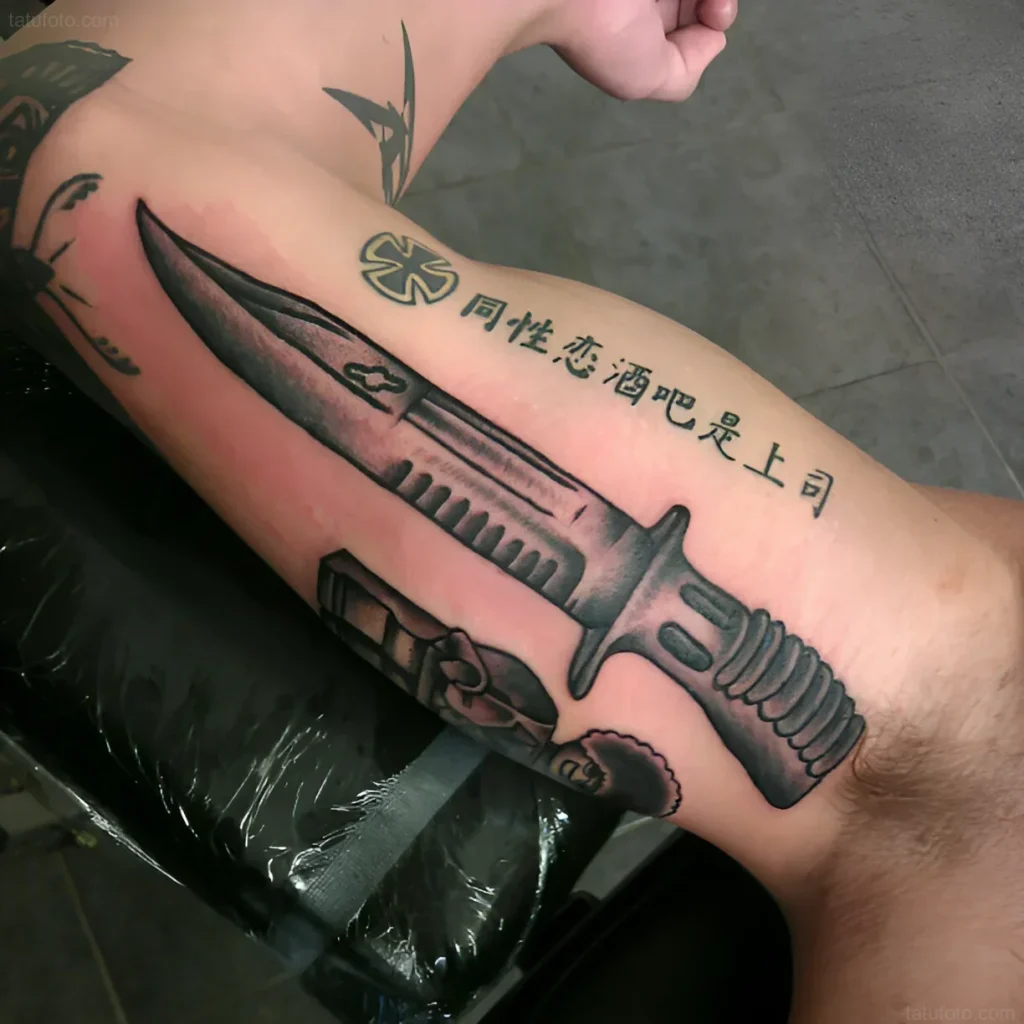
Best Locations for a Bayonet Tattoo on the Body: Showcasing Strength and Character
The placement of a bayonet tattoo on the body has as much significance as the design itself. It can enhance or change the symbolism, making the tattoo more personal or, conversely, a public statement. The choice of location depends on the size of the design, its detail, and how openly you want to display this powerful symbol.
- Forearm:
Meaning: One of the most popular places for a bayonet tattoo. The forearm is a body part that is often visible, symbolizing readiness for action, strength, determination. A tattoo here is easily seen and can serve as a constant reminder of your principles.
Advantages: Excellent surface for detailed images. Allows for easy display or concealment of the tattoo when necessary. - Shoulder/Deltoid:
Meaning: The shoulder is associated with strength, protection, responsibility. A bayonet tattoo here can symbolize the “burden” of responsibility that a person is ready to carry, or their ability to protect.
Advantages: Large area allows for complex compositions with additional elements (flags, skulls, other symbols). Less visible in daily life than the forearm, but easily displayed. - Back:
Meaning: The back is a large “canvas” often used for large-scale and deeply personal tattoos. A bayonet on the back can symbolize the fundamental basis of character, hidden strength, the “support” you rely on.
Advantages: Allows for a very large, detailed design, possibly combined with an entire scene or other symbols. A back tattoo is usually a very personal message, not intended for public viewing. - Chest:
Meaning: A tattoo on the chest, especially close to the heart, always carries a very personal and emotional meaning. A bayonet here can symbolize the protection of the most sacred, deep devotion to one’s ideals, memory of something very personal and important.
Advantages: Ideal for symbols that have deep personal significance. Suitable for medium and large images.

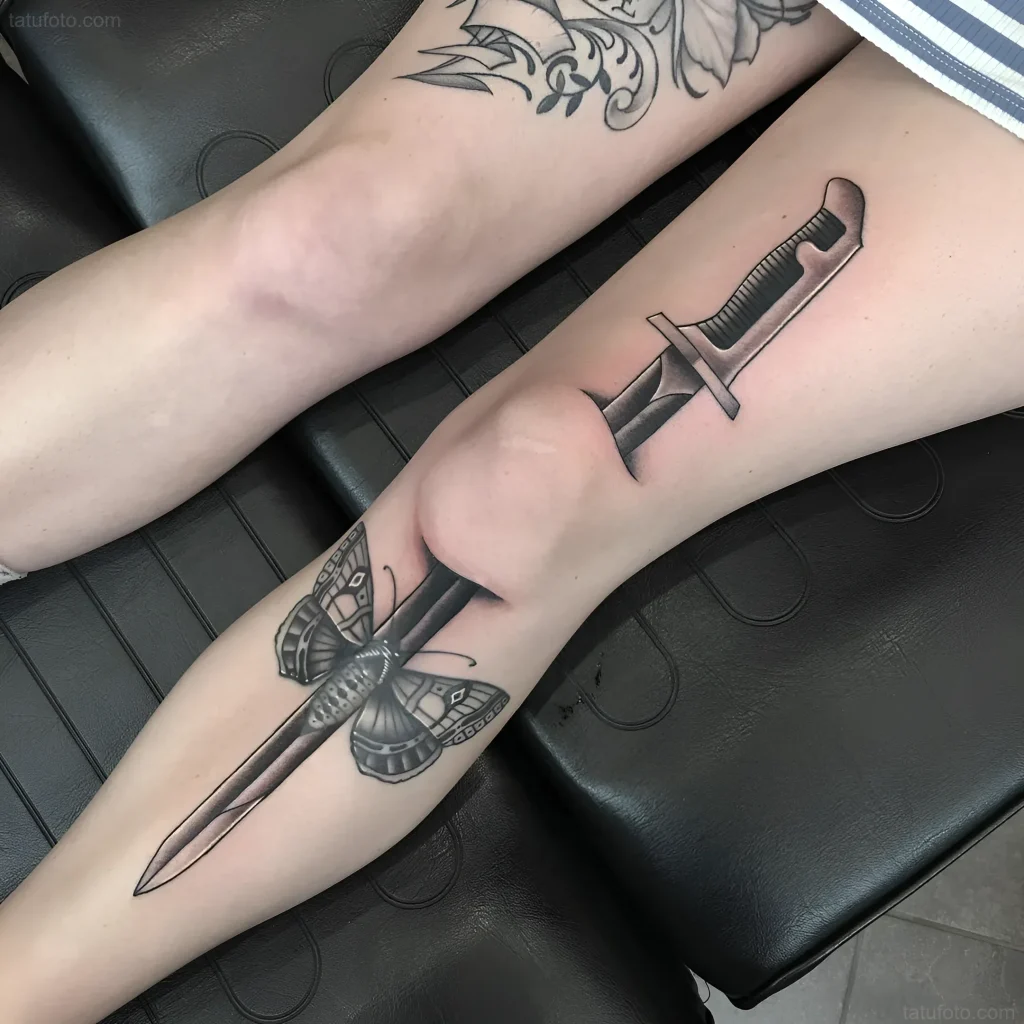
- Calf/Thigh:
Meaning: Tattoos on the legs are generally larger and less visible in daily life. A bayonet on the calf or thigh can symbolize a “solid foundation,” moving forward, readiness to fight to the end. The thigh, as a body part associated with strength, also emphasizes the power of the symbol.
Advantages: An excellent choice for those who want a large but not always visible tattoo. Allows for long, elongated designs. - Ribs:
Meaning: A tattoo on the ribs is considered one of the most painful, so choosing this location already speaks to spiritual strength and determination. A bayonet here can symbolize deep, internal strength and resilience, possibly hidden from outsiders, but no less powerful.
Advantages: A very personal and intimate place for a tattoo. Suitable for elongated, vertical compositions. - Neck (Rarely):
Meaning: A neck tattoo is a bold and very noticeable statement. A bayonet here can symbolize an open demonstration of strength, challenge, readiness for confrontation. This is the choice for those who are not afraid to attract attention and openly declare their principles.