In the world of tattoos, where every symbol carries deep meaning and personal history, sometimes the most ordinary objects acquire unexpected depth. Today, we delve into the world of button tattoos – at first glance, a simple clothing element, which, however, can become a powerful and multifaceted message on your skin. This modest yet ubiquitous item, firmly integrated into our daily lives, reveals itself in a completely new light in tattoo art, offering a rich palette of meanings and interpretations.
If you’ve ever thought about a tattoo that is both unique, personal, and meaningful, yet not loud or overly complex, a button tattoo might be your ideal choice. On Tatufoto.com, we strive to provide you with the most comprehensive information on the meaning and cultural context of tattoos, and today we meticulously explore this amazing symbol.
Button Tattoo: Meaning and Symbolism in Tattoo Art

A button tattoo is not just a fashion statement or an aesthetic adornment. It is a deeply personal and multilayered symbol capable of conveying a wide range of emotions, ideas, and life principles. At first glance, a button is associated with something ordinary, functional, but it is precisely in this simplicity that its strength and universality lie. In the context of a tattoo, it becomes a metaphor for many aspects of human existence, often related to concepts of connection, completion, individuality, and even luck.
For some, a button tattoo can symbolize connection: be it an unbreakable thread connecting a person to their loved ones, or a deep attachment to a specific place, time, or idea. It can be a reminder of family ties, friendship, love, or even a connection with oneself, with one’s roots and beliefs. A button, fastening pieces of clothing, becomes a symbol on the skin of what binds the soul and heart.
For others, its meaning may be related to completion or closure. Just as a button fastens clothing, a tattoo can symbolize the end of a certain stage in life, the completion of a difficult period, reconciliation with the past, or the resolve to move forward, leaving the unnecessary behind. It can be a powerful symbol of healing, letting go, and starting a new chapter.
No less important is the aspect of individuality. In a world of mass production, each button, despite its similarity to others, is a unique element performing its function. In a tattoo, this can reflect a person’s desire to emphasize their uniqueness, their “special detail” that sets them apart from others. It is a symbol that even the simplest elements can possess deep personal meaning and individual value.
Furthermore, a button tattoo can carry notes of nostalgia, memory of childhood, of dear people who are gone but have left their mark. An old, vintage button can become a symbol of connection to the past, to one’s family history, or to important life moments. Its simplicity allows it to blend organically into a personal story without drawing all the attention, yet remaining a significant accent.
The History of the Button: From Ornament to Functional Symbol

Understanding the historical journey of the button allows for a deeper appreciation of its symbolic power in tattoos. Initially, a button was not so much a functional element as an ornament and a status marker. Ancient civilizations, such as the Indus Valley and China, used buttons made of shells and bone long before they acquired their usual purpose. In those times, they served as amulets, talismans, or simply decorative elements, demonstrating the wealth and status of the owner.
- Ancient World: The earliest buttons found by archaeologists date back to around 2000 BC in the Indus Valley. They were made of shells, had holes, and were used as decorative elements rather than for fastening clothes. Their symbolism was associated with protection and adornment, echoing the idea of a tattoo as a talisman or personal decoration.
- Middle Ages: In Europe, buttons acquired a functional meaning around the 13th century when they began to be used for fastening clothes. However, they remained a luxury item. Buttons were made of precious metals, adorned with stones, and served as an indicator of high social status. Kings and nobles could have hundreds of buttons on a single outfit. This historical significance of the button as a symbol of status and wealth can be reflected in a tattoo, emphasizing a sense of self-worth or important achievements.

- Renaissance and Early Modern Period: With the development of manufactories, buttons became more accessible, but their variety and craftsmanship still allowed them to be expressive elements. Military buttons, for example, often bore the coats of arms or symbols of regiments, becoming a sign of belonging and honor. This meaning of belonging to something, loyalty to ideals or a group, can be transferred to a button tattoo.
- Modern Times: In the 20th century, the button became a ubiquitous and functional element. However, its symbolic meaning did not disappear. It remained in folklore, proverbs, and art as a symbol of connection, completion, and attention to detail. It is this centuries-old history, during which the button evolved from a magical amulet to a functional detail, that makes it so rich in meaning for tattoos.
Thus, by choosing a button tattoo, you are not just getting a drawing on your skin, but connecting to a centuries-old history of symbolism, where this modest item served as a talisman, a mark of status, a symbol of belonging, and finally, as a metaphor for connection and completion.
Main Meanings of Button Tattoos: What Lies Behind a Simple Element

As we’ve already noted, a button tattoo possesses amazing depth and can be interpreted in various ways depending on personal context and execution details. Let’s examine the most common and significant interpretations of this symbol:
- Connection and Unity: This is one of the most obvious meanings. A button connects two pieces of fabric, creating a single whole. In a tattoo, this can symbolize:
- Connection with Loved Ones: a reminder of family, friends, a partner. Often, two buttons or a button with a thread are chosen, symbolizing an unbreakable bond.
- Inner Harmony: connecting different aspects of personality, seeking balance.
- Belonging: connection to a specific group, community, or idea.
- Completion and Closure: A button fastens, closes, concludes. This is a powerful symbol for those who have gone through an important life stage:
- End of a Chapter: symbolizes saying goodbye to the past, completing a difficult period or relationship.
- Acceptance and Healing: a sign that a person is ready to move on, leaving behind pain or unresolved issues.
- Achievement of a Goal: completion of a project, education, an important career milestone.
- Individuality and Uniqueness: Each button, though part of a whole, has its own character. This meaning emphasizes:
- Personal Uniqueness: a reminder that you are unique, with your own strengths and peculiarities.
- Self-Expression: the desire to be yourself, not to blend in with the crowd.
- Attention to Detail: appreciating the little things that make life special.
- Luck and Protection: In some cultures and beliefs, buttons are associated with luck. A lost button could foreshadow changes, and a found one could promise good fortune. In a tattoo, this can be:
- Personal Talisman: a symbol that brings luck and protects against adversity.
- Hope for the Best: faith in a favorable outcome of a situation.
- Memory and Nostalgia: Old, vintage buttons often hold stories. A tattoo can be:
- A Childhood Memory: buttons on a favorite toy or piece of clothing.
- A Memory of a Person: a button associated with a dear departed person.
- A Symbol of Important Moments: an anchor for memories of significant events.
- Secrecy and Mystery: The expression “buttoned up” means to keep a secret. In a tattoo, this can be:
- A Personal Secret: a symbol that there is something sacred that you keep only for yourself.
- Reservedness: a person who is not quick to open their heart to everyone.
- Simplicity and Modesty: A button is a simple yet necessary element. A tattoo can reflect:
- The Value of Simple Things: the ability to be happy with little, to appreciate the basics.
- Modesty: a lack of desire to flaunt one’s achievements or qualities.
The choice of a specific meaning or a combination thereof depends entirely on you. The tattoo artist will help bring your idea to life, selecting a style and details that most accurately convey the desired meaning.
Button Tattoo Styles: From Realism to Minimalism

The visual embodiment of a button tattoo plays a key role in revealing its symbolism. The variety of styles allows everyone to find the perfect solution that harmonizes with personal preferences and the intended meaning. Let’s consider the main styles in which a button tattoo can be executed:
- Minimalism:
Characteristics: Simple lines, no unnecessary details, often monochrome. Focus on the silhouette of the button.
Meaning: In a minimalist style, the button becomes a pure symbol. It can emphasize the simplicity of connection, the clarity of intent to complete something, or the conciseness of individuality. Ideal for those who appreciate clean form and deep meaning without embellishments. For example, a thin outline button on the wrist can symbolize an unbreakable yet unobtrusive connection. - Realism:
Characteristics: Maximum accurate reproduction of the button, taking into account all details – material texture (wood, metal, mother-of-pearl), highlights, shadows, scuffs, and sometimes threads passing through the holes.
Meaning: A realistic button often carries a nostalgic or memorial character. It can be an exact replica of a button from a beloved grandmother’s sweater, an old military uniform, or a childhood toy. This approach enhances the meaning of memory, connection to the past, or a specific person. The detail of the threads can emphasize the fragility or strength of the connection. - Graphics and Linework:
Characteristics: Use of clear black lines, dots, and strokes to create the image. Shading elements may be added.
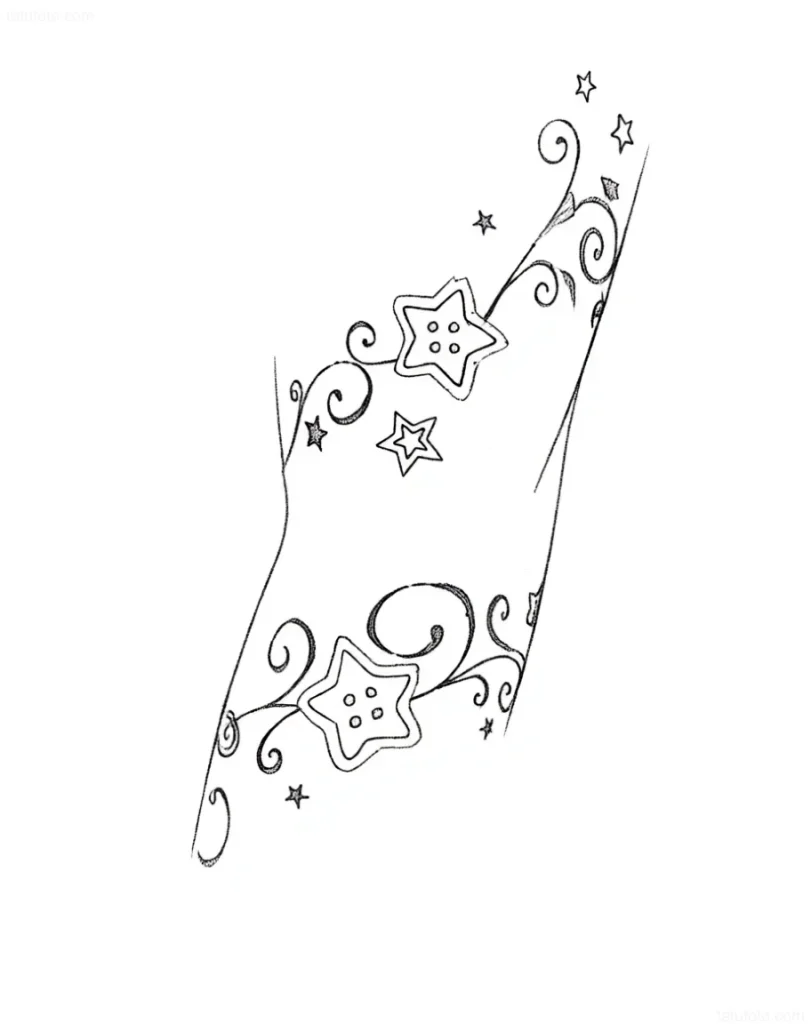
Meaning: This style gives the button an artistic, often illustrative look. Lines can be used to create a vintage, handmade effect. A linework button can look like a sketch, emphasizing the idea of incompleteness or, conversely, potential. It is often combined with other graphic elements, such as flowers or geometric shapes, to add additional layers of meaning. - Old School (Traditional) and New School:
Characteristics:
Old School: Bright, saturated colors, bold outlines, simplified forms.
New School: More voluminous images, dynamic lines, combination of bright colors with graffiti elements.
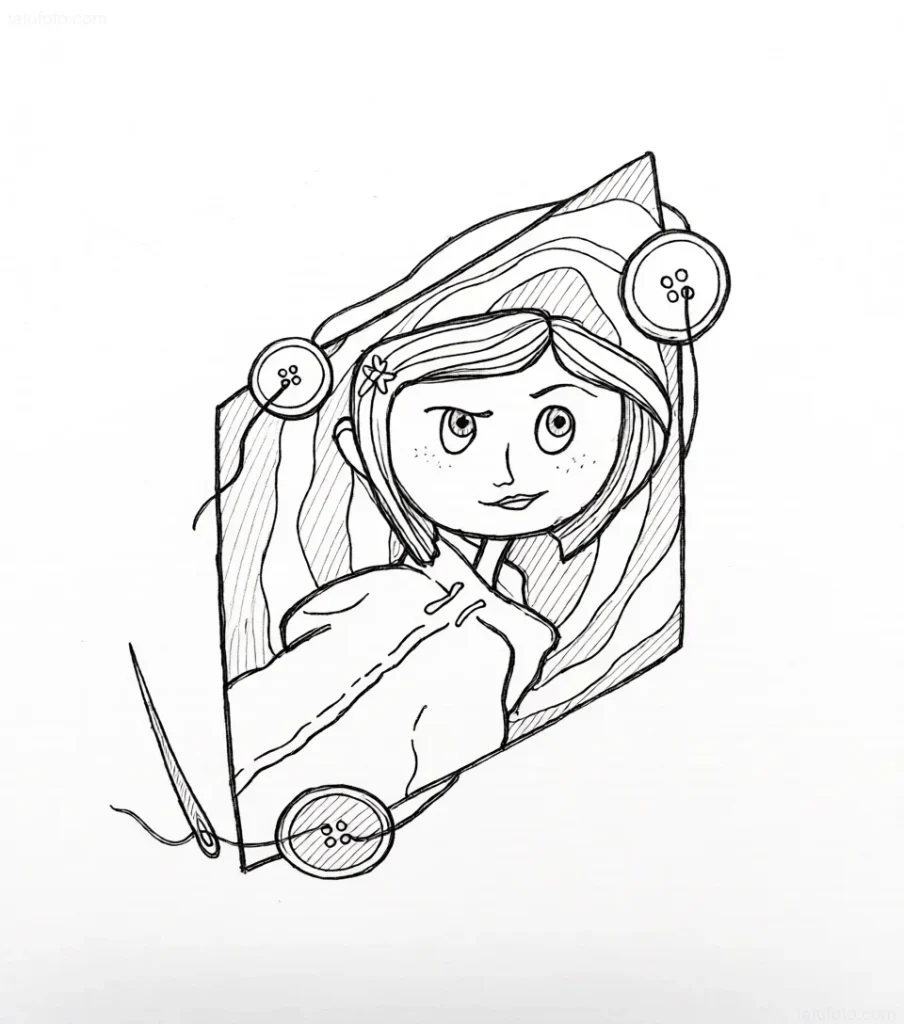
Meaning: In these styles, the button often becomes part of a larger composition. In old school, it can be an element of a sailor theme (e.g., on a cap band), symbolizing loyalty and belonging. In new school, a button can be stylized as a cartoon character or a fantasy element, giving it a playful, eccentric character, emphasizing uniqueness and freedom of self-expression.

- Watercolor:
Characteristics: Soft color transitions, blurred outlines, imitation of brush strokes and paint bleeding.
Meaning: A button in watercolor style looks light, airy, and often dreamy. It can symbolize the ephemerality of memories, the tenderness of a connection, or a lighthearted approach to completing stages. Suitable for those who want to convey the emotional, sensual side of the meaning. - Dotwork and Blackwork:
Characteristics:
Dotwork: The image is created using numerous dots, allowing for unique gradients and textures.
Blackwork: Use of large areas of black to create contrasting and expressive forms.
Meaning: Dotwork can give the button a mystical or meditative character, emphasizing the depth of its symbolism. Blackwork, on the other hand, makes the button a bold and graphic accent, which can symbolize decisiveness in completing something or firmness in one’s beliefs.
Choosing a style is not just a matter of aesthetics, but also a way to enhance or alter the interpretation of your button tattoo. Discuss with the artist which style best conveys your specific message.
Best Places for a Button Tattoo on the Body: Where the Symbol Will Reveal Its Potential

Choosing a location for a button tattoo is as important as the sketch itself, as the placement can enhance or even alter its meaning. A button is a universal symbol that looks equally good in miniature and in larger scale, offering wide possibilities for placement on the body.
- Wrist:
Meaning: One of the most popular places for a button tattoo. The wrist is a visible part of the body, making the tattoo a constant reminder. Here, a button can symbolize a constant connection with someone (like a thread binding you), the completion of an important stage, or a personal talisman that is always in sight. A miniature button on the inner wrist looks elegant and intimate. - Forearm:
Meaning: The forearm offers more space for a more detailed button or composition. Here, you can place a button that is part of a larger design (e.g., on a shirt sleeve, or as part of a narrative tattoo). It can symbolize the strength of connection, the completion of important work (if the arm is associated with labor), or a visible manifestation of your individuality. - Collarbone and Chest:
Meaning: These areas are close to the heart, making them ideal for tattoos with deep personal and emotional meaning. A button on the collarbone or chest can symbolize:- Connection with a Loved One: literally “close to the heart.”
- Completion of an Emotional Process: closing a wound, healing.
- Personal Talisman: protection of the most cherished.
A tattoo here is often more intimate and not always visible to others, which adds extra value for the owner.
- Neck (back):
Meaning: A button on the back of the head or neck can symbolize hidden meaning, a personal secret, or a protective charm that is “behind your back,” protecting the owner. It can also be a reference to “buttoned up” in the sense of keeping a secret or not wanting to show something off. - Ankle and Foot:
Meaning: These areas are associated with movement, paths, journeys. A button here can symbolize:- Completion of a Journey: the end of an important journey or life stage.
- Beginning of a New Path: symbolically “fastening” an old chapter and opening a new one.
- Lightness and Freedom: if the button looks light and minimalist.
- Finger:
Meaning: A miniature button on the finger is a subtle and delicate symbol. It can be very personal, barely noticeable, yet constantly reminding of its meaning. It is often chosen to symbolize an unbreakable bond (like a wedding ring), the completion of small but important tasks, or as a constant talisman that is always “at hand.” - Behind the Ear:
Meaning: A small tattoo behind the ear often symbolizes something personal that you want to “hear” or remember constantly. A button here can be a subtle reminder of an important connection, completion, or special individuality.
When choosing a location, be sure to consider the size and detail of the tattoo. A realistic button with many details will require more space than a minimalist outline drawing. Discuss with your artist not only the aesthetics but also the practicality of the chosen location, and how it will affect the perception of the meaning of your unique tattoo.
Tips for Choosing and Caring for a Button Tattoo: Practical Recommendations

Choosing and subsequently caring for a button tattoo, like any other tattoo, is crucial for preserving its beauty and symbolic significance for years to come. Here are some practical tips to help you through this process.
Choosing a Sketch and Artist
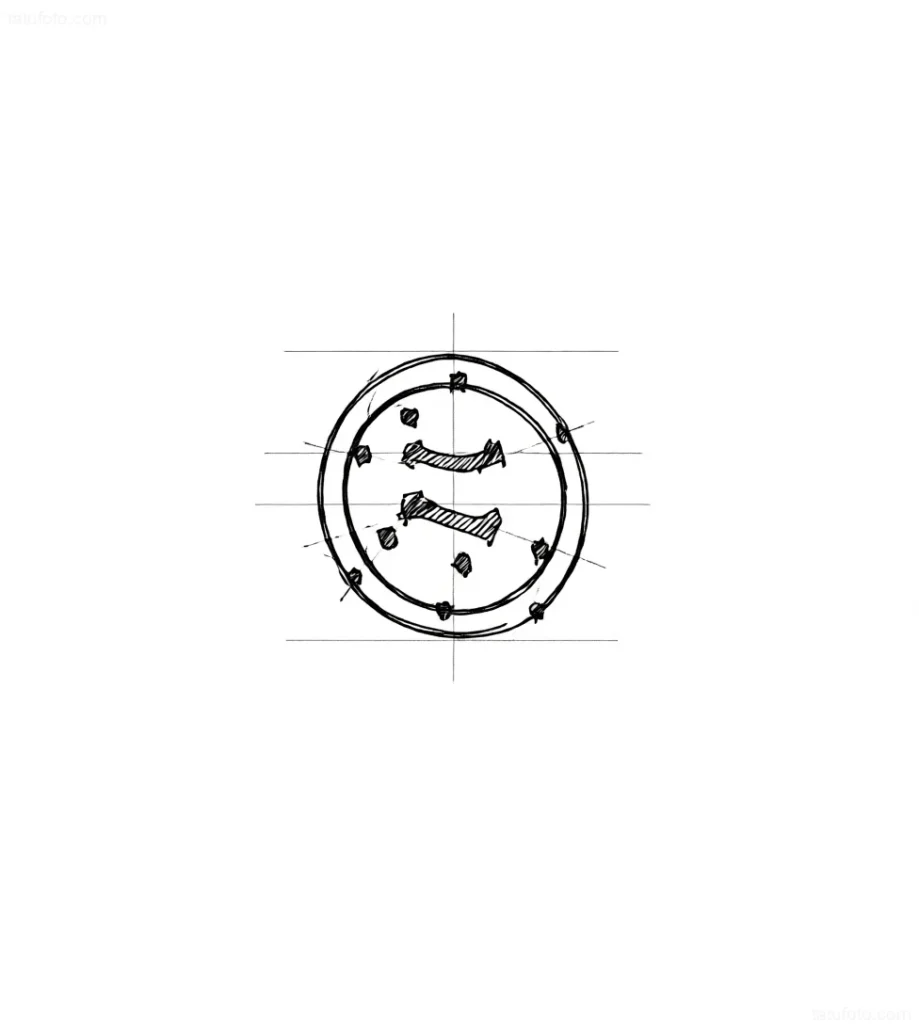
- Detail Matters: A button is an object that can be very different: with two or four holes, with a rim, with engraving, made of wood, metal, or mother-of-pearl. Each detail can carry additional meaning. For example, a two-hole button can symbolize simplicity, duality, or a straightforward connection, while a four-hole button can symbolize complexity, multifacetedness, or stronger, intertwined bonds. Consider these nuances.
- Personal Context: Think about whether you have a specific button that holds special meaning for you. Perhaps it’s a button from a loved one’s clothing, or from your favorite item from childhood. Tell the artist about it; they can incorporate these details into the sketch.
- Choosing a Style: As we discussed earlier, style greatly influences perception. Decide what resonates with you more: strict minimalism, detailed realism, vibrant old school, or delicate watercolor.
- Finding an Artist: For a button tattoo, especially if you want to achieve realism or fine graphics, you need an artist with a steady hand and attention to detail. Study artists’ portfolios, pay attention to their work with small elements, thin lines, and texture rendering. Don’t hesitate to ask questions and discuss all the nuances.
- Size and Placement: Reconsider where your button tattoo will be placed. A small button on a finger or behind the ear will look different from a large, realistic one on the forearm. Ensure that the chosen location matches the size and style of the sketch.

Caring for a Fresh Tattoo
Proper care in the first few weeks after getting a tattoo is critical for its healing and longevity.
- Cleanliness: Follow the artist’s instructions for cleaning the tattoo. This usually involves gentle washing with mild, unscented antibacterial soap several times a day.
- Moisturizing: Use the healing cream or ointment recommended by your artist. Do not let the tattoo dry out, but also do not over-moisturize, allowing the skin to breathe.
- Protection: For the first few days, the tattoo may be covered with a special film or bandage. Follow the recommendations regarding how long to wear it. Avoid direct sunlight, swimming pools, saunas, and prolonged immersion in water.
- Clothing: Wear loose, clean clothing made of natural fabrics that will not rub against the tattoo.
- Avoid Injury: Try not to scratch, pick at, or peel off any scabs that form. This can damage the pigment and lead to uneven healing.
Long-Term Care
- Sun Protection: UV rays are the main enemy of tattoos. Use sunscreen with a high SPF (at least 50) every time the tattoo is exposed to sunlight to prevent fading.
- Skin Hydration: Keep your skin moisturized; this will help maintain the brightness and clarity of your tattoo lines for years to come.
- Touch-ups: Over time, any tattoo may fade slightly. If you notice your button losing its sharpness or color, consult your artist for a touch-up.
By following these simple recommendations, you will ensure a long life for your button tattoo, preserving its aesthetic appeal and deep personal meaning.
Frequently Asked Questions About Button Tattoos

To help you make an informed decision and dispel any doubts, we have compiled answers to the most common questions regarding button tattoos.
- Why a button? It’s such an ordinary object.
It is precisely in the ordinariness of the button that its uniqueness as a symbol lies. It carries the power of universal concepts: connection, completion, individuality, memory. Unlike more aggressive or commonly accepted symbols, a button is perceived as something personal, subtle, yet deeply meaningful. Its simplicity allows it to blend organically into your personal story without drawing excessive attention, but always serving as a reminder of what is important.
Image Gallery


/* GALLERY ISOLATION v4.15.8: wp:html block + !important rules to protect from Gutenberg */
.attachment-gallery-wrapper {
margin: 40px 0 !important;
padding: 20px !important;
background: #1a1a1a !important;
border-radius: 8px !important;
box-sizing: border-box !important;
clear: both !important;
width: 100% !important;
}
.attachment-gallery-title {
font-size: 24px !important;
margin-bottom: 10px !important;
color: #ffffff !important;
font-weight: bold !important;
}
.attachment-gallery-description {
color: #cccccc !important;
margin-bottom: 20px !important;
font-size: 14px !important;
}
.attachment-gallery-page {
margin-bottom: 20px !important;
clear: both !important;
}
/* CRITICAL: Base grid for 3-column gallery */
.attachment-gallery-grid {
display: grid !important;
grid-template-columns: repeat(3, 1fr) !important;
gap: 16px !important;
list-style: none !important;
padding: 0 !important;
margin: 0 !important;
width: 100% !important;
box-sizing: border-box !important;
}
.attachment-gallery-item {
margin: 0 !important;
padding: 0 !important;
display: flex !important;
align-items: center !important;
justify-content: center !important;
overflow: hidden !important;
list-style: none !important;
box-sizing: border-box !important;
}
.attachment-gallery-item a {
display: block !important;
width: 100% !important;
height: 100% !important;
text-decoration: none !important;
}
.attachment-gallery-item img {
width: 100% !important;
height: auto !important;
display: block !important;
object-fit: cover !important;
border-radius: 4px !important;
transition: transform 0.3s ease !important;
max-width: 100% !important;
}
.attachment-gallery-item img:hover {
transform: scale(1.05) !important;
}
.attachment-gallery-controls {
text-align: center !important;
margin-top: 20px !important;
clear: both !important;
}
.attachment-gallery-btn {
background: #0073aa !important;
color: white !important;
border: none !important;
padding: 12px 24px !important;
font-size: 16px !important;
border-radius: 4px !important;
cursor: pointer !important;
transition: background 0.3s ease !important;
font-family: inherit !important;
}
.attachment-gallery-btn:hover {
background: #005177 !important;
}
.attachment-gallery-btn:active {
transform: translateY(1px) !important;
}
.attachment-gallery-btn:disabled {
opacity: 0.5 !important;
cursor: not-allowed !important;
}
/* Responsiveness for mobile devices */
@media (max-width: 768px) {
.attachment-gallery-grid, .attachment-remaining-gallery {
grid-template-columns: repeat(2, 1fr) !important;
gap: 12px !important;
}
}
@media (max-width: 480px) {
.attachment-gallery-grid, .attachment-remaining-gallery {
grid-template-columns: 1fr !important;
gap: 10px !important;
}
}
/* Styles for remaining images in content */
.attachment-remaining-gallery {
display: grid !important;
grid-template-columns: repeat(3, 1fr) !important;
gap: 16px !important;
list-style: none !important;
padding: 0 !important;
margin: 20px 0 !important;
}
.attachment-inline-image {
margin: 20px 0 !important;
text-align: center !important;
}
.attachment-inline-image img {
max-width: 100% !important;
height: auto !important;
border-radius: 4px !important;
}