
The Daruma tattoo is one of the most recognizable and deeply meaningful images in Japanese tattoo culture (irezumi). Unlike many other motifs that carry purely aesthetic or mythological weight, the Daruma is a true interactive talisman. This traditional Japanese daruma doll embodies an unbreakable spirit, iron will, and the belief that any obstacle can be overcome with persistence. By choosing such a design, you are not just decorating your body, but fixing a personal vow or life goal onto your skin, turning the process of wearing the tattoo into a continuous meditation on your success.
Daruma Tattoo: The Deep Meaning of the Japanese Symbol of Persistence and Luck

The primary meaning of the Daruma tattoo is centered around the famous Japanese proverb “Nana korobi ya oki,” which translates to “Fall down seven times, stand up eight.” The doll’s shape – round and limbless – perfectly reflects this principle: no matter how you push a Daruma, it always returns to an upright position. In the context of a tattoo, this symbolizes a person’s inner core, their ability to recover from life’s blows and continue moving towards their intended goal.
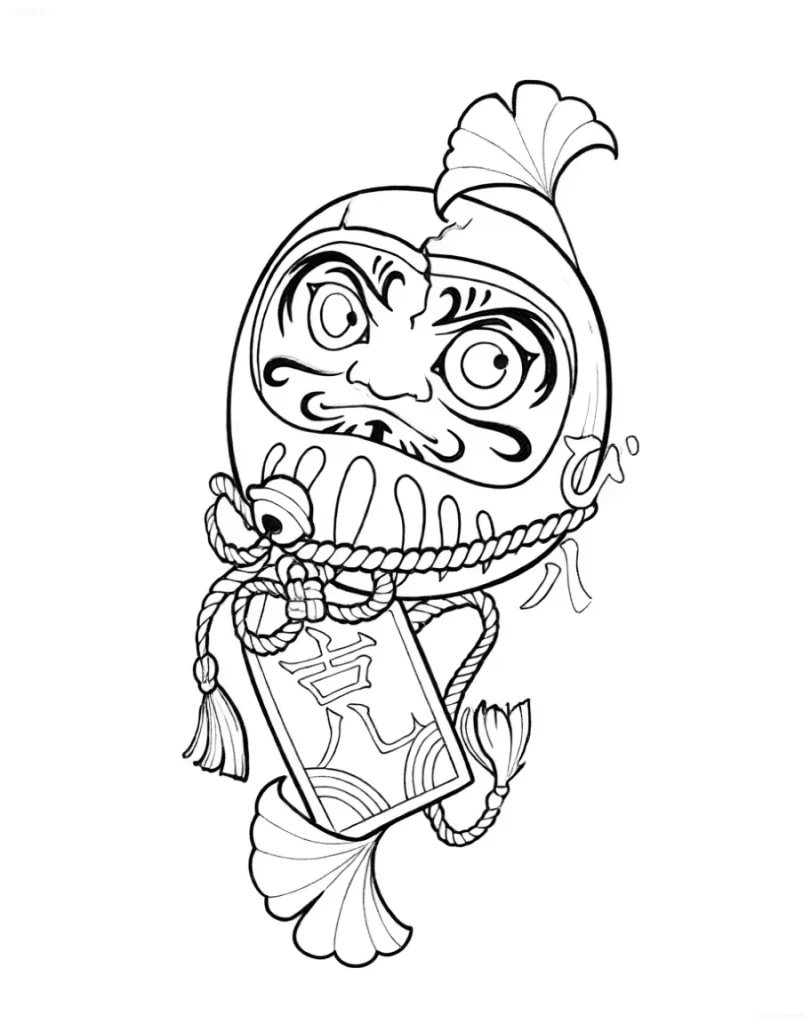
For many who get this tattoo, the Daruma becomes a visual reminder that failure is just a temporary state, not an end. The symbolism of persistence makes this image popular among athletes, entrepreneurs, and people undergoing complex life transformations. It’s important to understand that the Daruma doesn’t bring luck “just because” – it only helps those who are willing to put in the effort. It’s a symbol of active fortune, which is the result of hard work.
The History of Daruma: From Bodhidharma to the Modern Tattoo

The roots of this image go back to ancient times and are closely linked to the figure of Bodhidharma (known in Japan as Daruma Daishi) – the founder of Zen Buddhism. According to legend, this monk spent nine years in deep meditation, gazing at the cave wall in the Shaolin Monastery. Over these years, his arms and legs atrophied and fell off due to immobility, which served as the prototype for the shape of the daruma doll.
In Japanese culture, the daruma doll in its modern form appeared during the Edo period. Initially, they were made of papier-mâché in temples as talismans against diseases, especially smallpox (it was believed that the red color repelled the disease demon). Over time, the religious context transformed into a more secular one – the doll became a symbol for making wishes. Having migrated to tattoo art, the Daruma has retained its canonical features but has acquired new details, allowing artists to create unique artistic compositions while maintaining a connection to the ancient tradition.
The Multifaceted Meanings of the Daruma Tattoo: From Wish Fulfillment to Inner Strength

If you decide to examine the Daruma tattoo in detail, you will notice that its face is not just a set of lines, but a complex system of symbols. Japanese artists imbue each feature with meaning:
- Eyebrows: Traditionally, they are drawn in the shape of two cranes. In Japanese mythology, the crane lives for a thousand years and symbolizes longevity and wisdom.
- Whiskers and beard: Their outlines resemble the shell of a turtle, which, according to beliefs, lives for ten thousand years. The combination of the crane and the turtle on the Daruma’s face signifies a wish for a long life and unwavering determination, tested by time.
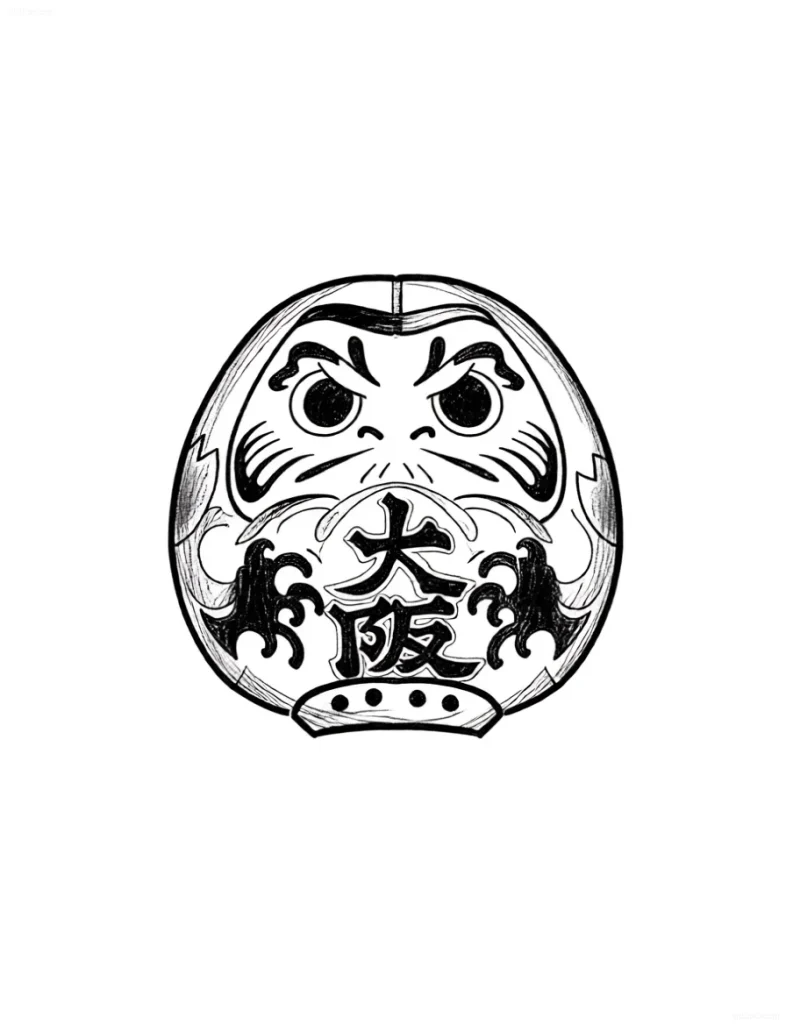
- Absence of pupils: This is the most important detail. In the classic tradition, Daruma dolls are sold with blank eyes. You color in one eye (usually the left from the viewer’s perspective) when you set a goal or make a wish. The second eye is colored in only when the goal is achieved.
In tattooing, this ritual is strictly observed. Many clients ask the artist to leave one eye blank so they can “open” it themselves (complete the tattoo) when their dream comes true. This makes the Daruma tattoo a truly living artifact on your body.
Color Symbolism of the Daruma Tattoo

Although the classic Daruma is always red, modern tattoo culture uses different colors, each carrying its specific message. Choosing a color allows you to fine-tune the tattoo’s “program” to your needs.
| Tattoo Color | Main Meaning | Recommended For |
|---|---|---|
| Red | Luck, protection from evil forces, energy | Classic choice for general well-being |
| Gold / Yellow | Wealth, prosperity, business success | Entrepreneurs and those seeking financial independence |
| White | Purity, harmony, new beginnings | People starting life anew or entering marriage |
| Black | Powerful protection, stability, overcoming crisis | Those who need strength of spirit in difficult times |
| Green | Health, physical strength, growth | Athletes and people who care about their body |
| Blue | Intellect, calmness, career growth | Students and intellectual workers |
Daruma Tattoo Styles: How to Embody the Symbol in Skin Art

The choice of style for a Daruma tattoo is crucial, as it determines the overall mood of the image. Despite being a traditional Japanese symbol, it adapts perfectly to modern trends.
Japanese Classic (Irezumi). This is the most logical and popular choice. Here, the Daruma is depicted using traditional canons: a dense black background (mikiri) in the form of clouds, waves, or sakura blossoms, bright, saturated colors, and clear outlines. In this style, the Daruma is often complemented by images of snakes (wisdom), maple leaves (the passage of time), or coins (wealth).
Neo-traditional. This style allows for adding volume, detail, and a more complex color palette to the Daruma. The artist can render the texture of papier-mâché, add realistic highlights to the eyes, or adorn the doll with intricate ornaments. This makes the tattoo more modern and artistic.
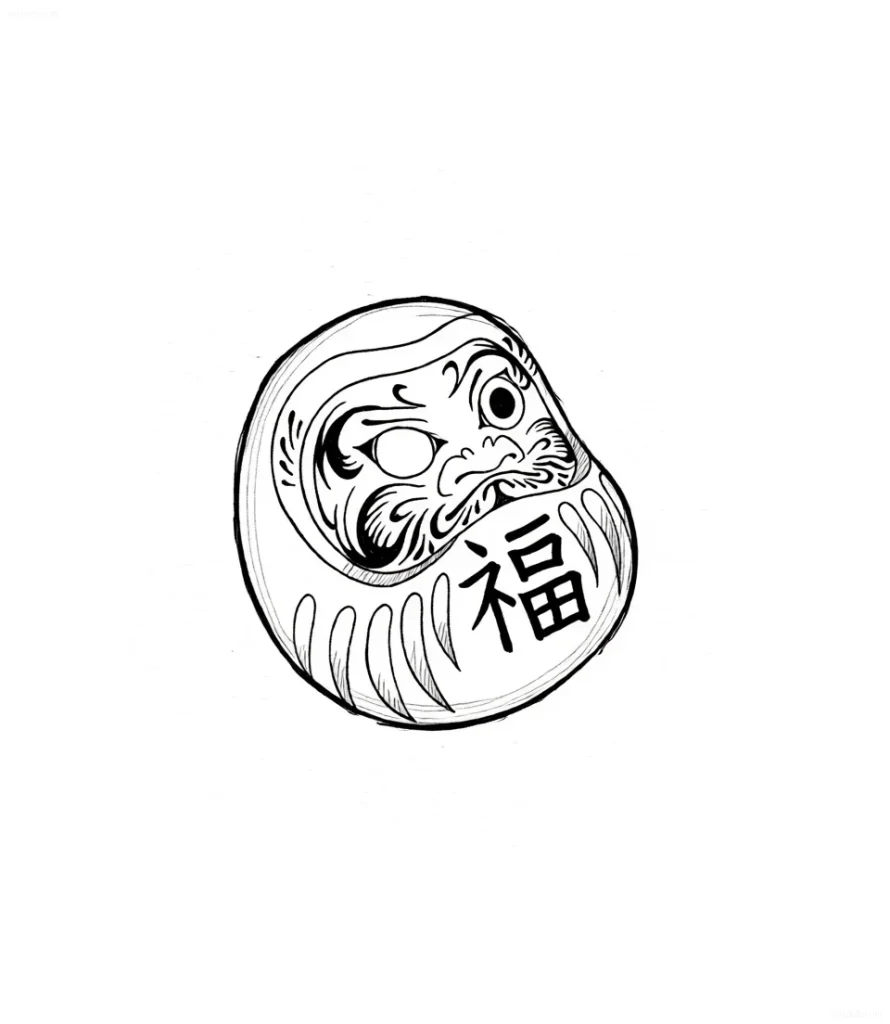
New School. If you want to add a touch of irony or cartoonishness to the symbol, New School is the perfect option. Here, the Daruma can have exaggerated emotions, bright neon colors, and unusual attributes, such as headphones or sunglasses. This is a great way to emphasize a positive attitude and a modern take on tradition.
Minimalism and Linework. For those who prefer conciseness, a small outline tattoo is suitable. Even with just a few lines, the Daruma retains its recognizability and symbolic power. Often, such tattoos are done on the wrist or behind the ear as a personal amulet, hidden from prying eyes.
Ideal Placement for a Daruma Tattoo: Where the Symbol Gains Strength

The choice of location for a Daruma tattoo depends on the size of the sketch and how “public” you want your symbol to be. Since the Daruma is a talisman, many prefer to place it where it will remind the owner of their goal.
- Forearm: One of the best places. You constantly see your Daruma, which helps maintain focus on the task at hand. Both single dolls and compositions look great here.
- Chest (near the heart): A deeply symbolic place, signifying that your goal and determination come from the heart. Often, the Daruma is placed on one side of the chest as part of a classic Japanese “vest.”
- Calves and thighs: An excellent canvas for large, detailed works. In Japanese tradition, legs symbolize support, which resonates with the stability of the Daruma itself.
- Back: A place for large-scale canvases. The Daruma can become the central element of a huge composition, surrounded by dragons or tigers, symbolizing the highest degree of protection and control over destiny.
Tips Before Getting a Daruma Tattoo: How to Choose a Design and Artist

Before heading to the studio, it’s important to consider a few key points to ensure your tattoo truly pleases you and functions as a talisman. Firstly, decide on your goal. If you plan to follow the ritual with the eyes, be sure to discuss it with the artist. It’s important that the blank eye looks aesthetically pleasing and doesn’t create a sense of unfinished work.
Secondly, choose an artist who is familiar with Japanese aesthetics. Irezumi has its own rules of composition and element combination. For example, you shouldn’t surround the Daruma with elements that contradict its meaning. An experienced artist can advise on which background elements (flowers, elements) best emphasize your message. Look at portfolios: the lines should be clean, and the coloring dense, as Japanese tattoos are renowned for their longevity and vibrancy.
Daruma Tattoo: Frequently Asked Questions (FAQ)

Can both eyes be colored in at the time of tattooing?
Yes, this is perfectly acceptable if your tattoo symbolizes an already achieved victory or if you perceive the Daruma simply as a symbol of general luck and protection, rather than a tool for a specific wish. In this case, the Daruma is depicted as “seeing,” which signifies its full power.
What if the wish associated with the Daruma tattoo doesn’t come true?
In Japanese tradition, if a paper doll hasn’t helped fulfill a wish within a year, it’s burned at a temple with gratitude and a new one is purchased. You can’t do this with a tattoo. However, esotericists and tattoo artists believe that in this case, the second eye simply remains uncolored as a reminder of the lesson to be learned or that the path to the goal requires more time.
Does it matter which eye is colored first?
Traditionally, the left eye of the doll is colored first (the right from your perspective when looking at it). This is related to Buddhist tradition and the direction of energy flow. However, in modern tattoo culture, this rule is not strict and is left to the owner’s discretion.
Interesting Facts About Daruma and Its Tattoo Embodiments

Did you know that huge “Daruma-ichi” fairs are held annually in Japan? The largest takes place at the Shōrinzan Daruma-ji Temple. People bring their “used” dolls there and buy new ones. In tattoos, this cycle of renewal is often conveyed through the image of a broken or cracked Daruma from which flowers grow – a symbol that something new and beautiful always arises from the ruins of the old.

Another interesting fact: the image of the Daruma is often paired with the Maneki-neko cat. If the Daruma is a symbol of perseverance, the Maneki-neko attracts opportunities. Together, they create an ideal duo for attracting success in all areas of life. Sometimes, the Daruma is also depicted as a woman (Hime-Daruma) – this is considered a powerful amulet for children and pregnant women, symbolizing the gentle yet unyielding strength of motherhood.
By choosing a Daruma tattoo, you are joining a centuries-old tradition. This symbol will remind you that you are stronger than any circumstances. May your Daruma always help you rise after every fall and look confidently into the future, regardless of whether its eyes are already colored in or you are just at the beginning of your journey towards a big dream.